News related to
Elon Musk

Elon Musk confirmed that Saudi Arabia has authorised the deployment of Starlink, his satellite internet service, for aviation and maritime applications. The announcement was made during the Saudi-US Investment Forum in Riyadh, where Musk also expressed interest in introducing Tesla’s autonomous vehicles to the Kingdom.

Starlink, operated by Musk’s aerospace company SpaceX, aims to provide high-speed internet connectivity, particularly in underserved and mobile regions. The approval in Saudi Arabia allows the service to cater to the country’s aviation and maritime sectors, enhancing communication capabilities in these industries.

Musk’s participation in the forum coincided with a visit by former U.S. President Donald Trump, who was in the Kingdom to strengthen bilateral economic ties. During the event, Musk showcased Tesla’s Optimus humanoid robots and discussed the potential introduction of Tesla’s self-driving vehicles in Saudi Arabia, aligning with the nation’s Vision 2030 initiative to diversify its economy through technological innovation.

Saudi Arabia has been investing heavily in its transportation and logistics infrastructure, aiming to become a global hub in these sectors. The integration of Starlink’s satellite internet service is expected to bolster the Kingdom’s capabilities in aviation and maritime operations, contributing to its broader economic diversification goals.

While Musk did not provide a specific timeline for the introduction of Tesla’s autonomous vehicles in Saudi Arabia, his discussions with Saudi officials indicate a mutual interest in exploring advanced transportation technologies. The Kingdom’s commitment to embracing innovative solutions positions it as a potential market for Tesla’s self-driving technology.

Saudi Arabia has authorised SpaceX’s Starlink satellite internet service for deployment in its aviation and maritime sectors, marking a significant step in the Kingdom’s push to modernise its digital infrastructure. The announcement was made by Elon Musk during the Saudi-US Investment Forum in Riyadh, where he expressed gratitude to the Kingdom for the approval. The decision aligns with Saudi Arabia’s broader ambitions to diversify its economy and […]

Saudi Arabia has launched HUMAIN, a new artificial intelligence company under the Public Investment Fund , aiming to position the kingdom as a global leader in AI innovation. Chaired by Crown Prince Mohammed bin Salman, HUMAIN is set to provide advanced AI services, including next-generation data centres, AI infrastructure, cloud capabilities, and sophisticated AI models. A key focus will be the development of one of the world’s […]

Arabian Post Staff -Dubai President Donald Trump’s ambitious pursuit of $1 trillion in investment pledges from Saudi Arabia is encountering a formidable challenge: the kingdom’s own sweeping economic transformation plans, which are projected to cost nearly twice that amount. As Trump embarks on his first Middle East tour of his second term, his administration is focusing on securing substantial trade and investment agreements with Gulf allies, including […]

OpenAI is engaged in high-stakes negotiations with Microsoft to restructure their multibillion-dollar partnership, aiming to secure new funding and lay the groundwork for a potential initial public offering . The discussions focus on revising equity arrangements and long-term access to OpenAI’s advanced artificial intelligence technologies.

Microsoft, having invested over $13 billion in OpenAI since 2019, is reportedly willing to adjust its equity stake in exchange for extended access to OpenAI’s AI models beyond the current 2030 agreement. This move reflects Microsoft’s strategic interest in maintaining a competitive edge in AI integration across its products and services.

The renegotiation also involves updating broader contractual terms established during Microsoft’s initial $1 billion investment in 2019. These revisions are crucial as OpenAI transitions into a public benefit corporation , a structure that balances profit motives with its mission to develop AI for the public good.

OpenAI’s shift to a PBC comes after abandoning plans to become a for-profit entity, following criticism from stakeholders concerned about deviating from its nonprofit origins. The new structure allows for conventional equity holdings by investors and employees while ensuring that the nonprofit entity retains significant control over the company’s direction.

The company’s recent fundraising efforts underscore its ambitions, with $6.6 billion raised in October 2024 and an additional $40 billion in March 2025, elevating its valuation to approximately $300 billion. These funds are intended to support OpenAI’s pursuit of artificial general intelligence and the development of AI technologies that can be broadly beneficial.

However, the partnership’s evolution has not been without tension. OpenAI’s engagements with other tech giants like SoftBank and Oracle have reportedly caused friction with Microsoft. Despite these challenges, both companies recognize their mutual dependence, particularly as Microsoft continues to integrate OpenAI’s technologies into its offerings.

Critics, including co-founder Elon Musk, have expressed concerns that OpenAI’s restructuring could compromise its nonprofit mission. Legal scrutiny from authorities in California and Delaware adds another layer of complexity to the company’s transformation. OpenAI must navigate these regulatory landscapes carefully to maintain its mission-driven approach while accommodating investor interests.

Oman has allocated approximately OMR60 million towards artificial intelligence initiatives between 2021 and 2024, as part of its strategic drive to position itself as a regional leader in digital innovation. This investment, overseen by the Ministry of Transport, Communications and Information Technology, underscores the sultanate’s commitment to integrating AI across various sectors to enhance public service efficiency and stimulate economic growth. The National Programme for Artificial Intelligence […]

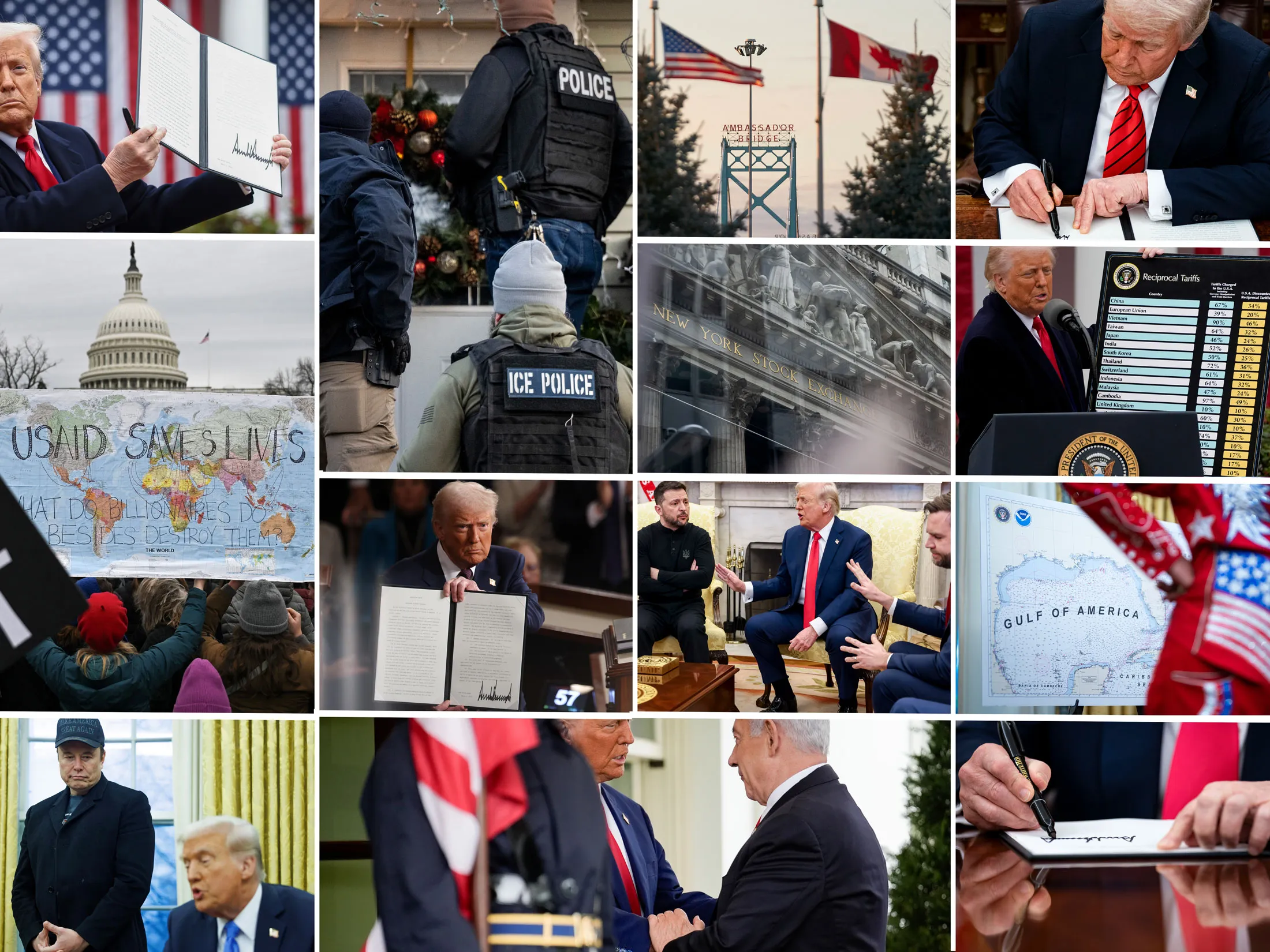
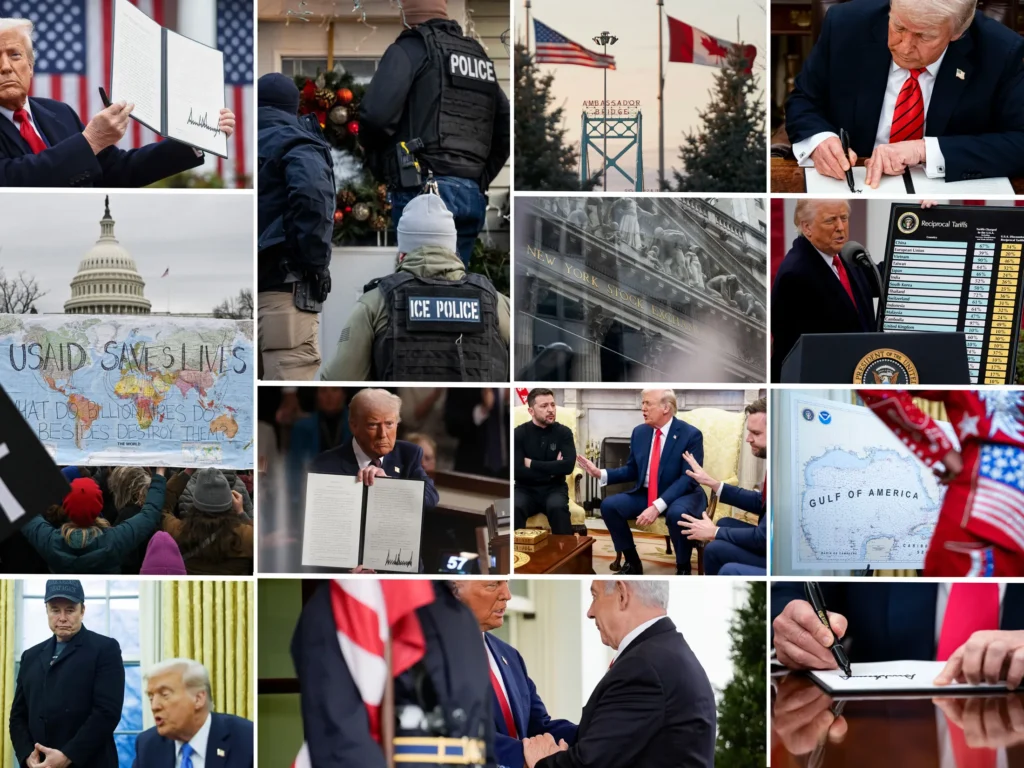
Donald Trump, upon commencing his second term as the 47th President of the United States, proclaimed the onset of a “golden age” for the nation. His inauguration speech outlined an ambitious agenda aimed at reshaping domestic and foreign policies, with immediate and far-reaching implications.

Central to Trump’s address was a commitment to restoring national sovereignty and security. He announced the declaration of a national emergency at the southern border, emphasizing the cessation of illegal immigration. This move aligns with his broader immigration strategy, which includes the suspension of refugee admissions and the initiation of efforts to end birthright citizenship.

In a significant restructuring of the federal government, Trump introduced the Department of Government Efficiency , led by Elon Musk. This new department is tasked with streamlining government operations and reducing bureaucratic inefficiencies. Early reports indicate that D.O.G.E. has already identified potential savings amounting to $150 billion.

Trump’s economic policies focus on revitalizing American industry and addressing trade imbalances. He announced the implementation of steep tariffs, particularly targeting imports from China, Mexico, and Canada. Additionally, he introduced the concept of an “External Revenue Service” to collect tariffs and taxes from foreign entities, aiming to bolster domestic revenue streams.

Environmental regulations underwent immediate revisions, with Trump revoking the electric vehicle mandate and withdrawing from the Paris Climate Agreement. He emphasized a return to fossil fuel production, including the reinstatement of coal mining operations, positioning these actions as measures to protect American jobs and energy independence.

On social policy, Trump declared that the U.S. government would officially recognize only two genders: male and female. He also announced the dismantling of the Department of Education and the repeal of diversity and inclusion measures, advocating for a merit-based, colorblind society.

Internationally, Trump signaled a shift in foreign policy by expressing intentions to reclaim the Panama Canal and by withdrawing from the World Health Organization. He also imposed sanctions on the International Criminal Court, reflecting a broader strategy of redefining U.S. engagement with global institutions.

Notably absent from Trump’s speech was any mention of cryptocurrency or Bitcoin. This omission had immediate repercussions in the financial markets. Bitcoin’s value dropped by 3.2%, and the $TRUMP memecoin experienced a 15% decline. The broader cryptocurrency market saw liquidations exceeding $1.2 billion, marking one of the most significant downturns in the sector’s history.

Advertisements
By Nitya Chakraborty The United States of America President Donald J. Trump has completed his first one hundred days in office in his second non-consecutive term on April 29, Tuesday amidst continuing global disorder over his chaotic policies — unilateral tariffs hike, failure to establish peace in Gaza with Israeli killing spree continuing unabated and […]

OpenAI is developing a social networking platform inspired by X , aiming to integrate AI functionalities directly into the user experience. This move signals the company’s intent to diversify beyond its core AI initiatives. An internal prototype of the platform reportedly exists, focusing on combining a social feed with ChatGPT’s image generation capabilities. CEO Sam Altman has been gathering external feedback as the company considers whether to […]

Tesla owners are increasingly parting ways with their electric vehicles, resulting in a surge in used car listings, as well as declining resale values. With the electric vehicle giant facing mounting criticism and ongoing controversies surrounding its CEO, Elon Musk, the trend appears to be gaining momentum. The used car market for Teslas has reached an unprecedented high, with some industry reports revealing a surge in listings, […]

The global shipping industry is experiencing significant upheaval following the implementation of extensive tariffs by U.S. President Donald Trump. These measures, including a 25% tariff on imports from Canada and Mexico and a 10% levy on Chinese goods, have disrupted international trade flows and introduced widespread economic uncertainty.

In anticipation of these tariffs, container vessel traffic to American ports surged by 12% last month, reaching a record 281 port calls in the week ending March 13, as reported by Ami Daniel of AI data provider Windward. This rush to ship goods ahead of the tariffs has complicated annual freight contract negotiations, set to begin on May 1, according to Norwegian analytics firm Xeneta. Asian shipping companies have responded by raising prices for routes to the U.S. to offset the expected tariffs on Chinese-built ships, as noted by Singapore-based Linerlytica.

The automotive sector has been notably affected. Jaguar Land Rover announced a temporary halt to exports of its British-made vehicles to the U.S. in response to the 25% import tariff. The company, which exports nearly a quarter of its 400,000 annual vehicle sales to the U.S., is assessing the financial impact and exploring options such as price increases for American consumers and boosting sales in other markets. Other UK-based automakers, including BMW, Rolls-Royce, and Ineos Automotive, are also evaluating their responses, with Ineos already raising U.S. prices.

The financial markets have reacted sharply to the tariff announcements. The Dow Jones Industrial Average and S&P 500 experienced significant declines over the past week, falling 7.9% and 9.1%, respectively, with the Dow dropping over 2,200 points on Friday alone. China responded with retaliatory 34% tariffs, escalating fears of a deepening trade war. Experts, including Moody’s chief economist Mark Zandi, warned that the tariffs could hinder productivity, damage the U.S.’ investment image, and prompt global allies to distance themselves from U.S. trade.

In the United Kingdom, Prime Minister Keir Starmer is considering a significant reset of the country’s economic policies in response to the U.S. tariffs. The FTSE 100 has plummeted over 7% in its worst week since the COVID-19 panic in March 2020. Amid fears of a prolonged recession, Starmer and Chancellor Rachel Reeves are reportedly contemplating raising taxes or altering fiscal rules to increase borrowing and stimulate growth, despite previous pledges to the contrary. British businesses, such as JLR, are already feeling the pressure, with the automotive sector particularly vulnerable due to its reliance on exports to the U.S.

The tariffs have also intensified discussions around supply chain deglobalization. Companies are reassessing their sourcing strategies, with potential shifts toward domestic production and alternative countries like Vietnam and India. This trend is driven by the need to mitigate the impact of tariffs and reduce reliance on any single country for manufacturing. However, such shifts are complex and require significant investment and time to implement.

The shipping industry is facing additional challenges due to the removal of the de minimis exemption for shipments under $800 from Canada, Mexico, and China. This change means that goods arriving by air will be subject to the new and existing tariffs, incur significant filing requirements and costs, and take longer to clear customs. This development could sharply reduce air cargo volumes from China to the U.S., leading to downward pressure on transpacific air cargo rates and potentially affecting the broader air cargo market.

Industry leaders are expressing concern over the escalating trade tensions. Billionaire Elon Musk expressed hopes for a future zero-tariff trade zone between North America and Europe. Meanwhile, leaders from the UK and France emphasized the importance of global cooperation and warned against the detrimental effects of trade wars. Italy’s economy minister cautioned against retaliatory actions and urged a rational response to safeguard Europe’s economic interests.


Elon Musk’s social media platform, X, is facing potential fines from the European Union for alleged breaches of the Digital Services Act . The European Commission has initiated formal infringement proceedings, citing concerns over content moderation, deceptive user interfaces, advertising transparency, and restricted data access for researchers. The Commission’s investigation highlights that X’s “blue checkmark” verification system may mislead users by allowing any subscriber to obtain verified […]

Elon Musk’s artificial intelligence venture, xAI, has acquired the social media platform X, formerly known as Twitter, in an all-stock transaction. The deal values xAI at $80 billion and X at $33 billion, inclusive of $12 billion in debt. Musk announced the acquisition on X, stating, “xAI has acquired X in an all-stock transaction.” This strategic move aims to integrate xAI’s advanced artificial intelligence capabilities with X’s […]

A surge in Studio Ghibli-style AI-generated images has ignited a significant uptick in the creation and valuation of related meme coins within the cryptocurrency market. This trend follows the introduction of OpenAI’s ChatGPT-4o model, which enables users to produce images emulating the distinctive aesthetic of the renowned Japanese animation studio.

On March 25, OpenAI unveiled the ChatGPT-4o model’s image generation feature, allowing users to craft visuals reminiscent of Studio Ghibli’s celebrated films such as “Spirited Away” and “My Neighbor Totoro.” This capability quickly gained traction on social media platforms, with individuals sharing their AI-generated Ghibli-style portraits. Notably, OpenAI CEO Sam Altman participated by posting an image of himself rendered in this style, describing the release as “a new high-water mark” for creative freedom.

The trend garnered further momentum as prominent figures in the tech industry joined in. Entrepreneur Elon Musk shared his own Ghibli-inspired portrait, while Ripple executives Brad Garlinghouse and David Schwartz also posted similar images. Their involvement amplified the visibility of the Ghibli-style AI imagery movement across various online communities.

This widespread fascination with Ghibli-style AI art has translated into the cryptocurrency sphere, leading to the emergence of several Ghibli-themed meme coins. Tokens such as “Ghiblification” and “GhibliCZ” have experienced remarkable surges in market capitalization. Ghiblification, for instance, reportedly achieved a market cap of $20.8 million within 19 hours of its launch, marking a 39,010% increase in value.

The Solana blockchain has become a notable platform for these tokens, with several Ghibli-inspired meme coins experiencing rapid gains. The integration of AI-generated art trends with cryptocurrency ventures has attracted both investors and enthusiasts, leading to heightened trading activity and speculative interest.

However, the rapid proliferation of these tokens has raised concerns regarding their legitimacy and the potential for market manipulation. The cryptocurrency market is known for its volatility, and the sudden popularity of themed meme coins can lead to speculative bubbles. Investors are advised to exercise caution and conduct thorough research before engaging with such assets.

Norwegian robotics firm 1X Technologies is set to initiate in-home trials of its humanoid robot, Neo Gamma, deploying the units in several hundred residences by the end of 2025. Bernt Børnich, CEO of 1X, emphasized the significance of these trials in advancing household robotics, stating, “This is a pivotal step towards integrating humanoid robots into daily life, allowing us to understand and enhance their interactions within real-world […]

Tesla has announced plans to commence sales in Saudi Arabia next month, marking a significant expansion into the Gulf region’s largest market. The electric vehicle manufacturer will host a launch event in Riyadh on April 10 to showcase its lineup of electric vehicles and solar-powered products.

This development indicates a mending of relations between Tesla’s CEO, Elon Musk, and Saudi Arabia, following tensions that arose in 2018. At that time, Musk’s statement about securing funding to take Tesla private, allegedly involving Saudi Arabia’s Public Investment Fund , led to a dispute when the deal did not materialize. Subsequent legal proceedings revealed strained communications between Musk and PIF Governor Yasir al-Rumayyan. The recent rapprochement is highlighted by Musk’s virtual participation in Riyadh’s Future Investment Initiative summit and his appearance alongside al-Rumayyan and U.S. President Donald Trump at a high-profile event in New York.

The upcoming event in Riyadh will not only feature Tesla’s electric vehicles but also introduce innovations such as the autonomous driving technology “Cybercab” and the humanoid robot “Optimus.” While these products will be on display, the company has yet to announce their availability in the Saudi market.

Saudi Arabia’s electric vehicle sector is still in its early stages, with electric cars accounting for just over 1% of total car sales in 2024. Despite this, the kingdom has demonstrated a commitment to diversifying its automotive market. The PIF has invested over $1 billion in Lucid Motors, a competitor in the EV space, and is supporting the development of Ceer, a domestic electric vehicle brand.

Tesla’s entry into Saudi Arabia comes at a time when the company is facing challenges in other markets. In Europe, Tesla has experienced a 42.6% decline in sales this year, even as overall demand for electric vehicles grows. In the United States, the brand has been the target of protests related to Musk’s political engagements and his role in federal budget cuts.

The Saudi market presents both opportunities and challenges for Tesla. The nation’s expansive road networks and limited charging infrastructure, coupled with a consumer preference for large, gasoline-powered vehicles due to low fuel prices, may pose hurdles to widespread EV adoption. However, the government’s initiatives to promote electric vehicles and renewable energy align with Tesla’s mission, potentially facilitating the company’s growth in the region.

By Nitya Chakraborty Europe, which has always been vocal about its past history and civilization as well its contribution to the making of the modern world, has never faced such humiliation in the hands of its transatlantic ally the USA in the last eighty years since the end of the Second World War in 1945.The […]
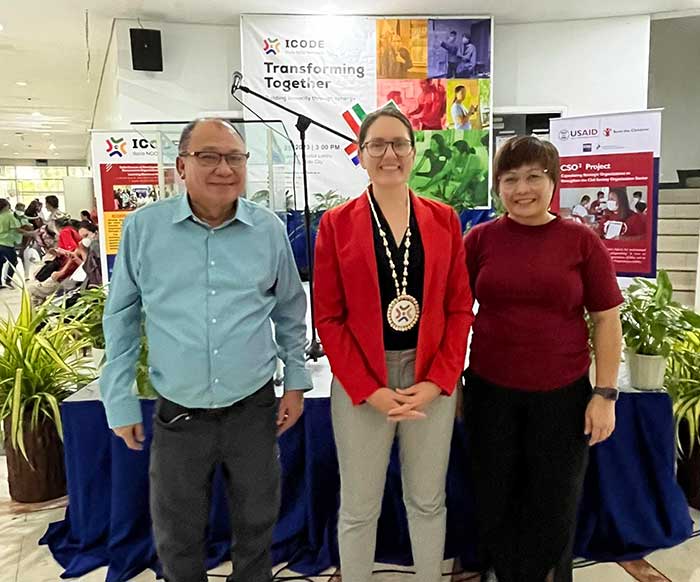
President Donald J. Trump has initiated a significant overhaul of the United States Agency for International Development , rebranding it as the U.S. International Humanitarian Assistance and integrating blockchain technology into its operations. This restructuring places the agency under the direct authority of Secretary of State Marco Rubio, aiming to enhance transparency and efficiency in foreign aid distribution.

An internal memo circulating within the State Department outlines the administration’s plan to utilize blockchain technology to secure and trace aid disbursements. The objective is to improve the transparency, security, and efficiency of aid distribution by leveraging blockchain’s immutable ledger capabilities. However, the specifics of this integration—whether it involves the use of cryptocurrencies or solely blockchain ledgers—remain unclear. The administration emphasizes a shift towards outcomes-based funding, intending to ensure that aid programs deliver measurable results.

Despite these intentions, the proposed reorganization has encountered legal challenges. A federal judge recently ruled that the dismantling of USAID by the Department of Government Efficiency , led by Elon Musk, likely violates the Constitution. The court issued an indefinite injunction blocking further actions against USAID and mandated the reinstatement of email and computer access to affected employees. This ruling does not reverse all personnel changes or fully restore the agency but highlights concerns over the administration’s approach to restructuring.

Critics argue that while blockchain technology offers potential benefits, its application in humanitarian contexts may not be necessary or cost-effective. Some experts caution that such technological solutions could impose additional burdens on smaller non-governmental organizations and may not provide substantial advantages over existing systems. They suggest that the focus should remain on addressing the immediate needs of aid recipients rather than implementing complex technological frameworks.

The administration’s broader strategy includes reducing the size of the federal government and reallocating resources to align more closely with American geopolitical interests. This involves concentrating on areas such as global health, food security, and disaster response, while politically oriented programs may be redirected to other sections within the State Department. The restructuring plan also proposes the elimination of multiple regional bureaus, aiming to streamline operations and enhance efficiency.

Secretary of State Marco Rubio has indicated that the reorganization will proceed with input from Congress, underscoring the administration’s commitment to aligning foreign aid programs with the interests of U.S. taxpayers and strategic objectives. However, the legal setbacks and critiques from various stakeholders suggest that the path forward may be complex and contentious.

Tesla, once the unchallenged leader in the electric vehicle market, is experiencing significant headwinds as sales decline and competitors gain ground. In January 2025, Tesla’s European sales plummeted by 45% compared to the same month in 2024, with only 9,913 units sold, down from 18,121. Germany, a pivotal market for Tesla, witnessed a staggering 76% decrease in sales, with only 1,429 vehicles sold in February 2025. This […]

By K Raveendran Prime Minister Narendra Modi’s proclivity for favouring friends has become an enduring characteristic of his leadership, a trait that has shaped both his domestic and international strategies. His approach to governance, often criticised for prioritizing personal and political loyalties over broader national interest, is once again evident in the unfolding saga of […]
By P. Sudhir The US President Donald Trump, in his first address to the US Congress following his election, has threatened to impose tariffs on countries that he considers are taking advantage of US trade policies. In his list is India, along with Canada, Mexico, China, Brazil and the European Union. Trump has repeatedly named […]

The world’s leading technology billionaires have experienced unprecedented declines in their net worths, with a collective loss of approximately $266 billion in 2025. This downturn surpasses the market capitalizations of major corporations such as Salesforce and McDonald’s. Elon Musk, the CEO of Tesla and SpaceX, has seen his wealth diminish by $102 billion in just two months, primarily due to a 35% drop in Tesla’s stock price. […]

A massive cyberattack disrupted X, formerly known as Twitter, on March 10, 2025, affecting tens of thousands of users worldwide. The hacking group “Dark Storm” claimed responsibility for the distributed denial-of-service attack, while Elon Musk, owner of X, suggested the assault originated from IP addresses traced to Ukraine. The outage began early Monday morning, with users reporting difficulties accessing the platform, posting content, and sending messages. According […]

Elon Musk, owner of the social media platform X, formerly known as Twitter, claimed on Monday that the platform was under a “massive cyberattack” after widespread outages affected tens of thousands of users globally. The disruptions began early in the day, with reports of service issues peaking at over 40,000 by mid-morning, according to data from Downdetector, a website that tracks online service interruptions. Users in major […]

VISHNU RAJA
RYO YAMADA
HITORI GOTOH
IKUYO KITA