News related to
Iran

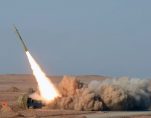
Washington and Tehran exchanged fresh military strikes across the Gulf, placing new pressure on a fragile ceasefire and raising the risk of wider disruption around one of the world’s most important energy corridors. US forces intercepted Iranian ballistic missiles and drones aimed at neighbouring Middle East countries and then struck a military ground control station on Iran’s Qeshm Island, near the Strait of Hormuz. The operation followed […]

India’s oil demand growth is heading for its weakest annual pace since the pandemic as the Middle East conflict pushes up crude and fuel costs, squeezes refiners and curbs consumption across transport, aviation and industrial sectors.

Consumption growth in the world’s third-largest crude importer is now forecast at about 78,000 barrels a day for 2026, nearly 40 per cent below pre-war expectations. Excluding the Covid-hit year of 2020, that would mark the slowest expansion in a decade for an economy that has otherwise been one of the main pillars of global oil-demand growth.

The downgrade reflects the widening economic impact of the war involving Iran, which began at the end of February and disrupted flows through the Strait of Hormuz, one of the world’s most important oil transit routes. International crude prices have risen sharply from pre-conflict levels, while refined product markets have tightened as Gulf exports of fuels and feedstocks remain constrained.

India’s reliance on imported crude and petroleum products has amplified the pressure. Higher energy prices are feeding into transport costs, refinery margins, aviation fuel expenses and household fuel supply management. A weaker rupee has added to the burden by increasing the local-currency cost of dollar-denominated imports.

State-run refiners have raised some fuel prices modestly, but domestic retail prices remain well below market-reflective levels. Oil ministry estimates indicate that processors have been losing about ₹6 billion a day on sales of diesel, petrol and liquefied petroleum gas. The strain has revived concerns over under-recoveries at state-controlled retailers, even as authorities seek to shield households and small businesses from a sharper fuel-price shock.

Diesel, the largest component of petroleum product consumption, is showing the clearest signs of stress. It powers trucks, tractors, construction equipment and a large portion of industrial activity. Forecasts for diesel-demand growth have been cut heavily, with some estimates suggesting growth may slow to only 4,000 to 5,000 barrels a day, compared with earlier expectations of 50,000 to 60,000 barrels a day.

Transport operators say higher running costs are already hurting freight movement. Rajendra Kapoor, president of the All India Motor and Goods Transport Association, said customers were resisting higher freight charges even as fuel expenses had risen. He estimated that fleet movement had fallen by 15 per cent to 20 per cent, affecting the movement of farm goods, industrial raw materials and retail products.

Petrol demand remains more resilient because passenger mobility has held up better than heavy freight. Even so, growth projections for petrol have been cut by about 40 per cent to around 38,000 barrels a day. Urban commuting, private vehicle use and two-wheeler demand continue to support consumption, but high prices and government appeals for fuel conservation are tempering growth.

Prime Minister Narendra Modi has urged people to save fuel by working from home where possible, using public transport and avoiding non-essential overseas travel. Such measures indicate how the energy shock has moved beyond refinery balance sheets into wider economic management.

Aviation turbine fuel is another area under pressure. Jet fuel costs account for a major share of airline operating expenses, and the loss of Middle East product exports has tightened supplies. Forecasts for jet fuel growth have been halved by some market consultants, while airlines face the twin challenge of higher fuel bills and weaker discretionary travel demand in price-sensitive segments.

Liquefied petroleum gas has also been hit by supply disruptions. April consumption fell to about 2.2 million metric tonnes, down more than 16 per cent from a year earlier, as import flows were affected. Authorities have asked state fuel retailers to build LPG storage capacity equivalent to 30 days of demand, a move aimed at strengthening energy security against further disruptions.

Official petroleum data showed total product consumption at 19.30 million metric tonnes in April, down 4.6 per cent from a year earlier. The contraction followed a record high of 21.75 million tonnes in December 2025, underlining the speed with which the war-related price shock has altered demand conditions.

Global oil-market agencies also disagree over the depth of the slowdown. Some forecasts still expect worldwide demand to rise this year, while others now see a contraction because of weaker refinery runs, reduced petrochemical feedstock availability and lower aviation activity. The sharpest downgrades have been concentrated in Asia, where import-dependent economies are most exposed to disruption in Gulf supply chains.

US forces said they defeated an overnight wave of missile and drone attacks launched by Iran towards Gulf states and civilian shipping, while carrying out self-defence strikes on military sites on Qeshm Island near the Strait of Hormuz. The confrontation marked a sharp escalation in a conflict already threatening energy flows, maritime security and diplomatic efforts to contain hostilities across the Gulf. US Central Command said its […]

Oil markets are heading towards a possible August inflection point as constrained flows through the Strait of Hormuz, recovering seasonal demand and disrupted supply chains combine to keep upward pressure on crude prices. Philippe Khoury, executive vice-president for sales and trading at ADNOC, told the Middle East Petroleum and Gas Conference in London that prices could move sharply higher if demand strengthens while the Iran war supply […]

Mounting pressure on the rupee has put the Reserve Bank of India’s reserve strategy under sharper scrutiny after a report indicated that the central bank may have sold about $12 billion worth of gold holdings to protect foreign currency assets from the fallout of the US-Iran conflict.

The reported move, if confirmed, would mark a significant shift in the composition of India’s external buffers at a time when oil prices, foreign portfolio outflows and import demand are combining to test the country’s balance of payments position. The RBI has not publicly confirmed any gold sale of that scale, and the latest available reserve data show a fall in the value of gold holdings rather than a definitive disclosure of physical bullion sales.

India’s foreign exchange reserves fell to $681.4 billion for the week ended May 22, down $7.5 billion from the previous week. Foreign currency assets declined by about $3 billion to $543 billion, while the value of gold reserves dropped by roughly $4.5 billion. The fall came as the rupee traded near record lows, having weakened by more than 4 per cent since the outbreak of the US-Iran conflict and the accompanying rise in energy prices.

The rupee has been under sustained pressure from higher crude oil and liquefied natural gas costs, wider hedging by importers and withdrawals by overseas investors from domestic equities. Brent crude has traded in the mid-$90 range, raising concern over India’s import bill because the country depends heavily on overseas energy supplies. Any prolonged disruption in Gulf shipping routes would add to inflation risks and intensify demand for dollars from refiners and importers.

The RBI has intervened through state-run banks to slow the currency’s decline, with traders indicating that the central bank has been uncomfortable with disorderly depreciation. The rupee was around 95 to the dollar this week after briefly sliding close to 97 in May. The central bank’s policy decision due this week is being watched for signals on whether it will rely mainly on liquidity tools, dollar sales and administrative measures, or consider a firmer monetary response.

The reported $12 billion gold-related action has drawn attention because India’s gold holdings have expanded in importance within the reserve portfolio. The central bank held about 880.5 tonnes of gold at the end of March, with gold accounting for nearly 17 per cent of total foreign exchange reserves. The physical stock has been broadly steady around 880 tonnes since mid-2025, suggesting that changes in the dollar value of gold reserves can reflect price movements, accounting effects and reserve operations as well as outright sales.

Gold has become a larger part of central bank reserves worldwide as monetary authorities seek diversification away from dollar assets and protection against geopolitical shocks. India has also moved more of its bullion to domestic vaults, reducing custody risks linked to overseas storage. That strategy had been seen as a long-term strengthening of sovereign reserve control, making any suggestion of sizeable gold liquidation politically and financially sensitive.

The government has moved separately to curb foreign exchange outflows. Import duties on gold and silver have been lifted sharply to about 15 per cent from 6 per cent, reversing earlier tariff relief and increasing the landed cost of precious metals. Rules around some bullion imports have also been tightened, while appeals have been made to households to reduce discretionary gold purchases.

Fuel prices have also been raised as state-run retailers pass through part of the increase in international crude costs. Petrol and diesel prices have risen after several years of limited retail adjustments, adding to household costs but reducing the burden on public-sector oil marketing companies. The step is intended to limit under-recoveries at fuel retailers and reduce the fiscal strain that would otherwise build if global prices stay elevated.

The combined policy response reflects the strain of a classic external shock: a weaker currency lifts import costs, higher oil prices widen the trade deficit, and investors demand higher compensation for risk. India enters this phase with substantial reserves, moderate inflation by past crisis standards and a financial system that remains broadly stable, but the speed of the rupee’s decline has revived comparisons with earlier episodes of currency stress.

For markets, the key question is whether the central bank can preserve confidence without exhausting liquid dollar assets or signalling panic. A calibrated use of reserves can smooth volatility, but heavy intervention may raise doubts if investors see it as a defence of a particular exchange-rate level. The RBI’s challenge is to keep currency markets orderly while allowing enough flexibility for the rupee to adjust to the oil shock and global risk aversion.

Arabian Post Staff -Dubai Iran’s Revolutionary Guards said they targeted a US-linked airbase after American strikes hit military sites on Iran’s Gulf coast, adding fresh pressure to a fragile ceasefire that has failed to stop intermittent exchanges between Washington and Tehran. The latest confrontation followed US military strikes on radar, drone control and launch facilities near Qeshm Island and Goruk after the downing of an American MQ-1 […]

A destructive cyber campaign tied to Iran-linked operators has targeted organisations in the Middle East and abroad, deleting virtual machines, databases, partitions and backup repositories in attacks designed to cripple recovery as well as disrupt daily operations. The activity has been linked by forensic investigators to infrastructure and tactics associated with Black Shadow, a long-running threat group assessed by Israeli authorities and private researchers as operating on […]

Advertisements

Global economic leaders have warned that the Middle East war is tightening energy supplies, disrupting trade routes and placing the heaviest burden on poorer economies already struggling with inflation, debt and food-security pressures. The heads of the International Energy Agency, International Monetary Fund, World Bank and World Trade Organization issued the warning on Friday as the U. S.-Israel war on Iran continued to unsettle commodity markets and […]

Arabian Post Staff -Dubai Tehran has warned it will reject any settlement with Washington unless the agreement delivers verifiable protection for the rights and interests of its people, sharpening the terms around negotiations aimed at ending the conflict with the United States. Mohammad Bagher Ghalibaf, Iran’s Parliament speaker and a central figure in talks with Washington, said no agreement would be approved without certainty that Iran had […]

Arabian Post Staff -Dubai Washington has tightened its warning to shipping, energy and insurance companies, saying US-linked parties cannot seek safe-passage arrangements from Iran for vessels moving through the Strait of Hormuz, even when no money changes hands. The updated position, issued on 29 May, broadens earlier sanctions guidance that focused on tolls, donations, offsets, digital assets and other indirect payments demanded in connection with passage through […]

Bitcoin remained under pressure near the $74,000 level after on-chain signals pointed to weakening demand from large holders, raising the risk that the world’s biggest cryptocurrency could stay locked in a bear phase well into 2027. The token traded around $73,900 on Saturday after a volatile week in which it fell close to $72,600, its weakest level since mid-April. The move followed a sharp risk-off turn across […]

Global energy markets face mounting strain heading into the northern hemisphere summer as the prolonged closure of the Strait of Hormuz threatens fuel availability, price stability and wider economic resilience across oil-importing economies. Warnings from the International Monetary Fund, the International Energy Agency and the World Bank have sharpened concern that emergency inventories are being depleted at an unusually rapid pace after weeks of disruption to one […]

Several Americans were injured and two MQ-9 Reaper drones were badly damaged after an Iranian ballistic missile aimed at Kuwait’s Ali Al Salem Air Base was intercepted by Kuwaiti air defences, sharpening doubts over a fragile US-Iran ceasefire as President Donald Trump weighs whether to extend the truce. The Fateh-110 missile was brought down before reaching its target, but falling debris struck the air base, causing minor […]

Arabian Post Staff -Dubai US President Donald Trump said he would soon decide whether to approve a proposed extension of the ceasefire with Iran, as Washington and Tehran remained divided over nuclear restrictions, sanctions relief and the future of shipping through the Strait of Hormuz. The proposed arrangement would extend the current pause in fighting for 60 days and open a new round of negotiations on Iran’s […]

China-linked hacking groups have used the Middle East war to intensify cyber-espionage attempts against maritime, energy and political targets across the Gulf, exposing how regional conflict is being turned into an intelligence-gathering opportunity for rival powers. The activity, tracked between October 2025 and March 2026, shows threat actors aligned with Beijing moving quickly around geopolitical shocks, particularly after the escalation involving Iran from late February. Maritime affairs, […]

By Dr. Gyan Pathak The last three months of 2026 have seen considerable inflationary pressure on Indian economy on account of fuel crisis triggered by the Iran war. All sectors of economy are reeling under the pressure. Unemployment is rising, real wages have declined, and living cost is rising fast. Now, there is an additional […]

The article Fuel Crisis, Inflationary Pressure On Economy, And Now A Deficit Monsoon appeared first on Latest India news, analysis and reports on Newspack by India Press Agency).

Kuwait’s air defence systems intercepted hostile missile and drone threats aimed at its airspace early on Thursday, the Kuwaiti Army’s General Staff said, as the Gulf state moved to contain security risks from widening regional military tensions. The military said its systems were responding to a wave of missiles and unmanned aerial vehicles attempting to penetrate the country’s airspace. It did not identify the source of the […]

Kuwait’s air defence systems intercepted hostile missiles and drones targeting its airspace early Thursday, triggering loud explosions across parts of the country but causing no casualties or damage, the army said, as Gulf states remained on high alert amid a volatile security environment. The General Staff of the Kuwaiti Army said air defence units detected multiple aerial threats attempting to enter national airspace and dealt with them […]

Arabian Post Staff -Dubai Washington carried out defensive strikes against Iranian drone operations near the Strait of Hormuz after what it described as imminent threats to American forces and commercial shipping, deepening strain around one of the world’s most important oil transit routes while both sides claim they remain committed to a ceasefire. US forces shot down four one-way attack drones and struck a ground control station […]

Global investment in oil projects is set to fall for a third consecutive year as the Middle East conflict forces governments and companies to redirect capital towards gas, alternative supply routes and cleaner energy systems. The International Energy Agency’s latest investment assessment points to a sharp reordering of global energy priorities, with upstream oil spending weakening even as overall energy security concerns intensify. The shift reflects both […]

Arabian Post Staff -Dubai Washington is pressing ahead with claims of progress toward a peace deal with Tehran, even as fresh US strikes on targets in southern Iran and renewed uncertainty over the Strait of Hormuz exposed the fragility of efforts to end a war approaching its third month. The latest flare-up came after US forces struck what they described as missile launch sites and mine-laying boats, […]

Arabian Post Staff -Dubai United Nations Security Council members have unanimously condemned a drone strike on the Barakah Nuclear Power Plant in Abu Dhabi’s Al Dhafra region, warning that any attack on a civilian nuclear facility carries grave risks for human life, critical infrastructure and the environment. The 15-member council said the strike on an electricity generator outside the plant’s inner perimeter amounted to “a flagrant violation […]

Oman and India renewed a maritime security cooperation agreement in Muscat, extending a framework designed to improve coordination, exchange expertise and support safer navigation across one of the world’s most sensitive sea corridors.

The renewed memorandum of understanding was signed on 25 May by Rear Admiral Saif bin Nasser Al Rahbi, Commander of the Royal Navy of Oman and Chairman of the Maritime Security Committee, and G. V. Srinivas, India’s Ambassador to the Sultanate of Oman. Oman was represented by the Maritime Security Centre, underlining the agreement’s operational focus on maritime safety, information-sharing and cooperation at sea.

The renewal keeps in place a mechanism that has gained importance as shipping routes through the Arabian Sea, Gulf of Oman and Strait of Hormuz face heightened risks from regional conflict, trafficking networks, drone threats, piracy-linked activity and disruptions to commercial navigation. For both countries, maritime security is tied not only to defence cooperation but also to energy flows, trade resilience and the protection of expatriate and commercial links across the Gulf.

The agreement aims to sustain joint cooperation and facilitate the exchange of expertise in maritime security, with the stated objective of contributing to the safety and security of maritime navigation. Its scope fits into a wider pattern of bilateral defence engagement involving naval interaction, coast guard cooperation, training, port calls, high-level meetings and operational contact between maritime agencies.

Oman’s location gives the pact strategic weight. The Sultanate sits close to the Strait of Hormuz, through which a significant share of the world’s seaborne oil trade passes, and faces the Arabian Sea, a route connecting the Gulf with East Africa, South Asia and the wider Indo-Pacific. India’s energy imports, diaspora links and commercial shipping make stability in these waters a central security interest.

The renewed document also reflects a continuity in defence ties that have developed through structured mechanisms over two decades. India and Oman have maintained regular military cooperation, including joint committee meetings, staff-level exchanges and service-to-service engagement. Earlier maritime arrangements between the two sides covered cooperation against crimes at sea, including piracy, armed robbery, arms trafficking, drug smuggling, illegal immigration and people-smuggling by sea.

Coast guard engagement has become a practical arm of that relationship. The Indian Coast Guard and Royal Oman Police Coast Guard have used high-level meetings to discuss capacity-building, cross-ship visits, the Sea Rider programme, pollution-reporting links and cooperation against transnational illegal activity at sea. Such measures are aimed at creating working-level familiarity before crises emerge, particularly in areas where law-enforcement, search-and-rescue and environmental response overlap.

The agreement comes as maritime security has moved higher on the regional agenda. Attacks on merchant vessels in and around the Red Sea, tensions linked to the Israel-Gaza war, risks around Iran-linked flashpoints and the vulnerability of energy shipping have pushed Gulf and Indian Ocean states to strengthen coordination. Oman has also positioned itself as a diplomatic and maritime actor with an interest in keeping sea lanes open while maintaining dialogue with multiple regional powers.

For India, Oman remains one of its closest defence partners in the Gulf. Access, trust and geography make the relationship important for deployments, evacuation contingencies, anti-piracy coordination and wider maritime domain awareness. Oman has historically provided India with a reliable western Indian Ocean partner, while Muscat benefits from deeper technical, training and operational interaction with a major naval power.

The security renewal also sits alongside a growing economic relationship. Bilateral trade has crossed the $10 billion mark, and the two countries signed a comprehensive economic partnership agreement in December 2025 to expand market access for goods and services. The trade pact gave exports from India zero-duty access across most Omani tariff lines, while New Delhi agreed tariff reductions covering a large share of imports from Oman by value.

That economic backdrop makes maritime security more than a defence concern. Smooth shipping flows affect energy supplies, fertilisers, minerals, food products, pharmaceuticals, textiles and engineering goods. Oman’s ports and logistics infrastructure are also relevant to India’s westward trade links, particularly as supply chains adjust to geopolitical tensions and route disruptions.

The renewed memorandum is expected to support more sustained institutional contact between the two sides rather than a one-off diplomatic gesture. Its emphasis on expertise-sharing suggests cooperation may cover surveillance practices, response protocols, training modules, information exchange and coordination against illegal activities at sea. It also offers a framework for strengthening maritime navigation safety at a time when commercial vessels increasingly require layered protection across contested waters.


South Africa’s diesel shock has turned a distant Middle East conflict into a domestic economic threat, exposing how sharply the country’s transport, mining, farming and power systems now depend on imported refined fuel. The Iran war and disruption around the Strait of Hormuz have pushed global energy markets into a new phase of volatility, but South Africa’s vulnerability is not driven by crude oil alone. The deeper […]

VISHNU RAJA
RYO YAMADA
HITORI GOTOH
IKUYO KITA