News related to
Iran

French President Emmanuel Macron is due to meet Japanese Prime Minister Sanae Takaichi in Tokyo on Wednesday, with the war involving Iran and the growing scramble for critical minerals set to dominate talks that reach far beyond bilateral ties. The meeting comes as Japan and France face the same strategic question from different angles: how to protect economic security in a world where energy supplies, shipping routes […]

Dubai-based Danube Group has said it will retain its full workforce and keep salary payments on schedule, with founder and chairman Rizwan Sajan telling staff the company will not resort to layoffs even as businesses across the Gulf navigate the strain of regional conflict, supply disruption and shakier investor sentiment. The assurance, carried in a public message from Sajan and echoed in local business coverage, applies to […]

Arabian Post Staff -Dubai Copper prices climbed on Wednesday after US President Donald Trump said military action against Iran could end within two to three weeks, helping trigger a wider rebound across markets that had been hit by worries over energy shocks, inflation and weaker global growth. The move in the red metal tracked a broader shift towards riskier assets as investors responded to the prospect, however […]

President Donald Trump said the United States could end its military campaign against Iran within two to three weeks, offering the clearest indication yet that Washington is looking for an exit from a war that has shaken Gulf security, driven up energy costs and unsettled allies. Speaking at the White House on Tuesday, Trump said the US had gone far enough militarily and suggested responsibility for the […]

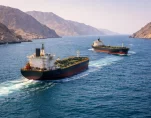
Arabian Post Staff -Dubai Commercial movement through the Strait of Hormuz is showing only the faintest signs of life, with a handful of vessels crossing under tightly controlled conditions as Iran continues to hold effective power over who may pass and when. Tracking data compiled by Bloomberg showed average weekly two-way transits rising to seven vessels through Monday from five a week earlier, a small increase that […]

Arabian Post Staff -Dubai Emirates NBD has closed $2.25 billion in five-year financing, completing one of the Gulf’s largest syndicated borrowings at a time when war-linked market turbulence has unsettled regional assets, shipping routes and funding sentiment. The package combines a $1.75 billion sustainability-linked syndicated term loan and a $500 million Club Commodity Murabaha term facility arranged through Emirates Islamic. The scale of demand appears to be […]

Pressure on the rupee is poised to intensify after the Reserve Bank of India ordered banks to sharply cut net open rupee positions in the onshore market, forcing a scramble to unwind large arbitrage trades that had linked domestic and offshore pricing. Bankers have warned that the adjustment could amplify volatility, strain treasury books and unsettle corporate hedging activity even as the central bank seeks to restore […]

Advertisements

Apple has added a new safeguard in macOS Tahoe 26.4 that warns users before potentially dangerous text is pasted into Terminal, a move aimed at disrupting ClickFix-style scams that trick people into infecting their own devices. The feature appears in the latest macOS release even though Apple’s public feature summary for version 26.4 does not spell it out directly, while the company’s broader security pages confirm 26.4 […]

Arabian Post Staff -Dubai Gold edged higher on Tuesday but remained on course for its sharpest monthly decline since October 2008, as investors weighed a powerful mix of delayed hopes for US rate cuts, a surge in energy prices linked to the Iran war and a stronger dollar through much of March. Spot gold was up about 3.2% at $4,652.31 an ounce by Tuesday, yet still showed […]

Nigeria has forfeited a potential revenue surge from elevated crude prices during the Iran war because it could not raise production enough to match the market opportunity, according to Dele Oye, chairman of the Alliance for Economic Research and Ethics, who said the lost upside could amount to about $20.2 billion a year. He argued that Brent’s climb far above Nigeria’s budget benchmark should have delivered a […]

Arabian Post Staff -Dubai   Emirates NBD Group has closed $2.25 billion in long-term financing, in a deal that ranks among the largest syndicated borrowings in the Gulf and underscores the lender’s ability to attract offshore funding even as markets navigate geopolitical tension and higher funding costs. The package comprises a $1.75 billion five-year sustainability-linked syndicated term loan and a $500 million five-year club commodity murabaha facility. […]

Vessel traffic through the Strait of Hormuz has begun to edge higher for ships deemed acceptable by Tehran, but the Gulf’s main maritime chokepoint remains tightly controlled and effectively shut to most commercial operators without Iranian clearance. Tracking data cited by Bloomberg showed a gentle rise in signal-on transits, while Reuters and other maritime reports indicate that only a narrow stream of ships linked to countries Iran […]

South Africa will cut a fuel tax for April to soften the hit from surging global oil prices, as Finance Minister Enoch Godongwana moves to contain a steep rise in petrol and diesel costs that threatens to feed inflation across Africa’s most industrialised economy. The step comes as oil markets remain under strain from conflict-linked supply disruption in the Middle East and as the rand has weakened […]

Google has moved a set of anti-ransomware tools for Drive from beta into full global release, adding a stronger layer of detection and bulk file restoration for organisations using Drive for desktop. The rollout, announced on 31 March, turns ransomware detection on by default for Workspace users, sends alerts to administrators when suspicious encryption activity is detected, and enables file restoration by default to help recover from […]

Arabian Post Staff -Dubai Oil prices eased in Asian trading on Tuesday after giving up earlier gains, as traders weighed a report that U. S. President Donald Trump had told aides he was willing to end the war with Iran even if the Strait of Hormuz remained largely closed for now, softening some of the market’s immediate fear of a broader supply shock. Brent crude for May […]

By Nantoo Banerjee The central excise duty cut on petrol and diesel oil to help petro-fuel producers and marketeers partly cover their losses on account of the rising crude oil import prices is an internal government matter. It is not meant to have any impact on retail prices which continue to be very high and […]

The article Petrol, Diesel Levies Need Drastic Cuts For Inflation Control, Economic Growth appeared first on Latest India news, analysis and reports on Newspack by India Press Agency).

Japan’s investors are being pushed back towards overseas yield trades as the war involving Iran unsettles the country’s traditional refuge assets, weakens the yen and lifts the cost of imported energy. What had looked like a steadier domestic backdrop at the start of 2026 has been disrupted by a surge in oil prices, renewed pressure on the currency and a sharp reassessment of where Japanese savers and […]

Oil is repricing fast. Markets aren’t pricing the consequences. Brent crude has surged more than 55% in March to around $115 a barrel, one of the sharpest monthly moves on record, as conflict involving the US, Israel and Iran intensifies and threats to energy infrastructure escalate. Yet across equities, bonds and currencies, positioning still reflects the belief that this is temporary and reversible. Markets are underestimating what […]

Electronic interference that had scrambled vessel tracking across the Persian Gulf eased over the weekend, allowing ships stranded in the war-affected waterway to show positions closer to their true locations and giving operators a clearer picture of navigation risks in one of the world’s most important energy corridors. Maritime security guidance issued on 29 March said GNSS, GPS and AIS disruption had moderated over the previous 24 […]

South Korea is weighing whether to extend car-use restrictions beyond the public sector as oil prices climb sharply, a step that would amount to the country’s first nationwide driving curbs since the 1991 Gulf War if it is applied broadly to the public. Finance Minister Koo Yun-cheol said wider restrictions could come into play if crude prices rise into a $120-$130 a barrel range, up from about $100-$110 now, as Seoul tries to contain fuel demand and cushion the economic shock from turmoil in the Middle East.

The discussion marks an escalation from measures already in force. Public institutions are operating under a five-day vehicle rotation system, while large companies including Samsung Electronics and SK Group have begun urging staff to cut private car use, reduce parking demand and adopt other energy-saving practices. Officials have also left open the possibility of further fuel-tax relief to soften the burden on households and businesses, though no final decision has been announced on compulsory curbs for private motorists.

At the centre of Seoul’s concern is its exposure to imported energy. About 70% of South Korea’s oil imports come from the Middle East, leaving the country highly sensitive to any disruption in supplies or shipping routes. The government raised its crude oil supply disruption alert to Level 2 on March 18 as tensions mounted, signalling a more serious official assessment of the risks facing one of Asia’s largest energy importers.

The external shock has been severe. Reuters reported that Brent crude climbed to nearly $115 a barrel over the weekend and above $116 on Monday, putting it on course for its biggest monthly jump on record, while US crude also surged past $100. The rally has been driven by a widening conflict linked to Iran and growing anxiety over disruptions around the Strait of Hormuz, a vital artery for global oil flows. That backdrop has sharpened pressure on Asian economies that rely heavily on imported fuel, with South Korea among the most exposed.

For policymakers in Seoul, the issue is no longer only about fuel bills. Higher oil prices threaten to spill into inflation, transport costs, industrial input prices and consumer sentiment. A Reuters poll published on Monday projected that South Korea’s imports rose 18% in March, the fastest pace since September 2022, largely because of elevated oil prices, even as exports remained buoyant on strong semiconductor demand. That split picture captures the dilemma facing the government: trade performance is being helped by chips and artificial intelligence-linked demand, but the economy’s dependence on imported energy is pushing up costs and widening vulnerability.

President Lee Jae Myung has responded by urging a nationwide energy-saving drive, while Energy Minister Kim Sung-whan has pushed demand management and warned against panic behaviour. The government has promoted 12 power-saving practices, from shorter showers to shifting electricity use away from peak hours, and has also moved to restart several nuclear reactors, loosen coal plant restrictions and expand renewable energy to offset pressure on gas imports. The mix underlines how Seoul is trying to balance short-term crisis management with longer-term energy security, even as those goals can pull in different directions.

That tension is visible in the broader regional response. Across Asia, governments are looking again at emergency stock releases, fuel-saving directives and, in some cases, greater coal use to bridge supply gaps. Analysts say such measures may shield economies from the immediate shock, but they also expose how quickly climate and transition goals can be tested when energy security comes under strain. In South Korea’s case, the administration’s public emphasis on renewables sits alongside plans to lean harder on nuclear and coal generation if needed.

The market fallout has already been visible in financial assets. South Korean equities were hit as investors fled Asian markets on fears of a prolonged oil shock, though some analysts argue the sell-off has reflected panic rather than a collapse in fundamentals. Technology and industrial names remain central to the country’s earnings outlook, but energy-intensive sectors face a tougher operating environment if high crude prices persist or if physical shortages emerge.


Omniyat Holdings has said it has enough liquidity to handle its debt obligations after Fitch placed the Dubai ultra-luxury developer on Rating Watch Negative, citing geopolitical risk linked to the Iran war and the potential for weaker buyer demand in Dubai and across the Gulf. The company said it held more than AED 5.3 billion in cash, cash equivalents and other financial assets at the end of […]

Arabian Post Staff -Dubai Donald Trump has triggered fresh controversy after using crude language about Saudi Crown Prince Mohammed bin Salman at the Future Investment Initiative Institute summit in Miami Beach, telling the audience the Saudi leader had not expected to “be kissing my a” and adding that “now he has to be nice to me.” The remarks, delivered on 27 March at the Saudi-backed forum, drew […]

Arabian Post Staff -Dubai Nabil Fahmy is set to become the next secretary-general of the Arab League after Arab foreign ministers unanimously backed Egypt’s nominee in a virtual meeting on 29 March, clearing the way for the veteran diplomat to take over in July when Ahmed Aboul Gheit’s second term ends. The ministers’ decision still requires formal endorsement at the next Arab summit in Saudi Arabia, but […]

India has cut special excise duties on petrol and diesel after a sharp rise in global crude prices, seeking to shield consumers from a broader inflation shock as the Iran war and disruption around the Strait of Hormuz continue to unsettle energy markets. A government order issued late on Thursday reduced the special excise duty on petrol to Rs 3 a litre from Rs 13, while the levy on diesel was removed entirely from Rs 10 a litre. At the same time, New Delhi imposed fresh windfall taxes on diesel and aviation turbine fuel exports to recover part of the revenue loss and manage the fiscal hit.

The move underlines the pressure facing policymakers as oil prices remain volatile and the rupee weakens, raising the cost of imports for one of the world’s biggest crude buyers. Brent crude climbed above $112 a barrel on Friday, extending a rally driven by doubts over any near-term ceasefire and persistent fears that supply disruptions in the Gulf could deepen. Traders and analysts have said the risk premium now reflects not only lost barrels but also the strategic importance of Hormuz, through which a large share of global oil and liquefied natural gas flows.

For India, the tax cut is as much about inflation management as political optics. Retail prices at state-run fuel retailers have been largely held steady even as global crude costs have climbed, forcing public-sector oil marketing companies to absorb losses on every litre sold. Reuters reported that those losses were running at about Rs 24 a litre on petrol and Rs 30 on diesel at the time of the duty cut, a burden that had begun to raise concerns about the financial strain on the country’s dominant fuel retailers. By lowering excise duties, the government creates room for those companies to keep pump prices stable without taking the full blow on their balance sheets.

That relief, however, comes with a cost. The excise reduction is expected to trim government revenue by roughly Rs 70 billion every fortnight, with the net impact estimated at about Rs 55 billion after accounting for the new export levies on diesel and jet fuel. Those numbers matter because New Delhi is already balancing slower growth risks, higher import costs and sensitivity in bond markets. India’s 10-year government bond yield rose as investors weighed the inflationary impact of oil and the possibility that fiscal targets may come under pressure if energy turbulence persists.

Currency markets have been sending a similar warning. The rupee slipped beyond 94 to the US dollar, marking a record low and capping its weakest fiscal-year performance in more than a decade. Higher oil prices have compounded external pressures by widening import costs and fuelling worries over inflation, while signs of reduced support from the Reserve Bank of India have added to volatility in both the currency and government debt markets. The combination of a softer rupee and expensive crude intensifies the urgency for measures that can prevent fuel inflation from feeding into transport, food and manufacturing costs.

The government has paired the tax changes with broader supply assurances. Officials have said retail fuel prices will remain stable and that supplies of fuel, fertiliser and coal are adequate. India has also increased the availability of liquefied petroleum gas for industrial use, an indication that authorities are trying to prevent energy stress from spilling into factories and power demand. That broader messaging is aimed at containing panic in a market already on edge over whether the Middle East conflict could trigger a more prolonged energy shock.

The burden of holding down prices has not been distributed evenly across the sector. State-run retailers, which control more than 90 per cent of the country’s fuel stations, have largely refrained from raising pump prices, while private players have begun adjusting. Nayara Energy, for example, increased gasoline and gasoil prices this week, citing the combined impact of a weaker rupee and surging global crude prices. The divergence highlights the structural challenge for the government: keeping inflation contained without unduly damaging the finances of state-backed refiners and marketers.

VISHNU RAJA
RYO YAMADA
HITORI GOTOH
IKUYO KITA