News related to
Iran

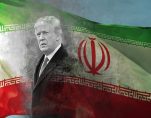
Donald Trump has urged Saudi Arabia and Qatar to move first in a renewed push to expand the Abraham Accords, linking wider recognition of Israel to US efforts to secure a deal with Iran and recast the Middle East diplomatic order. The US president said countries involved in the Iran negotiations should join the normalisation framework, naming Saudi Arabia, Qatar, Pakistan, Egypt, Turkey and Jordan among those […]

By Nitya Chakraborty With the U.S. President Donald Trump himself downgrading the status of the four nation Quadrilateral Security Dialogue (QUAD), why is Indian government spending so much of its precious time on QUAD meetings? It is sheer wastage of time for the Prime Minister Narendra Modi as also Foreign Minister Dr. S Jaishankar. US […]

The article Trump Has Downgraded Status Of QUAD-India Should Not Waste Time On It appeared first on Latest India news, analysis and reports on Newspack by India Press Agency).

Rupee trading came under renewed pressure on Tuesday as the currency slipped to 95.43 against the US dollar in early deals, weighed down by firm crude oil prices, month-end dollar demand and fading optimism over a quick easing of tensions in the Middle East.

At the interbank foreign exchange market, the currency opened weaker than Monday’s close of 95.26, losing 17 paise as importers and oil companies stepped up dollar purchases. The fall interrupted a brief recovery in the previous session, when the rupee had gained ground after suspected Reserve Bank of India intervention and softer crude prices lifted sentiment.

Market participants said the rupee’s early weakness reflected a broader risk-off mood across Asia. Oil-sensitive currencies faced selling pressure as traders reassessed the likelihood of a quick diplomatic settlement between Washington and Tehran. The rupee, already vulnerable because of the country’s heavy dependence on imported crude, moved in line with regional peers as energy prices rebounded and the dollar drew support from safe-haven demand.

Brent crude moved sharply higher towards the $100-a-barrel mark after fresh military action involving Iran raised doubts over the durability of peace efforts. Higher oil prices typically increase demand for dollars from refiners and importers, widening pressure on the trade balance and adding to inflation risks. For a country that imports nearly nine-tenths of its crude requirement, each sustained rise in oil prices feeds directly into currency, bond and equity market expectations.

The Reserve Bank of India is expected to remain active in the foreign exchange market to prevent disorderly moves rather than defend a fixed level. State-run banks were seen selling dollars in earlier sessions, a pattern traders often associate with central bank intervention. The central bank has used spot and forward market tools through periods of sharp volatility, drawing on its foreign exchange reserves while seeking to preserve market stability.

Foreign exchange reserves remain substantial by global standards, though they have eased from their February peak amid currency management and valuation changes. The buffer gives policymakers room to smooth volatility, but it does not fully insulate the rupee from external shocks when oil prices, global yields and geopolitical risks move in the same direction.

The rupee’s trajectory now hinges on three immediate variables: the price of crude, the strength of the dollar and the credibility of diplomatic efforts in the Middle East. A sustained climb in oil would complicate the inflation outlook and increase pressure on the current account. A softer dollar or clearer signs of de-escalation could help the rupee recover some lost ground, particularly if portfolio flows stabilise.

Bond markets also reflected caution. The benchmark 10-year yield edged higher as traders priced in the risk that imported inflation could narrow the central bank’s room for policy easing. Money-market rates showed a firmer bias, with swap markets reassessing the path of interest rates ahead of the next monetary policy review.

Equity markets faced a parallel adjustment, with energy-sensitive sectors, import-heavy companies and businesses exposed to foreign currency costs attracting closer scrutiny. Exporters, especially technology and pharmaceutical firms, may gain a translation benefit from a weaker rupee, but broader market sentiment remains tied to oil, capital flows and global risk appetite.

The pressure on the currency comes at a delicate moment for policymakers. Retail inflation has moderated from earlier peaks, but fuel costs and a weaker exchange rate can quickly alter expectations if the move persists. A weaker rupee raises the landed cost of crude, fertilisers, electronics and other imported goods, while also increasing the rupee value of external debt servicing for firms without adequate hedges.

Companies with dollar liabilities are likely to increase hedging activity if volatility persists. Importers generally prefer to cover near-term exposures when oil and the dollar rise together, while exporters may stagger dollar sales in expectation of better rates. This tug of war often intensifies near month-end, when corporate demand for foreign currency rises.

Mexico will host Iran’s national football team during the 2026 World Cup, with the squad expected to sleep in Tijuana and cross into the United States only on match days after Washington declined to accommodate the team for a tournament-long stay. President Claudia Sheinbaum said her government had agreed to the arrangement after football authorities sought Mexico’s help, making clear that Mexico saw no reason to deny […]

Iran-linked hackers have expanded cyber-espionage operations against aviation and software organisations in the United States, Europe and the Middle East, using fake recruitment pitches and search-engine manipulation to deliver malware capable of long-term surveillance and data theft. The campaign has been tied to Nimbus Manticore, also tracked as UNC1549, Screening Serpens, Smoke Sandstorm and Iranian Dream Job. The group is assessed to be aligned with Iran’s Islamic […]

Washington has moved to fold Middle East normalisation into its Iran diplomacy, with President Donald Trump urging key Muslim-majority states to join the Abraham Accords as negotiations with Tehran enter a delicate phase. Trump used a Truth Social post to say talks with the Islamic Republic of Iran were “proceeding nicely”, while warning that failure to reach what he called a “great deal” could send the parties […]

Arabian Post Staff -Dubai Fragile ceasefire efforts in Doha are facing a sharper test after United States forces struck military targets in southern Iran and Israel signalled expanded operations against Hizbollah in Lebanon, injecting fresh uncertainty into negotiations aimed at ending a wider West Asia conflict. US forces hit Iranian missile launch sites and boats suspected of laying mines near the Strait of Hormuz, describing the action […]

Advertisements

By Nantoo Banerjee India’s economy is navigating severe stress. The impact of Persian Gulf war, high cost of imported crude oil, frequent upward adjustment of retail oil prices, rising commodity rates, soaring transportation costs, weakening Rupee and continuous exit of foreign portfolio investors (FPI) are posing a big challenge to the economy. The government appears […]

The article Rising Prices, Falling Rupee And FPI Exit Pose Big Challenge To Economy appeared first on Latest India news, analysis and reports on Newspack by India Press Agency).

Gold rose more than 1 per cent on Monday as hopes of a possible US-Iran agreement pushed oil prices lower, weakened the dollar and reshaped inflation expectations across commodity and currency markets. Spot bullion climbed to about $4,559 an ounce, while US gold futures traded near $4,560, extending gains as investors assessed signals that Washington and Tehran had moved closer to a framework that could ease pressure […]

Arabian Post Staff -Dubai Abu Dhabi National Oil Co is moving oil, gas and refined fuel cargoes out of the Gulf through the Strait of Hormuz using ships linked to its own logistics network, keeping a limited export channel open while one of the world’s most important energy corridors remains under severe strain. Ship-tracking data indicates that vessels associated with ADNOC Logistics & Services have crossed or […]

Gold prices advanced by more than 1 per cent on Monday as a weaker dollar and a sharp fall in crude oil prices strengthened demand for bullion, with investors reassessing inflation risks and the likely course of US monetary policy amid signs of progress in Washington’s talks with Tehran. Spot gold traded near $4,560 an ounce, extending gains after the dollar slipped against major currencies and oil […]

UAE Minister for Foreign Trade Dr Thani bin Ahmed Al Zeyoudi used a high-level GLOBSEC Forum 2026 panel in Prague to present the country’s trade-continuity strategy as the Iran war continues to disrupt Gulf shipping, energy flows and global supply chains. Speaking during “The Ripple Effect: How the Iran War is Shaping Global Economies and Politics”, Al Zeyoudi told senior policymakers, business executives and international officials that […]

Matein Khalid US President Donald Trump’s recent state visit to China has done little to end the stalemate in the Strait of Hormuz. If anything, Iran appears to have been emboldened enough to escalate Gulf tensions through drone strikes near the Barakah Nuclear Energy Plant in Abu Dhabi and rocket attacks targeting sites in Saudi Arabia. Brent crude trading at about $110 a barrel has coincided with a brutal sell-off […]

President Donald Trump said a proposed agreement with Iran to reopen the Strait of Hormuz has been “largely negotiated”, raising hopes of a diplomatic breakthrough after months of conflict disrupted one of the world’s most important energy routes. Final terms are still being discussed among Washington, Tehran and regional governments, with an announcement expected once the remaining points are settled. Trump said the framework followed calls with […]

A loaded liquefied natural gas tanker has crossed out of the Strait of Hormuz bound for India, marking the country’s first confirmed LNG shipment from the Persian Gulf since the Iran war disrupted one of the world’s most important energy corridors.

The Al Hamra, operated by ADNOC Logistics & Services, was tracked leaving the Gulf with a cargo headed towards western India after weeks of restricted tanker movements through the narrow waterway. The vessel had stopped transmitting its position around April 19, when it was empty and near the eastern entrance of Hormuz, before reappearing with indications that it had loaded and moved through the passage.

The shipment is significant because it points to a cautious reopening of Gulf energy trade for selected cargoes, even as shipping remains constrained by security checks, insurance costs and uncertainty over whether the waterway can return to normal operations. The Strait of Hormuz links the Persian Gulf with the Gulf of Oman and the Arabian Sea, making it the most sensitive maritime route for Gulf oil and gas exports to Asia.

For India, the transit offers limited relief after weeks of pressure on energy logistics. The country relies heavily on imported LNG to supply fertiliser plants, city gas networks, refineries, power producers and industrial users. Western India, where several import terminals are located, is a critical landing point for Gulf cargoes because of its proximity to major gas-consuming states and pipeline networks.

The war that began on February 28 led to a sharp fall in tanker traffic through Hormuz, leaving ships idle inside the Gulf and forcing buyers to consider alternative cargoes from outside the region. LNG, crude oil and liquefied petroleum gas flows were all affected, with importers seeking supplies from the United States, Africa and Southeast Asia where available. The disruption came at a sensitive time for Asian buyers, with summer demand rising and spot cargoes becoming more costly.

Around one-fifth of global LNG trade passes through Hormuz in normal conditions. Qatar is the dominant LNG exporter through the route, while the UAE also ships cargoes from its Das Island facility. Asia receives the overwhelming share of Hormuz-linked LNG, with China, India and South Korea among the leading destinations. Any sustained restriction therefore has an immediate effect on Asian gas pricing and supply planning.

India’s LNG import system has expanded over the past decade, but dependence on seaborne supply remains a strategic vulnerability. The country has operational terminals at Dahej, Hazira, Dabhol, Kochi, Ennore, Mundra and Dhamra, with combined capacity of nearly 48 million tonnes a year. Dahej in Gujarat remains the most important facility, serving fertiliser units, refineries, power plants and city gas distributors across northern and western markets.

The Al Hamra movement follows earlier signs that limited LNG traffic had resumed through the chokepoint. The Mubaraz, another LNG tanker linked to the UAE, crossed out of the Gulf in late April after weeks of inactivity, becoming the first loaded LNG shipment to exit Hormuz since the conflict began. A second ADNOC-linked LNG tanker followed in early May, showing that Gulf suppliers were testing the scope for controlled departures.

Shipping executives and energy traders remain cautious, however. Vessel owners are facing higher war-risk premiums, tighter routing decisions and uncertainty over whether transponders should remain active in conflict-sensitive waters. Some tankers have switched off tracking systems for security reasons, making it harder for buyers and market participants to confirm loading and transit details in real time.

India has also been dealing with pressure in LPG supply, a politically sensitive segment because of household cooking fuel demand. Several LPG cargoes linked to India were stranded or delayed after the Hormuz disruption, prompting authorities to prioritise the return of ships already inside the Gulf before sending more vessels into the area. That approach reflects a broader effort to balance energy security with crew safety and insurance exposure.


Arabian Post Staff -Dubai President Donald Trump has said a peace agreement with Iran is close to completion, raising expectations of a diplomatic breakthrough that could reopen the Strait of Hormuz after months of conflict disrupted one of the world’s most important energy corridors. Trump wrote on Saturday that an agreement had been “largely negotiated” but remained subject to finalisation between the United States, Iran and other […]

Hackers are turning Middle East telecoms and hosting networks into a major command-and-control layer, exposing a regional cyber risk that now extends beyond compromised devices to the infrastructure patterns that sustain attacks. A three-month mapping of malicious activity between 1 February and 1 May identified more than 1,350 active C2 servers across 98 infrastructure providers in 14 countries, including Saudi Arabia, the UAE, Turkey, Israel, Iraq, Iran, […]

Full oil shipments through the Strait of Hormuz are not expected to return before the first or second quarter of 2027, even if the Middle East conflict were to end immediately, ADNOC chief Sultan Ahmed Al Jaber has said, signalling that the energy shock from the Iran war could outlast any diplomatic settlement by many months. The warning from the head of the Abu Dhabi National Oil […]

Britain’s jobs market weakened in April as employers cut back on permanent recruitment while turning to temporary staff to manage uncertainty, rising business costs and disruption linked to the Iran conflict. Permanent staff placements fell at the sharpest pace since January, reversing part of the improvement seen earlier in the year. The permanent placements index dropped to 47.5 in April from 49.2 in March, staying below the […]

UAE economic growth is expected to slip into a mild contraction in 2026 as the Iran war disrupts oil exports through the Strait of Hormuz, before staging a strong recovery in 2027 on higher crude and gas production, major energy projects and continued strength in non-oil sectors. The projected setback marks a sharp reversal for the Gulf’s second-largest economy, which has spent the past decade reducing its […]

France will add €710 million in targeted aid to help households and businesses absorb higher energy costs, as the war in Iran keeps fuel prices elevated and tests the government’s fiscal restraint. Budget Minister David Amiel said the new measures would lift total support for consumers and affected sectors to nearly €1.2 billion, while the government seeks to avoid broad tax cuts that would deepen pressure on […]

By Nitya Chakraborty The joint declaration made by Chinese President Xi Jinping and the visiting Russian President Vladimir Putin after their summit in Beijing on May 20 has major ramifications on the global geopolitics in the context of the present unilateral actions of the U.S. President Donald Trump including the launching of war against Iran […]

The article China-Russia Joint Declaration From Beijing Summit Puts More Pressure On Trump appeared first on Latest India news, analysis and reports on Newspack by India Press Agency).

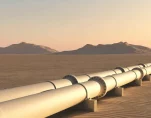
Arabian Post Staff -Dubai Abu Dhabi’s push to build a new crude pipeline bypassing the Strait of Hormuz has reached the halfway mark, with ADNOC chief executive Sultan Al Jaber saying the project is being accelerated towards a 2027 launch as regional tensions continue to expose the vulnerability of Gulf energy routes. Al Jaber said the pipeline, intended to expand export capacity through Fujairah on the Gulf […]

British Airways has pushed back the return of flights to Dubai, Doha and Tel Aviv to August 1, extending disruption on three strategically important Middle East routes as airlines continue to adjust schedules around security risks, airspace limits and uneven demand across the region. The one-month delay, shown on the carrier’s booking systems and reflected in its travel updates, affects passengers who had expected services to resume […]

VISHNU RAJA
RYO YAMADA
HITORI GOTOH
IKUYO KITA