

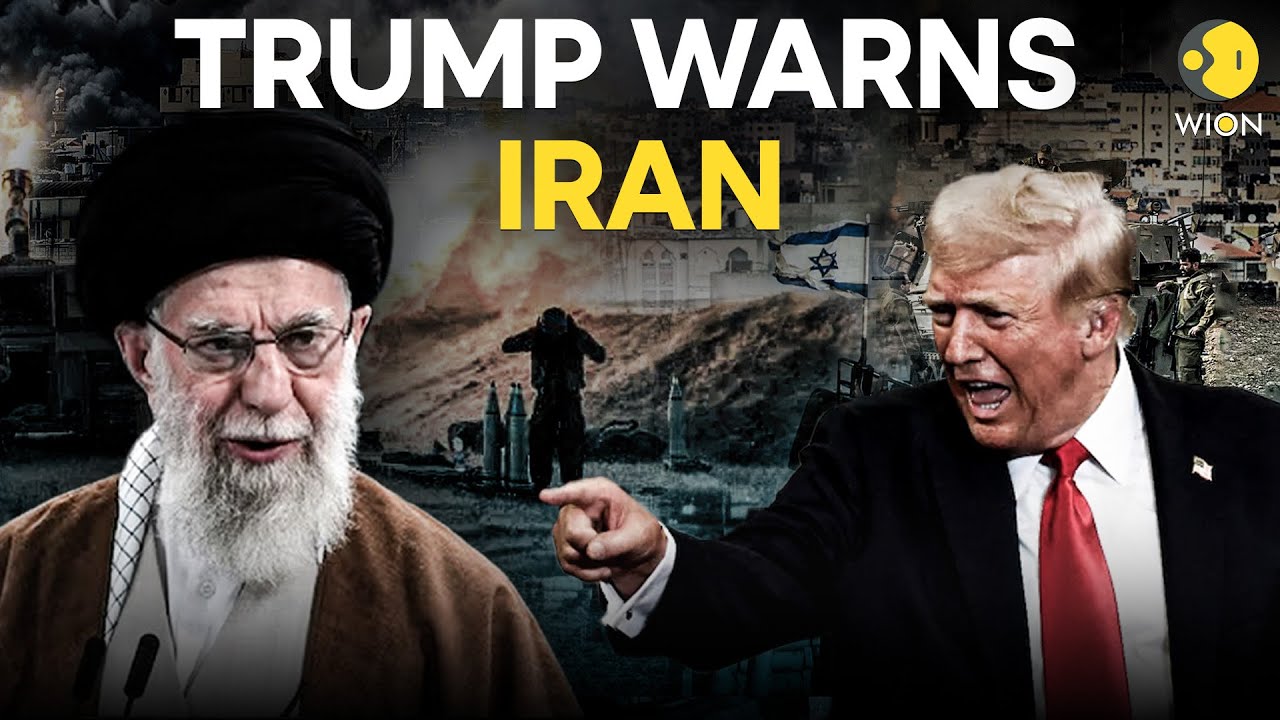
Donald Trump issued a stark warning to Iran, declaring the United States was “locked and loaded” should Tehran threaten American interests, as deadly protests inside the country intensified pressure on its leadership and sharpened an already volatile regional standoff.
The remarks, delivered during a briefing in Washington, followed days of unrest across several Iranian cities after demonstrations turned violent, leaving dozens dead and hundreds injured, according to official figures and independent monitors. The protests, initially driven by economic grievances and political frustrations, have evolved into a broader challenge to Iran’s ruling establishment, prompting a sweeping security response and sharp rhetoric from senior officials.
Trump said any attack on US personnel or facilities in the Middle East would be met with overwhelming force, underscoring that Washington was prepared to defend its troops and allies. While stopping short of announcing new military action, the language marked one of the most explicit warnings of his presidency towards Tehran and coincided with heightened US military readiness in the Gulf region.
Iran’s leadership responded angrily, rejecting what it described as interference in its internal affairs. Senior officials warned that US forces stationed in neighbouring countries would be legitimate targets if Washington crossed what they called Iran’s red lines. State media framed Trump’s comments as an attempt to exploit domestic unrest, while emphasising that Iran retained the capability to retaliate across multiple theatres.
The confrontation comes against a backdrop of years of escalating tension between the two countries, including US sanctions aimed at curbing Iran’s nuclear and regional ambitions, and Iran’s support for allied groups across the Middle East. Analysts say the latest exchange raises the risk of miscalculation, particularly as unrest inside Iran places additional strain on decision-making in Tehran.
Protests have flared intermittently over the past week in major urban centres, fuelled by high inflation, unemployment and longstanding restrictions on political expression. Security forces have deployed in large numbers, using force to disperse crowds, while authorities have restricted internet access in several provinces. Iranian officials insist the demonstrations are being manipulated by foreign powers, a claim repeatedly denied by Washington.
Trump’s warning was welcomed by some regional allies who have long urged a firmer US stance on Iran. Officials in several Gulf states privately expressed concern about the protests spilling across borders or triggering retaliation by Iran-backed groups. At the same time, European governments urged restraint, warning that inflammatory rhetoric could inflame an already fragile situation and undermine diplomatic efforts to contain the crisis.
Within the United States, reactions fell along familiar political lines. Supporters of the administration argued that clear deterrent messaging was necessary to prevent attacks on US forces and reassure allies. Critics countered that such language risked drawing Washington into another Middle Eastern conflict at a moment when diplomacy and de-escalation were urgently needed.
Military experts noted that US forces in the region are on heightened alert, with naval assets in the Gulf and air bases across the Middle East capable of rapid response. However, they cautioned that Iran possesses a range of asymmetric options, from missile strikes to proxy attacks, which could quickly broaden any confrontation. The presence of thousands of US troops in Iraq, Syria and the Gulf adds to the complexity of the standoff.
Inside Iran, the government faces the dual challenge of restoring order while projecting strength abroad. Hardline factions have pressed for a tough response to US threats, arguing that any sign of weakness could embolden protesters and foreign adversaries alike. More pragmatic voices have urged caution, mindful of the economic toll of sanctions and the risks of open conflict.
Follow Arabian Post
Select Arabian Post as your preferred source on Google and MSN News for trusted business news and Arab politics and updates.




