By Dr. Gyan Pathak Supreme Court of India on May 27, 2026 upheld the legality of the Special Intensive Revision (SIR) of the electoral roll in Bihar and elsewhere and emphasized that this exercise is constitutionally connected to “free and fair polls”. The judgment strongly underlined the purity and accuracy of rolls giving priority to […]
Jazeera Airways has launched a limited Eid and summer fare campaign, offering one-way tickets from KD15, or about $48.75, as Kuwait’s low-cost carrier moves to capture holiday demand across leisure, family and business routes. Bookings under the Special Eid and beyond sale are open until 31 May 2026, with travel valid from 27 May to 30 September 2026. The campaign covers selected destinations on the airline’s network […]
Qualcomm has secured a major opening in artificial intelligence infrastructure through a deal to supply ByteDance with chips for AI data centres, giving the San Diego-based group a high-profile customer as it pushes beyond its traditional smartphone processor business. The agreement covers application-specific integrated circuits, or ASICs, designed to support AI workloads in ByteDance’s expanding data-centre operations. The chips are expected to be used for AI agent […]
HONG KONG SAR – Media OutReach Newswire – 26 May 2026 – At 11.08pm on May 24, Dr Lai Ka-ying made history by becoming the first Hong Kong astronaut to blast off into space aboard the Shenzhou-23 manned spaceship. This momentous occasion also launched a new era for Hong Kong’s development of innovation and technology (I&T) as well as the city’s participation in national development under China’s 15th Five-Year Plan.
Congratulating Dr Lai on her achievement, John Lee, Chief Executive of the Hong Kong Special Administrative Region (HKSAR), said that the HKSAR can “transform from a ‘supporter’ of the country’s great aerospace endeavours into an ‘executor’ “.
Dr Lai Ka-ying (left) made history by becoming the first Hong Kong astronaut to blast off into space aboard the Shenzhou-23 manned spaceship.
“This not only demonstrates the HKSAR’s capability in contributing to the country’s development into an aerospace power, but also showcases how Hong Kong could better integrate into and serve the overall national development,” Mr Lee said.
“This mission is of great significance, as it is not only the first manned spaceflight mission during the 15th Five-Year Plan period, but also the first time for a payload expert from the HKSAR to participate in it.”
The Shenzhou-23 crew will conduct on-orbit rotation with the Shenzhou-21 crew. The crew, including Dr Lai, will stay in the space station and conduct multiple experiments and applications in various fields such as scientific applications.
The Secretary for Innovation, Technology and Industry of the HKSAR Government, Professor Sun Dong, led a delegation to the Jiuquan Satellite Launch Center to witness this historic moment. Members of the delegation included other government representatives, I&T experts, youths and students.
“I truly believe this is a great demonstration of Hong Kong integrating into and serving the overall national development through concrete actions, while contributing our strength in I&T,” Professor Sun said.
” ‘Science and technology is primary productive force, talent is primary resource, and innovation is primary driver of growth.’ The HKSAR Government will continue to drive the development of I&T, accelerate the establishment of an international I&T centre, and make greater contributions to building our nation into a strong power in science, technology, and aerospace.”
Commissioner for Innovation and Technology of the HKSAR Government, Mr Ivan Lee, said that the Government had been providing funding support for universities and research institutions in conducting aerospace technology-related projects through the Innovation and Technology Fund.
“In 2024, we launched a special call for funding applications, inviting universities to submit project proposals related to aerospace technology. Following a selection process, we supported six projects. Among them was the Multi‑Spectral Imaging Carbon Observatory (MUSICO) developed by a team from the Hong Kong University of Science and Technology,” he said.
On the Tiangong Space Station, Dr Lai will conduct experiments including operating the MUSICO — the world’s first lightweight, high-resolution synergistic observatory for carbon dioxide and methane emission point sources.
The Long March 2F Y23 carrier rocket carrying the Shenzhou-23 manned spaceship launched successfully at 11.08pm on May 24 at the Jiuquan Satellite Launch Center.
Born and raised in Hong Kong, Dr Lai is a Superintendent of the Hong Kong Police Force. In the recruitment exercise of China’s fourth batch of preparatory astronauts launched in 2022, she was successfully selected as a payload expert and was deployed to the China Astronaut Research and Training Center for training.
Before embarking on the historic spaceflight, Dr Lai expressed hope that it would inspire more Hong Kong youths to devote themselves to the field of I&T, thereby contributing to the country’s scientific and technological self-reliance and strength.
Hong Kong’s artificial intelligence market gained a locally built workplace automation product on Tuesday as Sentimento Technologies launched MonoClaw, a Mac-based AI secretary aimed at professionals and small and medium-sized businesses seeking tighter control over data, costs and daily administrative work.
The product, built around a personal AI assistant called Mona, is being positioned as a “local-first” alternative to cloud-based generative AI tools. Rather than routing most tasks through remote servers, MonoClaw runs large language models on a user’s own Apple hardware, with the company saying the approach is designed to keep sensitive memory, session history and credentials under the user’s direct control.
Sentimento Technologies Limited, the Hong Kong engineering studio behind the product, describes MonoClaw as the city’s first managed local AI runtime environment for professional users. Its launch comes as businesses move from experimental chatbot use towards agentic AI systems that can monitor workflows, draft responses, prepare reminders and act on user-approved instructions across multiple workplace channels.
Mona is designed to work as a digital secretary across email, WhatsApp, Telegram and calendar-linked tasks. The system can identify action items in messages, prepare reply drafts, generate morning briefings, track pending approvals, surface relevant documents before meetings and flag deadlines. The company says the product ships with 160 pre-bundled professional skills, covering both business administration and personal task management.
Billy Zuo, co-founder and chief executive of Sentimento Technologies, said the shift from manual software operation to autonomous AI execution marked a wider change in workplace computing. He said many businesses adopting cloud AI still face concerns over data leakage and unpredictable subscription costs, arguing that a local-first model gives companies greater control over sensitive information and spending.
MonoClaw’s pricing reflects that positioning. The permanent software licence is priced at HK$28,888, with an early-bird offer of HK$25,888. Users must also provide compatible Apple hardware, such as a Mac mini M4 or iMac M4, with the Mac mini starting at about HK$6,099. The company handles installation, workflow configuration and validation, with payment structured through a 40 per cent deposit and 60 per cent balance after final delivery and verification.
That model differs from many AI software products that rely on monthly subscriptions, metered token use or cloud-service plans. Sentimento is pitching MonoClaw as a capital investment rather than an operating expense, a message likely to appeal to smaller firms that want clearer budgeting and lower recurring software exposure. The trade-off is a higher upfront cost and a hardware dependency that may limit adoption among users who prefer device-neutral or fully cloud-hosted systems.
Privacy and auditability are central to the product’s commercial pitch. MonoClaw uses local contextual memory, local runtime profiles, secret redaction and explicit approval gates for higher-risk actions. Mona is designed to request confirmation through messaging channels before executing sensitive commands, data changes or external actions. That “human-in-the-loop” structure reflects a broader concern in the AI sector: agents that are powerful enough to automate work also need firm boundaries, logs and user control.
Hong Kong’s technology ecosystem has been moving in the same direction. AI agents, local foundation models and governed automation have become more prominent in policy, research and enterprise discussions, with public and academic initiatives focusing on authorisation, traceability and risk controls. MonoClaw enters this environment as a commercial product for office users rather than a research platform, but its design mirrors the same debate over whether AI agents can be useful without creating new privacy and operational risks.
The launch also underscores a changing competitive field for productivity software. Major global platforms are embedding AI assistants into office suites, browsers, customer-service tools and enterprise resource systems. MonoClaw’s advantage, if it gains traction, will lie in its local deployment, Hong Kong-specific setup and promise of cost predictability. Its challenge will be proving that a local Mac-based assistant can match the reliability, integrations and performance of cloud-backed rivals while remaining simple enough for non-technical users.
Energy and infrastructure concerns add another layer to the product’s appeal. Cloud AI workloads have intensified scrutiny of data-centre electricity demand, cooling requirements and network dependence. MonoClaw argues that routine tasks such as inbox triage, drafting, reminders and meeting preparation can be handled on Apple Silicon at desk level, reducing reliance on remote inference for every interaction. The system can still use filtered cloud subprocesses for selected workloads, meaning its privacy and cost benefits will depend on how users configure and supervise each workflow.
Microsoft’s early lead in AI-assisted software development is coming under pressure as outages at GitHub, leadership changes, security incidents and fast-moving rivals reshape one of the most important contests in enterprise technology. GitHub Copilot gave Microsoft a commanding start in the AI coding race. It was launched before many competitors had mature developer products, and it benefited from GitHub’s position at the centre of global software collaboration. […]
SINGAPORE – Media OutReach Newswire – 26 May 2026 – ASEAN Cableship Pte Ltd (ACPL) proudly marks its 40th anniversary this year under the theme “40 Years Leading Global Connectivity — Heritage, People, Fleet and Future.” For four decades, ACPL has been at the forefront of global connectivity, delivering submarine cable installation, repair and maintenance, as well as nearshore and onshore cable projects across Southeast Asia and the Indian Ocean with reliability and resilience.
To commemorate this milestone, ACPL hosted a gala dinner on 25th of May, where it unveiled its new corporate logo, symbolising the company’s evolution and forward-looking vision. The refreshed logo reflects ACPL’s continued commitment to innovation, operational excellence, and its role in enabling the future of global digital connectivity.
ACPL’s operational strength is anchored by its fleet of purpose-built cable vessels and supporting assets. Today, the company operates three cable ships and one barge — ASEAN Restorer, ASEAN Explorer, ASEAN Protector, and its latest addition, ASEAN Challenger, which was inaugurated in 2024. With the addition of this vessel, ACPL is better positioned to deliver timely and reliable cable operations, supporting the rapidly growing demand for submarine cable infrastructure driven by the continued expansion of global data traffic, cloud services, and digital connectivity.
“Our 40th anniversary is not only a celebration of our past, but a commitment to our future,” said Mr. Yue Meng Fai, Chief Executive Officer of ASEAN Cableship Pte Ltd. “The launch of our new corporate logo reflects our evolution as a company — one that is rooted in a strong heritage while continuously advancing towards the future. We will continue to safeguard our heritage of trusted operations, empower our people as a united team with resolute commitment to quality, enhance our fleet to remain reliable and innovative, and shape our future by leading the transformation of global connectivity in a responsible and sustainable way.”
The anniversary event brought together industry partners, stakeholders and clients to commemorate ACPL’s achievements and to mark the next chapter of its journey. Throughout the year, ACPL will commemorate this milestone through various initiatives that honour its legacy while reinforcing its dedication to responsible operations and long-term value creation.
With 40 years of trusted legacy, ACPL remains committed to connecting the world — resolutely, reliably and responsibly.
The issuer is solely responsible for the content of this announcement.
ASEAN Cableship Pte Ltd (ACPL)
Established in 1986, ASEAN Cableship Private Limited (ACPL) is a leading provider of submarine cable installation, repair, and maintenance services in the Asia Pacific region. Headquartered in Singapore, ACPL was formed by a consortium of six prominent telecommunications entities from the original ASEAN member countries, reflecting strong regional cooperation across Indonesia, Malaysia, the Philippines, Singapore, and Thailand. ACPL has built a strong reputation as a pioneer in submarine cable repair and maintenance, supporting critical telecommunications infrastructure under the Southeast Asia and Indian Ocean Cable Maintenance Agreement (SEAIOCMA), spanning from Djibouti to Guam and from Taiwan to Australia.
In addition to its repair and maintenance capabilities, ACPL is also an established submarine cable installer and integrator. Its services include main lay submarine cable installation and maintenance, shore-end landing and beach works, project management, offshore and diving support services, Universal Joint consumable supplies and jointing equipment, as well as engineering consultancy, site surveys, and desktop studies. ACPL remains committed to advancing submarine cable system installation and repair, delivering professional and reliable services to meet evolving customer needs and support a sustainable, connected future.
Jensen Huang’s arrival in Taipei ahead of Computex has put Nvidia’s next AI platform at the centre of a widening test for Taiwan’s semiconductor supply chain, as the company seeks more production capacity for Vera Rubin while riding record demand for data-centre chips.
Huang is expected to meet Taiwan Semiconductor Manufacturing Company chairman and chief executive C. C. Wei as Nvidia prepares a second-half production ramp for Vera Rubin, the next-generation platform that combines new Vera CPUs, Rubin GPUs, advanced memory and high-speed networking for rack-scale AI systems. The visit has drawn close attention because Nvidia’s product cycle is now tied more tightly than ever to Taiwan’s foundries, packaging houses, server assemblers and component suppliers.
Nvidia reported revenue of $81.6bn for the quarter ended April 26, up 85 per cent from a year earlier, with data-centre revenue reaching $75.2bn, up 92 per cent. The company also authorised an additional $80bn in share repurchases and raised its quarterly dividend to 25 cents a share from 1 cent, underscoring the scale of cash generation from the AI infrastructure boom.
Demand is being driven by cloud providers, AI model developers, enterprise customers and sovereign AI projects, all seeking clusters capable of training and running larger generative and agentic AI systems. Nvidia has described the buildout of “AI factories” as one of the largest infrastructure expansions in technology history, with its platform spanning chips, networking, systems software and reference designs for data centres.
Vera Rubin is expected to follow the Blackwell and Grace Blackwell generation, which is still being shipped in high volumes. That overlap is creating pressure across Taiwan’s supply chain because new capacity must support existing commitments while preparing for a platform with different requirements in advanced packaging, high-bandwidth memory integration, board assembly, cooling and system validation.
Huang has described Vera Rubin as potentially the biggest product ramp in Nvidia’s history and one of the largest technology manufacturing efforts Taiwan has handled. Industry estimates around the platform point to millions of parts across each system and the involvement of well over 100 Taiwan-based ecosystem partners, from chip fabrication and advanced packaging to printed circuit boards, power systems, connectors, thermal modules and final server integration.
TSMC remains central to the effort because Nvidia depends on its leading-edge process technology and advanced packaging capacity. The challenge is not limited to wafers. CoWoS and other packaging technologies have become strategic bottlenecks as AI accelerators require multiple logic dies, high-bandwidth memory stacks and dense interconnects. Any delay in packaging expansion can ripple through server production schedules, cloud deployment plans and Nvidia’s revenue timing.
Taiwan’s broader technology sector has become a critical artery for the global AI trade. TSMC, Foxconn, Quanta, Wistron, Wiwynn, Inventec and a dense network of specialist suppliers are competing to add capacity while dealing with constraints in land, power, water, skilled labour and equipment availability. The concentration gives Nvidia speed and engineering depth, but also exposes the company to geopolitical and operational risks.
China remains the clearest commercial setback. Huang has said US export controls have pushed Nvidia’s share of China’s advanced AI chip market to zero, a striking reversal for a company that once held a dominant position there. The restrictions have strengthened the opening for Huawei and other domestic suppliers, while leaving Nvidia dependent on whether Washington and Beijing allow compliant chips to be sold without triggering national-security objections.
That loss has not slowed Nvidia’s global momentum, but it has changed the composition of growth. Revenue is now increasingly concentrated in markets where hyperscale cloud companies, enterprise AI developers and governments are building large AI data centres outside China. For investors, the question is whether demand can keep absorbing each successive architecture at the scale implied by Nvidia’s guidance.
Nvidia forecast revenue of about $91bn for the current quarter, above market expectations, signalling that orders for AI infrastructure remain strong despite concerns about overcapacity, power shortages and the pace at which customers can monetise AI services. Operating expenses rose 49 per cent to $7.75bn, reflecting the growing cost of research, supply commitments and ecosystem investments needed to sustain the company’s lead.
Rugby Africa has appointed former NBA Africa executive Aïcha Diop as chief of staff to its president, Herbert Mensah, in a move aimed at strengthening the organisation’s governance, commercial execution and continental growth strategy. Diop will work directly with Mensah as Rugby Africa seeks to sharpen coordination across its 40 member unions, expand competitions, deepen partnerships and raise the profile of the sport in markets where participation […]
Tether is preparing to launch GEL₮, a blockchain-based stablecoin tied to the Georgian lari, with backing from Georgia’s government in a move aimed at putting the country’s currency on digital asset rails and strengthening its position as a regional fintech hub. The project, announced on Monday, would make GEL₮ a digital representation of the lari rather than a central bank digital currency. It is being positioned as […]
Arabian Post Staff -Dubai Ras Al Khaimah’s push to build a deeper corporate real estate market has gained momentum after major structural works were completed at RAK Central Square, the emirate’s first luxury Grade A office complex, keeping the project on track for a planned opening in the fourth quarter of 2027. The five-building development will provide 2.27 million sq ft of high-quality workspace, with large, efficient […]
SoftBank Group shares rose to a record high as investors priced in the prospect of major gains from potential public listings of OpenAI and SB Energy, reinforcing Masayoshi Son’s return to the centre of the global artificial intelligence trade.
The Tokyo-listed investment group has become one of the most closely watched proxies for AI demand after committing tens of billions of dollars to OpenAI and building exposure across chips, power infrastructure, robotics and data-centre supply chains. The latest rally extended a sharp two-session advance that added tens of billions of dollars to SoftBank’s market value, marking one of its strongest runs since the technology boom that first made the group a symbol of risk-taking capital.
Investor enthusiasm has been driven by two linked expectations. OpenAI is preparing for a confidential US initial public offering filing that could set up a listing as early as September, while SB Energy, a power and data-centre infrastructure company backed by SoftBank and OpenAI, has said it intends to confidentially file for a US IPO. Together, the developments have strengthened the market view that SoftBank’s private holdings may be moving closer to public-market price discovery.
SoftBank’s OpenAI position is the main driver of that reassessment. The group has invested $34.6bn in the ChatGPT maker since September 2024 and has agreed to make a further $30bn investment through SoftBank Vision Fund 2. Completion of those tranches would lift its cumulative investment to $64.6bn for an ownership interest of about 13 per cent. The preferred shares are designed to convert automatically into common shares if OpenAI completes an IPO or related listing transaction.
OpenAI’s valuation has become central to SoftBank’s investment case. The company was valued at $852bn in private markets and preliminary discussions around a listing have included the possibility of a valuation as high as $1tn. The company is also seeking to raise at least $60bn at the lower end of earlier discussions, reflecting the huge capital needs of frontier AI model development, data centres, chips and power supply.
The OpenAI bet has already reshaped SoftBank’s earnings profile. The group reported a sharp profit rebound, helped by valuation gains tied to OpenAI, and said cumulative gains on the investment had reached $45bn. Its annual profit of about ¥5tn was described by the company as the highest recorded by a Japanese company, underscoring how quickly Son’s AI strategy has altered investor perceptions after years of scrutiny over the Vision Fund’s uneven performance.
SB Energy has added another layer to the rally because its business sits at the intersection of AI and power infrastructure. Founded in 2019, the company develops large-scale energy and data-centre projects and has positioned itself to benefit from surging electricity demand linked to AI workloads. It has raised more than $18bn in project capital and has a portfolio of about 5 gigawatts of operating and under-construction energy assets.
The company’s January partnership with OpenAI under the Stargate initiative placed it inside a broader push to build AI and energy infrastructure in the United States. That has made SB Energy more than a conventional renewable power developer in the eyes of investors. Its appeal rests on the argument that AI expansion will require dedicated power generation, grid connections and purpose-built campuses capable of supporting high-density computing.
SoftBank’s rally has also been supported by strength in Arm Holdings, the UK chip designer in which the group holds a large stake. Arm remains a key public asset for SoftBank and is viewed as a beneficiary of AI-related semiconductor demand. Gains in Arm shares have helped reinforce confidence that SoftBank owns multiple assets tied to the same structural theme, rather than a single concentrated wager on OpenAI.
The optimism carries risks. OpenAI faces intensifying competition from Alphabet’s Gemini, Anthropic’s Claude and other model developers, while the cost of training and operating advanced AI systems continues to rise. Credit analysts have raised concerns that the size of SoftBank’s OpenAI commitment may affect liquidity and asset quality, particularly as the group uses loans, asset sales and financing backed by holdings such as Arm and SoftBank Corp. to fund its strategy.
SoftBank arranged a $40bn bridge loan in March and drew $20bn in April, largely for the OpenAI investment, while also repaying part of that borrowing. The group has sold stakes in holdings including Nvidia and T-Mobile, issued bonds and considered other financing options as it reallocates capital towards AI. Chief Financial Officer Yoshimitsu Goto has said the group may also explore ways to use its OpenAI assets for financing if market conditions allow.
Qatar has stepped up its investment campaign in China with high-level business meetings in Shanghai and Hangzhou aimed at turning long-standing trade links into deeper industrial, technology and financial partnerships.
Invest Qatar’s delegation, led by its chief executive Sheikh Ali bin Alwaleed Al-Thani, held executive-level meetings, site visits and closed-door business discussions with Chinese companies across advanced manufacturing, life sciences, industrial technologies and digital platforms. The engagements included WuXi Biologics, Shanghai SUS Environment, Cainiao Group and Ant International, placing the tour at the intersection of Qatar’s diversification agenda and China’s strengths in biotechnology, logistics, environmental services and digital finance.
The visit was designed to present Qatar as a platform for regional expansion, with Invest Qatar highlighting support for market entry, regulatory coordination, site selection, expansion planning and aftercare services. The pitch reflects Doha’s effort to move beyond energy-led ties and attract capital, technology and operational expertise into sectors linked to the Third National Development Strategy and Qatar National Vision 2030.
China already occupies a central place in Qatar’s external economic network. Bilateral cooperation spans energy, logistics, manufacturing, technology and financial services, while Qatar hosts about 520 Chinese companies. Over the 2017-2026 period, China has ranked among Qatar’s top 10 sources of foreign direct investment, with 59 projects generating more than $3bn in capital expenditure and creating more than 3,200 jobs across multiple sectors.
The Shanghai and Hangzhou programme signals a more targeted approach by Qatar’s investment promotion authorities. Rather than broad promotional activity, the delegation focused on companies that fit Qatar’s priority clusters. WuXi Biologics brings relevance to life sciences and contract research, Shanghai SUS Environment operates in waste-to-energy and environmental infrastructure, Cainiao Group is a major logistics and supply-chain player, and Ant International strengthens the digital payments and fintech dimension of the outreach.
Energy remains the anchor of Qatar-China economic relations. China is Qatar’s largest trading partner, with bilateral trade reaching $24.22bn in 2024. China exported goods worth about $4.17bn to Qatar and imported about $20.05bn, led by liquefied natural gas and industrial helium. Qatar is also China’s second-largest source of LNG imports, reinforcing the strategic weight of the relationship at a time when Asian demand remains central to global gas markets.
QatarEnergy’s expansion strategy has further tightened industrial links with China. Long-term LNG supply arrangements linked to the Chinese market, together with major vessel orders placed with Chinese shipbuilders, have created a broader commercial ecosystem around the North Field expansion. Qatar aims to raise LNG production capacity from 77mn tonnes a year to 142mn tonnes by 2030, a target that will require shipping, engineering, financing and downstream partnerships across Asia.
The investment outreach comes as Gulf states increasingly seek to use energy relationships as a foundation for wider economic cooperation with Asia. For Qatar, China offers scale, capital depth and technology capacity. For Chinese groups, Qatar provides political stability, strong transport connectivity, free-zone infrastructure and access to Gulf, African and South Asian markets.
Doha is also seeking to position itself as a business base for companies navigating a more fragmented global trade environment. Regulatory certainty, a relatively high-income market, advanced digital infrastructure and a sovereign investment ecosystem give Qatar tools to compete for regional headquarters, specialised manufacturing and services projects. The challenge will be converting exploratory meetings into project commitments in sectors where regional competition is intense, particularly from Saudi Arabia and the UAE.
Financial services form another important strand of the relationship. Qatar Investment Authority’s moves in China’s asset management sector and broader Gulf interest in Asian financial markets point to a shift from passive portfolio exposure towards more strategic investment channels. That trend could support new capital-market links, fintech partnerships and investment vehicles connecting Doha and Chinese financial centres.
The latest Invest Qatar tour also reflects a diplomatic-economic strategy that has become more visible across Asia. Qatar has sought to deepen ties with major economies while keeping its partnerships diversified across the United States, Europe, China and other Asian markets. This balancing approach allows Doha to pursue commercial opportunities while avoiding excessive dependence on any single investment corridor.
For Chinese companies, Qatar’s offer is strongest where national development goals align with corporate expansion plans. Life sciences companies can tap healthcare investment and research partnerships, logistics operators can link into Hamad Port, Hamad International Airport and regional re-export networks, and digital platforms can benefit from a market that has been investing in cashless payments, cloud services and smart-city infrastructure.
Arabian Post Staff -Dubai Abu Dhabi has gained a new artificial intelligence venture aimed at removing one of the most persistent barriers facing deaf and hard-of-hearing people: the absence of instant, affordable sign-language interpretation in everyday public services. New York University Abu Dhabi has launched ChatSign, a commercial AI spin-out developed from research at its Embodied AI and Robotics Lab. The system translates spoken Arabic and English […]
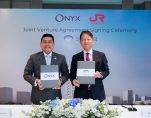
BANGKOK, THAILAND – Media OutReach Newswire – 25 May 2026 – ONYX Hospitality Group, a leading hospitality management company in Asia Pacific specialising in hotels, resorts, serviced apartments, and luxury residences, has announced a significant international partnership through the signing of a joint venture agreement with JR Kyushu Business Development (Thailand) Co. Ltd. (a group company of Kyushu Railway Company), one of Japan’s foremost corporations listed on Tokyo Stock Exchange. The collaboration will see the development of Shama North Pattaya, further advancing ONYX’s portfolio by leveraging Shama’s expertise to capitalize on short- and extended-stay demand, while reinforcing confidence in the growth potential of Thailand’s Eastern Economic Corridor (EEC).
Left: Mr. Yuthachai Charanachitta Right: Mr. Toshihiro Mori
This latest agreement marks a continuation of the strategic partnership between the two organizations, building upon the success of Shama Lakeview Asoke, which ONYX manages on behalf of JR Kyushu Group. The property has earned recognition as one of the leading serviced apartments in Bangkok’s central business district, reflecting the Japanese partner’s strong confidence in ONYX’s management capabilities and in-depth market expertise.
The development of Shama North Pattaya therefore represents not only an expansion into a high-potential location, but also a reaffirmation of ONYX’s disciplined growth strategy. By collaborating with globally respected partners, the group continues to strengthen its footprint in the EEC.
Mr. Yuthachai Charanachitta, Chief Executive Officer of ONYX Hospitality Group, stated that this joint venture with JR Kyushu Group reflects the company’s long-standing commitment to growing alongside its partners. It also marks ONYX’s second joint venture with an international partner under its strategic expansion plan, underscoring continued investor confidence in the company’s capabilities, as well as its ongoing pursuit of investment opportunities and strategic collaborations with high-potential partners.
“For ONYX Hospitality Group, growth is not defined merely by the number of projects we develop, but by the strength of the partnerships we cultivate. Our joint venture with JR Kyushu Group reflects a shared vision and a commitment to creating long-term value together.
The Shama brand has grown from a deep understanding of the long-stay market, which we have consistently studied and monitored over the years. We see clear future potential in this segment. Each Shama development is founded on comprehensive insights into resident needs and expectations, placing emphasis on the core of the living experience — comfort, flexibility and a genuine sense of home — all delivered to international standards.
Shama North Pattaya represents another important strategic property in strengthening and completing ONYX Hospitality Group’s presence in Pattaya, a high-potential destination within the EEC, alongside our key brands Amari and OZO, helping to create a more integrated and cohesive hospitality cluster in the area.”
Yuthachai added, “Shama North Pattaya reflects ONYX’s commitment to strengthening Thailand’s position as a leading destination for long-term residents while supporting the sustainable growth of the residential hospitality sector.”
Mr. Toshihiro Mori, Representative Director and Senior Managing Executive Officer of Kyushu Railway Company stated that this joint venture marks an important next step in JR Kyushu Group’s continued partnership with ONYX Hospitality Group in Thailand, building on the success of Shama Lakeview Asoke.
“Following our successful collaboration on Shama Lakeview Asoke Bangkok, we are pleased to deepen our partnership with ONYX Hospitality Group through Shama North Pattaya. We see strong potential in Pattaya as a leading resort destination within the EEC, and we have full confidence in ONYX’s hospitality expertise to deliver an exceptional property that meets the evolving needs of both Thai and international guests. We look forward to creating lasting value together.”
Strategically located in North Pattaya, a key tourism and economic hub within the EEC, Shama North Pattaya is designed to blend the comfort and convenience of serviced apartments with the refined services of a leading hotel brand. The project aims to cater to the steadily expanding long-stay segment, which is projected to continue its upward trajectory in 2026 and beyond.
The partnership between ONYX Hospitality Group and JR Kyushu Group not only highlights the complementary strengths of both organisations, but also serves as a strong indicator of Japanese investor confidence in Thailand’s economic stability and long-term prospects. At the same time, it signals the readiness of Thai hospitality brands to compete and grow alongside global partners in a sustainable and forward-looking manner.
Hashtag: #ONYXHospitalityGroup
The issuer is solely responsible for the content of this announcement.
About ONYX Hospitality Group
ONYX Hospitality Group, a reputable force in the Asia-Pacific hospitality industry, operates a collection of comprehensive yet complementary brands – Amari, OZO, Shama and Oriental Residence – catering to the distinctive needs of discerning business and leisure travellers across the region where it has deep expertise. In addition to its brand portfolio, ONYX Hospitality Group also operates additional hospitality services across spa and food & beverage. With six decades of management experience, the company extends its innovative solutions throughout the region, upholding internationally recognised standards and ensuring optimal operational manoeuvrability. By fostering enduring relationships with like-minded business partners, ONYX Hospitality Group delivers unparalleled experiences in a dynamic and competitive market, meeting the ever-evolving demands of travellers.
Kyushu Railway Company (JR Kyushu), headquartered in Fukuoka, Japan, and listed on the Prime Market of the Tokyo Stock Exchange, is a diversified group operating across Transportation, Real Estate and Hotels, Retail and Restaurants, Construction, and Business Services. Building on more than three decades of experience since its establishment in 1987, JR Kyushu has expanded beyond its core railway operations into a wide range of community-based and lifestyle businesses. In Thailand, JR Kyushu Business Development (Thailand) Co., Ltd. serves as the group’s investment platform for hospitality and real estate, building on the success of Shama Lakeview Asoke Bangkok and continuing to pursue long-term growth opportunities in the region.
European Parliament scrutiny of the Stop Destroying Videogames initiative was diverted by Slovak MEP Milan Uhrík after he used a debate on digital ownership and game preservation to attack what he described as “woke ideology” in the games industry. The initiative, widely known through the Stop Killing Games campaign, asks the European Commission to require publishers selling or licensing videogames in the European Union to leave them […]
Arabian Post Staff -Dubai Jazeera Airways has launched its first direct service between Kuwait and Italy, operating an inaugural flight from Kuwait International Airport’s Terminal 5 to Milan Bergamo Airport on Friday as the carrier pushes deeper into the European leisure and business travel market. The new Kuwait–Milan Bergamo route will operate three times a week, on Mondays, Wednesdays and Fridays, using Airbus A320neo aircraft. The service […]
Dubai Maritime City has opened Maritime Business Centre 2, an AED160 million commercial tower designed to add premium office capacity to DP World’s maritime, logistics and trade ecosystem at a time of sustained demand for Grade A workspace across the emirate. The new tower, located in the Commercial District of Dubai Maritime City, was completed in 20 months and had secured leasing commitments for 78 per cent […]
Google and Blackstone have agreed to create a $5 billion TPU-powered cloud company, widening the battle for artificial intelligence infrastructure as enterprises seek alternatives to graphics processing units that dominate AI training and inference. The US-based venture will offer data centre capacity, operations, networking and Google Cloud’s Tensor Processing Units through a compute-as-a-service model. Blackstone is making the initial equity commitment, with the first 500 megawatts of […]
Young people across India have turned an insult into a digital badge of defiance, transforming the cockroach from a symbol of contempt into the emblem of a fast-spreading satirical protest movement.
The Cockroach Janta Party, a social media-driven collective built around humour, mock manifestos and political parody, has surged across Instagram, X and short-video platforms within days of its launch. What began as an online response to courtroom remarks by Chief Justice of India Surya Kant has become a wider expression of frustration over jobs, living costs, institutional distrust and the limited space many young citizens feel they have in public debate.
The phrase took off after remarks during a Supreme Court hearing on May 15, when the bench was dealing with a petition linked to the designation of a lawyer as Senior Advocate. Comments referring to some unemployed young people, social media users, media figures and RTI activists as “cockroaches” and “parasites” triggered anger online. Justice Surya Kant later said he had been misquoted and clarified that his criticism was directed at people using fake or bogus degrees to enter professions, not at the youth of the country.
By then, the phrase had already escaped the courtroom. Memes, posters, mock campaign material and parody slogans began circulating at high speed. The Cockroach Janta Party, widely abbreviated as CJP, framed itself as the “voice of the lazy and unemployed”, turning a disparaging label into a collective identity. Its creator, Abhijeet Dipke, a 30-year-old based in Boston, positioned the project as peaceful, satirical and democracy-oriented rather than a conventional political outfit.
The scale of the online response has been striking. The group’s Instagram presence crossed the 10 million mark and was later reported to be nearing 15 million followers, temporarily putting it ahead of several established political accounts in visibility. More than 400,000 people were said to have signed up through its online channels, with a large share of participants falling in the 19–25 age group. The numbers also triggered scepticism, with claims that overseas users or bots had inflated the following. Dipke rejected the allegations, saying the overwhelming majority of followers were from India.
The movement’s appeal lies partly in its absurdity. A creature usually associated with dirt, survival and infestation has been reimagined as a metaphor for resilience. Supporters have used the cockroach to signal that a generation facing unstable work, high rents, exam pressure and limited upward mobility is refusing to disappear. The image has proved adaptable: it works as a meme, a protest costume, a party logo and a joke that can carry political weight without sounding like a formal campaign speech.
That flexibility has helped the trend move beyond online humour. Young volunteers in Delhi dressed as cockroaches while taking part in a Yamuna clean-up activity near Kalindi Kunj, linking the meme to civic action. Satirical spin-offs, including rival parody groups, appeared almost immediately. The trend also crossed borders, with users in Pakistan and Bangladesh adapting similar cockroach-themed political humour to their own domestic frustrations.
The timing has sharpened its resonance. Youth unemployment in the 15–29 age group stood at 9.9 per cent in 2025, with the urban youth rate higher at 13.6 per cent. A formal decline from the previous year has not erased anxiety among graduates and first-time job seekers, many of whom say the labour market offers either low salaries, insecure contracts or intense competition for public-sector posts. Inflation in housing, education and transport has added to the strain.
Gen Z’s political language in India is also changing. Earlier protest cultures relied heavily on student unions, party fronts, street marches and television visibility. The new pattern begins on reels, memes and comment threads, where humour lowers the cost of participation and helps users test political ideas before attaching their real identities to them. The Cockroach Janta Party sits within that shift: it is not a registered party with electoral machinery, but it has generated a recognisable symbol, a support base and a vocabulary of dissent.
Arabian Post Staff -Dubai Flydubai and Cyprus Airways have launched an interline partnership that gives passengers from Larnaca wider one-stop access to destinations across the Gulf, Asia, Africa and the Indian Ocean through Dubai International. The agreement allows customers to book travel on a single itinerary, with coordinated baggage handling and smoother transfers at DXB. For Cyprus Airways passengers, the arrangement opens connections beyond Dubai to flydubai […]
AMD has committed more than $10 billion to Taiwan’s semiconductor ecosystem, targeting advanced packaging and manufacturing capacity as demand for artificial intelligence infrastructure intensifies across global data centres.
The investment is designed to strengthen the chipmaker’s partnerships with foundries, packaging houses, substrate suppliers and server manufacturers that are central to its next generation of AI systems. The programme places Taiwan at the centre of AMD’s effort to scale production of high-performance processors, accelerators and rack-level systems built for increasingly complex AI workloads.
A major focus will be Elevated Fanout Bridge, or EFB, a 2.5D packaging technology intended to improve the speed and efficiency of connections between chip components. AMD plans to use the technology in its sixth-generation EPYC central processing units, codenamed “Venice”, which are being positioned for AI, cloud and high-performance computing deployments.
The move comes as AI infrastructure spending shifts from individual chips towards complete systems that combine CPUs, graphics processors, high-bandwidth memory, networking and software. Advanced packaging has become a critical bottleneck because AI workloads require large volumes of data to move quickly between processors while keeping power consumption and heat within manageable limits.
AMD Chair and Chief Executive Lisa Su said customers were rapidly expanding AI infrastructure to meet rising compute demand. The company is seeking to combine its high-performance computing portfolio with Taiwan’s manufacturing and packaging capabilities to support integrated, rack-scale AI systems.
AMD is working with partners including ASE, SPIL, Powertech Technology, Wiwynn, Wistron, Inventec, Unimicron, AIC, Nan Ya PCB and Kinsus. These companies cover key parts of the supply chain, from advanced packaging and substrates to server assembly and mechanical architecture. Sanmina is also involved in manufacturing support for the company’s Helios platform.
The investment will support both wafer-based and panel-based EFB interconnect development. AMD and Powertech Technology have qualified what they describe as the industry’s first 2.5D panel-based EFB interconnect, a step aimed at improving scalability and production economics for high-volume AI processors.
The technology is expected to help the “Venice” EPYC processors deliver higher interconnect bandwidth and better power efficiency. That matters because data centre operators are increasingly constrained by electricity availability, cooling capacity and rack density, not only by chip performance.
AMD has also begun ramping production of “Venice” CPUs using Taiwan Semiconductor Manufacturing Company’s 2-nanometre process technology in Taiwan. Future production is planned at TSMC’s Arizona facility, extending the supply chain beyond Taiwan while preserving the company’s close reliance on TSMC’s leading-edge manufacturing.
The “Venice” chips will be a central element of AMD’s Helios rack-scale platform, which also includes AMD Instinct MI450X graphics processors, advanced networking and the ROCm open software stack. The platform is scheduled for deployments beginning in the second half of 2026, with AMD describing the opportunity in terms of multi-gigawatt AI infrastructure rollouts.
The strategy puts AMD in a more direct contest with Nvidia, which dominates AI accelerator sales and has built a strong lead through its GPUs, networking, software ecosystem and full-rack systems. AMD’s challenge is not only to deliver competitive silicon but also to prove that it can scale complete AI infrastructure with dependable supply, efficient packaging and broad software support.
AMD’s data centre business has become the company’s main growth engine. First-quarter 2026 data centre revenue reached $5.8 billion, up 57 per cent from a year earlier, driven by demand for EPYC processors and the ramp-up of Instinct GPU shipments. That performance has strengthened investor expectations that AMD can capture a larger share of AI and cloud infrastructure spending.
Taiwan remains critical to that effort because of its concentration of semiconductor expertise. TSMC anchors the foundry side, while packaging, substrate and system-assembly partners provide the manufacturing depth needed to turn chip designs into deployable infrastructure. The concentration also creates geopolitical and supply-chain risks, particularly as governments and companies seek greater resilience across strategic technologies.
By Dr. Gyan Pathak Annoyed by the voice of the voiceless cockroaches on Social Media platform X, the Union Government of India led by PM Narendra Modi got their account banned in the country. Thanks to the Chief Justice of India Surya Kant’s one of the comments on May 15, 2026, that had triggered the […]
Take-Two Interactive has moved to quiet speculation over another Grand Theft Auto VI delay, reaffirming that Rockstar Games’ blockbuster open-world title remains scheduled for release on 19 November 2026. The confirmation, issued alongside Take-Two’s fiscal 2026 results, places the game at the centre of the company’s next financial year and signals that management is still planning around one of the most consequential launches in entertainment. Chief executive […]





 https://www.brandhk.gov.hk/
 https://www.linkedin.com/company/brand-hong-kong/
 https://x.com/Brand_HK/
 https://www.facebook.com/brandhk.isd
 https://www.instagram.com/brandhongkong