Iranian authorities have arrested four people, including two foreign nationals, over the alleged import of SpaceX Starlink terminals, sharpening a crackdown on one of the few remaining channels for uncensored internet access inside the country. Iranian state-linked reporting, carried by Reuters on Sunday, said the arrests were made in the north-west and linked by officials to an alleged espionage network tied to the United States and Israel. […]
Andhra Pradesh Chief Minister N. Chandrababu Naidu has cast Amaravati’s quantum push as a test of whether the country can build strategic technology capacity at home rather than remain tied to foreign platforms, using the launch of two indigenous open-access facilities to argue that partnership with global companies need not mean dependence. The remarks came days after the state unveiled Amaravati 1S and Amaravati 1Q on World Quantum Day, presenting the project as both a technology milestone and a political statement about capability.
Speaking in Amaravati, Naidu pushed back on questions over reliance on companies such as IBM, saying the starting point mattered less than whether domestic institutions could absorb, adapt and eventually build. He described the new facility as proof that companies and researchers in the country are capable of producing quantum systems, while acknowledging that the path to scale will involve collaboration. That framing is central to the state government’s pitch: use foreign alliances where useful, but ensure design, testing, skills and manufacturing depth are developed locally.
The immediate trigger for that argument was the April 14 launch of the Amaravati Quantum Reference Facility, or AQRF, spread across SRM University-AP in Amaravati and Medha Towers in Gannavaram. Andhra Pradesh has described the systems as the country’s first indigenously built, open-access quantum computer test beds, intended to let researchers, startups and industry users test hardware under operating conditions rather than rely only on closed imported machines. Officials say the site is designed to validate processors, cryogenic systems, amplifiers and control electronics, with access for hands-on study and benchmarking.
That matters because quantum computing remains a field in which much of the world’s high-end hardware is controlled by a small number of companies and laboratories. Andhra Pradesh officials and syndicated reports on the launch said about 85 per cent of the facility’s components were manufactured domestically, a claim being used to support the government’s assertion that a “sovereign hardware ecosystem” is now possible. The systems were developed with support from institutions including the Tata Institute of Fundamental Research, the Indian Institute of Science and the Defence Research and Development Organisation, alongside younger firms working on hardware integration.
Yet the sovereignty message sits alongside a second reality: Amaravati’s longer-term quantum ambitions still rely on international corporate participation. IBM, Tata Consultancy Services and the Andhra Pradesh government announced in May 2025 that the planned Quantum Valley Tech Park in Amaravati would seek to host an IBM Quantum System Two with a 156-qubit Heron processor, subject to export licences and final agreements, while TCS would work on algorithms and applications. Naidu himself described that project at the time as part of the National Quantum Mission and a route to job creation and industrial use cases.
That leaves Andhra Pradesh trying to strike a careful balance. On one hand, the state wants the credibility, tooling and developer ecosystem that come with IBM and TCS. On the other, Naidu is signalling that strategic depth cannot rest on access alone. His comparison with the telecom sector was meant to make that case: the country did not master mobile and network technologies overnight, but built capability over time through policy support, local firms and institutional confidence. In quantum, he appears to be arguing for the same sequence — collaborate first where necessary, but move steadily towards domestic competence.
The wider national backdrop supports that ambition. The National Quantum Mission, approved in April 2023 with an outlay of Rs 6,003.65 crore running through 2030-31, is meant to seed research, industrial development and applications across computing, communications, sensing and materials. The Department of Science and Technology says the mission aims to develop intermediate-scale quantum computers in the 50 to 1,000 physical qubit range and has already set up four thematic hubs led by IISc Bengaluru, IIT Madras, IIT Bombay and IIT Delhi. Amaravati’s project is therefore not operating in isolation; it is seeking to attach itself to a national push that is still in its build-out phase.
Dubai Chambers has stepped up its push to build stronger commercial ties with the Philippines, holding meetings in Manila with influential business groups and leading companies as it seeks to turn rising trade flows into broader investment and sector partnerships. The talks came days after Dubai International Chamber opened its representative office in the Philippine capital, underlining a coordinated effort to deepen its presence in a market that Dubai sees as strategically important for trade, services and expansion across Asia.
At the centre of the Manila discussions was Mohammad Ali Rashed Lootah, President and Chief Executive of Dubai Chambers, who met Ferdinand A. Ferrer, president of the Philippine Chamber of Commerce and Industry, and Donald Lim, president of the Management Association of the Philippines. According to Dubai Chambers, the conversations focused on trade facilitation, investment promotion and business partnerships, with particular attention to artificial intelligence, digital transformation and smart cities. Separate talks were also held with leading Filipino companies, where Dubai’s advantages were presented in areas including the digital economy, real estate investment and retail.
The Manila visit was not an isolated diplomatic stop. It followed the formal launch of Dubai International Chamber’s office in Manila on April 14, part of Dubai’s wider effort to build a larger global commercial footprint. Dubai Chambers says the office will serve both sides of the relationship: helping Filipino companies study opportunities in Dubai and use the emirate as a platform for expansion, while also supporting Dubai-based companies looking to enter the Philippine market through local intelligence, commercial introductions and help with market entry.
The commercial backdrop helps explain the urgency. Non-oil trade between Dubai and the Philippines reached AED3.58 billion in 2025, a 17 per cent increase from 2024, according to Dubai Chambers. By the end of December 2025, 2,592 Filipino companies were registered as active members of Dubai Chamber of Commerce, up 23.3 per cent year on year, while 856 new Filipino companies joined during 2025. Those figures point to a relationship that is moving beyond labour and remittance links into a more formalised business corridor involving services, trade intermediation, investment and corporate expansion.
That momentum has been building for some time. In May 2025, Dubai Chamber of Commerce organised a trade mission to the Philippines involving representatives from 17 Dubai-based private-sector companies. The mission produced 180 bilateral business meetings and included a Manila forum, “Doing Business with the Philippines”, attended by 314 participants. During that forum, Dubai Chambers signed a memorandum of understanding with the Philippine Chamber of Commerce and Industry to strengthen cooperation and explore new avenues for trade and investment. January 2026 brought another symbolic marker when First Lady Louise Araneta-Marcos visited Dubai Chambers headquarters, adding political visibility to what has become a more structured economic relationship.
For Dubai, the Manila initiative fits a larger policy design. The chamber says the office forms part of the “Dubai Global” initiative, which aims to establish 50 representative offices worldwide by 2030 and support expansion into 30 priority markets. That strategy is designed to attract foreign direct investment into Dubai while helping companies based there expand overseas. The Philippines, with its large consumer market, growing digital economy and active private-sector institutions, offers Dubai an opening not only into Southeast Asia but also into sectors where urban development, technology adoption and service-led growth are accelerating.
For the Philippines, the significance lies in access. Dubai positions itself as a gateway market linking Asia, the Gulf, Africa and Europe, and Filipino businesses looking for a wider regional or global footprint may see value in that proposition. The chamber has framed Manila’s new office as a bridge that can lower information barriers, connect firms with partners and convert general goodwill into bankable deals. Sectors identified during the talks suggest where both sides believe there is room to move fastest: AI and digital transformation for future-oriented growth, smart cities for infrastructure and urban services, and real estate and retail for more immediate commercial activity.
Fresh uncertainty gripped the Strait of Hormuz on Saturday after merchant vessels attempting to cross the waterway reported gunfire and shipping sources said Iranian naval broadcasts warned that passage was no longer permitted, sharpening fears over the security of one of the world’s most important energy corridors. Reuters reported that at least two vessels came under fire, while New Delhi confirmed that two India-flagged crude carriers were […]
Greenlogue/AP Dahbashi Engineering has moved its headquarters in Dubai Industrial City onto on-grid solar power, marking a sustainability push by a company better known in the Gulf for heavy machinery spare parts, service operations and industrial battery solutions. The company said the installation is expected to meet about half of the site’s annual electricity demand and cut operating costs by roughly 30 per cent under Dubai’s Shams […]
Arabian Post Staff -Dubai Prestige One Developments has begun handing over Vista, a 140-home residential project in Dubai Sports City, marking a delivery milestone for the developer as it expands construction activity across the emirate. The handover comes as Prestige One says it has more than 20 active developments under way and about 2,500 residential units under construction, underscoring how mid-sized developers are trying to convert off-plan […]
North Korea fired multiple short-range ballistic missiles into waters off its east coast early on Sunday, prompting swift condemnation from Seoul, Tokyo and Washington and extending a run of weapons activity that is deepening security concerns across North-East Asia. South Korea’s Joint Chiefs of Staff said the missiles were detected from the Sinpo area at about 6:10 a. m. local time and were launched towards the East […]
StarLink opened its 2026 roadshow in Riyadh on 19 April, pitching a vision of cyber defence in which autonomous systems are used not only to detect threats but to counter AI-enabled attacks at machine speed, as companies across the Middle East weigh how far they can trust software agents with critical security decisions. The event series, branded “The Silent War of AI vs AI”, is scheduled to […]
Anthropic’s Claude Opus has been thrust into a fresh security debate after researcher Mohan Pedhapati said he used the model to help build a working V8 exploit chain that achieved code execution against an outdated Chromium build bundled with Discord. Pedhapati, CTO of Hacktron and known online as s1r1us, said the exercise ran over about a week, consumed 2.3 billion tokens, cost $2,283 in API fees and […]
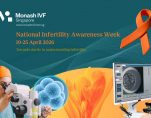
SINGAPORE – Media OutReach Newswire – 19 April 2026 – In conjunction with National Infertility Awareness Week (19–25 April 2026), Monash IVF Singapore, alongside partners like Fertility Support Singapore, is shifting the spotlight to a long-overlooked narrative: male factor infertility.
Monash IVF Singapore National Infertility Awareness Week
While fertility discussions often centre on women, statistics show that male factors contribute to approximately 50% of all infertility cases. Male factor infertility can arise from a range of factors, including low sperm count, reduced sperm motility, abnormal sperm morphology, hormonal imbalances, genetic conditions, or underlying medical issues. Lifestyle factors such as smoking, alcohol consumption, stress, and environmental exposures may also affect sperm quality over time.
Despite its prevalence, male factor infertility is often less discussed in Singapore, which can lead to delays in assessment and treatment. Early evaluation, including semen analysis and medical consultation, can help identify potential concerns and guide appropriate next steps for couples.
To support greater awareness, Monash IVF is launching a series of digital educational content aimed at de-stigmatising male reproductive health and providing actionable insights for men to take charge of their fertility. These resources will cover common causes of male infertility, when to seek medical advice, and the types of assessments and treatment options available. By making this information more accessible, the clinic aims to encourage earlier evaluation and more open conversations about male factor infertility, both within relationships and in the wider community.
As Singapore’s demographic landscape evolves, Monash IVF Singapore is contributing to broader discussions on reproductive health. With the national Total Fertility Rate (TFR) reaching a record low of 0.87 in 2025, the need for comprehensive and patient-centred fertility care continues to grow.
Understanding Modern Fertility Challenges: Beyond Biological Factors
The decline in fertility is not merely a biological hurdle but a reflection of the intense pressures that Singaporeans face today. The “workplace rat race”, high-stress environments, and environmental factors have contributed to a trend of delayed parenthood. Many individuals are choosing to start families later due to career progression, financial considerations, and evolving life priorities. At the same time, age remains a key factor, as both egg and sperm quality may decline over time.
As such, these same pressures do not just delay parenthood; they also make it more difficult for individuals to pursue fertility treatments in Singapore. Managing appointments, coping with the physical and emotional demands of treatment, and balancing work responsibilities can become an added strain for many.
“Fertility is often treated as a private struggle, but it is a societal challenge,” says June Jonet, Marketing and Business Development Head of Monash IVF Singapore. “We are calling for greater understanding and support within the workplace. Employees undergoing fertility treatments or preservation need an environment that recognises the physical and emotional toll of this journey, rather than one that penalises them for it.”
Monash IVF’s Approach to Assisted Reproductive Care
Monash IVF Singapore’s clinical and laboratory team is led by Chief Embryologist Ng Pei Hui, supported by a team of senior embryologists and Fertility Specialists, including Dr Kelly Loi, Dr Suresh Nair, and Dr Yap Lip Kee.
The clinic applies a range of established assisted reproductive techniques to enhance success rates, tailored to individual clinical needs. These include:
Piezo-ICSI: A fertilisation method that uses a blunt needle with high-speed vibration to gently penetrate eggs and assist sperm injection. It may be considered in cases involving fragile oocytes or advanced maternal age.
IMSI: A technique that uses high-magnification imaging to support sperm selection, enabling embryologists to identify and avoid sperm with morphological abnormalities, such as vacuoles.
PICSI: A method of biological sperm selection using hyaluronic acid to help identify mature sperm with a lower likelihood of DNA damage.
Embryoscope+: A time-lapse imaging system that continuously monitors embryo development without disrupting stable culture conditions, supporting the selection of embryos with strong developmental potential for transfer.
The Power of Planning: Fertility Preservation
Alongside treatment, Monash IVF Singapore highlights the importance of proactive planning. As more women and couples choose to delay parenthood, elective egg freezing (a form of fertility preservation) has become a vital tool. At the same time, early assessment of male factor infertility, including semen analysis, can identify potential concerns and help couples prepare more confidently.
“Even with the range of treatments available today, timing still matters,” says Chief Embryologist Ng Pei Hui. “Early consultation allows patients to better understand their options and make informed decisions.”
With infertility affecting approximately 1 in 6 individuals, it is now recognised as a relatively common medical condition rather than a rare exception. This is why at Monash IVF Singapore, fertility care is not only about addressing challenges as they arise but also about supporting early planning for both men and women. With options such as elective egg freezing, male fertility assessment, and fertility health checks, the clinic aims to help Singaporeans better understand their reproductive health and make informed decisions at different stages of their journey.
For more information about Monash IVF Singapore and what they do, visit their website. Hashtag: #MonashIVF #malefertility #mensfertility #reproductivehealth #fertilityawareness #menswellness
The issuer is solely responsible for the content of this announcement.
About Monash IVF Singapore
Monash IVF Singapore is part of the global Monash IVF Group, a pioneer in reproductive medicine since achieving the world’s first IVF pregnancy in 1973. We provide a full suite of fertility services, combining compassionate patient care with the latest scientific breakthroughs.
Jagex is preparing to take RuneScape: Dragonwilds into the Asia-Pacific market later this summer, extending the survival-crafting spin-off beyond its existing footprint and giving the long-running franchise a new test of international reach as it marks its 25th year. The Cambridge-based developer said the game will launch in Simplified Chinese, Japanese and Korean, a move it described as the most significant international expansion in its history. Dragonwilds […]
Bhutan has moved another 250 bitcoin worth about $18.5 million, extending a steady disposal of the digital asset that has cut the kingdom’s publicly tracked holdings to roughly 3,500 BTC and raised fresh questions over how long one of the world’s best-known sovereign crypto stockpiles can last. The transfer, flagged by Arkham Intelligence and widely followed across crypto markets, came as bitcoin traded near $77,000 on April […]
Microsoft has given its clearest account yet of how it plans to build the next Xbox, saying the teams that make its games are working alongside the engineers shaping Project Helix, the company’s next-generation console. The approach, outlined by Xbox Chief Content Officer Matt Booty, signals a tighter link between hardware and software as Microsoft tries to define what an Xbox machine should be in a market […]
Etihad Airways has set out one of its biggest Africa pushes in years, unveiling six new destinations across the continent as Abu Dhabi’s flag carrier deepens its reach into markets it says are being shaped by trade growth, cargo demand and rising cross-border mobility. The expansion adds services to Accra, Asmara, Kinshasa, Lagos, Harare and Lubumbashi, with the first of the new routes due to begin in […]
A sweeping international law-enforcement campaign has disrupted one of the cybercrime market’s most accessible attack models, with authorities saying Operation PowerOFF warned more than 75,000 suspected users of distributed denial-of-service-for-hire services, took down 53 domains, issued 25 search warrants and made four arrests during a coordinated action week on 13 April. The effort, backed by Europol and involving agencies from 21 countries, targeted both the operators and […]
Arabian Post Staff -Dubai Abu Dhabi has moved to expand lower-cost rental housing through a new partnership between the Department of Municipalities and Transport and Aldar, with the two sides planning about 9,000 value housing units across Mohamed Bin Zayed City and Baniyas in a scheme aimed at easing pressure on tenants and broadening access to professionally managed homes. The projects, announced on 17 April, sit within […]
Singapore Gulf Bank has launched a USDC mint-and-redeem service on the Solana blockchain, opening a round-the-clock channel for corporate and high-net-worth clients to move between fiat currency and digital dollars directly from their bank accounts as it pushes deeper into cross-border payments and treasury services. The bank said the product is designed to bypass delays tied to correspondent banking and standard settlement windows, offering near-instant conversion and […]
Netflix is set to roll out a redesigned mobile app by the end of April, adding a vertical video discovery feed that mirrors the swipe-driven format popularised by short-form platforms as the streaming group pushes to make browsing faster and more intuitive on phones. The company disclosed the change in its April 16 shareholder letter, saying the updated mobile experience follows a period of testing and is […]
Arabian Post Staff -Dubai Google is preparing to take its Android XR eyewear effort into luxury fashion through a partnership with Gucci, with Kering chief executive Luca de Meo saying the smart glasses are expected by 2027 rather than this year. The plan gives Google a high-end brand partner as it tries to turn experimental smart eyewear into something consumers will actually wear in public. The […]
AD Ports Group says it has kept operations running normally through the Gulf supply chain disruption that began at the end of February, using its integrated network to reroute cargo across land, rail, sea and air as traffic through the Strait of Hormuz remained severely constrained. The Abu Dhabi-based operator said on April 16 that it had shifted volumes through Fujairah Terminals and Khor Fakkan Port, activated […]
Arabian Post Staff -Dubai Emirates and Wesgro have signed a memorandum of understanding aimed at increasing inbound travel to Cape Town and the Western Cape, giving the province a fresh marketing and air-connectivity push at a time when South Africa’s visitor numbers have climbed above pre-pandemic levels. The agreement was formalised on 16 April on the sidelines of World Travel Market Africa in Cape Town and was […]
Trend Micro’s enterprise business accelerates its transformation as AI security category leader
HONG KONG SAR – Media OutReach Newswire – 17 April 2026 – TrendAI™, the enterprise AI security leader from Trend Micro Incorporated (TYO: 4704; TSE: 4704), today announced a strategic engagement with Anthropic, embedding Claude models across its platform to power agentic workflows, automation, AI-native security operations, and develop threat research to identify vulnerabilities in AI systems and infrastructure. TrendAI™ will use Claude to advance vulnerability discovery while ensuring coordinated action in real-world risk reduction.
Rachel Jin, Chief Platform and Business Officer, Head of TrendAI™: “We launched TrendAI™ to define the AI security category. This next phase is about scaling that vision globally, with leading partners like Anthropic. Our broad, strategic collaboration across research, defense, and innovation will define how AI is secured moving forward.”
TrendAI™’s use of Claude spans threat research, real-world risk reduction, platform innovation, and global go-to-market execution. This will operate across the full AI security lifecycle, from vulnerability discovery to automated defense and AI-native operations.
Ash Alhashim, Head of Cybersecurity GTM at Anthropic: “For 35 years, TrendAI™ has been at the forefront of cybersecurity. By using Claude to power TrendAI Vision One™ and initiatives like TrendAI™ Zero Day Initiative™ (ZDI) and Pwn2Own, TrendAI™ is advancing the next iteration of vulnerability discovery and reporting—and tilting the scales toward defenders.”
Focus areas include:
Advancing AI Threat Research: TrendAI™ is scaling its threat research to address the growing attack surface of AI, building on proven programs like Pwn2Own Berlin under TrendAI™ ZDI. This approach brings real-world vulnerability discoveries into AI systems, helping identify and address critical weaknesses before it reaches production environments.
Driving AI-Native Innovation: Anthropic’s Claude models will help power TrendAI™’s platform innovation, enhancing agentic workflows, automation, and AI-native security operations. This enables organizations to reduce noise, act faster, and scale security alongside AI adoption.
The announcement comes as TrendAI™ prepares to welcome over 600 cybersecurity leaders to its Spark Leadership Exchange in Phoenix, Arizona in May. Anthropic will join TrendAI™ on stage at the event alongside other industry leaders, reinforcing a shared commitment to shaping the future of AI security and engaging directly with global enterprise leaders.
The issuer is solely responsible for the content of this announcement.
About TrendAI™
TrendAI™, the global AI security leader and enterprise business unit of Trend Micro, empowers organizations with full AI visibility and consolidated security that inspires confidence, drives innovation, and eliminates risk. Trusted by the largest enterprises and governments across 185 countries, TrendAI™ secures the entire organization, from identities to infrastructure to data. Global Fortune 500 companies rely on TrendAI™ to cut risk and stop threats up to three months earlier, powered by world-leading threat and attack intelligence. Through deep ecosystem partnerships with market leaders like NVIDIA, Anthropic, AWS, Google, and Microsoft, TrendAI™ empowers your organization to securely drive forward at the speed of AI. AI Fearlessly. Learn more at trendaisecurity.com.
Alarm over the Strait of Hormuz is spilling far beyond the Gulf, sharpening attention on the Malacca Strait near Singapore as traders, shipowners and Asian governments weigh what a prolonged disruption in West Asian energy flows could mean for the region’s busiest maritime corridor. The immediate military confrontation is centred on Hormuz, where Iran has tightened restrictions and the United States has imposed a blockade on Iranian […]
UBS has lost senior wealth banker Lionel Yoong from its Singapore-based Indonesia coverage team, marking another departure from a franchise that has already seen several exits tied to the market since the start of last year. The move comes as the Swiss bank continues to reshape parts of its Asian private banking business following its takeover of Credit Suisse and while it pushes expansion in other wealth centres, including Hong Kong.
Yoong had been one of the named leaders on UBS Global Wealth Management’s Indonesia market structure unveiled after the Credit Suisse integration. In that 2023 reorganisation, Conrad Huber was appointed head of Global Wealth Management Indonesia and Japan International, with Lionel Yoong listed among the Indonesia market team leaders. That structure reflected how central the Indonesia book had become to UBS’s Southeast Asia wealth ambitions, particularly from Singapore, a long-established hub for serving affluent Indonesian clients offshore.
The latest exit follows earlier turnover in the same coverage area. Industry publication Hubbis reported in July 2025 that two Singapore-based bankers focused on Indonesia, Lionel Poh and Edy Panggabean, were set to leave UBS Global Wealth Management, describing the departures as part of ongoing restructuring within the Indonesian market team. That report said UBS declined to comment at the time and noted that both bankers specialised in the Indonesia market, underscoring how staff churn has persisted well after the initial merger phase.
Additional reporting circulating on Friday indicated that Yoong was the third market head for Indonesia to leave UBS since the beginning of last year. While Bloomberg’s full report was not accessible through the browsing tool, that detail appeared consistently in syndicated summaries of the story, aligning with the pattern already visible from prior trade reporting on the unit. The broad direction is clear even if some specifics around internal timing remain private: UBS is still contending with personnel changes in a business line that sits at the intersection of Southeast Asian entrepreneurial wealth and Singapore’s offshore private banking market.
That matters because Indonesia has long been one of the more attractive yet more delicate pools of wealth in the region. Reuters Breakingviews wrote in 2023 that Credit Suisse had been particularly strong in Indonesia and neighbouring countries before the rescue takeover by UBS. Reuters also reported that Southeast Asia was among the regions where UBS and Credit Suisse had some of their greatest overlaps in wealth management and investment banking after the emergency deal in March 2023. Those overlaps made departures and selective restructuring all but inevitable as UBS sought to fold rival teams, cut duplication and keep high-value client relationships intact.
UBS’s challenge is not simply to stop people leaving. It is to do so while preserving momentum in an Asian wealth market that remains strategically important to the group. Chief executive Sergio Ermotti said in March 2024 that UBS planned to increase assets sourced from clients in Asia by 20% over five to six years, highlighting wealth and asset management as a core pillar of growth. That ambition helps explain why departures from specialised country teams are watched closely by rivals and recruiters: in private banking, senior relationship managers often carry client loyalty, local networks and revenue visibility that are not easily replaced.
At the same time, UBS has signalled that it is willing to invest where it sees stronger near-term return. Bloomberg reported in February that the bank planned to hire about 50 bankers for its Hong Kong wealth business after record revenue in North Asia, with a greater focus on high-net-worth clients. That hiring drive suggests the group is not retreating from Asian wealth management as a whole. Rather, it appears to be recalibrating where resources are deployed, even as parts of Southeast Asia continue to absorb the after-effects of the Credit Suisse acquisition.
There is also a broader industry angle. Asian Private Banker wrote this month that the region’s private banking sector saw a spike in exits over the past month as hiring slowed in March, a reminder that movement among senior bankers is not confined to UBS. Still, turnover draws sharper scrutiny when it affects a market as valuable as Indonesia, where wealthy entrepreneurial families often require cross-border booking, succession planning and sophisticated capital-markets access. Singapore remains a key booking centre for that business, so departures there can reverberate beyond one desk or one reporting line.






 https://www.trendaisecurity.com
 https://www.linkedin.com/company/trendai-security
 https://x.com/trendaisecurity
 https://www.facebook.com/trendaisecurity/
 https://www.instagram.com/trendaisecurity/




