Just in:
Mubadala and Centerbridge secure £1.17bn Canaccord wealth agreement // Microsoft restores cloud services after gateway software failure // Fitch maintains UAE rating as 2026 growth persists // Iran claims six-drone operation against US radar in Bahrain // Regulator demands answers on controversial power deal // Pink Economy report puts equal rights at the heart of Thailand’s road to Bangkok WorldPride 2030 // EU levies definitive duties on five steel suppliers // Galaxy Resort Presents: “Plácido Domingo & José Carreras: The Legends United Opera Gala” // Google identifies autonomous AI systems conducting vulnerability attacks // Bora Group 3Q26: Revenue and Net Income Expansion Continues U.S. Manufacturing and Biologics Footprint Complete; Margin Expansion to Follow as Utilization Improves // Mexican journalists demand accountability after Acapulco reporter killed // Ayara Kamala Reveals a Refreshed Vision for Wellness in Phuket // Ramayana triggers high tourist traffic to Jatayu rock centre // JPMorgan restores transactions after banking payments disruption // Bankrupt Indian Business Barons Mostly Live Life King-Size // Govt offers talks to protesting teachers after CM signal // ADQ Aviation raises Abu Dhabi Aviation holding to 71.61% // Over 360 electricity distribution professionals meet in Seoul for CIRED’s first major event in the Asia-Pacific region // JCI Names the 2026 Ten Outstanding Young Persons of the World // Ukraine faces $32.6 billion financing gap amid legislative delays //

News related to
chief

A protocol on phytosanitary standards agreed upon during President Emmerson Mnangagwa’s visit to Beijing has unlocked the possibility of Zimbabwe exporting blueberries to China, the Horticultural Development Council has announced. This agreement offers local growers access to one of the world’s fastest-growing blueberry markets, although actual export volumes will depend on their ability to meet stringent sanitary conditions and manage compliance-related costs. Zimbabwe’s blueberry production is set […]

Astana International Exchange and Abu Dhabi Securities Exchange have activated a direct connection between their central securities depositories, enhancing post-trade infrastructure and extending investor access across markets. The move, under the October 2021 memorandum of understanding that brought AIX into the Tabadul digital hub, expands on the existing Tabadul network and enables fully operational CSD-to-CSD communication.

The newly established arrangement builds on Tabadul’s digital trading network, which launched in mid-2023 when AIX formally joined and began enabling bilateral trading with ADX. Tabadul, introduced in 2022, operates on a mutual market access model, facilitating cross-exchange trading across member markets.

Under the framework established in October 2021, AIX had integrated into Tabadul, paving the way for today’s deeper integration via its direct CSD link with ADX.

Assel Mukhanova, chief executive of AIX, welcomed the formalisation, noting that this will bring tangible benefits to participants through more efficient trading corridors and deeper cross-border investment flows. Abdulla Salem Alnuaimi, group chief executive of ADX, emphasised that the direct CSD connection supports capital markets accessibility, post-trade connectivity, and opens new avenues for both global and regional investors.

This development underscores a strategic commitment from both exchanges to deepen connectivity, bolster liquidity, and accelerate regional capital market integration. By complementing the stronger ties forged through Tabadul, the new ADX–AIX direct CSD link strengthens market access for issuers and investors alike.

OPEC’s oil output rose further in August, hitting 27.84 million barrels per day—a gain of 360,000 bpd over July’s revised total. The rise was driven chiefly by expanded production from Saudi Arabia and the United Arab Emirates under an OPEC+ agreement to gradually reverse output curbs.

The production boost stemmed from an agreement by eight OPEC+ countries for August output, under which five OPEC members—Algeria, Iraq, Kuwait, Saudi Arabia and the UAE—were to raise output by 416,000 bpd, before accounting for compensation cuts totalling 178,000 bpd imposed due to earlier overproduction. In practice, those five delivered a net increase of 310,000 bpd.

This escalation forms part of OPEC+’s accelerated effort to dismantle its most recent output cuts. Simultaneously, some members continue to implement additional cuts to offset previous excesses, theoretically capping the effect of these increases.

This latest surge underlines OPEC+’s strategy of reclaiming market share through coordinated rollback of production restraints, even as the group attempts to preserve price stability by enforcing compliance and offset mechanisms.

SHENZHEN, CHINA – Media OutReach Newswire – 5 September 2025 – On September 3, ASIA FRUIT LOGISTICA opened at AsiaWorld-Expo in Hong Kong. BGY Fruits, China’s leading fruit retail chain, participated alongside its subsidiary Jin Chengtai, continuing its annual presence at the event. Through consistent participation, BGY Fruits showcases its strengths in supply chain integration and brand development to global partners and potential clients—further advancing its strategy […]

HONG KONG SAR – Media OutReach Newswire – 4 September 2025 – Hong Kong joined nationwide activities to mark the 80th Anniversary of Victory in the Chinese People’s War of Resistance against Japanese Aggression and the World Anti-Fascist War. September 3 is designated as Victory Day in China, marking the end of the longest-running campaign in the war against fascism (1931-1945). John Lee, Chief Executive the Hong […]

ADNOC Logistics and Services plc has secured strong institutional backing through a $317 million placement of approximately 222 million shares—equivalent to about 3 percent of its issued capital—with demand reaching seven times the offering, ranking among the region’s most heavily oversubscribed secondary share sales. The transaction lifts ADNOC L&S’s free float from 19 percent to 22 percent, significantly enhancing trading liquidity and widening its appeal to institutional […]

A $2.62 billion, 10‑year credit facility has been secured by Khazna Data Centres, underwritten by a consortium led by Abu Dhabi Commercial Bank and First Abu Dhabi Bank, providing a substantial boost to the company’s strategy for regional and global expansion. The funds are earmarked to accelerate build‑out of high‑capacity data hubs across the Middle East and North Africa, with a clear focus on supporting high‑demand, AI‑intensive infrastructure. […]

Advertisements

Roblox will require all users who access its communication tools to undergo a rigorous age-estimation process by the end of 2025, deploying facial age estimation technology in tandem with identity verification and parental consent. This overhaul intends to replace the unreliable self-reported birthdate mechanism and bolster protection for minors via layered safety measures. The new system will categorise users into three age brackets—under 13, 13 +, and 18 +—based on […]

Paramount Skydance has sealed an agreement with Activision Blizzard to develop, produce and distribute a live‑action film based on the blockbuster Call of Duty video game franchise. That deal places the studio squarely behind one of the most lucrative and enduring gaming series, with both companies underscoring their determination to preserve its signature narrative intensity and visual style. Under the arrangement, Paramount will lead all aspects of filmmaking—from scripting […]

Arabian Post Staff DP World has agreed to manage the logistics operations for Atlantis, The Palm and Atlantis The Royal, overseeing daily on‑demand delivery of perishables, dry goods and speciality items across nearly 7,000 pallets, supported by temperature‑controlled storage, inventory management and real‑time tracking systems. The transaction positions DP World to address the complexity of luxury‑hotel supply chains, enabling the resorts to uphold high service standards as they serve thousands of […]

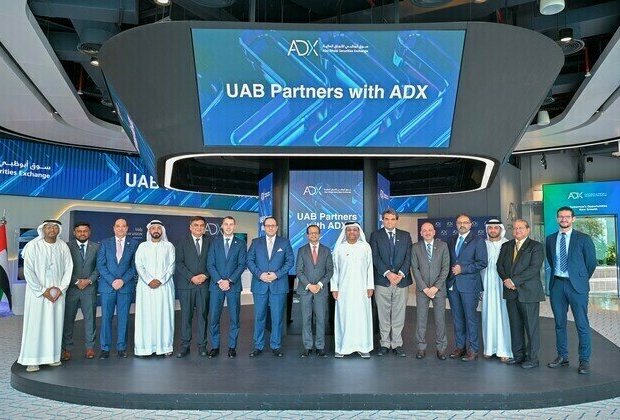
United Arab Bank has formed a strategic alliance with Abu Dhabi Securities Exchange to enable its customers to subscribe for upcoming IPOs through the bank’s digital channels or ADX’s eIPO Investor Portal. This arrangement aims to simplify the process of accessing capital markets, offering a secure and intuitive experience to investors.

At a ceremony held at ADX’s headquarters in Abu Dhabi, the agreement was formalised in the presence of Abdulla Salem Alnuaimi, Group Chief Executive Officer of ADX, and Shirish Bhide, Chief Executive Officer of UAB, alongside senior officials from both organisations.

This collaboration is designed to strengthen UAB’s wealth management proposition by embedding investment opportunities within its digital ecosystem. Customers will now be able to access IPO applications directly via UAB’s mobile application, replacing previously cumbersome procedures with streamlined, guided pathways that enhance transparency and usability.

According to Shirish Bhide, this partnership reflects the bank’s dedication to innovation and long-term value creation. By integrating investment services within UAB’s digital channels, customers gain more inclusive access to the UAE’s capital markets. Abdulla Salnuaimi added that this initiative reaffirms ADX’s aim to enhance the investor experience by collaborating with leading financial institutions and advancing digital solutions.

The move aligns with UAB’s broader digital transformation strategy, as demonstrated by prior efforts such as launching RegPRISM, an AI-powered regulatory intelligence platform developed with Smarbl to improve compliance and operational efficiency.

Further underpinning UAB’s financial robustness is its first-quarter 2025 performance. The bank reported a 49 per cent year-on-year increase in net profit—rising to AED 102 million—driven by growth in assets, loans, Islamic financing, and investments. Capital adequacy remains solid, with a CET1 ratio of 12.6 per cent and a total capital adequacy ratio of 17.1 per cent. Non-performing loans saw improvement from 4.8 per cent to 3.4 per cent, with coverage at 118 per cent.

These financial strengths were in part bolstered by a rights issue completed earlier, which raised around AED 1.03 billion and strengthened UAB’s capital position.

ADX, for its part, continues to pursue innovation in financial market infrastructure. In July, it collaborated with First Abu Dhabi Bank and HSBC to launch the Middle East’s first DLT-based digital bond, reinforcing its frontier role in tokenised finance.

Through this latest agreement, UAB and ADX are promoting a more integrated, accessible investment landscape—blending digital banking and capital markets participation in a manner that could redefine customer expectations and market engagement.

Stadium 66, the newly unveiled sports bar and wagering venue at Route 66 Casino Hotel in Albuquerque, opens its doors on 4 September 2025, aiming to redefine sports entertainment in the Southwest. The venue pairs a fully equipped dining and viewing experience with a cutting‑edge Caesars Sportsbook, offering both excitement and convenience to fans this NFL season. The venue accommodates up to 250 guests and features expansive LED video walls […]

OpenAI has struck an all‑stock agreement to acquire Statsig for about $1.1 billion, appointing the startup’s founder, Vijaye Raji, as chief technology officer of applications, a move poised to accelerate the firm’s product engineering efforts for ChatGPT, Codex, and future AI tools. The acquisition and leadership reshuffle reflect OpenAI’s intensified push into building scalable, safe, and intuitive AI-powered applications amid mounting competition. The acquisition, pending regulatory approval, brings […]

China’s solar industry, particularly its polysilicon segment, is experiencing a defining shift. Six leading solar makers reported a combined loss of Rmb20.2 billion during the first half of 2025, prompting regulatory intervention to stem overcapacity and destructive price competition.

In early September, GCL Technology Holdings confirmed that investors can anticipate clarity soon on a plan to restructure the polysilicon industry—potentially this year. Chief Financial Officer Yang Wenzhong indicated that GCL may invest its own capital into the effort but is proceeding with caution amid financial uncertainty.

The core of this restructuring lies in a proposed RMB50 billion pooling of funds by top producers like GCL and Tongwei. The aim is to acquire and retire roughly one-third of existing production capacity, targeting approximately one million metric tonnes of lower-quality output. This supply reduction could help raise prices and restore downstream solar panel maker profitability.

Government authorities are reinforcing this market realignment through direct meetings with industry representatives. In August, China’s Industry Ministry held its second session in two months, urging the sector to eliminate outdated manufacturing capacity and curb “low-price disorderly competition” as part of a broader effort to reverse deflationary trends.

The policy response reflects concern over global glut: in 2024, China produced 588 GW of solar capacity while global demand stood at 451 GW, leaving utilisation at just 54%. Analysts estimate that up to 20–30% or more of solar manufacturing capacity must exit the market to reestablish profitability.

This state-guided consolidation faces substantial obstacles. Local governments that have boosted regional development through subsidies, tax breaks and favourable land deals for solar manufacturers may resist decommissioning facilities tied to local GDP and employment. Even if a cartel is formed, analysts warn that members might sneak back into production once prices rebound.

While the outlook remains complex, sentiment among investors appears cautiously optimistic. Markets showed tentative improvement after reports of progress in industry coordination and price gains surfaced. Trina’s commentary on earnings, describing polysilicon as “the first step of anti-involution,” hints at broader hopes for a turnaround.

Global attention is intensifying. Successful restructuring could reinforce China’s dominance—already controlling around 90% of global solar cell capacity—while disrupting cheap exports that have pressured international markets. But a failed effort could compound challenges in other overcapacity-prone sectors such as electric vehicles or shipbuilding.

Longi, another solar powerhouse, is also adapting. Its founder, Li Zhenguo, has relinquished daily management to focus on R&D, including back‑contact cell and green hydrogen technology. The shift comes amid sustained losses and an 80% decline in its share price since 2021, as analysts predict that overcapacity will persist through 2028.

China’s solar supply chain—from polysilicon to panels—is at an industrial crossroads. The restructuring effort is perhaps the boldest policy move yet to recalibrate supply with demand. But its success hinges on overcoming entrenched regional interests, ensuring disciplined industry behaviour, and catalysing sustainable demand growth.

Nigeria has secured a production-sharing contract with TotalEnergies and South Atlantic Petroleum for two deepwater offshore blocks, under a novel legal structure designed to prioritise gas development alongside oil. The agreement spans units PPL 2000 and PPL 2001—a territory of some 2,000 square kilometres in the Niger Delta Basin—and marks Nigeria’s first PSC under its transformative Petroleum Industry Act of 2021. The PIA, enacted in 2021, acknowledges the differing […]

TransBnk has raised $25 million in its Series B funding round, led by Bessemer Venture Partners with support from Arkam Ventures, Fundamentum Partnership as well as existing backers 8i Ventures, Accion Venture Lab, and GMO Venture Partners. The Mumbai‑based transaction banking platform will channel the funds into geographic expansion across Southeast Asia and the Middle East, while strengthening its technology and product development teams. Vaibhav Tambe, co‑founder and chief executive, highlighted a sevenfold increase in the company’s valuation following […]

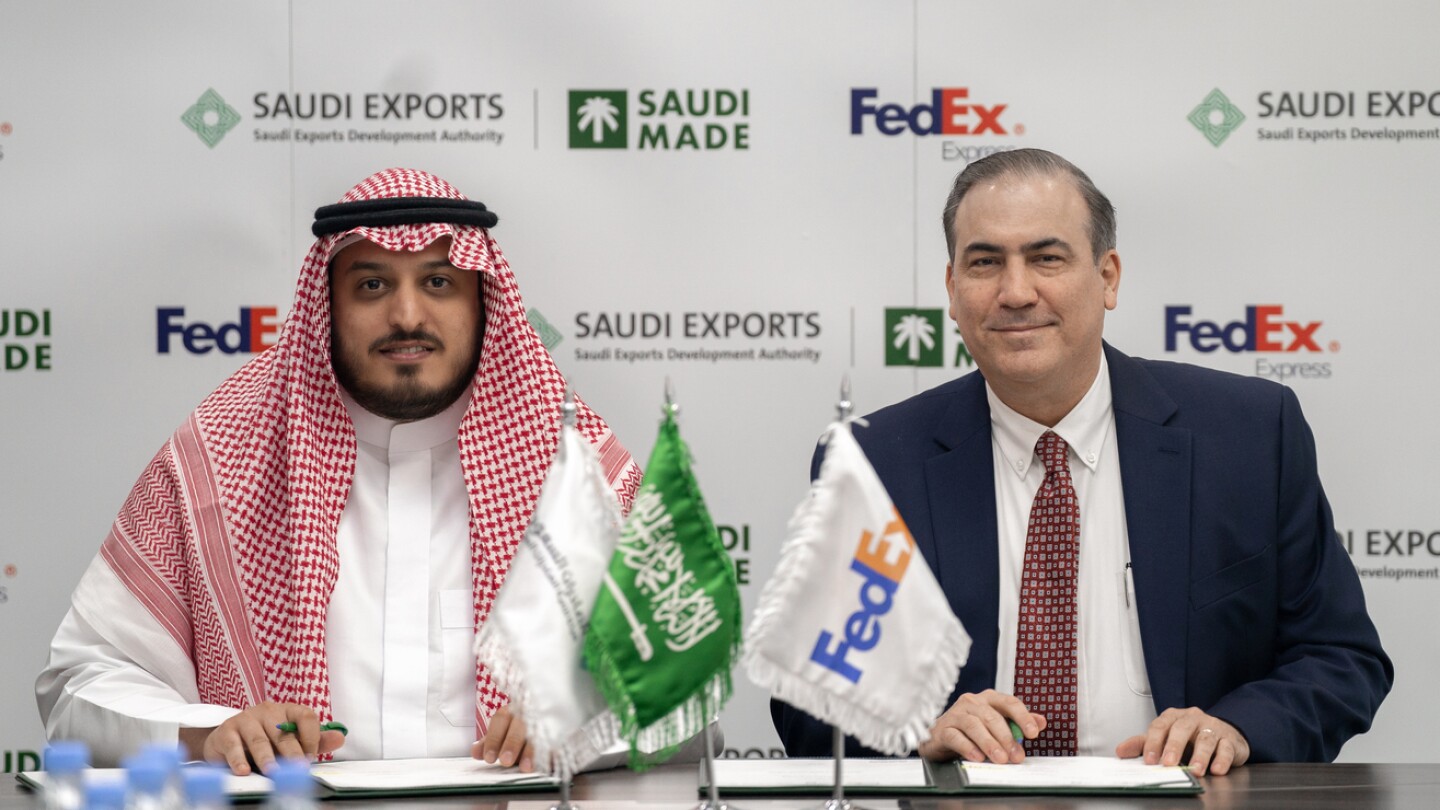
FedEx has gained an economic licence from Saudi Arabia’s General Authority of Civil Aviation to operate as a foreign air carrier, marking a significant expansion of its logistics footprint in the Kingdom. The move equips FedEx to conduct scheduled cargo services via King Khalid International Airport in Riyadh, with plans to operate 24 flights per month from early September 2025, establishing Riyadh as its regional hub linking continents.

The licence, granted on 2 September 2025, grants FedEx the ability to fly directly and to integrate air and ground operations across the Gulf Cooperation Council states. The announcement was made during a ceremony in Diriyah, attended by senior officials including Saleh Al‑Jasser, Minister of Transport and Logistics Services and Chairman of GACA; Abdulaziz Al‑Duailej, GACA President; and Dr Rumaih Al‑Rumaih, Acting President of the Transport General Authority, alongside FedEx executives.

FedEx introduced its first nonstop freighter service from the United States and Europe into Riyadh, operating six times a week with Boeing 777 aircraft. This route is the only express logistics connection offered by FedEx that bypasses other hubs, and continues onward to Guangzhou and Shanghai.

This direct link strengthens trade routes, particularly for high-priority sectors like energy, manufacturing, mining, healthcare and automotive, enabling temperature‑controlled, heavy, oversized or hazardous shipments. FedEx complements this airlift with its FedEx Logistics suite—air, road and sea freight forwarding, customs brokerage, and transit cargo support—aimed at enhancing supply chain resilience across the GCC, South Asia and Africa.

The company has developed end‑to‑end capabilities in the Kingdom, directly managing pickup, delivery and customs clearance through four gateways and four stations, supplemented by digital tools for shipping visibility and efficiency.

FedEx leadership emphasises Saudi Arabia’s role as a strategic logistics hub connecting Asia, Europe and the Americas. Richard Smith, Chief Operating Officer, International and CEO of the Airline at FedEx, cited the Kingdom’s infrastructure as a vital link in their global network. Kami Viswanathan, President of FedEx Middle East, Indian Subcontinent and Africa, underlined the integration of infrastructure, digital innovation and integrated solutions to aid Saudi businesses in competing globally.

These moves align closely with Saudi Vision 2030. The Aviation Programme aims to elevate Saudi Arabia’s aviation sector to the highest regional standards, targeting 330 million passengers, 4.5 million tonnes of air cargo, and air connectivity to 250 destinations by 2030. FedEx’s operations support these objectives by advancing industry capacity and reinforcing Riyadh’s prominence in logistics.

The expansion follows challenges earlier this year, when FedEx suspended economy parcel and freight services to the Kingdom from countries including India, Japan and the UK in March 2025. Service was halted temporarily, with FedEx noting it would resume “as soon as possible.”

Trade levels in Saudi Arabia have surged. The Kingdom posted a trade surplus of US$ 16.8 billion in Q1 2025, up 52 percent on the prior quarter, reflecting strong exports and demand for logistics infrastructure that FedEx is now well‑positioned to serve.

With strategic investments—including the creation of a global head office in Riyadh to oversee operations across Saudi Arabia, Bahrain, Kuwait and Qatar—FedEx reinforces its long‑term commitment to the region.

This expansion signals a departure from reliance on intermediaries or regional hubs outside the Kingdom; FedEx now controls its entire customs-to-delivery chain in Riyadh, laying the groundwork for faster transit, improved service reliability and deeper integration into global trade networks.

Emerging trends include rising demand for integrated logistics services, investment in digital tools for customs and tracking, and regional consolidation of supply chain operations. Key players alongside FedEx include Saudi authorities driving Vision 2030’s transport strategy, while GCC markets and commercial sectors increasingly rely on swift, dependable global connectivity.


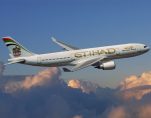
Etihad Airways has stressed it has no set timetable for a public listing, affirming that its $20 billion expansion over the coming decade can be financed from within.

The airline’s chief executive, Antonoaldo Neves, confirmed it is prepared for an initial public offering, yet the decision remains with its shareholder—Abu Dhabi’s sovereign wealth fund, ADQ. He stated that “the time has not come yet”, emphasising that Etihad can self‑fund its next phase of growth.

Neves traced the shift in strategy to ADQ’s acquisition of Etihad in October 2022, which ushered in a focus on organic growth and strengthened regional connectivity through Abu Dhabi, rather than continuing merger or acquisition activity.

Passenger demand continues to rise, with traffic up 17 percent year‑on‑year and load factors climbing to 88 percent—up from 86 percent a year earlier. Despite a slowdown during the Israel-Iran conflict, bookings rebounded fully by the end of July, demonstrating robust consumer interest.

Etihad’s fleet exceeds 100 aircraft, spanning both Airbus and Boeing models. In May, the airline placed a major order with Boeing for 28 wide‑body jets—including 777X aircraft destined to replace its Airbus A380s after 2030. Neves also revealed plans to supplement fleet expansion via secondhand aircraft and lessor sourcing.

This public statement builds upon a broader narrative unfolding over the past year. Etihad reported profitability in 2022 and 2023—92 million dirhams and 525 million dirhams respectively—after years of losses. The airline has been enhancing transparency, governance, and operational efficiency, eliminating underperforming routes and returning grounded aircraft to service.

Earlier projections had flagged a possible IPO no earlier than 2025, allowing Etihad to bolster its financials before a listing. Speculative growth targets under its “Journey 2030” strategy include expanding to over 125 destinations and substantially growing its fleet.

Other commentary from February 2025 suggested Neves intended to float a stake of up to 20 percent on the Abu Dhabi stock exchange, possibly valuing the airline at $5 billion, and underscored his readiness for a float—though final approval again resides with ADQ.

Throughout this period, Etihad has forged strategic alliances. A landmark joint venture with China Eastern Airlines will coordinate schedules and revenues on selected routes from 2025, the first such pact between Middle East and Chinese carriers. Additionally, the airline has broadened its network through expanded service offerings to emerging and mid‑distance markets, positioning Abu Dhabi as a strategic travel hub.

Toyota and BYD have formalised a watershed collaboration anchoring future battery‑electric vehicle innovation. The joint venture, BYD Toyota EV Technology Co., Ltd., began operations in Shenzhen in 2020, equally owned by Toyota Motor Corporation and BYD Company Ltd. Their combined expertise aims to reshape BEV design, performance, comfort and intelligence for discerning Chinese consumers—and potentially beyond. BTET emerged from a partnership agreement signed in November 2019, with formal registration […]

EU regulators have suspended the anticipated antitrust penalty against Google over its advertising technology practices, prioritising trade negotiations with the United States. A modest fine, expected after a four‑year investigation sparked by a complaint from the European Publishers Council, has been put on hold as the EU awaits a commitment from Washington to reduce tariffs on European car imports from 27.5 percent to 15 percent.3 sources familiar with the […]

Rocket Lab has expanded its in‑house manufacturing strength by successfully incorporating Planetary Systems Corporation, a Maryland‑based specialist in satellite separation systems. The deal, announced on 15 November 2021 and concluded by December that year, involved $42 million in cash and 1.72 million shares of Rocket Lab stock, with an additional performance‑based stock earn‑out dependent on PSC’s performance through 2022 and 2023.

PSC, celebrated for its “Canisterized Satellite Dispenser” and Lightband separation systems, boasts a flawless 100 percent mission‑success record across more than 100 launches. Its hardware has served a broad spectrum of launch platforms—from Rocket Lab’s own Electron vehicles to those managed by SpaceX, United Launch Alliance, Northrop Grumman, and international agencies such as Arianespace, the Indian Space Research Organisation, and JAXA.

By bringing PSC into its fold, Rocket Lab enhances its vertically integrated Space Systems division, now including Photon satellite buses, Maxwell dispensers, reaction wheels, star trackers, solar solutions, flight software, and the newly added separation hardware. PSC will continue operations in Maryland under the leadership of Mike Whalen as CEO, with founder Walter Holemans remaining chief engineer.

Chunked behind this strategic move is Rocket Lab’s intent to streamline the satellite deployment value chain, offering customers a one‑stop solution—from launch services to the final separation of payloads in orbit. Founder and CEO Peter Beck noted that integrating PSC’s proven hardware “simplifies the journey to orbit” by aligning hardware, software, spacecraft, and launch into a seamless package.

Alongside the acquisition of Advanced Solutions, Inc. in October 2021, this move aligns with Rocket Lab’s broader objective to secure technology, talent, and production capacity internally, reducing external dependencies. Industry observers have characterised this as a deliberate backward integration effort. A participant in an online space‑industry discussion observed:

“It seems like they are reverse integrating into their supply chain… instead of paying for products, buy the company, make the products for yourself, and make the margin on selling to others.”

Operationally, the acquisition has borne tangible returns. In November 2022, Rocket Lab secured two contracts totalling $14 million to supply Lightband separation systems for the Space Development Agency’s Tranche 1 transport layer constellation, reinforcing its position in national security‑oriented space architecture. The Lightbands, inherited from PSC, now supply critical satellite deployments with demonstrated reliability in specialised environments.

Rocket Lab’s expanded suite of capabilities positions it advantageously within a market increasingly dominated by fully integrated space services providers. By combining its Electron launch vehicle, Photon spacecraft, separation hardware, and on‑orbit software offerings, the company provides end‑to‑end mission support—a compelling proposition for both commercial and government customers.

With growth in space demand showing no signs of abating, particularly in low-Earth orbit constellations and defence networks, consolidating key enabling technologies under one roof offers Rocket Lab both operational efficiencies and competitive edge. The PSC acquisition stands as a pivotal building block in that strategy.

Google has eliminated around 35 percent of managers overseeing small teams, opting to shift many into individual contributor roles in a decisive drive to flatten its organisational structure. Brian Welle, vice president of People Analytics and Performance, revealed during an all‑hands meeting that the company now has substantially fewer managers and direct reports compared to this time last year. The aim is to reduce bureaucracy and accelerate decision‑making […]

McLaren Racing is set to be valued at in excess of £3 billion as its Middle Eastern backers move to acquire the remaining minority stake in the team. Bahrain’s Mumtalakat sovereign wealth fund and Abu Dhabi’s CYVN Holdings are preparing to buy out the 30 per cent share previously held by investors such as MSP Sports Capital, UBS O’Connor and Ares Management in a deal expected to be confirmed imminently.

This valuation marks a substantial leap from its December 2020 valuation of approximately £560 million, when MSP Sports Capital entered the picture during a fundraising round. The outcome promises significant returns for the minority investors who backed McLaren during its earlier financial challenges.

McLaren’s resurgence under chief executive Zak Brown and team principal Andrea Stella has helped propel the team back to the forefront of Formula One. Following years overshadowed by dominant rivals, McLaren clinched its first constructors’ championship in 2024, and in the current season its drivers—Oscar Piastri and Lando Norris—are locked in a fierce duel at the top of the drivers’ standings.

The sport’s expanding global appeal, driven by Liberty Media’s strategic digital outreach and the cultural phenomenon of the Netflix series Drive to Survive, has magnified team valuations across the grid. McLaren’s rise is emblematic of that broader trend.

Alongside on-track performance, McLaren has diversified into other motorsport arenas. It competes in IndyCar and has confirmed plans to enter the World Endurance Championship, notably the 24 Hours of Le Mans, beginning in 2027. Mastercard has also joined as the team’s title sponsor, in a deal slated to begin in 2026.

The Gulf investors, Mumtalakat and CYVN, currently hold control of McLaren Group Limited, the parent entity of McLaren Racing. With this deal, they will consolidate full ownership of the racing arm.

Beyond this deal, McLaren’s broader corporate structure has undergone notable change. In March 2024, Mumtalakat completed a full takeover of McLaren Group. Later, in December 2024, CYVN acquired McLaren Automotive along with a non‑controlling interest in the racing division. These moves underscore a strategic integration under Gulf ownership, spanning both competition and high-performance automotive manufacturing.

The proposed stake sale is set to be formally announced in the coming days—and might already be public by the time this report is published.

Further context: Aston Martin, another Formula One team, recently sold a minority stake in its racing operation for approximately $147 million, valuing that team at around $3.2 billion.

Alibaba cloud to dedicate its global capabilities to support Bosch’s technology stack Both intend to deepen collaboration in leveraging Alibaba’s AI strength to facilitate Bosch’s business innovations, such as smart cockpit Bosch to expand its e-commerce presence in Southeast Asia, Spain, and Latin America through Alibaba’s global platforms HANGZHOU, CHINA – Media OutReach Newswire – 2 September 2025 – Bosch, a leading global supplier of technology and […]

VISHNU RAJA
RYO YAMADA
HITORI GOTOH
IKUYO KITA
Just in:
JCI Names the 2026 Ten Outstanding Young Persons of the World // Ramayana triggers high tourist traffic to Jatayu rock centre // Row over Sabarimala toilet disruption // Bora Group 3Q26: Revenue and Net Income Expansion Continues U.S. Manufacturing and Biologics Footprint Complete; Margin Expansion to Follow as Utilization Improves // Hong Kong International Airport Online Shop Winter Festive Offer // ASEAN adopts binding pact on regional digital commerce // Over 360 electricity distribution professionals meet in Seoul for CIRED’s first major event in the Asia-Pacific region // Iran claims six-drone operation against US radar in Bahrain // Bankrupt Indian Business Barons Mostly Live Life King-Size // Ukraine faces $32.6 billion financing gap amid legislative delays // Galaxy Resort Presents: “Plácido Domingo & José Carreras: The Legends United Opera Gala” // JPMorgan restores transactions after banking payments disruption // Mubadala and Centerbridge secure £1.17bn Canaccord wealth agreement // Hong Kong schedules Gulf-Asia investment forum for 2027 // Bitcoin rebounds after weekend plunge wipes billions from cryptocurrencies // Govt offers talks to protesting teachers after CM signal // Google identifies autonomous AI systems conducting vulnerability attacks // Pink Economy report puts equal rights at the heart of Thailand’s road to Bangkok WorldPride 2030 // Fraudsters register brand lookalikes within a day // Danone expands consumer insight capabilities to accelerate nutrition innovation through Southeast Asia R&I Application Lab upgrade //