News related to
chief

Kraken has launched xStocks, a platform enabling users outside the United States to trade 60 tokenised U.S. stocks and ETFs around the clock, five days a week. Accessible through the Kraken app, these equities are issued on the Solana blockchain and are fully backed one‑for‑one by genuine shares held via Backed and Dinari, offering both price parity and economic rights.

The new service opens over 60 blue‑chip names—including Apple, Tesla, Nvidia and Amazon—to non‑U.S. investors, granting fractional ownership starting at just US$1, with no purchase fee in USD or Kraken’s native USDG. Trading is available 24/5 via the exchange, while withdrawal to self‑custodial wallets allows for 24/7 on‑chain usage, such as collateral in DeFi.

Kraken’s co‑chief executive Arjun Sethi described xStocks as a “foundational” shift in investment accessibility, emphasising seamless, permissionless ownership without intermediaries or geo‑barriers. The tokens are structured as SPL assets on Solana, chosen for its speed and efficiency, and dividends are auto‑reinvested into additional tokens, though users forfeit direct voting rights.

Kraken has imposed geo‑restrictions, excluding U.S. persons as well as residents in Canada, EU, UK and Australia during the initial rollout—but plans to expand to more than 185 countries in the coming weeks and eventually extend to multiple blockchains. The exchange emphasizes adherence to regulatory frameworks, supported by its partnerships with Swiss issuer Backed and U.S. SEC‑registered transfer agent Dinari.

The advent of tokenised stocks follows earlier, less‑successful attempts by Binance in 2021, which encountered regulatory pushback in multiple jurisdictions. Coincidentally, Bybit unveiled access to the same xStocks pool two hours after Kraken, signalling an intensifying push within the crypto sector. Bybit’s version supports both Solana and Ethereum versions, aimed at users seeking a bridge between traditional finance and crypto.

The global tokenisation of equities is attracting attention across the industry. Robinhood has launched tokenised stock trading in the EU in partnership with Arbitrum, enabling EU residents to trade over 200 U.S. equities 24/5. Coinbase is also pursuing approval from the U.S. Securities and Exchange Commission to offer tokenised equities domestically, pending regulatory clearance. Several firms recognise tokenisation’s potential to reduce costs, improve settlement times, and introduce continuous trading, though they acknowledge challenges surrounding liquidity and regulatory harmonisation.

Market watchers suggest tokenised equities could reshape global finance. The linkage to blockchain allows cross‑border access, seamless custody and composability in DeFi ecosystems. Critics note limitations, such as absence of voting rights and uncertain secondary‑market liquidity. The World Economic Forum and legal analysts have underlined the need for clearer disclosure standards and global regulatory coordination.

Kraken’s move appears calibrated to capitalise on a regulatory shift favouring tokenisation. It actively engages with international regulators, avoiding pitfalls that stymied predecessors. Its strategy builds on existing infrastructure—such as its listing of more than 11,000 traditional U.S. securities to U.S. clients—melding established market access with on‑chain innovation.

The launch of xStocks marks a pivotal moment in mainstreaming tokenised finance. By undercutting geographical limitations, slashing fees and uniting traditional equities with crypto rails, Kraken and peers are edging global capital markets closer to seamless, inclusive accessibility. As the ecosystem evolves, attention will turn to how regulatory authorities respond and whether liquidity deepens to support this new asset class.

HONG KONG SAR – Media OutReach Newswire – 30 June 2025 – As a global trade and financial centre and a key link in the Belt and Road Initiative (B&RI), Hong Kong plays a pivotal role in connecting the Belt and Road regions, spanning some 150 countries around the world. Hong Kong’s external trade with Belt and Road economies other than Mainland China has surged by almost […]

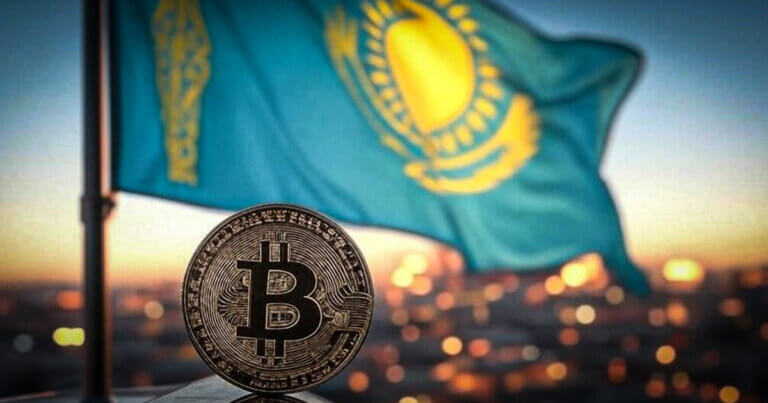
Kazakhstan’s National Bank, under its chairman Timur Suleimenov, is taking steps to build a state-held cryptocurrency reserve managed by a subsidiary entity, following international sovereign fund practices. The proposal outlines funding sources that include confiscated crypto-assets and coins mined through ventures with state participation—measures aimed at enhancing governance and stability within the digital asset ecosystem.

The National Bank is developing a comprehensive framework for the reserve’s formation and administration, emphasising transparency and institutional safeguards. It plans to enshrine in law both the status of the reserve and the protocols for deposit and use, with draft legislation to be submitted to parliament for approval.

Suleimenov highlighted that the envisioned affiliate would follow global norms for sovereign funds, ensuring robust accounting, secure storage, and resilient governance structures. The legal amendments under discussion would affirm the reserve’s legal standing and empower authorities to handle crypto-assets seized under law as well as profits generated from state-linked mining operations.

The banking chief stressed the importance of centralised institutional oversight, noting the high volatility and vulnerability of crypto-assets. Centralisation, he said, is key to mitigating risks such as market fluctuations or cyber threats.

This effort is part of a wider regulatory overhaul targeting cryptocurrency flows. Under proposals by the Ministry of Digital Development, draft laws would impose criminal and administrative liability on grey‑market trades, require licences for investment advisers, and curb unlicensed exchanges and misleading crypto promoters—many of whom target younger investors.

Parliamentary deputies have endorsed the overarching concept. One lawmaker, Kuspekov, recommended creating a “national digital reserve” at the central bank to anchor confiscated digital assets and tighten financial controls. He also urged strengthened due diligence by banks, prohibition of unlicensed crypto platforms, and mandates for licensed investment coaches.

These developments follow a surge in legislative activity since May. The National Bank has proposed amendments defining legal status for digital assets, licensing for crypto exchanges outside the Astana International Financial Centre, and a regulatory sandbox for testing digital services. The objective is to restore confidence in Kazakhstan’s crypto sector after capital flight estimated at US$15 billion last year.

Timur Suleimenov, appointed as National Bank chair in September 2023 and former minister of national economy, has emphasised institutional integrity and macroeconomic resilience. He recently noted that international reserves reached US$104.7 billion at end-2024, bolstered by gains in gold and foreign-exchange holdings.

The crypto reserve initiative appears aligned with broader state efforts. Issuance of AIFC‑backed crypto payment cards was piloted in early June by major banks including Halyk Bank, Forte and Altyn Bank—allowing consumers to instantly convert digital assets into fiat currency for everyday purchases.

The Ministry of Digital Development has proposed the creation of a crypto reserve as a digital asset repository to support the national digital economy. This official endorsement underscores the government’s increasing interest in integrating digital assets within its fiscal infrastructure.

Central to this initiative are practical mechanisms that remain under review. The National Bank is working with law-enforcement agencies and other government bodies to outline operational procedures, compliance norms and asset custody arrangements.

Generative artificial intelligence is revolutionising research and innovation, empowering humans to push the boundaries of creativity and discovery. According to Innovation Endeavors, one in eight workers now engages with AI monthly—90 percent of that growth occurring in the past six months. Tools are reshaping software development by merging programming, design and product planning into unified pipelines. Meta is aggressively competing, launching a “Superintelligence” research wing, hiring top-tier talent—including […]

Survey data from the Hana Institute of Finance indicates 27% of South Koreans aged 20 to 50 now hold cryptocurrencies, equating to roughly 14% of their total financial portfolios. Those in their 40s lead the trend with a 31% ownership rate, closely followed by those in their 30s and 50s. Notably, 70% of respondents across all age groups are planning to increase their crypto holdings in the face of mounting pressures in the job market and housing affordability.

This behavioural shift signals an evolution in investment patterns. Regular crypto purchases among this cohort have increased from 10% to 34%, while mid-term holdings — defined as positions held for months to a year — rose from 26% to 47%. Meanwhile, short‑term speculative trading has declined. “The perception is shifting from speculation to strategic investment,” notes Yoon Sun‑young, a researcher at the Hana Institute.

Bitcoin continues to dominate these portfolios, with six in ten owners including it among their crypto holdings. Many are diversifying further into altcoins and stablecoins, though NFTs and security tokens remain niche, with around 90% of investors sticking solely to coin-based assets. This maturation marks a departure from the earlier trend‑driven, high‑volatility investing to more structured, long‑term strategies.

Motivations for engagement increasingly reflect concerns beyond quick gains. Among individuals in their 50s, 78% cite wealth accumulation as a primary driver and 53% explicitly see crypto as a tool for retirement planning. Across all participants, interest in portfolio diversification and systematic savings emerged as common themes. The Korea Times reports four in ten investors now view crypto as a legitimate component of pension preparation.

Economic pressures—particularly youth unemployment of 6.6%, which is over twice the national average—combined with high housing costs and stagnant wages, are pushing younger demographics toward crypto as an alternative investment option. At German Blockchain Week, Eli Ilha Yune, chief product officer at Anzaetek, described crypto investment for many young Koreans as “a lifeline” rather than enthusiasm for blockchain ideals.

Despite this momentum, challenges persist across the ecosystem. Investors express concern about market volatility and fraud risks. A major logistical frustration stems from a government-mandated system allowing only one bank account linked per exchange. Around 70% of users have indicated support for linking multiple accounts to improve convenience. Survey respondents also cited the expansion of traditional financial institutions’ roles and reinforced legal protections as key to boosting confidence — at rates of 42% and 35% respectively.

Institutional adaptation is underway. KB Kookmin Bank, alongside seven other major domestic banks, has filed trademarks for won‑pegged stablecoins and is preparing to develop blockchain‑based financial products. Meanwhile, lawmakers have been advancing a Digital Asset Basic Act, with President Lee Jae‑myung’s administration expected to oversee further regulatory frameworks by the second half of 2025.

South Korea already hosts over 16 million crypto account holders—surpassing its stock investor base—and accounts for approximately 102 trillion won in assets held onchain. As the country moves further into regulated crypto waters, with legislation and infrastructure catching up to demand, the market appears set on a path toward mainstream acceptance and deeper integration into financial portfolios.

Australia’s earnings from mining and energy exports are set to decline over the coming years, with rising gold revenues unable to fully offset weak demand and price falls in iron ore, liquefied natural gas and coal. Government projections show a fall from A$415 billion in 2023–24 to A$385 billion in 2024–25, and further to A$352 billion by 2026–27. The Office of the Chief Economist highlights that surplus global supply—particularly in […]

Afreximbank has confirmed the appointment of Dr George Elombi, its Executive Vice‑President for Governance, Legal and Corporate Services, as the institution’s fourth President and Chairman of the Board, effective September 2025. The decision was ratified during the 32nd Afreximbank Group Annual Meetings held in Abuja, Nigeria, from 25 to 28 June, culminating in formal shareholder approval on 28 June. A Cameroonian national with nearly three decades of […]

Advertisements

Hong Kong’s government on 26 June issued its Policy Statement 2.0 on the development of digital assets, signalling a decisive push to position the city at the forefront of the global crypto landscape. The statement introduces the comprehensive “LEAP” framework—Legal, Expand, Advance, People—underlining a mission to develop a trusted, innovative, and deeply integrated ecosystem for digital assets.

The regulatory reforms assign explicit oversight roles: the Securities and Futures Commission will licence digital asset exchanges, custodial and dealing services, while the Hong Kong Monetary Authority will govern bank-related activities in the sector. In addition, licensing regimes for stablecoin issuers and custodians are scheduled to commence on 1 August 2025, designed to strengthen anti‑money‑laundering safeguards, investor protection, and transparency in stablecoin issuance.

Central to Policy 2.0 is a commitment to tokenisation of traditional financial instruments and real‑world assets. The government will regularise issuance of tokenised government bonds, streamline stamp‑duty treatment for tokenised ETFs, and legislate to support tokenisation of assets such as precious and non‑ferrous metals, and renewable energy products. These bids aim to boost liquidity and broaden market access, aligning with existing initiatives such as the HK$6.8 billion in green bond token issuances since 2022.

Stablecoins also feature prominently, with proposals to pilot licensed stablecoins in public sector uses. Market consultation is seeking input on integrating these instruments into government operations and cross‑border payments, underpinned by stricter regulatory clarity. Tax incentives for private investment vehicles and family offices trading digital asset securities are expected in the 2025–26 fiscal year, aligning digital and traditional financial regimes.

International alignment is embedded in the blueprint. Hong Kong’s framework adheres to global standards—covering anti‑money‑laundering as per FATF, Basel Committee prudential supervision, IOSCO’s policy recommendations, and OECD crypto‑asset tax transparency measures. Complementary pilot schemes include HKMA’s “Project Ensemble” wholesale central bank digital currency trials, LME‑backed tokenisation of metal assets in Hong Kong warehouses, and a Cyberport‑sponsored incubator scheme to finance blockchain startups.

Since unveiling its original 2022 policy, the government has approved licences for over a dozen digital asset platforms, including nine trading licences and OTC frameworks, and supported tokenised bond issues by both government and corporate entities. Financial Secretary Paul Chan and SFC chief Julia Leung emphasise that this next phase marks a departure from pilot testing, transitioning toward institutionalisation and global competitiveness.

Industry leaders responded positively. Legal and compliance expert Cora Ang described the framework as “a strategic win” that aligns regulatory clarity with stablecoin and tokenisation growth. HashKey CEO Xiao Feng noted the city is entering a “new stage of maturity”, transitioning from sandbox environments to a substantive digital assets regime. Historical drivers such as the JPEX OTC fraud prompted regulators to enforce tighter custody and trading separation to protect investors.

Notably, fintech legal advisers in Hong Kong report surging demand. Firms are actively supporting issuance of tokenised gold and digital bonds, as banks like Bank of Communications and Zhuhai Huafa Group deploy digital debt instruments via licensed platforms. Meanwhile, legal specialists continue to advocate for derivatives, margin‑lending, and institutional frameworks targeted at professional investors.

Hong Kong’s strategic deployment of Policy 2.0 underlines a competitive counterbalance to rival jurisdictions such as Singapore, Dubai, and the US, each advancing their own crypto regulatory frameworks. The city’s alignment with global financial standards—alongside tailored incentives and public‑sector engagement—signals a comprehensive, forward‑leaning posture in digital asset finance.

By K Raveendran When Chief Justice B R Gavai stated the other day that the Constitution is supreme and all arms of governance come under it, it may have seemed like a routine assertion at a felicitation event in his hometown, but in India’s current political atmosphere, it was anything but routine. It was a […]

GUIYANG, CHINA – Media OutReach Newswire – 27 June 2025 – Eco Forum Global Guyang 2025 will be held in Guiyang, Guizhou from July 5th to 6th. Guizhou, located in the southwest of China, is using an ecological pen to paint a gorgeous green picture along her mountains and rivers. From an ‘Experimental Zone’ to a ‘Pilot Zone’, Guizhou has embarked on a new path of green […]

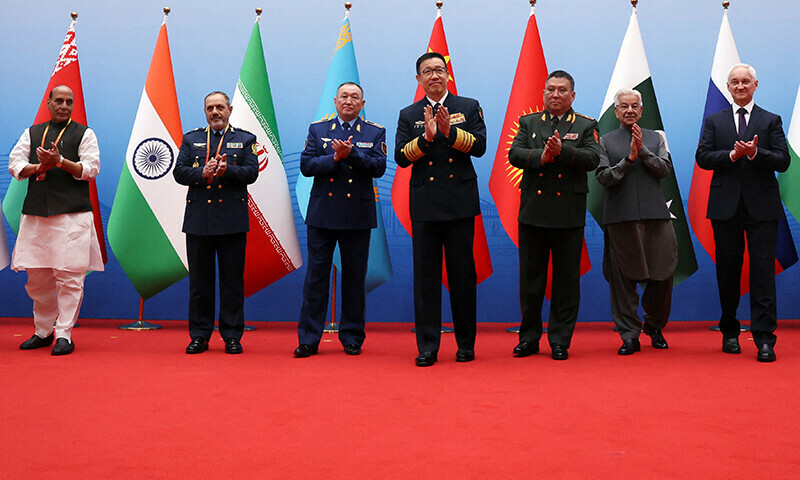
By Nitya Chakraborty India’s total diplomatic isolation was in show in the Shanghai Cooperation Organisation (SCO)’s defence ministers meet in Qingdao city in China on June 25 and 26 when a joint statement was prepared calling upon the members to jointly fight terror but there was no mention of Pahalgam killings on April 22 while […]

HONG KONG SAR – Media OutReach Newswire – 27 June 2025 – The Hong Kong Institute of Certified Public Accountants (HKICPA) is delighted to announce its renewal of Mutual Recognition Agreement (MRA) with the Association of Chartered Certified Accountants (ACCA). The two accounting bodies continue to join hands together to pave ways for career development of the accounting talents in Hong Kong, with the aim to foster […]

NVIDIA Corp is a equity in the USA market. The price is 154.31 USD currently with a change of 6.45 USD from the previous close. The latest trade time is Thursday, June 26, 17:06:55 +0530. Nvidia Surpasses Microsoft to Reclaim Global Valuation Crown Nvidia has overtaken Microsoft to retake its position as the world’s most valuable publicly traded company, with a market capitalisation reaching approximately $3.77 trillion. The […]

Seventeen Nigerian soldiers have died and ten more were wounded after coordinated attacks on three military bases in Niger and Kaduna states, the army confirmed. The assaults began in the early hours of Tuesday, as heavily armed gunmen stormed forward operating posts in Kwanar Dutse and Boka, along with a base in neighbouring Kaduna State. Combat persisted for several hours under heavy fire. Army spokesperson Lieutenant Colonel […]

Mashreq Bank has inaugurated a representative office in Türkiye, marking a significant stride toward enhancing financial collaboration between the Gulf and Turkish markets. This strategic move is central to Mashreq’s initiative to channel risk capacity and capital flows directly to Turkish banks and corporates. Dubai’s Mashreq is already a familiar correspondent to Turkish financial institutions, actively participating in syndicated loans, trade finance, payments, treasury services and capital […]

Malaysia has officially unveiled the Startup ASEAN platform during its tenure as ASEAN chair, establishing a fully operational digital gateway designed to unite entrepreneurs, investors and ecosystem enablers across Southeast Asia. The launch—following a developmental blueprint initiated in 2024—unlocks access to regional markets, capital, talent and data, with an aspirational target of onboarding at least 10,000 startups by year-end.

The platform’s roll‑out represents phase two of the ASEAN Startup Technology Ignite initiative. Development and a soft launch took place in 2024, while the newly announced phase includes capacity‑building programmes and a Startup ASEAN summit. A third phase commencing in 2026 will see the establishment of an ASEAN Centre of Excellence dedicated to early‑stage ventures.

Minister of Science, Technology and Innovation Chang Lih Kang described the platform as a “strategic enabler” born from collaborative efforts among all ASEAN member states. He highlighted its role in bridging fragmented access to finance, talent and market opportunities. At the launch in Putrajaya, he underlined that approximately 5,000 startups have already joined and affirmed the year‑end goal of doubling that number.

ASEAN Secretary‑General Dr Kao Kim Hourn echoed these commitments, stating that the platform exemplifies deeper regional integration and presents “unprecedented opportunities” through technology. He noted that the platform extends to ecosystem builders and government institutions, reflecting ASEAN’s dedication to fostering inclusive innovation.

Cradle Fund Sdn Bhd, appointed by Malaysia’s MOSTI, is spearheading implementation. Its group chief executive, Norman Matthieu Vanhaecke, emphasised that the platform transcends mere technology: it is designed to generate meaningful partnerships, foster cross‑border initiatives and catalyse growth across the region. He said it will track metrics such as startup onboarding, investment activity and regional collaboration, aiming to involve 2,000 investors and 500 strategic partners by 2025.

Dr Kao highlighted the context underpinning this push. Southeast Asia hosts over 680 million people—more than half under 35—with a combined GDP exceeding US$3.9 trillion and a digital economy projected to surpass US$1 trillion by 2030. Kuala Lumpur’s leap into the top 20 emerging startup hubs, ranking 18th in the Global Startup Ecosystem Report 2025 by Startup Genome, provided a credible basis for regional leadership.

CupTuring beyond connecting stakeholders, the platform is set to host a suite of programmes. Already underway are collaborative initiatives with international partners such as South Korea and China, and plans include additional regional market‑access sessions and mentorship opportunities. The launch event featured a video tour with startup success narratives and a regional market access session, ASEAN CrossConnect, which paired ten seasoned mentors with participating startups.

The platform’s ecosystem metrics are compelling: as of the launch, more than 4,000 startups and 1,087 investors were registered, contributing to an ecosystem valued at over US$131.2 billion.

Governments from less developed ASEAN nations were assured of equal standing on the platform. Chang emphasised its borderless design, allowing any startup with internet access to connect with markets and investors across the region.

The Startup ASEAN initiative traces back to 2023, when ASEAN leaders approved a framework empowering Cradle to lead policy development, ecosystem readiness, and cross‑sector partnerships. The recent formal launch marks the first major deliverable of the Ignite initiative under Malaysia’s ASEAN chairmanship.

Experts view the initiative as a timely response to ASEAN’s broader economic integration agenda, reflected in recent high‑level declarations such as the Kuala Lumpur Declaration. The new platform aligns with ASEAN Community Vision 2045, aiming to strengthen innovation, connectivity and socio-economic resilience.

PUTRAJAYA, MALAYSIA – Media OutReach Newswire – 26 June 2025 – Malaysia today launched the Startup ASEAN platform, marking the full-scale rollout of a bold, unified digital gateway to connect and empower startups across ASEAN. Spearheaded by the Ministry of Science, Technology and Innovation (MOSTI) and executed by Cradle Fund Sdn Bhd (Cradle), the platform’s regional launch underscores Malaysia’s commitment under its 2025 ASEAN Chairmanship to fostering […]

LOMBOK, INDONESIA – Media OutReach Newswire – 26 June 2025 – Mirah Investment & Development is proud to announce the soft launch of Kuara Resort, a boutique beachfront retreat on the southern coast of Lombok, Indonesia. Kuara Resort – Lombok, Indonesia With just 16 thoughtfully designed villas, Kuara offers an intimate, slow-paced escape rooted in the natural beauty, cultural heritage, and warm hospitality of the Southern Lombok […]

Claira, a New York–based deal intelligence platform, has closed a $7 million seed funding round co-led by Barclays and Citi, alongside Reimagine Tech Ventures. Additional backing came from Activant Capital, KDX and OPCO Ventures. Claira’s platform integrates domain-native artificial intelligence directly into deal workflows, enabling banks, private-credit funds and financial institutions to speed up due diligence, unlock historical deal insights and scale decision‑making processes. Founder and chief executive […]

Tether chief executive Paolo Ardoino has pledged to catapult the company into the position of the world’s leading Bitcoin miner by the end of 2025, asserting that crypto‑mining is key to safeguarding its $10 billion‑plus Bitcoin reserves. He outlined a sweeping strategy centred on large‑scale investment in mining and energy infrastructure across Latin America.

Ardoino said Tether has already channelled upwards of $2 billion into mining and energy systems and is now accelerating deployment. While the company’s precise hash‑rate remains confidential, executives emphasise that their investment reflects both scale and strategic intent. The mining push forms part of a broader financial architecture designed to secure the firm’s Bitcoin holdings and further embed it within the Bitcoin ecosystem.

The announcement emerged at the Bitcoin Conference in Las Vegas, where Ardoino noted Tether’s robust earnings—reporting a $13 billion profit in 2024—and a sizeable portfolio of U.S. Treasuries. He revealed the firm holds more than 100,000 BTC and hinted that the mining operation will leverage renewable energy sources supporting its underlying reserves.

Tether is concurrently preparing to open‑source its Bitcoin Mining Operating System, which the company says will democratise mining by enabling participants ranging from individual Raspberry Pi setups to large‑scale farms to connect into secure point‑to‑point networks. The move is intended to broaden participation, enhance resilience of the Bitcoin network, and solidify Tether’s position as a leader in infrastructure innovation.

Energy infrastructure forms a crucial part of Tether’s strategy. Ardoino highlighted investments across Latin America in renewable energy projects, including substantial commitments in Uruguay and El Salvador, where Tether relocated its headquarters and backs geothermal initiatives through a project known as Volcano Energy. These investments reflect a dual focus: securing clean, reliable power for mining and contributing to regional energy resilience.

The strategic rationale centres on mitigating the risks of holding large Bitcoin reserves. Mining, Ardoino explained, provides not only operational control but also reinforces financial sovereignty, anchoring assets within a secured blockchain‑based ecosystem. By internalising hash‑rate and power sources, Tether aims to shield its holdings from external dependency and volatility.

Security considerations have informed the launch of MOS. As a decentralised architecture, the system allows devices to operate without reliance on central servers, reducing vulnerability to single‑point failures or third‑party disruptions. Looking ahead, Tether plans to integrate artificial‑intelligence tools into MOS to monitor performance and optimise operations in real time.

Tether’s move into open‑source mining software dovetails with its broader tech ambitions. Ardoino introduced QVAC, an AI platform that uses non‑custodial wallets, and unveiled plans for a Bitcoin‑centric wallet developed with Rumble. These projects underscore Tether’s strategy to embed Bitcoin deeper into digital finance and expand its ecosystem services.

Market observers note that Tether’s mining ambition places it in direct competition with publicly traded mining firms. Although exact hashrate figures are absent, the scale of investment and reserve holdings suggest that surpassing existing miners is credible by late 2025. Tracking progress will require scrutiny of deployment timelines and performance metrics, which Tether has declined to specify.

Financial analysts regard Tether’s diversified asset approach—spanning Bitcoin, gold and U.S. Treasuries—as a deliberate hedge strategy. The large Bitcoin reserves, reportedly worth over $10 billion, alongside substantial gold and treasury holdings, underpin a multifaceted capital structure. By converting passive holdings into active mining assets, Tether aims to generate operational yield and enhance asset security.

Critics of large‑scale corporate mining warn of environmental strains and centralisation risks. Tether’s emphasis on renewable energy uptake and decentralised software architecture reflects an attempt to mitigate these concerns. If MOS and energy projects deliver as promised, the model may provide a template for sustainable, corporate-scale participation in Bitcoin mining.

Next steps include the public release of MOS, scheduled for later in 2025, alongside scaling up of energy infrastructure across targeted Latin American sites. Close monitoring of mining output, energy efficiency, and systems performance will determine whether Tether’s pledge translates into actual dominance in global Bitcoin mining.

Over 500 Premium Global Products Now Available for Convenient Home Shopping HONG KONG SAR – Media OutReach Newswire – 25 June 2025 – Best Mart 360 Holdings Limited (“Best Mart 360” or the “Company”, together with its subsidiaries, the “Group”; stock code: 2360.HK), a leading leisure food retailer in Hong Kong, is excited to announce that its flagship retail brand, “Best Mart 360˚ ” and its global […]

A six-month-old San Francisco‑based venture, Thinking Machines Lab, has secured a staggering $2 billion seed round, propelling its valuation to at least $10 billion. Led by Andreessen Horowitz with participation from Conviction Partners and reportedly the government of Albania, this marks one of the largest initial funding rounds in Silicon Valley history. Founded in February 2025 by former OpenAI chief technology officer Mira Murati, the company has assembled a formidable […]

HONG KONG SAR – Media OutReach Newswire – 25 June 2025 – AIA Hong Kong announced the launch of Wealth Generation (“the Plan”), a bespoke life insurance plan designed exclusively for high-net-worth (HNW) individuals. This Plan enables customers to capitalise on wealth creation opportunities in today’s dynamic market while fostering long-term prosperity through strategic legacy planning. The Plan features multiple market-first^ legacy planning options, a rare-in-market* Flexi […]

LAGOS — Rack Centre’s Lagos campus has entered a strategic collocation deal with TelCables Nigeria, a subsidiary of Angola Cables, marking a significant enhancement of West Africa’s digital infrastructure. The agreement brings high-capacity network infrastructure and four major subsea cable systems—SACS, MONET, SEBRAS and EllaLink—directly into Rack Centre’s campus, securing faster, lower-latency routes to Europe, the Americas and Latin America. Fernando Fernandes, chief executive of TelCables Nigeria […]

VISHNU RAJA
RYO YAMADA
HITORI GOTOH
IKUYO KITA