Securitize has expanded its tokenised AAA CLO fund to Solana, adding a major blockchain venue to a product built with BNY for institutional structured-credit exposure. The Securitize Tokenized AAA CLO Fund, known as STAC, will now be available to eligible investors through Solana, with Ethena Labs planning a $250 million allocation. The commitment ranks among the largest planned deployments into tokenised structured credit on the Solana ecosystem […]
Ripple has joined Mastercard’s Agent Pay for Machines programme, placing its XRP Ledger and RLUSD stablecoin within a new effort to build payment rails for AI agents and other autonomous software systems that can transact without manual intervention. The move links one of the best-known blockchain payments companies with a global card network seeking to define how machine-to-machine commerce should work as artificial intelligence systems begin buying […]
Phishing is entering a leaner but more dangerous phase, as attackers use artificial intelligence, encrypted delivery and session hijacking kits to turn fewer attempts into higher-value intrusions. Zscaler’s ThreatLabz 2026 Phishing and Initial Access Report says overall phishing volume fell by about 20% year on year for a second consecutive year, but the decline masks a shift towards campaigns built for speed, credibility and credential theft. The […]
Taiwan is moving to anchor its alliance with Paraguay through a data-centre project expected to require at least $200 million in its first phase, tying diplomatic survival to artificial intelligence, clean energy and strategic infrastructure.
The plan, centred on a sovereign AI computing facility in Paraguay, gives Taipei a rare large-scale investment platform in South America as Beijing intensifies pressure on Asunción to cut formal ties. Paraguay remains Taiwan’s only diplomatic partner on the continent and one of just 12 governments worldwide that maintain official relations with Taipei.
The project emerged from a memorandum signed in Taipei during President Santiago Peña’s visit to Taiwan, where he met President Lai Ching-te and senior technology officials. The proposed centre is intended to combine Taiwan’s computing and semiconductor expertise with Paraguay’s abundant hydroelectric power, a resource the Peña administration wants to convert into higher-value digital services.
Paraguay’s authorities have described the first stage as a 10-megawatt data centre focused largely on state use, including secure processing of public records, health data, tax systems and other sensitive government information. Investment for that phase has been estimated at between $200 million and $300 million. Officials have also outlined broader ambitions for later stages that could lift power demand to 100 megawatts and eventually 1,000 megawatts, though those targets remain politically and commercially demanding.
The initiative is being framed by both governments as a sovereign AI project rather than a conventional colocation facility. That distinction is important for Asunción, which wants to avoid being seen merely as a low-cost power host for foreign cloud companies. The official pitch is that Paraguay would retain strategic use of the computing capacity while Taiwan helps provide technology, financing channels and international credibility.
For Taiwan, the political stakes are clear. Paraguay established diplomatic relations with Taipei in 1957 and has resisted repeated calls to recognise Beijing. China claims Taiwan as part of its territory and rejects any formal state-to-state relationship with the island. Taipei rejects Beijing’s sovereignty claim and has sought to hold its remaining partners by shifting assistance from grants and symbolic diplomacy towards trade, investment, technology and education.
Peña has defended the relationship as one based on democracy, freedom and institutions, saying the partnership must produce tangible opportunities for Paraguayans. During the Taipei visit, he also reiterated support for Taiwan’s participation in international organisations and criticised pressure directed at the island. Beijing responded sharply, urging Paraguay to “stand on the right side of history” and sever ties with Taipei.
The diplomatic contest has domestic resonance in Paraguay. Agribusiness exporters and some opposition figures have long argued that formal ties with Taiwan limit access to China’s vast market, particularly for soybeans and beef. Peña’s government is trying to counter that argument by showing that the Taiwan relationship can deliver higher-value investment, technology transfer and market access, including Taiwan’s decision to open its market to Paraguayan poultry.
The data-centre proposal fits into a wider push to position Paraguay as a digital infrastructure hub. The country draws most of its electricity from major hydroelectric assets, including Itaipú and Yacyretá, giving it one of the cleanest power profiles in the region. That advantage is attracting interest from data-centre developers, crypto-mining firms and AI infrastructure companies seeking cheap, low-carbon electricity at a time when demand for computing power is rising worldwide.
Yet the plan faces serious tests. Data centres require not only electricity, but firm grid delivery, fibre connectivity, cooling systems, specialised construction, cybersecurity rules and skilled engineers. Paraguay’s digital workforce remains limited, and critics have questioned whether the country can support an AI facility on the scale described by officials. Energy planners also face pressure to balance industrial demand against future domestic consumption and export commitments.
Regional experience offers both encouragement and caution. Latin America is drawing heavier investment from cloud and AI companies because of renewable energy, growing digital markets and geopolitical diversification. Brazil, Chile, Mexico and Uruguay have advanced faster because they combine power access with deeper telecoms networks, larger technology labour pools and clearer regulatory pathways. Paraguay’s advantage lies in energy supply, but its success will depend on whether infrastructure, governance and talent can catch up.
Arabian Post Staff -Dubai Dubai Future Foundation has graduated 160 students from the second cohort of the Dubai TKS – Knowledge Society programme, marking a sharp expansion of the emirate’s effort to build early-stage talent in artificial intelligence, robotics, climate technology, biotechnology and advanced computing. The students, aged 13 to 17 and drawn from a range of nationalities, completed the 10-month programme at a ceremony held at […]
Elon Musk is on the brink of becoming the world’s first trillionaire as SpaceX prepares to open trading on Nasdaq after pricing the largest initial public offering on record, a deal that places one of the most strategically important technology companies at the centre of a debate over wealth, markets and power. Space Exploration Technologies Corp. priced 555,555,555 Class A shares at $135 each, raising about $75bn […]
Greenlogue/AP Climate stress is tightening its grip on vulnerable communities across the Middle East and North Africa, where water scarcity, conflict, weak public services and economic pressure are combining to narrow the choices available to millions of people. The region’s exposure is no longer defined by heat and drought alone. Families in fragile rural districts, informal urban settlements, refugee camps and conflict-affected towns are being pushed into […]
Investors have become so focused on AI software that many are overlooking the industries making the boom possible. I believe this could prove to be an expensive mistake. The dominant investment narrative has revolved around the companies building AI models, designing advanced chips and providing cloud-computing services. Investors have poured huge amounts of capital into firms such as NVIDIA, Microsoft, Amazon, Alphabet and Meta Platforms. Those businesses […]
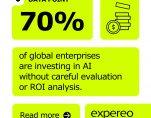
SINGAPORE – Media OutReach Newswire – 12 June 2026 – Enterprise AI spending is climbing rapidly, with boards racing to deploy the technology faster than they can measure whether it works. According to the latest IDC InfoBrief, commissioned by Expereo*, around 70% of organizations are investing in AI, motivated by its potential or by the fear of falling behind the competition, but they lag in disciplined ROI evaluation, and one in five (20%) admit they are investing aggressively in AI with little evaluation, driven by the fear of being left behind.
In Asia Pacific (APAC), that pressure is even more pronounced as 37% of organizations admit investing aggressively with little evaluation – nearly double the global average, and well ahead of the US (10%) and Europe (13%). The pressure is most acute in Australia (45%) and Vietnam (44%), while in Singapore, more than one in three organizations admit the same.
The IDC InfoBrief, based on a survey of 800 technology leaders across APAC, Europe, and the US, found that AI has become one of the most prioritized technology investments globally, with 51% of organizations planning to prioritize AI or machine learning investment over the next 12 months – rising to 61% across APAC. However, returns are failing to keep pace with the hype. Just 19% of global organizations surveyed say their AI implementations have exceeded expectations, and only 5% report they have significantly exceeded them1.
Across APAC, 40% say implementations have exceeded or significantly exceeded expectations – ahead of the global average but still leaving the majority falling short. Globally, the most-cited reasons for underperformance are inadequate or poor-quality training data (51%), higher-than-expected costs or ROI not achieved (47%), and AI not performing as well as expected (46%). For APAC specifically, the picture is broadly similar – though costs bite harder: 49% cite poor-quality training data, 54% cite cost overruns or ROI not achieved (rising to 80% in Malaysia), and 46% say AI has simply not performed as expected.
Where organizations have the right foundations in place, the results speak for themselves. Across APAC, 87% report productivity improvements in the business units most affected by AI, and 82% say quality of work has improved.
Underpinning many of these challenges is also a network and infrastructure readiness gap. Globally, 26% of organizations whose AI implementations have failed to meet expectations cite inadequate network or connectivity performance as a contributing factor. Looking ahead, 54% of organizations say they need more flexible and scalable networks to thrive in an AI-driven environment, and 51% need greater resilience and reliability to maximize uptime2. In APAC, the gap is acute as only 9% of organizations describe their network infrastructure as fully ready to support new AI, cloud, and digital initiatives, and 37% say it will need upgrading or replacing soon. The need is most acute in Thailand (74%) and Singapore (58%), both of which rank above the regional average on demand for flexible, scalable networks. In Indonesia, nearly half of all organizations (48%) say their infrastructure will need upgrading or replacing soon.
Ben Elms, CEO, Expereo, says: “Every enterprise we speak to is investing in AI, yet the data shows a clear gap opening up between AI ambition and AI outcomes. More often than not, that gap comes down to the network underneath. AI only delivers on its promise when the infrastructure carrying it is built to support it.
Without resilient, scalable, cloud-optimized networks, even the most well-funded AI programs will struggle to deliver ROI. Getting the network right is no longer an IT decision; it is one of the most important conversations happening in the boardroom today to help fulfill AI ambition.”
APAC is also leading on adoption, with 35% of organizations reporting extensive AI use across the business, against a global average of 25%3. Yet adoption alone is not enough without the right foundations beneath it.
Eric Wong, President, APAC, Expereo, says: “Asia Pacific is moving aggressively on AI adoption, but many organizations are discovering that scaling AI successfully requires more than just investment in applications and models. The underlying network, cloud connectivity, and operational readiness matter just as much. Across the region, we are seeing enterprises reassess whether their infrastructure is truly ready to support AI at scale, particularly around performance, resilience, governance, and visibility. Organizations that address those foundations early are generally seeing stronger outcomes and faster operational impact from their AI initiatives.”
Boardrooms are also waking up to the longer-term risks of unchecked AI investment. According to the survey, 54% of global tech leaders cite the creation of new security risks as a significant potential future threat for their organization’s use of AI, while 39% globally are concerned about losing track of AI-related costs and ROI once the technology is embedded across the business4. In APAC, that concern is sharper still as 41% of technology leaders in the region are worried about losing oversight of AI-related costs and ROI as adoption deepens – a figure that rises to 54% in Malaysia. Digital sovereignty is also moving up the strategic agenda, with 38% of APAC organizations rating it a high or top priority as they look to retain control over data and navigate an increasingly complex regulatory landscape.
For the full IDC InfoBrief, commissioned by Expereo, “Enterprise Horizons 2026: Where Innovation Meets Reality“ (doc #EUR154457526-IB, May 2026) please visit: [LINK]
The issuer is solely responsible for the content of this announcement.
Expereo
Expereo is a world-leading Managed Network as a Service provider that connects people, places, and things anywhere. Solutions include Global Internet, SD-WAN/SASE, and Enhanced Internet. With an extensive global reach, Expereo is the trusted partner of 60% of Fortune 500 companies. It powers enterprise and government sites in more than 190 countries, with the ability to connect to any location worldwide, working with over 2,300 partners to help customers improve productivity and empowering their networks and cloud services with the agility, flexibility, and value of the Internet, with optimal network performance.
Expereo was acquired in Feb 2021, by Vitruvian Partners which acquired a majority shareholding from Seven2.
Wall Street’s AI trade came under pressure as investors reassessed stretched technology valuations before SpaceX’s planned market debut, with Alphabet, Microsoft, Meta Platforms and Oracle losing more than $200 billion in combined market value during the session. The sell-off hit some of the largest companies tied to artificial intelligence spending, cloud infrastructure and data-centre expansion. Alphabet fell about 2.5 per cent, Microsoft lost nearly 2.7 per cent, […]
General Motors has moved deeper into the power business by enabling vehicle-to-grid functions for some electric-vehicle customers, positioning its bidirectional EV fleet as a distributed energy resource while pursuing sodium-ion batteries for grid-scale storage. The announcement, made at GM Empower 2026 in San Francisco, centres on a software update that expands the capability of GM’s vehicle-to-home energy system. The update allows eligible users to send electricity from […]
Arabian Post Staff -Dubai Hafeet Rail has completed 40 per cent of the Oman-UAE railway link, moving the Gulf’s first cross-border rail connection into a more advanced construction phase as work accelerates across tunnels, bridges, earthworks and logistics facilities along the corridor. The company, a joint venture between Etihad Rail, Oman Rail and Mubadala Investment Company, said the milestone covers civil works and major structures on the […]
Shin-Etsu Chemical plans to build a new rare-earth refining facility in Fukui Prefecture as Japan accelerates efforts to protect critical mineral supply chains from disruption caused by China’s export controls.
The project marks the company’s first new rare-earth refining facility since 2008 and comes as demand for high-performance magnets rises across electric vehicles, hard disk drives, robotics, wind power systems, defence equipment and advanced electronics. The investment is expected to exceed ¥35 billion, with ¥17.5 billion to be covered by government subsidy support, although the final cost and production schedule have not yet been fixed.
The new facility is intended to reinforce supplies for Shin-Etsu’s rare-earth magnet business and strengthen access to raw materials used in neodymium-based magnets. Heavy rare earths such as dysprosium, terbium and yttrium are particularly important because they improve magnet performance in high-temperature and high-stress applications, including vehicle motors and precision industrial systems.
Shin-Etsu already operates rare-earth refining facilities in Japan and has long been one of the country’s most important producers in the sector. Its rare-earth operations are centred in Fukui Prefecture, where it smelts materials and manufactures magnets at its plant in Echizen. The company says it works from raw materials through production to provide stable quality and supply, while also pursuing recycling and resource diversification.
The planned expansion reflects a broader shift in Japan’s industrial policy after months of tightening access to critical minerals. Chinese shipments of several heavy rare earths and gallium to Japan have been severely restricted since late 2025, heightening concerns among manufacturers that depend on these materials for magnets, semiconductors and other precision components. China continues to dominate mining, separation and refining capacity across the rare-earth value chain, giving Beijing considerable leverage over downstream industries.
Japan remains the largest rare-earth magnet producer outside China, but its manufacturers are still exposed to bottlenecks in the supply of heavy rare earths. The country has built stockpiles, backed overseas projects and encouraged recycling since the 2010 rare-earth shock, when diplomatic tensions with China exposed the risk of overdependence on one supplier. Those measures have improved resilience, but they have not removed the vulnerability.
The latest project is significant because it targets refining and processing rather than simply raw-material procurement. Mining deposits alone do not solve the supply challenge; rare earths require complex separation, purification and alloy processing before they can be turned into magnets. China’s advantage lies not only in reserves but also in decades of accumulated processing capacity, cost efficiency and industrial integration.
Shin-Etsu’s move also fits into a wider network of partnerships being pursued by Japan with Australia, France and the United States. Tokyo has backed alternative producers, supported offtake arrangements and encouraged private-sector investment in midstream processing. Australia-based Lynas has become a key non-China supplier, but output of heavy rare earths remains far below the volumes needed to replace Chinese supply in full.
The pressure is not limited to Japan. Manufacturers in the United States and Europe have faced similar supply uncertainty as export licensing delays affect rare earths used in aerospace, defence, clean energy and electronics. Companies exposed to the restrictions are searching for alternative suppliers, but industry executives warn that rebuilding a fully independent supply chain will take years.
For Shin-Etsu, the business case rests on both security and demand. Permanent magnets are central to electrification and digital infrastructure. Electric vehicles require compact, powerful motors; data centres and hard disk drives depend on precision magnetic components; wind turbines need high-strength magnets to improve efficiency. Demand growth has made the magnet supply chain a strategic concern for governments as well as manufacturers.
The company’s project is unlikely to eliminate Japan’s reliance on imported feedstock, especially for heavy rare earths where global non-China supply remains thin. It could, however, give domestic manufacturers greater control over processing, quality assurance and emergency production planning. That matters for customers in sectors where delivery delays can disrupt production lines and where material specifications are tightly controlled.
The government subsidy underscores how rare earths have moved from a specialist materials issue to a national industrial priority. Public support reduces the financial burden on companies undertaking technically demanding projects with long payback periods. It also signals that Tokyo is prepared to use industrial policy to keep strategic capabilities onshore.
Abu Dhabi’s L’IMAD Holding has deepened its grip on TAQA after its subsidiary Abu Dhabi Power Corporation bought a further 8.09 per cent stake in the listed power and water utility, lifting its holding to 98.12 per cent. The transaction, disclosed on Wednesday, involved the acquisition of 9.1 billion TAQA shares from Two Point Zero Group. Based on TAQA’s closing share price that day, the stake was […]
TOKYO, JAPAN – Media OutReach Newswire – 11 June 2026 – Industry expert Jason Gerlis has been appointed as the Chief Revenue Officer at GoGlobal – the global expansion business – bolstering the leadership team’s strength and depth at a time of accelerated growth.
With more than 15 years’ experience in helping businesses to scale internationally, his role will be to drive revenue growth at GoGlobal, align this to delivery excellence and add long-term value to those companies looking to expand and operate overseas.
“I’m delighted to welcome Jason into the fold,” states Jeremy Wastall, CEO at GoGlobal. “His extensive industry knowledge and global corporate services background support our strategy to deliver best‑in‑class business expansion and operational solutions to clients looking to enter new markets compliantly, and at speed.”
His appointment is also in-line with the company’s aim to build a business where cultural fit and mindset are just as important as experience.
“Alongside his impressive experience, Jason’s approach to leadership aligns with our brand values. I have full confidence in his ability to create a world-class environment where his teams will grow and excel,” adds Jeremy.
The move follows a series of recent senior hires and strategic investments designed to enhance GoGlobal’s ambitious growth plans, which include greater geographic reach, deeper technology capabilities and the continued development of market-winning solutions for clients.
Independence and long‑term focus
Explaining what drew him to GoGlobal, Jason points to the company’s independence and investment strategy.
“GoGlobal’s independence is a real strength,” he states. “It gives the business the freedom to invest in what genuinely matters to clients and focus on building sustainable, future growth. That long‑term perspective leads to better client outcomes, stronger partnerships and a more engaged, motivated workforce.”
Jason also highlights the company’s culture which is deeply grounded in servicing clients’ needs as a reason to join the business. He notes: “Understanding, consistency, collaboration and responsiveness are at the foundation of GoGlobal’s approach to client service, all of which resonate with me.
“And it’s these values and business ethics that truly set GoGlobal apart,” he concludes.
Strengthening global networks
Based in Charlotte, USA, Jason will spend his first months in the role engaging closely with GoGlobal’s global clients and partner ecosystem, while helping shape the company’s long‑term commercial strategy.
“I’m excited to work with clients across the full spectrum — from fast‑growing start‑ups and venture / private equity‑backed businesses to large multinationals — as we continue to build GoGlobal’s future roadmap,” he states.
Prior to joining GoGlobal, Jason spent five years as Global Head of Corporate Services at Ocorian and held several senior leadership roles at TMF Group over seven years, including Global Head of Consulting and Regional Director for North America and the Caribbean.
The issuer is solely responsible for the content of this announcement.
GoGlobal
GoGlobal – the global expansion business – helps companies set up and manage global operations compliantly and confidently. By combining global expertise with local execution, GoGlobal supports market entry, M&A activity and vendor consolidation through a single point of accountability.
Founded eight years ago in 2018, GoGlobal has grown from a startup into a fully decentralized global organization, supporting thousands of clients with their own growth stories.
It now has over 450 internal employees, operating across 85+ countries, and has enabled more than 1,000 clients to establish and manage their global operations across 145 markets.
Services include entity setup, compliance and management; accounting and tax services; HR and payroll support; Employer of Record (EOR); and Independent Contractor Solutions (ICS).
GoGlobal is headquartered in Tokyo but the leadership and operational teams are worldwide, enabling seamless support across time zones.
SpaceX plans to begin testing artificial intelligence data centres in orbit by late 2027, accelerating Elon Musk’s push to turn the company’s satellite and launch network into a new layer of global computing infrastructure. The programme would move part of the AI computing race beyond land-based data centres, where power shortages, grid constraints, cooling costs and local opposition have become major obstacles for technology companies. The first […]
Egypt’s Suez Canal recorded its strongest monthly revenue since early 2024 as oil tankers turned increasingly to the Red Sea route after the effective shutdown of the Strait of Hormuz disrupted Gulf energy flows. Revenue from the waterway reached about $419 million in April, up 27 per cent from a year earlier, supported by a sharp rise in tanker crossings and higher net tonnage. The canal handled […]
Morpho has secured $175 million from a group of heavyweight financial and crypto investors, strengthening its bid to turn decentralised lending into core infrastructure for global credit markets. The funding round was co-led by Paradigm, a16z crypto and Ribbit Capital, with participation from Apollo Funds, Circle Ventures, VanEck, Ledger Cathay, Variant, Wintermute Ventures, Prelude, IOSG, HashKey, Mirana, NJJ Capital, SBI Group and Bpifrance. The raise ranks among […]
Chinese investors shut out of SpaceX’s planned blockbuster share sale are turning to indirect routes, fuelling speculative demand for offshore vehicles, supplier stocks and domestic space-sector names as Elon Musk’s rocket company prepares for one of the largest market debuts on record. Underwriters handling the offering have been told not to accept orders from investors in mainland China and Hong Kong, with the restriction linked to US […]
Japan recorded a sharp rise in arrivals from GCC states in 2025, as affluent Gulf travellers turned increasingly to long-haul holidays built around luxury stays, food, culture, snow escapes and nature-led itineraries.
Visitor arrivals from the six GCC countries reached 55,924 in 2025, up 25.2 per cent from the previous year, outpacing Japan’s wider inbound tourism growth. The increase came as total international arrivals hit 42.683 million, a record annual figure and a 15.8 per cent rise from 2024, when Japan had already surpassed its pre-pandemic high.
The Gulf performance remains small in absolute numbers compared with Japan’s biggest source markets in East Asia, North America and Europe, but the pace of growth has drawn attention from travel operators because GCC visitors tend to favour premium hotels, private tours, family travel, shopping, wellness experiences and multi-city itineraries. Demand has been supported by stronger aviation links through Dubai, Abu Dhabi and Doha, easier visa processes for several categories of travellers, and sustained interest in Japan’s seasonal attractions.
The rise also reflects a broader shift in Gulf outbound travel. Travellers from the UAE, Saudi Arabia, Qatar, Kuwait, Bahrain and Oman are looking beyond traditional European summer destinations, especially as Japan promotes cooler regions, countryside routes and immersive cultural experiences. Hokkaido has gained visibility among Gulf families seeking milder summer weather, scenic drives and nature resorts, while Tokyo, Kyoto and Osaka continue to dominate first-time travel plans.
Japan’s appeal has been reinforced by the weak yen, which has made shopping, dining and accommodation more attractive for visitors with dollar-linked Gulf currencies. Luxury retail, department stores, theme parks, Michelin-listed restaurants, ryokan stays and private guides have benefited from the spending power of long-haul visitors. Travel agencies across the Gulf have also reported growing demand for tailor-made trips covering cherry blossom viewing, autumn foliage, ski resorts and Japanese pop culture.
Tourism spending has become a major pillar of Japan’s post-pandemic services economy. International visitor expenditure rose to about ¥9.5 trillion in 2025, up 16.4 per cent from the previous year, while average spending per visitor was roughly ¥229,000. The figures underline why Japan is targeting higher-value tourism rather than only volume growth, especially as pressure mounts on crowded destinations such as Kyoto, Mount Fuji viewing spots and central Tokyo districts.
Japan’s national tourism strategy aims to draw 60 million visitors annually by 2030, but policymakers and local authorities are increasingly balancing that target with concerns over overtourism. Measures have included crowd controls, higher accommodation taxes in some areas, visitor-management rules at popular sites and campaigns encouraging travellers to explore regional destinations. For GCC visitors, that strategy fits with demand for quieter, curated experiences outside the standard Golden Route of Tokyo, Kyoto and Osaka.
JNTO’s Dubai office has intensified destination marketing across the Gulf, with campaigns highlighting Hokkaido, Setouchi and other regions suited to repeat visitors. Promotional activity has focused on travel trade partners, digital media, luxury travel networks and family-oriented itineraries, reflecting the region’s preference for planned holidays with strong service standards. Japan’s participation in major Gulf travel events has also helped place the country more firmly in tour operators’ premium Asia portfolios.
Air connectivity remains a decisive factor. Gulf hubs provide one-stop access to several Japanese gateways for travellers from across the region, while Emirates, Etihad Airways and Qatar Airways have helped keep Japan visible in high-yield leisure and business travel channels. Doha, Dubai and Abu Dhabi also act as connecting points for travellers from wider Middle East markets, strengthening Japan’s ability to attract visitors beyond its traditional Asian feeder markets.
Visa facilitation has added momentum. UAE nationals continue to benefit from visa-free short stays, while Qatari citizens have access to similar arrangements after completing required registration. Travellers from Saudi Arabia and other GCC states have increasingly been able to use electronic visa channels for tourism, reducing friction for families and first-time visitors. Expatriate residents in Gulf countries remain subject to nationality-based rules, but online processing has improved access for many applicants.
Intel has used Computex 2026 to present a broader artificial intelligence strategy built around rack-scale systems, new Xeon data-centre processors and industry partnerships aimed at the fast-expanding market for inference and agentic AI workloads. The announcements in Taipei marked a deliberate shift in emphasis for the company, from selling individual chips to supplying integrated platforms that combine processors, accelerators, networking and software. Intel’s pitch rests on the […]
Japan’s three largest banking groups are moving to jointly issue stablecoins by the end of the fiscal year to March 2027, setting up a coordinated push that could place regulated bank-backed digital money at the centre of corporate payments and cross-border settlement. MUFG Bank, Sumitomo Mitsui Banking Corporation and Mizuho Bank will establish a council to examine operating rules, governance, issuance procedures and systems needed for the […]
Canadian University Dubai and FINTECH. TV have inaugurated a live broadcast studio at the university’s City Walk campus, creating a direct media and education link between Dubai and the New York Stock Exchange. The Global Markets Studio, opened on 1 June and announced publicly this week, is being positioned as a hands-on platform for students to produce financial news segments, podcasts, interviews and market-focused programming while engaging […]
Trad. Fi and W3 are preparing a $650 million private-credit programme aimed at moving equipment-financing loans for businesses onto public blockchain infrastructure, marking a fresh push to connect real-economy lending with automated capital workflows and tokenised settlement. The initiative targets a 48-month pipeline of lending assets tied to equipment purchases, with Trad. Fi originating credit and W3 providing artificial-intelligence agents to support risk assessment, due diligence and […]






 https://goglobal.com/
 https://www.linkedin.com/company/goglobalgeo/





