Just in:
Ramayana triggers high tourist traffic to Jatayu rock centre // Microsoft restores cloud services after gateway software failure // Mubadala and Centerbridge secure £1.17bn Canaccord wealth agreement // Mangroves Documentary Premieres, Exploring How Cities and Wetlands Coexist // First Abu Dhabi Bank proposes AED15 billion share sale // EU levies definitive duties on five steel suppliers // Hong Kong International Airport Online Shop Winter Festive Offer // Pink Economy report puts equal rights at the heart of Thailand’s road to Bangkok WorldPride 2030 // Row over Sabarimala toilet disruption // Over 360 electricity distribution professionals meet in Seoul for CIRED’s first major event in the Asia-Pacific region // UK privacy regulator flags GTA 6 phishing threats // Govt offers talks to protesting teachers after CM signal // Mangroves Documentary Premieres, Exploring How Cities and Wetlands Coexist // Bankrupt Indian Business Barons Mostly Live Life King-Size // Regulator demands answers on controversial power deal // Mexican journalists demand accountability after Acapulco reporter killed // ASEAN adopts binding pact on regional digital commerce // Hong Kong schedules Gulf-Asia investment forum for 2027 // Bora Group 3Q26: Revenue and Net Income Expansion Continues U.S. Manufacturing and Biologics Footprint Complete; Margin Expansion to Follow as Utilization Improves // Danone expands consumer insight capabilities to accelerate nutrition innovation through Southeast Asia R&I Application Lab upgrade //

News related to
protest

By Dr. Gyan Pathak On the first day of the three-day Special Session – April 16 to April 18, 2026 – of the Parliament convened by the Prime Minister Narendra Modi led government, three legislations have been introduced seeking to change the electoral map of India. Lok Sabha Speaker Om Birla has said that there […]

The article Modi Government Introduced Three Bills To Change Electoral Map Of India appeared first on Latest India news, analysis and reports on Newspack by India Press Agency).

A court in Saratov has fined a local news agency and one of its executives after the outlet published a review of the television series Heated Rivalry, in a case that underlines how far Russia’s campaign against LGBTQ+ expression now extends into ordinary cultural coverage. The Oktyabrsky District Court in Saratov imposed a 500,000-rouble penalty on SaratovBusinessConsulting, widely known as SarBC, over an article that discussed why […]

Hackers posing as trusted messaging and communications services have mounted a sustained surveillance campaign across the Middle East and North Africa, using fake app pages, phishing domains and a custom Android spyware known as ProSpy to target journalists, activists and political figures, according to a joint body of research published this week by Lookout, Access Now and SMEX. The operation, active since at least 2022 and documented […]

By Nitya Chakraborty China and Russia are the two major countries which are going the wholehog in boosting the Myanmar junta chief Min Aung Hlaing who has just been elected as the new President following national elections which were rigged, according to the international poll observers. India also exercised its diplomatic pragmatism by doing away […]

The article China Goes All Out To Boost The New President Of Myanmar Min Aung Hlaing appeared first on Latest India news, analysis and reports on Newspack by India Press Agency).

Tata Steel has been served with a demand notice of ₹17.55 billion by the District Mining Office in Ramgarh, Jharkhand, over alleged excess coal extraction at its West Bokaro Colliery, adding another legal challenge to the steelmaker’s long-running mining disputes in eastern India. The company said it received the notice on April 3, a day after the end of the financial year, and would contest it through judicial or quasi-judicial forums.

In its stock exchange disclosure dated April 4, Tata Steel said the notice, dated March 30, alleges extraction of about 162.4 million tonnes of mineral coal beyond permissible limits during the period from FY2000-01 to FY2006-07. The company said the demand had been framed on grounds similar to those examined by the Supreme Court in the Common Cause versus Union of India litigation, a landmark case that hardened official scrutiny of mining done beyond environmental or statutory limits.

The scale and vintage of the claim are striking. By reaching back more than two decades, the notice underscores how historical mining records, clearances and production caps remain exposed to reinterpretation by regulators long after the ore or coal has been extracted. For Tata Steel, which has spent years simplifying its structure and strengthening its balance sheet while managing volatile steel demand, the notice also revives a regulatory risk investors know well: mining-linked liabilities that can surface suddenly and run into hundreds or thousands of crores.

Tata Steel has taken a firm line in response. In its filing, management said the claim “lacks justification and substantive basis” and indicated it would pursue legal remedies. That wording suggests the company does not see the notice as an immediately payable liability, but as a disputed demand that will have to be tested through litigation or administrative review. Bloomberg, citing the company statement, reported the amount at about $189 million.

The case fits into a wider pattern. Tata Steel’s annual reports already describe other significant Jharkhand mining disputes, including older claims tied to alleged unlawful iron ore extraction after the expiry of lease renewals. In those disclosures, the company said a demand of ₹3,568.31 crore had been challenged before the Jharkhand High Court, while another ₹421.83 crore notice had also been disputed and partly paid under protest after transit permits were halted. Tata Steel said in that filing that it believed it was remote the state’s demand would ultimately survive.

That history matters because it shows the latest notice is not an isolated compliance issue but part of a broader tension between mining companies and state authorities over how production limits, lease terms and environmental permissions should be interpreted. The Common Cause rulings sharpened the legal and financial consequences of excess extraction, especially where production outstripped environmental clearance or statutory approvals. Courts and regulators have since shown a greater willingness to revisit older conduct and calculate compensation on a far more punitive basis than companies had anticipated years ago.

For Jharkhand, one of the country’s key mining belts, such claims carry a dual message. They show the state remains determined to pursue compensation linked to alleged over-extraction, while also signalling to miners that legacy operations are not beyond review. For the industry, the episode is another reminder that captive mines, often central to cost control for steelmakers, bring legal and policy exposure alongside raw material security. The business logic of owning mineral assets remains strong, but it comes with increasingly intense compliance scrutiny.

The timing is also notable. Tata Steel has faced other mining-related claims over the past year, including a demand from Odisha in July 2025 linked to mineral dispatch issues at the Sukinda Chromite Block. While the factual basis of that case differs from the West Bokaro matter, the accumulation of notices across jurisdictions suggests large resource companies remain under close watch from state mining departments even as policymakers push for higher domestic output of minerals and metals.

France is preparing targeted support for motorists who rely on their cars for work and daily life after the war involving Iran drove up oil prices and sharpened pressure on household budgets, with Prime Minister Sébastien Lecornu signalling that broad-based fuel subsidies remain off the table even as pump costs climb. Speaking in Bordeaux, Lecornu said ministers had been asked to draw up measures for people who […]

Anger over the war with Iran has widened the scope of the anti-Trump “No Kings” protests across the United States, turning what began as a broad movement against executive overreach into a sharper rebuke of the White House’s foreign and domestic agenda. Demonstrations on Saturday spread through more than 3,100 locations across all 50 states, with organisers and news reports describing one of the largest coordinated days […]

Advertisements

Crowds are expected to gather across major cities this weekend under the banner of “No Kings”, a decentralised protest movement that organisers say could mark one of the largest coordinated demonstrations in years, driven by mounting political polarisation and public frustration over executive power. Activists behind the campaign describe it as a response to what they view as expanding authority within the executive branch and a perceived […]

By Nitya Chakraborty U.S. President Donald Trump finally rescheduled his much awaited visit to China on May 14 and 15 by announcing in his Truth Social there by creating big interest in the diplomatic circles about the possibility of a sort of ceasefire in the current West Asian war before the scheduled trip to Beijing. […]

The article Trump-Xi Summit Rescheduled On May 14-15 In Beijing Worries Japan And Taiwan appeared first on Latest India news, analysis and reports on Newspack by India Press Agency).

Democracy is on the defensive. This is shown by the Bertelsmann Stiftung’s Transformation Index 2026 (BTI). The BTI was first surveyed twenty years ago, when democracies were still in the majority. Today, 56 percent of the 137 countries surveyed by the BTI are ruled autocratically. However, this rarely leads to better governance. Autocracies are more susceptible to corruption, less capable of shaping the future, and less consensus-oriented. However, examples such as Poland and Brazil show that social resistance and political competition can pave the way back to democracy.

GÜTERSLOH, GERMANY – Newsaktuell – 26 March 2026 – A majority of 77 of the 137 states surveyed by the BTI are now ruled autocratically and are taking increasingly repressive action against the opposition, the media and civil society. Of these countries, 52 are hard-line autocracies in which fundamental rights are completely disregarded – more than at any time since the survey began in 2006. But autocratic tendencies are also gaining ground in numerous democracies. “Many elected governments have undermined core democratic institutions in order to stay in power, and this paves the way for autocracy,” says democracy expert Sabine Donner.

In 54 percent of the countries, elections no longer meet minimum standards. In some countries, such as Gabon or Niger, they were suspended after military coups, while in Belarus, Russia and Rwanda they are strictly controlled legitimizating rituals. However, numerous free and fair elections also led to peaceful changes of government. In Madagascar, Tanzania and Venezuela, mass protests following rigged elections were violently suppressed, but strengthened political mobilization beyond the election date.

Examples such as El Salvador, Serbia and Turkey show that the repeatedly touted promise of authoritarian efficiency is rarely fulfilled. Corruption is insufficiently combated in more than 100 countries, two thirds of which are autocracies. “In autocracies, loyalty must be rewarded and positions secured,” says BTI expert Hauke Hartmann. “The supposed efficiency of authoritarian regimes is a myth.”

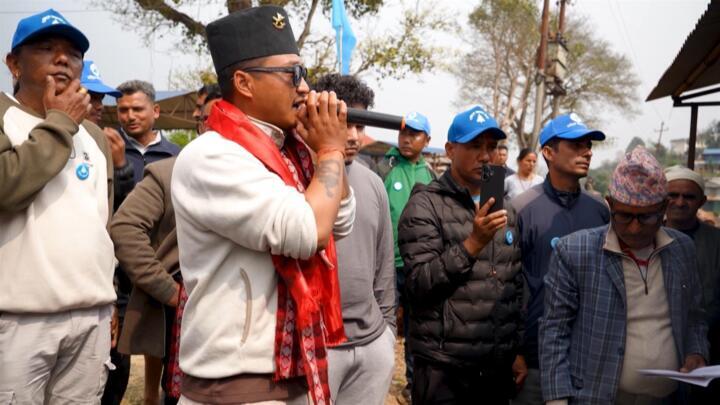
However, persistent grievances continue to ensure that protests by dissatisfied citizens show no sign of abating. In Bangladesh, Nepal and Sri Lanka, protests forced a democratic opening, while a democratic turnaround was achieved in Brazil and Poland. “The BTI shows how much pressure democratic institutions are coming under – at the same time, we are seeing remarkably lively resistance to their erosion in many places,” says Daniela Schwarzer, Member of the Executive Board, Bertelsmann Stiftung. “This ability to mobilize, which comes above all from an active civil society, is a key potential for democratic renewal.”

www.bti-project.org

Additional information:
Since 2006, the Bertelsmann Stiftung’s Transformation Index has analyzed the quality of democracy, market economy and governance in 137 countries every two years. Currently, 23 OECD countries, such as Germany and the USA, are not part of the study. The study was carried out between February 1, 2023 and January 31, 2025.

The issuer is solely responsible for the content of this announcement.

About the Bertelsmann Stiftung

The Bertelsmann Stiftung is committed to ensuring that everyone can participate in society – politically, economically and culturally. We put people at the center of everything we do. Because it is people who can move the world, change it and make it a better place. To this end, we develop knowledge, impart skills and develop solutions. The non-profit Bertelsmann Stiftung was founded in 1977 by Reinhard Mohn.

Russia has summoned Israel’s ambassador in Moscow following an airstrike in southern Lebanon that reportedly killed journalists linked to Russian state broadcaster RT, escalating tensions between the two countries and adding a new diplomatic dimension to the widening regional conflict. The Russian foreign ministry said the strike targeted a media presence and described the deaths as unacceptable, demanding a full explanation from Israeli authorities. Officials in Moscow […]

A Federal High Court ruling in Nigeria has affirmed that citizens are entitled to record police officers performing their duties in public, while also awarding damages in a case that challenged unlawful stop-and-search practices. The decision marks a significant judicial intervention in ongoing debates over police accountability and civil liberties in Africa’s most populous nation. Justice in the case brought through a public interest action by rights […]

Rapid deployment of AI-driven surveillance systems across multiple African cities is drawing scrutiny from rights groups and policy analysts, who warn that expanding digital monitoring networks risk eroding civil liberties while outpacing regulatory safeguards. Urban centres from Nairobi to Lagos and Johannesburg are integrating smart city technologies designed to improve traffic management, crime detection and public service delivery. These systems increasingly rely on facial recognition, biometric databases […]

Tumblr has rolled back controversial changes to its reblog system following a wave of user protests, marking another instance of the platform reversing course after community pushback. The microblogging service, owned by Automattic, confirmed it would restore key elements of its traditional reblogging functionality after users criticised recent updates that altered how posts are shared and interacted with across the platform. The decision comes amid sustained complaints […]

Rising oil prices linked to the war involving Iran are creating fresh economic strain for Indonesia just as millions prepare for the annual Eid al-Fitr travel surge, placing President Prabowo Subianto’s administration under mounting pressure to shield consumers from higher fuel costs.

Energy markets have been rattled by escalating conflict across the Persian Gulf, where attacks on shipping routes and oil infrastructure have disrupted global crude supplies. A large share of the world’s petroleum exports passes through the Strait of Hormuz, a narrow maritime corridor connecting Gulf producers with international markets. Disruption to tanker traffic through this chokepoint has pushed benchmark crude prices sharply higher, triggering fuel price increases across Asia and raising fears of supply shortages in import-dependent economies.

Indonesia faces particular vulnerability because it relies heavily on imported energy. Around a quarter of its crude oil and roughly a third of liquefied petroleum gas supplies originate in the Middle East. Shipping disruptions in the Gulf have already complicated trade flows, with tanker movements slowed by security risks and insurance costs rising for vessels operating in the region. Market volatility has driven crude prices beyond the psychological threshold of $100 per barrel, fuelling concern that further escalation could drive them even higher.

The timing of the price shock has heightened the challenge for Jakarta. Eid al-Fitr, marking the end of Ramadan, triggers one of the largest annual travel movements in the country as families journey from major cities to hometowns across the archipelago. State energy company Pertamina anticipates gasoline demand during the holiday period to climb by more than 10 per cent, intensifying pressure on supply chains already strained by global market turbulence.

Authorities have attempted to reassure the public that domestic fuel supplies remain sufficient. Officials say government stockpiles and logistics networks can support the expected surge in consumption during the festive season. At the same time, policymakers have signalled that subsidised fuel prices will remain unchanged until the Eid holidays conclude, a move designed to prevent abrupt increases in transport costs during the peak travel period.

Holding prices steady carries significant fiscal implications. Indonesia already devotes substantial resources to energy subsidies, allocating more than 380 trillion rupiah in the state budget to keep fuel and electricity costs manageable for households and businesses. Sustaining those subsidies while global oil prices rise could widen the fiscal deficit or force adjustments elsewhere in the budget.

Economists warn that prolonged turbulence in global oil markets may reverberate across the broader economy. Higher crude prices increase the cost of imports and can erode Indonesia’s trade balance, particularly because the country has transitioned from being an oil exporter to a net importer over the past two decades. Analysts estimate that each $10 increase in the price of oil could shave hundreds of millions of dollars from the country’s trade surplus while raising domestic inflationary pressures.

Currency markets have already reacted to the geopolitical shock. The rupiah has faced downward pressure amid investor concerns about rising energy import costs and potential fiscal strain from expanded subsidies. A weaker currency makes fuel imports more expensive, compounding the burden on state finances and increasing the risk that domestic prices may eventually need to adjust.

Officials are exploring alternative strategies to mitigate the impact. One approach involves diversifying crude imports away from the Middle East by securing additional shipments from suppliers such as the United States and other regions less affected by the conflict. Authorities are also considering longer-term measures including accelerated blending of biofuels and the expansion of renewable energy capacity to reduce dependence on imported oil.

Energy security has become a central concern for policymakers across Southeast Asia as the Gulf crisis unfolds. Countries throughout the region rely heavily on imported petroleum and have limited capacity to absorb sustained price shocks. Governments have begun introducing conservation measures, adjusting subsidies, and seeking alternative suppliers as they attempt to stabilise domestic markets.

Indonesia’s logistical challenges are magnified by its geography. The archipelago spans more than 17,000 islands, making fuel distribution complex even during stable market conditions. Sudden shifts in global prices can ripple quickly through domestic supply chains, affecting transportation costs, food prices, and broader consumer inflation.

Political pressures add another layer of complexity for the administration. Public sensitivity to fuel prices has historically been high, and previous attempts to reduce subsidies have sparked protests and social unrest. Managing the current crisis therefore requires balancing fiscal prudence with the need to maintain social stability and support economic growth.

Market analysts say the duration of the Middle East conflict will determine how severe the economic impact becomes. If disruptions to shipping lanes and energy infrastructure persist, global crude supplies could tighten further, pushing prices to levels that strain government budgets and household finances alike. A prolonged crisis could also prompt broader shifts in energy policy, encouraging faster investment in domestic energy resources and renewable alternatives.


Mojtaba Khamenei, son of Ayatollah Ali Khamenei, has been confirmed by authorities in Tehran as the country’s new supreme leader, marking a pivotal shift in the leadership structure of the Islamic Republic and raising questions over the direction of Iran’s political and security policies. Announcement of Mojtaba Khamenei’s elevation follows a period of intense speculation within the ruling establishment over succession planning around the ageing Ayatollah Ali […]

Global networks faced more than eight million distributed denial-of-service attacks during the second half of 2025, underscoring a sharp escalation in the scale and coordination of cyber disruption campaigns as attackers deploy increasingly sophisticated techniques to overwhelm digital infrastructure. Findings released by cyber-security firm NETSCOUT Systems indicate that attackers are exploiting automation, botnets and artificial intelligence-assisted tactics to launch large volumes of disruptive traffic against businesses, governments […]

Senior hardware executive Caitlin Kalinowski has resigned from OpenAI, citing ethical concerns over the company’s agreement to provide artificial intelligence capabilities to the United States Department of Defense, a move that has triggered debate within the technology sector about the role of AI in military and surveillance systems. Kalinowski, who led OpenAI’s robotics and consumer hardware initiatives, announced her decision in a public statement, saying the partnership […]

By Nitya Chakraborty The resounding victory of the Gen Z supported Rashtriya Swatantra Party (RSP) in the March 5 general elections in Nepal is a game changer not only in the political history of this tiny Himalayan nation but also in the evolving polity of South Asia. Nepal is now the second country in South […]

The article Gen Z Supported RSP’s Resounding Win In Nepal Elections Is A Gamechanger appeared first on Latest India news, analysis and reports on Newspack by India Press Agency).

  Iran’s sweeping digital shutdown has crossed the 100-hour mark, cutting tens of millions of people off from the global internet and intensifying fears of deeper isolation as military tensions and internal unrest grip the country. Connectivity across Iran has plunged to only a fraction of normal levels, leaving citizens unable to communicate freely with the outside world and severely restricting the flow of information. Network monitoring […]

Federal authorities are stepping up efforts to draw major technology companies into closer cooperation with surveillance and intelligence operations, relying on a mix of legal compulsion, regulatory leverage and private negotiations that civil liberties advocates argue could erode constitutional safeguards. Interviews with policy analysts, court records and public disclosures from technology firms show a pattern in which agencies expand demands for user data, metadata and technical assistance, […]

Arabian Post Staff -Dubai State television in Tehran has confirmed the death of Supreme Leader Ayatollah Ali Khamenei after a large-scale military offensive by the United States and Israel that struck multiple targets across Iran’s territory. The announcement marked a dramatic turn in the months-long escalation between Tehran and its adversaries, unfolding as Iranian officials declared a period of national mourning and vowed to continue counter-attacks against […]

Anthropic has declined to proceed with a revised artificial intelligence contract offered by the US Department of Defense, citing concerns that changes to the agreement would weaken safeguards tied to its core safety commitments and restrictions on military applications. The San Francisco-based company, founded by former OpenAI executives including Dario Amodei and Daniela Amodei, confirmed it would not accept amendments to a previously negotiated arrangement that it […]

By Dr. Gyan Pathak Supreme Court of India has ordered a blanket ban on an NCERT book, and used the expression “deep-rooted and well-planned conspiracy” in a specific context a chapter that discussed alleged corruption and functioning of the Judiciary. Only an investigation can reveal the actual dimension of the conspiracy, that has been threatening […]

The article Supreme Court’s Stern Comment On NCERT Focuses On Role Of BJP Led Centre appeared first on Latest India news, analysis and reports on Newspack by India Press Agency).

VISHNU RAJA
RYO YAMADA
HITORI GOTOH
IKUYO KITA
Just in:
Bankrupt Indian Business Barons Mostly Live Life King-Size // Row over Sabarimala toilet disruption // Hong Kong schedules Gulf-Asia investment forum for 2027 // Mubadala and Centerbridge secure £1.17bn Canaccord wealth agreement // Iran claims six-drone operation against US radar in Bahrain // Danone expands consumer insight capabilities to accelerate nutrition innovation through Southeast Asia R&I Application Lab upgrade // Ukraine faces $32.6 billion financing gap amid legislative delays // Takaichi exchanges greetings with Chinese minister at Manila summit // Over 360 electricity distribution professionals meet in Seoul for CIRED’s first major event in the Asia-Pacific region // Govt offers talks to protesting teachers after CM signal // ASEAN adopts binding pact on regional digital commerce // Ayara Kamala Reveals a Refreshed Vision for Wellness in Phuket // JPMorgan restores transactions after banking payments disruption // Bora Group 3Q26: Revenue and Net Income Expansion Continues U.S. Manufacturing and Biologics Footprint Complete; Margin Expansion to Follow as Utilization Improves // Dubai airport passenger traffic drops 28.1% amid conflict // Google identifies autonomous AI systems conducting vulnerability attacks // Mangroves Documentary Premieres, Exploring How Cities and Wetlands Coexist // Regulator demands answers on controversial power deal // First Abu Dhabi Bank proposes AED15 billion share sale // Mangroves Documentary Premieres, Exploring How Cities and Wetlands Coexist //