News related to
protest

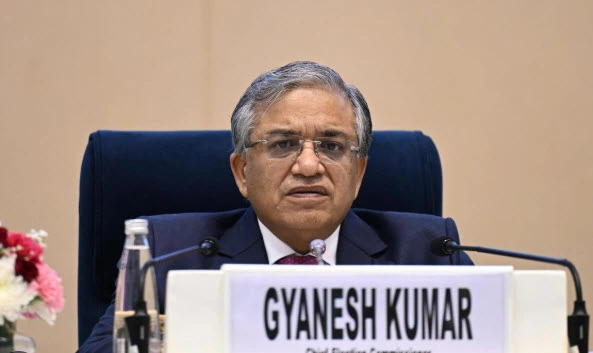
By K Raveendran India’s electoral democracy has reached a critical juncture where judicial intervention can no longer remain confined to procedural scrutiny and expressions of concern. The mounting controversy surrounding Chief Election Commissioner Gyanesh Kumar, the unprecedented scale of voter deletions under the Special Intensive Revision (SIR), and the government’s increasingly coercive response to public […]

The article Supreme Court Must Act Decisively To Restore Electoral Democracy appeared first on Latest India news, analysis and reports on Newspack by India Press Agency).

Delhi police detained more than 1,500 people, including prominent youth movement leaders, on Saturday as authorities imposed extensive security restrictions across the capital to prevent a demonstration demanding the resignation of Chief Election Commissioner Gyanesh Kumar.

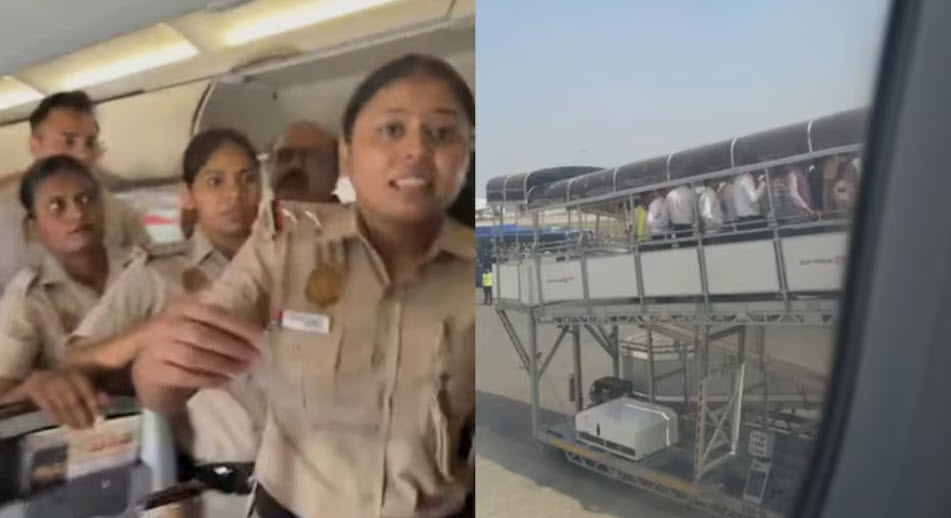
Cockroach Janta Party (CJP) founder Abhijeet Dipke and senior organisers Saurav Das and Ashutosh Ranka were detained at Indira Gandhi International Airport after arriving from Mumbai. Their detention followed overnight police operations targeting supporters preparing to assemble at Jantar Mantar.

Thousands of police and paramilitary personnel were deployed across New Delhi, with barricades, vehicle inspections, transport restrictions and mobile internet disruptions affecting movement through several districts. Security arrangements extended to railway stations, major intersections and roads leading towards the proposed demonstration.

Police maintained that the gathering had not received official permission and that preventive measures were necessary to protect public order. Organisers accused authorities of attempting to suppress peaceful dissent over disputed revisions to electoral rolls.

The protest, organised under a campaign to safeguard democracy, sought Kumar’s removal following allegations that the Election Commission’s Special Intensive Revision of voter lists had excluded substantial numbers of eligible voters.

The commission has rejected accusations of partisan manipulation, maintaining that electoral roll verification is intended to identify inaccuracies and ensure that voter registers remain accurate. It has also pointed to procedures allowing eligible citizens to challenge exclusions and seek reinstatement.

Police confirmed that detentions occurred across several districts, including areas near transport terminals and Delhi’s borders. The number of people detained increased throughout Saturday as officers intercepted groups attempting to reach central Delhi.

Dipke, Das and Ranka were subsequently taken to separate locations. Dipke was moved towards Gurugram, Ranka to Dwarka and Das to another location within Delhi, according to information emerging after their detention.

The CJP condemned the action against its leadership and maintained that its supporters were exercising their constitutional right to protest. Videos circulated by the organisation showed its leaders confronting officers aboard an aircraft and raising slogans before being escorted away.

The Delhi Police had refused permission for the Jantar Mantar gathering, citing concerns about public safety, traffic disruption and compliance with regulations governing demonstrations. Authorities said previous conduct by organisers had contributed to their assessment of potential risks.

The Union Ministry of Home Affairs had alerted state governments and Union Territories to possible disturbances associated with the planned mobilisation. Its communication called for coordination with Delhi Police, intelligence sharing and preventive action under applicable laws.

Security personnel established checkpoints along major approaches to the capital, while restrictions at metro stations complicated journeys for commuters. Traffic diversions were introduced around sensitive government installations and routes associated with the proposed rally.

Mobile internet services were suspended in parts of central Delhi, adding to disruption caused by transport controls. Railway operations also faced restrictions, with some services delayed or cancelled amid the security arrangements.

Opposition politicians criticised the detentions, arguing that denying permission for the gathering and restricting movement undermined the right to peaceful assembly. Government supporters defended the precautions as necessary to prevent disorder and disruption to essential services.

The controversy centres on the Special Intensive Revision, an electoral verification exercise that opposition parties allege has resulted in the removal of legitimate voters from official lists.

Critics have cited figures suggesting that approximately 130 million electoral entries were affected by revisions, although the circumstances and validity of individual deletions remain contested. The figure does not establish that an equivalent number of eligible citizens were unlawfully disenfranchised.

Opposition parties contend that the exercise could disadvantage particular communities and alter electoral competition. The Election Commission denies political bias and maintains that verification procedures operate within the established electoral framework.

The dispute has sharpened scrutiny of election administration ahead of state assembly contests scheduled for 2027. Opposition representatives have demanded greater transparency concerning deletions, verification procedures and opportunities for affected voters to appeal.

The CJP has attracted support from students, activists and digital campaigners who have questioned the handling of electoral records. Its mobilisation has also drawn participation from opposition groups, although their political affiliations and demands are not identical.

Police deployments included specialised units assigned to crowd management and the protection of sensitive locations. Officers used loudspeakers to warn prospective demonstrators against entering restricted areas without authorisation.

Jantar Mantar, a designated venue for public demonstrations near Parliament, remained under heavy security throughout Saturday. Small groups nevertheless attempted to assemble at scattered locations, prompting further interventions by police personnel.

Authorities also monitored movement around accommodation facilities and transport hubs used by visitors arriving for the demonstration. Additional security checks remained in place at major entry points to central Delhi.

By Dr Arun Mitra The unprecedented security arrangements in Delhi, which have virtually turned the capital into a cantonment, are reminiscent of the British Raj, when colonial rulers resorted to brute force to suppress popular movements and crush dissent. The arrests of leaders and activists of CJP, AISF, SFI and AISA, along with students and […]

The article In Delhi, The Battle Is Between The Powerful State And Its Citizens appeared first on Latest India news, analysis and reports on Newspack by India Press Agency).

New Delhi was placed under heightened security on Saturday as authorities imposed sweeping restrictions to prevent a mass demonstration by the Cockroach Janta Party (CJP), which is demanding the resignation of Chief Election Commissioner Gyanesh Kumar over controversial electoral roll revisions.

Thousands of police and paramilitary personnel were deployed across the capital, with barricades, surveillance equipment and detention facilities positioned around Jantar Mantar, where the youth-led movement planned to assemble despite being denied permission.

Delhi Police strengthened checkpoints at major entry routes, restricted access to sensitive areas and warned that unauthorised gatherings would face action. Security arrangements included drones, closed-circuit television cameras, body-worn cameras and additional personnel assigned to monitor crowd movements.

The authorities prepared for approximately 7,000 demonstrators, although organisers have claimed substantially wider support. Police officials said their priority was maintaining public order while preventing confrontations between protesters and security personnel.

The Ministry of Home Affairs instructed police chiefs across states and Union Territories to remain vigilant, citing possible law-and-order consequences arising from the mobilisation. Union Home Secretary Govind Mohan communicated the concerns after Delhi Police rejected the organisers’ application.

Police said the request had not complied with the prescribed ten-day advance notice requirement. Authorities also cited alleged failures to follow lawful instructions during an earlier demonstration and concerns about traffic disruption and public safety.

CJP representatives challenged the restrictions, arguing that peaceful assembly was a constitutional right. Founder Abhijeet Dipke maintained that the demonstration would proceed despite the security measures, accusing the government of attempting to suppress public opposition.

The planned protest centres on allegations that the Election Commission’s special intensive revision of electoral rolls has resulted in widespread exclusion of eligible voters. Organisers accuse the commission of conducting the exercise in a manner that benefits the ruling Bharatiya Janata Party.

The Election Commission and the BJP have rejected allegations of electoral manipulation. The dispute has nevertheless drawn opposition parties, student organisations and civil society campaigners into demonstrations demanding greater transparency and accountability.

The confrontation has intensified following claims by opposition groups that more than 130 million names were removed from electoral registers during the revision exercise. The figure remains politically contested, while the commission maintains that electoral roll verification follows established procedures.

Security officials said approximately 35,000 police and paramilitary personnel were available for deployment. Additional forces were mobilised from outside Delhi, while officers established multiple layers of security around government buildings, transport hubs and approaches to the proposed protest venue.

Preventive detentions began before the scheduled gathering. Police acknowledged detaining hundreds of people as part of security operations, while CJP leaders alleged that substantially larger numbers of supporters had been stopped or taken into custody across several states. The organisers’ figures could not be independently established.

Transport restrictions compounded the disruption. Delhi Metro authorities curtailed access to several stations, while railway services connecting the capital with neighbouring states faced cancellations and rescheduling. The restrictions affected commuters travelling for purposes unrelated to the demonstration.

Mobile internet access was also restricted in parts of central Delhi, alongside heightened monitoring of roads leading towards government offices. The measures attracted criticism from civil liberties campaigners concerned about their impact on communication and freedom of movement.

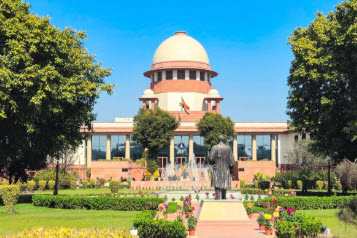
The Supreme Court’s intervention over the extent of transport restrictions prompted authorities to reconsider some closures, reflecting concerns about the consequences for ordinary passengers. Police nevertheless retained powers to regulate access to areas considered vulnerable to large gatherings.

Delhi Traffic Police issued an advisory identifying 30 locations where diversions could be imposed from 6 am. These included Connaught Place, Mandi House, Dhaula Kuan, Patel Chowk and roads approaching Jantar Mantar.

Commuters were advised to allow additional travelling time, particularly when heading towards railway stations, interstate bus terminals and the airport. Traffic arrangements were to be adjusted according to conditions on the ground.

Joint Commissioner of Police Madhur Verma urged officers to exercise restraint and maintain professional standards while handling demonstrators. The instructions emphasised minimum force, discipline and the protection of public safety during crowd-control operations.

Student organisations supporting the CJP maintained that their campaign would remain peaceful. The All India Students’ Association and other groups joined calls for accountability over electoral roll changes, while organisers appealed to participants to avoid confrontation.

Police also sought information from authorities outside Delhi about planned journeys, accommodation arrangements and organisers coordinating the mobilisation. Intelligence-sharing arrangements covered railway stations, road transport routes and potential assembly points.

Hotels and guest houses around central Delhi were asked to restrict bookings where necessary, while security personnel monitored arrivals at transport terminals. Police established designated detention facilities to accommodate people taken into preventive custody.

The traffic advisory identified additional possible restrictions around Lodhi Road, Sardar Patel Marg, Moti Bagh and the Ram Manohar Lohia Hospital roundabout, with diversions subject to operational assessments by traffic officers.


By Rahil Nora Chopra Leader of Opposition in the Lok Sabha Rahul Gandhi stole the spotlight with a display of athleticism, seamless climbing over a police barricade during the Opposition MPs’ march to the Election Commission headquarters. Dressed in his trademark white collared T-shirt, Rahul stood atop the barricade, waving the Tricolour in the face […]

The article Anti-Election Commission Protest: Athletic Rahul Steals The Show appeared first on Latest India news, analysis and reports on Newspack by India Press Agency).

By Dr. Gyan Pathak The first week of anti-CEC agitation – 2 to 8 October, originally called by 19 political parties of INDIA bloc on September 30, now looks like the beginning of a broader electoral-rights movement in India. Several streams are converging: INDIA bloc parties, the youth-led by Cockroach Janata Party (CJP), student organisations, […]

The article First Week Of Anti-CEC Agitation Turns Into Electoral Rights Movement appeared first on Latest India news, analysis and reports on Newspack by India Press Agency).

By Ashok Nilakantan Ayers NEW YORK: The latest Donald Trump–Gavin Newsom confrontation began, as many of their earlier clashes have, with California. Trump has done it before and he has done it again and he will do it again. Trump is known to make off the cuff remarks, knowingly or unknowingly, of the impact it […]

The article Trump-Newsom Clash Assumes Special Significance Before Nov 3 Polls appeared first on Latest India news, analysis and reports on Newspack by India Press Agency).

Advertisements

France has suspended the use of stun grenades against demonstrators as nationwide student protests over deteriorating school conditions intensify, placing the government under mounting pressure to address education shortages and allegations of excessive police force. Interior Minister Laurent Nuñez ordered the suspension following serious injuries to teenage protesters, including a 15-year-old who lost a hand during clashes with riot police in Lens. Authorities are investigating allegations of […]

By K Raveendran India’s escalating confrontation over the Election Commission is no longer merely a dispute about electoral rolls or the conduct of Chief Election Commissioner Gyanesh Kumar. It has become an institutional crisis touching the credibility of elections themselves. As opposition parties, activists and youth groups demand Kumar’s resignation over allegations of voter-list manipulation, […]

The article Supreme Court’s Indecision Has A Big Role In Today’s Constitutional Crisis appeared first on Latest India news, analysis and reports on Newspack by India Press Agency).

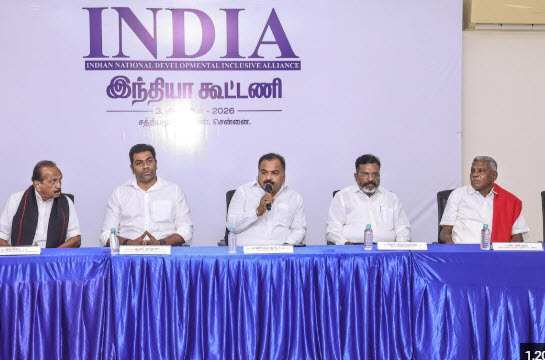
By Dr. Gyan Pathak Tamil Nadu politics is undergoing a great churning. Tamilaga Vettri Kazhagam (TVK) led by CM Chandrasekaran Joseph Vijay has formally joined the INDIA bloc on October 3, 2026. It is indeed the biggest strategic shift in Tamil Nadu politics in recent times, which the Tamil Nadu Congress Committee president Manickam Tagore […]

The article TVK Joining INDIA Bloc Is The Biggest Strategic Shift In Tamil Nadu Politics appeared first on Latest India news, analysis and reports on Newspack by India Press Agency).

By Arun Srivastava The political economy of a state is the interdisciplinary study of how a government’s political institutions, laws, and power dynamics interact with its economic system to produce, distribute, and manage wealth and public policy. The political economy of Uttar Pradesh is shaped by its massive electoral weight, profound caste-class cleavages, and a […]

The article Top BJP Leadership Is Leaving No Stone Unturned To Win Uttar Pradesh Assembly Polls appeared first on Latest India news, analysis and reports on Newspack by India Press Agency).

U. S. forces have imposed a curfew, alcohol ban and temporary operational pause in Okinawa after a Marine was arrested on suspicion of robbing and killing a local woman, intensifying anger over the American military presence on the Japanese island. The measures followed the arrest of Lance Corporal Devin Jacob Ballard, 20, who is suspected of killing 39-year-old Anna Yagi at a hotel in Naha, Okinawa’s capital, […]

By Dr. Gyan Pathak Members of Parliament of INDIA bloc and other opposition parties began their Save Democracy March on Tuesday October 6 from the Parliament to Election Commission of India (ECI) in protest of “Vote Theft” and irregularities in SIR process, but only to be stopped by the Delhi Police. They were not allowed […]

The article Opposition MPs March To ECI On The 5th Day Of Anti-CEC Protest appeared first on Latest India news, analysis and reports on Newspack by India Press Agency).

By K Raveendran India’s electoral system has entered a territory where the argument is no longer merely about errors in voters’ lists. The deeper question is whether citizens can continue to repose confidence in the constitutional institution entrusted with deciding who gets on those lists, how names are removed and whether the rules governing that […]

The article India’s Electoral Crisis Now Tests How Far Supreme Court Is Willing To Go appeared first on Latest India news, analysis and reports on Newspack by India Press Agency).

By Dr. Gyan Pathak On the very first day of the protests on October 2, by INDIA bloc and other opposition political parties, Cockroach Janata Party (CJP), Civil societies, and common people against CEC demanding his resignation across the country, particularly in Delhi and Mumbai, the campaign entered a consequential phase and at a political […]

The article Battle Over CEC Enters Consequential Phase, A Political Flashpoint appeared first on Latest India news, analysis and reports on Newspack by India Press Agency).

By Dr. Gyan Pathak The new political narrative brought forward by the opposition INDIA bloc is that CEC Gyanesh Kumar is PM Narendra Modi’s tool through whom electoral democracy of India has been hijacked. No wonder, BJP is trying their best to defend CEC Gyanesh Kumar, to defend PM Modi, who is now in the […]

The article ‘CEC Is PM Narendra Modi’s Tool’ Is The New Political Narrative appeared first on Latest India news, analysis and reports on Newspack by India Press Agency).

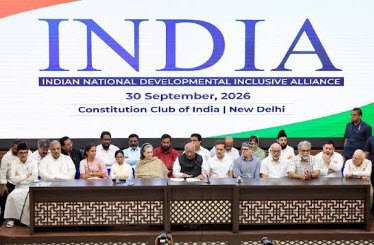
By Dr. Gyan Pathak On the morning of September 30, 2026, Delhi witnessed display of a series of hoardings, unclaimed by any organization but believed to have been put on behalf of the BJP, that targeted leaders of opposition before INDIA bloc meeting, and claiming rift among their leaders. BJP separately criticised Leader of Opposition […]

The article ‘Save Democracy’ Rallies From Oct 2-8, INDIA Bloc March To ECI On Oct 6 appeared first on Latest India news, analysis and reports on Newspack by India Press Agency).

By Dr. Gyan Pathak The proposed INDIA bloc meet — scheduled on September 30, 2026 in New Delhi against the Chief Election Commissioner’s (CEC’s) ‘illegal’ and ‘unauthorised’ actions as recorded by the two fellow Election Commissioners (ECs) — aims at not only taking a unified stand on demand of removal of the CEC and initiating […]

The article INDIA Bloc Meet On September 30 May Go Beyond Removal Of CEC Demand appeared first on Latest India news, analysis and reports on Newspack by India Press Agency).

By Arun Srivastava CEC Gyanesh Gupta on September 26, in the eye of the biggest-ever electoral scandal to rock the country, covertly confessed to have committed the criminal misdemeanour of massive voter deletions and electoral manipulation, at the full member meet of the Election Commission of India. As a temporary reprieve, he used the full […]

The article Nationwide Agitation Seeking Sacking Of CEC Gyanesh Kumar Intensifies appeared first on Latest India news, analysis and reports on Newspack by India Press Agency).

India’s youth-led Cockroach Janta Party has set Saturday as the deadline for Chief Election Commissioner Gyanesh Kumar to resign, warning that it will begin nationwide protests on October 2 if he remains in office.

Founder Abhijeet Dipke said the movement would start its campaign in Mumbai on Gandhi Jayanti and then take demonstrations to cities across the country. The ultimatum follows allegations of serious internal disagreements within the Election Commission over decisions affecting electoral rolls during the Special Intensive Revision.

“If Gyanesh Kumar does not resign by tomorrow, CJP will begin its nationwide protest from Mumbai on 2 October, and take it to cities across India,” Dipke said on Friday. The organisation had initially given Kumar 48 hours to step down and threatened an indefinite sit-in in New Delhi if its demand was ignored.

The CJP has also launched an “Election Commission Thik Karo” campaign and called for the SIR process to be halted. Its leaders have demanded an independent investigation into electoral-roll decisions and questioned whether safeguards governing voter registration, deletion and data management were properly observed.

The dispute intensified after information emerged that Election Commissioners Sukhbir Singh Sandhu and Vivek Joshi had formally raised objections at least 14 times over 10 months to decisions and orders concerning electoral rolls. The objections reportedly covered registration of new voters, deletion and restoration of names, changes to Form 6 and control of the technology used to maintain voter data.

Some objections concerned decisions that Sandhu and Joshi said had been taken or communicated without their knowledge. The two commissioners also raised concerns about centralising access to electoral-roll systems in New Delhi and, in separate communications, approached the Cabinet Secretary over changes affecting oversight of the commission’s technology infrastructure.

The Election Commission has rejected suggestions that the exchanges demonstrate improper decision-making. It said differing views and observations were a normal part of institutional deliberation and maintained that its final decisions, including those governing the SIR, were unanimous and legally valid.

The commission said it functions under Article 324 of the Constitution, statutory rules and established conventions. Officials have maintained that questions raised while proposals or orders are being considered should not be equated with dissent from final decisions approved by the three-member body.

Opposition parties have nevertheless seized on the disclosures to renew accusations that the electoral-roll revision has been conducted unfairly. Congress organised marches towards election offices in several state capitals on Friday, demanding Kumar’s removal and an independent examination of decisions taken during the revision.

The opposition has alleged that names have been removed from voter lists without adequate safeguards while some additions have lacked sufficient verification, claims the Election Commission disputes. The Bharatiya Janata Party has defended the commission and rejected allegations that the institution has been manipulated to favour the governing party.

BJP spokesperson Sambit Patra said internal deliberations demonstrated that the commission was functioning democratically. He said the final SIR decisions had been reached unanimously by all three commissioners and argued that disagreements during deliberations did not establish that the constitutional body was operating under one person’s control.

The controversy has given the CJP another national issue around which to mobilise young supporters. The organisation describes itself as a youth pressure group rather than a registered political party and emerged this year from an online protest campaign after Chief Justice of India Surya Kant used the words “cockroaches” and “parasites” while criticising a section of unemployed young people during a court hearing.

Its campaign subsequently expanded into street mobilisation over examination irregularities, education and public services. The group’s leaders have also organised inspections of government schools and used social media to highlight complaints about staffing and infrastructure.

By P. Sreekumaran THIRUVANANTHAPURAM: The VD Satheesan-led United Democratic Front (UDF) Government has temporarily stayed an order implementing minimum marks for classes VI-II, IX and X in the 2026-27 academic year. Implementation of minimum marks was one of the most significant and debated decisions of the previous LDF Government. The LDF had in 2024 approved […]

The article Keralam Govt Stays Implementation Of Minimum Marks In Schools appeared first on Latest India news, analysis and reports on Newspack by India Press Agency).

Ed Sheeran has said his “heart has been broken” by the scale of civilian suffering in Gaza, while apologising for mistakes made amid the dispute over rapper Macklemore’s removal from his United States tour. Addressing fans at Lincoln Financial Field in Philadelphia on Saturday, Sheeran described the situation in Gaza as “catastrophic and unjustifiable and disproportionate” and said the humanitarian toll had forced him to speak publicly […]

A United Nations-backed fact-finding mission has found reasonable grounds to believe United States forces committed war crimes in two February strikes in Iran, including an attack on a primary school in Minab that killed more than 150 people. The Independent International Fact-Finding Mission on Iran said the strikes amounted to indiscriminate attacks that caused civilian deaths, injuries and damage to civilian objects. Its findings were submitted to […]

Protests over surging fuel costs widened across several countries on Wednesday as crude oil remained above $100 a barrel, pushing diesel and petrol prices higher and forcing governments to confront growing public anger over the economic fallout from the Middle East conflict. French fishermen blocked the Frontignan fuel depot near Sète, a day after a similar action at Fos-sur-Mer near Marseille, demanding relief from fuel costs and […]

VISHNU RAJA
RYO YAMADA
HITORI GOTOH
IKUYO KITA