News related to
prove no

Uganda achieved a significant leap in coffee export earnings and volumes during May, driven by a strong harvest in key growing regions and sustained high global prices. The May coffee shipments reached 793,445 bags of 60 kg—an increase of 44% year‑on‑year—while export earnings soared to US$243.95 million, marking a 92% rise compared to May 2024. The Ministry of Agriculture, Animal Industry and Fisheries attributes the performance to robust output from the […]

ByteDance has unveiled “Dolphin”, an OCR model released under an MIT licence designed to revolutionise document processing by combining layout analysis and parsing in a unified workflow. This new tool is poised to enhance accuracy and adaptability across complex document types, marking a major advancement in optical character recognition. Dolphin operates by first analysing the document layout—identifying paragraphs, tables, figures and formulas—and then parsing each section in […]

Bitcoin continues to hover above the US $100,000 mark, yet the network’s on‑chain activity tells a contrasting story. Overall transaction counts have declined sharply—from over 730,000 daily in 2023–24 to between 320,000 and 500,000 so far in 2025—while average transaction values surge, indicating that large investors are driving activity.

Despite fewer overall movements, the economic weight of each transaction remains high. Daily on‑chain settlement averages around US $7.5 billion, peaking at US $16 billion when Bitcoin briefly pierced its all‑time high of US $111.7 thousand. That amounts to an average transaction value of about US $36.2 thousand—dramatically higher than before.

The evidence points to a concentration in high‑value transfers. Transactions exceeding US $100,000 now account for nearly 89 percent of on‑chain volume—a stark increase from around 66 percent in late 2022—while transfers under that threshold have dwindled. Smaller wallets and lower‑value senders are increasingly absent from the blockchain.

Transaction fees are also bucking historical trends. In previous bull markets, network congestion drove fees higher. Now, with Bitcoin nearing all‑time highs, miner fee revenue has dropped to just US $558,000 per day—markedly low in comparison to past cycles. This divergence demonstrates muted block‑space demand despite soaring prices.

Meanwhile, trading activity is shifting decisively off‑chain. Centralised exchanges now dominate, with combined spot, futures and options volumes estimated at seven to 16 times greater than on‑chain settlement values. Futures markets alone trade roughly US $57 billion per day on average, peaking at US $122 billion in November 2024. Spot volumes, although smaller, remain robust, averaging US $10 billion daily.

Total open interest in Bitcoin futures and options has reached about US $96.2 billion. Notably, collateral structures have improved; stablecoin‑margined positions now dominate the derivatives landscape—an encouraging sign of reduced systemic risk following the collapse of FTX.

The on‑chain/off‑chain divergence shapes a nuanced picture: Bitcoin’s price resilience stems less from broad public usage and more from concentrated institutional flows and leveraged activity in centralised markets. While large holders continue to shift substantial sums on‑chain, much of the ecosystem’s vitality lies within off‑chain derivatives.

A team from the Directorate General of Civil Aviation will conduct a comprehensive annual audit of Air India from 24 to 26 June, intensifying focus on the carrier’s operations and compliance following the June 12 crash of Flight AI171 in Ahmedabad, which claimed nearly 280 lives. Though scheduled independently of the crash, the audit arrives as inspectors scrutinise the airline’s operational documents, cabin safety protocols, and historical audit responses.

Leading the review will be Deputy Chief Flight Operations Inspector Adhiraj Yadav and a team of ten officials, including two cabin safety experts. The inspection will span documents on airworthiness, crew training and flight duty records, and previous non-compliance action plans. The DGCA has emphasised mandatory presence of key Air India executives during the audit.

The audit takes place against a backdrop of mounting regulatory intervention. In late May, a DGCA inspection found that three Airbus jets in Air India’s fleet flew without timely safety checks on their emergency slides—one A320 had a check more than one month overdue, and one A319 was delayed by over three months. The regulator issued formal warnings and described the delayed compliance as evidence of “weak procedural control and oversight”.

Further compounding matters, the DGCA last Saturday issued a stern warning for repeated and serious pilot duty scheduling violations, instructing the removal of three crew-scheduling executives. Air India has indicated it has acted on the directive.

These developments follow intensified inspections of all 33 Boeing 787s in Air India’s fleet. While initial findings revealed no major safety defects, 24 aircraft had already undergone enhanced inspections by mid-June, with the remainder scheduled to complete the checks shortly. The comprehensive checks contributed to delays and cancellations across wide-body operations, with a downturn in route availability pegged at around 15 percent through mid‑July.

Experts suggest that this layer of oversight reflects a strategic shift by the DGCA toward “360-degree” evaluations, broadening beyond routine audits to include airlines, airports, maintenance organisations, training institutes and ground services. Officials describe this as a coordinated effort to fortify the aviation ecosystem after safety deficiencies surfaced in recent months.

In response, Air India has emphasised that it is accelerating its internal compliance efforts, including extensive verification of maintenance records and ensuring escape-slide checks are up to date. The airline maintains that its aircraft—particularly the ill-fated Boeing 787-8—were “well maintained” and crews were suitably experienced.

The crash of Flight AI171 involved a Boeing 787-8 Dreamliner registered VT‑ANB, which lost thrust after take-off and impacted a hostel block at B.J. Medical College shortly after clearing the runway. Only one passenger survived, while at least 39 people were killed on the ground. Both UK and US authorities are supporting the investigation, which is examining technical and procedural factors such as engine performance, hydraulic systems, flap configuration and crew training.

Tata Group, which assumed ownership of Air India in 2022, has urged staff to treat the disaster as a “turning point” in rebuilding a safety-first culture. Its strategic investments have included more than US $70 billion in new aircraft orders, infrastructure upgrades and a full-scale rebranding effort. Analysts caution, however, that restoring public trust hinges on tangible improvements in operational discipline and compliance.

The DGCA audit will therefore not only evaluate existing compliance but also test if Air India’s corrective processes are thorough and permanent. Given recent warnings and the complexity of the current probe, expectations are high that the audit’s findings could shape a longer-term regulatory approach to aviation safety in India.

Factories are increasingly adopting a Unified Namespace architecture—an event‑driven, centralised framework that unites data from diverse systems under a single, real‑time source of truth. By standardising naming conventions and utilising protocols like MQTT, this model dismantles data silos, enhances scalability, and accelerates decision‑making across engineering, operations, and management teams. UNS addresses the critical issue of fragmented automation ecosystems, where legacy PLCs, SCADA, MES, ERP and new IIoT […]

Iran has launched a new wave of missile and drone strikes against Israel, following U.S. airstrikes that obliterated key Iranian nuclear facilities under Operation Midnight Hammer. The ripple effects are already being felt in global oil markets, while diplomatic channels strain under mounting pressure. The bombardment hit Israeli cities including Tel Aviv and Ashdod, with satellite monitoring confirming sirens and intercepted projectiles. Iran disclosed the deployment of […]

Private kindergarten pupils across the UAE will now receive 40 minutes of Arabic instruction each school day under a fresh directive from the Ministry of Education. The policy, effective from the 2025–2026 academic year, establishes a foundation aimed at fostering national identity and language proficiency from the earliest stages of education.

The requirement entails 200 minutes of weekly Arabic lessons—one period per day—from September this year, set to increase to 300 minutes per week by the 2027–2028 school year. Qualified early‑childhood educators will deliver lessons tailored for both native and non‑native speakers using approved resources and age‑appropriate methodologies.

Alongside Arabic, Islamic education will feature for Muslim children in kindergarten, with 90 minutes per week allocated, divided into two 45‑minute sessions or three 30‑minute lessons. Social studies will be incorporated to introduce concepts of family, UAE geography, environmental awareness and broader community values through a mix of classroom and outdoor play-based learning.

Beyond academic scheduling, the Ministry emphasises the move as a cultural cornerstone aimed at nurturing young learners who are confident, rooted in identity and proficient in their mother tongue. Advisory visits to private schools are set before term begins, with compliance inspections commencing in the 2026–2027 academic year.

This initiative forms part of a wider UAE‑wide agenda. Abu Dhabi’s Department of Education and Knowledge introduced a similar policy this academic year, mandating 240 minutes of weekly Arabic instruction in nurseries and kindergartens—rising to 300 minutes in 2026–2027. ADEK highlighted that early childhood is a critical period for language acquisition and stressed the significance of nurturing both native and non‑native Arabic speakers with customised learning pathways.

ADEK executive‑director for early education, Mariam Al Hallami, described the directive as delivering children “the gift of language, identity, and connection starting from day one,” and underscored the use of interactive methods such as storytelling, song and play to engage learners.

These regional policies echo growing sentiments from education officials across the Emirates. In Abu Dhabi, the ADEK strategy parallels curricula in Dubai and Sharjah, which have recently rated private schools on their success in embedding Arabic language and culture. Sharjah’s ruler has previously urged educators to innovate Arabic teaching and revamp pedagogical approaches.

Analysis of early education studies supports the Ministry’s stance. Research indicates that consistent, immersive instruction during foundational years boosts linguistic fluency and cognitive development. Tailored tracks for different proficiency levels also align with global best practices for inclusive early foreign‑language programmes.

Private schools are now working to revamp their curriculums. Administrators across the Emirates are preparing to integrate the additional lessons while ensuring instructional quality. Schools will receive curriculum frameworks and educator training ahead of implementation.

Some teaching professionals caution that the rollout must be carefully managed. A teacher at a leading international school in Dubai, speaking anonymously, noted that maintaining engagement for non‑native pupils requires smaller class sizes and specialised support. Equally, curriculum directors warn against overloading learners with too many structured subjects, advocating balance with play.

Parents have shown mixed reactions. Many expatriate families express strong support for their children learning Arabic early to aid cultural integration, while others voice concerns about the impact on existing literacy or numeracy time. School councils are expected to discuss timetables and resource allocations in the coming weeks.

Home‑school collaboration will be key. The UAE Ministry and ADEK are encouraging schools to involve families with take‑home materials, workshops and community events dedicated to Arabic language and culture. Experts say that parental engagement significantly strengthens children’s retention and enthusiasm for language learning.

Advertisements

HANOI, VIETNAM – Media OutReach Newswire – 23 June 2025 – With the invention of solar cells using Passivated Emitter and Rear Contact (PERC) technology, Prof. Martin Andrew Green from the University of New South Wales (Australia) and his team made a groundbreaking contribution to green energy production. Two years after receiving the 2023 VinFuture Grand Prize, he continues to push the boundaries of solar innovation, working […]

A novel method from Rice University scientists means electrochemical CO₂ conversion devices can now run more than 50 times longer thanks to a simple yet effective switch in their humidification process. By bubbling carbon dioxide through a gentle acid—such as hydrochloric, formic or acetic—the team has prevented blockages that previously cut runtimes to mere hundreds of hours. Electrochemical CO₂ reduction systems traditionally suffer from salt buildup. Potassium […]

Dubai’s Roads and Transport Authority, partnering with Emaar Properties, is expanding the Burj Khalifa/Dubai Mall Metro Station to meet mounting passenger demand. The extension enlarges the station from 6,700 m² to 8,500 m², boosting its hourly throughput from 7,250 to 12,320 passengers—an uplift of 65 per cent. When complete, it is expected to accommodate up to 220,000 passengers per day. The move comes as metro use continues to rise sharply at this […]

João Almeida secured the general classification at the Tour de Suisse on 22 June, overpowering Kevin Vauquelin in a commanding mountain time trial, while Filippo Baroncini clinched his first overall win at the Baloise Belgium Tour on the same day. The victories mark a milestone weekend for UAE Team Emirates‑XRG, pushing its season tally to a record-breaking 50 wins.

Almeida, wearing the yellow jersey, staged a remarkable turnaround during the 10.1 km ascent from Beckenried to Stockhütte. Starting the final stage 33 seconds behind Vauquelin, he posted a blistering 27:33—beating the Frenchman by 1:40 and sealing the victory by a 1:07 margin. His performance ensured he not only claimed the overall title but also the points jersey.

The Tour de Suisse had already seen Almeida recover from an early setback—losing over three minutes on stage one—by capturing stage four and seven victories, and grinding out bonus seconds during stage seven to stay within reach. The final time trial confirmed his status as one of the WorldTour’s most consistent climber–time‑trial specialists.

Baroncini’s triumph at the Baloise Belgium Tour marked his debut general classification success. He topped the podium with a slender four-second lead over Ethan Hayter, after a tactically astute five‑stage campaign. Baroncini’s consistency in the Ardennes-style terrain and strategic riding during the Golden Kilometre bonus sprints proved decisive.

These wins reflect a broader surge in form across the Emirati team. With Almeida’s mastery in time trials and mountain terrain, complemented by Baroncini’s emergence in hilly classics, the squad demonstrates depth and versatility—especially crucial as attention now turns to the Tour de France.

Analysts highlight that Almeida parlayed a challenging start into a commanding campaign by dominating critical stages and leveraging team support. He paid tribute to his riders and staff after stage seven, noting that every second counted and his boost in morale hinged on teamwork.

Baroncini, meanwhile, operated quietly yet effectively—conserving energy and nabbing time bonuses without making headlines until the final standings were published. His victory signals maturity beyond a first-time winner; his profile suggests he could emerge as a versatile contender in mountainous races later this season.

UAE Team Emirates‑XRG, under the stewardship of General Manager Mauro Gianetti and Team Manager Matxin Fernández, stands third in the UCI WorldTeam rankings this season, boasting eight overall stage‑race victories and seventeen individual stage wins. Tadej Pogačar has led the charge with seven wins, yet Almeida and Baroncini are edging into prominence.

The team’s momentum also offers tactical flexibility for the upcoming Tour de France, where Almeida is expected to support Pogačar, and Baroncini may be deployed in breakaways or mountain stages. Their successes in Switzerland and Belgium send a clear signal: UAE Team Emirates‑XRG will field a multi‑faceted and potent challenge in the Grand Départ.

U.S. military jets attacked three uranium-enrichment facilities in Iran—Fordow, Natanz and Isfahan—after President Trump authorised a precision bombing campaign targeting underground shafts, marking a significant escalation in efforts to curb Tehran’s atomic ambitions. Trump asserted that the installations were “totally obliterated” following deployment of B‑2 stealth bombers armed with GBU‑57 bunker‑buster munitions. Pentagon officials confirmed this was the first operational use of Massive Ordnance Penetrators.

Satellite imagery shows craters at Fordow and Natanz, alongside signs of collapsed tunnel entrances and surface damage. Yet analysts caution that subterranean caverns may remain intact. One crater at Natanz measured approximately 5.5 metres across, and a large support structure at Fordow appeared untouched. The International Atomic Energy Agency has reported no detectable increase in off‑site radiation but acknowledges an inability to evaluate underground facility damage.

Destruction of declared nuclear infrastructure may impair Iran’s enrichment capabilities temporarily, but it adds complexity to monitoring efforts. The strikes have disrupted IAEA inspectors’ routine inspections and scattered environmental samples, weakening the agency’s ability to conduct forensic analysis. Former IAEA official Robert Kelley warned that bomb‑strewn sites render isotopic sampling nearly impossible, complicating accurate uranium accounting.

On diplomatic and military fronts, the strikes have triggered serious concern. Russia’s Deputy Foreign Minister characterised global tensions as “millimetres” from the brink of nuclear confrontation. Iran’s leadership, including foreign minister Abbas Araghchi, condemned the attacks as “lawless aggression,” and pledged proportionate retaliation. Iranian state media reported missile defence operations over Tehran and Karaj, while the Islamic Revolutionary Guard Corps warned U.S. bases in the region may face “regrettable responses”.

Allies have issued mixed reactions. Australian foreign minister Penny Wong backed the action as a move to prevent weaponisation, though she also called for a halt to hostilities and a return to diplomacy. In Washington, lawmakers are divided: some Republicans applaud the airstrikes, while Democratic leaders criticise the unilateral decision absent congressional authorisation.

Despite military claims of success, experts caution that bombing cannot permanently dismantle Iran’s nuclear infrastructure. A 2025 Reuters analysis noted that even well-targeted airstrikes would likely result in only temporary delay, with underground facilities concealing critical components and technical expertise intact. The IAEA’s upcoming board meeting in Vienna is expected to address both the fissile-material disruption and the challenge of rebuilding effective verification.

Iran had responded to earlier IAEA censure by announcing a new enrichment site and upgrading centrifuges at Fordow, deepening concerns over progress toward weaponisation. By mid‑June, the agency confirmed that Iran held approximately 409 kg of 60 percent enriched uranium—enough for several warheads if further refined.

Military strategists believe that while Israel’s campaigns damaged above‑ground infrastructure, only the U.S. possessed the capability to strike buried facilities effectively. But even with advanced bunker‑busters, Fordow remains a tough target; Israel earlier claimed it could strike the site independently, though many experts doubted that it had the means to deliver sufficient penetration.

Operation “Midnight Hammer,” as it is reportedly codenamed, has bolstered military deterrence, yet it may harden Iran’s resolve. Observers warn that Tehran is likely to deepen its program underground, reduce transparency, and accelerate its nuclear pursuits outside of IAEA oversight.

Amid rising hostilities, diplomatic overtures remain faint. Iranian and U.S. envoys were scheduled to meet in Oman, while Araghchi was set to confer with Russian counterparts in Moscow. The IAEA board’s deliberations in Vienna may prove a critical venue for negotiating how to restore inspections, assess nuclear inventory, and potentially revive diplomacy.

Analysts stress that without sustained oversight, military strikes risk igniting an arms race. Uranium shields buried deeper, veiled by bomb damage, could reemerge in new sites—potentially accelerating forceful advances outside the scrutiny of Western intelligence.

HONG KONG SAR – Media OutReach Newswire – 23 June 2025 – The Hong Kong Institute of Certified Public Accountants (HKICPA) is delighted to announce its renewal of Mutual Recognition Agreement (MRA) with CPA Australia (CPAA). Based on the new MRA, the HKICPA will continue to join hands with peer accounting professional body to cultivate top-tier talents for the accounting profession and foster its development. The HKICPA […]

Patients Demonstrate Significant Knowledge Gaps in Treatment Options, Leading to Lost Hope and Treatment Discontinuation Over 70% of Vitiligo Patients Desire Skin Repigmentation; New Topical Therapy Introduced in Hong Kong Shows Encouraging Results HONG KONG SAR – Media OutReach Newswire – 22 June 2025 – In observance of World Vitiligo Day (June 25), Hong Kong Vitiligo Support Group has released findings from its latest “Hong Kong Vitiligo […]

Tests by Thailand’s Pollution Control Department have revealed that arsenic concentrations in the Kok River and tributaries now exceed national safety limits by up to five times. Biochemical analysis indicates that these toxic levels are linked to unregulated mining operations in Shan State, Myanmar, particularly within territories controlled by the United Wa State Army.

The Kok River, which begins its 285km course in Myanmar’s Daen Lao Range before entering Thailand through Mae Ai and flowing into Chiang Rai and eventually the Mekong, has become the focus of mounting alarm. Tests conducted between late May and early June demonstrated elevated arsenic at all 15 tested points along the Kok and Sai rivers, with further contamination detected in two Mekong sampling sites.

Local fishermen have reported adverse impacts to aquatic life and livelihoods. Prices for catch in Chiang Rai have dropped by nearly half, as consumer fear surrounding contamination takes hold. Fisherman Sawat Kaewdam told AFP: “They say, ‘There’s arsenic. I don’t want to eat that fish.’”.

Satellite imagery and drone footage show dozens of active mining sites emerging since around 2022, believed to involve both gold and rare earth minerals. These mines operate under minimal environmental safeguards, with tailings and chemical-laden effluent discharged directly into rivers. One environmental campaigner described the situation as Thailand’s “largest-ever case of transboundary pollution”.

Health experts warn that while immediate poisoning symptoms may not materialise, long‑term exposure through contaminated water and fish consumption could lead to chronic arsenic poisoning. Somporn Phengkham of the Community Health Impact Assessment Platform emphasised the risk of gradual accumulation, urging increased scrutiny of wells and irrigation systems.

Communities along the Kok River have experienced unusual water discolouration, persistent skin irritations, and fish deformities. Chiang Rai environmentalists staged protests on 5 June, tying ribbons along the river bridge to demand intervention and mine closure. In Chiang Mai’s Mae Ai district, a monk from Wat Thaton confirmed that the river’s appearance and use had become culturally and practically untenable.

Thailand’s federal government has initiated emergency measures. Deputy Prime Minister Prasert Jantararuangtong has overseen a new response centre, while the Pollution Control Department is conducting enhanced sampling. Officials reassure domestic water supplies are safe, although the contamination source remains external.

Proposals for containment include constructing a dam across the Kok River to trap sediments, dredging heavily polluted sections, and pursuing diplomatic negotiations with Myanmar and China. The Foreign Affairs Committee is engaging Beijing to urge oversight of Chinese mining companies operating within UWSA territories.

Challenges persist as Shan State’s mines lie beyond Myanmar’s central control. With the UWSA exerting autonomy and Chinese-linked firms driving extraction operations, finding a direct negotiating partner proves elusive. Regional analysts warn that building physical barriers without curbing source pollution will yield temporary alleviation at best.

Environmental advocates underscore the urgency of scaling up real-time monitoring and cross-border coordination. They highlight growing concerns that contamination could extend throughout the Mekong basin, threatening agriculture, fisheries, and water security across Southeast Asia.

Experts like Tanapon Phenrat of Naresuan University stress that addressing the problem requires systemic reform: mandated tailings treatment, strict environmental standards, and international cooperation. “We need to act now,” he stated.

Arabian Post Staff -Dubai Meta has unveiled the Oakley Meta HSTN, a new smart glasses model tailored for sports enthusiasts that introduces high-resolution video and extended battery life. Pre-orders open on 11 July for the premium $499 edition, with standard variants priced from $399 available later in the summer. Initial markets include the US, Canada, UK, select European countries, Australia, and later expansions slated for Mexico, India, and the […]

The Saudi Central Bank has introduced sweeping reforms in the rules governing credit-card issuance and operation, aiming to reduce consumer costs, bolster transparency and align with global standards. The changes include mandatory fee notifications, reduced cash withdrawal charges, capped international transaction fees and improved disclosures.

SAMA will implement these updates within 30 to 90 days. Key changes include a requirement for issuers to send SMS alerts before any fee or term modification, allowing cardholders a 14-day window to cancel agreements without penalty under the updated terms. E-wallet top-ups using credit cards will now incur no charges, a move intended to incentivise digital payments.

Cash withdrawals of SR2,500 or less will carry a maximum fee of 3% of the transaction value; those of SR2,500 or more are capped at SR75. Previously, cash advance fees applied sharply until SR5,000 with a flat SR75, and beyond that 3%, up to SR300—making the new cap notably more favourable for larger withdrawals. International purchases will now attract a clear 2% fee of the transaction amount.

A notable enhancement allows customers to deposit amounts beyond their credit limit and withdraw them at any point without additional charges, enhancing flexibility and consumer agency. Account statements must now be issued via SMS at least 25 days before payment, detailing balances, due dates and fees. Immediate notifications must follow any credit-card transaction, including details such as merchant, amount and remaining limit. Issuers are also required to provide pre‑transaction tools for estimating international charges and reward benefits.

Repayment provisions maintain consumer safeguards: a 25-day minimum grace period is mandated before term costs apply. The rules prohibit levying additional fees for full balance payments and outlining clear terms for minimum payments and their implications.

These reforms are underpinned by standardised disclosure templates for fees and benefits, inclusive of promotional terms—a step towards consistency across the market. Issuers must emphasise APR, term costs and expiration timelines for rewards or promotions, with SMS reminders 14 days in advance.

SAMA’s emphasis on mandatory due diligence and creditworthiness checks prior to card issuance is reinforced under the new framework. Criteria now include explicit customer consent via authenticated channels, formal credit record assessments and eligibility conditions aligned with industry best practices.

Procedures for supplementary cards, default reporting and dispute resolution have also been clarified. For example, the minimum repayment remains 5% of the due balance, and any default procedures must include consumer advisory services before legal or collection measures begin.

SMS has been designated the primary channel for disclosures, with issuers obliged to inform customers of account activity, fee changes and promotional developments. Financial institutions must adhere to SAMA‑specified notification templates to promote uniformity and clarity.

According to a senior official within SAMA, the goal is to “establish minimum requirements to promote disclosure, transparency and fair practices, as well as to limit credit risk.” Industry reaction has been generally positive. Analysts from regional banks suggest the rules will “enhance consumer protection while supporting digital payment growth.” Critics, however, note potential implementation challenges—particularly in updating existing systems to align with stricter notification and compliance requirements.

The timing reflects SAMA’s broader strategy to modernise the financial sector and accelerate digital payments as part of Saudi Vision 2030. A 2020 directive mandated real‑time notifications for debit card and e-wallet transactions, laying foundational infrastructure for today’s enhanced SMS regime. Collaboration with global payment networks—such as Visa, MasterCard and American Express—has helped shape caps on international and cash advance fees.

Banks and fintech firms are now preparing compliance roadmaps. One major lender has initiated system-wide updates to include the new SMS templates, fee calculators and balance‑flexibility features. Industry trade bodies are urging transparency in implementation timelines to ensure consumers are well informed ahead of the rollout.

As SAMA positions Saudi Arabia’s credit‑card framework at par with international best practice, key areas to monitor include transparency in third‑party charges, enforcement mechanisms for non-compliant issuers, and feedback from consumer‑protection advocates.

Question.AI has launched a significantly enhanced AI-driven educational platform designed to provide immediate, accurate assistance across diverse subjects. Now boasting over 20 million monthly users, the platform offers image-based problem solving, writing enhancements, multilingual translation, and real-time AI chat—all accessible around the clock. At the heart of the offering is a “snap‑and‑solve” feature that allows users to upload photos of homework problems and receive detailed, step‑by‑step solutions […]

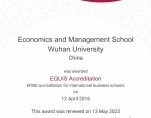
WUHAN, CHINA – Media OutReach Newswire – 19 June 2025 – Recently, the European Foundation for Management Development (EFMD) released a formal letter informing that the Economics and Management School (EMS) of Wuhan University (WHU) has successfully gained the five-year re-accreditation of EQUIS (EFMD Quality Improvement System). This is the first time that the EMS has been accredited by EQUIS’ highest honor, a five-year period, following its […]

If the United States launches direct military strikes against Iran, global stock markets will likely react with speed and force—dropping hard before any official policy statements are made or economic forecasts adjusted. This would not be a measured repricing. It would be a sharp reflex from investors who have, until now, largely overlooked the rising threat of a wider regional war in the Middle East. Equities across […]

Hackers claiming affiliation with Predatory Sparrow, possibly linked to Israel, have executed a cyber‑strike against Nobitex, Iran’s leading cryptocurrency exchange, erasing approximately $90 million worth of digital assets. The assault began in the early hours of 18 June 2025, when the group transferred diverse cryptocurrencies—including Bitcoin, Ethereum and Dogecoin—into vanishing crypto‑wallets designed without private keys, effectively “burning” the funds to send a deliberate political message.

Blockchain analytics firms, including Elliptic and TRM Labs, analysed the transactions and found the emptied addresses bore anti‑IRGC messages, confirming the operation was ideologically motivated rather than financially driven. Elliptic noted that the assets were moved into vanity addresses with embedded slogans denouncing the IRGC, and that the group leaking the funds would not retain the keys, ensuring permanent loss.

Noble objective remains politically charged

The group, using its Farsi‑named moniker Gonjeshke Darande—or “Predatory Sparrow”—publicly accused Nobitex of facilitating Iran’s sanctions evasion and funding militant groups, claiming the platform had enabled transactions for IRGC‑linked factions such as Hamas and Yemen’s Houthis. Elliptic has traced past ties between Nobitex and IRGC‑affiliated actors, including sanctioned individuals like Amir Hossein Niakeen Ravari and Ahmad Khatibi Aghada.

The hack comes amid heightened Israel‑Iran tensions. Reports indicate that Predatory Sparrow also targeted Iran’s state‑owned Bank Sepah on 17 June, triggering widespread service disruption, including to ATMs and fuel stations. Analysts interpret these cyber‑operations as extensions of conventional military retaliations between the two nations.

Nobitex disruptions raise alarm

Nobitex admitted to unauthorised access affecting both its app and website, temporarily shutting services while conducting assessments. Public updates from the exchange have been sparse, and customer inquiries have reportedly gone unanswered. Plans to recover or rebuild lost assets remain unclear, raising concerns among its claimed user base of over 7 million.

Despite accusations, Israel has not officially claimed responsibility. Media speculation within the country suggests government backing, but no formal confirmation has been issued. Predatory Sparrow, noted for previous impactful operations—from collapsing gas station networks in 2021 to prompting major fires at a steel mill in 2022—added this attack to its growing list of cyber engagements against Iranian infrastructure.

Impact and implications for crypto ecosystem

Cyber‑security analysts have labelled the hack “particularly significant given the comparatively modest size of Iran’s cryptocurrency market,” with Chainalysis intelligence chief Andrew Fierman underscoring the political overtones. The operation exemplifies how digital currencies and blockchain platforms are becoming tactical assets and vulnerabilities within geopolitical conflicts.

U.S. legislators, including Senators Elizabeth Warren and Angus King, previously raised concerns over Nobitex’s facilitation of sanctions avoidance, highlighting its role in enabling Iran’s IRGC and related proxies to move financial resources. This attack may intensify scrutiny on crypto exchanges suspected of abetting questionable transactions in sanctioned jurisdictions.

Decline of Iran’s crypto defences

Crypto adoption in Iran has long served as a hedge against economic instability, with citizens and state‑linked groups alike using digital currencies to escape inflationary pressures and circumvent banking restrictions. Nobitex, in particular, developed significant traction, drawing millions of users seeking alternative financial tools.

However, analysts warn this sabotage could erode investor trust, disrupt public confidence in digital assets, and invite heightened regulatory oversight. Exchanges in politically sensitive regions may now face new security standards and sanctions compliance demands.

A new frontier in cyber‑warfare

This development underlines a shift where cyber‑warfare transcends state boundaries, now targeting third‑party financial networks with tangible consequences. By obliterating rather than stealing funds, Predatory Sparrow signalled that its operation aimed to disrupt Iran’s crypto‑financing rather than profit from it.

Officials tracking these patterns warn that similar tactics may emerge as cyber‑tools of statecraft evolve, affecting financial systems across volatile regions. Experts suggest exchanges handling high‑risk jurisdictions should shore up defences and improve transparency around asset provenance and network resilience.

As Nobitex works to restore functionality, regulators, crypto stakeholders and intelligence services will closely examine the incident. The breach draws attention to the critical role of exchanges in global geopolitics, raising complex questions about neutrality, compliance and cybersecurity in an increasingly fraught digital economy.


A dramatic explosion ripped through SpaceX’s Starbase test site near Brownsville, Texas, at approximately 11 p.m. Central Time on Wednesday, June 18, when the Starship prototype designated Ship 36 detonated during a routine static‑fire test ahead of its anticipated tenth flight. The stainless‑steel vehicle was engulfed in flames following a “major anomaly” while being fuel‑led for a multiple‑engine ignition sequence, according to SpaceX. All personnel remained outside the secured […]

ImFact today unveiled its “Blockchain Anywhere” infrastructure, enabling 6.8 billion devices—from smartphones to IoT hardware—to operate individual blockchain instances. Dubbed Personal Blockchain and On‑Device Blockchain, the rollout promises cryptographic data verification embedded directly within devices, marking a pivotal shift in trust architecture for artificial intelligence applications. The launch was showcased through Korea’s DaeguChain deployment across Daegu city and supported by a global testnet.

Personal Blockchain runs as a standalone blockchain on smartphones via mobile apps such as MyChain and Fact Stamp, allowing users to verify image authenticity, certify legal documents and complete offline transactions. In parallel, On‑Device Blockchain embeds blockchain functionality into internet-connected hardware—security cameras, autonomous vehicles, industrial sensors—assuring tamper-evident data creation at the source. Together, they integrate with ImFact’s Layer‑1 mainnet through a proprietary Station protocol.

These innovations build on six years of development and have undergone trials within DaeguChain, the civic blockchain network of Daegu city—South Korea’s fourth largest—with a population of 2.5 million. ImFact confirmed the system has proven reliable at enterprise scale. A dual‑track Testnet 2.0 currently supports more than 50,000 users across 97 countries, with participants incentivised via device mining rewards and verification incentives. The team aims to launch the Layer‑1 mainnet in Q4 2025.

Driving ImFact’s initiative is a leadership team comprising Professor Minkyu Je from KAIST—previously with Samsung—as head of hardware blockchain integration; Professor Yasin Ceran of San Jose State University and Stanford Medical School, focusing on privacy-sensitive health data verification on-device; and David Woong Jin Yoon, ex‑CEO of Gravity, steering strategic market deployment. Senior Ecosystem Builder San Jun described the development as the group’s solution to embedding blockchain functionality wherever computing power exists.

The announcement arrives against a backdrop of broader technological investment in South Korea. The government has pledged 16.1 trillion KRW over five years to boost artificial intelligence infrastructure, including data centres and GPU capacity, as outlined in a policy paper presented to the Presidential Policy Planning Committee on 18 June 2025. Key objectives include constructing AI data centres and offering open‑model development to citizens.

Industry analysts suggest that while South Korea’s blockchain strategy originated in controlled, closed networks, the growth of AI demands public and verifiable data systems. Infrastructure such as ImFact’s aligns with this strategic shift, seamlessly enabling decentralised trust within traditionally siloed environments.

ImFact positions its infrastructure as DePIN, distinct from existing offerings that rely on external validation. Instead, their data integrity is assured at the point of generation—whether it be a camera capturing footage or a sensor logging readings—with cryptographic proof to prevent tampering. The embedded nature enhances security and auditability, crucial for sectors like healthcare, autonomous vehicles, legal systems, and industrial monitoring.

While ImFact’s public roadmap outlines the L1 mainnet launch in late 2025, it is already actively engaging early adopters through Testnet 2.0. Users are deploying personal blockchain nodes on smartphones and integrating on-device blockchain chips in IoT hardware, generating token rewards and engaging in verifiable proof tasks. These early-stage validators are cultivating a nascent ecosystem that could mature rapidly ahead of commercial stage.

South Korea’s public sector stance and investment in AI and related infrastructure create a favourable landscape for projects like ImFact. The 16.1 trillion KRW policy emphasises open‑source AI models and GPU availability—initiatives that align with ImFact’s objective to offload cryptographic verification tasks to the edge of the network. The convergence of national policy and device-level trust architecture underscores an ecosystem designed to support AI at scale.

ImFact’s strategy hinges on the deployment and interoperability of three layers: personal blockchains for users, on-device blockchains for hardware, and an L1 mainnet offering global anchoring. Success depends on adoption rates of its mobile apps and IoT kits, regulatory acceptance of on-device verification for legal and medical use cases, and demonstration of clear ROI for participants in device mining.

Bitcoin Solaris is gaining rapid momentum, positioning itself as a potential outperformer of Polkadot’s early expansion. Analysts and on‑chain metrics highlight growth indicators that not only replicate Polkadot’s debut phase but in several cases significantly surpass it. Market observers attribute this shift to Solaris’s mobile‑first mining approach, hybrid consensus architecture, and aggressive presale execution.

Polkadot established its reputation through multi‑chain interoperability and shared security via parachains—a design emphasising developer adoption over mainstream user engagement. In contrast, Bitcoin Solaris is scaling through mass inclusivity. Its Solaris Nova app enables users to mine with everyday smartphones or PCs, eliminating the need for costly ASICs or complex infrastructure—barriers that still restrict Polkadot validator participation. This strategy has sparked an influx of retail interest, including among existing Polkadot investors turning to BTC‑S presale phases in search of higher short‑term returns.

Solaris’s roadmap reflects an ambition to execute where Polkadot encountered slowdowns. From launching testnet and mobile wallet in early 2026 to a full mainnet and exchange listings by late 2026, the timeline is concrete and time‑bound. In contrast, Polkadot’s parachain roll‑out, while pioneering, has been criticised for complexity and slower-than-expected mainstream uptake.

Technically, Solaris combines foundational Proof‑of‑Work for security with Delegated Proof‑of‑Stake for instant transactions and smart contracts. Its target throughput—10,000 to 100,000 TPS with finality in as little as two seconds—edges ahead of both Polkadot and competing layer‑1 networks. Validators rotate daily to enhance decentralisation, and its Helios security layer brings protocol-level safeguards comparable with Bitcoin’s scarcity model and Solana’s performance.

Energy consumption is also a focal point. Solaris claims 99%+ savings in power usage compared with legacy mining operations. With escalating scrutiny of crypto’s environmental impact, that low‑energy design resonates with both regulators and eco‑conscious investors.

The presale narrative underscores urgency. Currently in mid‑phases, token pricing has ranged from US $2–8, with anticipated exchange‑launch pricing plateauing near US $20. This structure has already attracted over US $4–5 million in capital, and presale bonuses approach 12–14% per phase.

Comparisons to Bitcoin’s early growth phase are emerging. Financial analysts argue that Bitcoin Solaris’s fixed supply, mobile mining model, and early‑stage presale echo crypto’s 2013 dynamics. Even modest investments—US $1,000 today—are being framed as having potential to outperform multi‑thousand‑dollar Bitcoin buys over a similar timeframe.

However, such enthusiasm is not without admonitions. As a relatively new protocol, Solaris remains in development, with adoption hinging upon mainstream acceptance of the Nova app, audit outcomes, smart contract integrity, and exchange listings. Polkadot’s longevity and proven ecosystem via robust parachain deployment stand as a counterpoint—Solaris must demonstrate resilience under live load.

The academic and developer communities have taken note of Polkadot’s strengths—shared security via NPoS consensus, governance frameworks, and scholarly analysis of its sharding mechanisms. Yet critiques surrounding complexity, validator cost thresholds, and centralisation risks persist. By contrast, Solaris is proactively targeting those criticisms with user‑centric design, streamlined entry, and full audit transparency.

Early data from presale participants suggests substantial uptake. West African and Southeast Asian communities—traditionally underrepresented in high‑end mining—are increasingly engaging through mobile mining accessibility. While precise regional figures are opaque, anecdotal evidence and community growth metrics from Solaris’s Telegram and X channels point to significant global traction.

Institutional interest remains unsubstantiated. Vertex Ventures and other blockchain‑focused funds have yet to announce allocations. Solaris’s validation remains retail‑driven, though its governance plan includes institutional play in later roadmap phases. By contrast, Polkadot has cultivated grants via Web3 Foundation and tapped institutional bonds for parachain funding.

As of now, the crypto community stands at a divergence point. One path reflects Polkadot’s methodical but slower‑burn strategy, centred on developer utilisation and cross‑chain infrastructure. The other is a sprint toward inclusion, speed, and mobile participation via Bitcoin Solaris.

VISHNU RAJA
RYO YAMADA
HITORI GOTOH
IKUYO KITA