News related to
prove no

Smartphone storage is on the cusp of its biggest leap in years as the Universal Flash Storage 5.0 specification arrives with headline sequential bandwidth touted at up to 10.8GB/s, nearly a twofold jump over today’s mainstream UFS 4. x. The stated aim is clear: keep pace with feature-rich camera pipelines and the growing wave of on-device AI so that apps open quickly, multitasking holds steady, and background […]

The subscription window for Abdulaziz Ahmad Al-Twijri Trading Company’s initial public offering on the Nomu–Parallel Market will run from 2 to 9 November 2025, focusing exclusively on qualified investors. The offering involves 1 million shares — equivalent to 20 % of the company’s post-IPO capital. The Capital Market Authority approved the registration in June 2025.

Al-Twijri had earlier attempted an IPO in June 2023, when it proposed to list 600,000 shares; the attempt was cancelled after failing to attract full subscription. The current issue is built on a base capital prior to offering of SAR 40 million, paid up via 4 million shares at a nominal value of SAR 10 each. Post-offering, the company will issue 5 million shares, with the floated portion representing 20 %.

Al-Twijri’s core operations span wholesale of food, hygiene and personal care products, medical supplies, plus real-estate leasing and management. In its prospectus, the firm indicates plans to channel proceeds toward expansion of storage capacity and related working capital needs.

The company has appointed Yaqeen Capital as financial advisor and bookrunner, and a spectrum of Saudi capital firms — including Derayah, Al Rajhi Capital, SNB Capital, Riyad Capital, Albilad Capital, AlJazira Capital, Alistithmar Capital, Alinma Capital, ANB, Alkhabeer, SAB Capital, Sahm Capital, GIB Capital and Musharaka Capital — as receiving agents.

Under Saudi capital markets rules, the offering is limited to qualified investors as defined by CMA guidelines. The CMA has emphasised that its approval is procedural; it does not constitute an investment endorsement.

Analysts note that the timing taps into broader momentum in Saudi Arabia’s IPO market. During the second quarter of 2025, Saudi listings captured about 76 % of all GCC IPO proceeds, with strong interest in offerings on both the main market and Nomu. Participation by institutional or high-net-worth investors will be critical to achieving full allocation.

Al-Twijri’s promoters — chiefly members of the Al-Twijri family — will retain controlling interest. In past filings, Mohamed and Khalid Al-Twijri held 30.5 % each, with minority holders covering the remainder. Post-IPO, their combined share will remain significant.

Gemini has secured registration with AUSTRAC and formally established its Australian arm, positioning itself as a regulated digital currency provider in the country. With the move, Australians can now trade with Australian dollars through local payment rails and the firm has named a dedicated country head to lead its strategy.

The new entity, Gemini Intergalactic Australia Pty Ltd, is now recognised by AUSTRAC as a digital currency provider, enabling full operations in compliance with Australia’s anti-money laundering and counter-terror financing laws. Local deposit and withdrawal options via PayID and Australia’s New Payments Platform will be enabled, reducing reliance on cross-border transfers.

Saad Ahmed, Gemini’s head of APAC, said the expansion aligns with robust demand in Australia’s crypto market, which the company estimates at roughly 22–25 per cent adoption. He emphasised that the decision to push into Australia preceded the government’s latest regulatory proposals. The firm plans to apply for an Australian Financial Services License to roll out advanced services such as staking and lending, but these will not be available at launch.

To lead its local presence, Gemini has appointed James Logan as Head of Australia. Logan was formerly in leadership roles at Luno and Bitget in Australia, thus bringing regional experience in crypto operations and regulatory compliance. His responsibilities include building partnerships, scaling operations, and navigating evolving policy frameworks.

Gemini’s entry comes amid intensifying regulatory focus in Australia. The government recently released draft legislation that would require crypto exchanges to hold an AFSL under the Corporations Act, thus applying the same regulatory rigour to digital assets as to traditional finance firms. Some industry observers view the move as a consolidation trigger—smaller platforms may struggle to absorb compliance costs.

Beyond regulation, banking integration remains a competitive differentiator. Australian customers have long faced friction when depositing and withdrawing via crypto platforms due to banks restricting or flagging such transactions. Gemini’s local setup aims to mitigate such barriers by partnering with Australian payment systems and financial institutions.

In the competitive landscape, Gemini will go head to head with established players such as Independent Reserve, CoinSpot, Binance Australia and OKX. While some already operate under established local compliance frameworks, Gemini emphasises institutional-grade infrastructure, regulatory integrity and global liquidity as its advantages.

Analysts view the timing of Gemini’s move as strategic. The firm’s recent listing on Nasdaq, in which it raised USD 425 million, has strengthened its capital base and credibility. Establishing operations in Australia now allows it to lock in market share under current rules, ahead of any stricter licensing regime.

Australia’s crypto adoption has surged in recent years. Surveys and industry reports suggest that by 2025 nearly one in four Australians hold digital assets—a rate comparable to the U. S. This growth, along with rising institutional interest, makes the market an increasingly attractive target for global exchanges.

Gemini has had a presence in Australia since 2019, serving local users via its global platform but with limited features and higher costs. Under the new structure, native AUD deposits, enhanced trading pairs, and faster settlement are expected to improve user experience and price competitiveness.

While Gemini’s initial rollout will omit certain features like crypto-backed credit or staking, the company says it is pacing its product expansion in tandem with regulatory clarity. It is adopting a “wait-and-watch” posture with respect to the government’s consultation process, but remains confident that its operations will comply.

The Australian push is one element in Gemini’s broader global strategy. It has also moved ahead in Europe under MiCA and is exploring tokenised stock trading in key markets. The firm now claims to serve customers in over 60 jurisdictions and has processed hundreds of billions of dollars in cumulative trading volume.

JAKARTA, INDONESIA – Media OutReach Newswire – 9 October 2025 – PT Bank Amar Indonesia Tbk. (“Amar Bank”, IDX: AMAR), a pioneer in digital banking serving the retail and MSME segments, today announces that SBI Holdings, Inc. (“SBI Holdings”, TYO:8473), a leading Japanese financial services conglomerate, has taken a stake in Amar Bank. Following this transaction, SBI Holdings now holds more than 5% of Amar Bank’s shares, […]

A Singapore High Court hearing is scheduled on 13 October 2025 to consider WazirX’s proposed Scheme of Arrangement, marking a pivotal moment in the embattled crypto exchange’s restructuring efforts. The court will hear further arguments on HC/SUM 940/2025, a case central to the platform’s ability to repay creditors and revive operations.

The hearing follows a tumultuous legal process. In June 2025, the court declined to sanction the original scheme submitted by Zettai Technologies, WazirX’s parent entity, citing structural concerns and ambiguities in how the proposal would address creditor claims. Zettai responded by seeking an opportunity for further arguments. The court acceded to that request, setting the stage for the October proceedings.

Prior to this hearing, the court has directed both Zettai and opposing parties to submit additional written submissions. Zettai filed on 26 September 2025, and the court issued further directions on 29 September requiring clarifications by 3 October 2025. Until now, no hearing date had been formally fixed.

The background to this process dates to July 2024, when WazirX suffered a cyberattack resulting in the loss of roughly $235 million. Nearly 16 million users were affected, with withdrawals and trading suspended indefinitely. The attack was widely attributed to North Korea’s Lazarus Group.

In January 2025, the Singapore High Court allowed users to vote on a restructuring plan. The vote concluded in March, with approximately 93.1% of users endorsing the scheme. However, in May, the court declined to give the scheme its sanction, stating the proposal failed to meet the required legal standards and flagged concerns over compliance with evolving Singapore regulations. Zettai was then directed to revise the scheme and conduct a revote.

In July 2025, after further oral arguments before the court, the original June decision was set aside and a revote was permitted to consider an amended Scheme. The court also extended the moratorium until 16 September 2025. Zettai responded by preparing an updated Scheme and explanatory statement, organising a town hall for creditors, and initiating a refreshed vote.

Analysts observe that the October hearing is likely to be decisive. If the court approves the amended plan, the process could move quickly toward fund distribution, theoretically within ten business days of the effective date. Should the court require further modifications or reject the proposal, the process could be delayed significantly, potentially pushing payouts into late 2025 or beyond.

Critically, the court has scrutinised how Indian law provisions intersect with its jurisdiction. Much of WazirX’s user base resides in India, prompting concerns about cross-border legal compliance and enforceability of creditor rights. By demanding detailed supplementary submissions, the court signals caution in approving a scheme that might expose it to legal vulnerabilities.

Creditors and industry watchers remain under strain, facing uncertainty over when and whether they will receive recovered funds. Many users have awaited payouts for more than a year, and confidence in centralised exchanges has been tested further by this case.

Portuguese quantum computing firm Quantica Tech has revealed a new digital currency, Quantic Bitcoin, engineered to resist attacks from future quantum computers. The project rests on a proprietary “Quantum Interoperability” protocol designed to allow conventional blockchains and quantum‐era architectures to communicate and co-operate.

BTCQ is intended to preserve Bitcoin’s proof-of-work consensus but replace vulnerable cryptographic signatures with algorithms that conform to NIST-approved post-quantum standards. In transitional phases, the system runs quantum algorithm emulation on classical hardware—enabling development without immediate dependence on quantum hardware. Quantica has also introduced tiered fractional units, named Photons, Quarks and Bosons, to mirror Bitcoin’s Satoshi model at microtransaction scale.

The announcement reflects intensifying concern within cryptographic and blockchain communities about quantum threats to existing systems. Shor’s algorithm, for instance, is capable of undermining widely used public-key schemes, such as ECDSA, that secure most cryptocurrencies today. A literature review of quantum impacts on blockchain estimates that, although scalable quantum machines remain a work in progress, the threat horizon is accelerating, pushing many in the industry to preemptively explore quantum-safe alternatives.

Quantica says its interoperability protocol enables smart contracts in languages such as Solidity, Rust, Plutus and Vyper to invoke quantum layer functions through external script calls. The firm claims it has already shared the initial design of that protocol with the scientific community, though specific cryptographic details remain withheld. Plans are in place to issue Simple Agreements for Future Tokens in late 2025 and conduct a pre-sale of the token units ahead of public launch. The company is also working in parallel on related projects—Quanticacoin, USDT-Q and Q-Solana—to extend its quantum-capable ecosystem.

BTCQ joins a growing number of blockchain initiatives adopting quantum-resistant techniques. The Quantum Resistant Ledger, for example, has long leveraged XMSS to offer protection against quantum attacks, and many networks have begun integrating lattice-based or hash-based post-quantum cryptography.

Still, implementation and security challenges loom. Recent academic analysis warns that purely algorithmic guarantees do not suffice; side-channel attacks and hardware vulnerabilities may undermine post-quantum schemes if not carefully addressed. Analysts caution that the “harvest now, decrypt later” risk remains active: encrypted data captured today may be decrypted when quantum capabilities mature.

Market reception has been cautious. Many observers view Quantica’s claims as ambitious, given the dearth of open cryptographic proofs or independent audits so far. Some see the project as an early bet on quantum transition rather than an immediate substitute for existing value chains. Others argue the broader utility of quantum-resistant assets will depend heavily on regulatory frameworks, interoperability standards, and community adoption.

Quantica’s announcement arrives against the backdrop of intensifying activity in quantum and cryptographic infrastructure. Hardware vendors and research institutions are racing to scale error correction, qubit coherence and interconnects. Meanwhile, financial and security firms are preparing migration strategies for sensitive systems. Among commercial players, SEALSQ has unveiled hybrid cryptographic hardware intended to safeguard blockchain systems and IoT devices against quantum attacks.

Quantica has positioned BTCQ’s development as a shift from theoretical readiness to pragmatic construction. The firm contends it can build bridges between classical chains and quantum systems without heavy disruption to existing protocols. Early access via SAFTs and token presales aim to bootstrap an ecosystem of developers and enthusiasts.

Google has broadened the reach of its Opal AI-powered app builder, enabling users in 15 additional countries to create mini web apps using text prompts and visual workflows. The expansion comes with performance upgrades and improved debugging tools to support more complex, no-code app development. Opal now operates in Canada, India, Japan, South Korea, Vietnam, Indonesia, Brazil, Singapore, Colombia, El Salvador, Costa Rica, Panama, Honduras, Argentina and […]

Advertisements

Google DeepMind has made public a new AI model, Gemini 2.5 Computer Use, capable of interacting with web and mobile user interfaces by mimicking human actions such as clicking, typing and scrolling. The model is now available in preview through the Gemini API, via Google AI Studio and Vertex AI, allowing developers to build agents that can directly operate interfaces otherwise inaccessible via backend APIs. The model […]

Wikipedia’s position as a trusted repository of knowledge is under intense pressure from the accelerating adoption of generative artificial intelligence, which poses multidimensional threats to its editorial integrity, infrastructure, and community model. Volunteer editors report surging volumes of AI-generated drafts, forcing a defensive stance rarely seen in its history. At the heart of the challenge lies the phenomenon often dubbed “AI slop” — text that superficially mimics […]

Greenlogue/AP Mubadala Energy achieved a 36.5 per cent drop in its Scope 1 and 2 greenhouse gas emissions in 2024, the company’s newly published Sustainability Report reveals, underscoring the firm’s accelerating role in the energy transition. The decline was complemented by a sharp 55 per cent fall in emissions intensity, from 15.57 to 6.95 tonnes CO₂e per kilo barrel of oil equivalent. Emissions from flared gas fell […]

The mobile app-based Chronic Disease Management Programme (CDMP) provides expert coaching and personalised resources to encourage healthier lifestyle changes, complementing Healthier SG and expanding the insurer’s comprehensive suite of healthcare solutions SINGAPORE – Media OutReach Newswire – 8 October 2025 – AIA Singapore and Amplify Health today announced the launch of a Chronic Disease Management Programme (CDMP), which leverages technology and multi-disciplinary health expertise to help Singaporeans […]

Ethiopia has introduced its first malaria vaccine programme in Turmi, South Omo Zone, delivering the vaccine in tandem with a large-scale distribution of insecticide-treated bed nets across 58 high-burden districts. The dual approach aims to strengthen protection for children against malaria in areas of intense transmission. At the launch on 18 September 2025, the federal Ministry of Health, regional health bureaus, the Malaria Consortium, WHO and other […]

More than 70 percent of H-1B visa recipients are citizens of India, underscoring the country’s dominant role in the U. S. skilled-worker pipeline. According to U. S. Citizenship and Immigration Services data, in fiscal year 2024, India accounted for 71 percent of approved H-1B petitions. China followed distantly with 11.7 percent.

The H-1B visa programme allows U. S. companies to employ foreign nationals in “specialty occupations,” typically requiring at least a bachelor’s degree, over periods of up to six years. The annual statutory cap is 65,000 new visas plus 20,000 reserved for holders of advanced U. S. degrees.

The Indian concentration in the H-1B cohort has persisted over decades, yet its scale is striking under renewed policy pressure. A recent presidential proclamation raised the cost for new H-1B petitions to $100,000—a move critics say targets exactly the cohort with the greatest concentration in India.

Industry analysts warn the fee hike could shrink participation in the programme or push firms to avoid new petitions, particularly when the number of new visas is strictly limited. The policy excludes existing visa holders and those whose petitions were filed before the proclamation.

The Indian government has cautioned that such steep increases in visa costs may have “humanitarian consequences” for workers and families. It has also expressed concern about disruption to bilateral skilled labour mobility and urged U. S. authorities to reconsider the policy in light of its broader economic implications.

Indian IT firms such as Tata Consultancy Services and Infosys have historically been among the top sponsors of H-1B workers. But recent years have seen U. S. tech firms like Amazon, Microsoft, Google and Meta increasingly dominate the list of petitioners, reflecting evolving dynamics in who hires global talent.

Critics of the visa fee hike argue that Congress—not the executive branch—retains authority to impose fees and that the move could contravene statutory limits on visa allocation. A coalition of industry groups, unions and educational organisations has filed a federal lawsuit challenging the policy’s legality.

Supporters of the change frame it as a measure to prioritise domestic wage levels and reduce abuse of the H-1B system by contractors hiring at low rates. They contend the increased barrier will press firms to invest more in U. S.-based workforce development, though critics counter that American companies rely heavily on foreign technical talent to stay globally competitive.

Governments and utility providers are exploring a blockchain-based incentive scheme dubbed “IncentiveChain” aimed at moderating agricultural electricity and water consumption by rewarding farmers with cryptocurrency. The system allocates crypto-ether from utility company accounts directly to farmers via smart contracts, thereby eliminating intermediaries, bolstering data integrity and reducing centralised risks. At its core, IncentiveChain combines distributed storage, edge computing nodes, and integrations with regional agricultural agencies and utility […]

TOKYO, JAPAN – Media OutReach Newswire – 6 October 2025 – ANDPAD (Headquarters: Chiyoda City, Tokyo; Representative Director: Takeo Inada; hereinafter called “ANDPAD”), which operates a cloud-based construction project management service, and the Vietnamese subsidiary ANDPAD VIETNAM COMPANY LIMITED, hereby announces the completion of the demonstration project to develop and deploy construction project management systems to improve operational efficiency in the construction industry in Vietnam. This project […]

Cisco will unveil its latest innovations at GITEX GLOBAL 2025 in Dubai, aiming to equip enterprises across the Middle East and broader region with infrastructure built specifically for the AI era. The showcase focuses on AI-ready data centres, resilient network architectures, and strengthened security frameworks designed to support advanced workloads in data-intensive environments.

By joining the AI Infrastructure Partnership alongside BlackRock, Microsoft, NVIDIA, xAI and others, Cisco has committed to accelerating capital flows into datacentre and infrastructure projects. The partnership expects to unlock $30 billion in initial funding, scaling up to $100 billion including debt financing. Cisco brings its network, security and systems expertise to support the platform’s mission of secure, at-scale AI infrastructure.

At the heart of Cisco’s push is its new Cisco Data Fabric, launched in integration with Splunk, which provides federated data access across systems such as Amazon S3, Iceberg, Delta Lake and Snowflake, routing workloads intelligently to the best analytics or storage engine. This architecture is intended to reduce data movement, shorten analysis latency, and enable enterprises to transform machine data into AI-ready intelligence.

To support retrieval-augmented generation and agentic AI deployments, Cisco introduced the Secure AI Factory solution with NVIDIA and VAST Data. This validated architecture accelerates data extraction and retrieval at scale while enforcing security guardrails for every token processed. AI PODs built under this architecture offer pre-validated, high-performance building blocks for enterprise AI.

Networking and security are being redefined for the AI workload environment. At Cisco Live 2025, the company launched a next-generation network architecture for campus, branch and industrial environments, delivering unified management and devices purpose-built to support AI traffic patterns. It also introduced Hybrid Mesh Firewall and Universal Zero Trust Network Access to embed security into network fabric across hybrid and distributed environments. These features aim to simplify policy enforcement, improve visibility, and reduce complexity in securing both human users and AI agents.

Cisco CEO Chuck Robbins disclosed that fiscal year 2025 saw record AI infrastructure orders. In its final quarter, the company secured over $800 million from webscale clients, bringing total AI-focused orders to more than $2 billion—more than double its initial target. He described the pipeline as steadily growing into “hundreds of millions” as enterprises demand scalable, secure solutions.

In the Middle East, Cisco plans to demonstrate the regional relevance of its technologies under the theme “Make AI Work for You.” According to Cisco’s new AI Readiness Index, a vast majority of organisations in the UAE expect to expand their data centre capacity for AI within five years. The company will also present its work with Splunk on security and observability platforms at the event.

Cisco’s collaboration with Saudi Arabia’s HUMAIN is intended to build out an open, scalable AI infrastructure ecosystem aligned with Vision 2030. The multi-year programme includes deployment of cloud-based AI infrastructure, joint research initiatives, and efforts to grow local talent and innovation. The partnership underscores Saudi ambitions to position itself as a global AI hub.

Cisco sees accelerating demand for network modernisation. Its internal research reports that 97 percent of IT leaders view modernised networks as critical to deploying AI, cloud and IoT workloads, and 98 percent rate secure networking as essential for growth. However, the same study notes that only 40 percent of organisations have begun deploying advanced segmentation or intelligent control, illustrating an execution gap.

To strengthen its AI strategy, Cisco also expanded its presence in Indonesia by signing a Letter of Intent with BRIN to develop AI and cybersecurity capabilities via its Country Digital Acceleration programme. The plan includes building an AI Centre of Excellence and delivering training in AI, security and networking to 500,000 Indonesians by 2030.

Splunk’s observability portfolio itself is being reworked to embrace agentic AI, deploying AI agents to automate tasks such as root cause detection, alert correlation and issue resolution. This is intended to lighten the operational burden on IT and engineering teams while driving real-time insight.


Telecom operator du and technology vendor Nokia have completed a trial of an artificial intelligence–driven automation system aimed at simplifying and expediting the expansion and management of optical networks in the UAE.

The deployment tested Nokia’s WaveSuite AI, which combines traditional AI methods with generative models to assist du engineers with tasks such as planning, troubleshooting and documentation retrieval. The trial reportedly halved the time needed for optical network planning and produced designs 30 percent more efficient, while reducing errors during deployment.

During the trial, du’s engineering team used a single natural language interface to query live network status, access accurate documentation instantly, and simulate potential network evolutions. The system flagged possible inconsistencies or conflicting configurations early, allowing corrective adjustment before full-scale rollout. According to du, the result was faster troubleshooting, fewer manual errors and improved resource utilisation.

Saleem AlBlooshi, chief technology officer at du, said the trial “shows how innovation can transform network operations to face challenges brought on by increasingly sophisticated networks and ever-higher traffic volumes.” He emphasised that the automation of routine tasks and provision of intelligent tools would lead to more reliable, SLA-backed connectivity for customers.

From Nokia’s standpoint, Ron Johnson, senior vice president and general manager of Optical Networks, called WaveSuite AI “a demonstration of the real value of automation solutions with both classical and generative AI for optical networking.” He noted that the system reduces friction in planning, documentation search, and operational processes, and helps service providers accelerate provisioning of higher-speed, more reliable services.

The trial builds on du’s broader effort to embed AI and automation more deeply across its systems. Earlier this year, du partnered with Microsoft, Nokia, Khalifa University’s 6G Research Center and the ITU to launch an “Arabic Telecom LLM,” a large language model tailored for internal telecom operations. That model is designed to handle internal workflows, resolve device issues, process complaints and provide operational insights in Arabic and English. The initiative is part of du’s strategy to blend regional research leadership and global AI tools while retaining language and cultural fidelity in its operations.

This AI-driven automation trial comes amid growing pressures on telecom operators worldwide to scale quickly to meet surging demand for bandwidth, driven by AI workloads, data centers and new real-time applications. As networks grow in complexity, manual processes no longer scale efficiently, pushing operators into an era of closed-loop or autonomous operations. Nokia, in its public literature, frames network automation as essential to reducing manual intervention, improving performance and enabling faster service delivery across domains such as core, mobile, IP and optical networks.

In the UAE context, this trial signals du’s ambition to advance its optical infrastructure ahead of demand peaks, while benchmarking its operations for future 6G readiness. The success of automation in planning and deployment could reduce operational costs, increase agility, and support more complex services such as network slicing, ultra-low latency applications and differentiated service tiers.

Wikimedia Deutschland has introduced a new vector database designed to make Wikidata’s knowledge graph directly usable by AI systems. The initiative, known as the Wikidata Embedding Project, aims to convert structured facts into vector representations so that large language models and related AI tools can conduct semantic queries grounded in verified data. Under this system, the 119 million or more entries of Wikidata are embedded into high-dimensional […]

openSUSE Project has rolled out the beta of Leap 16, marking a substantial shift in its Linux distribution strategy by extending community support to 24 months and introducing core architectural changes. The transition signals a deliberate move toward modernization and longer-term stability for users. Leap 16’s codebase is now aligned with SUSE Linux Enterprise 16 and built atop the SUSE Linux Framework One. The beta ships with […]

The Labour Fund, Tamkeen, has confirmed it will organise the Kingdom of Bahrain’s pavilion at GITEX Global 2025 in Dubai, featuring 14 Bahraini technology start-ups and small and medium enterprises alongside the Economic Development Board and ARRAY Innovations.

The event, scheduled from 13 to 17 October 2025, promises to provide the participating firms with access to global investors, partners and industry networks. The pavilion’s aim is explicit: to boost the international visibility of Bahrain’s ICT ecosystem and facilitate business growth.

Tamkeen’s announcement places it firmly in a leadership role for the pavilion’s curation and operations. The decision aligns with its 2025 strategic priorities, which emphasise supporting enterprise growth, promoting digitalisation, strengthening private-sector competitiveness and fostering sustainability.

Officials from Tamkeen and the Economic Development Board have highlighted that the selection of the 14 entities spans multiple subsectors within ICT, including software, data analytics, cybersecurity, and emerging technologies. They say the mix is intended to reflect both Bahrain’s current strengths and its ambitions for diversification.

In past editions of GITEX, Bahrain’s pavilion drew attention from regional and international delegations. During GITEX Global 2024, the pavilion was credited with facilitating multiple memoranda and partnership discussions. Tamkeen’s continued involvement signals its belief that sustained pavilion presence is critical to maintaining momentum in Bahrain’s tech diplomacy.

Some observers note that Bahrain’s tech infrastructure and regulatory environment are increasingly seen as competitive in the Gulf region. Over the past few years, the kingdom has liberalised foreign ownership rules in certain sectors and introduced incentives for startups and innovation funds. This pavilion engagement is viewed by analysts as part of a broader soft-power strategy to position Bahrain as a hub for digital investment.

However, challenges remain. For many Bahraini startups, scaling beyond domestic markets continues to be difficult. Access to international capital, navigating cross-jurisdictional regulation, and building brand recognition are persistent hurdles. Critics caution that pavilion exposure does not always translate into long-term market entry, and that stronger post-exhibition support is needed to ensure sustained growth.

Tamkeen has stated that it plans to accompany pavilion exposure with mentorship, investor matchmaking and export facilitation services for participating firms. The hope is that a combination of showcase visibility and structural support will help convert leads into lasting collaborations.

Already, the pavilion has generated interest among regional stakeholders. Several Gulf regional delegations and venture capital firms have expressed intent to engage with Bahrain’s teams during the event. The EDB is reportedly coordinating bilateral sessions between Bahrain’s entrants and visiting foreign trade missions.

For the 2025 edition, organisers have introduced a more structured schedule for pitch sessions, one-on-one meetings and thematic forums. This signals learning from past editions, where informal networking sometimes overshadowed targeted client engagement. Tamkeen officials have emphasised tighter alignment of startup offerings with investor interest sectors like fintech, AI and cloud services.

Within Bahrain’s domestic ecosystem, private sector associations and incubators have welcomed the announcement. Some have pushed for better curation, arguing that selecting firms with proven traction or clear roadmaps increases the chance that pavilion participation yields concrete contracts or investment.

HANOI, VIETNAM – Media OutReach Newswire – 7 October 2025 – The mega concert G-DRAGON 2025 WORLD TOUR [Übermensch] will take place on November 8 at 8Wonder Ocean City, with tickets officially opening for sale on October 7, 8, and 9. Prices range from VND 2 million to VND 8 million, offering a variety of exclusive benefits. With such anticipation, ticket sales are expected to spark an […]

Organisers have confirmed that Future Blockchain Summit x Fintech Surge will take place at Dubai Harbour from 12 to 15 October 2025, positioning the event as a central nexus for blockchain, digital assets, and fintech innovation across the MENA region. The four-day gathering, held alongside Expand North Star and powered by GITEX GLOBAL, aims to attract regulators, investors, entrepreneurs and technologists to shape emerging frameworks for finance.

Attendance is expected to exceed 70,000, with over 1,200 investors and more than 225 speakers scheduled to participate, alongside 150 exhibitors showcasing new products and solutions. A feature highlight is the Digital Assets Forum, which brings regulators, banks, and innovators together for intensive discussions on topics such as CBDCs, stablecoins, tokenised capital markets, cross-border regulation and the role of AI in compliance.

Speakers confirmed include Jimmy Su, Lily Liu, Eric Piscini, Oliver Stauber, Helen Liu and Kevin Lee. The event also features the Supernova Challenge, a startup pitch competition offering equity-free prizes totalling US$214,000 to finalists presenting to global judges and investors. Corporations such as Ruya, OKX and DKK Partners anchor the sponsorship tiers, while YPAY backs the Digital Assets Forum.

Dubai has been steadily reinforcing its position in the digital asset ecosystem. Earlier this year, the DAMAC Group signed a $1 billion contract with blockchain platform MANTRA to tokenise its real-world assets, a move aligned with the UAE’s aspirations to become a global digital assets hub. The country has been actively implementing regulatory frameworks, particularly in free zones like ADGM and DMCC, to attract blockchain firms and promote tokenisation of assets.

Investment momentum in the broader crypto and fintech sphere in the UAE has been robust. In the first quarter of 2025, global venture capital funding into cryptotech startups reached $5.4 billion, its highest quarterly total since 2022. Dubai has hosted major conferences such as TOKEN2049, drawing tens of thousands of participants and signalling regional leadership, though industry sentiment currently balances optimism with caution amid regulatory uncertainty and macro-economic pressures.

Technology trends driving this year’s agenda include the convergence of AI and blockchain, regulatory clarity for digital assets, tokenised infrastructure, and embedded finance. A newly published academic framework proposes integrating blockchain with Zero Trust security models to improve protection against insider threats in fintech ecosystems — a demonstration of how research is intersecting with commercial deployment.

Organisers emphasise that the event’s format is more than a conference: it is designed to enable deal-making, pilot launches and real partnerships. One-to-one investor matchmaking, live product demonstrations, and structured labs are scheduled to convert ideas into actionable projects. Startups exhibiting at Expand North Star receive automatic inclusion in the Supernova Challenge, deepening integration between the startup and blockchain-fintech community.

Regulators from the MENA region and beyond are expected to engage at the forum. Discussions will centre on harmonising cross-border rules, interoperability of digital asset legislation, and pathways for institutional adoption of tokenised assets. Several central banks may share updates on central bank digital currency explorations.

Teams at GITEX Global 2025 in Dubai will put liquid-cooled AI laptops under extreme thermal stress, testing whether advanced cooling systems can uphold sustained performance in one of the world’s harshest climates. Omnix International’s HOT Systems division, in partnership with PNY, will unveil a lineup of AI workstations, liquid-cooled laptops and the new HOT Guard monitoring suite, aiming to prove that these machines can maintain stability in high ambient temperatures.

At the heart of the exhibit is the challenge posed by regional heat: daytime temperatures in Dubai frequently exceed 40 °C, while indoor exhibition halls still pose cooling constraints. For high-performance AI workloads—particularly those involving CAD, BIM and machine learning—thermal throttling can cripple throughput. HOT Systems claims its integrated cooling and hardware optimisation can circumvent that performance drop. The accompanying HOT Guard software will monitor temperatures, fan and pump behaviour and security in real time on site.

Liquid cooling is no novelty in high-density server enclosures, but applying it in portable form factors presents a tougher engineering problem. In data centres, the shift from air to liquid systems has accelerated because conventional cooling struggles to keep up with power densities above 10–15 kW per rack. Liquid systems offer reduced power use, higher thermal headroom and often reclaimed waste heat reuse. But translating that to mobile form demands compact and robust fluid paths, efficient pumps, and risk control against leakage.

Advances in chip cooling are reinforcing that liquid systems represent more than a marginal improvement. Microsoft engineers have developed a microfluidics cooling technique that embeds coolant channels within the silicon substrate itself, enhancing heat removal efficiency at the chip level. That suggests future AI hardware may increasingly rely on liquid solutions at a micro scale.

Regional data centre operators are already embracing the shift: Khazna Data Centres, active across the UAE, has rolled out the country’s first liquid-cooled AI data centre and is developing more AI-optimised campuses. The move reflects recognition that standard cooling infrastructure cannot scale profitably with AI workloads.

Technical design choices behind liquid cooling include direct-to-chip systems, which place cold plates atop CPUs or GPUs, and immersion cooling, where liquid envelops hardware. The former is more suited for modular, retrofit deployments; the latter can offer full heat removal but introduces maintenance and material challenges, especially for localised devices. A recent review in AI systems architecture emphasises single-phase direct cooling as a flexible compromise for power levels below extreme thresholds, though it demands high reliability in fluid delivery and sealing.

Within the exhibition context, the HOT Systems demo will likely emphasise sustained throughput rather than peak benchmarks. The company plans real-world workflows—such as rendering, simulation and AI model inference—to demonstrate how the cooling system maintains clock speeds under load. PNY’s involvement underlines the reliance on qualified memory, GPUs and driver support, ensuring that thermal gains translate into usable computing stability.

End-users in architecture, media, engineering and AI fields are closely watching such developments. If heat throttling can be mitigated in this climate, portable AI rigs could expand in markets previously constrained to air-conditioned labs. But adoption depends on how well the solutions resist failure under harsh dust, vibration and heat cycles inherent to Gulf environments.

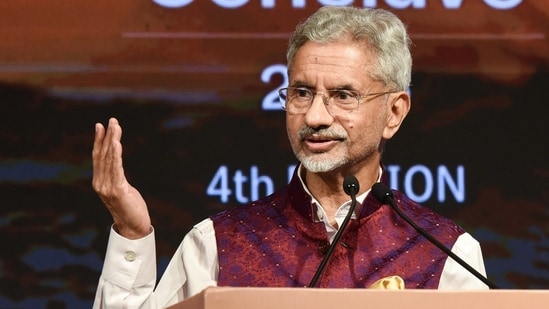
By Nitya Chakraborty Indian foreign policy makers have at last showing some mature understanding of the geopolitics of the post-Trump.2 months if the external affairs minister Dr. S Jaishankar’s observations at the concluding session of Kautilya Economic Conclave in New Delhi on Sunday, are any indication. The minister was quite candid in explaining the complexity […]

The article EAM Jaishankar Is Right: Trump Has To Respect India’s Red Lines appeared first on Latest India news, analysis and reports on Newspack by India Press Agency).

VISHNU RAJA
RYO YAMADA
HITORI GOTOH
IKUYO KITA
Just in:
California examines possible criminal breaches in Nvidia investigation // CrowdStrike explores Zscaler takeover amid cybersecurity dealmaking // Promoting Common Human Development Through Exchanges and Mutual Learning Among Civilizations // Abu Dhabi boat show seals manufacturing partnership on Saturday // Padmini follows Padmaja for ‘ghar vapsi’ // Egypt’s African Union trade climbs to $8.2 billion // Crypto market loses $150 billion amid broad sell-off // Toward a Shared Future for Humanity: Rethinking Civilizational Exchange //
Centre grants aircraft cabin access for Sabarimala pilgrims’ irumudi
// Diabetes Malaysia And Alpro Pharmacy Set National Record With 11,007 Most Blood Glucose Screenings Conducted Across Malaysia In Just 48 Hours // Energy Markets Find Little Substance In Shenzhen Summit Promises // PayerMax and ShopeePay Strengthen Strategic Partnership to Advance Digital Payment Collaboration in Southeast Asia // Ex-minister named accused in Messi visit fraud case // Yeebo Announces Interim Results for FY26/27 Revenue Increases by 45.5% to HK$806.7 Million Profit Attributable to Owners Surges 87.6% to HK$2,284.7 Million //
Rahul addresses League’s INDIA bloc grievances
// Anthropic briefly reaches $2 trillion in Nasdaq debut // US military rebuts Iran’s Gulf F-16 strike allegation // FirstBank expands LIT app with integrated financial services // Sabarimala booking discrepancies prompt sabotage angle probe // ED searches five districts in probe against hawala //