News related to
prove no

Anthropic has agreed to pay US $1.5 billion to settle a class-action lawsuit filed by several authors who alleged the company illegally downloaded and stored pirated copies of their books to train its AI chatbot Claude. A federal court filing has been submitted to U. S. District Judge William Alsup in San Francisco, who is scheduled to review the agreement. If approved, the payout will likely represent […]

DP World will begin offering the “Atlas” service from Morocco to UK and North Europe, cutting export times for fruit and vegetable shipments by up to two days when operations commence in November 2025. The maritime corridor will link the Moroccan ports of Agadir and Casablanca with DP World’s London Gateway and Antwerp Gateway terminals via two dedicated vessels, offering a faster, more cost-effective, and lower-carbon alternative to over-the-road transport.

This new route is expected to transfer up to 150,000 tonnes of fresh produce annually from trucks to ships, reducing carbon emissions by approximately 250 kg CO₂ per tonne-kilometre—a decrease of around 70% compared with traditional road haulage.

By offering faster and smoother delivery, the “Atlas” service from Morocco to UK and North Europe provides a more reliable logistics option. It circumvents issues such as traffic congestion, border delays and instances of vandalism, which frequently compromise delicate produce like tomatoes and blueberries.

To support the service, DP World has rolled out a substantial investment in refrigerated and general-cargo containers: 1,250 new reefer units plus 1,000 40-foot high-cube and 750 20-foot dry containers. Customers will benefit from full end-to-end supply-chain visibility via the CARGOES digital platform.

According to DP World, Morocco currently exports more than 6.5 million metric tonnes of fruit and vegetables to Western Europe annually, with volumes rising at over 20% year-on-year—making improved logistics more urgent than ever.

DP World Europe’s managing director and chief executive, Rashid Abdulla, emphasised that the service’s pillars of reliability, fast transit and modern IT platform make it a viable alternative to trucking, delivering better-quality produce at lower cost and with markedly reduced emissions. Markus Rodatz, chief operating officer for Freight Europe at DP World, highlighted the company’s commitment to developing smarter, more sustainable and more resilient supply chains, noting the new route helps growers and retailers meet environmental targets.

BERLIN, GERMANY – Media OutReach Newswire – 5 September 2025 – Global lighting innovator Olight is making a bold statement at IFA 2025 in Berlin with the launch of its new ArkPro Series. The slogan of this series is “Rethink Light, Reimagine Style” This series of advanced portable flashlights includes ArkPro, ArkPro Ultra and ArkPro Lite, and integrates multiple functions into one, redefining the performance and design […]

Roblox has entered into a strategic alliance with the International Age Rating Coalition to overhaul its content labelling system, replacing its existing maturity labels with recognised regional ratings such as ESRB in the United States, PEGI in the UK and Europe, USK in Germany, and GRAC in South Korea. Simultaneously, the platform will expand age-estimation requirements for all users accessing communication features by year-end, using technology like […]

A surge in hunger has struck Nigeria, as sharply diminished aid inflows have forced closures of nutrition centres and blocked treatment for countless children at risk of malnutrition. Aid cuts from the United States and other Western donors have triggered an abrupt collapse in food assistance across northeast regions, particularly Borno State, the epicentre of a long-standing insurgency. In northeastern Nigeria, the United Nations’ World Food Programme […]

Warp has unveiled Warp Code, a new AI-powered coding suite that brings agent-generated code from prompt to production inside its terminal environment. Users can now see every change made by AI as it happens, review diffs in real time, edit code inline and manage agent profiles—all without leaving Warp’s interface. This approach, described internally as “agent steering”, aims to give developers tighter control over AI-generated outputs. Founded […]

Linux Mint 22.2 Zara is now available, offering a fresh wave of enhancements across performance, visual design, and usability. Based on Ubuntu 24.04 LTS and running on the Linux 6.14 HWE kernel, the release delivers improved hardware compatibility and gains extended support through April 2029. Linux Mint 22.2 Zara Launches with Polished Features echoes this refined release in tone and brevity. At the core of the update, […]

Advertisements

Samsung has introduced its newest Galaxy S25 FE handset and Tab S11 tablet series, underlining an ambition to deliver flagship-level features to a broader audience. The Galaxy S25 FE arrives at around $650, equipped with a 6.7-inch AMOLED display, Exynos 2400 chipset, 8GB of RAM, and a 4,900 mAh battery—paired with Galaxy AI enhancements such as Instant Slow-Mo, Generative Edit, and Audio Eraser. The Tab S11 models—the 11-inch base and the 14.6-inch Ultra—feature One UI 8, Android 16, S Pen support, 120Hz AMOLED screens, MediaTek Dimensity 9400+ chips, and AI-enabled enhancements including Samsung DeX’s new Extended Mode.

At the event held alongside IFA 2025, Jay Kim, one of Samsung’s corporate executive vice-presidents, noted that Galaxy AI is now live on more than 200 million devices, and the company expects to double that by year’s end. The Galaxy S25 FE delivers the longest battery life yet for an FE phone and debuts with improved cooling via a larger vapour-chamber system, alongside a build featuring Armor Aluminium and Gorilla Glass Victus+, with IP68 dust and water resistance.

The Tab S11 Ultra matches the iPad Pro’s 5.1 mm thinness and brings Wi-Fi 7 support, anti-reflective coating, enhanced DeX features, and promising multitasking capabilities. Together, these devices reflect Samsung’s approach to combine premium hardware with smart, AI-powered functionality at competitive prices.

Samsung’s announcement suggests a deliberate strategy: expanding access to its AI ecosystem, offering extended software support—seven years of OS and security updates for the S25 FE—and positioning these devices ahead of major rival launches.

The Galaxy S25 FE is now available and begins around $650 in the US, while the Galaxy Tab S11 line starts from $799 for the base model and $1,199 for the Ultra.

Samsung’s timing—introducing value-oriented yet AI-driven phones and tablets just before its biggest mobile competitor’s next launch—signals a sharp push to attract consumers with strong hardware, intelligent software, and long-term support.

In Bangalore and beyond, industry observers note that the S25 FE’s offering of Galaxy AI tools, robust support lifespan, and competitive price point could challenge rivals in emerging markets. The Tab S11 series, with its stylus-enabled productivity enhancements and tablet-as-laptop flair, appears aimed at professionals and creatives seeking seamless workflows on Android.

Echoing its messaging, Samsung is enhancing its Galaxy ecosystem, aiming to envelop users in its AI capabilities—whether through smartphones or tablets—while ensuring that cutting-edge features are no longer confined to its flagship devices alone.

Apple shares rallied following a pivotal ruling from U. S. District Judge Amit Mehta, who allowed the technology giant to continue receiving payments—estimated at around $20 billion annually—for default search placement in Safari, while imposing targeted restrictions on exclusivity and data practices. The verdict, delivered on 2 September 2025, represents a significant reprieve for Apple amid ongoing antitrust scrutiny. The ruling bars Google from enforcing exclusive distribution […]

Private firms are allocating an average of 22 per cent of their profits into Bitcoin, as revealed by a new analysis from River, a specialist in Bitcoin financial services. The move underscores an accelerating wave of adoption from traditional companies across sectors from real estate to hospitality, driven by favourable regulation, strengthened accounting clarity, and a buoyant bull market.

River’s data shows that real estate businesses are leading this charge, with nearly 15 per cent reinvesting profits into Bitcoin, while hospitality, finance, and software firms direct between 8 per cent and 10 per cent. Even smaller, diverse businesses—including fitness studios, painting outfits, roofing contractors, and religious nonprofits—are joining the trend. By 2025, these private firms have quietly amassed 84,000 bitcoins, amounting to roughly a quarter of what institutional fund managers and corporate treasury holders combined have acquired.

The underlying conditions for this surge are clear. River attributes the shift to improved Bitcoin accounting standards, regulatory certainty, growing institutional acceptance, and a strong bull market that has seen Bitcoin’s value surge—creating an “ideal environment for widespread adoption”.

Smaller businesses, typically with fewer than 50 employees, account for 75 per cent of River’s clients, and appear to find Bitcoin adoption simpler than larger corporations. Those with complex, committee-based governance are more cautious, often awaiting peer precedent before committing—even when convinced of Bitcoin’s long-term value.

Adoption patterns also vary in scale. Over 40 per cent of the businesses allocate between 1 per cent and 10 per cent of profits to Bitcoin, while just 10 per cent invest more than half of their net income into the cryptocurrency.

This wave of grassroots participation complements broader institutional demand. River reports that public and private firms—the latter including treasury-managed corporations—are purchasing approximately 1,755 BTC per day on average in 2025. Exchange-traded funds and other investment vehicles are acquiring about 1,430 BTC per day, and governments add another 39 BTC daily. These figures stack up sharply against miner output, which is only around 450 BTC per day—raising the likelihood of a supply squeeze if exchange inventories continue to deplete.

Institution-grade buyers are also piling in. Bitcoin treasury firms accounted for 159,107 BTC acquired in the second quarter of 2025, pushing the total corporate and business-held Bitcoin to around 1.3 million BTC. Michael Saylor’s company Strategy remains the dominant corporate holder, with more than 630,000 BTC under its control.

Parallel developments illustrate the growing strategic shift toward Bitcoin within corporate finance. In the United States, investor Anthony Pompliano orchestrated a $1 billion SPAC merger to launch ProCap Financial, a new Bitcoin treasury firm with an ambition to manage up to $1 billion in cryptocurrency holdings. The firm plans to monetise its holdings through lending, derivatives, and other services, pushing the boundaries of Bitcoin treasury strategies.

Across the Atlantic, UK markets are witnessing their own momentum. At least nine London-listed companies—from technology to mining ventures—have either acquired Bitcoin or announced plans to do so, seeking similar boosts in investor appeal. Despite historical resistance from regulators concerned about money‑laundering risks, the Financial Conduct Authority appears open to easing restrictions, offering a potential regulatory tailwind to adoption in Britain.

This widespread movement mirrors and builds upon earlier corporate Bitcoin trends. As of mid‑2025, nearly 130 publicly traded companies held about $87 billion in Bitcoin, or 3.2 per cent of the total supply, driven by the ‘Bitcoin treasury’ blueprint pioneered by Strategy. Firms including Tesla, Metaplanet, Twenty One Capital, Block, GameStop, and Trump Media & Technology Group have followed suit, deploying equity issuance, bonds, and convertible debt to fund their Bitcoin accumulation.

Analysts also project an enormous potential inflow of corporate capital: Bernstein Research estimates that corporate demand could funnel as much as $330 billion into Bitcoin by 2029, with up to $124 billion attributable to Strategy alone.

Financial management is certainly an ordeal for any business, be it a massive corporation or a small company that is just starting out. To some extent, with practical knowledge and math skills it is possible to do accounting even in Google Sheets. Still, modern software with automation functions accelerates this process by a considerable amount. More and more accounting solutions are making their appearance on the market, […]

BEIJING, CHINA – Media OutReach Newswire – 4 September 2025 – On August 27, Mengniu Dairy (2319.HK) released its interim results for 2025, reporting revenue of RMB 41.57 billion for the first half of the year, with operating profit reaching RMB 3.54 billion—an increase of 13.4% year-on-year. Thanks to the company’s ongoing implementation of lean management practices, Mengniu also achieved a 46.2% year-on-year growth in operating cash […]

Organisations across Africa, the United Kingdom, the Middle East and Brazil are accelerating a shift away from traditional payroll systems as cloud-native platforms transform how companies manage staff pay, compliance and workforce data. With remote and hybrid workforces now common, employers are under pressure to modernise systems that were built for office-bound staff and paper-based reporting. The payroll function, often overlooked, has emerged as a critical lever […]

Entrepreneurship is a challenge, especially when it comes to your own project: a small restaurant, a boutique, or an online store. For many women, starting a business feels like a personal trial, a test of resilience. But in reality, any business is a game, an opportunity to grow, create something of your own, and bring ideas to life. And yes, every business faces crises. But this is […]

Beautyworld Middle East will run from 27 to 29 October 2025 at the Dubai World Trade Centre, drawing an extensive global delegation of beauty professionals to explore innovations across the full spectrum of the industry. Organised by Messe Frankfurt Middle East, the event has become the region’s preeminent platform for unveiling trends, forging partnerships, and showcasing global brands and breakthrough technologies. Projected attendance data highlights the scale […]

Collaboration combines Mirai Bridge Capital’s financing expertise with NCI’s trade credit insurance to deliver secure, growth-driven solutions for businesses across Asia. KUALA LUMPUR, MALAYSIA – Media OutReach Newswire – 4 September 2025 – Mirai Bridge Capital Sdn Bhd (“MBC”), a fast-growing private equity management company, has signed a Collaboration Agreement with NCI Malaysia Sdn Bhd (“NCI”) to expand into trade credit facilities for businesses in Malaysia and […]

ADNOC Logistics and Services plc has secured strong institutional backing through a $317 million placement of approximately 222 million shares—equivalent to about 3 percent of its issued capital—with demand reaching seven times the offering, ranking among the region’s most heavily oversubscribed secondary share sales. The transaction lifts ADNOC L&S’s free float from 19 percent to 22 percent, significantly enhancing trading liquidity and widening its appeal to institutional […]

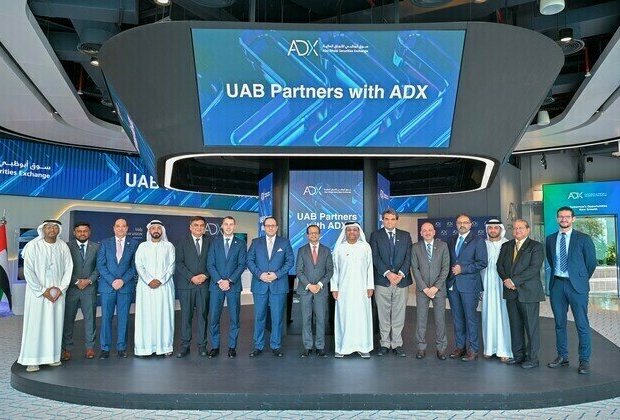
United Arab Bank has formed a strategic alliance with Abu Dhabi Securities Exchange to enable its customers to subscribe for upcoming IPOs through the bank’s digital channels or ADX’s eIPO Investor Portal. This arrangement aims to simplify the process of accessing capital markets, offering a secure and intuitive experience to investors.

At a ceremony held at ADX’s headquarters in Abu Dhabi, the agreement was formalised in the presence of Abdulla Salem Alnuaimi, Group Chief Executive Officer of ADX, and Shirish Bhide, Chief Executive Officer of UAB, alongside senior officials from both organisations.

This collaboration is designed to strengthen UAB’s wealth management proposition by embedding investment opportunities within its digital ecosystem. Customers will now be able to access IPO applications directly via UAB’s mobile application, replacing previously cumbersome procedures with streamlined, guided pathways that enhance transparency and usability.

According to Shirish Bhide, this partnership reflects the bank’s dedication to innovation and long-term value creation. By integrating investment services within UAB’s digital channels, customers gain more inclusive access to the UAE’s capital markets. Abdulla Salnuaimi added that this initiative reaffirms ADX’s aim to enhance the investor experience by collaborating with leading financial institutions and advancing digital solutions.

The move aligns with UAB’s broader digital transformation strategy, as demonstrated by prior efforts such as launching RegPRISM, an AI-powered regulatory intelligence platform developed with Smarbl to improve compliance and operational efficiency.

Further underpinning UAB’s financial robustness is its first-quarter 2025 performance. The bank reported a 49 per cent year-on-year increase in net profit—rising to AED 102 million—driven by growth in assets, loans, Islamic financing, and investments. Capital adequacy remains solid, with a CET1 ratio of 12.6 per cent and a total capital adequacy ratio of 17.1 per cent. Non-performing loans saw improvement from 4.8 per cent to 3.4 per cent, with coverage at 118 per cent.

These financial strengths were in part bolstered by a rights issue completed earlier, which raised around AED 1.03 billion and strengthened UAB’s capital position.

ADX, for its part, continues to pursue innovation in financial market infrastructure. In July, it collaborated with First Abu Dhabi Bank and HSBC to launch the Middle East’s first DLT-based digital bond, reinforcing its frontier role in tokenised finance.

Through this latest agreement, UAB and ADX are promoting a more integrated, accessible investment landscape—blending digital banking and capital markets participation in a manner that could redefine customer expectations and market engagement.

OpenAI has struck an all‑stock agreement to acquire Statsig for about $1.1 billion, appointing the startup’s founder, Vijaye Raji, as chief technology officer of applications, a move poised to accelerate the firm’s product engineering efforts for ChatGPT, Codex, and future AI tools. The acquisition and leadership reshuffle reflect OpenAI’s intensified push into building scalable, safe, and intuitive AI-powered applications amid mounting competition. The acquisition, pending regulatory approval, brings […]

China’s solar industry, particularly its polysilicon segment, is experiencing a defining shift. Six leading solar makers reported a combined loss of Rmb20.2 billion during the first half of 2025, prompting regulatory intervention to stem overcapacity and destructive price competition.

In early September, GCL Technology Holdings confirmed that investors can anticipate clarity soon on a plan to restructure the polysilicon industry—potentially this year. Chief Financial Officer Yang Wenzhong indicated that GCL may invest its own capital into the effort but is proceeding with caution amid financial uncertainty.

The core of this restructuring lies in a proposed RMB50 billion pooling of funds by top producers like GCL and Tongwei. The aim is to acquire and retire roughly one-third of existing production capacity, targeting approximately one million metric tonnes of lower-quality output. This supply reduction could help raise prices and restore downstream solar panel maker profitability.

Government authorities are reinforcing this market realignment through direct meetings with industry representatives. In August, China’s Industry Ministry held its second session in two months, urging the sector to eliminate outdated manufacturing capacity and curb “low-price disorderly competition” as part of a broader effort to reverse deflationary trends.

The policy response reflects concern over global glut: in 2024, China produced 588 GW of solar capacity while global demand stood at 451 GW, leaving utilisation at just 54%. Analysts estimate that up to 20–30% or more of solar manufacturing capacity must exit the market to reestablish profitability.

This state-guided consolidation faces substantial obstacles. Local governments that have boosted regional development through subsidies, tax breaks and favourable land deals for solar manufacturers may resist decommissioning facilities tied to local GDP and employment. Even if a cartel is formed, analysts warn that members might sneak back into production once prices rebound.

While the outlook remains complex, sentiment among investors appears cautiously optimistic. Markets showed tentative improvement after reports of progress in industry coordination and price gains surfaced. Trina’s commentary on earnings, describing polysilicon as “the first step of anti-involution,” hints at broader hopes for a turnaround.

Global attention is intensifying. Successful restructuring could reinforce China’s dominance—already controlling around 90% of global solar cell capacity—while disrupting cheap exports that have pressured international markets. But a failed effort could compound challenges in other overcapacity-prone sectors such as electric vehicles or shipbuilding.

Longi, another solar powerhouse, is also adapting. Its founder, Li Zhenguo, has relinquished daily management to focus on R&D, including back‑contact cell and green hydrogen technology. The shift comes amid sustained losses and an 80% decline in its share price since 2021, as analysts predict that overcapacity will persist through 2028.

China’s solar supply chain—from polysilicon to panels—is at an industrial crossroads. The restructuring effort is perhaps the boldest policy move yet to recalibrate supply with demand. But its success hinges on overcoming entrenched regional interests, ensuring disciplined industry behaviour, and catalysing sustainable demand growth.

Aspen Pharmacare recorded a full‑year after‑tax loss of 1.1 billion rand in the year to 30 June 2025, a dramatic reversal from the previous year’s profit of 4.4 billion rand. The principal cause of this downturn was a contractual manufacturing dispute concerning an mRNA product agreement, compounded by asset impairments amounting to 4.1 billion rand. Revenue across the group grew marginally by 1 percent to 43 billion rand. However, manufacturing revenue plunged […]

Dubai Chambers, together with the International Chamber of Commerce and its World Chambers Federation, introduced a new digital platform designed to elevate the performance of chambers of commerce worldwide. Unveiled at the 14th World Chambers Congress in Melbourne, the Chamber Benchmarking Tool offers structured data analysis, best-practice comparisons and a repository of global insights to help chambers advance operational standards.

The launch was witnessed by over 1,200 chamber officials representing more than 100 countries, reaffirming the tool’s role as a global platform for strategic exchange.

The Chamber Benchmarking Tool evaluates performance across seven principal functions of chamber institutions—spanning economic research and business intelligence, advocacy and policy representation, trade and investment facilitation, workforce training and support, networking, advisory services and legal or dispute resolution. These are assessed alongside eight dimensions of operational excellence, including strategic alignment, innovation, governance and financial impact.

Mohammad Ali Rashed Lootah, President and CEO of Dubai Chambers, described the initiative as emblematic of the emirate’s ambition to lead in institutional innovation, enabling chambers to elevate their value to business communities through streamlined services and resilient strategies. John W. H. Denton AO, Secretary‑General of the ICC, hailed the tool as a “milestone,” praising Dubai Chambers for their leadership in bringing the platform to fruition.

Built from research examining 19 diverse chambers, the tool rests on a foundation of empirical insight. It offers a data-driven framework of self-assessment, enabling chambers to compare their metrics against anonymised regional and global averages and receive tailored strategic guidance drawn from global case studies.

Developed in confidence under ICC‑WCF’s secure, cloud‑based infrastructure, the platform ensures high standards of data confidentiality. Only aggregated benchmarking results are shared publicly, with each chamber’s data kept private unless explicit consent is granted.

The tool assigns two access roles: the ‘chamber steward’, who leads data submission, assessment completion and case‑study creation; and ‘chamber staff’, who receive view‑only access to performance dashboards, insights and the best‑practice library.

Participation remains voluntary and open to all types of chambers—whether national, regional, thematic or international—particularly those connected to the ICC‑WCF network. Non‑members may apply for membership to gain access.

Chambers that perform well in given categories become eligible to develop case studies, using an integrated creator to document initiative details, global trends addressed, outcomes and lessons learned. Authors may enrich submissions with supporting documents, media, and contact details. Approved case studies are added to the global repository, fostering peer learning and strategic inspiration.

With an emphasis on continuous improvement, the platform allows chambers to refresh their assessments annually—or after major organisational shifts—and to update roles and responsibilities over time, ensuring the tool remains current with evolving strategic priorities.

Beyond benchmarking, the platform is a strategic intelligence system. Chambers gain access to emerging trends, visibility into gaps and growth opportunities, and direction for innovation and future readiness. It fosters cross‑border collaboration, data‑led decision‑making and collective excellence across the global chamber ecosystem.

A wave of profit‑taking sent the Nigerian equities market lower, with the NGX All‑Share Index falling by around 0.7 per cent to approximately 138,737 points on Tuesday—equivalent to a loss of nearly 0.67 per cent in market capitalisation, which dropped to about ₦87.8 trillion. The sell‑off was driven largely by pressure on heavyweight stocks such as Lafarge Africa and Transnational Corporation, while market breadth skewed negative, with far more declines than gains. […]

Prince Alwaleed bin Talal is negotiating with the Public Investment Fund over a potential acquisition of approximately 75 per cent of Al Hilal Football Club, marking what may become a landmark transaction in the kingdom’s football privatisation agenda. The discussions remain preliminary; financial details and final ownership structure have yet to be finalised, and there is a possibility that negotiations might not reach completion. The Public Investment […]

VISHNU RAJA
RYO YAMADA
HITORI GOTOH
IKUYO KITA
Just in:
Saudi defences destroy three Houthi missiles targeting Riyadh // Anthropic briefly reaches $2 trillion in Nasdaq debut // Bahrain demands UN action after Iranian industrial strike //
Centre grants aircraft cabin access for Sabarimala pilgrims’ irumudi
// CrowdStrike explores Zscaler takeover amid cybersecurity dealmaking // PayerMax and ShopeePay Strengthen Strategic Partnership to Advance Digital Payment Collaboration in Southeast Asia // Yeebo Announces Interim Results for FY26/27 Revenue Increases by 45.5% to HK$806.7 Million Profit Attributable to Owners Surges 87.6% to HK$2,284.7 Million // Balagopal challenges CM over tax revenue // Diabetes Malaysia And Alpro Pharmacy Set National Record With 11,007 Most Blood Glucose Screenings Conducted Across Malaysia In Just 48 Hours // US military rebuts Iran’s Gulf F-16 strike allegation // Toward a Shared Future for Humanity: Rethinking Civilizational Exchange // Energy Markets Find Little Substance In Shenzhen Summit Promises // FirstBank expands LIT app with integrated financial services // Saudi Arabia schedules multinational top-up tax for 2027 // California examines possible criminal breaches in Nvidia investigation // Ex-minister named accused in Messi visit fraud case // Crypto market loses $150 billion amid broad sell-off // Technology at Work, Heritage for All: The “Chinese Approach” to Safeguarding the Leshan Giant Buddha // Abu Dhabi boat show seals manufacturing partnership on Saturday // Singapore regulator cautions against AI access to bank logins //