Just in:

News related to
prove no

HANOI, VIETNAM – Media OutReach Newswire – 19 August 2025 – To mark the 80th anniversary of the National Day of the Socialist Republic of Vietnam, Vingroup inaugurated and broke ground on six major projects across the country. The highlight was the inauguration ceremony of the National Exhibition and Convention Center in Dong Anh, Hanoi, alongside five other landmark projects in the fields of socio-economic infrastructure, transportation, […]

Scientists are testing a technique that could reshape the cornea using electricity instead of lasers, offering a potential alternative to traditional laser surgery. Early experiments with rabbit corneas have demonstrated the method can correct vision in minutes without any incisions—a promising development that may redefine the future of refractive correction. At the American Chemical Society Fall meeting, held from 17-21 August 2025, research led by Michael Hill […]

A growing crisis unfolds in Saint-Louis as families uprooted from the Langue de Barbarie peninsula remain in precarious limbo at the Khar Yalla site, more than nine years after coastal erosion rendered their homes uninhabitable. Despite the introduction of temporary shelters at Diougop under the SERRP programme, many displaced persons continue to confront chronic hardship, vulnerability and the erosion of hope. Dozens of families originally from Guet-Ndar, […]

TAIPEI, TAIWAN – Media OutReach Newswire – 19 August 2025 – Solid State Storage Technology Corporation (SSSTC) proudly announces the launch of the SSSTC CA8 Series, the world’s first industrial M.2 SSD built with BiCS FLASH™ generation 8 3D flash memory technology and a PCIe® Gen5 x4 interface. Offered in the industry-standard M.2 2280 form factor, the SSSTC CA8 Series is available in 512 GB, 1 TB, […]

A bold partnership between the Central Bank of the UAE and Presight, the AI arm of G42, is unfolding a new era in financial infrastructure. The joint venture will embed artificial intelligence across core systems – spanning digital currency, instant and real-time payments, card services and open finance platforms – designed, built, and managed within the UAE. The agreement places AI at the heart of systems such as the Central Bank Digital Currency, Instant Payments, Domestic Card Scheme, National Card Switch, Real-Time Gross Settlement, and Open Finance network.

The initiative underpins the Financial Infrastructure Transformation Programme, a sweeping architectural modernisation blueprint launched by CBUAE in February 2023, with full deployment anticipated by 2026. Where CBUAE once relied on external vendors for supervisory technology and data systems, the new venture shifts toward a sovereign, AI-driven approach.

Ebrahim Obaid Al Zaabi, Assistant Governor for Monetary Policy and Financial Stability, characterised the venture as a strategic move “to ensure the UAE’s financial market infrastructure remains resilient, secure, efficient and future-ready.” He also noted that merging FIT’s leadership with Presight’s technological prowess will reinforce the UAE’s financial ecosystem and underpin national economic stability, strengthening its position as a global financial centre.

Thomas Pramotedham, Chief Executive of Presight, described the venture as a “decisive leap forward,” stating that by “focusing exclusively on AI-driven financial solutions, we are creating a sovereign finance technology powerhouse that will redefine how financial markets operate—faster, with applied intelligence, and more securely than ever before.”

Already, FIT has delivered functional platforms like Instant Payments and the Jaywan card scheme, with CBDC infrastructure currently under development. The venture now takes over these critical functions — charged with developing, maintaining and safeguarding them under a sovereign, AI-backed framework.

Beyond financial rails, this AI integration offers promise across several performance benchmarks: settlement speed, fraud detection, transparency, and cost efficiency all stand to improve. These enhancements align with broader technological sovereignty goals: reducing dependence on foreign providers, enhancing cybersecurity responsiveness, and supporting fintech innovation with locally administered smart infrastructure.

In a parallel development, the Emirates Institute of Finance’s Innovation Hub has entered into a Memorandum of Understanding with HSBC, Al Maryah Community Bank, Presight, and Core42 to explore applications of both traditional and generative AI across banking. The objective is to augment operational efficiency, strengthen cybersecurity, and enrich customer service within the banking sector.

In the broader academic and regulatory sphere, scholars have analysed the transformative potential of AI in finance, alongside its risks: regulatory opacity, bias, data privacy issues, systemic vulnerabilities, and ethical concerns. Recent studies advocate for explainability, human oversight, auditability, and adaptive, principled governance frameworks to safeguard trust while fostering innovation.

By embedding AI at the infrastructure layer, the UAE initiative intersects with these academic prescriptions — though realisation of such ideals will hinge on effective governance, transparency, and operational resilience. As financial systems globalise and grow increasingly complex, ensuring AI’s reliable, accountable implementation will determine whether this model achieves its promise.


The United Arab Emirates has reached a significant milestone, securing the 16th position globally in the 2025 Government Support Index, as outlined in the IMD World Competitiveness Yearbook. This index evaluates how effectively governments foster the conditions needed for businesses to thrive, measuring factors such as infrastructure, regulatory environment, and public sector efficiency. With this advancement, the UAE solidifies its standing as a global leader in creating […]

Greenlogue/AP Suqia, the UAE’s national water charity, continues to solidify its global humanitarian efforts, reaching nearly one million people in Tanzania with clean drinking water. In partnership with the Emirates Red Crescent and backed by a grant from HH Sheikh Mohammed bin Rashid Al Maktoum, this initiative aims to address water scarcity, one of the most pressing issues facing communities in East Africa. The project, a part […]

Advertisements

  LibreOffice now supports AI-driven image generation via a new extension that bridges the office suite with the Stable Diffusion system, enabling users to create visuals directly from textual descriptions without leaving the application. A compact, purpose-built introduction prompts users to describe a scene, then uses Stable Horde, a collaborative network of volunteer-run Stable Diffusion servers, to generate an image. This functionality allows immediate integration of visuals […]

Cocoa processing in Ivory Coast saw a significant decline in July, with the nation’s cocoa grind dropping by 31.2% compared to the same period last year. According to figures released by the Ivory Coast Exporters’ Association, the volume of cocoa ground during the month amounted to just 39,301 metric tons, marking a sharp fall from the 57,125 metric tons processed in July 2023. This downturn has raised […]

BEIJING, CHINA – Media OutReach Newswire – 18 August 2025 – The 42nd “Baidui Cup” Football Tournament kicked off in the rain on the August 8th. It brought a refreshing coolness of summer to the young players and once again ignited a football fever in Beijing, the “Dual Olympic City”. A player goes for goal during a Baidui Cup match, August 2025. As 51-year-old Chinese football legend […]

West African businesses and digital service providers are reaping the benefits of remote peering, which is rapidly transforming the region’s internet connectivity landscape. As the continent’s digital economy expands, the demand for fast, reliable, and affordable access to online services is driving the adoption of innovative solutions. At the heart of this transformation is TelCables Nigeria, a key player in West Africa’s digital infrastructure. A subsidiary of […]

Ethereum is once again challenging heavy resistance levels, sparking optimism among investors. The second-largest cryptocurrency by market capitalisation is showing signs of strength as it attempts to break through critical price points that have stalled its upward momentum in the past. This has caught the attention of analysts, who are predicting significant gains for the cryptocurrency in the final quarter of the year, driven by an anticipated surge in demand and institutional interest.

Ethereum’s price has been hovering in a narrow range, with investors closely watching for a decisive breakout. A clear move above its resistance level could signal a shift in market sentiment, potentially setting the stage for a new wave of bullish activity. Analysts have set their eyes on key technical indicators, suggesting that Ethereum may soon see a substantial increase in value, potentially surpassing previous highs and breaking new ground before the year’s end.

Meanwhile, Dogecoin, a long-standing favourite in the cryptocurrency space, continues to show resilience despite a fluctuating market. The meme-inspired coin is inching closer to its familiar ceiling, prompting speculation on whether it will finally break through and hit new highs. Dogecoin has experienced various cycles of growth and retracement, and many investors are now wondering if it can capitalise on Ethereum’s upward momentum and sustain a bullish rally of its own.

Dogecoin’s price action remains tied to broader market trends, but its reputation as a speculative asset with viral potential could play a pivotal role in driving future price movement. As the crypto community looks to Ethereum for cues, Dogecoin’s loyal following and established place in the market ensure it will continue to draw attention, particularly as some analysts see the potential for a significant rally in the latter half of the year.

On the other hand, Remittix, a newer entrant to the market, is steadily gaining traction. The cryptocurrency’s rapid rise can be attributed to an upcoming listing tied to a hard funding threshold, creating buzz in investor circles. Remittix has quickly become a focal point for those looking for high-growth opportunities in the crypto space. With its market debut on the horizon, analysts are forecasting a potential 500% gain in the short term as the market eagerly anticipates its full-scale launch.

The excitement surrounding Remittix is built on the expectations of a broader, global remittance network offering low-cost and instant cross-border payments. Its underlying technology and potential use case could position it as a viable player in the increasingly competitive financial services sector. As it prepares for its debut, Remittix is showing the type of explosive growth that crypto enthusiasts eagerly seek, especially when backed by a clear roadmap and strategic funding milestones.

The broader market conditions continue to show signs of improvement, with Ethereum, Dogecoin, and Remittix all benefitting from a renewed investor appetite for cryptocurrencies. As the final quarter approaches, analysts are bullish on the prospects for these assets, highlighting the crucial technical levels that could signal significant gains.

Ethereum’s position is especially important, given its role as a leader in the blockchain space. Any positive momentum in Ethereum could trigger a broader market rally, lifting altcoins like Dogecoin and Remittix along with it. As market conditions evolve and investor sentiment strengthens, these cryptocurrencies are poised to be among the key beneficiaries of what could be a dynamic finish to the year.

DP World has reported a significant rise in revenue for the first half of 2025, with figures climbing 20.4 per cent to reach $11.24 billion. This growth was primarily driven by strong performance in its Ports & Terminals division, as well as the positive impact of acquisitions completed in recent months. The company’s adjusted EBITDA also saw an impressive increase, up by 21.4 per cent to $3.03 […]

Negotiations at the United Nations aimed at creating a legally-binding treaty to tackle global plastic pollution have once again stalled, leaving international efforts in disarray. This latest failure in the negotiations signals a growing sense of pessimism among key environmental advocates and policymakers who had hoped for substantial progress on what was once seen as a groundbreaking initiative. Three years ago, a historic agreement was reached by […]

Cohere has raised $500 million in new funding, propelling its valuation to an impressive $6.8 billion as the company accelerates its push to reshape enterprise AI. This significant investment will bolster its efforts to expand its security-first agentic AI platform, a product designed to enhance organizational productivity through advanced, secure artificial intelligence. The AI sector has seen rapid growth over the last few years, with businesses increasingly […]

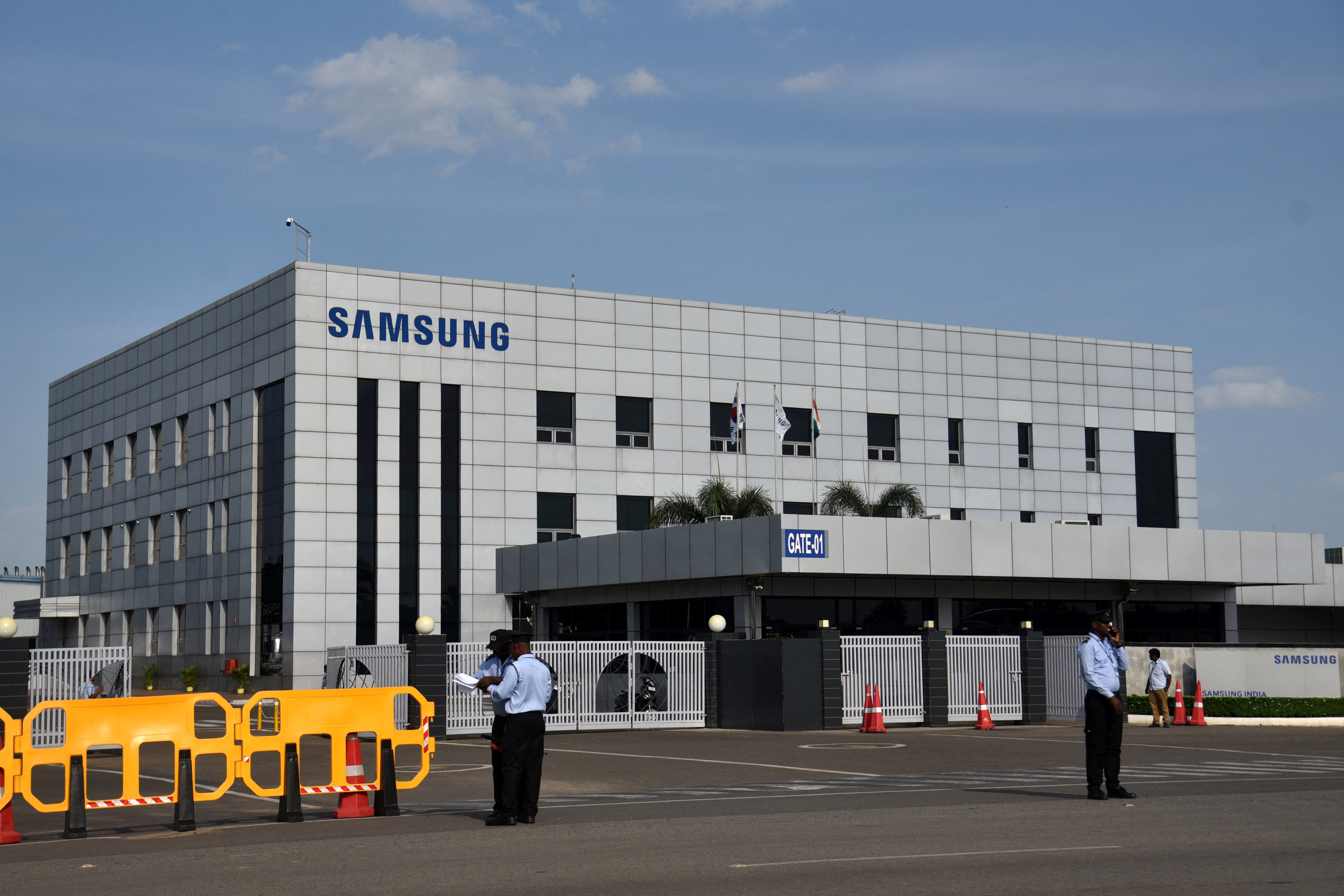
Samsung has commenced local production of laptops in India, marking a significant shift in its manufacturing strategy. The move follows growing trends in the global tech industry, where companies are increasingly decentralising their manufacturing to cater to regional markets and mitigate supply chain risks. The tech giant’s decision to set up its laptop assembly line in India comes as part of a broader push to diversify its production capabilities and tap into the country’s emerging manufacturing ecosystem.

The new facility, which is located in Noida, is expected to meet rising demand for Samsung laptops in India and other parts of Asia. The plant will focus on assembling a range of models, from entry-level to premium devices, with an emphasis on enhancing the supply of high-performance laptops. By doing so, Samsung aims to capitalise on the Indian government’s incentive schemes aimed at boosting local manufacturing and creating jobs in the sector.

India has become an increasingly attractive destination for global manufacturers due to its robust infrastructure, competitive labour costs, and a growing pool of skilled engineers and technicians. Samsung’s decision to invest in local laptop production highlights the country’s status as a strategic hub for tech companies looking to scale operations. The move also aligns with the Indian government’s vision of becoming a global manufacturing leader under the “Make in India” initiative, which encourages foreign companies to establish production bases in the country.

The South Korean company has been investing heavily in India over the past few years, with a significant focus on expanding its footprint in consumer electronics, particularly smartphones. The expansion of laptop production further strengthens its position in the Indian market, where the demand for personal computing devices has been steadily increasing. India, with its young population and rapid digitalisation, presents a lucrative market for tech companies. By establishing local manufacturing units, Samsung can not only meet this demand more effectively but also potentially lower the cost of its devices by reducing import duties and other logistical expenses.

Samsung’s Noida plant will be equipped with advanced manufacturing technology, allowing the company to ensure that its laptops meet international quality standards. The facility is expected to produce several million units annually, with an eye on both the domestic and export markets. This localisation strategy is expected to significantly cut down on shipping costs and delivery times, giving Samsung a competitive edge over other international brands that continue to import their devices into the country.

The move comes at a time when India is becoming increasingly attractive to global technology firms. Companies like Apple, Dell, and HP have already ramped up their manufacturing presence in India in recent years. India’s well-established electronics sector, supported by the government’s push to improve infrastructure and streamline regulatory processes, has led to a surge in foreign direct investment in the country’s tech manufacturing ecosystem.

Samsung’s expansion into laptop production also reflects the growing importance of India in the global supply chain. The country’s status as a low-cost production base, combined with its large consumer market, makes it an attractive location for companies looking to avoid the risks associated with heavy dependence on single countries, such as China. By shifting some of its manufacturing operations to India, Samsung can reduce its exposure to potential disruptions in China, which has long been the dominant player in global electronics manufacturing.

This shift is also likely to have broader implications for the Indian tech industry. With global giants like Samsung setting up local production lines, it is expected that the country will see an increase in the number of skilled jobs in the tech sector. Additionally, the growing demand for locally manufactured devices may spur innovation in the country’s tech ecosystem, encouraging the development of homegrown talent and technologies. This would not only strengthen India’s position as a manufacturing hub but also lay the foundation for the growth of its own tech startups.

Dubai Metro has taken a significant step forward with the integration of artificial intelligence into its operational maintenance model, marking a notable enhancement in its rail system’s efficiency and safety protocols. The shift to AI-powered solutions aims to revolutionise how maintenance is approached, ensuring quicker response times and more proactive management of the city’s rapidly expanding metro infrastructure.

The new AI technology focuses on automating the detection of faults and predicting potential breakdowns before they occur. This shift towards predictive maintenance is in line with Dubai’s wider goals of improving transportation infrastructure through innovation. AI’s role in this transformation goes beyond simply automating tasks; it serves as a core tool in enabling more intelligent decision-making for the Dubai Metro’s operations.

With a network that spans 75 kilometres and operates across multiple lines, the Dubai Metro has grown to be one of the most recognised urban transit systems in the world. Over 200,000 passengers rely on the metro each day, making it essential to maintain high levels of safety and operational reliability. By integrating AI, the metro can now leverage real-time data to monitor equipment and infrastructure, identifying anomalies that would otherwise be overlooked by human inspection.

AI-driven algorithms allow for continuous analysis of various parameters, including train speed, track conditions, and mechanical performance. This data is gathered via sensors installed across the metro system, from trains to trackside infrastructure. When any irregularities are detected, the system alerts maintenance teams, prioritising interventions based on urgency and potential impact. The technology also facilitates remote diagnostics, reducing the need for engineers to physically inspect the system unless absolutely necessary.

This predictive maintenance model promises to cut costs and downtime significantly. According to experts, the AI system is expected to reduce unplanned disruptions by up to 30%, which will directly benefit both passengers and operational teams. Reduced downtime means trains will spend less time off-track for repairs, contributing to a smoother, more reliable service.

The integration of AI into the Dubai Metro’s maintenance strategy is expected to pave the way for similar technological applications across other sectors of the city’s public transportation network. With Dubai’s long-term plans to further expand its metro network, AI will be crucial in ensuring that the growth of this infrastructure remains sustainable and efficient.

However, the implementation of such sophisticated technology also poses challenges, particularly in terms of data privacy and system security. As AI becomes more deeply integrated into the operational framework of Dubai Metro, it is essential to establish robust cybersecurity measures to prevent potential hacking or system failures. The Dubai Roads and Transport Authority, which oversees metro operations, has already placed emphasis on maintaining secure networks, working closely with experts to safeguard sensitive operational data.

AI’s potential in transforming public transport is not unique to Dubai. Several cities globally are also exploring how AI can be applied to enhance the efficiency and sustainability of urban rail systems. In Europe and Asia, metros have begun adopting similar technologies to improve service reliability and reduce the environmental impact of their operations. Dubai’s adoption of AI technology, however, stands out as a benchmark for its scope and ambition, setting a new standard for metro operations in the region.

Greenlogue/AP Oman Data Park has formed a strategic alliance with Solar Wadi to establish the Sultanate’s inaugural green energy data centre, powered by solar generation. The collaboration marks a significant step in aligning ODP’s technological infrastructure with Oman’s net-zero ambitions, as the data centre is set to harness sustainable energy to lower operational emissions and improve grid resilience. ODP, long regarded as the nation’s leading provider of […]

TAIPEI, TAIWAN – Media OutReach Newswire – 16 August 2025 – Lung cancer continues to be the leading cause of cancer-related deaths worldwide. Yet, progress is within reach. In Taiwan, thanks to the National Lung Cancer Early Detection Program, the proportion of early-stage lung cancer cases continues to rise. Against this backdrop, HOPE Foundation for Cancer Care, one of the largest cancer-focused patient advocacy groups in Taiwan, […]

Iracemápolis, São Paulo – Media OutReach Newswire – 16 August 2025 – In the early hours of August 16 (Beijing time), GWM’s Brazil plant officially commenced operations, marked by a grand ceremony for the rollout of its first vehicle, the HAVAL H6 GT. The plant, located in Iracemápolis, São Paulo, was acquired from Daimler Group and has since been upgraded into an intelligent manufacturing base. As GWM’s […]

Lamborghini has introduced the Fenomeno, its most powerful V12 hybrid supercar, at Monterey Car Week 2025. Celebrating the 20th anniversary of Centro Stile, Lamborghini’s design division, the Fenomeno is a limited-edition model that pushes the boundaries of performance and design. The Fenomeno is powered by a naturally aspirated 6.5-litre V12 engine paired with a tri-electric motor hybrid system, delivering a combined output of 1,065 horsepower. This powertrain […]

Accumulated losses at Abu Dhabi-listed Invest Bank stand at AED 1.653 billion, equivalent to 51.6 per cent of its paid-up capital, slightly down from AED 1.69 billion reported in March 2025. The losses originate from legacy impairments dating back to the first quarter of 2018 and continue to erode the lender’s financial position.

The bank has launched efforts to stabilise its financial health by de-risking its balance sheet. At the same time, the Government of Sharjah, as the major shareholder, has injected capital aimed at bolstering liquidity—a strategic move that aims to shore up the bank’s resilience.

Looking back, Invest Bank reported more severe accumulated losses in earlier years. At the end of 2019, those losses amounted to AED 2.21 billion, roughly 70 per cent of capital—a stark contrast to the current levels. By the third quarter of 2022, the accumulated losses were AED 2.16 billion, or about 68.2 per cent of capital, largely due to persistent non-performing loans. In response, the bank implemented remediation measures, writing off AED 2.10 billion in accumulated losses by September 2023, bringing the ratio down to approximately 20 per cent of capital. That period also saw a significant share capital increase.

Combined, these figures reveal a notable, though gradual, trajectory of improvement—from 70 per cent of capital in 2019, easing to 20 per cent by late 2023, before creeping back up to 51.6 per cent in the year through March 2025.

The strategic role of the Government of Sharjah remains pivotal. Following its initial 50.07 per cent stake in 2019—acquired via a substantial capital injection—the emirate later transferred roughly 20.48 per cent of its shares to the Sharjah Social Security Fund at the end of December 2024, retaining around 70.06 per cent ownership. This shareholder reorganisation suggests an internal shift in governance structure, while financial backing continues.

Invest Bank is navigating a complex path of recovery. Its efforts to de-risk and recapitalise, combined with consistent shareholder support, offer a cautious optimism. But the level of accumulated losses still significantly exceeds capital, and ongoing remediation will be critical to restore full financial stability.

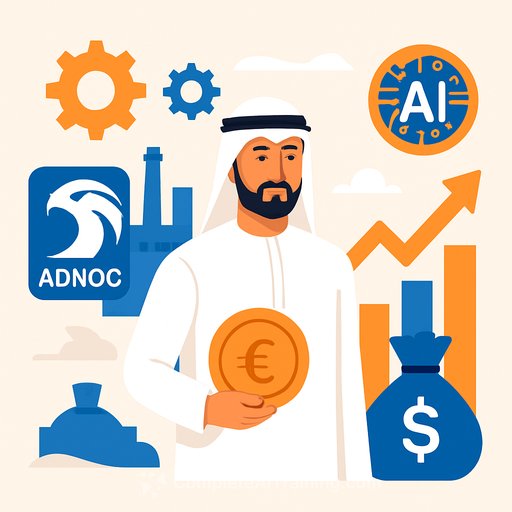
ADNOC Group’s six publicly listed entities posted a combined net profit of USD 4.7 billion for the first half of 2025, underscoring how the widespread deployment of advanced artificial intelligence across operations has sharpened efficiency and underpinned robust growth.

At the heart of this transformation lies MEERAi, ADNOC’s proprietary AI platform. It is deployed across ADNOC Gas, ADNOC Distribution, ADNOC Drilling, ADNOC Logistics & Services, Fertiglobe and Borouge, delivering real-time, data-driven insights that are elevating decision-making and operational precision across the board.

ADNOC Gas achieved a record Q2 net income of USD 1.385 billion, marking a 16 per cent year-on-year rise, while EBITDA increased 8 per cent to USD 2.256 billion, propelled by surging local demand and operational prowess. Investors will see the payoff as the board approved an interim dividend of USD 1.792 billion, up 5 per cent, due for disbursement in September 2025. MEERAi’s impact was central in guiding the board’s strategic decisions.

ADNOC Distribution delivered its highest first-half EBITDA to date—USD 566 million, up 10 percent—with net profit climbing 12.2 percent to USD 358 million. Fuel volumes surged to a record 7.62 billion litres, and non-fuel retail gross profit lifted 14.9 percent. The AI-driven enhancements include predictive fuel-demand forecasting, intelligent assortment planning and hyper-personalised customer offerings. The company introduced MEERAi to its board for real-time strategic oversight, and it expects to distribute a USD 350 million dividend in October 2025.

ADNOC Drilling also delivered standout performance, with management attributing its ability to scale through diverse energy cycles to advanced technologies including AI. The board approved a USD 217 million second-quarter dividend in August 2025. The company is also pursuing regional expansion, including a majority stake acquisition in SLB’s land drilling business across Kuwait and Oman.

Borouge’s AI, digitalisation and technology programme generated USD 307 million in value, including an AI-powered control room in collaboration with Honeywell and integration with MEERAi. New product innovations such as medical-grade polyolefins and recyclable packaging also featured prominently.

Meanwhile, ADNOC’s broader push to harness AI is also playing a central role in its clean-energy pivot. Following earlier investments in AI tools like RoboWell and AR360, which generated USD 500 million in value and reduced around one million tonnes of CO₂ emissions between 2022 and 2023, the company is now deploying AI to advance low-carbon energy frontiers including hydrogen and carbon management, in partnership with entities such as SOCAR, Microsoft and Masdar.

Across all six listed companies, the near-term financial performance echoes the effectiveness of ADNOC’s strategy of embedding AI across both core operations and emerging markets. The unified deployment of MEERAi is not just enhancing control-room functions, but reshaping boardroom dynamics, driving smarter strategy execution, operational optimisation, emissions reduction and product innovation.

Key players in this transformation include the leadership of ADNOC Distribution, championing digital retail evolution; ADNOC Drilling’s CEO Abdulla Ateya Al Messabi, who has publicly credited AI for the company’s resilience and growth momentum; and the broader ADNOC executive team, aligning technology and energy transition goals. Their collective efforts are reinforcing ADNOC’s position as a global energy player committed to leveraging AI for sustainable value creation.

Binance’s Chief Security Officer, Jimmy Su, has identified North Korean hacking groups as one of the most significant threats facing the cryptocurrency sector in 2025. As the world’s largest cryptocurrency exchange, Binance has been at the forefront of monitoring and responding to cyber threats. Su’s recent statements have highlighted the urgency of addressing the escalating risk posed by North Korean cyber actors targeting the crypto industry.

The North Korean government has long been linked to a series of cyberattacks aimed at funding its regime through illicit means, with cryptocurrency exchanges being prime targets. These attacks have become more sophisticated over time, with state-backed hackers employing advanced techniques to infiltrate systems and steal millions of dollars’ worth of digital assets. Experts argue that this is part of a broader strategy to bypass international sanctions imposed on North Korea.

Su’s comments, made during an industry event in early 2025, point to a clear rise in the volume and sophistication of these attacks. According to Binance’s internal threat intelligence, these cybercriminals are using increasingly advanced malware, social engineering tactics, and even direct network intrusions to steal sensitive data and crypto assets.

An ongoing investigation by Binance’s security team revealed that these hackers have been exploiting vulnerabilities in the infrastructure of crypto exchanges and DeFi platforms. In some cases, they have used phishing emails and fake job offers to target employees of key financial institutions, hoping to gain access to privileged systems. Such tactics are a clear indication of a well-coordinated operation with global ambitions.

One of the most concerning trends identified is the use of sophisticated ransomware attacks, which have forced some exchanges to pay hefty ransoms to prevent the loss of critical data. The high-profile hacks have raised questions about the resilience of the global financial ecosystem to such breaches, especially as more governments and institutions begin to integrate blockchain technology into their operations.

North Korean actors, according to cybersecurity experts, have also shown an increasing willingness to attack smaller and lesser-known exchanges. This shift in focus comes as these platforms often lack the robust security protocols that larger exchanges like Binance and Coinbase have implemented. As a result, they are seen as softer targets, vulnerable to exploitation.

The financial implications of these attacks are staggering. Since 2019, estimates suggest that North Korean hackers have stolen over $2 billion in cryptocurrency. This is in addition to the $250 million reportedly taken from a major South Korean exchange in 2023. The stolen funds are typically laundered through complex networks of wallets and mixers, making it challenging for authorities to track and recover the stolen assets.

Su’s remarks have sparked a broader discussion about the need for improved cybersecurity measures within the cryptocurrency sector. Many industry leaders have called for a more collaborative approach, involving private companies, governments, and international law enforcement agencies. A unified strategy could help create a more secure environment for the rapidly expanding digital asset market.

The North Korean government has long denied any involvement in cyberattacks. However, international cybersecurity firms have linked numerous incidents to Pyongyang’s operatives, underscoring the persistent threat posed by the country’s cyber espionage efforts. Furthermore, it is widely believed that these hacking groups are funded by the regime to help finance its nuclear weapons programme and other illicit activities.

Efforts to combat these threats have led to increased investment in security technology, including more advanced encryption methods, real-time monitoring tools, and fraud detection systems. In addition to these technological solutions, some exchanges are considering implementing stricter Know-Your-Customer regulations to combat money laundering and ensure compliance with international financial rules.

As the stakes continue to rise, both industry players and regulators face a significant challenge. The rapid growth of blockchain technologies, along with the increasing use of decentralised finance applications, has created a complex and evolving landscape where traditional security measures are often inadequate. As a result, companies must remain vigilant and proactive in defending against cyber threats from state-sponsored actors like North Korea.

While North Korea’s cyber campaign remains a major concern, it is not the only threat facing the cryptocurrency sector. Other nation-states, including Iran and Russia, have been linked to similar activities, further complicating efforts to secure the digital assets market. However, the ongoing attention on North Korean actors serves as a reminder of the global reach and scale of the problem.

VISHNU RAJA
RYO YAMADA
HITORI GOTOH
IKUYO KITA
Just in:
Egypt’s African Union trade climbs to $8.2 billion //
Rahul addresses League’s INDIA bloc grievances
//
Centre grants aircraft cabin access for Sabarimala pilgrims’ irumudi
// Phancy Announces Business Performance for the Nine Months Ended September 30, 2026 // Singapore regulator cautions against AI access to bank logins // 2026 Tropical Rainforest Ecosystem Partners Conference Kicks off in Hainan // Crypto market loses $150 billion amid broad sell-off // PayerMax and ShopeePay Strengthen Strategic Partnership to Advance Digital Payment Collaboration in Southeast Asia // Dubai Introduces SHARH, an AI-Powered Platform Helping Entrepreneurs Buy, Sell and Manage Businesses in the UAE // Promoting Common Human Development Through Exchanges and Mutual Learning Among Civilizations // Russia permits retail cryptocurrency purchases under regulated framework // Yeebo Announces Interim Results for FY26/27 Revenue Increases by 45.5% to HK$806.7 Million Profit Attributable to Owners Surges 87.6% to HK$2,284.7 Million // Toward a Shared Future for Humanity: Rethinking Civilizational Exchange // Balagopal challenges CM over tax revenue // Technology at Work, Heritage for All: The “Chinese Approach” to Safeguarding the Leshan Giant Buddha // Padmini follows Padmaja for ‘ghar vapsi’ // Dalilk Academy reaches 27 million, targets 100 million by 2030 // Saudi defences destroy three Houthi missiles targeting Riyadh // US military rebuts Iran’s Gulf F-16 strike allegation // Bail refused to 17-year old in Abhiram murder //