

Arabian Post Staff -Dubai
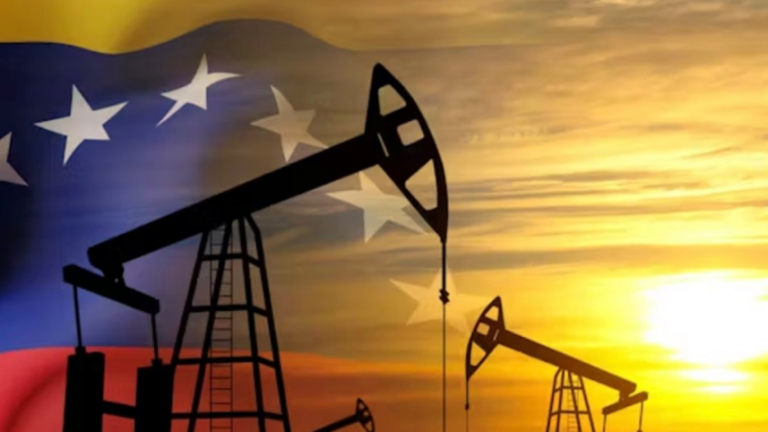
Trump described the agreement as the “biggest oil deal in world history”, saying it had been negotiated by Secretary of State Marco Rubio and Secretary of War Pete Hegseth with Venezuela’s interim President Delcy Rodríguez and would involve private-sector companies rather than expenditure by US taxpayers.
The deal covers 17 strategic oilfields with proven potential exceeding 65 billion barrels, representing roughly one-fifth of Venezuela’s estimated 303 billion barrels of proven reserves. The fields include assets in the vast Orinoco Belt and producing areas around Lake Maracaibo, regions that contain some of the country’s most important petroleum resources.
Details released by Caracas indicate that the arrangement envisages more than $100 billion in private investment and could generate more than $209 billion in tax revenue over its lifespan. American companies are expected to play the dominant role in exploration, development and production, although the identities of participating companies and the precise ownership structure have not been fully disclosed.
Rodríguez hailed the agreement as a “historic milestone” and said it would allow Venezuela to substantially increase production through private operators. She said the investment programme would support economic recovery, employment and government revenue after years of falling output, sanctions and deterioration of the country’s energy infrastructure.
Venezuela holds about 17% of the world’s proven crude reserves but currently accounts for only a fraction of global production. Output stands at roughly 1.25 million barrels a day, far below the more than 3 million barrels a day produced around the turn of the century. Ageing facilities, shortages of investment and skilled personnel, sanctions and years of political instability have constrained recovery.
The agreement could eventually provide US refiners with substantial quantities of heavy Venezuelan crude, which is particularly suited to sophisticated refineries along the Gulf Coast. Washington has sought additional supplies as high energy prices and disruptions to international oil flows have increased pressure on domestic fuel costs.
Trump said the transaction would more than double the oil reserves available under US control and help lower petrol prices “long into the future”. The average US petrol price has risen to about $4.09 a gallon, compared with approximately $3.21 a year earlier, increasing political pressure on the administration ahead of November’s midterm elections.
Washington has also drawn heavily on the Strategic Petroleum Reserve. The stockpile fell below 300 million barrels in early August, more than 100 million barrels lower than at the beginning of 2026, strengthening the administration’s interest in securing dependable long-term crude supplies.
Rubio said the Venezuela agreement would bring about $100 billion of private capital into the country while providing lower energy prices for US consumers. The administration has presented the arrangement as serving both countries by combining American capital and technology with Venezuela’s enormous but underdeveloped reserves.
Major obstacles remain before the 65-billion-barrel resource can translate into substantially higher production. Venezuela’s oil infrastructure requires extensive rehabilitation, while extracting and processing its predominantly heavy and extra-heavy crude is technically demanding and costly. Several international producers have also remained cautious because of the history of nationalisation, contract disputes and political intervention in the industry.
ExxonMobil chief executive Darren Woods earlier characterised Venezuela as “un-investable” when Trump urged US oil executives to consider returning after the political upheaval that removed Nicolás Maduro from power. Companies assessing the new arrangement are likely to seek strong contractual protection, clear fiscal terms and guarantees that future governments will respect long-duration investments.
The legal structure is also attracting attention. Lease arrangements have been considered as a mechanism through which designated fields could be developed by US operators while Venezuela retains formal sovereignty over its underground resources. Such a model would have to comply with Venezuela’s constitutional provisions governing state ownership of hydrocarbons and with energy-sector legislation revised under Rodríguez to expand private participation.
Also published on Medium.
Follow Arabian Post
Select Arabian Post as your preferred source on Google and MSN News for trusted business news and Arab politics and updates.



