

Arabian Post Staff -Dubai
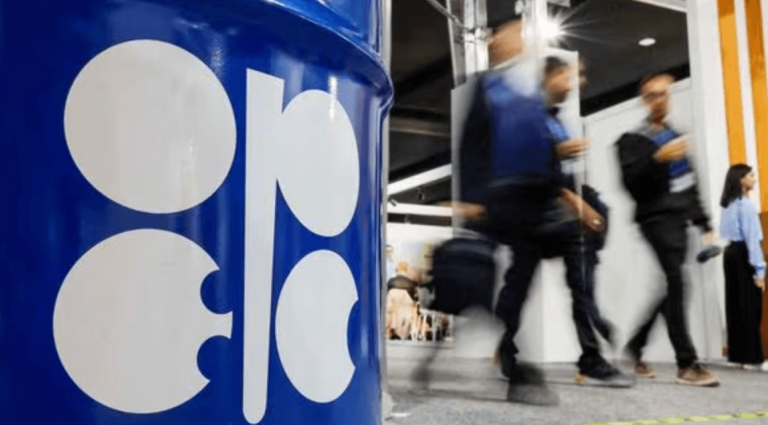
The decision, announced on Tuesday and set to take effect on May 1, marks one of the most consequential breaks inside the oil-exporting bloc since Qatar’s exit in 2019 and Angola’s departure in 2024. For the UAE, the move reflects a desire for greater control over production policy, a larger role for its expanding upstream capacity and more flexibility in responding to fast-changing global demand. For OPEC, it removes one of its most technically advanced, financially strong and politically influential Gulf members at a sensitive moment for the group.
UAE Energy Minister Suhail Mohamed Al Mazrouei framed the withdrawal as a strategic decision aligned with long-term energy priorities rather than a rejection of market stability. The country has indicated that it will continue to act responsibly in energy markets, while no longer being bound by collective output management under OPEC or the wider OPEC+ framework.
The exit comes after years of periodic tension over production baselines, capacity recognition and the balance of influence inside the alliance. Abu Dhabi has invested heavily to raise crude production capacity, with ADNOC pursuing expansion plans intended to lift capacity to 5 million barrels per day by 2027. That ambition has often sat uneasily with OPEC+ supply restraint, particularly when the UAE argued that its formal baseline did not reflect its actual investment and production potential.
The UAE joined OPEC in 1967, before the federation was established in its present form in 1971, and became one of the group’s most reliable producers. Its departure reduces the Gulf weight inside OPEC at a time when Saudi Arabia continues to shoulder the largest burden of voluntary supply management. It also adds pressure on the group’s ability to project unity, especially as non-OPEC production from the United States, Brazil, Guyana and other suppliers has expanded the range of alternatives in global crude supply.
Market reaction is likely to be shaped by whether Abu Dhabi moves quickly to lift output or keeps production adjustments gradual. Traders will watch for signs of higher exports once logistical and market conditions allow, particularly if crude flows through key shipping lanes stabilise. Any sizeable increase from the UAE could complicate efforts by remaining OPEC+ members to manage inventories and defend prices, while consumers may welcome additional supply if prices remain elevated.
The timing also carries geopolitical weight. Energy markets have been unsettled by conflict involving Iran and disruption risks around the Strait of Hormuz, through which a significant share of globally traded oil and liquefied natural gas passes. Gulf producers have long relied on coordination to reassure buyers, but the UAE’s step suggests that national energy strategy is now taking precedence over the benefits of bloc discipline.
For Saudi Arabia, the UAE’s exit is a strategic setback rather than simply a technical change in membership. Riyadh has used OPEC+ as a central platform to influence prices, manage spare capacity and coordinate policy with Russia and other exporters. Losing a major Gulf partner weakens that architecture and may encourage other producers to seek more room for manoeuvre if quota limits clash with domestic investment plans.
The decision also highlights a broader transformation in the UAE’s economic model. Abu Dhabi is trying to monetise hydrocarbon reserves while investing in low-carbon technologies, gas, petrochemicals, artificial intelligence, logistics and finance. The country’s oil policy is increasingly tied to national industrial planning, long-term customer relationships in Asia and a strategy of presenting its crude as relatively low-cost and lower-carbon compared with many competing sources.
Also published on Medium.
Follow Arabian Post
Select Arabian Post as your preferred source on Google and MSN News for trusted business news and Arab politics and updates.




