

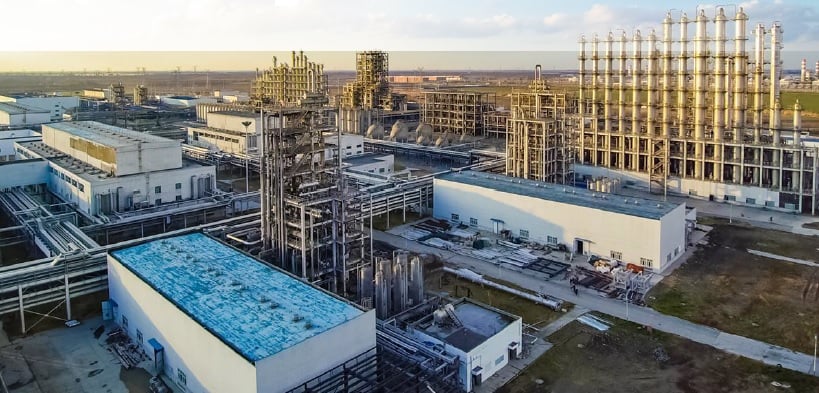
China’s solar industry, particularly its polysilicon segment, is experiencing a defining shift. Six leading solar makers reported a combined loss of Rmb20.2 billion during the first half of 2025, prompting regulatory intervention to stem overcapacity and destructive price competition.
In early September, GCL Technology Holdings confirmed that investors can anticipate clarity soon on a plan to restructure the polysilicon industry—potentially this year. Chief Financial Officer Yang Wenzhong indicated that GCL may invest its own capital into the effort but is proceeding with caution amid financial uncertainty.
The core of this restructuring lies in a proposed RMB50 billion pooling of funds by top producers like GCL and Tongwei. The aim is to acquire and retire roughly one-third of existing production capacity, targeting approximately one million metric tonnes of lower-quality output. This supply reduction could help raise prices and restore downstream solar panel maker profitability.
Government authorities are reinforcing this market realignment through direct meetings with industry representatives. In August, China’s Industry Ministry held its second session in two months, urging the sector to eliminate outdated manufacturing capacity and curb “low-price disorderly competition” as part of a broader effort to reverse deflationary trends.
The policy response reflects concern over global glut: in 2024, China produced 588 GW of solar capacity while global demand stood at 451 GW, leaving utilisation at just 54%. Analysts estimate that up to 20–30% or more of solar manufacturing capacity must exit the market to reestablish profitability.
This state-guided consolidation faces substantial obstacles. Local governments that have boosted regional development through subsidies, tax breaks and favourable land deals for solar manufacturers may resist decommissioning facilities tied to local GDP and employment. Even if a cartel is formed, analysts warn that members might sneak back into production once prices rebound.
While the outlook remains complex, sentiment among investors appears cautiously optimistic. Markets showed tentative improvement after reports of progress in industry coordination and price gains surfaced. Trina’s commentary on earnings, describing polysilicon as “the first step of anti-involution,” hints at broader hopes for a turnaround.
Global attention is intensifying. Successful restructuring could reinforce China’s dominance—already controlling around 90% of global solar cell capacity—while disrupting cheap exports that have pressured international markets. But a failed effort could compound challenges in other overcapacity-prone sectors such as electric vehicles or shipbuilding.
Longi, another solar powerhouse, is also adapting. Its founder, Li Zhenguo, has relinquished daily management to focus on R&D, including back‑contact cell and green hydrogen technology. The shift comes amid sustained losses and an 80% decline in its share price since 2021, as analysts predict that overcapacity will persist through 2028.
China’s solar supply chain—from polysilicon to panels—is at an industrial crossroads. The restructuring effort is perhaps the boldest policy move yet to recalibrate supply with demand. But its success hinges on overcoming entrenched regional interests, ensuring disciplined industry behaviour, and catalysing sustainable demand growth.
Follow Arabian Post
Select Arabian Post as your preferred source on Google and MSN News for trusted business news and Arab politics and updates.




