

Arabian Post Staff -Dubai
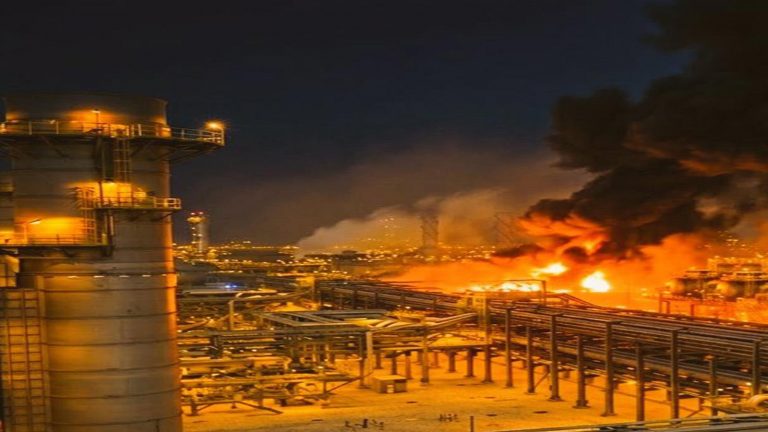
ADNOC Gas said its domestic supply chain remains intact after damage at part of the Habshan complex on April 3, with gas demand inside the UAE being met through other facilities and no disruption to customer supply. The company told the Abu Dhabi Securities Exchange that the affected area had been isolated and that a full assessment of damage to the Habshan train was continuing, while it worked with international customers where needed.
The statement offers the clearest sign yet that Abu Dhabi is trying to separate physical damage at one of its most important gas assets from the wider question of supply security. Habshan is central to the emirate’s gas processing system and sits at the heart of ADNOC Gas’s role in supplying a large share of the UAE’s fuel needs, as well as serving export customers. That makes the company’s assurance significant for utilities, industrial users and trading partners watching for further fallout from the US-Iran war.
The damage followed an April 3 incident in which falling debris, after air defence interceptions, struck the Habshan site and caused fires. Abu Dhabi authorities said one Egyptian national died during the evacuation and four others, two Pakistanis and two Egyptians, sustained minor injuries. Early official accounts said the complex had suffered significant damage, prompting an operational halt and a broader technical review. Those details underscore that while customer deliveries may be protected for now, the operational and human toll at the site is more serious than the market-facing reassurance alone suggests.
Habshan’s importance extends beyond a single processing train. It is one of the largest gas processing hubs in the region and forms part of ADNOC Gas’s integrated network of onshore plants, pipelines and LNG infrastructure. The company says it has access to around 10 billion standard cubic feet a day of gas processing capacity and supplies roughly 60% of the UAE’s gas needs. That scale helps explain how ADNOC Gas can reroute volumes and keep domestic deliveries flowing even when one facility is compromised. It also highlights the strategic value of redundancy in the UAE’s energy system.
The Habshan incident did not occur in isolation. Since the conflict widened in late February, Gulf energy infrastructure has come under repeated strain, with attacks and debris incidents affecting sites in the UAE, Qatar and Kuwait. Reuters has reported earlier suspensions or disruptions involving Habshan, Shah and Fujairah, while ADNOC had already been adjusting operations and managing output in response to storage constraints, shipping risk and security pressures. That pattern suggests the region’s energy map is being tested not only by direct hits, but also by the cumulative effect of repeated interruptions across interconnected assets.
For Abu Dhabi, the immediate policy priority is continuity of domestic supply. For international buyers, the more difficult question is whether a reliable supplier can remain fully dependable if the conflict continues to reach critical infrastructure. ADNOC Gas has told investors it is liaising with overseas customers as required, language that points to contingency management rather than a declared export outage. Even so, the market has already seen how quickly shipping constraints and plant disruptions can alter LNG and gas-product flows across the Gulf, especially when Hormuz itself becomes a bargaining chip in the conflict.
That wider strategic pressure is now shaping the regional diplomatic response. UAE presidential adviser Anwar Gargash said on April 6 that guaranteed use of the Strait of Hormuz must be part of any settlement, a reflection of how security and energy trade have become inseparable. His remarks came as mediation efforts sought to contain the fighting, but with Washington simultaneously threatening further strikes if shipping lanes remain restricted. For producers such as ADNOC Gas, that leaves operations exposed to both kinetic risk onshore and maritime risk offshore.
Also published on Medium.
Follow Arabian Post
Select Arabian Post as your preferred source on Google and MSN News for trusted business news and Arab politics and updates.




