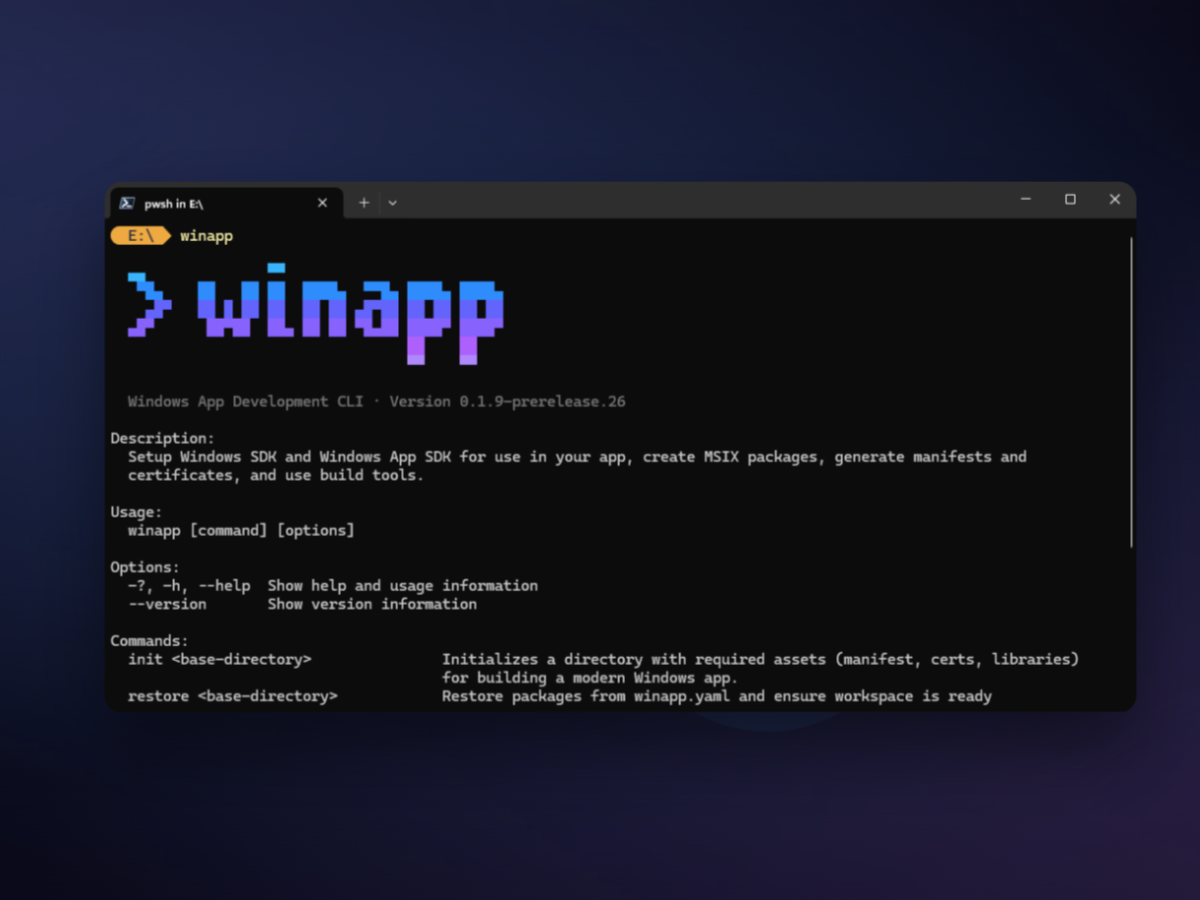
Microsoft has unveiled WinApp CLI, an open-source command-line tool released in public preview, aimed at simplifying how developers build and package applications for Windows. The tool brings together tasks that are typically spread across multiple utilities, allowing teams to initialise projects, manage software development kits, configure app manifests, handle certificates and generate MSIX packages from a single workflow.
The launch reflects a broader push by Microsoft to lower the friction involved in Windows app development, particularly as developers increasingly work across diverse frameworks and languages. WinApp CLI is designed to support projects built with Electron,. NET and Rust, among others, providing a common interface regardless of the underlying stack. By standardising these steps, the company says it can reduce setup time and minimise configuration errors that often slow down delivery.
At its core, WinApp CLI automates tasks that have long been seen as repetitive or error-prone. Developers can scaffold a Windows application with predefined templates, ensure that the correct Windows App SDK components are installed, and maintain consistent project settings across teams. The tool also generates and validates app manifests, a process that has historically required manual edits and deep familiarity with platform requirements.
Packaging and distribution form a central part of the offering. WinApp CLI integrates MSIX packaging into the development cycle, enabling developers to produce installable packages that meet Windows security and deployment standards without relying on separate build scripts. Certificate creation and signing are handled within the same environment, addressing a common pain point for smaller teams and independent developers.
The public preview status signals that Microsoft is seeking early feedback from the developer community. By releasing the tool as open source, the company is encouraging external contributions and scrutiny, with the aim of refining features and expanding framework support. Engineers familiar with the Windows ecosystem note that this approach mirrors earlier efforts such as the Windows App SDK, where community input helped shape tooling priorities.
Industry analysts view the move as part of a competitive response to cross-platform development trends. Tools like Electron and Rust have gained popularity for their portability, but Windows-specific deployment steps have remained complex. A unified command-line interface could make Windows a more attractive target for teams that want to maintain a single codebase while still delivering native-quality experiences.
The introduction of WinApp CLI also aligns with Microsoft’s broader strategy of investing in developer productivity. Recent updates across its tooling portfolio have focused on automation, reproducibility and integration with modern continuous integration pipelines. A single CLI that handles setup and packaging fits neatly into automated build environments, reducing the need for bespoke scripts.
Developers who have tested early builds say the promise lies in consistency. By codifying best practices into commands, WinApp CLI can help ensure that applications meet platform guidelines from the outset, rather than requiring late-stage fixes. This is particularly relevant for organisations managing multiple Windows apps with shared infrastructure.
Follow Arabian Post
Select Arabian Post as your preferred source on Google and MSN News for trusted business news and Arab politics and updates.