

Just in:
Empowering Huanggang Port: Over 100 KONE elevators and escalators unlock vertical flow design
//
Thyssenkrupp establishes Pune centre for automotive software development
//
Full Collaboration Of INDIA Bloc And CJP Needed To Fight Modi Govt
//
Britain retains mansion tax threshold despite fiscal pressures
//
Microsoft introduces Maia 300 for large-scale AI deployment
//
Anthropic disconnects internal AI tests after website breaches
//
ADIA evaluates anchor stake as Zetwerk prices IPO
//
Creative Secondary School Celebrates 20 Years of Educational Excellence with Open Day 2026: “World of Possibilities”
//
Dubai Global Village prepares 31st season opening Wednesday
//
Ledger reseller investigation widens as theft estimates rise
//
Epstein cultivated Woody Allen ties to widen connections
//
UK widens Saudi travel warnings, raising insurance risks
//
HKTDC Hong Kong International Lighting Fair (Autumn Edition) and Hong Kong International Outdoor and Tech Light Expo Set to Illuminate this October
//
Panama mobilises emergency relief after widespread earthquake damage
//
Saudi airport attacks sharpen pressure for US intervention
//
Qilin and Settra exploit patched Palo Alto VPN flaw
//
UAE broadens AI deployment across essential public services
//
China-EU agreement threatens surge in Chinese hybrid exports
//
Japanese Bag Brand pionunnal Makes Its Overseas Debut at Takashimaya Singapore
//
Gargash urges Gulf states to reinforce collective defences
//
Category: Peer to Peer
Latest P2P News and Updates on Arabian Post
ADVERTISEMENT
WLFI Gains Wider Spotlight as DWF Ventures Probes Utility Token’s Role
Quantum-Power ETF Hits Regional Stage

The fund traces the Solactive Developed Quantum
BullZilla Roars with Engineered Scarcity in Meme-Coin Surge

The presale, structured across 24 stages, begins at $0.00000575 per token. Token prices increase automatically every 48 hours or whenever $100,000 is raised,
OKB Token Rockets Above $200 on Supply Shock and Ecosystem Overhaul

A decisive blow to token supply was delivered on 13 August 2025, when OKX executed a one‑off burn of approximately 65 million OKB—equivalent to around $7.3 billion—effectively halving
Mastercard and Circle Unlock Stablecoin Settlements in EEMEA
The initiative marks a clear shift towards tokenised money. Mastercard’s President for EEMEA, Dimitrios Dosis,
AI-Powered Move Coding Comes to ChainIDE
An AI assistant has been introduced into ChainIDE, Sui’s flagship development environment, enabling developers to generate Move code through natural language prompts in English, Chinese and Korean. The assistant provides intelligent autocompletion, real‑time security checks, automated documentation and readily available templates—features
XLM Slides 8% on Institutional Pullback, Yet Adoption Grows
Stellar’s native token, XLM, slumped to roughly $0.36—a drop from $0.39—prompted by heightened institutional selling and wider unease among corporate investors. Trading volumes soared beyond 41 million XLM as large holders trimmed positions, yet the token managed to recover from intraday lows thanks to renewed institutional interest.
Despite the volatility, adoption on the Stellar network continues to advance. The Stellar Development Foundation reports that the network is approaching 10 million registered accounts, bolstered by an influx of 5,000 to 6,000 new
Despite the volatility, adoption on the Stellar network continues to advance. The Stellar Development Foundation reports that the network is approaching 10 million registered accounts, bolstered by an influx of 5,000 to 6,000 new
Pepeto Trades on Utility, Not Just Viral Buzz

At its Ethereum‑based core, Pepeto boasts PepetoSwap, a DEX offering fee‑free, fast trading, alongside PepetoBridge, enabling seamless cross‑chain transfers without intermediaries—all built on the security of Ethereum’s
WLFI Token Faces Wheel-of-Fortune Launch and Retail Risk

Trading commences at 12:00 UTC on 1 September, when presale participants can claim
Treasury Invites Industry Input on Digital Asset Crime-Spotting Tools

Crypto Poised as Fed Signals Stir New Wave of Market Movement
Bitcoin remains anchored just above the $113,000 mark and Ethereum hovers near $4,600, as markets digest fresh signals from the Federal Reserve and institutional interest.
Bitcoin has regained footing near $113,000 following a textbook flash crash over the weekend triggered by a whale’s sell‑off of 24,000 BTC, which sparked over $800 million in forced liquidations across crypto markets. Market behaviour since suggests cautious optimism, with support holding firm at around $110,000—analysts now eye this level as a critical
AI-Fueled Presales Ignite Crypto Buzz

Meanwhile, Maxi Doge has emerged as one of the standout meme coins of the year, igniting investor
BingX AI Breaks 2 Million Users in Just Over Three Months

BingX AI offers a suite of AI-powered avatars—The Analyst, Strategist, Recommender, Protector and Monitor—that support users at distinct
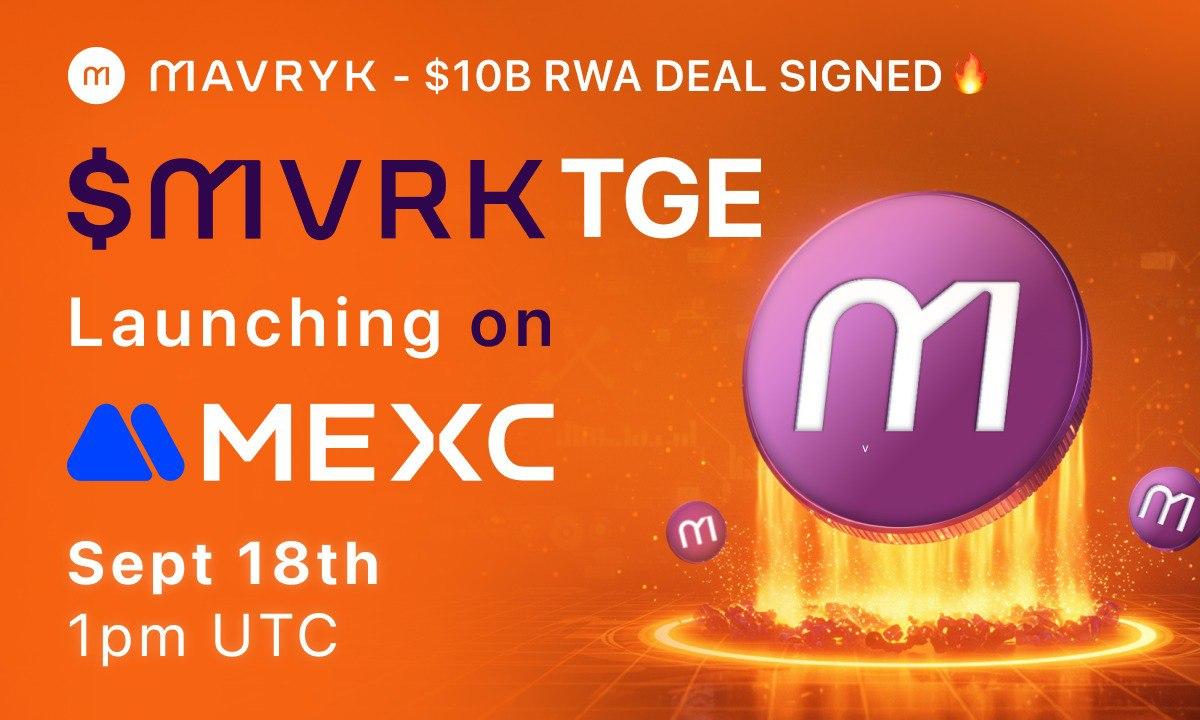
Mavryk Blockchain Set for Token Launch on MEXC Exchange
Durov addresses French arrest, calls it a mistake

Pepeto Surpasses $6 Million in Presale Funding

OKB Hits $200 Amid Significant Token Burn

The token burn, part of a broader strategy by OKX to reduce the circulating supply, was confirmed by the exchange in its
Bitcoin Swift Hits Stage 6 as Ethereum Eyes Upgrades
Ethereum,
Crypto Giants Unite to Combat Stolen Funds with Beacon Network

The Beacon Network functions by blacklisting suspicious crypto addresses
Binance and TRM Labs Launch Beacon Crime Network

Beacon, powered by TRM Labs, will provide a comprehensive suite of tools to track and identify suspicious
Simplex 3D’s REALS Reshapes Property Sales Industry

Two Prime and Figment Partner for Staking Solutions

Norway’s Wealth Fund Expands Bitcoin Holdings to Record Levels

Trump Family Acquires ALT5 Sigma for $15 Billion

Just in:
ZNAKI FM Expands Its Arabic Edition, Bringing Its News and Reference Network to Middle East Readers
//
Attackers exploit Bricksforge flaw to breach WordPress websites
//
UK widens Saudi travel warnings, raising insurance risks
//
Fake Marketplace adverts exploit users’ names to solicit replies
//
Chamet Brings Real-Time AI Translation in 50+ Languages and Multimodal Safety AI to Cross-Border Video Chat
//
Anthropic disconnects internal AI tests after website breaches
//
Panama mobilises emergency relief after widespread earthquake damage
//
China-EU agreement threatens surge in Chinese hybrid exports
//
Creative Secondary School Celebrates 20 Years of Educational Excellence with Open Day 2026: “World of Possibilities”
//
Britain retains mansion tax threshold despite fiscal pressures
//
Working Graduate Share In Labour Market Fell To 5 Years Low In September
//
HKTDC Hong Kong International Lighting Fair (Autumn Edition) and Hong Kong International Outdoor and Tech Light Expo Set to Illuminate this October
//
ADIA evaluates anchor stake as Zetwerk prices IPO
//
Japanese Bag Brand pionunnal Makes Its Overseas Debut at Takashimaya Singapore
//
Ledger reseller investigation widens as theft estimates rise
//
VinFast announces special incentives for new electric motorcycle showrooms in Indonesia and the Philippines, accelerating distribution network expansion
//
Saudi airport cancellations mount after deadly Houthi strikes
//
Epstein cultivated Woody Allen ties to widen connections
//
Temasek Trust and World Bank Group Forge Strategic Partnership to Advance Shared Development Priorities
//
Microsoft introduces Maia 300 for large-scale AI deployment
//