Arabian Post Staff -Dubai
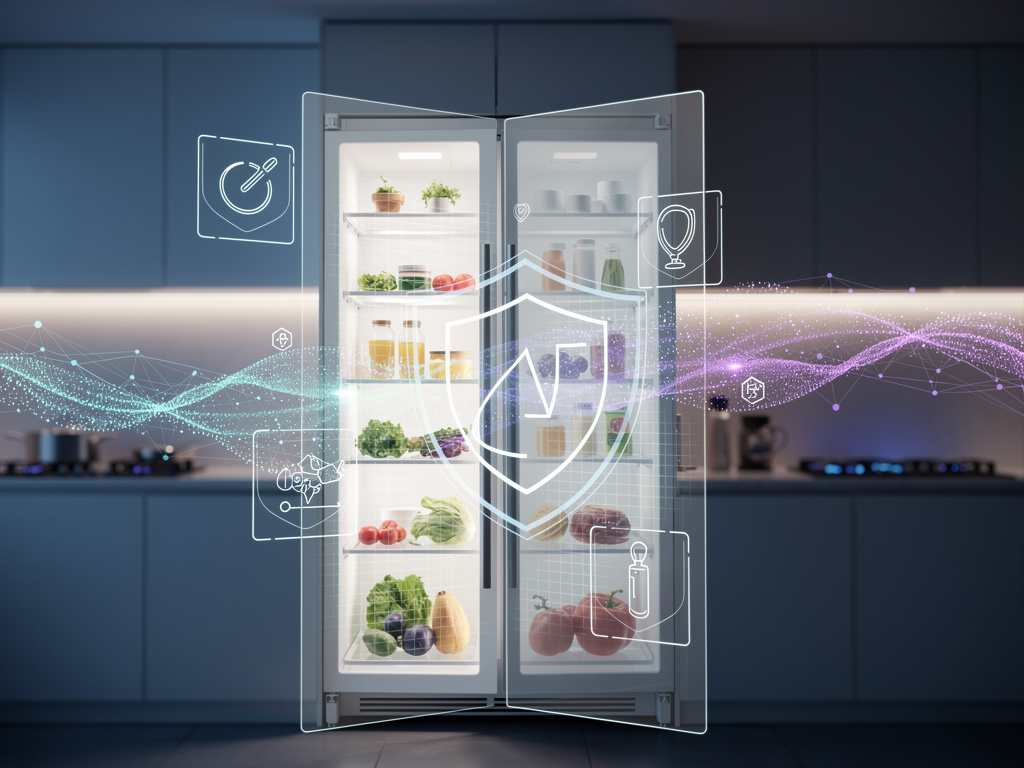
Samsung used its “The First Look” showcase at the annual Consumer Electronics Show to signal a strategic shift in how large home appliances fit into everyday life, unveiling FoodNote and a slate of software-led upgrades aimed squarely at its refrigerator range. The announcements framed refrigerators not as static storage units but as adaptive hubs designed to manage food, energy use and household routines with greater precision.
FoodNote emerged as the headline feature, positioned as a digital food diary embedded into select Samsung refrigerators. The system is designed to log what goes in and out of the fridge, allowing households to track consumption patterns, receive prompts tied to expiry dates and build meal plans based on what is actually available. Samsung executives described the feature as a response to mounting concerns about food waste, rising grocery costs and the pressure on households to manage diets more carefully. By integrating FoodNote directly into the appliance, the company is betting consumers will engage more consistently than they do with standalone smartphone apps.
The new functionality builds on Samsung’s existing vision-based inventory tracking, which uses internal cameras to identify items placed inside the fridge. FoodNote extends that approach by adding a layer of contextual memory, recording how often certain items are used and suggesting adjustments to shopping habits. In demonstrations, Samsung showed how the system could flag ingredients that are consistently thrown away or prompt users to repurpose items nearing their use-by date. While the company stopped short of claiming full automation, it emphasised that FoodNote would learn over time, adapting recommendations as household routines change.
Beyond FoodNote, Samsung outlined a broader refresh of refrigerator software that ties more tightly into its SmartThings ecosystem. Refrigerators announced at the showcase are expected to feature upgraded AI-driven energy management, allowing the appliance to optimise cooling cycles based on usage patterns and electricity tariffs. This aligns with regulatory pressure in major markets for more transparent energy consumption and with consumer demand for lower running costs. Samsung said the upgrades would also support remote diagnostics, enabling early detection of performance issues and potentially extending product lifespans.
Another notable update centres on personalisation. Samsung previewed interfaces that adjust the fridge’s display and notifications according to individual household members. For families, this could mean tailored alerts for different users, such as reminders for children’s lunches or dietary prompts linked to health goals. Industry analysts attending the showcase noted that this approach mirrors trends already established in smartphones and wearables, now migrating into large appliances as screens and connectivity become standard.
The announcements come at a time when competition in the premium appliance segment is intensifying. Rivals including LG and Bosch have also been pushing AI-enabled features, though Samsung is seeking to differentiate itself by emphasising data continuity across devices rather than isolated smart functions. Executives argued that refrigerators, given their constant presence in daily routines, are uniquely placed to anchor that ecosystem. Critics, however, caution that the success of such features depends heavily on reliability and privacy safeguards, particularly when appliances collect detailed household data.
Samsung addressed those concerns by reiterating its commitment to on-device processing for sensitive information and encrypted cloud storage where external connectivity is required. The company said FoodNote’s learning algorithms are designed to minimise unnecessary data transfer, a point likely aimed at regulators and privacy-conscious consumers in Europe and North America. Even so, consumer advocacy groups have warned that transparency around data use will be essential as appliances become more intelligent.
From a commercial perspective, the refrigerator updates also reflect Samsung’s effort to extract longer-term value from hardware sales through software differentiation. By introducing features that can evolve via updates, the company can keep existing models relevant while encouraging upgrades to higher-margin variants that support advanced AI functions. Analysts see this as part of a wider industry move to blur the line between consumer electronics and home infrastructure.
Also published on Medium.
Follow Arabian Post
Select Arabian Post as your preferred source on Google and MSN News for trusted business news and Arab politics and updates.