By Dr. Gyan Pathak Gig workers of India have concluded the year 2025 with an all-India strike action on the last day, December 31, 2025, demanding fair wages and working conditions, which have undergone marked deterioration in the last three months. It happened despite the Union government’s repeated claim that they have been doing everything […]
By K Raveendran As Indian corporates step into the new year buoyed by stronger growth momentum and easing inflationary pressures, a sense of anticipation is spreading across boardrooms and policy circles alike over a dispute that dwarfs most corporate battles seen in the country’s history. At the heart of this confrontation lies the Indian government’s […]
By Ashis Biswas Within the South Asian context, a noticeable coarsening of diplomatic discourse among four countries has occurred, following the violent regime change in Bangladesh, a brief encounter involving India and Pakistan and sporadic skirmishes between Pakistan and Afghanistan. A new political alignment, whose contours will be clearer after the Bangladesh general elections, is […]
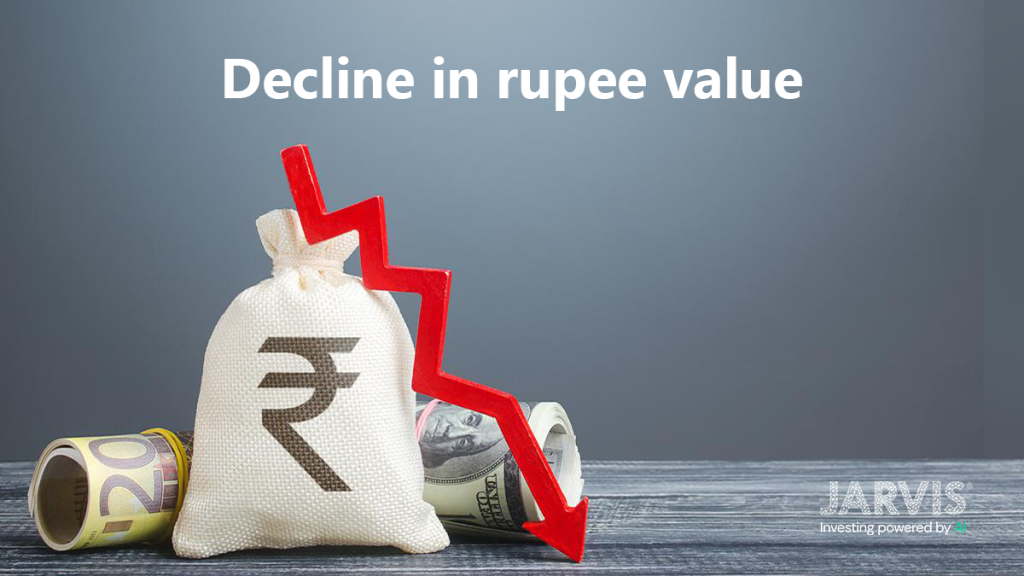
By Nantoo Banerjee It does not make sense for India to deplete its hard-earned foreign currency reserves to temporarily protect the Rupee’s exchange value. In fact, Indian Rupee’s downturn vis-à-vis other major currencies has not adversely impacted the country’s impressive economic growth, at least for the present. On the contrary, it has made exports cheaper […]
By K Raveendran Gold’s surge has turned a long-running Indian household instinct into a global macro trade. With spot prices pressing above the $4,500 an ounce mark late in 2025 and year-to-date gains running above 70 percent, the metal is headed for its strongest annual performance since 1979. The question now animating dealing rooms as […]
A sweeping federal decree-law has set out a unified legal framework aimed at protecting minors from online harm across the UAE’s fast-expanding digital ecosystem, placing clear duties on internet service providers and digital platforms that operate within the country or target users based there. The legislation signals a tougher regulatory posture as children’s screen time rises and online services become more embedded in everyday life. The decree-law […]
Storm scientists warn that the world’s oceans are now fuelling hurricanes and typhoons of a strength that strains the limits of existing classification systems, as deep layers of unusually warm water enable cyclones to intensify far beyond historical norms. Measurements from satellites, autonomous floats and research vessels show that pockets of heat extending hundreds of metres below the ocean surface are becoming more widespread. These subsurface hot […]
Thousands of users of Trust Wallet suffered losses estimated at about $7 million after a malicious browser extension masquerading as the official Trust Wallet add-on circulated on Google Chrome’s extension store, prompting renewed scrutiny of security gaps in decentralised finance tools and browser marketplaces. The attack centred on a fake extension designed to mimic Trust Wallet’s legitimate Chrome interface. Once installed, the malicious software harvested private keys […]
Labour demand across the United Arab Emirates is on course to rise by more than one million roles by the end of the decade, with technology positions accounting for a growing share of new hiring as digital transformation accelerates across government and the private sector. The outlook, drawn from labour market modelling and workforce data cited in a new ServiceNow study, points to sustained growth driven by artificial intelligence adoption, cloud migration, cybersecurity needs and large-scale public investment programmes.
The report estimates that the UAE currently supports about 8.5 million jobs across its economy, of which roughly 169,000 are technology-focused roles. While this represents only a small fraction of total employment, the pace of change is expected to intensify as organisations automate processes, modernise legacy systems and respond to new regulatory and security requirements. Analysts tracking the Gulf labour market say the country’s ambition to position itself as a global hub for digital services, advanced manufacturing and knowledge industries is translating into long-term workforce demand rather than short hiring cycles.
Economic planners have prioritised sectors that combine high productivity with export potential, including financial technology, health technology, clean energy systems, logistics platforms and smart infrastructure. Programmes aligned with national digital strategies are encouraging public bodies and state-linked firms to move services online, adopt AI-enabled decision tools and integrate data across departments. Each of these shifts creates secondary demand for software developers, data engineers, cloud architects and IT service managers, while also reshaping non-technical roles that require digital fluency.
ServiceNow’s analysis suggests that technology roles are expanding faster than overall employment growth, even as traditional sectors such as retail, hospitality and construction continue to add jobs. Employers surveyed for the study reported difficulty filling specialised digital roles, particularly in cybersecurity operations, enterprise platform management and AI workflow design. These shortages are contributing to wage premiums for experienced professionals and increased investment in training pipelines.
Education providers and corporate academies have responded by scaling certification programmes, apprenticeships and mid-career conversion schemes. Universities in the UAE have expanded computer science and engineering intakes, while partnerships with global technology firms aim to align curricula with enterprise needs. Industry observers note that demand is not limited to coders; roles in product management, digital compliance, IT service delivery and change management are growing as organisations seek to embed technology into core operations.
Demographics and migration policy also shape the employment outlook. The UAE’s ability to attract skilled expatriates remains a central factor in meeting talent requirements, particularly for niche technical expertise that takes years to develop. Long-term residency options and sector-specific visas have helped stabilise the workforce, reducing turnover in high-demand roles. At the same time, localisation initiatives encourage employers to invest in training citizens for private-sector technology careers, broadening the domestic talent base.
Beyond pure technology positions, the report highlights a rise in hybrid jobs that combine domain knowledge with digital skills. In banking, compliance specialists increasingly work alongside data analytics teams; in healthcare, clinicians are expected to engage with digital records and AI-assisted diagnostics; in energy and utilities, engineers manage sensor-driven systems and predictive maintenance platforms. This blending of skills expands the effective footprint of the tech workforce beyond headline job titles.
Regional competition for talent is intensifying as neighbouring economies pursue similar diversification strategies. Salaries, quality of life and career progression prospects are key differentiators, according to recruitment firms operating in the Gulf. The UAE’s mature infrastructure, regulatory clarity and concentration of multinational headquarters continue to attract professionals, though employers face pressure to offer flexible working arrangements and clear upskilling pathways.
By Dr Arun Mitra The new nuclear bill, titled Sustainable Harnessing and Advancement of Nuclear Energy for Transforming India (SHANTI), passed by Parliament, has received the assent of the President of India, Droupadi Murmu. With this, it has become an Act governing various aspects of nuclear energy in the country. There is a strong push […]
SINGAPORE – Media OutReach Newswire – 26 December 2025 – Z.ai has released GLM-4.7, the latest version of its open-source large language model, ahead of Christmas, as the company steps up efforts to position its models for real-world software development and production use.
The new model is designed around practical engineering workflows, with a focus on long-running task execution, stable tool calling, and multi-step reasoning, capabilities that have become increasingly important as developers deploy large language models in complex, agent-based systems.
Compared with its predecessor, GLM-4.6, GLM-4.7 shows notable gains in code generation, complex reasoning, and agent execution. According to Z.ai, the model delivers more consistent and controllable performance over extended tasks, while producing cleaner and more concise language output, addressing a common weakness in many open-source models.
To evaluate performance in realistic settings, Z.ai tested GLM-4.7 on 100 practical programming tasks in production-like environments such as Claude Code, spanning front-end, back-end, and command-execution scenarios. The company said GLM-4.7 achieved higher task completion rates and greater stability than GLM-4.6, and has since been adopted as the default model for its GLM Coding Plan.
Benchmark results also place GLM-4.7 among the strongest open-source models currently available. It scored 67.5 on BrowseComp and 87.4 on τ²-Bench, the latter marking a new high for open-source systems. In coding-focused evaluations, including SWE-bench Verified and LiveCodeBench v6, its overall performance approaches that of Claude Sonnet 4.5. In Code Arena’s large-scale blind evaluation, which aggregates votes from more than one million comparisons, GLM-4.7 ranked first among open-source models.
The model is available through the BigModel.cn API and has been integrated into Z.ai’s full-stack development platform, according to the company. As open-source models take on a more prominent role in the global technology ecosystem, Z.ai’s progress offers a clear indication of how such systems may continue to evolve, and what they might enable next.
KUALA LUMPUR, MALAYSIA – Media OutReach Newswire – 24 December 2025 – As Malaysians gear up for multiple financial commitments in the upcoming weeks and months, especially during the year-end holidays, back-to-school and double festive season, AEON Bank (M) Berhad, Malaysia’s first digital Islamic bank, strengthens its commitment to financial inclusion by offering accessible support through its Personal Financing-i (PF-i).
From December 2025 till March 2026, the bustling seasons present convergence of multiple spending needs for many households. Acknowledging that this might raise the need for flexible liquidity, AEON Bank provides a solution to address such budgetary constraints in the form of the PF-i; an inclusive, hassle-free financing facility, easily accessible via its digital banking app.
Optimising a Risk-Based Pricing (RBP) framework to determine a competitive and personalised profit rate, AEON Bank ensures that customers can seamlessly apply for PF-i online, as long as they are Malaysian citizens aged 18 to 55, with a minimum monthly gross income of RM2,500 – be it salaried employees or self-employed individuals, freelancers, as well as gig economy workers.
Aligned with Shariah banking principles, PF-i offers financing facility from RM1,000 up to RM100,000 with flexible tenure options ranging from 3 to 84 months, allowing for repayments tailored to individual budget needs. The Flat Profit Rate starting from 3.88% p.a. and a nominal Wakalah Fee of RM1 is applicable upon acceptance.
The entire process, from the application to fund disbursement are all managed online via the AEON Bank app. This simplifies the process and eliminates the need for physical paperwork or branch visits. To apply for PF-i, customers simply need to follow these steps :
Download the AEON Bank app and activate the Savings Account-i, prior to applying for PF-i.
Step 2 : Eligibility check and employment details
Applicants must be Malaysian citizens aged 18 and above, earning a minimum monthly gross income of RM2,500 – either as salaried employees, self-employed or gig workers.
Step 3 : Financing selection
Select the preferred financing amount ranging from RM1,000 up to RM100,000 and flexible repayment tenure, with options between 3 to 84 months.
Step 4 : Supporting document submission
Upload the latest EPF (KWSP) statement, reflecting the latest consecutive 6-months contributions (for salaried workers) or latest consecutive 6-month bank statement (for self-employed/gig workers).
Step 5 : Approval and fund disbursement
Applications will be processed immediately and upon approval, funds will be disbursed directly into the applicant’s AEON Bank Savings Account-i. Repayments will be automatically deducted via monthly auto-debit.
PF-i enables Malaysians to access a Shariah compliant financing facility to ease their needs; be it an emergency financial support, family budget constraint, small renovation, vehicle repair or a much needed financial aid to bridge the temporary cashflow gaps.
The issuer is solely responsible for the content of this announcement.
AEON Bank (M) Berhad
AEON Bank (M) Berhad is the first digital Islamic bank in Malaysia, licensed and regulated by Bank Negara Malaysia and the Ministry of Finance. Officially launched on 26 May 2024, we currently offer a suite of Shariah-compliant products and services under the Personal Banking and Business Banking (AEON Bank Biz).
Our Personal Banking offerings are 100% accessible via the AEON Bank app, namely the deposit Savings Account-i, AEON Bank x Visa Debit Card-i, Personal Financing-i, Term Deposit-i, Savings Pots, DuitNow QR, utility bill payments, personal financial management and budgeting tools with Neko Sensei, and a range of digital payment services with strategic partners and merchants, as well as Neko Missions, Malaysia’s first gamified digital banking interactive rewards programme.
On 8 August 2025, AEON Bank (M) Berhad officially launched AEON Bank Biz, anchored by the Current Business Account-i and integrated cash management capabilities, with the initial onboarding of vendors from AEON Credit Service (M) Berhad and suppliers within the broader AEON ecosystem. The targeted approach is designed to create an integrated value chain linking AEON’s retail and financial services networks, supporting strategic growth and greater inclusivity. AEON Bank Biz offers streamlined processes for account onboarding, credit assessments and financial services, utilising AI-driven fintech solutions to enable simplified procedures, faster approvals, and an enhanced digital banking experience for business owners and entrepreneurs. AEON Bank Biz’s products and services will soon be extended to more local businesses and entrepreneurs across Malaysia.
Being part of the AEON Group conglomerate, AEON Bank (M) Berhad is equally held by AEON Financial Service Co. Ltd. (AFS Japan) and AEON Credit Service (M) Berhad (ACSM). AFS Japan is responsible for the AEON Group’s financial services businesses, with strong roots in the retail sector which operates in Japan and 10 countries across Asia and it is. AEON Group is Japan’s largest retail group and it is a pure holding company that comprises eight core businesses.
AEON Group Malaysia consists of several entities, namely, AEON Co. (M) Bhd, AEON Credit Service (M) Berhad, AEON Bank (M) Berhad, AEON BiG (M) Sdn Bhd, AEON Fantasy (M) Sdn Bhd, AEON Delight (M) Sdn Bhd, AEON Global Supply Chain Sdn Bhd and Malaysian AEON Foundation (MAF). AEON Group has been a recognizable household brand with more than 200 years of history and evolution in Japan since the Edo era, along with 4 decades of growth in Malaysia, providing consumers with daily financial solutions and diversified retail convenience.
Our cloud native agility and AI optimisation, combined with the strength of our Shariah DNA, Malaysian roots and Japanese heritage are our distinguishing factors, while the integration with the AEON ecosystem gives us a competitive advantage of being the only bank in Malaysia with its own nationwide retail network. On top of that, AEON Points loyalty programme offers customers value-added benefits and meaningful rewards, as the AEON Points can be redeemed into cash value, deposited directly into customers’ AEON Bank Savings Account-i.
AEON Bank (M) Berhad is committed to provide accessible financial solutions for Malaysians and we aim to empower the community in pursuing their financial aspirations and achieve economic independence, hence fostering a more inclusive financial future for all. We will continue to contribute towards the Islamic banking development in the region and the nation’s digital economy.
By K Raveendran As 2026 approaches, the global oil market is heading into a year that could decisively reshape price dynamics, fiscal planning in producing states, and energy security calculations for importing economies. The defining feature of the coming year is not demand destruction or geopolitical shock, but the growing weight of surplus supply. Market […]
Stricter municipal requirements for private schools and learning facilities across Saudi Arabia have been issued by the Ministry of Municipalities and Housing, widening oversight of environmental quality, safety standards and urban planning as the kingdom continues to reshape its education landscape.
The updated framework applies to nurseries, kindergartens, schools and large educational complexes, covering private educational buildings established on land zoned for education as well as facilities built on government land leased to the private sector. It also extends to education facilities developed on plots allocated for commercial use, bringing a broader range of premises under a single municipal rulebook.
These revised rules aim to raise school standards, officials familiar with the changes say, by aligning environmental and safety benchmarks with national urban development goals. Municipal authorities will now assess new and existing private education facilities against clearer criteria for site suitability, building design, infrastructure access and community impact, with the stated objective of improving learning environments while reducing planning conflicts in fast-growing urban areas.
Environmental quality features prominently in the requirements. Schools and learning centres must meet stricter controls on waste management, ventilation, natural lighting and noise mitigation, particularly in densely populated districts. Municipal inspectors are expected to pay closer attention to how campuses manage traffic flow during peak hours and how outdoor spaces are designed to minimise heat exposure, reflecting broader sustainability priorities embedded in local planning codes.
Safety standards have also been expanded, with new specifications for emergency exits, fire prevention systems, accessibility for students with disabilities and safe pedestrian access. Facilities operating on leased government land will be subject to the same technical checks as those on privately owned plots, removing earlier ambiguities over compliance responsibilities between landlords and operators.
Urban planning considerations mark a significant shift in how private education projects are approved. The requirements link school licensing more tightly to neighbourhood zoning plans, population density and existing public services. Education facilities built on commercially zoned land must now demonstrate compatibility with surrounding uses, including retail and office developments, and show how student movement will be separated from heavy traffic and delivery routes.
Education sector specialists note that the changes reflect a growing emphasis on coordinated urban growth rather than piecemeal approvals. Private schooling has expanded rapidly over the past decade, particularly in major cities such as Riyadh and Jeddah, driven by demographic growth and rising demand for international curricula. Municipal authorities have faced mounting pressure to ensure that this expansion does not strain infrastructure or compromise safety.
Operators are being given clearer guidance on minimum plot sizes, building heights and setbacks, as well as requirements for green spaces and recreational areas. While the rules do not prescribe specific architectural styles, they emphasise functional design and durability, encouraging materials and layouts that support long-term use and lower maintenance costs.
For existing schools, the requirements introduce a phased compliance approach. Facilities already in operation will be required to align with the new standards within defined timeframes, with municipalities expected to prioritise critical safety and environmental upgrades. Education providers that fail to meet key benchmarks could face restrictions on licence renewals or limits on student capacity until deficiencies are addressed.
Private education investors and school operators are assessing the commercial implications. Some developers see higher upfront costs, particularly for projects planned on commercial land where redesigns may be needed to meet zoning compatibility rules. Others argue that clearer standards reduce regulatory uncertainty and improve asset quality over time, making compliant schools more attractive to parents and financiers.
The rules also intersect with broader national reforms aimed at improving quality of life and diversifying the economy under long-term development strategies. By tightening oversight of private education facilities, authorities are signalling that growth in the sector must be matched by higher standards of safety, sustainability and urban integration.
Municipal officials say enforcement will rely on closer coordination with education regulators to avoid duplication and ensure consistent interpretation of requirements. Digital permitting systems are expected to play a larger role in tracking compliance and scheduling inspections, although detailed implementation guidance is still being rolled out at the local level.
By Ashis Biswas How serious is the slogan for wresting the seven sister states in India’s northeast region, raised by Islamic extremists in Bangladesh, for New Delhi? For a proper assessment of the political challenge this poses for India, a brief study of background information is necessary. Bangladesh sought to revive old links with Pakistan […]
HONG KONG SAR – Media OutReach Newswire – 22 December 2025 –As Christmas and New Year holiday draw near, UnionPay International has launched a promotional campaign spanning 26 countries and regions, which includes over 170 marketing activities across more than 100,000 merchant stores, with selected offers providing discounts of up to 33%.
Aligned with the travel peak season at the end of the year, the campaign covers key destinations including Hong Kong SAR, Macau SAR, South Korea, Southeast Asia, Europe, North America and Oceania. Offline promotions extend to 30 major international airports, 65 premium shopping districts, 40 leading department stores, 15 outlet villages, as well as duty-free shops and luxury boutiques within 30 major global airports. The initiatives also encompass daily consumption, such as supermarkets, cosmeceutical retailers, dining spots, tourist attractions, entertainment, accommodation, local transportation and telecommunication services.
UnionPay has also customized activities for mobile payment methods, including UnionPay mobile QuickPass and UnionPay QR code payment, which are accepted in more than 100 countries and regions. For instance, in Australia and New Zealand, UnionPay cardholders can enjoy instant discounts when using UnionPay mobile QuickPass at participating merchants nationwide.
The year-end incentives have been further expanded to online scenarios. UnionPay has collaborated with digital entertainment platforms to accommodate the high-frequency online spending during the holiday, such as Hoyoverse Honkai: Star Rail top-up promotion, Apple Services promotion. In Australia, UnionPay has launched an online tuition payment promotion for students.
In select markets, UnionPay has partnered with local issuing banks to provide exclusive privileges for cardholders. For example, DBS Bank in Singapore offers UnionPay Platinum debit cardholders value-added benefits, such as cashback, fee waivers, airport lounge access and other travel-related perks.
UnionPay has built up a global payment network covering 183 countries and regions, providing stable and convenient payment support for cross-border travel and holiday consumption. Through in-depth cooperation with issuing banks, financial institutions and merchants, UnionPay has provided diverse holiday discounts and supporting services to optimize the consumption experience for cardholders.
Hashtag: #UnionPay
The issuer is solely responsible for the content of this announcement.
By Nantoo Banerjee US President Donald Trump may have problems with Russia, Venezuela and a host of other states and has every right to decide on the US trade and diplomatic policies to deal with those countries. But he has no right to thrust upon other free nations his likes, dislikes and prejudices. Unfortunately, he […]
Google has committed USD 8 million to support a network of artificial intelligence Centres of Excellence in India, signalling a deeper push into applied AI for public services, health care and local-language technologies while tying the investment to a parallel clean-energy partnership aimed at powering digital infrastructure sustainably.
The funding, announced by Google, is designed to accelerate research, product development and deployment across priority areas that include healthcare delivery, Indic language models and urban governance tools. The company said the centres will work with academic institutions, startups and public-sector bodies to translate laboratory advances into systems that can be deployed at scale, reflecting a broader shift among global technology firms towards mission-oriented AI programmes.
The allocation targets three primary domains. In healthcare, the centres are expected to focus on AI-assisted diagnostics, disease surveillance and workflow automation to reduce administrative burdens on clinicians. Google has previously tested AI models for medical imaging and population health analytics, and the new funding is intended to localise such tools for regional health systems, with attention to data privacy and clinical validation. Researchers involved in early-stage planning say the emphasis will be on interoperable platforms rather than standalone pilots, a response to criticism that many AI health projects fail to move beyond proof of concept.
Language technology forms the second pillar of the initiative. India’s linguistic diversity has long posed challenges for digital inclusion, and the centres are tasked with advancing large language models and speech systems that perform reliably across Indic languages and dialects. Google has already released open datasets and models for low-resource languages; the new programme seeks to improve accuracy, reduce bias and expand access for education, e-governance and small businesses. Industry observers note that competition in multilingual AI has intensified as regional startups and global rivals race to build models that can handle code-switching and local context.
Urban governance rounds out the focus areas, with planned projects covering traffic management, air-quality monitoring and municipal service delivery. Smart-city programmes have generated mixed results over the past decade, often constrained by fragmented data and procurement hurdles. By situating research within Centres of Excellence, Google aims to create replicable frameworks that cities can adapt, rather than bespoke systems tied to individual vendors.
Beyond the AI investment, Google has paired the announcement with a new solar partnership intended to support the energy needs of data centres and AI workloads. The company has pledged to match growth in computing capacity with clean-energy procurement, aligning with its global goal to operate on carbon-free energy around the clock. Analysts say the coupling of AI funding with renewable energy reflects mounting scrutiny of the environmental costs of large-scale computing, particularly as generative AI drives higher power demand.
The USD 8 million commitment is modest compared with Google’s global AI spend, yet its targeted design has drawn attention from policymakers and researchers. Government officials involved in discussions around the Centres of Excellence say the model allows for shared governance, with academic rigour balanced against industry deployment expertise. The approach also aligns with national ambitions to position the country as a hub for responsible AI development, emphasising safety, transparency and societal benefit.
Competition among technology firms has sharpened as Microsoft, Amazon and others expand partnerships with universities and public agencies across the Global South. In this context, Google’s move is seen as both a strategic investment and a reputational play, aimed at demonstrating that advanced AI can address public-interest challenges rather than solely commercial applications. Startups working in health tech and language processing expect spillover benefits through access to datasets, compute resources and mentorship.
A dramatic concept video portraying a proposed “Dubai Air Hotel” by Emirates has ignited global attention, depicting a full-scale Airbus A380 mounted atop a 580-metre, 125-storey tower in Dubai. The vision, priced at an estimated $3 billion, imagines an aviation-themed landmark that would combine ultra-luxury hospitality with a striking architectural statement, reinforcing the city’s reputation for headline-grabbing development. The footage shows the double-deck superjumbo positioned like a […]
Docker has made its enterprise-grade hardened container images freely available to the global developer community, marking a significant shift in how secure software supply chains are built and maintained. The company confirmed that images once restricted to paid enterprise customers are now open source and released under the Apache License 2.0, allowing unrestricted use, modification and redistribution. The move centres on Docker Hardened Images, a curated set […]
Google is preparing a possible reversal of one of its most debated Android interface decisions, with beta indicators suggesting that separate Wi-Fi and mobile data toggles could reappear in Quick Settings after being merged three years ago. The change, still under development, signals a renewed focus on usability following sustained feedback from users and developers who argued that the combined control added friction to everyday connectivity tasks. […]
Schaeffler Group has moved to strengthen Europe’s position in humanoid robotics by unveiling what it describes as a production-ready universal actuator designed to be deployed across multiple robot joints, a step the company says could narrow the scale and cost advantages held by Chinese manufacturers. The Frankfurt-based industrial and automotive supplier plans to present the new planetary gear actuator at CES 2026 in Las Vegas early next […]
SK hynix has secured a significant validation for its enterprise memory portfolio after completing Intel’s Data Center Certified process for a 256GB DDR5 RDIMM designed for the Xeon 6 server platform, marking a first for a module built on 32-gigabit die technology. The certification positions the South Korean chipmaker at the forefront of high-capacity memory deployment for data centres facing sharp increases in workload density driven by […]
Bitcoin’s slide below the closely watched $86,000 threshold has unsettled digital-asset markets, breaking a price floor that traders had treated as a key line of defence since the sharp sell-off in October. The move has triggered renewed volatility across major tokens and prompted a reassessment of risk as investors weigh whether the decline reflects temporary dislocation or a deeper shift in market structure. The breach occurred amid […]



 By K Raveendran As Indian corporates step into the new year buoyed by stronger growth momentum and easing inflationary pressures, a sense of anticipation is spreading across boardrooms and policy circles alike over a dispute that dwarfs most corporate battles seen in the country’s history. At the heart of this confrontation lies the Indian government’s […]




 https://www.aeonbank.com.my/
 https://www.linkedin.com/company/aeonbankmy/?viewAsMember=true
 https://x.com/aeonbankmy
 https://www.facebook.com/aeonbankmalaysia
 https://www.instagram.com/aeonbankmy


 By K Raveendran As 2026 approaches, the global oil market is heading into a year that could decisively reshape price dynamics, fiscal planning in producing states, and energy security calculations for importing economies. The defining feature of the coming year is not demand destruction or geopolitical shock, but the growing weight of surplus supply. Market […]





