News related to
Code

Dubai has introduced the world’s first icon-based system to clearly signal whether content is crafted by humans, artificial intelligence, or a blend of both. Launched by Sheikh Hamdan bin Mohammed bin Rashid Al Maktoum, the Human–Machine Collaboration classification marks a shift in content disclosure standards. The initiative requires government entities to adopt the system immediately, marking a drive towards accountability and public trust in an era of rapid AI integration.

The HMC framework comprises five primary icons: All Human, Human-Led, Machine-Assisted, Machine-Led, and All Machine, each reflecting increasing levels of machine involvement. Developers can further specify nine functional icons to indicate AI contribution across tasks such as ideation, data analysis, writing, translation, visuals, and design.

The system, developed by the Dubai Future Foundation and endorsed by Sheikh Hamdan in his capacity as Chairman of its Board of Trustees, is compulsory for all Dubai government research and knowledge publications. Media content, academic papers, technical reports, videos, academic journals and other multimedia outputs must now prominently display the appropriate icons. For non-government creators, the icons are voluntary but available for ethical transparency.

Sheikh Hamdan said transparency is essential for distinguishing human creativity from machine efficacy. He urged global content creators—researchers, publishers, writers, and designers—to adopt the new classification as a norm. On LinkedIn, he stated: “Today, we launch the world’s first Human–Machine Collaboration Icons…a new global benchmark in the age of AI,” inviting worldwide adoption.

The initiative meets growing demands for clarity around AI-generated content in scientific, academic, and creative fields. As AI technologies such as generative models and automation tools proliferate, distinguishing authorship becomes increasingly complex. The HMC system addresses this by offering concise visual indicators of machine involvement throughout a document’s lifecycle.

Beyond classification, the icons offer practical guidelines. Each icon can appear on the cover, footer, or bibliography of a document, with no numerical thresholds assigned. The nine functional icons enable precise reporting by highlighting stages influenced by AI, such as data collection or translation. The system avoids quantification due to challenges in objectively assessing AI contribution levels.

Dubai’s icon strategy is modelled on enhancing trust in public knowledge creation. Government entities in Dubai must adopt the icons; private sector use is labelled “opt-in and voluntary,” encouraging transparency across broader sectors. The icons aim to build credibility in educational materials, annual reports, research briefs, social media content, public-facing campaigns, and design outputs.

Industry experts have broadly welcomed the initiative. Fast Company Middle East noted the dual-layer approach offers transparency without excessive complexity, while Economy Middle East reported Sheikh Hamdan’s emphasis on the blurred lines between human art and machine output. Gulf News cited the icons as a tool for “honest self-assessment,” reinforcing accountability among content creators.

Academics and publishers are now exploring integration possibilities. The system could become a template for journal submission protocols or university publishing frameworks. Concerns persist about compliance monitoring and the potential for misuse—some question whether creators may understate AI contribution or apply icons inconsistently across formats.

Dubai Future Foundation has emphasised that icons are free to use and do not require licensing; they are copyrighted but freely deployable, with no prior permission needed. The foundation’s intention is to encourage natural adoption in scholarly work, media, and social channels, promoting a culture of transparency rather than regulatory enforcement.

Global observers note that while Dubai is first, other cities and institutions are likely to follow. The HMC icons address growing demand from research communities for AI disclosure standards, amid debates over authorship attribution, peer review confidence, and reproducibility.

Dubai’s initiative closes a gap in ethical AI practice by establishing a clear visual code for machine involvement. As AI-generated content becomes ubiquitous, its success will depend on global uptake, consistent application, and alignment with existing ethics and publishing standards. In the meantime, Dubai’s icons offer a blueprint for transparency, setting a new bar for content creation in the AI era.


By K Raveendran The Wall Street Journal’s report on the Ahmedabad Air India crash has triggered a storm of controversy not only for what it suggests but also for what it deliberately avoids. The claim that the crash, which took 260 lives, may have been caused by the senior pilot unintentionally or mistakenly putting the […]

By Nitya Chakraborty The INDIA Bloc constituents are finally meeting in New Delhi on Saturday, July 19 to discuss the strategy for the monsoon session of the Parliament beginning on July 21 as also an assessment of the developments in the country including increasing threat to the electoral democracy in the third term of Narendra […]

Dubai Chamber of Digital Economy and Dubai Finance have entered into a strategic partnership to bolster the emirate’s ambitions of becoming a fully cashless economy. A Memorandum of Understanding signed between the two bodies outlines a coordinated framework that targets improved governance, fintech innovation, and wider digital payment adoption, in line with the objectives of the Dubai Cashless Strategy.

The agreement was formalised during a ceremony attended by H. E. Abdulrahman Saleh Al Saleh, Director General of Dubai Finance, and H. E. Mohammad Ali Rashed Lootah, President and CEO of Dubai Chambers. Representing the respective institutions, Saeed Al Gergawi, Vice President of Dubai Chamber of Digital Economy, and Ahmad Ali Meftah, Executive Director of the Central Accounts Sector at Dubai Finance, signed the document on behalf of their organisations.

This collaboration underscores Dubai’s growing emphasis on integrating digital solutions across public and private sector transactions, as the emirate positions itself as a global fintech and smart governance hub. The new agreement aims to accelerate digital payments across government services while enhancing efficiency, security, and accessibility.

Under the framework of the MoU, both entities will establish joint task forces, undertake regular progress evaluations, and implement technology-driven initiatives to modernise financial infrastructure. The emphasis will be on enabling end-to-end digital transactions for individuals and businesses interacting with government entities.

Officials involved in the signing highlighted the strategic relevance of the initiative, citing the pivotal role of digital transformation in achieving Dubai’s broader economic diversification goals. Saeed Al Gergawi remarked that this step would unlock new economic potential and reinforce Dubai’s reputation as a leader in digital innovation. He noted that the Chamber aims to promote the use of cashless technologies across all levels of society, particularly among small businesses and startups.

Ahmad Ali Meftah echoed similar sentiments, noting that the DOF views this partnership as an opportunity to develop governance models that leverage real-time payment data and analytics to improve decision-making and transparency. He added that it marks a milestone in the effort to optimise public sector financial management through advanced digital tools.

The Dubai Cashless Strategy, announced previously by the Dubai Government, focuses on transforming the way residents and businesses conduct financial transactions. Its three-pillar approach—governance, innovation, and the shift towards a cashless society—provides the structural foundation for this latest collaboration. The strategy also aligns with the UAE Digital Government Strategy 2025, which aims to foster a holistic digital ecosystem nationwide.

Dubai has already made significant strides towards cashless integration. Key government services, including health, transport, and municipal utilities, have seen widespread uptake of digital payments. A growing number of private sector entities—particularly in retail, hospitality, and real estate—have also moved to offer fully contactless payment options.

Data from payment solutions providers and financial regulators suggest that consumer behaviour in Dubai is increasingly shifting towards digital modes. Contactless transactions, QR-code payments, and mobile wallet usage are seeing double-digit growth, reflecting both convenience and trust in digital platforms. E-commerce platforms and delivery services in the city have reported a significant drop in cash-on-delivery usage, replaced by integrated payment gateways.

Despite the surge in adoption, challenges remain. Concerns over cybersecurity, digital exclusion among certain demographics, and interoperability between platforms continue to demand coordinated attention. Experts believe that public-private partnerships, like the one signed this week, are vital to addressing these gaps. The joint initiative between Dubai Finance and Dubai Chamber of Digital Economy aims to prioritise inclusive design and data security in all future systems.

Digital finance specialists have observed that the commitment from high-level institutions such as DOF and Dubai Chambers is an indication of long-term policy backing. The formalisation of this cooperation may lead to more unified regulatory frameworks, making it easier for startups and global fintech players to operate in Dubai’s ecosystem.

The agreement is also expected to boost investor confidence, particularly among digital-first businesses exploring Middle East expansion. Analysts note that initiatives aimed at institutionalising digital payments often serve as catalysts for broader technology adoption, including AI-driven financial services and decentralised finance platforms.

By T N Ashok WASHINGTON: In a landmark but largely silent move, the U.S. Supreme Court has paved the way for former President Donald Trump to dismantle the Department of Education, terminate thousands of federal employees, and slash funding to states — all without providing a single word of legal justification. Issued as a terse […]

Apple has introduced a fresh feature in its Apple News+ app in the U. S. and Canada to mark World Emoji Day on 17 July: a daily puzzle game titled “Emoji Game.” Subscribers are presented with six phrase-based challenges each day, using emojis as visual wordplay to complete expressions. The launch stands alongside existing puzzle offerings like Crossword, Mini Crossword, Sudoku and Quartiles, and includes stats tracking, streaks […]

Building a successful food delivery app requires more than a great idea—it needs the expertise of a reliable mobile app development company in Dubai and the right framework to ensure performance, scalability, and a smooth user experience. In this blog, we’ll explore: Why framework choice matters in app development Best frameworks to build food delivery app in Dubai How to choose the right framework for food startup […]

Advertisements

OpenAI confirmed early on Wednesday that ChatGPT, along with its associated services Sora and the GPT API, was disrupted worldwide. Users in India and the UAE reported difficulties starting from around 5 am local time, experiencing error messages like “unable to load projects” and delays in loading chat history. Outage tracker Downdetector indicated that approximately 82–88 per cent of users encountered service interruptions. OpenAI’s status page noted “elevated error […]

By Nitya Chakraborty India-China bilateral relations have started showing cautious improvement with the signals from both the leaderships of the two biggest countries of Asia that they are keen to restore normal political and economic ties. Indian external affairs minister Dr. S Jaishankar’s meeting with the Chinese President Xi Jinping on Monday in Beijing was […]

HONG KONG SAR – Media OutReach Newswire – 16 July 2025 – This summer, LEGO® Group teams up with popular minifigure Lok Jai to invite everyone in Hong Kong—young and old—to “Take a Brick” and enjoy a slower, more joyful summer! From July 12 to August 31, 2025, LEGO® Hong Kong presents the “Let’s Take a Brick” campaign, where Lok Jai will pop up at eight “Fun […]

By Dr. Gyan Pathak One day after the “locking down” of the Chief Minister of Jammu & Kashmir Omar Abdullah, his cabinet ministers, his party National Conference legislators, along with leader from the PDP, People’s Conference, and J&K Apni Party in their homes to prevent them from paying homage to Martyrs of July 13, 1931 […]
By Nantoo Banerjee Trade unionism seems to have lost focus in India. It has failed to reform itself to keep pace with economic reforms and globalisation, and changing job scenarios. It is also facing the biggest leadership crisis. The poor public and industry response to the nationwide strike call by 10 central trade unions on […]

Dubai authorities have issued a warning after a surge in phishing emails impersonating companies such as McAfee Security and PayPal. These messages falsely claim that debit transactions of around AED 1,400 or AED 2,200 have been processed, instructing recipients to cancel the payment within 24 hours. The ruse prompts panicked victims to call a provided number, where scammers gain remote access to their computers and harvest sensitive personal and financial data.

Law enforcement agencies in the emirates highlight this scam as a sophisticated iteration of classic technical support fraud. Dubai Police reported nearly 500 arrests related to phone-based fraud last year, while Sharjah Police uncovered another gang that misused remote-access prompts to defraud residents of AED 3 million via 173 bank accounts. Cybercrime units from across the UAE have reiterated that legitimate companies never solicit remote access, issue invoices from personal accounts, or demand immediate cancellation via unsolicited calls.

Cybersecurity experts confirm that such scams operate by embedding urgency and trusted branding within fraudulent invoices. In some cases, genuine McAfee or PayPal logos are used, with phishing emails exploiting official domains like “@paypal. com” to evade security filters. Most alarmingly, McAfee Labs noted that PayPal-related phishing attempts have spiked sevenfold compared to a month earlier, indicating that cybercriminals are increasingly refining their tactics.

These email scams typically follow a multi-stage process. Victims first receive a customised invoice claiming unauthorised charges. Alarmed by the sum, recipients are directed to call a phone number that leads to a scam call centre. Once connected, scammers initiate remote access software—such as AnyDesk—using the pretext of ‘fraud prevention’, and subsequently extract bank details, personal data and in some cases install malware.

Anecdotal evidence from victims underscores the psychological impact of the scam’s design. One government employee from Dubai reported receiving an email from someone named “Jarred” bearing a McAfee invoice. Convinced that she had skipped a subscription renewal, she reached out via the provided number to cancel. Similar stories have surfaced across the UAE, often involving the extraction of remote passwords and sensitive credentials.

Authorities emphasise vigilance. They advise members of the public to verify any invoice or billing-related email by visiting official websites or contacting customer support via verified communication channels. Users should never allow remote access in response to unsolicited calls.

Globally, this scam mirrors trends seen in the UK and North America. Consumer watchdog Which? identified parallel phishing campaigns wherein emails purporting to be from McAfee or AVG warned of antivirus renewals. These messages aimed to persuade users to scan QR codes or download malicious software to seize device control. York University’s Information Security team also identified fake McAfee renewal notices that claimed subscription charges had been processed, urging recipients to call to reverse the transaction, only to be prompted for remote access.

PayPal’s system has also been exploited via its official invoice and address‑confirmation tools. Scammers can trigger legitimate PayPal alerts by entering a user’s email, bypassing email filters and lending credibility to the scam. Subsequent messages urge recipients to call fake “support” phone numbers, leading to remote-control software installation under the guise of account verification.

Security specialists recommend the following countermeasures:
Always verify invoices by logging into the official company site or app rather than interacting with email links or phone numbers.
Inspect email senders carefully to ensure they match legitimate company domains.
Avoid granting remote access or installing software when prompted by unsolicited callers claiming to represent vendors.
Register suspicious emails with relevant authorities—PayPal’s phishing email forwarding service, and McAfee’s scam reporting email addresses are official avenues.

Email marketing firms and cybersecurity analysts also note that the sharp rise in such scams reflects a broader shift by criminals towards hybrid phishing campaigns that combine urgency, trusted branding and remote access elements. Authorities across the UAE continue to intensify public awareness efforts, urging residents to scrutinise any invoices involving unfamiliar charges above AED 1,000.

Cybersecurity firm Darktrace has revealed a sophisticated social engineering campaign targeting cryptocurrency users on Windows and macOS. The scheme employs fake start‑up companies themed around AI, gaming, Web3, video conferencing, and social media to trick individuals into downloading malware disguised as legitimate software. Darktrace’s analysis shows threat actors are establishing plausible digital identities using compromised or spoofed X accounts—sometimes verified—for both companies and employees, hosted on platforms […]

Goldman Sachs has begun deploying “Devin,” an autonomous coding agent developed by London-based startup Cognition, as part of its technology workforce, Chief Information Officer Marco Argenti confirmed to CNBC. The bank plans to roll out hundreds, potentially thousands, of Devin instances working alongside its approximately 12,000 human software engineers. Argenti described Devin as a “new employee” that will augment rather than replace human programmers, forming what he […]

By K Raveendran The most important takeaway from the Supreme Court’s stand on the Special Intensive Revision (SIR) of Bihar’s electoral rolls is a reminder that while the Election Commission of India (ECI) has the constitutional authority to take all necessary steps to ensure free and fair elections, it does not have the license to […]
By Prakash Karat The infamy that the Narendra Modi government’s foreign policy has earned in the recent period, is something that cannot be understated. On June 13, the United Nations General Assembly adopted a resolution moved by Spain calling for an immediate and unconditional ceasefire in Gaza. The resolution accused Israel of using “starvation of […]
By Nitya Chakraborty The 17th BRICS summit held in Brazil on July 6 and 7 has helped in partially restoring the image of the Indian Prime Minister Narendra Modi as the defender of the interests of Global South against the increasing attacks on the political and economic interests of the developing nations by the United […]

Major technology firms and start‑ups are racing to adopt the Model Context Protocol, the open‑source standard that streamlines communication between large language models and external tools. Since its debut in November 2024, Anthropic’s creation has gained swift endorsement from OpenAI, Google DeepMind, Microsoft and others and is now being adopted to power the next wave of agent‑based AI. However, the protocol’s rapid integration has exposed serious vulnerabilities—forcing […]

Monday stress is more than a passing feeling—it leaves a measurable imprint on the body, according to a large-scale longitudinal study that has identified elevated cortisol levels in people experiencing anticipatory anxiety at the start of the week. The research, which tracked hair cortisol concentrations over extended periods, offers compelling evidence that societal rhythms and ingrained weekly schedules may biologically reinforce anxiety patterns linked to the beginning […]

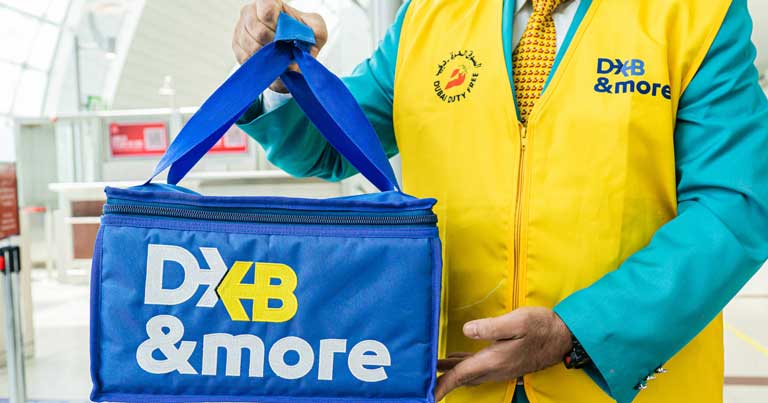
Dubai International Airport has introduced DXB Greet & Go in Terminal 3, revolutionising the way arrivals are greeted. Licensed hotels, tour operators and transport providers can now tap QR codes—replacing traditional placards—to meet guests efficiently in a dedicated arrivals area.

The initiative, officially live since early July, provides an authorised meeting zone designed to improve passenger flow and elevate hospitality standards. Dubai Airports has established this as part of its strategy to ease congestion and reduce stress at peak arrival times.

This digital-first service streamlines the reception experience: instead of waiting among crowds, drivers and host staff now scan pre-shared QR codes, guiding travellers directly to designated areas where they are met by clear signage. The system aligns with security protocols while offering better clarity and comfort.

Industry observers describe DXB Greet & Go as another milestone in Dubai’s automation and smart-performance ambitions. It complements prior enhancements—like biometric Smart Tunnels and QR-code navigation tools—designed to process high passenger volumes more swiftly while preserving a premium touchpoint.

Key regional operators have already registered. A senior operations manager at one of Dubai’s leading hospitality chains noted guest satisfaction has improved, citing fewer missed connections and faster handovers. Dubai Airports spokesperson emphasised that launch partners are primarily “licensed entities” committed to seamless, branded guest engagement.

Compliance and coordination with security teams were paramount in crafting the scheme. The dedicated meeting point follows stringent screening criteria and maintains oversight from airport operations, ensuring guest meets do not impinge on wider terminal safety. It also alleviates footfall in busy corridors, especially during peak periods.

Analysts see branding and service quality benefits. Sharply reducing wait times at arrivals enhances early impressions for high‑value guests, business travellers and VIPs—key revenues for both hotels and airport retail operators. And as QR-based systems gain traction worldwide, DXB’s approach may offer a replicable benchmark for other global gateways.

Passengers have already reported smoother arrivals. A recent poll by a GCC‑based travel blog found that 87 percent of users appreciated the clarity of designated zones and reduced crowding. Several said using the service felt more “personalised and modern”, aligning with expectations for a luxury travel experience.

Onboarding requires minimal effort: partners register via Dubai Airports’ platform, receive official QR codes linked to flight details, and station meeting personnel accordingly. QR scanning synchronises with flight schedules, activating the service only once the flight has landed and passengers have disembarked.

Dubai Airports reports the system has quickly gained traction among boutique hotels and VIP ground handlers, with expansion plans underway. Terminal 3—the main hub for Emirates—is expected to expand the service across other terminals if demand continues.

The move also integrates with existing smart journeys like DXB Express Maps, enabling visitors to navigate lounges, shops and gates by QR scanning digital kiosks. The combined effect is a frictionless experience from landing to departure, supporting ambitions to top 100 million annual passengers.

Security analysts have uncovered a new campaign delivering the Anatsa Android banking trojan to users in the U. S. and Canada via a seemingly legitimate app on Google Play. This marks the third major wave of North American targeting by the threat actor, raising fresh concerns around mobile banking security. The malicious app, masked as a “Document Viewer – File Reader,” gained traction in the U. S. top‑three […]

By Dr. Gyan Pathak Though on the eve of the workers’ all India general strike on July 9, 2025, Union Ministry of Labour, Government of India, tried to downplay the strike action by claiming that213 unions had informed of their staying away from the strike, India actually witnessed on Wednesday the largest ever general strike […]


SHENZHEN, CHINA – Media OutReach Newswire – 8 July 2025 – Smart home innovator Proscenic is kicking off Prime Day 2025 with one of its biggest sales yet, offering up to 40% off its top-rated vacuums on Amazon from July 8–11 (CEST). With prices starting at just €89, customers can upgrade their summer cleaning routine with powerful, easy-to-use devices designed for every home. In addition to the […]

VISHNU RAJA
RYO YAMADA
HITORI GOTOH
IKUYO KITA