Just in:
ED searches five districts in probe against hawala // Dar Global unveils $700m Trump development in Qatar // Alibaba shares slip despite 53% cloud revenue growth // Sabarimala booking discrepancies prompt sabotage angle probe // Dalilk Academy reaches 27 million, targets 100 million by 2030 // Travel Insurance Was Built for the Few Who Claim. Ancileo’s Felt Coverage™ is for Everyone Else // Yeebo Announces Interim Results for FY26/27 Revenue Increases by 45.5% to HK$806.7 Million Profit Attributable to Owners Surges 87.6% to HK$2,284.7 Million // LittleLives, Little Lab and SEGi College Sign MOU to Explore Early Childhood Education Collaboration Across ASEAN // Sharjah clears Kalba free zone plan for 400MW complex // Oil futures rebound after Riyadh strikes and tanker alerts // Crypto market loses $150 billion amid broad sell-off // Anthropic shares finish above offer price after Nasdaq debut // Coinbase targets 2027 launch amid state gambling lawsuits // Jaiedco and Golden Bridge Announce Strategic Collaboration for a New Dubai Islands Development // Balagopal challenges CM over tax revenue // Phancy Announces Business Performance for the Nine Months Ended September 30, 2026 // Sui activates Hashi Bitcoin lending across partner network // PicCollage extends photo editing platform to web browsers // Toward a Shared Future for Humanity: Rethinking Civilizational Exchange // Thailand’s Most Iconic New Year’s Celebration Returns: ICONSIAM Unveils “Amazing Thailand Countdown 2027” //

News related to
Expo

IndiGo has turned to airline veteran William Walsh to lead the carrier through its next phase, handing the top job to a figure known across global aviation for combining operational discipline with outspoken views on industry policy. The appointment, announced on March 31, comes after the departure of Pieter Elbers and places one of the sector’s most recognisable executives at the helm of the country’s largest airline by market share.

Walsh, widely known in the industry as Willie Walsh, is currently director general of the International Air Transport Association and is due to take up the IndiGo role by August 3, 2026, after his IATA term ends on July 31, subject to regulatory and security clearances. Before leading IATA, he served as chief executive of British Airways and later of International Airlines Group, the parent company of British Airways, Iberia and other carriers. That background gives IndiGo a chief executive with experience spanning pilots’ operations, legacy airline restructuring, international expansion and trade-body advocacy.

The leadership change is significant because it follows a difficult period for IndiGo, whose rapid growth has also exposed strains in operations and staffing. Reuters reported that Elbers resigned after regulatory scrutiny linked to the airline’s handling of pilot rest and duty rules, following thousands of flight cancellations in December. Rahul Bhatia, IndiGo co-founder and managing director of promoter group InterGlobe Enterprises, had stepped in on an interim basis. Bringing in Walsh suggests the board wanted an external figure with global credibility and enough independence to steady operations while preserving the carrier’s long-term growth plans.

For IndiGo, the choice is also about scale. The airline holds roughly 65 per cent of the domestic market, according to Reuters, making it not merely a successful low-cost carrier but the central force in the country’s aviation market. That dominance has helped it build a strong cash-generating base at home, yet it also raises the pressure to prove it can translate domestic strength into a broader international network without letting reliability slip. Walsh arrives as the airline is trying to balance fleet growth, customer service, regulatory compliance and overseas ambition in a market where passengers are increasingly price-sensitive but also less tolerant of disruption.

His appointment may reassure investors and lessors who value experience at a time when the global airline industry is still dealing with supply-chain bottlenecks, aircraft delivery delays, engine issues and fluctuating fuel costs. At IATA, Walsh has spent the past several years commenting on exactly those pressures, from safety and profitability to cargo demand and trade shifts. That does not automatically make him an easy fit for IndiGo’s low-cost, execution-heavy culture, but it gives him a broad vantage point over how airlines are adapting to tighter margins and uneven global demand.

There is, however, another side to the appointment. Walsh’s career has been built largely in full-service and multi-brand international airline groups rather than in a pure low-cost model of the kind that made IndiGo successful. Critics may ask whether a leader shaped by European consolidation and global lobbying is the right match for a carrier whose reputation rests on fast turnarounds, tight cost control and consistent domestic execution. Supporters will counter that IndiGo is no longer a straightforward low-cost story. As its aircraft orders grow and its international reach deepens, the airline needs a chief executive who can negotiate complex regulation, manage global partnerships and command authority well beyond its home market.

Walsh’s own profile could become an asset as IndiGo tries to sharpen its identity from dominant domestic operator to more influential international player. He began his career as a cadet pilot at Aer Lingus in 1979 and later ran both Aer Lingus and British Airways before taking charge of IAG. That trajectory matters because IndiGo is moving into a stage where fleet strategy, global slots, bilateral rights and premium long-haul competition matter more than they did when the airline was focused chiefly on the home market. Boardrooms, regulators and suppliers all know Walsh, and that can give IndiGo added leverage as it pushes outward.

Arabian Post Staff -Dubai Abu Dhabi has widened its self-supply solar policy to households, allowing villa owners and eligible residential buildings to generate electricity from rooftop solar systems, store power in batteries and use it alongside grid supply, in a move that pushes distributed clean energy beyond commercial and agricultural users and into the emirate’s housing stock. The second phase of the Solar Energy Self-Supply Policy, announced […]

English Schools Foundation, one of Hong Kong’s biggest international school operators, is seeking an investment adviser to help oversee an endowment valued at about $400 million, according to people familiar with the matter, in a move that underscores how large education groups are taking a more institutional approach to treasury and long-term capital planning. The development comes as ESF, which operates 22 schools and serves about 18,500 students, balances fee pressures, capital spending and the management of a growing pool of investable assets.

The adviser search points to a shift in how school systems with substantial reserves are treating their balance sheets. What might once have been handled more conservatively through deposits and internal oversight is now increasingly being managed with the same disciplines used by foundations, family offices and other long-horizon institutions. In ESF’s case, the task appears especially significant because the group’s endowment is no longer a marginal reserve but a material financial resource that can influence scholarships, strategic projects, property decisions and resilience during periods of market or enrolment volatility.

ESF’s own disclosures show why the mandate matters. In its 2023/24 annual report, the foundation said its endowment includes both a residential property portfolio and investments held in ESF Investments Limited. It reported that the fair value of investments held in that vehicle rose 13.4% to HK$587.7 million from HK$518.2 million a year earlier, while finance and investment committees continued to focus on asset performance monitoring and strategic asset allocation. The same report said three companies had been set up to restructure the holding of residential assets within the ESF endowment, with a new operating model expected to launch in the first half of 2025.

That helps explain why an external adviser would be attractive now. Once a fund reaches this scale, the main challenge is not simply preserving capital. It is deciding how much risk an education group should take, how liquid the portfolio needs to be, whether alternative assets belong alongside traditional holdings, and how to align returns with liabilities such as campus upgrades, technology spending and support programmes. For a school operator, there is also a reputational dimension: parents and staff expect prudence first, even when boards are under pressure to extract higher returns from idle capital.

ESF’s finances show both stability and constraints. The group reported total operating income of HK$2.85 billion in 2022/23, with tuition fees accounting for 84.3% of operating income and government grants 5.3%. It also said the long-running phase-out of government subvention, which began in 2016/17, was continuing, with the phase-out for secondary schools having started in 2022/23. By 2023/24, ESF said strong interest income had allowed it to seed a HK$10 million scholarship fund and a HK$30 million development fund, including support for a project researching the use of AI in teaching and learning.

Those figures matter because they show that investment income is becoming more relevant to the group’s strategic flexibility even as tuition remains the dominant revenue line. They also suggest that endowment governance is no longer peripheral to education policy inside ESF. A stronger investment framework could help smooth cyclical swings in income, but it could also expose the group to debate over mandate design, manager selection and tolerance for drawdowns in volatile markets. Educational institutions globally have wrestled with that trade-off for years: conservative portfolios can struggle to keep pace with inflation and capital needs, while more ambitious allocations can attract scrutiny when markets turn.

The Hong Kong backdrop adds another layer. Authorities are trying to reinforce the city’s appeal as an asset and wealth management centre, with proposed tax reforms aimed at making it easier to attract managers and capital. The Securities and Futures Commission said total assets under management in Hong Kong’s asset and wealth management business rose 13% to HK$35.1 trillion at the end of 2024, while the number of firms licensed for asset management increased 4% to 2,212. That means ESF is seeking advice in a market that is both deep and actively competing for institutional mandates.

Founded by ordinance in 1967, ESF occupies an unusual place in Hong Kong’s education landscape: a statutory body with a large footprint, significant fee income and a legacy of government support that is being phased out over time. Its latest public materials describe a group with more than 18,500 students and a broad mix of Hong Kong permanent residents and overseas passport holders, reflecting its role as a major English-medium provider in the city. That scale means any change in how it manages long-term capital is likely to be watched closely by school operators, fund managers and policymakers alike.

Blackstone has opened talks with investment banks over a possible Mumbai listing of AGS Health that could raise as much as $500 million, according to reports on Tuesday, putting another sizeable healthcare-linked offering on the radar even as the primary market remains more selective than it was a year ago. The discussions are at an early stage, and the proposed float has yet to move into formal filing territory, but people familiar with the matter have said the firm is considering a mix of fresh shares and secondary sales and is seeking a valuation of as much as $3 billion.

AGS Health sits in a part of the healthcare economy that has drawn strong financial interest: revenue cycle management, the business of helping hospitals, physician groups and health systems handle billing, coding, claims, collections and data-led workflow improvement. The company describes itself as a technology-enabled operator serving major healthcare providers in the United States, with intelligent automation and AI woven into those services. On its website, AGS says it processes tens of billions of dollars in accounts receivable annually and supports clients through a large coding and back-office workforce spread across multiple geographies.

The mooted flotation would fit a broader pattern in which buyout firms are trying to crystallise gains from businesses built around outsourced healthcare administration and software-supported services. AGS had already been seen as a prized asset before Blackstone took control, with deal reporting last year and in 2025 pointing to intense interest from private equity groups in the company as well as in peers serving the same market. That activity underlined how investors view healthcare operations platforms as steadier, more scalable assets than many consumer-facing businesses, especially when they are tied to recurring work for hospitals and insurers.

Blackstone’s interest in AGS also reflects the continuing attraction of cross-border healthcare services models anchored in delivery centres in South Asia and the Philippines while selling into the US healthcare system. AGS says it operates globally and markets itself as a strategic growth partner for provider organisations facing rising administrative costs, denial management pressures and a growing need for automation. Its own recent company material has placed heavy emphasis on AI-powered coding, denial management and compliance support, showing how the pitch to clients has shifted from labour arbitrage alone to a combination of software, analytics and domain expertise.

Whether the listing proceeds on the terms being discussed will depend not only on AGS’s financial profile but also on market mood. Reuters has reported that the domestic IPO pipeline remains active, with large names such as Zetwerk and INOX Air Products advancing plans, yet it has also noted that sentiment has been weaker in 2026 after underperformance in some new-age and technology listings and amid heavy foreign outflows from equities linked to geopolitical tensions and oil-price shocks. That makes valuation discipline more important for sponsors seeking exits through public markets.

Healthcare, however, is one of the areas where issuers still believe they can command investor attention. Reuters reported last week that Manipal Health Enterprises filed for an IPO of up to $1.17 billion, betting on demand for specialised care, consolidation and higher insurance coverage. Against that backdrop, AGS would offer investors a different healthcare angle: not hospitals or pharmaceuticals, but the infrastructure of billing, coding and claims management that sits behind care delivery. For fund managers looking for healthcare exposure without direct clinical risk, that model may prove easier to value, though the dependence on US reimbursement systems and hospital spending cycles will remain a point of scrutiny.

Another factor in AGS’s favour is that revenue cycle management has stayed a live consolidation theme. Reuters reported in 2024 that EQT agreed to acquire GeBBS Healthcare Solutions for more than $850 million, while other reports have highlighted interest from major investors in comparable healthcare outsourcing assets. Those transactions suggest that buyers are still willing to pay for scale, client retention and workflow technology in a sector where providers are under constant pressure to improve cash collection and reduce administrative leakage. If Blackstone can pitch AGS as a business with strong client stickiness and growing automation capability, the company may find a receptive audience despite choppier equity conditions.

CareCloud, a US healthcare technology company, has disclosed that hackers gained unauthorised access to part of its electronic health record infrastructure, triggering fresh scrutiny of cyber resilience across a sector already under pressure from mounting digital attacks and tighter regulatory expectations. The company said the incident was detected on March 16, 2026, after a network disruption in its CareCloud Health division affected one of its six electronic […]

Arabian Post Staff -Dubai Oil prices eased in Asian trading on Tuesday after giving up earlier gains, as traders weighed a report that U. S. President Donald Trump had told aides he was willing to end the war with Iran even if the Strait of Hormuz remained largely closed for now, softening some of the market’s immediate fear of a broader supply shock. Brent crude for May […]

Arabian Post Staff -Dubai Dubai authorities were battling a fire aboard a Kuwaiti oil tanker on Tuesday after a drone struck the vessel in waters near Anchorage “E”, with officials saying no injuries had been reported and emergency teams were working under established maritime safety protocols. The incident unfolded off Dubai’s coast as maritime firefighting units moved to secure the tanker, contain the blaze and prevent any […]

Advertisements
HONG KONG SAR – Media OutReach Newswire – 31 March 2026 – Phancy Group Co., Ltd. (“Phancy” or the “Company”, Stock Code: 6682.HK), a leading Artificial General Intelligence (AGI) company, today announced its annual results for the year ended December 31, 2025 (the “Reporting Period”).

In 2025, Phancy reported total revenue of RMB7.135 billion, representing a strong year-on-year increase of 35.6%. Adjusted net profit attributable to the parent company reached RMB17.84 million, a milestone reflecting significant advance in operational efficiency, business model strength, and resilience. During the reporting period, the three core business segments — AI Platform, API, and Agentic AI — delivered synergistic growth, with revenues of RMB6.552 billion, RMB79.9 million, and RMB503 million respectively, representing year-on-year increases of 32.0%, 129.2%, and 93.2%. The company has a total of over 1,000 contracted clients with deep penetration across more than 20 high-value industries, including energy, manufacturing, finance, retail, and telecommunications. Order on hand amounted to over RMB8.9 billion, surpassing the Company’s total revenue in 2025.

Dr. Dai Wenyuan, Founder, Chairman of the Board, and Chief Executive Officer of Phancy Group Co., Ltd. said, “2025 was a landmark year for Phancy. We completed a comprehensive strategic upgrade from ‘Fourth Paradigm’ to ‘Phancy Group’, signifying our transformation from an enterprise AI platform to a full-stack AI ecosystem and officially entering the AI 2.0 era. This performance breakthrough validates the development philosophy and strategic vision we have long pursued, demonstrating our forward-looking industry insight and long-term value creation capabilities. As we embrace the next wave of AI, we will continue to focus on ‘AI Agent + World Model’ as our core technology path, strengthen computing power and foundational capabilities, drive deeper value realization of AI, and work with ecosystem partners to build a sustainable intelligent future.”

Performance Highlights:

  • Total revenue reached RMB7.135 billion, up 35.6% year-on-year; adjusted net profit amounted to RMB17.84 million, marking the first full-year profitability.
  • According to IDC, Phancy ranked first in China’s machine learning platform market for seven consecutive years, with a 34% market share.[i]
  • Orders on hand amounted to over RMB8.9 billion, surpassing the Company’s total revenue in 2025.
  • AI Platform contributed RMB6.552 billion in revenue, up 32.0% year-on-year, accounting for 91.8% of total revenue and serving as the core growth pillar.
  • API business, driven by a token-based model, became the fastest-growing segment with revenue of RMB79.9 million, representing explosive year-on-year growth of 129.2%.
  • Agentic AI business, centered on a “Result-as-a-Service” model, achieved revenue of RMB503 million, up 93.2% year-on-year, demonstrating strong momentum and sustainable scalability.

Business Highlights:

In 2025, Phancy’s three core business segments — AI Platform, API, and Agentic AI — established a multi-engine growth model, creating a cycle of synergy and mutual reinforcement.

AI Platform: Sustained Growth Driver

Driven by strong domestic demand for localization and the national “AI+” initiative, the AI Platform remained the Company’s core growth engine. With its full-stack product portfolio and leading market position, the segment delivered deep integration between computing power and platform services, lowering barriers to AI adoption. Supported by a comprehensive technology framework and a strong customer base, the AI Platform effectively boosted performance and contributed to the Company’s profitability breakthrough.

The Company continued to drive technological iteration, with a strategic focus on three core offerings: PhanthyCloud, HAMi vGPU, and ModelHub XC.

  1. PhanthyCloud – the backbone of the full-stack AI PaaS cloud service, integrating diverse AI capabilities to provide efficient, cloud-based services. Seamlessly connected to ModelHub XC and HAMi vGPU, PhanthyCloud delivers model adaptation and computing power scheduling, while maintaining broad compatibility with mainstream domestic chips to support digital transformation.
  2. HAMi vGPU – a core GPU resource management product that allows GPUs to be flexibly shared and scheduled. Customers can tailor GPU configurations to their business needs, significantly improving utilization rates.
  3. ModelHub XC – China’s largest ITAI (information technology application innovation) model community, designed to promote deep adaptation between domestic chips and AI models. The number of adapted and certified models has now surpassed 30,000. The Company had initially planned to scale the number of adapted models to the hundred-thousand level within a year, a milestone it has already achieved ahead of schedule.

API Business: Fastest Growth Engine

With the rapid adoption of AI Agents, token consumption has grown exponentially. Phancy’s API business, built on a flexible pay-as-you-go model and a comprehensive ecosystem, achieved leapfrog growth, and became the Company’s fastest growing segment. Token revenue for the first quarter of 2026 alone has already surpassed the full-year total for 2025.

The API business is anchored by the Phanthy platform, complemented by PhanRouter and PhanClaw, creating a comprehensive token ecosystem in synergy with the Sage Platform:

  1. Phanthy – the core platform of the token-based ecosystem. It integrates cloud services with more than 30,000 adapted models and industry-specific vertical models, delivering accessible API capabilities that reach over 100 million of terminal products and support the large-scale deployment of AI capabilities.
  2. PhanRouter – a unified API gateway for large models. It enables developers and enterprises to seamlessly connect with dozens of mainstream model providers, it is compatible with the OpenAI standard and major domestic chips, and supports both private deployment and token-based payment, reducing customer costs and easing operational complexity.
  3. PhanClaw – an agent platform deeply integrated within PhanthyCloud and serves as an extension of the OpenClaw ecosystem. It is designed to provide users with secure, controllable, and cost-efficient digital assistant services. Working in synergy with Phanthy and PhanRouter, PhanClaw manages the token lifecycle, including risk control, permission management, and log auditing, meeting the stringent security and compliance requirements of industries, such as finance and government affairs.

Agentic AI: Long-Term Sustainable Growth

Agentic AI serves as the Company’s revenue cornerstone and a “value multiplier” for empowering a wide range of industries. Operating under a Result-as-a-service model and aligned with national “AI+” energy development policies, this segment expanded rapidly across high-value industries, achieving economies of scale and strong growth momentum. Working in synergy with the AI Platform and API businesses, Agentic AI provides long-term support for revenue and contributes to the high-quality development of the Company’s operations.

In terms of business expansion, the Company is focusing on core scenarios in spot electricity trading and medium- to long-term electricity trading. It has developed a full-chain AI solution encompassing forecasting, decision-making, risk control, and post-trading review. This solution has already been deployed in multiple pilot provinces and recognized by key customers, effectively improving efficiency and profitability in wind power, photovoltaics, and energy storage. This model is now being rapidly extended to other industries, including manufacturing and finance.

Future Outlook:

Looking ahead to 2026, Phancy will continue to advance its four strategic priorities: deepening its AI 2.0 roadmap, accelerating the deployment of industrial-grade AI Agents, driving international expansion, and further extending into the consumer market.

In terms of the AI 2.0 roadmap, the Company will continue to pursue its core philosophy of “AI for Everyone”, focusing on foundational technology R&D and real-world deployment. By refining its end-to-end technology system, Phancy aims to lower barriers to AI adoption and enable more enterprises and users to benefit from AI. For industrial-grade AI Agents, the Company will accelerate deployment under a Result-as-a-service model, deepening its presence in key sectors such as energy and finance, and developing replicable, scalable industry solutions, to expand business scale and profitability. On international expansion, Phancy will strengthen partnerships with overseas brands and channels, building a robust global operations framework to support worldwide growth. In the consumer market, the Company will focus on core consumer needs by launching high-experience smart terminal products, further expanding its customer base and establishing a dual-driven growth model powered by both technology and market reach.

Hashtag: #PHANCY

The issuer is solely responsible for the content of this announcement.

About Phancy Group

Phancy Group (Stock Code: 6682.HK) is a leading artificial general intelligence technology company. Guided by its mission of “AI for Everyone”, the Company is committed to empowering industries across the board through its “AI Agent + World Model” technology approach. Founded in 2014, the Company underwent a comprehensive restructuring in 2025, establishing multiple business divisions including Enterprise Services (Fourth Paradigm), Large Models & AGI (Pantheon), Consumer Electronics (Paradigm Pilot), Smart Energy (PhancyArc), and Smart Sports (Phancy Wonder). To date, the Company has successfully deployed over 10,000 AI applications across sectors such as finance, retail, and healthcare, consistently striving to advance the democratization of AI and help enterprises achieve sustainable growth.


Lloyds Banking Group has disclosed that an IT defect exposed the personal data of up to 447,936 customers after a faulty overnight software update allowed some mobile app users to see other people’s current-account transactions. The incident, which affected the Lloyds, Halifax and Bank of Scotland apps on 12 March, has intensified scrutiny of operational resilience at major lenders as more banking activity shifts to digital channels. […]

By Nantoo Banerjee The central excise duty cut on petrol and diesel oil to help petro-fuel producers and marketeers partly cover their losses on account of the rising crude oil import prices is an internal government matter. It is not meant to have any impact on retail prices which continue to be very high and […]

The article Petrol, Diesel Levies Need Drastic Cuts For Inflation Control, Economic Growth appeared first on Latest India news, analysis and reports on Newspack by India Press Agency).

Nasdaq is accelerating the route into its flagship Nasdaq-100 index for large newly listed companies, a rule change that could materially benefit future market debuts such as SpaceX by shortening what has often been a wait of many months. The exchange said the revised methodology will take effect on May 1, allowing certain newly public companies to be assessed by their seventh trading day and, if they […]

Japan’s investors are being pushed back towards overseas yield trades as the war involving Iran unsettles the country’s traditional refuge assets, weakens the yen and lifts the cost of imported energy. What had looked like a steadier domestic backdrop at the start of 2026 has been disrupted by a surge in oil prices, renewed pressure on the currency and a sharp reassessment of where Japanese savers and […]

Oil is repricing fast. Markets aren’t pricing the consequences. Brent crude has surged more than 55% in March to around $115 a barrel, one of the sharpest monthly moves on record, as conflict involving the US, Israel and Iran intensifies and threats to energy infrastructure escalate. Yet across equities, bonds and currencies, positioning still reflects the belief that this is temporary and reversible. Markets are underestimating what […]

By Dr. Gyan Pathak On the very onset of the Financial Year 2026-27, beginning from April 1, 2026, India faces a multi-layered set of risks, given its position as a major energy importer with strong trade, investment, and remittance linkages with the West Asia region, which has turned into a war zone since the United […]

The article India Faces Multi-Layered Set Of Risks At The Onset Of FY2026-27 appeared first on Latest India news, analysis and reports on Newspack by India Press Agency).

France is expanding its annual energy cheque scheme to an additional 700,000 households, widening a support measure that Prime Minister Sébastien Lecornu said would begin reaching 3.8 million households from this week as pressure on household budgets intensifies. The extra recipients are due to start receiving the aid from 1 May after the government used broader data matching to identify more eligible homes. Lecornu said the programme […]

South Korea is weighing whether to extend car-use restrictions beyond the public sector as oil prices climb sharply, a step that would amount to the country’s first nationwide driving curbs since the 1991 Gulf War if it is applied broadly to the public. Finance Minister Koo Yun-cheol said wider restrictions could come into play if crude prices rise into a $120-$130 a barrel range, up from about $100-$110 now, as Seoul tries to contain fuel demand and cushion the economic shock from turmoil in the Middle East.

The discussion marks an escalation from measures already in force. Public institutions are operating under a five-day vehicle rotation system, while large companies including Samsung Electronics and SK Group have begun urging staff to cut private car use, reduce parking demand and adopt other energy-saving practices. Officials have also left open the possibility of further fuel-tax relief to soften the burden on households and businesses, though no final decision has been announced on compulsory curbs for private motorists.

At the centre of Seoul’s concern is its exposure to imported energy. About 70% of South Korea’s oil imports come from the Middle East, leaving the country highly sensitive to any disruption in supplies or shipping routes. The government raised its crude oil supply disruption alert to Level 2 on March 18 as tensions mounted, signalling a more serious official assessment of the risks facing one of Asia’s largest energy importers.

The external shock has been severe. Reuters reported that Brent crude climbed to nearly $115 a barrel over the weekend and above $116 on Monday, putting it on course for its biggest monthly jump on record, while US crude also surged past $100. The rally has been driven by a widening conflict linked to Iran and growing anxiety over disruptions around the Strait of Hormuz, a vital artery for global oil flows. That backdrop has sharpened pressure on Asian economies that rely heavily on imported fuel, with South Korea among the most exposed.

For policymakers in Seoul, the issue is no longer only about fuel bills. Higher oil prices threaten to spill into inflation, transport costs, industrial input prices and consumer sentiment. A Reuters poll published on Monday projected that South Korea’s imports rose 18% in March, the fastest pace since September 2022, largely because of elevated oil prices, even as exports remained buoyant on strong semiconductor demand. That split picture captures the dilemma facing the government: trade performance is being helped by chips and artificial intelligence-linked demand, but the economy’s dependence on imported energy is pushing up costs and widening vulnerability.

President Lee Jae Myung has responded by urging a nationwide energy-saving drive, while Energy Minister Kim Sung-whan has pushed demand management and warned against panic behaviour. The government has promoted 12 power-saving practices, from shorter showers to shifting electricity use away from peak hours, and has also moved to restart several nuclear reactors, loosen coal plant restrictions and expand renewable energy to offset pressure on gas imports. The mix underlines how Seoul is trying to balance short-term crisis management with longer-term energy security, even as those goals can pull in different directions.

That tension is visible in the broader regional response. Across Asia, governments are looking again at emergency stock releases, fuel-saving directives and, in some cases, greater coal use to bridge supply gaps. Analysts say such measures may shield economies from the immediate shock, but they also expose how quickly climate and transition goals can be tested when energy security comes under strain. In South Korea’s case, the administration’s public emphasis on renewables sits alongside plans to lean harder on nuclear and coal generation if needed.

The market fallout has already been visible in financial assets. South Korean equities were hit as investors fled Asian markets on fears of a prolonged oil shock, though some analysts argue the sell-off has reflected panic rather than a collapse in fundamentals. Technology and industrial names remain central to the country’s earnings outlook, but energy-intensive sectors face a tougher operating environment if high crude prices persist or if physical shortages emerge.

Arabian Post Staff -Dubai European shares held their ground on Monday as investors waited for German and euro zone inflation readings that could show how sharply the Middle East war is feeding through into prices, after a surge in oil left the STOXX 600 heading for its worst month since the first pandemic shock of March 2020. The pan-European STOXX 600 was up about 0.2 per cent […]

Omniyat Holdings has said it has enough liquidity to handle its debt obligations after Fitch placed the Dubai ultra-luxury developer on Rating Watch Negative, citing geopolitical risk linked to the Iran war and the potential for weaker buyer demand in Dubai and across the Gulf. The company said it held more than AED 5.3 billion in cash, cash equivalents and other financial assets at the end of […]

Mubadala Energy has tightened its grip on one of Southeast Asia’s most closely watched offshore gas provinces after winning the Southwest Andaman exploration Production Sharing Contract in Indonesia, a move that extends the Abu Dhabi-based company’s push to build scale in the country’s Andaman basin. The block was awarded by Indonesia’s oil and gas regulator, Direktorat Jenderal Minyak dan Gas Bumi, under the second bid round for […]

Arabian Post Staff -Dubai Donald Trump has triggered fresh controversy after using crude language about Saudi Crown Prince Mohammed bin Salman at the Future Investment Initiative Institute summit in Miami Beach, telling the audience the Saudi leader had not expected to “be kissing my a” and adding that “now he has to be nice to me.” The remarks, delivered on 27 March at the Saudi-backed forum, drew […]

India’s rupee surged on Monday after the Reserve Bank of India tightened banks’ foreign-exchange position limits, forcing lenders to cut dollar holdings and unwind arbitrage trades that had built up as the currency slid to a record low at the end of last week. The rupee rose as much as 1.4% in early trade and was quoted around 93.48 to 93.85 per US dollar, marking its sharpest one-day gain since February.

The immediate trigger was the RBI’s March 27 directive capping banks’ net open rupee positions in the onshore deliverable market at $100 million by the close of each business day from April 10. That replaced a looser framework under which banks’ boards could set limits up to 25% of total capital. Traders said the order prompted a burst of dollar selling as banks moved to reduce exposures that had become profitable while the rupee was weakening.

The rebound followed a bruising stretch for the currency. On Friday, the rupee hit a record low of about 94.84 to the dollar after heavy pressure from higher crude prices, risk aversion and foreign outflows. Reuters reported the rupee had fallen more than 4% in March, putting it on course for its worst monthly performance in more than seven years, while broader anxiety over the Middle East conflict and its implications for energy markets deepened concern over India’s import bill and external balance.

At the centre of the RBI’s move is the gap between the domestic market and the offshore non-deliverable forward, or NDF, market. Banks had been exploiting pricing differences between the two venues, building large arbitrage books that were profitable during the rupee’s slide. Estimates for those positions vary, but Reuters and other market reports put them broadly in the $25 billion to $50 billion range. By suddenly tightening the rules, the central bank appears to have targeted not only volatility in the spot market but also the speculative mechanics that were amplifying pressure on the currency.

That has given the rupee breathing room, but it has also shifted the strain onto banks. Lenders have warned that rapid compliance could force a disorderly unwinding of positions and crystallise losses in treasury books. Several banks have asked the RBI for three months to comply, arguing that a phased adjustment or permission to hold existing trades to maturity would reduce the risk of market disruption. Equity investors appeared to register that concern, with banking shares falling amid estimates that mark-to-market losses could run into thousands of crores if the unwind is abrupt.

The central bank’s intervention is being read in dealing rooms as one of its strongest attempts in years to reassert control over rupee pricing. Market participants said the RBI has already been active in local and offshore markets, using reserves and liquidity tools to keep the currency from sliding too quickly. The new cap adds a regulatory weapon to that defence. It also sends a signal that the central bank is prepared to curb trading strategies it sees as destabilising, even at the cost of squeezing bank profitability in the short term.

Whether the rupee can hold on to these gains will depend less on technical unwinding and more on the backdrop that pushed it down in the first place. Brent crude has climbed sharply, with Reuters reporting a move above $115 a barrel on Monday and a monthly gain of nearly 60%. For an economy that imports the bulk of its oil, that raises the risk of a wider current account deficit, imported inflation and renewed pressure on the currency. Bond yields also edged higher, indicating that traders remain alert to the wider macroeconomic fallout even as the rupee recovers ground.

TAIPEI, TAIWAN – Media OutReach Newswire – 30 March 2026 – More than half of Taiwan’s small businesses recorded growth in 2025, while confidence heading into 2026 climbed to its highest level since 2020, according to the Asia-Pacific Small Business Survey 2025–26 conducted by global professional accounting body CPA Australia.

SBS Infographic 2026 Taiwan Eng

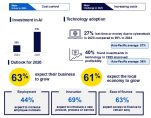
The survey found that 53 per cent of Taiwanese small businesses grew in 2025, slightly below the 57 per cent recorded in the previous survey. Looking ahead, business sentiment strengthened notably. In 2026, 63 per cent of respondents expect their business to grow, while confidence in the local economy also improved, with 61 per cent anticipating economic growth, the highest level recorded since Taiwan was first included in the survey in 2018.

Taiwan’s small and medium‑sized enterprises (SMEs) continue to play a vital role in creating new jobs. In 2025, 31 per cent of SMEs increasing staff numbers, while 44 per cent plan to hire additional employees in 2026.

With rising costs identified as the biggest challenge facing Taiwan’s SME in 2025, many businesses identified cost control as the most positive contributor to business performance last year.

Mr Elic Lam FCPA (Aust.), Honorary Taiwan Advisor at CPA Australia, said Taiwan’s economic fundamentals continue to support small business resilience, “Rising global demand for semiconductors and AI related chips continues to create opportunities for exporters and suppliers across Taiwan’s value chain,” Mr Lam said. “While geopolitical tensions and intensifying competition are adding uncertainty, government support measures for SMEs, including targeted subsidies and tax incentives, together with Taiwan’s resilient domestic demand, are helping to lift business confidence.”

Technology adoption, particularly artificial intelligence (AI), is becoming increasingly widespread among Taiwanese small businesses. The survey found that 33 per cent of small businesses identified AI as the technology they invested in most heavily invested in 2025, up from 29 per cent in the previous year.

Cyber risk among Taiwanese small businesses fell markedly. The share of small businesses reporting losses of time or money due to cyber incidents declined sharply from 59 per cent in 2024 to 27 per cent in 2025, reflecting stronger awareness and the uptake of basic protective measures across the sector.

However, the survey also indicates there is room to strengthen the returns from digital investment. Only 40 per cent of respondents reported that their technology investment in 2025 improved profitability, compared with the survey average of 56 per cent.

Mr Lam noted that Taiwan’s SME sector is undergoing a generational transition that is influencing technology adoption patterns, “Many SMEs in Taiwan are moving from first generation ownership to second or third generation leadership, and technology adoption remains cautious and practical,” he said. “The increase in AI investment reflects both external drivers, such as changing customer expectations and government policy support for digital transformation, as well as internal factors, including younger owners’ familiarity with AI tools and rising operating and staffing costs.”

“To improve profitability, SMEs should focus on applying digital solutions in areas with the greatest impact. For example, as rising costs were identified as the most negative factor affecting performance in 2025, investing in ready-to-use and AI enabled accounting or financial management tools can help reduce operating expenses and lift productivity.”

Access to finance is another notable finding. Financing conditions in Taiwan improved significantly in 2025, even as borrowing softened. Two-thirds of businesses (66 per cent) I said it was easy to access external finance, placing Taiwan among the top three surveyed markets and representing a sharp increase from 28 per cent in 2024. Looking ahead, financing conditions are expected to remain supportive, with 63 per cent anticipating easy access to finance in 2026.

Despite the marked improvement in financing conditions, demand for finance was more subdued. In 2025, 54 per cent of SMEs sought external finance, down from 72 per cent in 2024.

“The Taiwan government has expanded inclusive and guaranteed financing mechanisms to support SMEs, including higher guarantee ratios under the SME Credit Guarantee Fund and preferential loans offered through state affiliated banks,” Mr Lam said. “These measures have made bank financing more accessible for small businesses.”

“Even so, many SMEs remain cautious about taking on new debt. In a stable domestic environment, businesses can maintain steady growth, but external uncertainties drive them to take a prudent approach to borrowing. This aligns well with the government’s policy focus on gradual and resilient SME transformation rather than rapid, high risk expansion.”

Lam concluded, “To navigate international uncertainty and intensifying market competition, Taiwan’s small businesses should make better use of government policy support to upskill their workforce through AI adoption, foster innovation, and diversify export markets by strengthening online sales channels.”

The Asia Pacific Small Business Survey 2025–26 gathered views from 4,166 small businesses across 11 markets in the region, including Singapore, Chinese Mainland and Australia. The Taiwan survey sample comprised 311 small businesses.

Hashtag: #CPAAustralia

The issuer is solely responsible for the content of this announcement.

About CPA Australia

CPA Australia is Australia’s leading professional accounting body and one of the largest in the world. We have more than 176,000 members in over 100 countries and regions, including more than 22,500 members in Greater China. Our core services include education, training, technical support and advocacy. CPA Australia provides thought leadership on local, national and international issues affecting the accounting profession and public interest. We engage with governments, regulators and industries to advocate policies that stimulate sustainable economic growth and have positive business and public outcomes. A CPA is a Certified Practising Accountant. More at

Online anonymity is facing a sharper threat as new research suggests large language models can now identify pseudonymous internet users at scale by combining fragments of public writing with broader online data. The warning comes from a February 2026 preprint by Simon Lermen and co-authors at ETH Zurich, Anthropic and the Machine Learning Alignment and Theory Scholars programme, which argues that the “practical obscurity” that once protected […]

Arabian Post Staff -Dubai Nabil Fahmy is set to become the next secretary-general of the Arab League after Arab foreign ministers unanimously backed Egypt’s nominee in a virtual meeting on 29 March, clearing the way for the veteran diplomat to take over in July when Ahmed Aboul Gheit’s second term ends. The ministers’ decision still requires formal endorsement at the next Arab summit in Saudi Arabia, but […]

VISHNU RAJA
RYO YAMADA
HITORI GOTOH
IKUYO KITA