Just in:
Toward a Shared Future for Humanity: Rethinking Civilizational Exchange // Crypto market loses $150 billion amid broad sell-off // Russia permits retail cryptocurrency purchases under regulated framework // US military rebuts Iran’s Gulf F-16 strike allegation // ED searches five districts in probe against hawala // European Commission takes systems offline after AI cyberattack // Travel Insurance Was Built for the Few Who Claim. Ancileo’s Felt Coverage™ is for Everyone Else // Sabarimala booking discrepancies prompt sabotage angle probe // Dubai Introduces SHARH, an AI-Powered Platform Helping Entrepreneurs Buy, Sell and Manage Businesses in the UAE // Oil futures rebound after Riyadh strikes and tanker alerts // 2026 Tropical Rainforest Ecosystem Partners Conference Kicks off in Hainan // Sui activates Hashi Bitcoin lending across partner network // Jaiedco and Golden Bridge Announce Strategic Collaboration for a New Dubai Islands Development // Phancy Announces Business Performance for the Nine Months Ended September 30, 2026 // Technology at Work, Heritage for All: The “Chinese Approach” to Safeguarding the Leshan Giant Buddha // Coinbase targets 2027 launch amid state gambling lawsuits // Promoting Common Human Development Through Exchanges and Mutual Learning Among Civilizations // PayerMax and ShopeePay Strengthen Strategic Partnership to Advance Digital Payment Collaboration in Southeast Asia // Workday targets Honeydew purchase to unify AI metrics // Anthropic shares finish above offer price after Nasdaq debut //

News related to
Expo

A sanctioned spyware vendor’s capability to view government surveillance feeds through its own platform has intensified global scrutiny over the boundaries of state monitoring and private-sector intrusion. Researchers examining Intellexa’s Predator spyware found that the firm had the technical capacity to access data streams from government clients in real time, raising alarm among security experts and rights groups about the scale of oversight failures. The findings emerged […]

Cybersecurity officials have issued a coordinated alert on a malware strain known as BRICKSTORM after identifying a wave of intrusions targeting VMware ESXi hosts and Windows environments across several sectors. The advisory, released by national defence and cyber agencies in the United States and Canada, underscores mounting concern over activity linked to operators aligned with the People’s Republic of China, whose campaigns have been tracked exploiting virtualisation […]

Ika’s latest mainnet upgrade has widened its native cross-chain capabilities to cover Solana, Zcash, Cardano, Stellar, Near and several other ecosystems that depend on EdDSA signatures, marking a significant step in efforts to streamline secure multi-chain interoperability. The network, which positions itself as a high-performance parallel MPC infrastructure, said the development enables decentralised wallets on its platform to generate EdDSA signatures directly, removing a key barrier for users aiming to execute transactions across diverse blockchain environments without intermediaries.

Executives described the rollout as a fulfilment of a core commitment to allow seamless control of digital assets across multiple chains through native authentication mechanisms. Analysts tracking the sector noted that Ika’s move arrives at a moment when blockchain networks are intensifying competition to offer deeper interoperability, improved security guarantees and lower latency for institutional and retail users transacting across a dispersed ecosystem. The company’s upgrade introduces direct support for chains with distinct cryptographic architectures, giving developers a more unified environment for building decentralised applications that interact across networks with minimal friction.

EdDSA, a signature scheme valued for speed and resistance to certain attack vectors, has become a standard across several major chains. By integrating native support for it, Ika has aligned itself with a widening group of protocols that rely on this cryptographic approach. Engineers familiar with cross-chain bridging mechanisms said the enhancement reduces the need for external validators or proprietary signing modules, both of which have historically created vulnerabilities that attackers have exploited. The company’s emphasis on decentralised key generation and distributed signing is aimed at addressing those concerns, with the upgrade designed to ensure that no single node gains access to full private key material during any point of the transaction process.

Developers working on multi-chain tools have highlighted that Solana and Zcash pose demanding requirements given their divergent architectures, throughput characteristics and privacy frameworks. Solana’s focus on parallel transaction processing and Zcash’s shielded transaction system require precise signature handling. Ika’s engineers said the upgrade underwent extensive compatibility tests to ensure that signature validity, network confirmation times and verification methods aligned with native standards on each chain. Market observers added that Cardano’s adoption of Ed25519, Stellar’s reliance on simple yet robust distributed consensus, and Near’s sharded architecture also required tailored integration approaches that maintain performance targets while preserving decentralisation.

The extended coverage is expected to attract developers seeking infrastructure capable of delivering verifiable computations and secure multi-party controls without depending on centralised custodial layers. Industry analysts have reported a growing appetite for MPC-based solutions as institutional participants demand cryptographic guarantees that reduce counterparty risk and strengthen operational security. Ika’s parallel design allows multiple signing operations and computations to run simultaneously, a feature the company argues positions it for high-volume environments such as decentralised exchanges, cross-chain liquidity networks and tokenisation platforms.

Executives said the upgrade also lays groundwork for supporting additional ecosystems that may adopt or transition to EdDSA-based cryptography. While the company has not disclosed timelines for further integrations, the MPC network’s architecture is designed to accommodate expanded signature schemes without major reconfiguration. That adaptability has become an important differentiator for infrastructure providers aiming to keep pace with evolving cryptographic standards and the emergence of new blockchain protocols built around enhanced privacy or throughput.

Blockchain security specialists noted that the industry continues to grapple with vulnerabilities in cross-chain bridges, some of which have seen major exploits over the past two years due to weaknesses in multi-signature setups and validator coordination. Ika’s MPC-driven approach seeks to mitigate these risks by distributing trust and eliminating single-point signing authority. By enabling native EdDSA signatures within its distributed wallet environment, the company aims to reduce exposure to the types of exploits linked to compromised custodial keys or flawed verification mechanisms.

VTB — Russia’s second-largest bank by assets — has announced plans to allow its clients to directly buy, sell and hold cryptocurrencies through its brokerage accounts starting in 2026. The move was disclosed by the head of its brokerage services at an investment conference in Moscow, signalling a shift from derivatives-based crypto exposure toward full asset-level trading.

At present, VTB already offers clients access to cryptocurrency derivatives. The planned service would enable investors to acquire digital assets such as Bitcoin through regular investment or brokerage accounts once regulatory approval is secured. The bank is canvassing regulators and expects authorisation to come through within months.

This development comes against a broader backdrop of rapid evolution in Russia’s digital-asset infrastructure. The Moscow Exchange has recently launched ruble-settled Bitcoin futures and other crypto-linked instruments for institutional investors — part of a broader effort to open new investment channels under carefully structured legal regimes.

Under the current regulatory framework, only “specially qualified” investors — those with high net worth or significant annual income — can directly engage in cryptocurrencies. VTB’s new offering may broaden participation beyond derivatives and institutional-only vehicles, assuming the financial regulator approves the shift.

For VTB, the initiative represents a diversification of its services at a time when Russian banks face mounting pressures. The bank is grappling with new capital requirements imposed by the Central Bank of Russia, which its chief has described as a major challenge going forward.

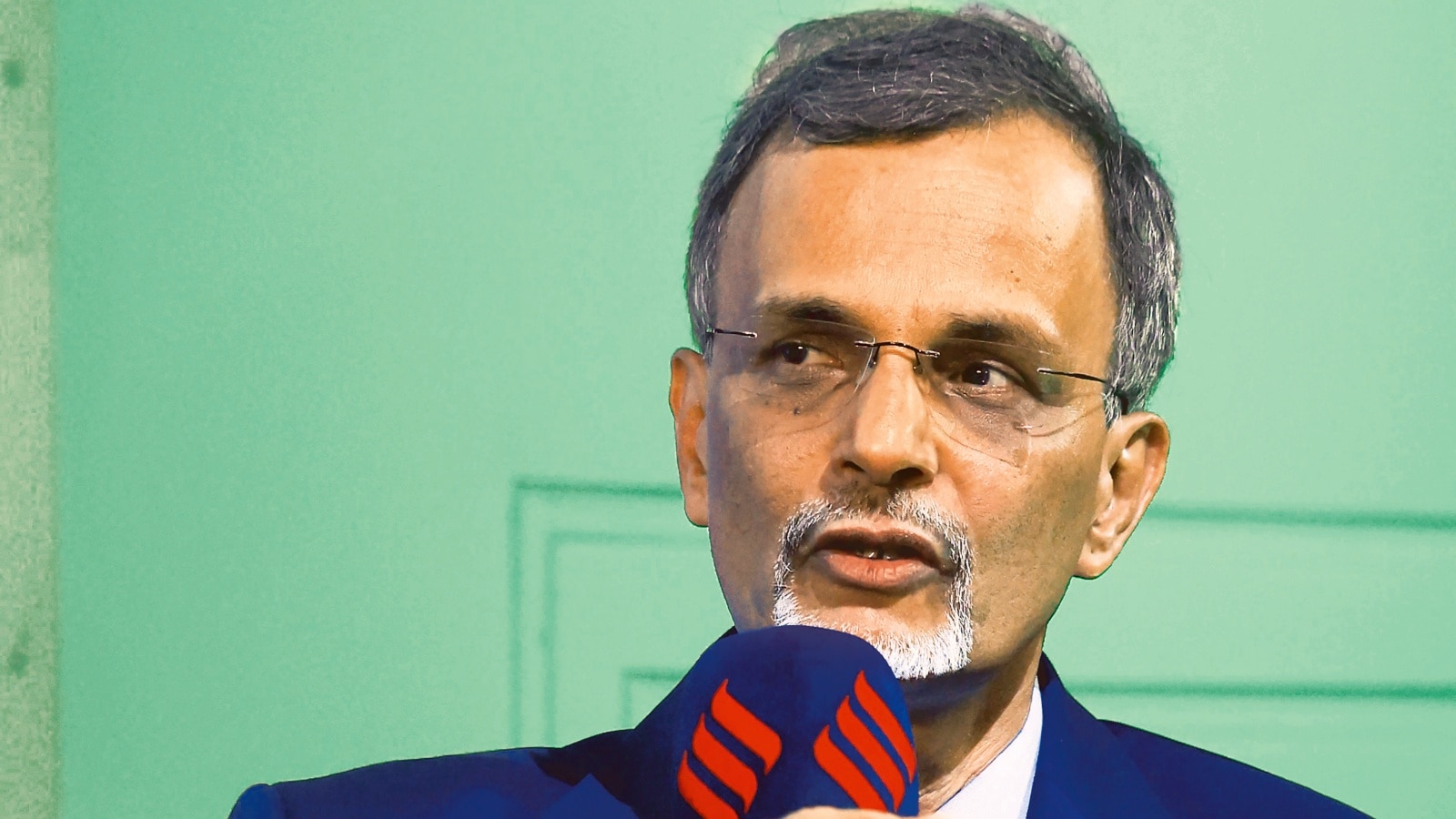
By Dr. Gyan Pathak When Indian rupee was falling in the Mumbai market against US dollar on Wednesday, December 3, 2023 – sliding past the 90-a-dollar mark for the second day, plumbing a new low of 90.29 in the morning trade after opening flat at 89.96, analysts were pegging the next level for the beleaguered […]

The article CEA’s Calmness Over Steep Fall Of Rupee Ignores Key Risks To India appeared first on Latest India news, analysis and reports on Newspack by India Press Agency).

SINGAPORE – Media OutReach Newswire – 4 December 2025 – Pursuing higher education abroad represents a significant financial commitment. According to a report by The Straits Times, annual tuition fees at top global universities can range from US$30,000 to US$50,000. Total expenditure for a four-year programme, including accommodation and living costs, exceeding S$500,000 in destinations such as the United States, United Kingdom and Australia. In comparison, international […]

Saudi energy giant Saudi Aramco has begun output from the first phase of its vast Jafurah gas field, signalling a major milestone in the Kingdom’s shift toward natural gas. The project, valued at around $100 billion, has an initial production capacity of 450 million cubic feet per day, according to the Saudi Finance Ministry’s 2026 budget statement.

The field holds an estimated 229 trillion standard cubic feet of raw gas along with 75 billion stock tank barrels of condensate—making Jafurah the largest non-associated gas development in Saudi Arabia and among the largest shale-gas plays outside the United States.

Completion of the first development phase allows Aramco to begin supplying sales gas domestically. The company plans to ramp production gradually and aims to reach a sustainable output of 2 billion cubic feet per day by 2030.

To support its gas-processing infrastructure, Aramco earlier sealed an $11 billion lease-and-leaseback agreement with a consortium led by Global Infrastructure Partners, part of BlackRock. Under the deal, a newly formed subsidiary, Jafurah Midstream Gas Company, will lease the processing and fractionation facilities — which Aramco will then lease back for a 20-year period. Aramco retains majority ownership with a 51% stake, while the investor group holds 49%. The transaction is designed to inject capital without constraining production volumes.

Aramco’s move reflects a broader strategic shift. By ramping up gas production, the company aims to reduce domestic reliance on crude oil for power generation — thereby freeing more crude for export. Gas from Jafurah is expected not only to meet domestic power and utility needs but also to provide feedstock for petrochemicals, hydrogen, and potentially emerging sectors such as AI data-centres.

Analysts view Jafurah as a potential game-changer for both Saudi Arabia and global gas markets. With reserves comparable to major U. S. shale plays and a projected daily output of 2 bcf by 2030, the project could make Saudi Arabia a more prominent natural-gas exporter or LNG player — a significant rebalancing from its traditional role as an oil-dominated supplier.

Through this transformation, Aramco underlines its long-term aim of reinventing its energy portfolio — aligning with efforts to diversify the country’s economy and meet shifting global demand patterns.

Advertisements

Arabian Post Staff -Dubai The Abu Dhabi Securities Exchange Group has launched a new index — the FTSE ADX Dividend Stars Index — aimed at giving investors exposure to companies listed on ADX with strong dividend records. The index, now live, initially comprises 17 constituent companies selected for their consistent dividend performance and diversified operations across multiple sectors of Abu Dhabi’s economy. Those 17 constituents accounted for […]

ServiceNow has reached agreement to acquire Veza, a cloud-native identity-security startup, for more than $1 billion. The deal brings under ServiceNow’s umbrella Veza’s “Access Graph”, a technology designed to map and manage permissions across human users, machines and AI agents — giving enterprises clearer visibility over who can access what data and perform what actions. ServiceNow said the acquisition will fold Veza’s identity management features into its […]

Geopolitical and macroeconomic uncertainty, tariffs, and cyber risks pose liability challenges for the boards of corporations of all sizes. The increasing number of insolvencies around the globe is becoming a major issue for executives. Claims severity and settlement costs are increasing, especially in the US, while the commercial financial lines insurance market remains highly dynamic. SINGAPORE – Media OutReach Newswire – 3 December 2025 – Around the […]

Advances in large language models have delivered extraordinary gains, yet each new iteration introduces a structural tension that the wider software ecosystem is only beginning to confront. As foundation models evolve from version 4.X to 4.X+1, the coding assumptions, prompt-engineering conventions and guardrails that developers rely on can shift in subtle but consequential ways. This is emerging as a modern variant of the software world’s old problem […]

The Arab Investment & Export Credit Guarantee Corporation reported that the collective gross domestic product of Arab countries rose by 1.7 percent to about US$3.8 trillion in 2025, even as the region grappled with significant geopolitical tensions. The bulk of the growth remained concentrated in a handful of large economies — Saudi Arabia, United Arab Emirates, Egypt, Algeria and Iraq — which together account for nearly 73 […]

Iraq’s Oil Ministry has launched a formal process to invite a handful of major US oil companies to directly negotiate the takeover of the 75 percent stake in the West Qurna-2 oil field — currently held by Lukoil — following international sanctions imposed on the Russian company. The ministry’s announcement emphasises that transferring control to a US operator would support global market stability while preserving Iraq’s vital […]

Russian President Vladimir Putin arrived in New Delhi for a two-day visit aimed at reviving and expanding energy and defence cooperation with India. His agenda includes proposals for increased Russian oil exports alongside renewed offers of missile systems and fighter jets, as part of efforts to restore ties challenged by global pressure on Moscow.

The visit coincides with heightened scrutiny of India’s oil and weapon imports from Russia, but also signals Moscow’s determination to deepen the “special and privileged strategic partnership” with New Delhi. Kremlin officials, including Russia’s deputy prime minister overseeing trade, emphasised that the India-Russia forum planned around the summit would explore ways to diversify bilateral trade, extend industrial cooperation and foster joint investments across high-technology and raw-material sectors.

On offer are new arms deals including advanced air-defence platforms and additional batches of combat aircraft. Negotiations are expected to cover the procurement of more units of the S-400 missile system and potential acquisition of fifth-generation Su-57 jets and the next-generation S-500 air-defence shield. Although India has widened its defence procurement sources over recent years, Moscow remains one of its leading suppliers, bolstered by long-standing familiarity and legacy hardware in the armed forces. Analysts note that these proposed arms deals would reaffirm Russia’s influence in India’s defence posture, even as New Delhi attempts to balance Western and Russian dependencies.

Energy cooperation is another key pillar. Russia is offering discounted crude oil supplies under new trade arrangements, including through intermediaries and possibly via joint ventures or extraction projects in Russia’s Far East and Arctic regions. This appears geared toward circumventing Western sanctions on Russian energy exports, while ensuring that India retains access to competitively priced hydrocarbons. At the same time, Indian officials are conscious of growing trade imbalances caused by large-scale Russian imports and have flagged the need to augment Indian exports to Russia, particularly in equipment, raw materials and food products.

Efforts to revive large-scale trade go beyond energy and defence. The India-Russia forum accompanying the summit is expected to chart cooperation in civil nuclear projects, space technology, and high-tech industrial ventures. Signals from the Russian side underscore a long-term vision of a resilient, multifaceted partnership rooted in historical ties. While geopolitical pressures from Western capitals and tariffs on Indian goods pose real challenges, both Moscow and New Delhi appear keen to insulate their bilateral engagement from external strains.

European banking regulators are intensifying warnings that widespread use of artificial intelligence across the financial sector could expose the banking system to new, systemic vulnerabilities. The chair of supervision at the central bank of the Netherlands, Steven Maijoor, stated that the increasing reliance on AI tools supplied by non-European tech firms is creating a structural threat to financial stability. He urged swift action to reduce dependence on […]

Strategy, the publicly traded firm widely known for holding the largest corporate stash of Bitcoin, has drawn a line under doubts over its ability to meet dividend and debt obligations without selling crypto by creating a $1.44 billion U. S.-dollar reserve backed by share sales. This move reflects a deeper shift in the company’s risk management as the digital-asset market endures sharp price swings.

According to disclosures, the cash reserve was funded through the company’s at-the-market sales program, under which Strategy issued new Class A common stock in November, raising nearly $1.5 billion. Those proceeds now serve to fund preferred stock dividends and interest payments on outstanding convertible debt, obligations that had sparked investor concern amid a steep slide in Bitcoin valuations.

Alongside the cash build-up, Strategy added another 130 Bitcoin to its holdings, raising its total cache to 650,000 BTC — reaffirming its long-term bullish stance even as market conditions deteriorate. Executive chairman Michael Saylor reiterated commitment to Bitcoin as core to the firm’s identity, signalling confidence that the underlying asset remains a compelling store of value despite pressure.

Still, Strategy trimmed its fiscal-year 2025 guidance on operating income and diluted earnings per share, reflecting the volatile environment. Earlier projections assumed a markedly higher Bitcoin price range; the company now expects end-of-year BTC valuations between $85,000 and $110,000, a significant downgrade from prior assumptions near $150,000. Analysts caution this wide range introduces considerable uncertainty for cash-flow forecasts and valuation models.

The need for a cash reserve stems from one of the harshest drawdowns Bitcoin has faced this year. Bitcoin surged past $126,000 in early October but surrendered those gains over the subsequent weeks. The broader crypto sell-off, combined with liquidity constraints and high correlation between digital assets and riskier financial instruments, has erased much of the 2025 rally.

Industry-wide, firms that built large digital-asset treasuries this year are now navigating amplified risk. A recent study modelling “Digital Asset Treasury” companies warns that those relying solely on mark-to-market gains are especially vulnerable in bear markets — a problem compounded when accounting for debt and fixed-income obligations. The authors argue that cash-flow generation independent of crypto price swings, such as fee-based services on payment rails, could offer a path to stability; for now, Strategy’s cash reserve seems to be its principal line of defence.

Market reaction was swift. Shares of Strategy dropped more than 10 per cent following the announcement, extending a decline that has taken the stock down over 50 per cent in 2025. Some investors remain unconvinced that the company’s liquidity buffer is sufficient, pointing to its substantial convertible debt load and the challenge of generating recurring operational revenue. Others see the reserve as a pragmatic step — a signal that Strategy is prioritising financial resilience over ideological purity.


Government of India has broadened access to advanced semiconductor design by enabling universities across the country to use industry-grade Electronic Design Automation tools and Multi-Project Wafer fabrication services under the Chips to Start-up Programme. At a handover event at Semiconductor Laboratory, Mohali saw 28 chips—comprising 600 bare dies and 600 packaged units—designed by students from 17 institutions returned to their teams. Officials confirmed that 122 design tape-outs from 46 institutions were processed over the past year through five MPW shuttles, with over 175 lakh hours of EDA usage logged by more than 380 academic and research organisations via the ChipIN Centre.

Union Minister for Electronics & Information Technology, Railways and Information & Broadcasting, Ashwini Vaishnaw, described the effort as a transformation of India’s semiconductor landscape, arguing the shift empowers students and researchers to work with the same tools global chipmakers use and turns campuses into active nodes of chip innovation and design. SCL and ChipIN’s collaboration enables institutions to prototype, validate and manufacture chips under one integrated workflow—from design to wafer fabrication and packaging.

Analysts note that this initiative addresses previous barriers faced by academic institutions seeking to explore integrated circuit design, where lack of access to expensive EDA licences and manufacturing services often made projects unviable. By providing a centralised national facility, the government is effectively building a talent pipeline and offering practical exposure to chip fabrication, potentially reducing India’s reliance on foreign design and fabrication services over time.

The rollout comes against the backdrop of a wider push to develop domestic semiconductor manufacturing capabilities. Plans to upgrade SCL with an injection of ₹4,500 crore aim to expand fabrication capacity nearly hundred-fold and advance manufacturing to smaller nodes, reinforcing the analog and digital production backbone that the academic chip designs will feed into. Combining design empowerment with fabrication capacity creates a rare integrated ecosystem where chip concept can travel from whiteboard to silicone within the country.

Start-ups too are benefitting: institutions under C2S and ChipIN aren’t limited to student projects but include over 90 young companies. These entities logged about 50 lakh hours of EDA use, indicating that the programme serves both academic and commercial ambitions. Sector analysts suggest that with incentives under the broader India Semiconductor Mission—including design-linked and deployment-linked incentives—this could accelerate design work in fields such as 5G, electric vehicles, AI, industrial automation and defence electronics.

Crypto markets endured a sharp shake-out as leveraged positions worth roughly $800 million were liquidated within a single 24-hour span, wiping out a wave of long bets across major digital assets.

The dump was triggered when Bitcoin slipped below a key price threshold, pressuring highly leveraged long positions on futures markets and prompting a cascade of forced sell-offs. Platforms such as Hyperliquid and Bybit reportedly absorbed the majority of the liquidations, underscoring how overextended trader leverage remains widespread even after prior volatility.

Data compiled by derivatives-monitoring firms shows hundreds of thousands of traders saw their positions wiped out, reflecting a broad-based unwind rather than a handful of large outliers. Long positions accounted for the lion’s share of the losses, a pattern that analysts argue deepens near-term downside risk while simultaneously resetting excessive leverage.

Market participants suggest the liquidation sequence was worsened by macroeconomic uncertainty. Signals from major central banks hinting at tighter monetary policy have quelled risk appetite, undermining speculative crypto bets built on hopes of renewed easy capital. A stronger dollar and rising bond yields weighed on crypto sentiment and intensified pressure on leveraged positions.

Declines weren’t limited to Bitcoin. Ethereum and other large-cap altcoins also suffered sharp drawdowns as falling prices triggered liquidation cascades across the derivatives market. As leverage unwinding rippled through the system, traders who had bet on a sustained rebound found themselves among the hardest hit.

Some investors framed this purge of leverage as a potential reset for the crypto market. Clearing out excessive long exposure might pave the way for more stable price action if broader buying support returns. Others, however, cautioned that forced liquidations could destabilise confidence and deepen volatility — especially if macro headwinds persist.

Security analysts working on China-linked cyber espionage have deepened scrutiny of two Beijing-based organisations that appear to support the country’s intelligence infrastructure. The Beijing Institute of Electronics Technology and Application and its subsidiary Beijing Sanxin Times Technology Co., Ltd. are now under particular focus for allegedly supplying advanced steganography tools and network-penetration services to agencies tied to the Ministry of State Security.

BIETA has built a decades-long publication record in information hiding research, with around 40–46 percent of its 87 peer-reviewed papers between 1991 and 2023 devoted to steganography methods. Observers note that those outputs align with covert-communication and data-exfiltration requirements typical of state espionage missions. CIII, meanwhile, boasts copyright registrations for software capable of disguising malicious code within images, audio and video files, and has offered foreign-developed network simulation and penetration-testing tools that are frequently repurposed by advanced persistent threat actors.

Officials familiar with the intelligence landscape argue that BIETA and CIII function less like independent private firms and more like technology-enablement arms of China’s state-security apparatus. Evidence cited includes overlapping leadership — several BIETA executives have held or continue to hold roles within organisations tightly linked to the MSS — and a shared location: BIETA’s headquarters sit adjacent to the MSS First Research Institute in Beijing, a facility believed to be behind China’s mass surveillance infrastructure in regions such as Xinjiang.

The role of front organisations like BIETA and CIII expands beyond development of steganographic tools. According to analysts, these firms provide a bridge between Western technical innovation and China’s intelligence needs by acting as intermediaries for acquiring or licensing foreign cybersecurity and network-monitoring products. Through such supply-chain activity, capabilities like deep network simulation, cyber-range training and payload obfuscation may be imported under the guise of legitimate commercial transactions.

Linking BIETA and CIII’s activities to actual APT campaigns remains difficult, in part because those campaigns rely on clandestine infrastructure and rarely include public attribution. Nevertheless security researchers point to historical patterns: Chinese-linked APTs have employed image, audio and video steganography to deploy malware or smuggle exfiltrated data; such techniques were documented in operations as far back as 2013. These precedents match the capabilities now associated with BIETA and CIII’s publicly disclosed research and product catalogue.

Last year’s exposure of another contractor, i‑Soon, offered insight into how the wider ecosystem operates: leaked internal communications and product manuals revealed use of malware management platforms tied to major intrusion campaigns against governments and companies globally. That development affirmed concerns that front organisations could serve as staging grounds for supply-chain attacks, with steganographic delivery mechanisms functioning as invisible carriers for payloads.

Coupang has admitted that unauthorised access exposed the personal information of 33.7 million customer accounts, marking the worst data leak in South Korean history. The leaked data includes names, email addresses, phone numbers, delivery addresses and some order histories, while payment credentials and login details are said to remain secure. The breach first began on 24 June and remained undetected until 18 November, when the company discovered suspicious access affecting about 4,500 accounts — a figure swiftly revised upward as investigators uncovered the full scale of the leak.

Police investigators are analysing server logs and have identified the IP address used in the attack, triggering efforts to trace the suspect. Authorities have not confirmed the nationality of the person under suspicion, though local media have pointed to a former employee of Chinese origin. Coupang filed a formal complaint on 25 November under legislation covering unauthorised access and data theft, and the probe has since turned into a full-fledged criminal investigation.

In response to mounting public concern, the Ministry of Science and ICT convened an emergency meeting to examine whether Coupang violated national data-protection laws. The government has warned that the exposed information — though not financial in nature — could easily be used for phishing, identity theft or other scams, particularly given the extent of the leak and the volume of personal data involved.

Coupang says it blocked the breach route as soon as the intrusion was confirmed and has engaged external cybersecurity experts to strengthen internal monitoring. The firm also issued a public apology through its chief executive, pledging full cooperation with law enforcement and regulatory bodies.

A new study led by researchers at Stanford demonstrates that social media polarisation can be eased through modest adjustments to content ranking rather than content removal or heavy moderation. The team developed a browser-based tool that reorders users’ feeds on X to push down posts containing extreme partisan hostility, calls for political violence or antidemocratic rhetoric. When applied in a field experiment during the 2024 US election, […]

By Nantoo Banerjee It is encouraging to note that the government has decided to invest large sums of money in support of rare earth magnet manufacturing and substantially improve the country’s rare earth-based metals production to escape China’s global chokehold in this strategic sector. Presently, there are a few small Indian companies engaged in manufacturing […]

The article India’s Push For Self-Reliance In Rare Earth Magnet Making Is Laudable appeared first on Latest India news, analysis and reports on Newspack by India Press Agency).

Japan’s 10-year government bond yield jumped to 1.84 percent, marking its highest level since 2008, sending ripples across global financial markets. Equities and risk assets came under pressure while investors reassessed portfolios built on cheap Japanese funding.

The surge reflects an abrupt shift away from decades of near-zero rates in Japan, transforming the dynamics of global capital flows. Long considered a foundation of stability, Japanese government bonds are now drawing fresh interest, prompting capital repatriation as investors seek higher yields at home. This shift threatens to unwind the entrenched “yen carry trade,” where investors borrowed yen cheaply to pour money into higher-yielding markets abroad — including equities and cryptocurrencies. With yen-denominated debt now offering compelling returns, such cross-border funding strategies are losing appeal.

As liquidity conditions tighten, markets for risk assets are being reshaped. Cryptocurrencies and tech stocks, once buoyed by easy global credit, have borne the brunt of investor risk aversion. Traders point out that this yield shock was partly triggered by a shift in market expectations around the Bank of Japan, which has signalled the possibility of further rate increases in its upcoming policy review. That, combined with concerns over Japan’s sizeable fiscal obligations and growing government borrowing, is pushing bond yields across the maturity curve higher — including 20-, 30- and 40-year maturities that recently recorded historic highs.

For global investors, the implications are stark. Funds and hedge-fund managers that relied on yen-funded carry trades now face rising funding costs and diminishing returns. Emerging markets and growth-oriented sectors that thrived on abundant liquidity may see capital outflows as investors retreat to safer, yield-bearing bonds. Currency markets have already reacted: the yen has strengthened sharply, adding pressure on exporters and raising the cost of dollar-denominated investments for Japan-based holders.

Analysts note that this yield shock does not necessarily spell widespread collapse — but signals a structural recalibration. Portfolios will need to adapt to a world where Japanese bonds are no longer a funding tool, but a competing asset class in their own right. For risk assets to recover, markets will need fresh capital inflows rather than the easy money of the past.

Oil prices climbed as OPEC+ upheld a halt on output increases through the first quarter of 2026, prompting traders to weigh the repercussions of escalating geopolitical tensions around Venezuela. Brent crude futures hovered close to $63 a barrel while U. S. West Texas Intermediate rose above $59, reflecting tentative optimism in energy markets. The group’s decision to maintain the pause—originally declared at the start of November—was confirmed […]

VISHNU RAJA
RYO YAMADA
HITORI GOTOH
IKUYO KITA
Just in:
Thailand’s Most Iconic New Year’s Celebration Returns: ICONSIAM Unveils “Amazing Thailand Countdown 2027” // Russia permits retail cryptocurrency purchases under regulated framework // Travel Insurance Was Built for the Few Who Claim. Ancileo’s Felt Coverage™ is for Everyone Else // Yeebo Announces Interim Results for FY26/27 Revenue Increases by 45.5% to HK$806.7 Million Profit Attributable to Owners Surges 87.6% to HK$2,284.7 Million // Dar Global unveils $700m Trump development in Qatar // Padmini follows Padmaja for ‘ghar vapsi’ // ED searches five districts in probe against hawala // Balagopal challenges CM over tax revenue // PayerMax and ShopeePay Strengthen Strategic Partnership to Advance Digital Payment Collaboration in Southeast Asia // Phancy Announces Business Performance for the Nine Months Ended September 30, 2026 // Saudi Arabia schedules multinational top-up tax for 2027 // Coinbase targets 2027 launch amid state gambling lawsuits // Technology at Work, Heritage for All: The “Chinese Approach” to Safeguarding the Leshan Giant Buddha // 2026 Tropical Rainforest Ecosystem Partners Conference Kicks off in Hainan // Sui activates Hashi Bitcoin lending across partner network // Sabarimala booking discrepancies prompt sabotage angle probe // Sharjah clears Kalba free zone plan for 400MW complex // Jaiedco and Golden Bridge Announce Strategic Collaboration for a New Dubai Islands Development // Dalilk Academy reaches 27 million, targets 100 million by 2030 // Workday targets Honeydew purchase to unify AI metrics //