

News related to
Expo

Kuwait has moved to deepen its role in Gulf maritime trade after the Kuwait Ports Authority said it signed a memorandum of understanding with Abu Dhabi Ports Group to develop and operate the container terminal at Shuaiba port under a concession agreement. The arrangement places a major state-backed ports operator from Abu Dhabi at the centre of a facility that has long served as a backbone of Kuwait’s seaborne commerce, signalling a shift towards international partnerships to modernise ageing infrastructure and boost competitiveness.

The memorandum outlines a framework for collaboration that could see Abu Dhabi Ports Group involved in terminal operations, capacity upgrades and efficiency improvements at Shuaiba, subject to regulatory approvals and the finalisation of commercial terms. While financial details have not been disclosed, officials described the understanding as a step towards unlocking investment, technology transfer and operational expertise at Kuwait’s oldest port, which has faced mounting pressure from larger and more automated hubs elsewhere in the region.

Shuaiba port was established in the 1960s and remains a critical gateway for imports and exports despite growing competition from newer facilities along the Gulf. The port covers a total area of about 2.2 million square metres and has 20 berths, according to data published by the Kuwait Ports Authority. Its container terminal includes a storage area of roughly 318,000 square metres, making it a significant asset in a country that relies heavily on maritime trade for food, consumer goods and industrial inputs.

Officials familiar with the discussions said the focus of the partnership would be on improving berth productivity, reducing vessel turnaround times and expanding container-handling capacity to meet shifting trade patterns. Kuwait’s logistics sector has faced challenges linked to congestion, limited automation and slower clearance processes compared with regional peers. Partnering with an experienced international operator is seen as a way to narrow that gap without placing the entire investment burden on the state.

Abu Dhabi Ports Group has expanded rapidly beyond the UAE over the past few years, building a portfolio that spans ports, terminals, maritime services and logistics corridors across the Middle East, Africa and South Asia. Its strategy has centred on long-term concessions and joint ventures that integrate port operations with industrial zones and inland logistics. The Shuaiba memorandum aligns with that approach, offering access to a mature but under-optimised port in a strategically located market.

For Kuwait, the agreement reflects a broader policy push to diversify the economy and improve infrastructure efficiency as part of long-term development plans. While the country has invested heavily in oil and gas facilities, progress in logistics and transport has been slower, partly due to regulatory complexity and limited private-sector participation. Bringing in a regional operator with a track record in terminal modernisation could help accelerate reforms that have proved difficult to deliver through public investment alone.

Industry analysts note that container volumes in the Gulf are increasingly concentrated at mega-ports with deep drafts, advanced cranes and integrated digital systems. Smaller or older ports risk being sidelined unless they upgrade or specialise. Shuaiba’s location near industrial zones and population centres gives it an advantage, but sustaining that position requires capital spending and operational know-how. The proposed concession model would allow Kuwait Ports Authority to retain ownership while delegating day-to-day operations to a specialist partner.

The memorandum also carries geopolitical and commercial significance. Closer cooperation between Kuwait and Abu Dhabi in maritime infrastructure adds to a growing web of Gulf logistics partnerships aimed at strengthening regional supply chains. As global trade routes adjust to disruptions in other corridors, Gulf ports are competing to attract transshipment traffic and value-added services. Collaboration rather than rivalry is increasingly seen as a way to enhance resilience and bargaining power with global shipping lines.

SHENZHEN, CHINA – Media OutReach Newswire – 15 December 2025 – SF has launched two new cross-border supply chain products — “SF Smartlink Vietnam”, connecting China with Mainland Southeast Asia, and “SF India Sky Prime”, linking China with South Asia. The company has also unveiled “Ylink”, an innovative end-to-end integrated supply chain solution that combines financial services, logistics and warehousing, and data-driven capabilities. SF Smartlink Vietnam: It […]

Hackers have siphoned about $2.7 million worth of digital assets from old wallets linked to Aevo, a decentralised options and perpetuals exchange, underscoring persistent security risks tied to legacy infrastructure in the crypto market. The breach did not affect Aevo’s core trading systems or user funds held in active contracts, but it has revived scrutiny of how exchanges manage dormant or transitional wallets long after platform upgrades. […]

SINGAPORE – Media OutReach Newswire – 15 December 2025 – Fast Track Events (FTE), a proud subsidiary of Fast Track Group (NASDAQ: FTRK), today announced a strategic partnership with CloudX Entertainment, a next-generation hybrid talent management and creative agency. The partnership expands the range of amplification options available to brands through both celebrity partnerships and influencer and content creator campaigns across travel, sports, and entertainment. Harris Lim, […]

Artificial intelligence is beginning to change how people with upper-limb loss interact with prosthetic technology, with researchers at Newcastle University developing an AI “co-pilot” system designed to make bionic hands respond in a more natural and intuitive way. The approach, which blends human intention with machine assistance, aims to reduce the mental and physical strain many amputees face when using advanced prostheses, while improving precision in everyday […]

Hassan Allam Construction has secured a contract valued at about $250 million to deliver the new headquarters of the African Export-Import Bank in Egypt, marking one of the most significant institutional construction awards in the country’s financial infrastructure sector this year. The project will house Afreximbank’s global headquarters and is positioned as a flagship development reflecting the lender’s expanding role in trade finance across the continent. The […]

Abu Dhabi-based International Holding Company has increased its ownership in Invictus Investment Company to about 40 per cent after acquiring an additional 17.5 per cent stake in a transaction valued at roughly Dhs420m, signalling a deeper strategic alignment between one of the region’s largest conglomerates and a global commodities trading platform. The investment was executed through the purchase of about 196 million shares in a major block […]

Advertisements

Arabian Post Staff -Dubai Middle Eastern crude markets are showing growing signs of strain as supply from the region appears set to exceed demand, reinforcing a broader softening trend in global oil fundamentals that has pressured benchmark futures and physical differentials. One of the clearest indicators has been the steady erosion in the premium of Abu Dhabi’s Murban crude over Brent. That spread, closely tracked by traders […]

Alphabet Inc is positioned to record a sizeable paper profit after a major insider share transaction at SpaceX valued the aerospace company at about $800 billion, a level that could significantly uplift the book value of Alphabet’s long-held stake in the Elon Musk-led venture. The valuation, anchored by a tender offer pricing shares at roughly $421 each, more than doubles earlier benchmarks and underscores the growing financial […]

Advanced Micro Devices has reshaped its standing in the global semiconductor industry under chief executive Lisa Su, evolving from a company once associated mainly with cyclical PC demand into a diversified supplier central to the artificial intelligence build-out now reshaping data centres, cloud computing and high-performance workloads. AMD’s market capitalisation has hovered around the $200bn mark during 2024 and 2025, reflecting investor confidence that the company can […]

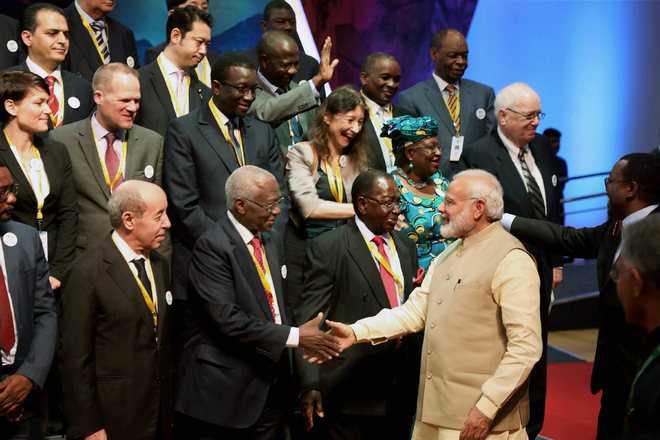
Prime Minister Narendra Modi began a three-nation diplomatic tour covering Jordan, Ethiopia and Oman, signalling a calibrated push to deepen political engagement, economic cooperation and people-to-people ties across West Asia and Africa. The visit places emphasis on long-standing partnerships while marking diplomatic milestones that officials describe as pivotal to a wider strategy linking the Gulf, the Horn of Africa and South Asia.

The tour opened in Jordan, where Modi held talks with King Abdullah II in Amman. Discussions focused on regional stability, counter-terror cooperation and expanding trade and investment links. Jordan occupies a strategic position in West Asia diplomacy, and both sides underlined shared concerns over conflicts affecting the region and their spillover effects. Bilateral exchanges also addressed cooperation in health care, education and technology, areas where existing agreements are being reviewed for expansion.

Jordan has emerged as a steady political partner, and the visit underscored efforts to elevate ties beyond symbolism. Officials highlighted collaboration in renewable energy and pharmaceuticals, alongside labour and skills partnerships that reflect Jordan’s role as a hub for regional services. Cultural engagement featured prominently, with references to the shared heritage reflected in academic exchanges and archaeological cooperation.

From Amman, Modi travelled to Addis Ababa, marking a significant diplomatic moment with Ethiopia. The visit coincides with the strengthening of relations with the African Union, headquartered in the Ethiopian capital, and signals intent to broaden engagement with Africa’s multilateral institutions. Talks with Prime Minister Abiy Ahmed centred on development cooperation, infrastructure financing and capacity building, as well as coordination in international forums.

Ethiopia’s role as a gateway to the Horn of Africa places it at the centre of regional connectivity and security discussions. The leaders examined cooperation in agriculture, manufacturing and digital public infrastructure, with attention to skills development and technology transfer. Ethiopia has been seeking diversified investment partnerships to support industrial parks and export-oriented growth, and the talks reflected interest in long-term collaboration rather than project-based engagement.

Diplomatic officials also pointed to cooperation in peacekeeping and humanitarian assistance, noting Ethiopia’s contribution to regional stability and its engagement with multilateral peace processes. The visit reinforced engagement with Africa at a time when competition for influence and investment has intensified, and when African economies are prioritising infrastructure and human capital development.

The final leg of the tour takes Modi to Oman, a country with deep historical and economic links, particularly in trade, energy and maritime cooperation. Meetings in Muscat are expected to focus on energy security, logistics and defence ties, building on agreements covering strategic petroleum reserves, port development and naval collaboration. Oman’s role as a stable interlocutor in the Gulf has given it a distinctive place in regional diplomacy.

Economic cooperation remains central to the Oman visit, with attention on bilateral trade, investment flows and collaboration in downstream energy projects. The presence of a large expatriate community has added a people-centric dimension to relations, shaping discussions on labour welfare, skills recognition and mobility. Financial services, tourism and green energy have emerged as additional areas of interest as both sides seek to diversify economic engagement.

Across the three stops, the tour reflects a broader pattern of outreach that links West Asia and Africa through trade corridors, energy routes and strategic partnerships. Officials involved in the preparations described the itinerary as a deliberate effort to balance political dialogue with economic substance, moving beyond ceremonial diplomacy. The focus on infrastructure, digital governance and energy transition aligns with priorities shared by many emerging economies.

Google has expanded its cultural mapping ambitions with the debut of the Google Art Project, a digital platform that places high-resolution artworks and virtual museum galleries within reach of anyone with an internet connection. The initiative extends the company’s mapping tools beyond streets and landmarks, offering close-up access to paintings, sculptures and artefacts held by leading museums across Europe, North America and Asia. Launched as a collaboration […]

The United States government’s approval for Nvidia to export its powerful H200 artificial intelligence chips to China has upended expectations across global technology markets and deepened debate over export controls and strategic competitiveness. President Donald Trump confirmed that U. S. authorities will permit sales of Nvidia’s H200 processors to approved Chinese customers under a regime that levies a 25 per cent levy on such transactions, a policy […]

A proposal in the House of Lords to restrict the use of virtual private networks by under-16s has reignited debate over child online safety, digital privacy and the enforceability of age-based controls. The amendment, put forward during scrutiny of the government’s online safety framework, aims to prevent children from using VPNs to bypass age checks on social media, adult content platforms and other regulated online services. Supporters […]

SpaceX has signalled a major shift in its financial strategy by setting internal share prices that imply a valuation of about $800 billion and signalling plans for an initial public offering in 2026, according to communication to investors and financial institutions. The insider share sale, priced at roughly $421 per share, more than doubles the company’s valuation from mid-year levels and comes as SpaceX lays the groundwork for what could become one of the largest public market debuts ever.

Chief Financial Officer Bret Johnsen communicated to employees that the rocket and satellite operator founded by Elon Musk is preparing for a potential flotation in 2026, though the precise timing and structure remain contingent on market conditions and business milestones. SpaceX’s statement highlights that the internal valuation proposition is part of broader fundraising and liquidity arrangements rather than a definitive IPO roadmap.

Starlink, SpaceX’s satellite internet arm, underpins much of the valuation optimism. The constellation of thousands of low-Earth orbit satellites has expanded its service footprint significantly, adding millions of users globally and pushing the company’s revenue trajectory upward. Analysts say that this growth, alongside Starlink’s planned expansion into direct-to-mobile services and other connectivity niches, is central to investor enthusiasm for a public listing.

The valuation implied by the secondary offering eclipses previous private market benchmarks. SpaceX had been valued at about $400 billion earlier in 2025, and the $800-billion marker would place it among the most valuable pre-IPO companies globally. OpenAI’s valuation peak of $500 billion has been surpassed by this internal pricing, although that figure is not a public market price. SpaceX remains the second-most valuable private startup after OpenAI.

Despite speculation over the $800 billion figure, Musk has publicly questioned such valuation assertions, describing some of the media characterisations as inaccurate and emphasising the company’s strong cash flow and internal liquidity mechanisms. Musk’s comments reflect the tension between private market hype and management’s more cautious public posture on valuation and IPO timing.

SpaceX’s broader IPO strategy appears to be evolving. Reports indicate that the company has held discussions with investment banks about potentially raising over $25 billion in a 2026 offering, which could value SpaceX at more than $1 trillion. Multiple sources familiar with the talks suggest that a mid- to late-2026 timetable is under consideration, though this could shift depending on market conditions and regulatory factors.

Market participants are weighing the implications of a SpaceX public listing against broader trends in the US equity markets, which are exhibiting renewed IPO activity after a period of subdued issuance. A successful SpaceX listing at the projected scale would not only set new records in terms of funds raised but also provide a benchmark for other high-growth private companies that have been delaying public offerings.

Investors and analysts have reacted to the buildup in valuations with a mix of enthusiasm and caution. EchoStar, a significant stakeholder in SpaceX’s satellite ventures, saw its shares rise on increased IPO chatter, reflecting broader investor appetite for exposure to the commercial space sector. But concerns linger around execution risk and the technical challenges inherent in SpaceX’s ambitious projects, including the Starship launch vehicle and long-term goals such as lunar and Martian missions.

Critics of the current valuation narrative highlight that private share prices do not always translate into market realities once a company lists publicly. They note that factors such as regulatory scrutiny, evolving market sentiment and the inherent risks of aerospace and satellite operations could temper the ultimate IPO trajectory. Nonetheless, the expanded focus on Starlink’s recurring revenue streams and SpaceX’s diversified business portfolio underlines investor interest in the company’s long-term growth potential.

LUANDA, ANGOLA – EQS Newswire – 12 December 2025 – The Ministry of Transport of The Republic of Angola (www.MinTrans.gov.ao) has today launched, 5th December, the Public Tender for the Concession of the Right to Operate, Manage and Maintain the Namibe Corridor. Interested entities may submit their proposals until 4 May 2026. The concession, with an initial duration of 30 years, extendable up to 50 years, covers […]

Warnings that Japanese companies face existential risks if supply chains linked to China are disrupted are sharpening the debate in Tokyo over economic security, diversification and the costs of geopolitical strain in East Asia. Hidetoshi Tashiro, chief economist at Infinity LLC and chief executive of Terra Nexus Project Management Services, said the most serious danger from worsening Japan–China relations lies not in tariffs or diplomacy but in […]

Dubai Chamber of Commerce has launched the Bulgarian Business Council, marking a new institutional step aimed at expanding bilateral trade, strengthening commercial partnerships and encouraging mutual investment between Dubai and Bulgaria.

The council has been established under the umbrella of Dubai Chambers and is intended to serve as a structured platform for companies from both markets to collaborate, exchange market intelligence and identify joint opportunities. Officials involved in the initiative said the move reflects growing interest among Bulgarian firms in using Dubai as a regional base, while Dubai-based businesses increasingly view Bulgaria as a gateway to the European Union and South-Eastern Europe.

The new body brings together representatives from key sectors including manufacturing, logistics, food and agriculture, information technology, tourism, construction and renewable energy. Its mandate includes organising business delegations, facilitating B2B meetings, supporting regulatory understanding and helping members navigate investment frameworks in both jurisdictions. Dubai Chamber of Commerce indicated that the council will also work closely with public institutions and trade promotion agencies in Bulgaria to ensure alignment with national economic priorities.

Speaking at the launch, Dubai Chambers officials said the council was designed to “build stronger partnerships between business communities and unlock new opportunities for joint investment”, highlighting a shared interest in diversifying trade flows and deepening private-sector engagement. Bulgarian representatives echoed that view, noting that Dubai’s position as a global trade and logistics hub offers Bulgarian exporters and investors access to markets across the Middle East, Africa and Asia.

Trade ties between Dubai and Bulgaria have been expanding steadily, supported by improved logistics links and a broader push by Dubai to strengthen economic relations with European economies. Non-oil trade between the UAE and Bulgaria has grown over the past decade, driven by machinery, metals, chemicals, food products and pharmaceuticals, according to publicly available trade data. Dubai’s role as a re-export centre has also helped Bulgarian firms reach third markets more efficiently.

The launch of the Bulgarian Business Council fits into Dubai Chamber of Commerce’s wider strategy of establishing country-specific business councils to institutionalise trade relations and provide structured support to foreign investors. Dubai Chambers now hosts dozens of such councils, covering markets across Europe, Asia, Africa and the Americas. These councils have become a central tool in Dubai’s efforts to attract foreign direct investment, promote cross-border partnerships and reinforce the emirate’s status as a preferred base for international companies.

Analysts note that Bulgaria’s competitive advantages include its EU membership, relatively low operating costs, skilled workforce and strategic location linking Europe, the Balkans and the Black Sea region. For Dubai-based companies, these factors make Bulgaria an attractive destination for manufacturing, near-shoring, logistics and technology development. At the same time, Bulgarian companies see Dubai as a stable business environment with advanced infrastructure, business-friendly regulations and strong connectivity.

Investment interest between the two sides has been widening beyond traditional trade. Sectors such as renewable energy, agri-tech, fintech, health care and tourism development have emerged as areas of mutual focus. Bulgarian technology firms have shown growing interest in Dubai’s innovation ecosystem, while companies from Dubai are exploring opportunities in Bulgaria’s industrial zones, real estate and tourism assets.

The Bulgarian Business Council is expected to play a coordinating role in these areas by aligning private-sector initiatives with broader economic strategies. Its agenda includes promoting joint ventures, supporting start-ups seeking cross-border expansion and encouraging knowledge exchange in areas such as digitalisation and sustainability. Council members will also work to address practical barriers faced by businesses, including regulatory clarity, market entry requirements and partner identification.

Diplomatic and business officials involved in the initiative stressed that the council is intended to complement, rather than replace, existing government-to-government frameworks. By focusing on commercial engagement, it aims to translate high-level economic cooperation into tangible outcomes for companies operating on the ground. Similar councils under Dubai Chambers have previously been credited with accelerating deal-making and improving investor confidence by providing direct access to market insights and decision-makers.

Australia has begun enforcing a landmark social media restriction aimed at limiting how platforms interact with users under 16, triggering debate among teenagers who question whether the policy addresses the realities of online life or simply shifts responsibility away from technology companies. The measures, introduced through updates to the Online Safety Act and reinforced by regulatory directives to major platforms, require companies such as Meta, TikTok, Snap […]

A sophisticated cyber-espionage campaign attributed to North Korean state-linked hackers has exploited a critical vulnerability in React Server Components to deploy a stealthy remote access trojan known as EtherRAT, security researchers and incident responders say. The operation highlights a convergence of web application flaws and blockchain-based command-and-control techniques that complicates detection and response for organisations running modern JavaScript stacks. The attack chain centres on a flaw dubbed […]

Danish pharmaceutical company Novo Nordisk has launched its blockbuster diabetes and weight-related therapy Ozempic in India, making the semaglutide-based injectable available across the country with a starting cost of about ₹2,200 per week for the lowest 0.25 mg dose. The move positions Ozempic as a key element in the fast-evolving metabolic health market, where type 2 diabetes and obesity rates are among the highest globally.

Available in pre-filled pens with 0.25 mg, 0.5 mg and 1 mg strengths, the therapy has been approved in India as an adjunct to diet and exercise for adults with uncontrolled type 2 diabetes. Novo Nordisk has set the monthly cost for the 0.25 mg dose at approximately ₹8,800, with incremental pricing for the higher strengths. The company says Ozempic delivers benefits beyond glycaemic control, including cardiovascular and kidney risk reduction, and supports weight management through appetite suppression.

India’s diabetes burden is among the world’s largest, with more than 100 million adults affected, according to World Health Organization estimates. Additionally, hundreds of millions live with overweight or obesity, factors that increase the risk of metabolic complications. The introduction of a globally validated therapy such as Ozempic provides clinicians with another option in managing these interconnected health challenges.

Industry analysts note that the launch comes as the country becomes a major battleground for GLP-1 receptor agonist drugs — a class that includes semaglutide and competitors such as Eli Lilly’s tirzepatide, marketed locally as Mounjaro. These therapies mimic gut hormones to regulate blood glucose and appetite, and have become focal points in efforts to curb both diabetes and excess weight.

Novo Nordisk’s roll-out follows the entry of Wegovy, its higher-dose semaglutide formulation specifically approved for chronic weight management, which debuted in India earlier in the year. Wegovy’s pricing adjustments have sparked a noticeable uptick in uptake, highlighting how cost influences adoption of these premium therapies. Ozempic’s pricing at a relatively lower weekly rate aims to broaden its accessibility, though some clinicians stress that affordability will remain a concern for patients without comprehensive insurance coverage.

The timing of the launch intersects with ongoing intellectual property developments. While the core semaglutide patent has expired in India, a secondary patent covering specific formulations remains valid until early 2026, limiting domestic generic competition. Indian courts have recently allowed local firms such as Sun Pharmaceutical Industries and Dr. Reddy’s Laboratories to manufacture semaglutide for export to countries where Novo Nordisk holds no patent but have barred domestic sales of these versions until the formulation patent lapses, shaping competitive dynamics in the near term.

Novo Nordisk India’s managing director, Vikrant Shrotriya, has acknowledged that the weekly pricing is positioned to balance accessibility with the company’s investment in supply infrastructure. He said the goal is to expand reach beyond major urban centres to tier-1 and tier-2 cities and dedicated diabetes clinics, where consistent access to modern therapies has traditionally lagged. Clinicians emphasise that appropriate patient education and specialist referrals will be crucial in ensuring safe and effective use, given that semaglutide therapies require monitoring for gastrointestinal and metabolic effects as part of comprehensive care.

The launch also intersects with broader digital health initiatives. Local health-tech firms are partnering with international drugmakers to offer patient support programmes that provide coaching and adherence tools for individuals on GLP-1 therapies. These services aim to bolster outcomes by integrating medication with lifestyle guidance, reflecting a holistic approach to long-term metabolic health management.

Market speculation around XRP has intensified after a well-known digital asset commentator argued that the token could climb from around $2 to $10 in less than a year, reigniting debate over whether structural shifts in payments, regulation and market plumbing could support such a move. XRP, the token associated with Ripple’s cross-border payments network, has spent much of its existence oscillating between bouts of optimism and prolonged […]

Bhutan has entered the digital asset arena with the rollout of a sovereign gold-backed token built on the Solana blockchain, marking a cautious but notable step by the Himalayan kingdom into tokenised finance. The initiative, unveiled on Thursday, aligns with Bhutan’s long-standing emphasis on economic stability and social well-being, while testing how blockchain technology can be used to modernise public finance without undermining monetary discipline. The token […]

Global oil supply is likely to align closely with demand through 2026, according to fresh projections from the Organization of the Petroleum Exporting Countries, setting up a clear divergence with forecasts from other major agencies that warn of a sizeable surplus building in the same period. OPEC’s latest monthly assessment indicates that the OPEC+ alliance, which brings together OPEC members, Russia and other producing partners, expects market […]

VISHNU RAJA
RYO YAMADA
HITORI GOTOH
IKUYO KITA



