Arabian Post Staff -Dubai US forces hit about 90 targets along Iran’s coast on Wednesday, extending military action for a second straight day and deepening doubts over efforts to turn a fragile truce into a permanent peace deal. US Central Command said the operation was designed to weaken Tehran’s ability to attack commercial shipping and civilian mariners in the Strait of Hormuz, the narrow waterway through which […]
A newly examined Everest ransomware encryptor has exposed a sharper technical playbook built to weaken recovery, obstruct analysis and expand damage across dormant network systems before encryption begins. The Windows payload, identified as hlntqyun. exe, is a 114 KB C# assembly compiled for. NET Framework 4.0 and protected with ConfuserEx, a widely abused obfuscation tool used to frustrate static malware analysis. The sample carries the SHA-256 hash […]
A newly demonstrated attack against Claude Desktop has highlighted how synced AI preferences and locally connected tools can be chained to turn a trusted chatbot into a covert route for command execution on a user’s workstation. The attack path centres on Claude Desktop’s Personal Preferences feature, which allows users to set account-wide instructions that are synchronised across sessions and devices. Security researchers showed that if an attacker […]
By K Raveendran The Narendra Modi government’s position on fuel prices now looks less like prudent caution and more like an overly defensive reading of a market that has already absorbed much of the Iran-US risk. The more calibrated question, therefore, is not whether New Delhi is right to watch the West Asian security situation, […]
Compelling path to $1billion ARR and public offering, fueled by product market fit in the agentic AI age, explosion of identities and related threats, and accelerating growth
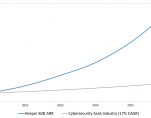
SINGAPORE – Media OutReach Newswire – 9 July 2026 – Keeper Security (“Keeper” or “we”), the identity security platform for humans, machines and AI agents, today announced a major milestone in its journey to become the market standard for AI-native identity security, having reached $225 million in Annual Recurring Revenue (ARR). Since 2021, Keeper’s ARR has grown over 3x.
Keeper protects over 95,000 organizations, which includes many Fortune 500 enterprises and public sector agencies. The company is quickly emerging as the market standard for AI-native identity security for enterprises globally with its leading zero-trust and zero-knowledge identity security platform. In 2025, leading analyst firm Gartner recognized Keeper as the second-fastest-growing security software competitor globally, second only to Google.* This recognition underscores Keeper’s rapid market expansion in addressing identity security challenges created by cloud transformation and artificial intelligence adoption across enterprise infrastructure and endpoints.
Keeper is now growing at over 4x the industry average.
This market-leading growth is driven by the explosion of identities in the agentic AI age and relentless focus on innovation to protect customers, as evidenced by the release of its unified privileged access management and identity security platform, KeeperPAM®, which protects both human and Non-Human Identities (NHIs), including service accounts, machine identities, databases, AI agents and agentic workloads. Since the launch of KeeperPAM in February 2025, KeeperPAM revenue has exhibited 10x year-over-year growth and Keeper has seen industry-leading new customer growth, adding an average of 850 new organizations every month. In the last fifteen months, Keeper added over 400 innovative features and products to KeeperPAM.
“Identity is the new security perimeter,” said Darren Guccione, CEO and Co-founder of Keeper Security. “As enterprises increasingly deploy AI agents and autonomous systems, the number of privileged identities and machine credentials is growing exponentially. Organizations need a modern, unified platform that secures every identity – human and non-human – and governs every privileged interaction. Our growth reflects the market’s demand for a platform purpose-built to address these challenges.”
Keeper’s cloud-native cybersecurity platform delivers a comprehensive approach to identity security and privileged access management by unifying enterprise password management, secrets management, privileged session management, database management and endpoint privilege management in a single platform. Keeper’s AI-native identity security strategy seamlessly extends these capabilities to non-human identities and agentic AI environments, enabling organizations to discover, manage and secure machine credentials and autonomous workloads with the same rigor applied to human users.
As enterprises adopt AI technologies at scale, the proliferation of non-human identities is rapidly outpacing that of human identities by 150:1, according to reports, thereby creating new attack surfaces and operational complexity. Keeper’s platform helps organizations establish identity-first security strategies that provide security, visibility, governance and least-privilege controls across their entire identity ecosystem.
“Autonomous agents, frontier LLMs and machine-to-machine workflows are operating inside enterprise environments right now – without adequate governance, secrets management or access controls,” said Craig Lurey, CTO and Co-founder of Keeper Security. “Keeper is purpose-built to solve this problem at scale.”
The company’s continued growth and market recognition reinforce its position as one of the cybersecurity industry’s most innovative and fastest-growing providers of AI-native identity security and privileged access management solutions. Keeper’s financial profile combines best-in-class growth, profitability and a debt-free capital structure and is an asset positioned to efficiently lead identity security in the agentic AI age.
“Surpassing $225 million in ARR confirms what we’ve heard in every enterprise conversation – that securing non-human identities is the defining security challenge of the AI era,” said Darren Guccione, CEO of Keeper Security. “We have established an accelerated path to $1 billion in ARR which, coupled with our technology roadmap, will provide optionality for a public offering.”
Gartner is a trademark of Gartner, Inc. and/or its affiliates.
Gartner does not endorse any vendor, product or service depicted in its research publications and does not advise technology users to select only those vendors with the highest ratings or other designation. Gartner research publications consist of the opinions of Gartner’s Business and Technology Insights Organization and should not be construed as statements of fact. Gartner disclaims all warranties, expressed or implied, with respect to this research, including any warranties of merchantability or fitness for a particular purpose.
Hashtag: #KeeperSecurity
The issuer is solely responsible for the content of this announcement.
About Keeper Security
Keeper Security is the leading zero-trust and zero-knowledge identity security solution, trusted by millions of people and thousands of organizations globally. KeeperPAM® is Keeper’s privileged access management platform that unifies password and passkey management, secrets management, privileged session management and endpoint privilege management in a single cloud-native platform, protected with quantum-resistant encryption. KeeperAI delivers real-time, AI-native threat detection across every privileged session. As AI agents proliferate and identity becomes the defining attack surface, Keeper governs access for humans, machines, non-human identities and AI agents, serving as the unified control plane for access, compliance and visibility across the enterprise. For more information, visit KeeperSecurity.com.
ADNOC Distribution has agreed to buy Shell Downstream South Africa in a $1 billion deal that gives the Abu Dhabi fuel retailer control of one of South Africa’s largest petrol station networks and marks a decisive expansion of Gulf capital into Africa’s downstream energy market. The agreement covers 100 per cent of Shell Downstream South Africa from Shell South Africa Holdings, with the enterprise value subject to […]
President Trump’s declaration on Wednesday that the ceasefire with Iran is over immediately pushed oil prices higher, lifted Treasury yields and revived concerns about the security of the Strait of Hormuz. Markets responded in familiar fashion, with traders reassessing energy supplies, inflation expectations and monetary policy. Another consequence deserves equal attention. Higher oil prices strengthen the fiscal position of the Gulf’s major energy exporters. Over time, stronger […]
Spain reached the World Cup quarter-finals by beating Portugal 1-0 in Arlington, Texas, while setting a tournament record with a sixth consecutive match without conceding a goal. Mikel Merino scored in the 91st minute to settle a tight Round of 16 tie at AT&T Stadium, sending Spain through and ending Portugal’s campaign after a match shaped more by control, discipline and defensive concentration than attacking fluency. The […]
A browser flaw in Opera GX allowed hostile websites to silently install customisation mods and use them to extract data from pages visited by a signed-in user, exposing a weakness in how browser styling features can be turned into cross-site surveillance tools. The vulnerability, now patched, affected the gaming-focused Opera GX browser and centred on its GX Mods feature, which lets users customise themes, wallpapers, sounds and […]
Attackers are hiding machine-readable instructions inside websites to manipulate AI agents, turning ordinary web pages into a new security battleground as automated systems begin browsing, summarising and acting on behalf of users. Zscaler’s ThreatLabz has documented two live campaigns using indirect prompt injection, a technique in which malicious instructions are planted in third-party content that an AI system reads during a task. Unlike a direct prompt attack, […]
Arabian Post Staff -Dubai Almarai’s second-quarter revenue rose 11 per cent year on year to SAR5.87 billion, as stronger demand for dairy, poultry and bakery products helped the Riyadh-listed food group absorb higher shipping, energy and raw material costs. The company’s first-half revenue reached SAR12.03 billion, up 9 per cent from the same period last year, reinforcing its position as one of the Gulf’s most closely watched […]
Cybercriminals are using fake cracked-software downloads to infect consumers and smaller businesses with a double payload that steals credentials and mines Monero, underscoring how commodity malware operators are combining immediate data theft with longer-running attempts to profit from compromised machines. The campaign delivers Vidar, a widely used information stealer, alongside XMRig, an open-source cryptocurrency miner often abused in cryptojacking attacks. Victims are lured through malvertising into downloading […]
Greenlogue/AP Lhyfe has expanded one of Europe’s largest bulk green hydrogen logistics fleets, adding 10 new Hexagon Purus containers as it seeks to strengthen production, transport and storage capacity across a market still constrained by cost, infrastructure gaps and uneven demand. The Nantes-based producer now operates 84 Type IV tube trailers dedicated to hydrogen transport, a fleet serving its production sites, partner locations, storage facilities and transport […]
Twenty Saudi university students are undergoing artificial intelligence training at Huawei’s headquarters in Shenzhen under a Mawhiba-Huawei programme designed to build specialist digital skills among high-performing young talent.
The training, announced on July 6, brings together the King Abdulaziz and His Companions Foundation for Giftedness and Creativity, known as Mawhiba, and Huawei as Saudi Arabia expands its pipeline of students capable of working across artificial intelligence, cloud computing, big data and telecommunications. The initiative forms part of a wider partnership that aims to train 500 beneficiaries in advanced technology fields.
Participants are being exposed to a mix of theoretical instruction and practical exercises, with the programme structured around real-world AI applications, global technology practices and workplace-based learning. The Shenzhen placement gives students direct access to one of Huawei’s main innovation centres, where they are expected to study how artificial intelligence tools are developed, deployed and integrated into digital infrastructure.
The programme covers core areas including AI fundamentals, machine learning, deep learning, foundation models and AI development tools. Its practical component is intended to help students move beyond classroom-level understanding into applied problem-solving, particularly in fields where AI systems are increasingly tied to business operations, public services and industrial automation.
Mawhiba’s role reflects its long-standing mandate to identify and support gifted students, while Huawei’s participation gives the programme an international industry dimension. The partnership is aimed at matching academic talent with technologies that are shaping labour-market demand, especially as Saudi Arabia increases investment in data centres, digital government, smart cities and automation.
The Shenzhen cohort follows the launch of the first joint Mawhiba-Huawei training track for Saudi university students in China. The programme is being presented as both a skills initiative and an international exposure opportunity, giving participants familiarity with advanced technology ecosystems outside the Kingdom.
Saudi Arabia has placed AI capacity-building at the centre of its digital transformation agenda. The Saudi Data and Artificial Intelligence Authority has been expanding training schemes for students, professionals and government leaders as part of efforts to create a national workforce capable of supporting data-driven economic diversification.
A separate programme at the authority’s headquarters in Riyadh began with 215 male and female students from 28 universities, giving participants training in data, artificial intelligence and advanced technologies. That initiative was designed to connect academic knowledge with practical experience in computer science, data science and AI, while aligning university outcomes with labour-market needs.
The scale of national AI training has grown sharply. More than 779,000 citizens have been trained through data and AI initiatives, including 9,775 specialists and 260 scientists and experts. More than 80 government leaders have also received training focused on the design and implementation of data and AI strategies.
The Mawhiba-Huawei programme adds a private-sector and cross-border layer to that domestic training push. For students, the China placement offers exposure to applied AI in a corporate setting. For policymakers, it supports an effort to create a wider base of young specialists who can work with global platforms while contributing to local technology goals.
Saudi Arabia’s AI strategy has increasingly focused on building human capital alongside infrastructure. The country has moved to strengthen data governance, support Arabic AI models, expand cloud capacity and encourage the adoption of emerging technologies across education, healthcare, finance, energy and government services.
The emphasis on training also reflects a growing recognition that AI adoption depends on more than hardware and software. Surveys and academic studies on generative AI use in Saudi Arabia show strong public engagement with AI tools, but also uneven technical understanding and concerns over privacy, misinformation, trust and responsible use. Structured training is therefore being treated as a way to improve both competence and confidence.
For universities, the programme underlines the pressure to update curricula as AI changes entry-level skill expectations. Employers in technology, finance, logistics and energy are increasingly looking for graduates who understand data handling, model behaviour, automation workflows and ethical safeguards. Programmes that combine classroom instruction with industry exposure are seen as a route to narrowing that gap.
Dutch prosecutors have summoned Tata Steel IJmuiden B. V. to face criminal proceedings over alleged unlawful pollution from its vast steelworks on the North Sea coast, escalating a long-running dispute over emissions, public health and industrial regulation in the IJmond region.
The Public Prosecution Service suspects the company of multiple criminal offences, including deliberately and unlawfully releasing harmful substances into the air with possible adverse consequences for public health. The case also covers alleged breaches of the company’s duty of care, insufficient maintenance, operating without the required permits and failure to report several incidents involving raw coke, a by-product linked to the steelmaking process.
A first procedural hearing has been scheduled for 20 November 2026 at the Amsterdam District Court, where prosecutors are expected to set out the precise charges. The investigation began after a criminal complaint filed on behalf of more than 800 residents and campaigners, who have for years linked emissions from the IJmuiden complex to health risks, nuisance and damage to quality of life.
The steelworks, located west of Amsterdam in Velsen, is among the Netherlands’ biggest industrial sites and one of its largest greenhouse gas emitters. Its blast furnaces, coke ovens and associated facilities have made it a strategic employer and export asset, but also a central target for environmental enforcement. Local concern intensified after pollution incidents, odour complaints and measurements showing deposits of metals and polycyclic aromatic hydrocarbons in nearby communities.
Prosecutors say the criminal investigation examined the steel production process and the operation of Tata Steel’s coke gas factories. The inquiry was carried out with input from environmental inspection and police units, including the investigative arm of the Human Environment and Transport Inspectorate and regional environmental enforcement agencies.
The company has rejected the accusations, saying it disagrees with the decision to prosecute and has already made major improvements to reduce emissions. Tata Steel Nederland has described the case as unnecessary, arguing that it relates to a limited number of incidents where corrective action had already been taken. The company maintains that its emissions comply with legal limits and that planned investments will cut pollution further.
The prosecution has not ruled out possible action against individuals. A separate part of the investigation is examining whether people in management roles could be held personally criminally liable. Prosecutors said that part of the inquiry may take more time, while the company summons has been issued now to keep the criminal case moving.
The summons comes against a broader legal and regulatory backdrop. Residents living near the plant and environmental groups have pursued civil and criminal routes to force faster reductions in pollution. A collective claim filed in the Netherlands seeks about €1.4 billion in compensation from Tata Steel’s Dutch subsidiaries, alleging health damage, stress, loss of enjoyment of life and property-related losses across the region. Tata Steel has dismissed those claims as speculative and unsupported.
Regulatory pressure has also mounted over the coke ovens, one of the most contentious parts of the IJmuiden operation. Authorities have previously warned that permits could be at risk if breaches continue, and financial penalties have been imposed over emissions violations. The coke-making process is crucial to conventional blast-furnace steel production, but it is also associated with pollutants that have drawn sustained scrutiny from residents and health experts.
Public health studies commissioned by Dutch authorities have strengthened demands for action. Research has identified the Tata Steel site as a significant source of metals and polycyclic aromatic hydrocarbons in the IJmond area, while health assessments have pointed to higher exposure risks for communities around the plant. Campaigners argue that enforcement has been too slow, given the scale of the plant and the duration of residents’ complaints.
Tata Steel is attempting to balance the legal fight with negotiations over a cleaner production model. The company, the Dutch government and the province of North Holland signed a non-binding framework in 2025 aimed at cutting carbon emissions and improving the living environment around IJmuiden. The plan includes a shift towards lower-carbon steelmaking, with public support of up to €2 billion under discussion and additional funding sought from European programmes.
Epic Games has moved to end its lawsuit against former contractor Hayden Cohen, accused of leaking confidential Fortnite collaboration plans involving major entertainment and gaming franchises before they were made public. The proposed settlement, filed in a North Carolina federal court, would permanently bar Cohen from possessing, accessing, using or disclosing Epic’s confidential information and trade secrets. It would also prevent him from helping others obtain or […]
Bitcoin fell below $62,000 in Asian trading as renewed US-Iran hostilities drove oil prices higher, prompting investors to cut exposure to cryptocurrencies and other risk assets. The world’s largest digital token traded near $62,000 after touching an intraday low around $61,700, extending a pullback that spread across Ether, XRP and Solana. Ether hovered near $1,625, while several large alternative tokens lost between 1 and 3 per cent […]
Securitize’s shares have fallen about 40 per cent since the BlackRock-backed tokenisation firm completed its public listing through a Cantor Fitzgerald-linked blank-cheque vehicle, exposing a sharp gap between investor enthusiasm for blockchain-based financial infrastructure and the early trading performance of companies entering public markets through SPAC deals. The company, now trading on the New York Stock Exchange under the ticker SECZ, slipped to about $8 after opening […]
China has offered fresh channels for easing trade tensions with the European Union after Foreign Minister Wang Yi completed a four-country Nordic tour aimed at rebuilding confidence with some of Europe’s most security-conscious governments.
Wang’s 2-8 July visit to Denmark, Sweden, Finland and Norway came as Brussels and Beijing try to prevent a deepening dispute over industrial subsidies, electric vehicles, market access, export controls and critical minerals from turning into a broader trade confrontation. The trip placed trade, green technology, shipping, healthcare, tourism and scientific innovation at the centre of talks, while allowing Beijing to test whether northern Europe could support a less confrontational EU approach.
The diplomatic push followed high-level trade discussions in Brussels, where both sides agreed to establish a ministerial-level mechanism that would meet once or twice a year. Four negotiation tracks are expected to cover export controls, trade and investment balancing, market access, and supply-chain transparency, with October emerging as a key deadline for measurable progress.
The EU’s trade deficit with China stood at about €360 billion last year, driven by imports of electric vehicles, batteries, solar equipment, machinery and consumer goods. European officials have warned that subsidised Chinese production could put pressure on strategic industries, while Beijing argues that EU restrictions on technology exports and investment screening have politicised commerce.
Wang used the Nordic leg to frame China and Europe as partners rather than rivals. In Copenhagen, he urged Denmark to play a constructive role in stabilising EU-China relations and highlighted cooperation in green shipping, life sciences and tourism. Denmark holds political weight in Brussels through its support for open trade, but it has also backed a firmer European line on economic security and resilience.
The tour carried symbolic value. It was the first visit by a Chinese foreign minister to Denmark in 15 years and to Sweden in 22 years. Sweden is China’s largest trading partner in the Nordic region, but relations have faced strain over human rights, security policy and Europe’s concerns over dependence on Chinese technology. Wang met Prime Minister Ulf Kristersson and Foreign Minister Maria Malmer Stenergard in Stockholm, where the talks covered bilateral ties and the wider EU agenda.
Finland added a sharper security dimension to the visit. President Alexander Stubb and Foreign Minister Elina Valtonen have supported a more cautious European posture towards Beijing, particularly since Russia’s war in Ukraine reshaped the security debate across northern Europe. Finland’s accession to NATO has also altered the regional balance, placing Helsinki firmly inside the transatlantic security framework. Trade dialogue with Beijing therefore sits alongside hard questions over Russia, technology transfer and strategic infrastructure.
Norway, the final stop, offered Beijing a more pragmatic opening. Oslo is outside the EU but closely tied to the single market through the European Economic Area. Its energy, maritime and seafood industries give it economic links with China, while Norway’s diplomatic tradition allows space for dialogue even during periods of political tension. Wang’s meeting with Foreign Minister Espen Barth Eide was expected to focus on trade, green transition and international security.
Beijing’s message is that the EU should expand trade rather than restrict it. China has signalled willingness to increase imports from Europe and improve communication over trade frictions. It has also pressed Brussels to ease restrictions on high-tech exports and avoid measures that it views as protectionist. European negotiators, however, want more than general assurances. They are seeking concrete steps to narrow the trade gap, improve access for European firms, and curb state-backed overcapacity in sectors where Chinese exports have surged.
The most sensitive issue remains electric vehicles. The EU imposed duties on battery-powered cars made in China after concluding that state support had distorted competition. Chinese manufacturers have responded by looking more seriously at European production sites, including plants in Hungary and other markets, to maintain access to consumers while reducing tariff exposure. The dispute has become a test case for whether Brussels can defend industry without triggering retaliation that would hit exporters, luxury brands, agriculture and aviation.
Rare earths and critical inputs have become another pressure point. China dominates several stages of processing for materials used in clean energy, defence and advanced manufacturing. European officials are trying to reduce exposure without severing commercial links. Beijing retains leverage through licensing and supply-chain controls, while the EU is developing tools to diversify sourcing, screen investment and support domestic production.
Gulf Cooperation Council banks are bracing for slower growth as the Middle East war and wider geopolitical uncertainty weigh on credit demand, investor confidence and corporate activity, even as lenders retain strong profitability, capital buffers and stable funding. S&P Global Ratings analyst Tatjana Lescova said banks across the six-nation bloc are expected to continue delivering solid earnings despite pressure from the conflict, higher risk premiums and uneven […]
Arabian Post Staff -Dubai Iran’s Revolutionary Guards said they fired missiles and drones at US military facilities in Bahrain and Kuwait on Wednesday, widening a confrontation that has put a fragile ceasefire under severe strain after US strikes on Iranian targets near the Strait of Hormuz. The Islamic Revolutionary Guard Corps said the operation hit sites linked to the US Fifth Fleet in Bahrain and Ali Al […]
A Ukrainian drone attack set off a fire at Russia’s Saratov oil refinery overnight, extending Kyiv’s campaign against fuel assets that support Moscow’s military operations and domestic supply network. Footage circulating from the Volga region showed flames and smoke rising from the refinery area after explosions were reported around 3am local time. Saratov regional governor Roman Busargin acknowledged a drone threat and said warning systems could be […]
The Reserve Bank of India has renewed its support for keeping cryptocurrency away from the formal financial system, reviving the prospect of a tougher national policy on private digital assets even as millions of users continue to trade through domestic and offshore platforms. Government documents and briefings to a parliamentary panel point to a policy line that leans towards prohibition rather than licensing. The central bank has […]
Temasek’s portfolio value climbed to a record S$518 billion, or about $400 billion, as the Singapore state investment company sharpened its push into artificial intelligence and reported stronger returns after two years of portfolio recalibration.
The latest figure, based on a mark-to-market valuation of listed and unlisted holdings, showed a S$49 billion rise for the financial year ended 31 March 2026. The increase reflected stronger performance from Singapore-based portfolio companies, gains from divestments and a broader recovery in public market valuations. The portfolio has doubled over the past decade, underlining the scale of Temasek’s role as one of Asia’s most influential investment groups.
Temasek invested S$51 billion during the year and divested S$31 billion, resulting in a net investment of S$20 billion. Its one-year shareholder return stood at 10.5 per cent in Singapore dollar terms, while its 10-year return was 7.1 per cent. The 20-year return was 6.8 per cent, a measure closely watched because Temasek is designed to generate long-term returns for Singapore rather than chase short-term market gains.
Artificial intelligence has become a central plank of the company’s next phase of growth. AI-related investments now account for about 6 per cent of its portfolio, with plans to raise that exposure to 10-15 per cent by 31 March 2031. Temasek has already taken positions linked to leading AI companies including OpenAI and Anthropic, while also targeting the wider infrastructure needed to support the technology.
The strategy is not limited to model developers. Temasek is looking across the AI value chain, including semiconductors, cloud service providers, data centres, energy systems, foundation models and software infrastructure. That wider approach reflects a belief that the economics of AI will not be captured only by consumer-facing platforms, but also by companies supplying chips, computing power, storage, power capacity and enterprise software.
Chief executive Dilhan Pillay has described AI adoption as a pivotal phase in the digitisation trend that Temasek has followed for more than a decade. The company’s approach is expected to combine direct investments, listed equities and private market exposure, with a preference for flexibility at a time when valuations across parts of the AI sector remain elevated.
The stronger annual performance also comes after Temasek moved to sharpen accountability within its investment structure. From April 2026, its portfolio has been organised into three broad segments: Singapore-based portfolio companies, global direct investments, and partnerships and funds. The change is intended to improve execution and give clearer visibility on how different parts of the portfolio contribute to returns.
Singapore-based companies remain an anchor of Temasek’s holdings. These include major stakes in groups tied to finance, telecommunications, transport, logistics, infrastructure and real estate. Their performance helped lift the portfolio during the year, even as Temasek continued to diversify beyond its home market.
The company has also increased attention on private credit, an asset class that has expanded as banks have retreated from some forms of lending and institutional investors have sought higher-yielding alternatives. Private credit currently accounts for about 2 per cent of Temasek’s portfolio, with a target of 5 per cent by 2031. The allocation is expected to provide recurring cash yield and a different risk profile from the predominantly equity-heavy portfolio.
Sustainable living remains another major investment theme. Temasek’s sustainable living portfolio rose to S$49 billion as of 31 March 2026, supported by commitments in renewable energy, power grids and transition technologies. Its portfolio emissions remained at about 21 million tonnes of carbon dioxide equivalent, around 30 per cent below 2020 levels, though the company has signalled that rising electricity demand, higher capital costs and exposure to emissions-intensive businesses may complicate its 2030 reduction target.
Temasek’s global exposure continues to reflect a balance between Asia and developed markets. Its earlier vulnerability to China-linked volatility had weighed on returns, prompting a more disciplined approach to capital allocation and risk management. The latest numbers suggest that portfolio adjustments, divestments and stronger listed-market performance have helped restore momentum.



 KeeperSecurity.com





