Survey covers 15 countries and includes first nationwide polling inside Syria The Arab Center for Research and Policy Studies has released findings from the 2024 to 2025 Arab Opinion Index following a presentation at its headquarters in Doha. The survey, now in its ninth edition, examines political, economic and social views across 15 Arab countries. Fieldwork took place between October 2024 and August 2025 and included interviews […]
A landmark agreement between Caracas and Washington will see up to $2 billion worth of Venezuelan crude oil exported to the United States under terms announced by President Donald Trump, marking a major shift in energy geopolitics and offering a potential reprieve to Venezuela’s embattled oil sector. The arrangement, underscored by negotiations that could divert barrels previously bound for China, elevates the United States into a key […]
Dubai Aerospace Enterprise Ltd has moved to the international debt markets with plans for a benchmark-sized, dollar-denominated Regulation S senior unsecured bond with a seven-year tenor, as the aircraft leasing and aviation services group looks to extend its maturity profile amid steady demand for high-quality aviation credit. The proposed notes will be issued through DAE Funding LLC under the company’s Global Medium Term Note Programme and are […]
US schools are increasingly replacing full-length novels with short excerpts in literature classes, a shift driven by falling reading proficiency, shorter attention spans and the pull of digital media, according to educators and curriculum specialists. The change has stirred debate over whether students are being denied the sustained engagement needed to build critical thinking, cultural literacy and empathy. Data from national assessments show that reading scores among […]
Aldar Properties PJSC, Abu Dhabi’s largest property developer and real estate asset manager by total assets, has appointed a syndicate of global and regional banks for a planned US dollar-denominated hybrid notes issuance, a move that underscores the company’s intention to strengthen its capital structure while retaining balance-sheet flexibility. The company, which carries a Baa2 rating with a Stable outlook from Moody’s, has mandated Citi as sole […]
Tackle rising business costs and trade barriers with a unified digital platform for Free Trade Agreements as well as build stronger economic partnerships.
Bridge AI adoption gaps by co-funding shared data pools and introducing a regional “Trusted AI” mark to drive innovation and governance.
Future-proof the workforce with targeted work visas for global experts, job transformation roadmaps, and advanced leadership programmes.
SINGAPORE – Media OutReach Newswire – 7 January 2026 – KPMG in Singapore and the Singapore Institute of Directors (SID) are pleased to announce the release of a joint Budget 2026 Proposal, titled “Prospering in a New Global Landscape”.
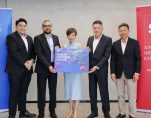
From Left to Right: Yong Jiahao, Partner, Infrastructure, Government & Healthcare (IGH) & Industrial Manufacturing, Tax, KPMG; Ajay Kumar Sanganeria, Partner and Head of Tax, KPMG; Lee Sze Yeng, Managing Partner, KPMG; Max Loh Khum Whai, Vice-Chair, Singapore Institute of Directors; Edwin Lee, Deputy CEO, Singapore Institute of Directors
By fostering resilient economic linkages, embedding digital trust, and cultivating world-class talent and leadership with cross-domain expertise, Singapore can ensure its businesses and economy remain secure, innovative, and competitive in an uncertain global landscape.
This Proposal outlines strategies to position Singapore as a critical hub for global flows, covering three crucial areas:
A new global order: Resilience as a pivotal growth strategy
The Intelligent Age: Smart solutions for an innovative era
The recommendations in the proposal are also supported by data-driven insights from a survey recently conducted by KPMG and SID. More than 1,000 professionals, managers, executives and technicians (PMETs) and business owners were surveyed on the challenges they face and the kinds of Budget 2026 support they hoped to see. [For more information, please refer to the deck with the full survey results: https://kpmg.com/sg/en/campaigns/kpmg-singapore-budget.html ]
Empowering businesses to leverage Singapore’s trusted role as a global connector
Global commerce is rapidly transforming amid rising protectionism, shifting trade rules, evolving tax regimes, and geopolitical tensions. Singapore’s long-term prosperity in the new global order depends on its ability to lead as a trusted connector and aggregator of the flows of goods, capital, data, and talent.
Singapore must strengthen its economic linkages, build secure and interoperable digital platforms, cultivate a workforce equipped with cross-domain expertise, and equip boards with essential skills to navigate emerging risks and opportunities. Trusted and resilient economic linkages will ensure the seamless movement of goods, services, and investments, while interoperable digital platforms will play a critical facilitation role in enabling cross-verification of information, streamlining compliance, and fostering trust across borders. These efforts are especially important in helping businesses cope with shifting regulations. KPMG and SID’s survey found that 51 percent of respondents identified increased business costs as the main challenge to cross-border expansion, followed by higher tariffs (26 percent) and supply chain difficulties (25 percent). To address these challenges, 43 percent of respondents want stronger economic and trade partnerships to overcome trade barriers.
KPMG and SID recommend:
a) Developing a unified digital platform for Free Trade Agreement (FTA) management (page 7) to help businesses navigate complex procedures and unlock the full benefits of FTAs. This would be seamlessly integrated with government systems, making it more seamless and cost-effective for businesses to comply with FTA requirements. This would enable firms to leverage Singapore’s extensive FTA network to gain footholds in new markets, further enhancing Singapore’s regional and global competitiveness.
b) Increasing access to working capital to accelerate local enterprises’ strategic transformation and implementing industry-specific governance frameworks (page 7). With geopolitical shifts driving a more complex regulatory landscape, increased and dedicated funding would enable businesses to transform for the future while responding effectively to evolving governance standards. Such funding should be complemented by industry-specific governance playbooks to equip boards with essential tools to strengthen agility and resilience.
c) Enhancing Singapore’s government-backed trade platform with blockchain and AI (page 6). The global economy has seen an increase in supply chain disruptions amid geopolitical and trade uncertainties. An enhanced Government-backed trade platform would enable Singapore to further facilitate the flow of trusted payments, making it even easier for businesses to validate transactions and act on smart recommendations to elevate supply chain efficiency. Amid a more fragmented world, the enhanced platform would also reinforce Singapore’s position as a reliable hub for global commerce, by promoting increased supply chain transparency for critical industries like semiconductors, pharmaceuticals, and advanced manufacturing.
d) Introducing progressive carbon taxes to reward decarbonisation and establish performance-based pathways for large emitters (page 9). Singapore’s carbon taxes must evolve to consider unique business needs and companies’ decarbonisation plans. Progressive carbon tax rates post-2030 – based on facility emissions volume, emissions per unit of output, and sectoral abatement potential – could be accompanied by permanent conditional tax rebates for energy-intensive, trade-exposed sectors. These rebates could be based on set criteria such as verified year-on-year reductions in carbon intensity and investments in low-carbon technology. To strengthen these efforts, Singapore could also establish an ASEAN Environmental Data Exchange to facilitate the sharing of standardised and interoperable environmental data between Singapore and its regional trade partners (page 8). The exchange would improve the flows of green trade and green capital, enabling Singapore to be a regional hub for environmental data harmonisation. Organisations like the Singapore Institute of Directors could play a catalytic role by building board-level capability, aligning disclosure expectations and promoting best practices through director education, guidance frameworks and peer learning on a regional scale, helping boards to lead initiatives like progressive carbon taxation.
Fostering an ecosystem of Trusted AI in the Agentic Era
The rise of artificial intelligence (AI) is reshaping global competitiveness, with agentic AI—capable of autonomous decision-making—introducing both transformative opportunities and significant challenges. While agentic AI can drive innovation, optimise operations, and unlock new efficiencies, it also raises critical concerns around accountability, ethical deployment, and governance.
A critical enabler of AI’s potential is data sharing, yet this often proves difficult due to competition, concerns over intellectual property, and a lack of trust between organisations. Businesses—particularly smaller enterprises—also face cost constraints in accessing high-quality data, and many also lack the strategic clarity and workforce competencies to identify where AI can augment their operations.
KPMG and SID’s poll found that 54 percent of respondents cited talent and skills gaps as the top challenge for adopting AI, followed by high costs of technology adoption (52 percent) and a lack of clear AI adoption strategies (48 percent). By addressing these concerns, Singapore will be able to fully leverage the vast potential of AI and data to reinforce its status as a hub across various sectors.
KPMG and SID recommend:
a) Co-funding sector-specific shared data pools in partnership with trade associations and industry stakeholders (page 15). These shared, anonymised data pools would enable businesses to access high-quality datasets without incurring prohibitive costs. Tailored to specific sectors such as logistics and retail, these pools would facilitate benchmarking, model training, and experimentation under a trusted framework that safeguards data privacy and protects intellectual property. Shared data initiatives should be paired with guided AI adoption support to help businesses understand how AI can enhance specific parts of their value chain. For example, targeted support could help logistics firms optimise supply chains or assist retailers in leveraging AI to personalise customer experiences. This dual approach would enable broader AI adoption and accelerate innovation across industries.
b) Enhancing the public-private partnership (PPP) framework to accelerate AI adoption (page 15). As firms navigate high costs and limited guidance around AI adoption, there is an opportunity for the Government to provide greater access to infrastructure to lower barriers for AI experimentation and deployment. The enhanced framework would create positive spillover effects from existing AI initiatives, as government agencies, academia and industry stakeholders collaborate to strategically integrate AI solutions into business strategies. The framework could also promote cross-sector collaboration in key industries, fostering a culture of open innovation in AI. To bolster digital trust, Singapore could also establish a regional “Trusted AI” mark to drive harmonisation and innovation (page 12). Although Singapore’s Model AI Governance Framework provides a strong foundation for responsible AI deployment, there is still a largely untapped opportunity for Singapore to champion an assurance label that shows firms have AI controls aligned with recognised AI governance standards. By pushing regionalrecognition of this mark, Singapore could accelerate cross-border innovation and trade. The mark would build on initiatives like AI Verify and Project Moonshot, which have helped to promote Trusted AI in Singapore.
c) Supporting hands-on AI governance training for board members and executives (page 13) through a dedicated fund. This would complement existing SkillsFuture programmes which focus primarily on AI awareness, by expanding the emphasis to address strategic and operational gaps at the leadership level – covering ethical deployment, change management and cross-domain applications.
Building globally relevant leaders with cross-domain skills
To fulfil its role as a hub for global flows, Singapore must enable its businesses to navigate a complex web of governance requirements, trade rules, tax policies, and tariffs. While compliance with governance standards will bring higher upfront costs, it also provides a foundation for businesses to lead in innovation and competitiveness. For instance, businesses that embrace sustainability compliance can innovate in areas like green finance, carbon accounting, and environmental data exchange.
Yet, none of this is possible without specialised talent and leadership. Singapore needs professionals and board leaders with expertise in areas such as supply chain management, AI governance, and sustainability strategy. These individuals must be able to connect the dots across domains, such as linking data governance with trade compliance or integrating sustainability goals into business operations. The need for enhanced talent development also emerged from KPMG and SID’s survey findings. Forty-nine percent of respondents want more skills development and upskilling courses. Meanwhile, 42 percent hope for more support for workforce transformation and job redesign, such as higher grants. In addition, 37 percent of respondents want more leadership and management development initiatives, especially in the areas of mentorship and coaching for emerging leaders and advanced leadership programmes.
KPMG and SID recommend:
a) Creating a dedicated work-pass category for “master trainers” and mentors (page 18). The work-pass would encourage international professionals to join local companies, public agencies and training institutions to lead structured upskilling or leadership development programmes. This would accelerate skills transfer, expose workers to global best practices, and build a robust pipeline of talent capable of driving strategic transformation and competitiveness in a rapidly evolving global landscape. Structured leadership development programmes could also include peer-sharing platforms (page 21) aimed at promoting transformation training among C-suite leaders. Backed by the public sector and industry stakeholders, such platforms could foster the exchange of best practices, promote collective learning on key sustainability capabilities and empower leaders to proactively redesign roles and workflows ahead of market shifts.
b) Setting up job transformation roadmaps with co-funded training and certification initiatives (page 19) tied closely to sector-specific needs. As rapid technological developments shape industry demand for skills, job transformation roadmaps would be beneficial in outlining sector-specific disruptions, challenges and opportunities. These roadmaps could be accompanied by industry-recognised certification, and programmes backed by both the public and private sectors. Tailored to sectoral needs, certifications could help to assess whether workers have acquired the necessary skills to perform in transformed roles, especially in fast-evolving sectors where traditional qualifications may no longer suffice.
c) Establishing a $100 million fund to advance social impact reporting (page 9). As Singapore pursues long-term resilience, it must also ensure that economic growth is sustainable and inclusive. The fund could be used to train professionals and board directors in the reporting of social metrics, support academic modules in social sustainability and certify social auditors and advisers. It could also be complemented by broader efforts to enhance environmental, social and governance (ESG) competencies among businesses’ top leadership. Singapore could establish a national registry of certified sustainability committee members (page 20) who can be matched to boards and committees across sectors. This would help to expand access to qualified board resources, especially for local enterprises.
Lee Sze Yeng, Managing Partner, KPMG in Singapore, said:
“Leadership today isn’t just about mastering AI or acquiring specialised skills—it’s about navigating the intersections of cross-border trade, technology, and sustainability. To remain competitive, leaders must move beyond the basics, using AI and data to drive real business outcomes while building governance frameworks that inspire trust. At the same time, they need the courage to take calculated risks and collaborate across ecosystems to unlock new opportunities. Initiatives like co-funding sector-specific shared data pools and guided AI adoption support are critical to overcoming barriers and equipping leaders with the tools to thrive. As disruptions grow increasingly cross-border and cross-domain, Singapore’s ability to cultivate leaders who can turn complexity into opportunity will define its success as a global flows hub.”
Ajay Kumar Sanganeria, Partner, Head of Tax, KPMG in Singapore, said:
“Singapore’s position as a global hub—connecting trade, data, and capital—offers businesses significant opportunities to grow and compete globally. Grants and platforms are vital enablers, but they must be part of a broader solution that simplifies complexities and empowers businesses to focus on innovation. Future-ready approaches, such as managing governance and compliance in a more consolidated or ‘as-a-service’ mode, can reduce burdens on enterprises. A unified digital platform for Free Trade Agreement (FTA) management, enhanced with blockchain and AI, could streamline compliance and unlock the full benefits of Singapore’s FTA network. Co-funded training programmes and shared governance frameworks can further help businesses pool resources and build capabilities. By combining grants, platforms, and smarter ways of working, Singapore strengthens its role as a trusted global connector and equips businesses to lead with confidence in an evolving world.”
Yeoh Oon Jin, Chair, Singapore Institute of Directors, said:
“Singapore’s future as a global hub for connectivity and commerce will be shaped by how boards of directors evolve to lead with resilience and trust. Budget 2026 is an opportunity to strengthen governance frameworks that embed sustainability, cyber trust and accountability into every organisation’s agenda. By empowering directors to champion innovation, sustainability and digital assurance, organisations can grow with confidence while reinforcing Singapore’s position as a secure and trusted connector for goods, capital, data and talent in an increasingly complex global landscape.” Hashtag: #KPMG #SID
The issuer is solely responsible for the content of this announcement.
About KPMG in Singapore
KPMG in Singapore is part of a global organization of independent professional services firms providing Audit, Tax and Advisory services. We operate in 142 countries and territories with more than 275,000 partners and employees working in member firms around the world. Each KPMG firm is a legally distinct and separate entity and describes itself as such. KPMG International Limited is a private English company limited by guarantee. KPMG International Limited and its related entities do not provide services to clients.
About SID
The Singapore Institute of Directors (SID) is Singapore’s national association for company directors. Established in 1998, our mission is to transform boards and empower board directors to be champions of good governance. SID works with regulators and partners to serve as the voice for directors and facilitates consultations and feedback sessions on regulatory matters. In advocating for good governance, SID advances thought leadership and benchmarking research and indices on corporate governance and directorship issues.
SID builds competencies and capabilities to enhance boardroom skills of directors for informed decision-making. An accreditation programme serves to set standards for and showcase best practices of good governance. The organisation supports members on their directorship journey with courses, workshops, advanced masterclasses, forum discussions and pit-stops. SID connects and strengthens the ecosystem with initiatives such as mentoring and networking. The Governance for Good Alliance is an initiative by SID to bring together key stakeholders who help advance our vision for every board director to be a champion of good governance.
RAKBANK has secured in-principle approval from the Central Bank of the UAE to issue an AED-backed payment token, marking one of the clearest signals yet that regulated stablecoins are moving from concept to execution within the federation’s banking system. The Ras Al Khaimah-based lender said the approval allows it to proceed with development and testing of a dirham-denominated digital token designed for payments and settlement, subject to […]
Arabian Post Staff -Dubai Dubai Aerospace Enterprise Ltd has moved to the market with a mandate for a benchmark-sized, dollar-denominated Regulation S senior unsecured bond with a seven-year tenor, marking a strategic step in its funding programme amid steady demand for aviation finance assets. The transaction, expected to draw interest from global fixed-income investors, reflects confidence in the aircraft leasing sector’s cash-flow resilience and in the issuer’s […]
Arabian Post Staff -Dubai Emirates NBD has raised a combined $1 billion through blue and green sustainability-linked bonds, signalling sustained investor appetite for environmentally themed debt from the Gulf’s largest banking groups despite volatile global credit markets. The transaction drew orders exceeding $2 billion, underscoring strong demand from international asset managers, insurers and regional institutions seeking exposure to ESG-aligned issuers with solid balance sheets. The issuance […]
LAS VEGAS, US – Media OutReach Newswire – 7 January 2026 – The 2026 International Consumer Electronics Show (CES 2026) opened on January 6 in Las Vegas, bringing together leading global technology companies. As the barometer of industry trends, CES highlights rapid advances in consumer electronics. This year, Changhong presented a new portfolio of AI-driven home appliances under the concept of “AI Technology + Human-Centric Design”, blending advanced intelligence with a distinctive design identity.
Changhong is accelerating the integration of AI across its home‑appliance lineup. Its panda-themed AI series merges this widely welcomed Chinese cultural symbol with AI capabilities, utilising anthropomorphic interaction, environmental sensing, and adaptive control to recreate a naturally intuitive and comforting user experience. The AI TV features the intelligent “Panda Xiaobai,” offering round-the-clock interaction. Complementing it, the AI refrigerator introduces cloud-based humidity control to maintain ingredients in an optimized freshness chamber, while the AI air conditioner delivers a gentle adaptive cooling experience reminiscent of a natural breeze. Completing the ecosystem, the AI washing machine employs triple-power cleaning for efficient fabric care. Blending everyday technology with humanistic warmth, Changhong aims to create smart home experiences that feel more intuitive and emotionally engaging.
Moreover, Changhong also unveiled several breakthroughs: The 100-inch RGB MiniLED TV, boasts an ultra-slim profile, an anti-glare display, and immersive audiovisual performance, complemented by industry-leading large-scale AI models like DeepSeek for enhanced voice interaction. The AI Air Manager 360° air conditioner extends beyond temperature control to incorporate air‑quality management, learning user habits to optimize comfort and energy efficiency. The full‑space preservation refrigerator applies AI freshness algorithms and dual‑system temperature control to eliminate odor mixing and temperature fluctuations. The AI washer‑dryer set intelligently identifies fabric types and automatically adjusts washing programs.
Changhong presents a holistic smart home ecosystem designed around user experience, further enhancing its visibility and presence in the international smart home landscape. Driven by its global “Technology + Sports” branding strategy, the brand has established an overseas network encompassing R&D, manufacturing, products, and services. Through intelligent sensing, natural interaction, and multi-scenario coordination, its AI appliances deliver a more efficient, convenient, and comfortable home experience, reflecting the Company’s forward-looking vision for smart living.
Through its fusion of AI innovation and vivid design, Changhong is shaping a distinct global brand presence, delivering smart home solutions that resonate both emotionally and technologically with users worldwide.
Hashtag: #Changhong
The issuer is solely responsible for the content of this announcement.
LAS VEGAS, UNITED STATES – Media OutReach Newswire – 7 January 2026 – Amidst a CES 2026 landscape dominated by AI headlines and humanoid robots, a quiet corner of the Lens Technology booth has unexpectedly become a focal point for commercial space analysts.
There are no flashy RGB lighting effects here, only a sheet of glass as thin as a cicada’s wing, being repeatedly rolled and unrolled like a tape measure. This is the public debut of Lens Technology’s aerospace-grade UTG (Ultra-Thin Glass) photovoltaic encapsulation solution. This technology marks the official entry of the manufacturing titan—best known as a giant in the Apple supply chain—transferring its precision manufacturing capabilities from consumer electronics to humanity’s next trillion-dollar market: space infrastructure.
As leading global satellite companies begin the mass deployment of third-generation (V3) satellites, the Low Earth Orbit (LEO) internet race is entering a “second half” defined by heavy payloads, long lifespans, and low costs. Lens Technology’s entry aims to untie the knot that has long plagued the aerospace industry: the trade-off between flexibility and durability.
Farewell to the “Plastic Feel”: The Material Battle in Space
At the Lens Technology booth, engineers demonstrated the core contradiction to the audience: Traditional aerospace solar cell covers are either heavy Cerium-doped Glass (CMG) or expensive Fused Silica, typically ranging from 100μm to 500μm in thickness. They are robust, but too heavy and impossible to bend.
To adapt to the massive power demands of next-generation satellites (such as those supporting direct-to-cell services), solar wing designs are rapidly evolving from rigid panels to Roll-Out Solar Arrays (ROSA-like structures). This shift forced designers to temporarily turn to polymer materials like transparent Polyimide (CPI).
“However, polymers have a fatal weakness in space,” explained a Lens Technology on-site technical lead. “The LEO environment is filled with high-energy Atomic Oxygen (AO) and strong UV radiation. Under long-term exposure, polymer molecular chains break, causing the material to yellow, become brittle, and suffer a drastic drop in light transmission. This efficiency decay was tolerable for early satellites with 5-7 year lifespans, but for the new generation of mega-constellations pursuing higher commercial returns, it is unacceptable.”
Lens Technology’s answer is Aerospace-Grade UTG. As an inorganic material, glass possesses innate “immunity” to Atomic Oxygen and UV aging, ensuring high light transmission throughout the satellite’s lifecycle. More importantly, its dense structure provides an effective barrier against water vapor and micrometeoroids, offering physical protection for delicate ultra-thin HJT or future Perovskite batteries.
The 30-Micron “Moat”: A Perfect Match for Next-Gen Satellites
In the demo area, a piece of glass only 30μm-50μm thick is bent to an astonishing radius of R1.5mm. This level of flexibility drew gasps from the audience.
This is exactly the characteristic most coveted by top global satellite companies today. To reduce the cost per launch, next-generation mega-satellites must be stowed with origami-like efficiency inside the rocket fairing. Lens Technology’s UTG solution allows solar wings to be tightly wound like a tape measure during launch, and instantly recover to a flat state upon orbital deployment.
However, making glass thin is the first step; keeping it from shattering during the violent vibration of a rocket launch is the real challenge.
Analysts point out that Lens Technology’s core competitiveness lies in its proprietary chemical strengthening processes and laser/diamond wire cutting technologies. Glass fractures often originate from micro-cracks invisible to the naked eye. Leveraging processes honed on foldable smartphones, Lens has significantly reduced the density of micro-defects on the glass edges and surfaces. This means that even under immense tension and vibration, this “glass skin” remains tough and resilient.
Dimensional Strike: Reshaping Aerospace Costs with “Consumer-Grade” Capacity
If technical specifications are the ticket to entry, then capacity and cost control are Lens Technology’s ultimate weapons.
“The logic of commercial space has changed; it is now the era of industrial mass production,” commented an industry analyst at the scene. Compared to the small-batch, lab-grade customization model of traditional aerospace glass manufacturers, Lens Technology brings the scale of consumer electronics manufacturing.
Facing the grand ambition of global satellite leaders planning to launch tens of thousands of satellites annually, supply chain elasticity is critical. Lens Technology stated that it has the capability to rapidly expand existing pilot lines or flexibly retrofit mass production lines. This potential for “ten-thousand-satellite scale” delivery and yield control can significantly lower the BOM (Bill of Materials) cost per satellite—addressing the most sensitive pain point for commercial space giants today.
Outlook: The New Cornerstone of Next-Gen Space Energy
At CES, Lens Technology also “spoiled” its future technology roadmap.
As Perovskite/Silicon tandem cells are viewed as the mainstream for future satellite power, UTG will serve not just as a cover, but as an encapsulation substrate. Lens Technology revealed it is developing next-generation composite UTG integrated with Anti-Static (ESD) coatings and Selective Radiation coatings, which will not only protect chips from electrostatic discharge damage but also assist in regulating battery temperature.
Although this business currently accounts for a tiny fraction of Lens Technology’s massive revenue and is in a period of intensive validation with global top-tier photovoltaic component manufacturers (Tier 2) and top commercial space clients (Tier 1), its signal significance cannot be ignored.
From smartphone screens to satellite wings, Lens Technology is proving that in the era of scaled expansion for space infrastructure, ground-based industrial giants possessing extreme craftsmanship and mass manufacturing capabilities will be indispensable “pavers” for the interstellar journey.
Hashtag: #LensTechnology
The issuer is solely responsible for the content of this announcement.
Britain’s new car market crossed the two-million mark in 2025 for the first time since the pandemic, signalling a broad-based recovery powered by electric vehicle uptake and steady fleet demand, according to industry data compiled across manufacturers and dealers. Registrations reached about 2.02 million units, lifting volumes above levels seen during the disrupted years of supply shortages and subdued consumer confidence. Britain’s auto market clears two million […]
Arabian Post Staff -Dubai Abu Dhabi has announced the inaugural winners of the Abu Dhabi International Competition for Composition, marking a significant step in the emirate’s ambition to position itself as a global centre for contemporary music creation and cultural exchange. The competition, held under the patronage of Sheikh Abdullah bin Zayed Al Nahyan, Deputy Prime Minister and Minister of Foreign Affairs, and Founding Honorary Patron […]
Web Awesome has entered the front ranks of open-source front-end projects with an explicit ambition: to make modern, high-quality user interface components available without locking developers into any single framework or tooling stack. Positioned as the largest open-source library of web-standards-based UI components, the project arrives at a moment when many developers are reassessing heavy framework dependencies and long-term maintainability in their front-end architectures. Launched as a […]
Two-year collaboration to support Hong Kong’s talent pipeline by strengthening STEM readiness and industry exposure among teen girls and young women aged 12-19
HONG KONG SAR – Media OutReach Newswire – 6 January 2026 – The FutureGen Girls Foundation (“the Foundation“) and Microsoft Hong Kong have signed a Memorandum of Understanding (MOU) to launch a two-year strategic collaboration aimed at expanding access to artificial intelligence (AI) and STEM education for teen girls and young women aged 12-19 across Hong Kong. The collaboration will focus on developing future-ready skills, mentoring networks, and pathways that help teen girls and young women imagine and pursue diverse career opportunities in a rapidly evolving world of work and further expand outreach to all.
Starting in year 2026, Microsoft Hong Kong will support the Foundation to support the development of new learning experiences that integrate AI education, hands-on digital skills training, and real-world career exposure opportunities. Through workshops, mentorship, recognized learning programs, and outreach initiatives, the collaboration seeks to broaden participation in emerging fields and level the playing field from teen girls and young women to all students.
This initiative aligns with the Foundation’s mission to empower teen girls and young women, helping them bridge youth to careers with confidence, purpose, and access to diverse industry pathways. Key highlights of the collaboration include:
AI Skills Education: Integrating age-appropriate Microsoft AI learning tools and certification courses into FGG programs.
Mentorship & Role Modelling: Connecting students with Microsoft professionals and student ambassadors.
Community Engagement: Joint workshops, outreach activities, and participation in Foundation Youth Career Fairs.
Real-World AI Application: Showing how AI is applied across industries and helping students understand real-world applications and inspire problem-solving skills.
Inclusive Access: Ensuring opportunities reach students across diverse schools and districts.
“For many secondary school students, future development pathway can feel distant or unclear simply because they may not yet have the access or exposure to see what is possible,” said Jennifer Yu Cheng, Founder of the Foundation. “Our aim is to make that exploration easier – to open doors across more than 20 industries.”
“By expanding access to future ready learning and real world career experiences, we are helping to build a strong and diverse talent pipeline ready to step into the opportunities of tomorrow. This is the foundation of our collaboration with Microsoft Hong Kong.”
“Through this collaboration, we hope to empower students to unlock the courage to try, to explore different fields, and to image big futures for themselves,” said Secy Cheung, Foundation Founding Board Director. “The most meaningful change happens when young people realize that their voice and vision matter.”
Leo Liu, General Manager of Microsoft Hong Kong shared, “At Microsoft, we are deeply committed to empowering the next generation by democratizing access to AI and future-ready skills. Through trusted, secure platforms and hands-on learning experiences, we strive to make advanced technology accessible to all, fostering creativity, critical thinking, and lifelong learning. Together with the FutureGen Girls Foundation, we look forward to supporting Hong Kong’s youth to become frontier talent in the digital era.”
The foundation and Microsoft Hong Kong are committed to exploring further opportunities in future.
Hashtag: #FutureGenGirlsFoundation
The issuer is solely responsible for the content of this announcement.
About the FutureGen Girls Foundation
The FutureGen Girls Foundation (“the Foundation”) is a registered charitable organization dedicated to empowering teen girls and young women, bridging youth to careers. By collaborating with schools, industry partners, and community organizations, the Foundation creates pathways that support skill-building, career exploration, and youth leadership development across Hong Kong.
About Microsoft
Microsoft (Nasdaq “MSFT” @microsoft) creates platforms and tools powered by AI to deliver innovative solutions that meet the evolving needs of our customers. The technology company is committed to making AI available broadly and doing so responsibly, with a mission to empower every person and every organization on the planet to achieve more.
Canada’s airline sector is bracing for sharper competition after Ottawa moved to widen market access for carriers from the Middle East, a shift that industry executives and analysts say could force domestic airlines to improve pricing, punctuality and onboard service as more long-haul capacity enters the market. The policy change, announced through updated air transport arrangements, gives carriers based in the Gulf greater flexibility to add frequencies […]
Caracas has slipped into an uneasy calm as Venezuelans await signals about the direction their country will take, with political negotiations stalled, economic pressures unresolved and social tensions simmering beneath the surface. “There is a strange lull,” said Benigno Alarcón Deza, a long-time resident of the capital, describing a sense of collective anticipation that has settled over daily life. “People are waiting, watching, unsure of what comes […]
AQT Arithmos Quantum Technologies Ltd has announced the launch of a live, real-world quantum hybrid test at the Dubai International Financial Centre, signalling a critical step in the commercialisation of advanced quantum computing methods. The Dubai Financial Services Authority has clarified that AQT’s planned activities do not require additional authorisation because they fall outside regulated financial services, allowing the firm to proceed under its existing licence at […]
By Nitya Chakraborty The invasion of Venezuela by the United States on the early hours of January 3 along with the kidnapping of President Nicholas Maduro and his wife marks a new phase in Donald Trump’s foreign policy which has been termed by The Guardian columnist as “naked imperialism”. The announcement by Trump that the […]
Google has continued to expand the reach and capabilities of Copybara, its open-source tool designed to automate code migration and synchronisation across repositories, positioning it as a critical utility for organisations grappling with large, distributed codebases and complex development workflows. Originating from the company’s own need to manage code movement out of its vast internal monorepo, Copybara has evolved into a mature project used well beyond its […]
Ghana’s cedi closed 2025 as the fourth best performing currency in Africa, reflecting a year of relative stability after prolonged volatility and placing the unit among the continent’s stronger exchange rates against the United States dollar. The cedi finished the year at about GH¢10.93 to the dollar, a level that contrasted sharply with the steep depreciation seen in earlier periods and underscored the impact of tighter macroeconomic […]
Washington’s move to detain Nicolás Maduro has sharpened the White House’s focus on Venezuela’s vast petroleum reserves, with President Donald Trump signalling that access to crude exports is now a strategic priority. The shift marks a harder edge in US policy towards Venezuela, but it also exposes legal, logistical and market obstacles that complicate any rapid redirection of oil flows. The administration’s intent has been framed as […]
Swiss authorities have moved swiftly to block any financial assets within their jurisdiction linked to Venezuela’s deposed President Nicolás Maduro and associates, ordering freezes with immediate effect after his arrest by United States forces and transfer to the United States to face narco-terrorism charges. The decision by the Swiss Federal Council is set to remain in place for four years, aimed at preventing the outflow of potentially […]
Apollo Global Management has agreed to anchor an investor group committing more than $1bn to QXO, the building products distributor led by Brad Jacobs, strengthening the company’s balance sheet as it presses ahead with an ambitious acquisition-led expansion.
People familiar with the transaction said the capital injection is structured to provide QXO with flexibility to pursue large-scale deals while maintaining access to public markets. The funding is expected to be deployed alongside existing cash and debt capacity to accelerate consolidation across a fragmented construction materials supply chain that spans roofing, insulation, waterproofing and related products.
QXO, chaired and controlled by Jacobs, was formed to assemble a scaled distribution platform capable of competing with established regional and national players. Jacobs, known for building multibillion-dollar logistics businesses through serial acquisitions, has positioned QXO as a long-term consolidator targeting steady cash flows and pricing power in non-cyclical end markets such as residential repair, maintenance and infrastructure upgrades.
Apollo’s participation signals institutional backing for that strategy at a time when dealmaking in building products is reshaping supply networks in North America. The alternative asset manager has extensive experience in industrial and services investments, and its involvement is expected to reassure lenders and potential sellers as QXO negotiates transactions that could reshape the sector’s competitive landscape.
People briefed on the matter said the investment gives QXO additional firepower to support a transformative purchase announced earlier, while also preserving capacity for follow-on acquisitions. The company has indicated that scale is critical to improving procurement economics, expanding private-label offerings and deploying technology to optimise inventory and logistics across a wide branch network.
Market participants note that building products distribution has drawn sustained private equity interest due to its resilience during economic slowdowns and its exposure to long-term housing and infrastructure demand. While new construction can fluctuate with interest rates, repair and renovation spending tends to be more stable, supporting predictable earnings for distributors with diversified customer bases.
Apollo’s investment arrives amid cautious optimism in credit markets. Financing conditions have improved compared with earlier tightening cycles, though borrowers remain selective and focused on leverage discipline. By bringing in a deep-pocketed sponsor, QXO reduces reliance on debt at a time when acquisition multiples remain elevated for high-quality assets.
Executives close to the company have said QXO aims to balance rapid growth with operational integration, avoiding the pitfalls that can accompany aggressive roll-up strategies. Jacobs has emphasised disciplined capital allocation, standardised systems and experienced management teams as cornerstones of value creation.
The transaction also underscores Apollo’s broader strategy of partnering with founder-led platforms that can compound value through scale rather than short-term financial engineering. The firm has increasingly favoured equity-heavy structures in sectors where operational improvements and market positioning drive returns over extended horizons.
Analysts covering the building products space say the investment could intensify competitive pressure on mid-sized distributors, many of which face succession challenges or capital constraints. For sellers, a well-capitalised buyer with public currency and sponsor backing can offer certainty of execution, a factor that often influences deal outcomes alongside price.
QXO’s shares have reflected heightened investor attention since the company outlined its acquisition plans, with trading volumes increasing as the market digests the implications of a more aggressive growth profile. The Apollo-backed financing is expected to reduce uncertainty around funding while sharpening focus on execution and integration milestones.