Just in:
Workday targets Honeydew purchase to unify AI metrics // Alibaba shares slip despite 53% cloud revenue growth // Sharjah clears Kalba free zone plan for 400MW complex // Malappuram hartal over Western Ghats // Dalilk Academy reaches 27 million, targets 100 million by 2030 // Hackers exploit public notes to distribute NodeLinkRAT malware // International Business Leaders Say Xi’s Speech Boosts Confidence in Asia-Pacific Cooperation // HC nullifies assets FIR against minister // Russia permits retail cryptocurrency purchases under regulated framework // Sui activates Hashi Bitcoin lending across partner network // Dubai Introduces SHARH, an AI-Powered Platform Helping Entrepreneurs Buy, Sell and Manage Businesses in the UAE // PicCollage extends photo editing platform to web browsers // 2026 Tropical Rainforest Ecosystem Partners Conference Kicks off in Hainan // Dar Global unveils $700m Trump development in Qatar // Coinbase targets 2027 launch amid state gambling lawsuits // LittleLives, Little Lab and SEGi College Sign MOU to Explore Early Childhood Education Collaboration Across ASEAN // Thailand’s Most Iconic New Year’s Celebration Returns: ICONSIAM Unveils “Amazing Thailand Countdown 2027” // AXS and PayerMax Advance Omnichannel Payment Acceptance for Merchants // Jaiedco and Golden Bridge Announce Strategic Collaboration for a New Dubai Islands Development // Travel Insurance Was Built for the Few Who Claim. Ancileo’s Felt Coverage™ is for Everyone Else //

News related to
Expo

The World Bank has upgraded its 2025 growth forecast for the Middle East, North Africa, Afghanistan, and Pakistan region to 2.8 percent, up from 2.6 percent, while trimming the outlook for 2026 amid intensifying conflict and faltering oil output. Expansion in the Gulf and non-oil sectors is driving the upward revision in 2025, securing a more optimistic tone for this year. But persistent geopolitical stress—particularly in Iran, […]

The U. S. Cybersecurity and Infrastructure Security Agency has designated CVE-2021-43226, a privilege-escalation vulnerability in Microsoft’s Common Log File System driver, as actively exploited and added it to its Known Exploited Vulnerabilities catalog. The flaw allows a local, authenticated user to bypass security controls and elevate privileges to the SYSTEM level—a shift that can lead to full system compromise. Microsoft rates the vulnerability with a CVSS 3.1 […]

Arabian Post Staff -Dubai Goldman Sachs lifted its December 2026 gold price forecast from $4,300 to $4,900 per ounce, citing strength in Western exchange-traded fund inflows and sustained central bank purchases. Gold’s spot price hovered around $3,960 per ounce early on Tuesday, having earlier touched an intraday high of $3,977.19. Goldman analysts expect central banks—particularly in emerging markets—to continue diversifying foreign-exchange reserves into gold, with forecast average […]

Filestack has launched a sweeping upgrade to its core platform, introducing a fully integrated Digital Asset Management system, a comprehensive Event Logger, and a revamped Filepicker 4.0 with advanced upload control features. The move is aimed at giving developers stronger tools to manage file workflows, versioning, and audit trails—all without building these systems from scratch. At the heart of the update is the DAM, which allows users […]

A consortium led by Saudi Arabia’s Public Investment Fund, with Silver Lake and Jared Kushner’s Affinity Partners, has struck a deal to acquire Electronic Arts for approximately $55 billion, taking the iconic game publisher private. Under the agreement, EA’s shareholders will receive $210 per share, a 25 percent premium over the share price before the deal emerged, as the consortium combines fresh equity with a leveraged debt […]

The Labour Fund, Tamkeen, has confirmed it will organise the Kingdom of Bahrain’s pavilion at GITEX Global 2025 in Dubai, featuring 14 Bahraini technology start-ups and small and medium enterprises alongside the Economic Development Board and ARRAY Innovations.

The event, scheduled from 13 to 17 October 2025, promises to provide the participating firms with access to global investors, partners and industry networks. The pavilion’s aim is explicit: to boost the international visibility of Bahrain’s ICT ecosystem and facilitate business growth.

Tamkeen’s announcement places it firmly in a leadership role for the pavilion’s curation and operations. The decision aligns with its 2025 strategic priorities, which emphasise supporting enterprise growth, promoting digitalisation, strengthening private-sector competitiveness and fostering sustainability.

Officials from Tamkeen and the Economic Development Board have highlighted that the selection of the 14 entities spans multiple subsectors within ICT, including software, data analytics, cybersecurity, and emerging technologies. They say the mix is intended to reflect both Bahrain’s current strengths and its ambitions for diversification.

In past editions of GITEX, Bahrain’s pavilion drew attention from regional and international delegations. During GITEX Global 2024, the pavilion was credited with facilitating multiple memoranda and partnership discussions. Tamkeen’s continued involvement signals its belief that sustained pavilion presence is critical to maintaining momentum in Bahrain’s tech diplomacy.

Some observers note that Bahrain’s tech infrastructure and regulatory environment are increasingly seen as competitive in the Gulf region. Over the past few years, the kingdom has liberalised foreign ownership rules in certain sectors and introduced incentives for startups and innovation funds. This pavilion engagement is viewed by analysts as part of a broader soft-power strategy to position Bahrain as a hub for digital investment.

However, challenges remain. For many Bahraini startups, scaling beyond domestic markets continues to be difficult. Access to international capital, navigating cross-jurisdictional regulation, and building brand recognition are persistent hurdles. Critics caution that pavilion exposure does not always translate into long-term market entry, and that stronger post-exhibition support is needed to ensure sustained growth.

Tamkeen has stated that it plans to accompany pavilion exposure with mentorship, investor matchmaking and export facilitation services for participating firms. The hope is that a combination of showcase visibility and structural support will help convert leads into lasting collaborations.

Already, the pavilion has generated interest among regional stakeholders. Several Gulf regional delegations and venture capital firms have expressed intent to engage with Bahrain’s teams during the event. The EDB is reportedly coordinating bilateral sessions between Bahrain’s entrants and visiting foreign trade missions.

For the 2025 edition, organisers have introduced a more structured schedule for pitch sessions, one-on-one meetings and thematic forums. This signals learning from past editions, where informal networking sometimes overshadowed targeted client engagement. Tamkeen officials have emphasised tighter alignment of startup offerings with investor interest sectors like fintech, AI and cloud services.

Within Bahrain’s domestic ecosystem, private sector associations and incubators have welcomed the announcement. Some have pushed for better curation, arguing that selecting firms with proven traction or clear roadmaps increases the chance that pavilion participation yields concrete contracts or investment.


BitMine Immersion Technologies has disclosed crypto and cash holdings amounting to $13.4 billion, with 2,830,151 ETH tokens forming the bulk of its position, according to its latest statement.

The company’s portfolio also includes 192 Bitcoin, $113 million in “moonshot” equity investments such as Eightco Holdings, and $456 million in unencumbered cash, positioning it as one of the largest public crypto treasuries by ETH exposure.

BitMine’s ETH stash represents roughly 2 percent of total Ethereum supply, underscoring the firm’s aggressive accumulation strategy. In its announcement, the company reaffirmed its ambition to reach a “5 percent alchemy” threshold—i. e., to hold 5 percent of ETH’s total circulation.

Thomas “Tom” Lee of Fundstrat, chairman of BitMine, framed ETH as the “premier choice” for its reliability, 100 percent uptime, and alignment with institutional and AI adoption in blockchain infrastructure. He argued that as Wall Street and AI increasingly anchor on the blockchain, Ethereum offers structural advantage.

The disclosed holdings mark a dramatic acceleration in BitMine’s pivot from bitcoin mining toward becoming a major Ethereum treasury vehicle. The firm claims it now leads all publicly traded companies in ETH holdings, and ranks second globally in treasury scale behind Strategy, Inc.

Investors and markets responded swiftly to BitMine’s disclosures and related developments. In July, shares soared following a regulatory filing revealing that Peter Thiel’s Founders Fund had taken a 9.1 percent stake in the company, making him its largest known institutional shareholder. That news helped drive BitMine’s stock to near-record intraday gains.

Analysts view the firm’s strategy as part of a broader trend: smaller-cap crypto and blockchain firms are increasingly diversifying beyond bitcoin into ETH-focused treasury allocations. BitMine’s velocity of accumulation and the high liquidity of its stock have drawn comparisons to Michael Saylor’s bitcoin strategy at MicroStrategy.

Regulatory and market timing factors may amplify or constrain BitMine’s ambition. The U. S. SEC’s evolving posture toward digital asset teams—including Project Crypto and the so-called “GENIUS Act” proposals—could shape the framing of Ethereum as a mainstream institutional asset, or alternatively intensify scrutiny of crypto treasury holdings.

Sceptics point to concentration risk and valuation vulnerability. Holding such a large share of a single token leaves BitMine exposed to ETH price swings, smart contract risks, network upgrades, and macro-crypto sentiment downturns. As the firm presses toward its 5 percent goal, it will also face growing attention from regulators, market participants, and the Ethereum community around centralisation concerns.

Still, BitMine’s approach stands out for its bold scale and speed. The company argues that the “power law benefits” favour large holders of ETH, and that a discount between ETH price and its future utility—particularly under rising AI and blockchain convergence narratives—makes accumulation compelling.

Advertisements

HANOI, VIETNAM – Media OutReach Newswire – 6 October 2025 – Vingroup today announced the establishment of VinMetal Joint Stock Company for Manufacturing and Trading, officially entering the metallurgy industry and expanding its existing Industrials & Technology pillar. The new company aims to meet the internal material needs of Vingroup’s ecosystem while contributing to the development of Vietnam’s heavy industry. VinMetal is launching with an initial investment […]

Grayscale Investments has enabled staking on its Grayscale Ethereum Trust and Grayscale Ethereum Mini Trust, making them the first U. S.-listed spot exchange-traded products to support native staking functions. In tandem, its Solana trust has also activated staking, pending regulatory approval for an exchange listing.

The introduction means investors in ETHE and ETH can now earn staking rewards while retaining exposure to Ether’s spot price. Grayscale says staking operations will be managed via institutional custodians and a distributed network of validator providers. The firm emphasises that staking is passive, intending to support protocol security while offering additional yield.

ETHE and ETH are not registered under the Investment Company Act of 1940, placing them outside the conventional ETF regulatory regime. That structure allows flexibility but also exposes investors to different oversight and risk frameworks. GSOL, currently quoted over the counter, must undergo a formal uplisting process to align with exchange-traded product standards.

The regulatory environment has posed ongoing challenges for staking-enabled products. Earlier in 2025, the U. S. Securities and Exchange Commission delayed decisions on staking features in ether ETFs proposed by major issuers. The SEC has articulated concerns that staking may constitute an offer of securities, complicating how such products can be structured under existing law. Grayscale’s new move comes amid evolving guidance around liquid staking receipts and the broader regulatory calibration of crypto ETPs.

Grayscale currently controls approximately half of U. S. ETP-held Ethereum, and as of the end of September 2025, the firm reported around $35 billion in assets under management. The firm has already staked tens of thousands of ETH, deploying mechanisms to balance liquidity demands with staking commitments. It uses what it calls a “liquidity sleeve”—a pool of unstaked tokens and short-term financing—to meet redemption requests without forcing premature withdrawals from staking pools.

Analysts note that Ethereum staking yields in the market range around 2 per cent annually, while Solana’s higher inflation and protocol incentives can push staking returns to double digits. For yield-seeking investors, a staking-enabled ETP structure promises a more seamless way to tap into rewards without managing validator nodes or staking accounts directly.

Yet the innovation also carries risks: validator slashing penalties, network downtime, and the volatility of token prices remain material. Because Grayscale’s staking is passive, investors’ rewards reflect aggregated validator performance. The firm has committed to transparency through regular reports disclosing validator partnerships, staking activity, and operational metrics.

HONG KONG SAR – Media OutReach Newswire – 6 October 2025 – The anime IP “BUCKET MAN”, created by filmmaker Stephen Fung, has been awarded the Rising IP Award at DesignerCon 2025, held at AsiaWorld-Expo, in recognition of its outstanding potential in creativity, technology, and cultural development. “BUCKET MAN”, created by filmmaker Stephen Fung DesignerCon (DCon) first launched in California in 2005 as a gathering for toy […]

DP World has signed a memorandum of understanding with PayPal to roll out a digital payments solution meant to accelerate cross-border trade, bringing settlement times down from days to minutes. The agreement is part of DP World’s broader Digital Payments programme, targeting merchants, shippers, exporters, importers and marketplaces with a more transparent, lower-cost infrastructure. Under the deal, DP World will not itself act as a regulated payments […]

Arabian Post Staff -Dubai Chinese automakers have revived a barter-style trade with Iran, sending semi-assembled vehicles in exchange for containers of copper and zinc that feed China’s non-ferrous metals sector. This swap, involving no traditional cash payments, emerges as a creative workaround amid the constraints of sanctions and currency pathways. Every few months, a facility on the Yangtze churns out engines and chassis, which are sent to […]

Singapore — Google will begin enforcing age-based download restrictions in Singapore from March 2026, disallowing users estimated to be under 18 from acquiring apps offering dating services or explicit sexual content via the Google Play Store. Under the planned measures, Google will use an “age assurance” system across its products to estimate a user’s age via algorithmic signals—such as search history and content consumption—to impose default filters […]

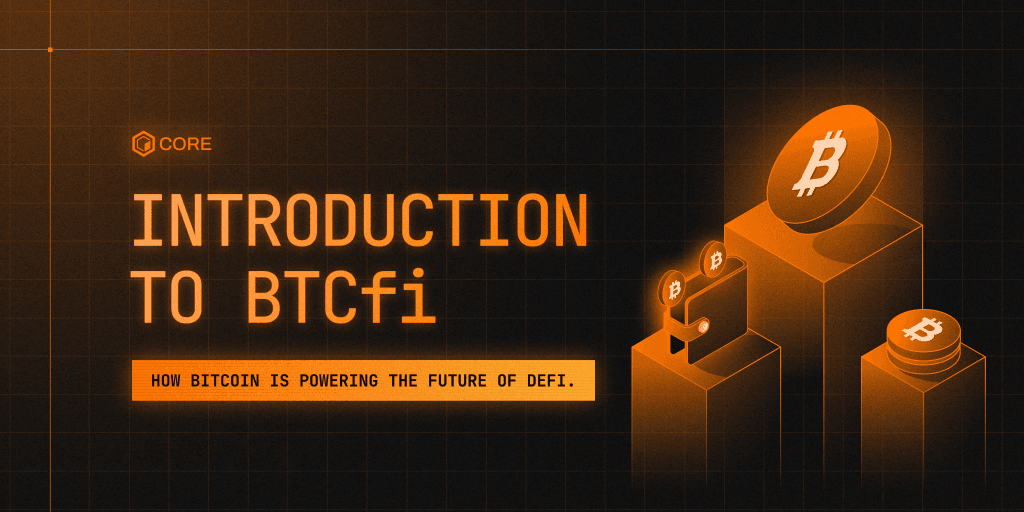
A GoMining-commissioned survey of over 700 Bitcoin holders across North America and Europe reveals that 77 percent of respondents have never engaged with any BTCFi platform. Only around 8 percent say they actively use BTCFi services for lending, staking or yield generation.

The data exposes a striking contradiction: while the BTCFi sector is receiving strong investment and attention, its reach among actual Bitcoin holders remains minimal. Over 65 percent of those surveyed could not name a single BTCFi protocol, pointing to a significant awareness gap in the industry. Roughly 40 percent of respondents say they would allocate less than 20 percent of their Bitcoin to DeFi products—underscoring cautious attitudes steeped in mistrust or lack of comprehension.

GoMining CEO Mark Zalan argues the survey reflects a mismatch in product design: “There’s an enormous appetite for these opportunities, but the industry has built products for crypto natives, not for everyday Bitcoin holders.” He cautions that BTCFi platforms must prioritise simplicity, trust and education over technical sophistication if they are to attract a broader base.

Despite limited adoption, interest in BTCFi is not absent. Some 73 percent of respondents express a desire to earn yield on their Bitcoin through lending or staking, while 42 percent would like access to liquidity without selling. Yet for now those desires largely remain theoretical.

The survey publication coincides with a sharp rise in BTCFi venture capital activity. Data from industry trackers show that in the first half of 2025, funding to Bitcoin-related infrastructure, custody, and DeFi projects reached US$175 million, spread across 32 funding rounds—20 of which targeted consumer-facing applications. Total value locked in BTCFi has also climbed, hitting US$6.6 billion by mid-2025, up from modest levels just a year earlier.

Industry analysts see this as a pivotal moment. BTCFi is theoretically well-positioned: Bitcoin holders collectively control over US$1 trillion in assets, and unlocking even a small portion into yield markets would shift capital flows substantially. But bridging the adoption chasm requires more than protocol robustness—it demands user trust, transparent security models, and intuitive onboarding.

Several projects are experimenting with custodial BTCFi models that reduce user friction, essentially merging decentralised finance with familiar wallet experiences. These hybrids aim to lower the barrier to entry for mainstream holders who are wary of self-custody risks. Others are focusing on streamlined education and marketing campaigns to bring awareness of BTCFi’s value proposition to non-tech audiences, rather than relying exclusively on high-end technical features.

Skeptics argue the reliance on Ethereum’s DeFi archetype may be a poor fit for Bitcoin’s more conservative base. BTCFi protocols often demand bridging, wrapping or interacting with smart contracts—actions that alienate users comfortable with simpler vehicles like ETFs and custodial wallets. A portion of Bitcoin holders remain risk-averse by nature, preferring regulated, custodial holdings and avoiding experimental protocols.

Some in the industry suggest a phased approach: target early adopters first, establish trust metrics, then gradually roll out to mainstream holders. Others urge a revisit to design philosophy itself: ensuring BTCFi can deliver yield, liquidity and composability while behaving in a way Bitcoin users find intuitive and safe.

The Ai Everything Global Supernova Challenge concluded in Dubai with Pulsar. ml crowned champion among 30 startups from 15 nations vying for a USD 60,000 prize pool. The event drew over 150 global investors representing some USD 50 billion in assets under management, who watched founders pitch AI solutions across sectors including robotics, fintech, e-commerce and healthcare. Pulsar. ml, based in Canada and led by founder Mohamed […]

OPEC+ delegates are weighing two divergent paths for November oil quotas: a modest lift mirroring October’s 137,000 barrels per day increase or a more aggressive jump, possibly two to three times larger. Diplomatic and market pressures appear to be pulling members in different directions.

Ahead of Sunday’s formal meeting, one source familiar with the deliberations described 137,000 bpd as the “base case,” replicating this month’s incremental pace. A second source, speaking on condition of anonymity, indicated that under more aggressive assumptions the group may opt for increases of 280,000 bpd or even 400,000 bpd. Those in favour of larger hikes argue that strengthening demand and constrained Russian output justify a bolder step.

Analysts are aligning with the moderate view. Goldman Sachs, for instance, projects a November quota increase of around 140,000 bpd, citing tight inventory levels in Asia and Europe and declining U. S. crude stockpiles. Pressure for a more substantial increase, however, is mounting given elevated oil prices and a desire among key producers to reclaim or expand market share.

During a meeting of the Joint Ministerial Monitoring Committee this week, OPEC+ emphasised full compliance with output agreements, urging shirking members to compensate for previous breaches. While the JMMC lacks decision-making power on quotas, it retains the ability to summon full OPEC+ sessions if necessary. This move underscores growing unease about cohesion ahead of the upcoming vote.

Market reaction has already shown sensitivity. Oil prices—which had climbed amid tight supply forecasts—slid more than 3 per cent early this week as traders factored in the possibility of an oversupplied market if OPEC+ moves decisively upward. Further pressure arrived as Iraq’s Kurdistan region resumed exports to Turkey, adding to short-term supply. Expectations of a November increase of at least 137,000 bpd have also fed concerns about potential gluts.

Saudi Arabia is anticipated to respond to this industrial backdrop by raising its official selling prices for November crude to Asia. Refining sources suggest increases of 20–40 cents per barrel for Arab Light, and larger bumps for heavier grades—moves intended to optimise returns amid the shifted supply landscape. Observers note, however, that these pricing adjustments may be constrained by growing global volumes and rising freight costs.

Within OPEC+ circles, some major players favour the status quo increment. They caution that a more aggressive hike could undermine prices and strain discipline among reluctant members. Others view a bold move as an opportunity to reshape global oil dynamics—forcing non-allied producers to respond and reasserting the cohesion and influence of the alliance.

Russia is under particular scrutiny. Its output has been running below forecasts, and further declines—coupled with Western sanctions and infrastructure disruptions—are cited by several sources as a justification for a larger quota increase across the group. Still, Moscow’s appetite for more substantial volume gains remains unclear, balancing revenue interests with geopolitical strategy.

Botswana has become the target for a bold new data infrastructure initiative after U. S. operator ChillMine and Netherlands-based AAAS Energy inked a memorandum of understanding to develop a solar-plus-storage data centre campus near Palapye. The proposed facility, intended to support AI workloads, hyperscale operations and energy-intensive computing, will be integrated into the Leupane Energy Hub and Industrial Park. The energy backbone of the hub is planned […]

South African equities climbed to unprecedented levels on Thursday, driven by buoyant momentum in mining and financial sectors. The benchmark FTSE/JSE All-Share Index rose past its prior peak, cementing the capital market’s status as one of the continent’s top performers this year. The rally has been underpinned by a strong commodity backdrop: iron ore, platinum, and gold all posted gains, boosting mining stocks across the board. The […]

WhatsApp is rolling out a mechanism that allows users to reserve their preferred handles ahead of its planned shift to username-based identities. The feature was uncovered in the Android beta version 2.25.28.12, which includes settings linking to “username reservation” in preparation for the broader username rollout. The reservation system acts as a precursor to a full username feature that is still under development. It aims to mitigate […]

Abu Dhabi’s economy expanded 3.8 percent in the second quarter of 2025, with non-oil activity growing by 6.6 percent and, for the first time in a second quarter, making up 56.8 percent of total GDP, according to figures released by the Statistics Centre – Abu Dhabi. The emirate’s real gross domestic product reached AED 306.3 billion in Q2, rising from the corresponding period in 2024. The non-oil […]

Aluminium Products Company of Saudi Arabia and Hong Kong–based Asia Aluminum Group have inked a master framework agreement to build the largest integrated downstream aluminium industrial complex in the Kingdom, with planned investment reaching up to USD 500 million. The initiative centres on three joint ventures covering aluminium extrusion, modular housing, and solar panel frame manufacturing. The agreement was signed in Hong Kong by ALUPCO Chief Executive […]

Saudi Arabia confronts mounting fiscal headwinds as oil revenues falter and large-scale investments under its Vision 2030 agenda intensify strain on the state’s budget, a fresh analysis by Fitch Ratings warns. Fiscal consolidation efforts are threatened by rising expenditures, volatile energy markets and valuation setbacks to flagship development projects.

Fitch anticipates the kingdom will record a fiscal deficit equivalent to 5.3 percent of GDP in 2025—more than double earlier forecasts of 2.3 percent—and projects a narrowing to 3.3 percent in 2026. That trajectory, the ratings agency argues, rests on fragile assumptions about revenue rebound and disciplined spending cuts. The downgrade in oil income, combined with persistent capital outlays, introduces high risk to Saudi’s consolidation plans.

The Public Investment Fund, corner-stone of Vision 2030, channels vast investment into infrastructure, technology, tourism and real estate. But it has also borne losses: in 2024, the PIF recognised an $8 billion writedown of its “gigaprojects,” including NEOM, reflecting cost overruns and market volatility. That impairment eroded some of the cushion these high-profile ventures were meant to provide.

Fitch treats PIF as a government-related entity, equating its credit profile with that of the sovereign given its central role in state economic strategy and the expectation of ongoing state support. However, Fitch cautions that heavy spending commitments in the pre-budget statement expose weaknesses in the consolidation path. The agency notes that worsening oil market dynamics and delays in translating megaprojects into stable returns heighten exposure.

Saudi Arabia’s finance ministry projects 2026 revenues of 1.14 trillion riyals against expenditures of 1.31 trillion, signalling an ambition to shrink deficit to 3.3 percent. The government anticipates revenue growth of 5.1 percent and spending reductions of 1.7 percent relative to 2025 projections. But achieving that will depend heavily on improved non-oil income and restrained capital outlays.

Crude price downturns have compounded pressure. With oil income constituting roughly 60 percent of Saudi’s state revenue, any softness in the energy market imposes acute stress. Analysts say the kingdom is caught in a bind: it must maintain investment momentum to stay on track with Vision 2030, yet it must also restrain spending lest debt and deficits spiral.

Investors and economists point to NEOM as a test case. Massive in scale and ambition, NEOM has come under scrutiny following the substantial writedown. Critics suggest that the project’s capacity to generate returns fast enough to justify its cost is increasingly in question. That, in turn, weakens one of the main pillars of the kingdom’s diversification rationale.

To mitigate risks, Saudi authorities are leaning on non-oil revenue sources, including taxes, fees and state levies, which remain robust. Public consumption and private sector growth also play supportive roles. But these revenue streams may not suffice to offset deep slippage in oil proceeds.

Valetax, a leading global provider of trading services, is proud to announce its participation as an Elite Sponsor at Forex Expo Dubai 2025, one of the world’s most prestigious financial events. The expo will take place on 6–7 October 2025 at the Dubai World Trade Centre, drawing traders, partners, and industry experts from across the globe. As an Elite Sponsor, Valetax is set to make a remarkable […]

Bitwise has launched a new exchange-traded product on Deutsche Börse Xetra under the ticker AVNB, offering regulated exposure to Avalanche’s native token AVAX along with integrated staking rewards.

The ETP is physically backed and domiciled in Germany, aiming to deliver price-tracking performance plus yield, while eliminating the need for investors to manage staking infrastructure or custody themselves. Staking rewards are credited daily and automatically reinvested. The product references the “CF AVAX Staked Return Index” as its benchmark.

Bitwise positions the AVAX staking ETP as part of its growing European suite of institutional crypto products. Earlier offerings in its staking line-up include Ethereum and other digital assets. The firm emphasizes that this launch addresses demand from institutional and professional investors seeking yield-bearing digital asset exposure within regulated frameworks.

Under the terms, the ETP carries a total expense ratio of 0.85 per cent annually. Bitwise retains roughly one-third of the staking rewards generated, as a staking service fee to cover operational costs including validator services and infrastructure. The remainder is passed to investors, net of protocol fees and slashing risk.

Bradley Duke, Head of Europe at Bitwise, stated that AVNB “opens the door for investors to access price movements in AVAX coupled with staking rewards through an exchange-traded total return product.” He noted that its regulated structure and transparency aim to bridge the traditional capital markets with crypto infrastructure. John Wu, President of Ava Labs, welcomed the development, saying that offering access through established market systems expands participation in Avalanche’s ecosystem.

Avalanche has gained traction as a scalable, energy-efficient layer-1 blockchain capable of supporting subnetworks tailored for compliance, governance and performance. Its adoption extends across tokenisation, decentralised finance, gaming and payment systems. The ability to stake AVAX is an integral feature of the network’s consensus, making yield products a natural extension for investors.

VISHNU RAJA
RYO YAMADA
HITORI GOTOH
IKUYO KITA