News related to
Expo

Crypto markets endured a sharp shake-out as leveraged positions worth roughly $800 million were liquidated within a single 24-hour span, wiping out a wave of long bets across major digital assets.

The dump was triggered when Bitcoin slipped below a key price threshold, pressuring highly leveraged long positions on futures markets and prompting a cascade of forced sell-offs. Platforms such as Hyperliquid and Bybit reportedly absorbed the majority of the liquidations, underscoring how overextended trader leverage remains widespread even after prior volatility.

Data compiled by derivatives-monitoring firms shows hundreds of thousands of traders saw their positions wiped out, reflecting a broad-based unwind rather than a handful of large outliers. Long positions accounted for the lion’s share of the losses, a pattern that analysts argue deepens near-term downside risk while simultaneously resetting excessive leverage.

Market participants suggest the liquidation sequence was worsened by macroeconomic uncertainty. Signals from major central banks hinting at tighter monetary policy have quelled risk appetite, undermining speculative crypto bets built on hopes of renewed easy capital. A stronger dollar and rising bond yields weighed on crypto sentiment and intensified pressure on leveraged positions.

Declines weren’t limited to Bitcoin. Ethereum and other large-cap altcoins also suffered sharp drawdowns as falling prices triggered liquidation cascades across the derivatives market. As leverage unwinding rippled through the system, traders who had bet on a sustained rebound found themselves among the hardest hit.

Some investors framed this purge of leverage as a potential reset for the crypto market. Clearing out excessive long exposure might pave the way for more stable price action if broader buying support returns. Others, however, cautioned that forced liquidations could destabilise confidence and deepen volatility — especially if macro headwinds persist.


Security analysts working on China-linked cyber espionage have deepened scrutiny of two Beijing-based organisations that appear to support the country’s intelligence infrastructure. The Beijing Institute of Electronics Technology and Application and its subsidiary Beijing Sanxin Times Technology Co., Ltd. are now under particular focus for allegedly supplying advanced steganography tools and network-penetration services to agencies tied to the Ministry of State Security.

BIETA has built a decades-long publication record in information hiding research, with around 40–46 percent of its 87 peer-reviewed papers between 1991 and 2023 devoted to steganography methods. Observers note that those outputs align with covert-communication and data-exfiltration requirements typical of state espionage missions. CIII, meanwhile, boasts copyright registrations for software capable of disguising malicious code within images, audio and video files, and has offered foreign-developed network simulation and penetration-testing tools that are frequently repurposed by advanced persistent threat actors.

Officials familiar with the intelligence landscape argue that BIETA and CIII function less like independent private firms and more like technology-enablement arms of China’s state-security apparatus. Evidence cited includes overlapping leadership — several BIETA executives have held or continue to hold roles within organisations tightly linked to the MSS — and a shared location: BIETA’s headquarters sit adjacent to the MSS First Research Institute in Beijing, a facility believed to be behind China’s mass surveillance infrastructure in regions such as Xinjiang.

The role of front organisations like BIETA and CIII expands beyond development of steganographic tools. According to analysts, these firms provide a bridge between Western technical innovation and China’s intelligence needs by acting as intermediaries for acquiring or licensing foreign cybersecurity and network-monitoring products. Through such supply-chain activity, capabilities like deep network simulation, cyber-range training and payload obfuscation may be imported under the guise of legitimate commercial transactions.

Linking BIETA and CIII’s activities to actual APT campaigns remains difficult, in part because those campaigns rely on clandestine infrastructure and rarely include public attribution. Nevertheless security researchers point to historical patterns: Chinese-linked APTs have employed image, audio and video steganography to deploy malware or smuggle exfiltrated data; such techniques were documented in operations as far back as 2013. These precedents match the capabilities now associated with BIETA and CIII’s publicly disclosed research and product catalogue.

Last year’s exposure of another contractor, i‑Soon, offered insight into how the wider ecosystem operates: leaked internal communications and product manuals revealed use of malware management platforms tied to major intrusion campaigns against governments and companies globally. That development affirmed concerns that front organisations could serve as staging grounds for supply-chain attacks, with steganographic delivery mechanisms functioning as invisible carriers for payloads.

Coupang has admitted that unauthorised access exposed the personal information of 33.7 million customer accounts, marking the worst data leak in South Korean history. The leaked data includes names, email addresses, phone numbers, delivery addresses and some order histories, while payment credentials and login details are said to remain secure. The breach first began on 24 June and remained undetected until 18 November, when the company discovered suspicious access affecting about 4,500 accounts — a figure swiftly revised upward as investigators uncovered the full scale of the leak.

Police investigators are analysing server logs and have identified the IP address used in the attack, triggering efforts to trace the suspect. Authorities have not confirmed the nationality of the person under suspicion, though local media have pointed to a former employee of Chinese origin. Coupang filed a formal complaint on 25 November under legislation covering unauthorised access and data theft, and the probe has since turned into a full-fledged criminal investigation.

In response to mounting public concern, the Ministry of Science and ICT convened an emergency meeting to examine whether Coupang violated national data-protection laws. The government has warned that the exposed information — though not financial in nature — could easily be used for phishing, identity theft or other scams, particularly given the extent of the leak and the volume of personal data involved.

Coupang says it blocked the breach route as soon as the intrusion was confirmed and has engaged external cybersecurity experts to strengthen internal monitoring. The firm also issued a public apology through its chief executive, pledging full cooperation with law enforcement and regulatory bodies.

A new study led by researchers at Stanford demonstrates that social media polarisation can be eased through modest adjustments to content ranking rather than content removal or heavy moderation. The team developed a browser-based tool that reorders users’ feeds on X to push down posts containing extreme partisan hostility, calls for political violence or antidemocratic rhetoric. When applied in a field experiment during the 2024 US election, […]

By Nantoo Banerjee It is encouraging to note that the government has decided to invest large sums of money in support of rare earth magnet manufacturing and substantially improve the country’s rare earth-based metals production to escape China’s global chokehold in this strategic sector. Presently, there are a few small Indian companies engaged in manufacturing […]

The article India’s Push For Self-Reliance In Rare Earth Magnet Making Is Laudable appeared first on Latest India news, analysis and reports on Newspack by India Press Agency).

Japan’s 10-year government bond yield jumped to 1.84 percent, marking its highest level since 2008, sending ripples across global financial markets. Equities and risk assets came under pressure while investors reassessed portfolios built on cheap Japanese funding.

The surge reflects an abrupt shift away from decades of near-zero rates in Japan, transforming the dynamics of global capital flows. Long considered a foundation of stability, Japanese government bonds are now drawing fresh interest, prompting capital repatriation as investors seek higher yields at home. This shift threatens to unwind the entrenched “yen carry trade,” where investors borrowed yen cheaply to pour money into higher-yielding markets abroad — including equities and cryptocurrencies. With yen-denominated debt now offering compelling returns, such cross-border funding strategies are losing appeal.

As liquidity conditions tighten, markets for risk assets are being reshaped. Cryptocurrencies and tech stocks, once buoyed by easy global credit, have borne the brunt of investor risk aversion. Traders point out that this yield shock was partly triggered by a shift in market expectations around the Bank of Japan, which has signalled the possibility of further rate increases in its upcoming policy review. That, combined with concerns over Japan’s sizeable fiscal obligations and growing government borrowing, is pushing bond yields across the maturity curve higher — including 20-, 30- and 40-year maturities that recently recorded historic highs.

For global investors, the implications are stark. Funds and hedge-fund managers that relied on yen-funded carry trades now face rising funding costs and diminishing returns. Emerging markets and growth-oriented sectors that thrived on abundant liquidity may see capital outflows as investors retreat to safer, yield-bearing bonds. Currency markets have already reacted: the yen has strengthened sharply, adding pressure on exporters and raising the cost of dollar-denominated investments for Japan-based holders.

Analysts note that this yield shock does not necessarily spell widespread collapse — but signals a structural recalibration. Portfolios will need to adapt to a world where Japanese bonds are no longer a funding tool, but a competing asset class in their own right. For risk assets to recover, markets will need fresh capital inflows rather than the easy money of the past.

Oil prices climbed as OPEC+ upheld a halt on output increases through the first quarter of 2026, prompting traders to weigh the repercussions of escalating geopolitical tensions around Venezuela. Brent crude futures hovered close to $63 a barrel while U. S. West Texas Intermediate rose above $59, reflecting tentative optimism in energy markets. The group’s decision to maintain the pause—originally declared at the start of November—was confirmed […]

Advertisements

Arabian Post Staff -Dubai Leaders of the oil-exporting alliance OPEC+ confirmed they will maintain their pause on increasing crude output through the first quarter of 2026. The group’s decision, reconfirmed after a weekend of virtual meetings, reflects growing evidence of oversupply in global oil markets and subdued demand prospects for early 2026. The eight member countries involved in output adjustment — among them Saudi Arabia, Russia, UAE, […]

By K Raveendran An evolving convergence of political intent and economic pragmatism is giving fresh momentum to the India–Russia relationship, placing the forthcoming summit in New Delhi as a significant moment in a partnership that has already weathered decades of geopolitical shifts. The visit of President Vladimir Putin, framed within the terminology of a ‘Special […]

The article Delhi Summit To See A New Strategic Reset In India-Russia Partnership appeared first on Latest India news, analysis and reports on Newspack by India Press Agency).

Arabian Post Staff -Dubai A US$500 million Sukuk issued by Sharjah Islamic Bank has begun trading on Nasdaq Dubai, strengthening the exchange’s position as a leading hub for Sharia-compliant debt instruments and marking another step in Sharjah’s broader capital-raising strategy. The exchange confirmed that the five-year issuance, structured under the lender’s US$3 billion Trust Certificate Issuance Programme, enhances the visibility of Gulf-based issuers seeking to tap international […]

By Ashok Nilakantan Ayers SILICON VALLEY / SAN FRANSISCO / CALIFORNIA: The numbers are staggering. Microsoft has spent over $20 billion building data centres stuffed with the most powerful computer chips ever made. Meta is burning through billions more, weaving artificial intelligence into Instagram, WhatsApp, and Facebook. Google and Amazon are locked in a cloud-computing […]

The article The Great AI Gold Rush By US Big Tech Companies Through Huge Investment appeared first on Latest India news, analysis and reports on Newspack by India Press Agency).

FG Gold Limited has closed a US$330 million senior debt agreement with the Africa Finance Corporation and the African Export-Import Bank, unlocking financing for the development of the Baomahun Gold Project — set to become Sierra Leone’s first large-scale commercial gold mine. The facility was formalised during AFC’s investor forum in London, marking one of the most significant mining deals in the country’s history. The Baomahun project […]

OpenAI disclosed a data breach involving its analytics provider Mixpanel, confirming that a security lapse allowed unauthorised access to certain API user details but did not compromise ChatGPT message data or model-generated content. The company informed affected developers that the incident, traced to November 2025, exposed names, email addresses and limited account-related metadata, prompting a broader review of third-party integrations across its platform. OpenAI stated that the […]

South Korea’s largest cryptocurrency exchange saw roughly $36 million drained from its hot wallet linked to the Solana network in what officials describe as an “abnormal withdrawal”. The breach triggered an immediate freeze on deposits and withdrawals. The operator, Dunamu, moved remaining assets into cold storage and pledged to fully reimburse all affected users.

Authorities in Seoul identified the hacking group Lazarus Group — long associated with previous crypto thefts — as the prime suspect behind the intrusion. Investigators plan an on-site inspection of Upbit’s systems to determine how attackers bypassed security protocols.

The tokens siphoned off included SOL alongside several Solana-ecosystem assets. Observers noted that the attack bears striking resemblance to a prior Upbit breach in 2019 — when 342,000 ETH disappeared under circumstances later attributed to Lazarus and associated groups.

Security firms monitoring on-chain flows report that the speed and pattern of withdrawals mirror those from Lazarus-linked incidents. Analysts warn that the hack underscores persistent vulnerabilities when hot wallets — the always-online accounts exchanges use for frequent transactions — remain exposed to governance failures or credential compromises.

The timing of the incident coincided with a corporate milestone for Dunamu: the day saw the public announcement of a planned merger with technology firm Naver. Some security experts speculate that the attackers might have deliberately chosen the moment to maximise impact on market confidence and regulatory attention.

Upbit’s management emphasised that user assets held in cold storage remained untouched. The company began working immediately with token issuers and blockchain-analytics firms to freeze traceable stolen funds. Officials involved in the probe noted the laundering techniques — rapid mixing of tokens across multiple wallets and networks — reflect a refined modus operandi honed over several high-profile attacks.

Kenya’s total exports during the second quarter of 2025 rose by 1.7 per cent to reach KSh 280.0 billion, while imports grew more sharply, pushing up the overall merchandise trade deficit. That dynamic contributed to a wider current account shortfall and signalled that economic headwinds could complicate the country’s external balance even as growth picks up. Export strength this quarter was driven largely by gains in coffee, […]

Europe’s police-intelligence agency appears poised to appoint a senior Italian law-enforcement official as head of its financial-crime division, as the bloc intensifies efforts to track illicit flows across borders. The official, named by insiders as Giuseppe Lopez, would assume responsibility for coordinating investigations into money-laundering, fraud and cross-border financial crime — a move that signals a sharpening of Europe’s enforcement stance. Lopez is described as a veteran […]

Organisers DMCC and Bybit have selected five winning projects from their global Web3 Unleashed #3 hackathon, granting a total prize pool of US$140,000 to the top teams. The live finale took place at S/O Uptown Dubai where finalists pitched across six tracks — DeFi, Web3 Gaming, SocialFi, Infrastructure, Tokenisation, as well as two new areas, DeFAI and DeSci.

More than 90 teams applied from around the world and ten were chosen to present before a panel of industry experts and investors. Judges assessed the entries on technical execution, innovation, business potential and real-world impact. The five winners were Yumi Finance, Glint Analytics, Sorachain AI, Aurayale and Spout Finance.

Ahmed Bin Sulayem, Executive Chairman and CEO of DMCC, said the Web3 Unleashed programme has evolved from a regional initiative into a global benchmark for Web3 innovation, and adding new tracks this year reflects organisers’ commitment to technological evolution and decentralised transformation.

Helen Liu, Co-CEO of Bybit, noted the growing technical depth and global calibre of hackers joining the competition. She underscored that despite volatility in crypto markets — with major tokens facing pullbacks — the exchange remains committed to backing builders working on utility-driven Web3 solutions.

Support for the hackathon came from partners including DWF Labs, Hacken, CV Labs, Blockchain for Good Alliance, Verse8, CROSS and Cointelegraph, which contributed mentorship, technical guidance and exposure to participating teams.

The hackathon’s broadened scope this year, especially with DeFAI and DeSci categories, highlights widening interest in merging blockchain with artificial intelligence and decentralised scientific research — areas gaining traction among developers worldwide. The winners’ projects are expected to benefit from access to mentors, potential backing from investors and integration into DMCC’s expanding Web3 ecosystem.

Stakeholders consider the outcome indicative of a maturing Web3 landscape in Dubai and beyond, where decentralised technologies are increasingly judged on real-world utility, technical robustness, and cross-sector applicability.

JPMorgan Chase & Co has upgraded its recommendation on China’s stock market to “overweight,” arguing that potential gains in the coming year now outweigh the risks of sharp losses. Strategists at the firm, including Rajiv Batra, explained that China’s market has already surrendered much of its outperformance this year, creating what they describe as an attractive entry point. They highlighted a combination of factors poised to support equities — widespread adoption of artificial intelligence, renewed consumption measures, and expectations of governance reforms. The performance setback appears to have reset valuations and left positioning relatively light, paving the way for what JPMorgan analysts see as potentially strong upside ahead.

The shift follows a quarter in which the MSCI China Index dropped around 6.2 percent even as broader regional indices in Asia-Pacific posted modest gains. JPMorgan noted that the Chinese equity market remains in the early stages of recovering from a downcycle that began in late 2020. With valuations now seen as acceptable and investor sentiment subdued, the bank anticipates room for rally once supportive catalysts take hold.

Analysts argue that companies tied to technology and AI stand to benefit most from upcoming tailwinds. Firms previously weighed under regulatory and macroeconomic uncertainty may now attract renewed investor interest, especially where corporate governance improvements and capital discipline have strengthened balance sheets. Entities with exposure to domestic consumption, industrial automation, electric vehicles, and energy storage are viewed as especially well positioned.

Some investors remain cautious, citing lingering macroeconomic headwinds, weak property prices, deflationary pressures and subdued consumer sentiment that have dampened retail participation in equity markets. But for long-term investors with a willingness to absorb volatility, JPMorgan’s call marks a turning point: the market’s immediate downside appears limited while its upside — if China’s growth impulses and structural reforms materialise — could be substantial.

JPMorgan also sees potential gains for Asian equities more broadly. With China, Hong Kong, South Korea and India judged as overweight, and Taiwan as neutral, the bank expects the MSCI Asia ex-Japan Index could rise roughly 15 percent from current levels if global liquidity remains supportive. Regional equities, they argue, may benefit from a reorientation of capital flows away from developed markets towards Asia’s current valuations.

At the same time, the bank’s optimism contrasts with more cautious forecasts from some rivals, which warn earnings uncertainty and high valuations could trigger consolidation rather than a sustained rally. That divergence underscores the highly bifurcated nature of the market: selective positioning may offer rewards, but indiscriminate exposure could remain risky.

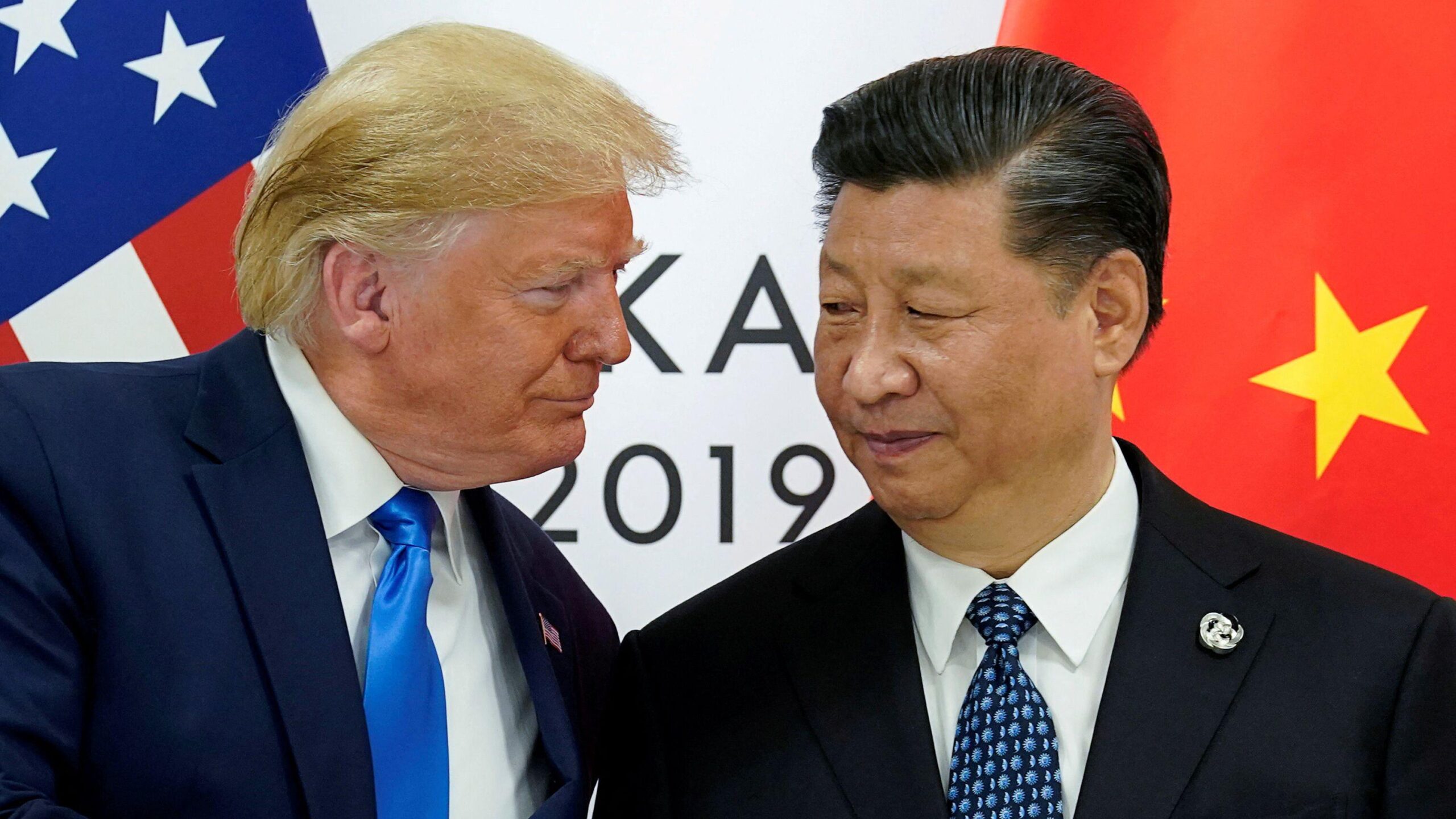
By Nitya Chakraborty 2025 has been a golden year for the Chinese President Xi Jinping in global diplomacy. In the last ten months since taking over the U.S. presidency by Donald Trump on January 20 this year for the second non-consecutive term, Chinese supremo Xi Jinping is on the roll. At the Busan summit in […]


The article How President Xi Jinping Has Emerged Taller In Global Diplomacy In 2025 During Trump.2 Tenure appeared first on Latest India news, analysis and reports on Newspack by India Press Agency).

Dogecoin has attracted fresh attention as price action strengthens in tandem with the debut of its first U. S. spot ETFs, even though initial institutional demand appears muted. Trading volume surged and chart patterns suggest growing bullish conviction among some market participants.

The first U. S.-listed spot Dogecoin ETF, Grayscale GDOG ETF, began trading on the NYSE Arca with a zero-fee structure for early investors. Its opening-day volume totalled just $1.41 million—well below some analyst estimates—but the listing nevertheless marks a milestone, signalling growing institutional interest in meme-coins like Dogecoin. The ETF’s modest start prompted tempered expectations, yet it underscores a desire among asset managers to provide regulated exposure to DOGE beyond speculative retail trading.

Parallel to the ETF launch, DOGE’s price behaviour has drawn attention. The token has been defending a support zone around the $0.15 level. Technical indicators show a compression of exponential moving averages and the formation of a falling wedge on daily and 12-hour charts—structures often interpreted by analysts as consolidation preceding a potential breakout. Should DOGE clear the resistance zone near $0.154–$0.16 with convincing volume, traders believe a move toward $0.18–$0.20 could follow.

Some traders cite the emergence of “higher lows” in recent trading sessions as evidence that buying pressure is gradually building. That pattern reflects increasing confidence in the token’s support base, potentially signalling a shift away from prolonged downtrends that have weighed on many altcoins over recent months.

Still, scepticism persists among observers. The low launch volumes of both the Grayscale ETF and comparable products highlight caution among institutional players. Compared with high-visibility fund flows into leading cryptocurrencies such as Bitcoin, the uptake of DOGE appears subdued—underscoring doubts about the token’s long-term appeal beyond meme status.

Macroeconomic conditions and broader market sentiment remain uncertain. Elevated volatility in crypto markets, combined with macroeconomic headwinds, may continue to dampen aggressive accumulation strategies. For DOGE to sustain upward momentum, technical breakout must align with renewed investor conviction.

At present, DOGE’s trajectory appears to hinge on whether it can secure a decisive breakout above the $0.16 resistance zone backed by volume. A successful move could ignite a rally toward $0.18–$0.20 and possibly higher; failure to do so may leave the token vulnerable to further consolidation or declines.

Stock market information for Dogecoin

AI’s most celebrated breakthroughs have lived almost entirely behind glass. Models generate words, sketches and synthetic universes, but the physical world remains stubbornly uninterpreted and largely untouched by this computational flourish. As companies push toward systems that move, react and collaborate like autonomous agents, a quieter truth is settling in across California’s innovation core: intelligence can no longer remain suspended inside screens. The next era is about […]

BANGKOK, THAILAND – Media OutReach Newswire – 27 November 2025 – SCG is advancing its “Regional Optimization” strategy by positioning Vietnam as a key production base to support domestic consumption and exports to global markets. The company is showcasing the strengths of Long Son Petrochemicals (LSP), Vietnam’s first fully integrated petrochemical complex, and Binh Minh Plastics (BMP), the country’s leading manufacturer of premium plastic pipes and fittings. […]

Weak cybersecurity strategies leave businesses exposed Businesses must prioritise strengthening leadership technology capabilities AI challenge is to balance efficiency gains and preserve human expertise KUALA LUMPUR, MALAYSIA – Media OutReach Newswire – 27 November 2025 – Malaysian businesses are rapidly adopting AI and data analytics, but weak cybersecurity strategies are leaving them exposed to growing digital threats, according to CPA Australia’s latest Business Technology Survey. While 87 […]

By K Raveendran A quieter phase has set in around discussions on a potential trade agreement between India and the United States, yet the subdued optics conceal a period of more intense negotiation. Officials on both sides describe a process that has deliberately stepped away from public signalling, opting instead for steady and less visible […]

The article India, US Energy Alignment Shapes A Quieter Trade Push appeared first on Latest India news, analysis and reports on Newspack by India Press Agency).

VISHNU RAJA
RYO YAMADA
HITORI GOTOH
IKUYO KITA
Just in:
Microsoft restores services gradually but gives no recovery deadline // Crescent Enterprises venture arm funds Oyster Therapeutics development // Sun World Ba Den Mountain marks Vietnam Culture Day, welcoming Cambodian visitors over Bon Om Touk // The Honey Trap Is The Headline, The Chip Pipeline Is The Story // US authorities dismantle North Korean cryptocurrency deception infrastructure // US resumes flights after nationwide air traffic shutdown // From Dubai to the EU: how UAE-based crypto firms can expand under MiCA // Microsoft outage leaves Outlook and Teams users disconnected // China Reconciled To U.S. Curbs On Chips Exports, Woos South Korea For Supply // L’OCCITANE Celebrates 50 Years Of Provençal Craftsmanship With Holiday 2026 Collection // TORRAS Launches Two New iPhone Duo Cases from Its Popular Ostand Series, Addressing Foldable Phone Users’ Concerns About Difficult Stand Positioning and Scratches // Woman found dead as bank moves to repossess home // Fujairah highway pile-up leaves 14 dead and 30 injured // EBANX and Eneba strengthen partnership in Latin America with 138% YoY growth in payment volume // Inpex reaffirms Gulf oil strategy despite shipping constraints // October Food Price Shock Has Far Reaching Consequences // Nvidia appoints Colette Kress interim chief after Huang departure // Yicura BioMed Advances Dual Capital and Industrial Strategy: Completes First Closing of Series B Financing Led by Gobi Partners // Messi affair SIT finds all-round violations // Microsoft apologises as Outlook services recover after outage //