Just in:
Coinbase targets 2027 launch amid state gambling lawsuits // Sabarimala booking discrepancies prompt sabotage angle probe // Dubai Introduces SHARH, an AI-Powered Platform Helping Entrepreneurs Buy, Sell and Manage Businesses in the UAE // Diabetes Malaysia And Alpro Pharmacy Set National Record With 11,007 Most Blood Glucose Screenings Conducted Across Malaysia In Just 48 Hours // Sharjah clears Kalba free zone plan for 400MW complex // Russia permits retail cryptocurrency purchases under regulated framework // Thailand’s Most Iconic New Year’s Celebration Returns: ICONSIAM Unveils “Amazing Thailand Countdown 2027” // Padmini follows Padmaja for ‘ghar vapsi’ // Saudi Arabia schedules multinational top-up tax for 2027 // Workday targets Honeydew purchase to unify AI metrics // Sui activates Hashi Bitcoin lending across partner network // LittleLives, Little Lab and SEGi College Sign MOU to Explore Early Childhood Education Collaboration Across ASEAN // European Commission takes systems offline after AI cyberattack // 2026 Tropical Rainforest Ecosystem Partners Conference Kicks off in Hainan // Oil futures rebound after Riyadh strikes and tanker alerts // Dalilk Academy reaches 27 million, targets 100 million by 2030 // Toward a Shared Future for Humanity: Rethinking Civilizational Exchange // Promoting Common Human Development Through Exchanges and Mutual Learning Among Civilizations // Jaiedco and Golden Bridge Announce Strategic Collaboration for a New Dubai Islands Development // ED searches five districts in probe against hawala //

News related to
Expo

Sub-Saharan Africa’s gross domestic product is now projected to grow by about 3.8 percent in 2025, up from 3.5 percent in 2024, as inflation moderates and foreign exchange markets stabilise across many nations. The updated outlook emerges from the latest “Africa’s Pulse” report by the World Bank, which highlights a more favourable macroeconomic backdrop enabling central banks to ease policy constraints and stimulating consumption and investment. The […]

Since its arrival in September 2025, the XPL token has drawn attention as the fulcrum of Plasma’s stablecoin-first blockchain vision. The network, engineered to process high-volume stablecoin transfers with minimal friction, stakes much on XPL’s design, distribution, and incentive architecture. A close look at how the token functions, how it has been received in markets, and what early ecosystem moves suggest reveals both promise and pitfalls.

XPL is conceived as the backbone of network security, transaction operations, and ecosystem growth. Under Plasma’s model, validators will stake XPL to secure the network under the PlasmaBFT consensus protocol, earning rewards in return. Meanwhile, the token also acts as the medium for executing non-basic transactions and participating in governance-like decisions tied to ecosystem programs. In that sense, XPL parallels Bitcoin’s role on the Bitcoin network and Ether’s role on Ethereum, though with nuances shaped by Plasma’s stablecoin orientation. The team states that its architecture deliberately ties token mechanics to campaign-driven incentives designed to migrate traditional financial flows onto its rails.

From a distribution perspective, Plasma launched with a fixed supply of 10 billion XPL. Ten percent was allocated to a public sale, while 40 percent was reserved for ecosystem and growth initiatives. At mainnet beta, 8 percent of the total supply was unlocked to support initial liquidity, partner incentives, and launch integrations. The remainder—particularly allocations for team, investors, and long-term contributors—follows graded vesting schedules to temper sudden sell pressure. In the public sale design, non-U. S. participants’ tokens were fully unlocked at launch, while U. S. participants face a 12-month lockup. This dual-track unlocking scheme aims to balance inclusion and capital discipline.

The tokenomics also include a built-in inflation schedule and fee mechanics intended to contain supply pressure. Initial validator rewards are targeted around 5 percent per annum, with planned reductions over time toward 3 percent baseline. Meanwhile, the protocol supports a form of fee burn inspired by EIP-1559; as transaction usage scales, some portion of fees will be removed from supply, offsetting inflation. The combined effect is intended to sustain staking incentives without runaway dilution. Another technical feature is Plasma’s “paymaster” system, which allows standard USDT transfers to carry zero fees, subsidized by the protocol itself. That mechanism reduces the necessity for every user to hold XPL merely to pay gas, lowering adoption friction.

Market reception to XPL turned dramatic almost immediately. At launch, the network held more than USD 2 billion in stablecoin liquidity across over 100 DeFi protocols. Within 24 hours of trading, XPL surged by over 50 percent in some reports—a mark of speculative demand meeting limited immediate circulating supply. Some early buyers from the public sale reportedly reaped significant multiples, even as Plasma distributed bonus tokens to pre-deposit participants regardless of purchase. At peak, XPL reportedly hit above USD 1.50 before retracing to levels around USD 0.90 to USD 1.10. Observers estimated its fully diluted value approaching USD 8–10 billion, reflecting soaring expectations baked into launch pricing.

Yet that market euphoria also exposes structural tensions. The disparity between circulating supply and total supply creates a potential “float risk”—many tokens locked under vesting may exert downward pressure as unlocks commence. The timing and pacing of those unlocks will test whether early demand can be sustained under growing supply. Furthermore, while the paymaster model reduces friction, it also transfers the burden of fee subsidies to the protocol’s reserves. If usage scales unpredictably, that subsidy cost could challenge sustainability unless fee revenue or ecosystem yield compensates.

Another variable is how decentralized and secure the validator structure becomes. The strength of PlasmaBFT relies on meaningful decentralization and active participation. If validator concentration remains high or slashing risks are unevenly applied, token holders may question whether XPL truly underpins a secure, trust-minimized system. The use of reward slashing somewhat mitigates direct capital loss risk, but critics argue it may weaken incentives for strict validator discipline.

Beyond core mechanics, XPL’s ecosystem deployment matters. Early integrations offer a glimpse: Plasma granted XPL funding to Clearpool to support PayFi, a stablecoin‐settled credit infrastructure. That move reflects a play to establish secondary use cases—credit rails, yield protocols, merchant flows—that could entrench XPL usage beyond staking and fees. Meanwhile, Binance’s announcement of a 75 million XPL airdrop tied to its HODLer program signals aggressive token distribution into retail investor hands. That distribution may expand user base but also risks speculative churn.

On the regulatory front, XPL must navigate emerging scrutiny. Since stablecoins straddle monetary and securities domain, a blockchain built entirely around them invites questions about oversight and compliance. To date, Plasma has employed jurisdictional filtering, KYC onboarding, and cautious distribution to U. S. investors, but scaling into global payments heightens exposure. If major jurisdictions impose stricter rules on stablecoin issuance or transfer, XPL’s value proposition may face constraints or require adaptation.


Tesla has introduced stripped-down “Standard” versions of its Model Y and Model 3 in China, priced at about US$39,990 and US$36,990 respectively, in an effort to stem declining demand. The clean, steep drop into affordability came with a catch: several key features have been removed. The move has triggered wide disquiet and mixed sentiment across Chinese social media platforms as observers weigh its significance for Tesla’s China fortunes.

Tesla said the new models omit elements such as leather seats, a rear-passenger screen, radio functionality and the “Autosteer” feature of Autopilot. The price cut—roughly a 10 per cent reduction from higher-end trims—aims to broaden appeal without launching an entirely new product line. Many Chinese users responded sharply, dubbing the launch a “beggar version” of Tesla. Some highlighted that domestic EV rivals already offer more complete features at similar or lower price points.

Discussions on Weibo ranged from dismissive to cautiously optimistic. One commenter asked, “The beggar’s version of the Model Y costs 230,000 yuan. Would one actually buy it?” Another compared it to offerings from Li Auto, arguing that a similarly priced Li model delivers more “intelligent” content. Others countered that buyers often criticise products online yet still purchase them, suggesting Tesla might yet move significant volume.

Analysts see the move as a double-edged sword. While it could generate volume and help defend market share, it risks cannibalising Tesla’s own higher-margin variants. According to one industry strategist, the success of this strategy depends heavily on Tesla’s ability to squeeze out cost in manufacturing, battery sourcing and logistics. If it fails to manage margins, the gambit could backfire.

Tesla’s share price dropped by about 3.6 per cent in daytime trading following the announcement. One market observer described the shift as symbolic: “Tesla is slipping into a mainstream volume play rather than remaining a luxury-tech halo.” The automaker is being cast less as a disruptor and more as a mass-market player trying to straddle both prestige and affordability.

The pressure on Tesla is mounting. Its China market share has slipped amid surging competition from local automakers such as BYD, Nio and Xiaomi, which are aggressive on both pricing and feature bundles. Earlier this year, Xiaomi unveiled its YU7 SUV boasting strong range, 800-volt architecture and performance metrics designed to challenge Tesla directly. Tesla’s market share in China fell sharply, in part because local brands are better able to integrate battery innovations, in-vehicle entertainment, and smart-home integration.

Tesla’s strategy in China is complicated further by macro and regulatory tension. The company has already suspended orders for its U. S.-imported Model S and Model X in China, possibly in response to trade tensions. Meanwhile, the Gigafactory in Shanghai remains Tesla’s main hub for local and export production of Model 3 and Model Y, representing one of its rare wholly foreign-owned plants in China.

Smartphone storage is on the cusp of its biggest leap in years as the Universal Flash Storage 5.0 specification arrives with headline sequential bandwidth touted at up to 10.8GB/s, nearly a twofold jump over today’s mainstream UFS 4. x. The stated aim is clear: keep pace with feature-rich camera pipelines and the growing wave of on-device AI so that apps open quickly, multitasking holds steady, and background […]

The RNTrust Group is set to roll out its digital-trust architecture under the banner “Infinite Trust” at GITEX Global 2025 in Dubai. The offering is built around three flagship technology pillars—BOAT orchestration, cyber-intelligence, and stratum-level time synchronisation—aimed at solving friction points faced by large enterprises operating across complex, digital ecosystems.

At the core of the strategy is Coopera BOAT, RNTrust’s enterprise orchestration and automation engine, which integrates bots, APIs, microservices, content, case-management, and AI agents under a unified platform. The company positions BOAT as a successor to legacy BPM and ECM systems, enabling long-running and cross-domain workflows across IT and business domains. Integrated AI and generative flows help with decision intelligence and unstructured data extraction. RNTrust claims the platform aligns with market forecasts that predict the orchestration market will expand markedly in the coming years.

Complementing BOAT is ThreatLeap, a cyber threat intelligence and compliance platform operating 24/7 to scan external attack surfaces, detect leaks, misconfigurations, phishing domains and advanced threats, and flag compliance gaps across regulations such as NIS2, DORA, GDPR and PCI-DSS. The system is portrayed as proactive, intended to reduce risk exposure rather than simply respond to incidents.

Lastly, the group is spotlighting StratumOne, a time-synchronisation solution leveraging GNSS signals, atomic clocks and precision engineering to deliver nanosecond-level accuracy. Target sectors include finance, telecoms, 5G networks and critical infrastructure where time precision is essential.

RNTrust leadership will host product demos and discussions at the Novotel World Trade Centre during the expo, targeting CIOs, CISOs, system integrators and partner firms. The platform claims deployments and partnerships across the GCC, Europe and the U. S., drawing on R&D centres in Southeast Europe, Italy and the UAE.

The company frames “Infinite Trust” as a unification strategy—bringing orchestration, security and timing coherence into a cohesive architecture that can scale across diverse enterprise landscapes. This positioning aims to appeal to large organisations wrestling with digital transformation, hybrid workloads, compliance burdens and the growing attack surface of distributed systems.

Market watchers note that digital trust is becoming a key battleground for software and cybersecurity vendors. The integration of orchestration and security is a direction echoed by peers embedding zero-trust and AI decision engines into automation platforms. The time-sync component adds a niche yet strategic dimension, tapping into sectors where precision timing is a regulatory and technical requirement.

Apple has removed Eyes Up, an iPhone app that collected and archived videos of U. S. Immigration and Customs Enforcement arrests, marking the second platform the company has taken down after ICEBlock. The swift removal followed concerns from U. S. law enforcement that such apps pose risks to officers. Eyes Up’s functionality allowed users to upload videos, tag arrest locations, and view past incidents on an interactive […]

The U. S. Department of Commerce has granted export licences for several billion dollars’ worth of Nvidia chips destined for the United Arab Emirates under a bilateral AI agreement struck in May, paving the way for a high-stakes test of America’s artificial intelligence diplomacy. The licences were issued through the Commerce Department’s Bureau of Industry and Security, marking the first concrete implementation of the Trump-era pact with […]

Advertisements

Arabian Post Staff -Dubai The Central Bank of the United Arab Emirates has boosted its gold reserves by about 32 percent in the first eight months of 2025, pushing the total value to AED 30.329 billion by end-August — a figure not seen before. The bank’s gold holdings stood at AED 22.981 billion at the close of December 2024. Between July and August alone, the value increased […]

Binance founder Changpeng “CZ” Zhao has publicly rejected Forbes’ assertion that his net worth is $87.3 billion, calling the figure “baseless and wildly overstated.” The dispute highlights ongoing tensions over the valuation of wealth tied to cryptocurrency assets, where transparency and methodology remain contested. Forbes placed Zhao near the top of its billionaire rankings, asserting that his holdings in Binance and related digital assets justify the $87.3 […]

A Singapore High Court hearing is scheduled on 13 October 2025 to consider WazirX’s proposed Scheme of Arrangement, marking a pivotal moment in the embattled crypto exchange’s restructuring efforts. The court will hear further arguments on HC/SUM 940/2025, a case central to the platform’s ability to repay creditors and revive operations.

The hearing follows a tumultuous legal process. In June 2025, the court declined to sanction the original scheme submitted by Zettai Technologies, WazirX’s parent entity, citing structural concerns and ambiguities in how the proposal would address creditor claims. Zettai responded by seeking an opportunity for further arguments. The court acceded to that request, setting the stage for the October proceedings.

Prior to this hearing, the court has directed both Zettai and opposing parties to submit additional written submissions. Zettai filed on 26 September 2025, and the court issued further directions on 29 September requiring clarifications by 3 October 2025. Until now, no hearing date had been formally fixed.

The background to this process dates to July 2024, when WazirX suffered a cyberattack resulting in the loss of roughly $235 million. Nearly 16 million users were affected, with withdrawals and trading suspended indefinitely. The attack was widely attributed to North Korea’s Lazarus Group.

In January 2025, the Singapore High Court allowed users to vote on a restructuring plan. The vote concluded in March, with approximately 93.1% of users endorsing the scheme. However, in May, the court declined to give the scheme its sanction, stating the proposal failed to meet the required legal standards and flagged concerns over compliance with evolving Singapore regulations. Zettai was then directed to revise the scheme and conduct a revote.

In July 2025, after further oral arguments before the court, the original June decision was set aside and a revote was permitted to consider an amended Scheme. The court also extended the moratorium until 16 September 2025. Zettai responded by preparing an updated Scheme and explanatory statement, organising a town hall for creditors, and initiating a refreshed vote.

Analysts observe that the October hearing is likely to be decisive. If the court approves the amended plan, the process could move quickly toward fund distribution, theoretically within ten business days of the effective date. Should the court require further modifications or reject the proposal, the process could be delayed significantly, potentially pushing payouts into late 2025 or beyond.

Critically, the court has scrutinised how Indian law provisions intersect with its jurisdiction. Much of WazirX’s user base resides in India, prompting concerns about cross-border legal compliance and enforceability of creditor rights. By demanding detailed supplementary submissions, the court signals caution in approving a scheme that might expose it to legal vulnerabilities.

Creditors and industry watchers remain under strain, facing uncertainty over when and whether they will receive recovered funds. Many users have awaited payouts for more than a year, and confidence in centralised exchanges has been tested further by this case.

A proposed ETF tracking the TRUMP meme coin has appeared on the Depository Trust & Clearing Corporation’s system — an infrastructural step that signals intent, though it falls short of regulatory approval.

Canary Capital, which filed an S-1 registration with the U. S. Securities and Exchange Commission for the ETF, now sees its TRUMP Coin fund listed in DTCC systems alongside other altcoin ETF candidates. The DTCC listing enables clearing and settlement readiness should approval arrive.

Analysts view the development as a technical milestone. Bloomberg ETF specialist Eric Balchunas observed that once a ticker appears on DTCC’s eligibility file, it rarely retracts — underscoring the forward momentum for the product. Nonetheless, he and others caution that DTCC inclusion is procedural and does not guarantee SEC consent.

Canary’s filing proposes that the ETF would offer exposure to the price dynamics of TRUMP token without requiring investors to self-custody the asset. To cover transaction costs inherent in the blockchain architecture, the filing permits the fund to hold up to 5 percent in Solana’s native token SOL, although it will not treat SOL as a core investment.

The TRUMP coin is a Solana Program Library token whose market value hinges heavily on political sentiment, community engagement and volatility rather than fundamental utility. Critics have raised concerns about the blending of political interests with speculative finance, warning of conflicts of interest and reputational risks to the broader crypto ecosystem.

This development coincides with DTCC’s addition of other altcoin ETFs — namely Fidelity’s Solana ETF and Canary’s XRP and Hedera funds — to its eligibility files. These moves have injected renewed optimism into altcoin ETF markets, though all such listings still await the SEC’s green light.

Momentum for altcoin ETFs has accelerated since spot Bitcoin and Ethereum funds gained approval. Still, the SEC has kept other proposals on ice, deferring decisions and delaying rulings. The regulator’s patience underscores the risk-management pressures it faces in balancing innovation and investor protection.

Canary’s TRUMP ETF filing follows earlier efforts by Trump Media & Technology Group, which has sought SEC approval for a suite of thematic “Truth Social Funds” ETFs covering areas such as energy, infrastructure and American icons.

Nvidia CEO Jensen Huang dismissed assertions that the artificial intelligence boom is mirroring the dot-com bubble, saying the current momentum rests on strong fundamentals rather than speculation. He defended Nvidia’s recent investments in AI startups and pitched infrastructure build-out as the engine sustaining growth. During a wide-ranging interview on CNBC, Huang stated that what differentiates today’s environment from the dot-com era is the depth of demand: global […]

MetaMask has rolled out an integration with Hyperliquid that allows perpetual futures trading directly within its wallet, marking a major expansion beyond its core custodial functionality. The launch went live today in selected jurisdictions, enabling users to take leveraged positions without leaving the application’s interface.

This move transforms MetaMask from a simple wallet to a more comprehensive on-chain trading hub. By embedding Hyperliquid’s perpetuals engine natively, MetaMask removes several intermediate steps that historically deter adoption—such as requiring users to traverse to external exchanges, cross chains, or cover multiple transaction fees. According to MetaMask’s global product lead, Gal Eldar, the integration “offers a frictionless path for passive holders to become active traders.” The wallet’s new “one-tap” experience is optimised for mobile usage, lowering barriers to entry.

Hyperliquid, a decentralised derivatives platform built with its own Layer 1 infrastructure, claims to support gas-free settlement and performance at scale. The platform processes tens of billions in trading volume, placing it among the leading names in on-chain perpetual markets. Hyperliquid’s architecture, with reported throughput exceeding 200,000 orders per second, underpins the performance demands of integrating derivatives directly inside a wallet.

MetaMask’s entry into this domain arrives amid sharp growth in decentralized perpetuals. In September, the total trading volume across decentralised perpetual platforms exceeded $700 billion, spurred by trader demand for leverage, 24/7 markets, and non-custodial exposure. Hyperliquid is a consistent high performer, with some estimates attributing to it a majority share of decentralised perpetual activity.

The new feature supports USDC deposits from any Ethereum Virtual Machine-compatible chain, and trades can be initiated with a single tap. The integration includes slippage checks, fee previews, and confirmation flows meant to shield users from common UX pitfalls. MetaMask’s team emphasises that the wallet retains self-custody at all stages, with users retaining control over private keys.

Critics caution that embedding leverage within a wallet may amplify risks for inexperienced users. Rapid liquidation, sharp market swings, and elevated margin requirements could expose users to sudden losses. To mitigate this, MetaMask is integrating risk-control measures and permission checks, though the success of those mechanisms will be closely watched by the community.

MetaMask’s expansion aligns with its broader roadmap. Earlier in the year, it unveiled a Mastercard-powered card feature, enabling spending directly from self-custodial wallets. It has also signalled intent to launch its native token, MASK, and is refining a loyalty rewards engine tied to on-chain activity. Those ancillary products may dovetail with its perpetuals integration, potentially weaving them into loyalty tiers, discounts, or governance models.

The decision pits MetaMask more directly against both centralised and decentralised exchanges. Centralised venues such as Binance and Bybit continue to dominate derivatives in terms of volume; however, their users must trust custody and counterparty risk. MetaMask’s proposition is differentiated by offering derivatives inside a wallet, combining convenience with self-custody.

CleanCore Solutions announced it has accrued over 710 million Dogecoin tokens in its treasury, yielding more than US$20 million in unrealised gains as it edges toward a one-billion token target.

The Omaha-based company launched its Dogecoin treasury programme on 5 September, using proceeds from a US$175 million private placement to make phased acquisitions. The holding is backed by the Dogecoin Foundation and coordinated through its corporate arm, House of Doge.

At a trading price near US$0.245 per DOGE, CleanCore values its holdings at roughly US$173.9 million, leaving a buffer over its capital outlay after marking the gains.

Chief Executive Officer Clayton Adams described the strategy as aligned with “long-term vision of insiders and the House of Doge,” emphasising that the company is not just stacking DOGE but is seeking to expand its utility and maintain disciplined treasury management.

CleanCore says it maintains sufficient cash reserves to continue its accumulation efforts. It has forged a strategic alliance with Bitstamp by Robinhood to serve as the primary trading venue for its Dogecoin operations.

On the markets, shares of CleanCore fell 8.44 per cent to close at US$2.06, before a modest rebound of 1.46 per cent in after-hours trade.

Some analysts question the relevance of mNAV metrics for companies pursuing large crypto treasuries. Greg Cipolaro of NYDIG has argued that mNAV may neglect operational businesses beyond token holdings and may not properly account for convertible instruments.

Standard Chartered has cautioned that smaller firms with aggressive crypto treasury strategies could face overexposure pressures if market volatility intensifies, predicting that consolidation may occur among weaker players.

CleanCore continues to monitor short interest in its stock while working with the SEC to register shares issued under its private placement. The company also underscores that restricted and locked shares are held by insiders, the House of Doge, and affiliates.

Wikipedia’s position as a trusted repository of knowledge is under intense pressure from the accelerating adoption of generative artificial intelligence, which poses multidimensional threats to its editorial integrity, infrastructure, and community model. Volunteer editors report surging volumes of AI-generated drafts, forcing a defensive stance rarely seen in its history. At the heart of the challenge lies the phenomenon often dubbed “AI slop” — text that superficially mimics […]

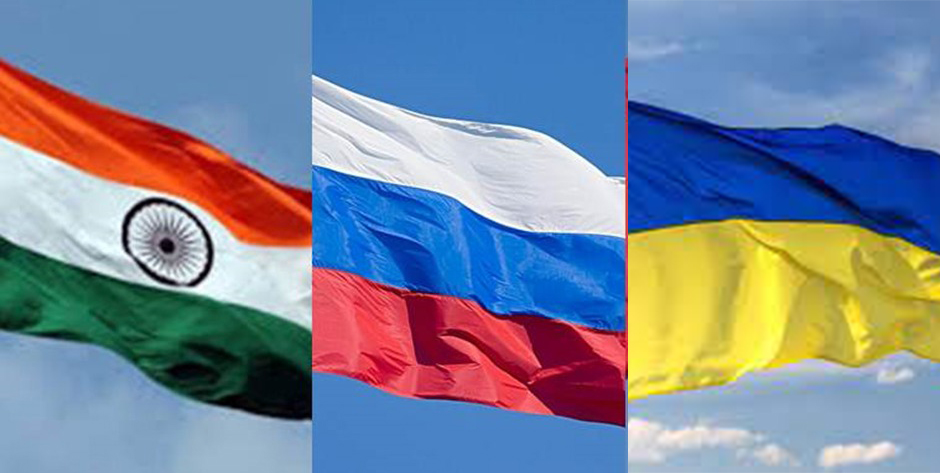
Ukraine’s 63rd Mechanised Brigade has released footage claiming that a 22-year-old Indian national, Majoti Sahil Mohamed Hussein from Morbi, Gujarat, surrendered to Ukrainian forces after fighting for Russia. The Indian Ministry of External Affairs stated it is investigating the matter, having not yet received formal confirmation from Ukrainian authorities.

In the video, Hussein says he travelled to Russia for university studies but was later convicted on drug charges and handed a seven-year prison sentence. He states that to avoid incarceration, he accepted a Russian military contract to fight in Ukraine. After only 16 days of training, he was deployed to the front lines on 1 October, and after three days of combat, asserted that a dispute with his commander prompted him to approach a Ukrainian trench position and surrender. “I immediately put down my rifle … I didn’t want to fight. I needed help,” he is heard saying in Russian. He further claims he never received promised financial compensation and that he would rather remain in custody in Ukraine than return to Russia.

Indian officials have neither confirmed his capture nor denied it. A spokeswoman from the MEA said New Delhi is “ascertaining the veracity of the report.” The Indian mission in Kyiv is reported to be seeking clarity from Ukrainian counterparts. The MEA noted it has not yet received an official notification.

If confirmed, this would mark the first verified case of an Indian national being held by Ukrainian forces after participating directly in combat on Russia’s side—although Indian nationals have previously been reported among Russian-aligned forces. In January, Indian authorities disclosed that 12 citizens had died fighting for Russia, while 16 others were listed as missing. New Delhi has repeatedly raised the issue with Moscow, urging the repatriation or discharge of Indians serving in the Russian military.

The broader phenomenon of third-country nationals entering the Russia-Ukraine war as combatants has drawn increasing scrutiny. Independent investigations estimate that more than 1,500 foreign fighters from over 48 nations have joined Russia’s military ranks. Some are believed to have been recruited under misleading promises, including job opportunities, visa benefits, or leniency in legal cases. In India’s case, accusations of coercion or trafficking have been made—families of slain Indian fighters have claimed their relatives were enticed with assurances but ultimately compelled into frontline service.

Analysts note that this case, if corroborated, underscores the murky legal and ethical terrain of foreign national participation in armed conflict. Under international humanitarian law, combatants captured in war zones may face prosecution, detainee protections, or diplomatic processes, depending on their status. The Indian government, maintaining a non-aligned posture regarding the Russia-Ukraine conflict, must balance protecting its citizens abroad with adherence to international norms and pressure from both Moscow and Kyiv.

Within India, this development is likely to intensify scrutiny over how students or migrants abroad might be exposed to recruitment schemes, particularly in countries engaged in conflict. Some previous admissions of Indians fighting for Russia suggested recruitment via third-party agents or recruitment drives run under the guise of employment for non-combat roles—later displaced into military duty. Families have, in past instances, sought intervention from Indian diplomatic missions, urging more robust preventive mechanisms.

Meanwhile, in Russia, foreign conscripts—or contracted soldiers from abroad—have been increasingly leveraged to supplement manpower. Ukrainian authorities have touted captures of foreign fighters in multiple instances, often publicising their nationality to highlight alleged exploitation or coercion. These reports frequently appear in social media or Telegram channels operated by Ukrainian units, although independent verification is sometimes challenging, given the fog of war and conflicting narratives.

The World Bank has trimmed its projection for South Asia’s economic expansion in 2026, citing elevated U. S. tariffs on Indian exports as a key drag. The region’s growth is now forecast at 5.8 percent, down from 6.6 percent this year.

The updated “South Asia Development Update” flags the U. S. trade measures as a major headwind, especially given India’s size and its integration into regional supply chains. The report sets India’s growth for fiscal year 2025–26 at 6.5 percent, up from its earlier estimate of 6.3 percent, but warns of a drop to 6.3 percent in 2026–27 as tariff pressures intensify.

The U. S. has imposed tariffs of up to 50 percent on a broad swath of Indian goods—impacting sectors such as textiles, gems and jewellery and seafood—affecting nearly $50 billion in exports. These are among the highest duties levied on any U. S. trading partner. The World Bank notes that these tariffs will particularly bite in 2026 as initial buffers from public spending fade.

Franziska Ohnsorge, chief economist for South Asia at the World Bank, asserted that the toll from trade restrictions reflects “a reversal of the gains” India had made in integrating into global value chains. She urged structural adjustments: lowering tariffs and signing free trade agreements to support export competitiveness.

Beyond India, Bangladesh and Sri Lanka show varying trajectories. The Bank upgrades forecasts for Bangladesh and Sri Lanka, citing easing fiscal strain and improving external balances. Meanwhile, Nepal and the Maldives bear the brunt of tighter global conditions, with their outlooks revised downward.

Policy responses in India are already in motion. The government launched sweeping tax cuts spanning consumer goods to automobiles, one of the largest fiscal interventions in recent years. Concurrently, infrastructure spending is being boosted to drive domestic demand and counterbalance export headwinds. The Reserve Bank of India held its repo rate at 5.50 percent in October, citing subdued inflation and leaving open room for a future cut.

Indian officials remain confident. Finance Minister Nirmala Sitharaman called the economy “resilient,” expressing faith it could absorb external shocks while targeting an ambitious 8 percent growth. The Chief Economic Adviser affirmed earlier forecasts of 6.3–6.8 percent GDP growth, downplaying long-term damage from trade friction.

International institutions have also flagged downside risks. The Asian Development Bank cut India’s FY 26 forecast to 6.5 percent from 6.7 percent, pointing to duty pressures and policy uncertainty. The IMF earlier trimmed India’s 2025-26 prediction to 6.2 percent, citing heightened global trade tensions.

The World Bank’s report emphasises that over the medium term, trade liberalisation combined with labour flexibility and investment in digital infrastructure could help South Asia reclaim momentum. Within the document, a scenario of tariff cuts and deeper trade integration is modelled to yield significant gains in productivity, employment, and output per capita.

Still, the path ahead is fraught. The report cautions that the region is vulnerable to a global slowdown, geopolitical shocks and labor market disruptions from artificial intelligence. In particular, it warns that weaker export growth from India will spill over across the region via trade, financial and migrant-worker channels.

Wizz Air Hungary is reopening bookings for flights from Abu Dhabi to several European destinations, with services beginning in October and November 2025. Flight schedules show routes from Katowice and Krakow in Poland launching on 10 October. The carrier plans to resume Larnaca services from 15 November, operating four times weekly on Tuesdays, Thursdays, Saturdays and Sundays, and Sofia flights from 17 November on Mondays, Wednesdays and […]

Ahmad Assiri Gold has done it. Gold has reached the long-awaited $4,000 per ounce mark, a level that carries psychological and symbolic significance. This moment represents a powerful and sustained rally that began with a breakout from a lengthy consolidation phase in early September, evolving into a pivotal chapter for the market and the yellow metal. Since that breakout, gold has risen by 16%, while attempts at […]

Serbia will serve as the Future Digital Economy Partner Country at GITEX Global 2025 in Dubai, becoming the first European nation accorded that role. The designation foregrounds Serbia’s ambitions to reposition itself from outsourcing hub to innovator in global tech markets.

Serbia’s IT exports crossed €3.5 billion in 2023, and the sector has maintained close to 20 percent year-on-year growth. The number of IT firms now exceeds 4,000, with many branching into domains such as fintech, health tech, AI and gaming. The Chamber of Commerce and Industry of Serbia, which leads the national delegation, views the GITEX platform as an opportunity to elevate the country’s narrative beyond cost-competitiveness to creative capacity.

Marko Čadež, president of CCIS, said Serbian firms are now pitching themselves as long-term transformation partners rather than simple vendors. He emphasised that enterprises increasingly expect strategic collaboration, not just software delivery. Meanwhile, analysts point to Serbia’s strong foundations—high math and engineering education standards, English proficiency, and relatively affordable costs—as a competitive edge in Eastern Europe.

Yet Serbia confronts headwinds. Talent retention is an ongoing challenge: many trained professionals migrate to Western Europe or the U. S. Infrastructure remains uneven, with rural areas lagging behind Belgrade in connectivity. In addition, venture capital inflows to the Balkans are smaller compared to Western Europe, constraining the ability of startups to scale aggressively.

Serbia is attempting to counterbalance those constraints through targeted programmes. The Chamber of Commerce has launched “Start 2,” a support scheme for scale-up firms, which includes mentoring and market access, and will be showcased at GITEX Europe in Berlin. The programme focuses on Serbian companies already achieving revenues above €250,000 and aims to open doors into German and EU markets.

At GITEX Global 2025, Serbia will present a showcase of startups and products under “North Star,” highlighting innovations in AI, e-commerce, predictive analytics, and diagnostics tools. Its delegation will also include outsourcing firms pitching upscaled offerings—product co-development, R&D support, and domain expertise in sectors such as telecom and healthcare.

GITEX organisers themselves have underscored Serbia’s place among rising tech nations: the 2025 edition includes 6,800 tech enterprises, 2,000 startups, and participant countries from 180 nations. Serbia joins Brazil and Pakistan as Country Partners this year—a reflection of the broader intention to diversify the event’s global footprint. The spotlight on AI, biotech, semiconductors, data infrastructure, and robotics offers Serbia a chance to align its exposure with the global themes defining tech agendas.

Oil markets climbed modestly on Wednesday as traders digested OPEC+’s decision to raise production by only 137,000 barrels per day from November — a figure widely viewed as cautious and aimed at managing oversupply pressures. Brent crude gained about 0.7 per cent to $65.93 a barrel, while US West Texas Intermediate added 0.8 per cent, reaching $62.24.

The measured increase is part of an ongoing tug-of-war between easing supply fears and softening demand estimates. Analysts argue that the restrained hike helped calm immediate market jitters about a flood of new barrels entering global markets. At the same time, the surge in output from non-OPEC producers—especially the United States—is tipping the scale toward a heavier supply environment.

The U. S. Energy Information Administration raised its 2025 forecast for domestic oil production to a record 13.53 million barrels per day, up from earlier projections. That upward revision intensifies concerns that global inventories could swell, placing downward pressure on prices. The EIA warns that crude inventories may build further, potentially squeezing prices in the coming months.

OPEC+ has signalled a cautious approach. The bloc’s members, including Saudi Arabia and Russia alongside six others, opted for incremental supply additions rather than aggressive increases. The decision underscores a balancing act: securing market share without triggering a disruptive oversupply.

Some market watchers believe the group is constrained by internal capability limits and the risk of destabilising the market. Only about 75 per cent of the targeted 2.7 million bpd raise since April has actually materialised, as certain member states struggle to meet output goals. Meanwhile, signs of macro slowdown and tepid fuel demand, especially in Asia and Europe, loom as headwinds.

Large oil majors are already adjusting strategies to navigate the tighter margins. Chevron, ExxonMobil, BP, Shell, and TotalEnergies are implementing cost cuts, trimming share buybacks, and streamlining operations to preserve balance sheets. Oil prices under $65 are straining profitability across the sector, particularly for producers with high breaking-even costs. Shell, for instance, has taken a $600 million impairment hit tied to biofuel and remediation operations in Europe.

In Argentina, falling oil revenues threaten the government’s ambitious economic plans centred on energy exports. Output at the country’s Vaca Muerta formation peaked in August but has shown signs of deceleration due to weaker global pricing and elevated costs. Local industry sources warn that strapped fiscal conditions and foreign-exchange restrictions are discouraging further investment.

Futures markets also reflect a state of tension. The structure remains sensitive to signals that either reassure or alarm about supply and demand balances. Traders are closely watching upcoming US inventory data, geopolitical developments affecting Russian shipments, and demand dynamics from China. Some analysts regard the cautious output hike as a temporary reprieve, with the risk that a sharper fall may take prices into the $50–$60 range if oversupply intensifies.

The International Energy Agency projects a potential surplus of 3.3 million barrels per day in 2026, even if current output levels persist — a scenario that would further test OPEC+’s capacity to contain downside. In contrast, OPEC’s internal modeling suggests a smaller deficit under the same conditions, reflecting wide divergences in forecasting assumptions. Investors and policymakers now wait for signs of demand resilience or fresh supply shocks, both of which could dictate whether oil stabilises in the $60s or slips further.

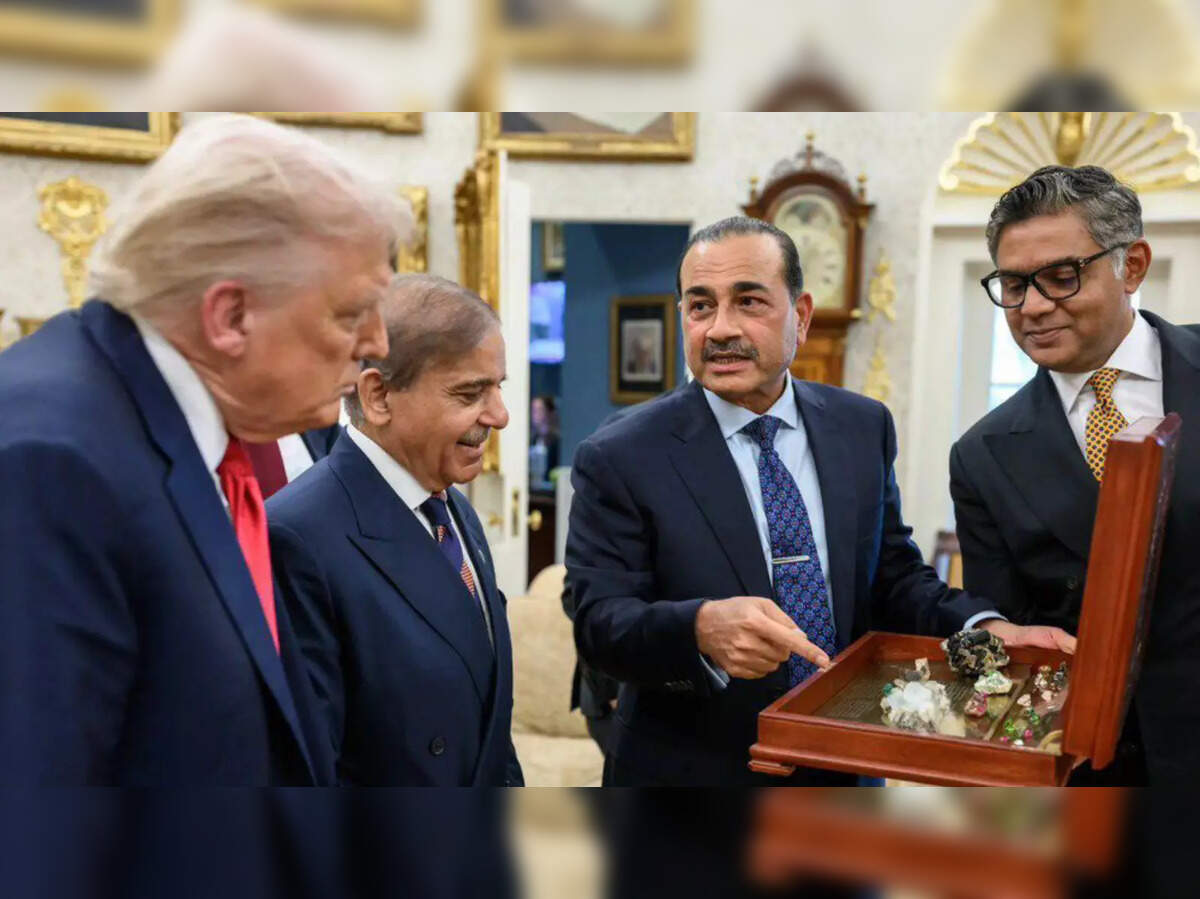
By Sushil Kutty Rare minerals included lots of ores, this was something we were taught in school and we learned about stone age, copper age and iron age, the last of which remains to this day the most basic of minerals, out of which was born steel and the term steely strength, like in ‘Superman […]


The article Pakistan Is The Dearest To Trump In Asia As Islamabad Exports Rare Earth Minerals appeared first on Latest India news, analysis and reports on Newspack by India Press Agency).

Turkish authorities reaffirmed their commitment to maintaining energy ties with Russia, dismissing US appeals to cut off Moscow from the country’s gas supply network. The Turkish Energy Minister, Alparslan Bayraktar, emphasised that existing contracts and technical dependencies render any abrupt withdrawal impractical. Bayraktar told CNNTurk that “we cannot tell our citizens: We have run out of gas,” adding that Turkey must ensure continuous supply from Russia, Azerbaijan, […]

OpenAI has struck letters of intent with Samsung Electronics and SK Hynix to supply undiced DRAM wafers for its ambitious “Stargate” AI infrastructure initiative, with projected demand reaching as high as 900,000 wafers per month—potentially equivalent to 40 percent of global DRAM output. The agreements were announced during meetings in Seoul among OpenAI CEO Sam Altman, South Korean President Lee Jae-myung, Samsung Chairman Jay Y. Lee and […]

VISHNU RAJA
RYO YAMADA
HITORI GOTOH
IKUYO KITA
Just in:
Toward a Shared Future for Humanity: Rethinking Civilizational Exchange // Dalilk Academy reaches 27 million, targets 100 million by 2030 // Phancy Announces Business Performance for the Nine Months Ended September 30, 2026 // European Commission takes systems offline after AI cyberattack // Saudi defences destroy three Houthi missiles targeting Riyadh // Workday targets Honeydew purchase to unify AI metrics // PayerMax and ShopeePay Strengthen Strategic Partnership to Advance Digital Payment Collaboration in Southeast Asia // Oil futures rebound after Riyadh strikes and tanker alerts // Technology at Work, Heritage for All: The “Chinese Approach” to Safeguarding the Leshan Giant Buddha // Crypto market loses $150 billion amid broad sell-off // Saudi Arabia schedules multinational top-up tax for 2027 // Balagopal challenges CM over tax revenue // Dar Global unveils $700m Trump development in Qatar // Dubai Introduces SHARH, an AI-Powered Platform Helping Entrepreneurs Buy, Sell and Manage Businesses in the UAE // Sui activates Hashi Bitcoin lending across partner network // Jaiedco and Golden Bridge Announce Strategic Collaboration for a New Dubai Islands Development // Yeebo Announces Interim Results for FY26/27 Revenue Increases by 45.5% to HK$806.7 Million Profit Attributable to Owners Surges 87.6% to HK$2,284.7 Million // Travel Insurance Was Built for the Few Who Claim. Ancileo’s Felt Coverage™ is for Everyone Else // ED searches five districts in probe against hawala // 2026 Tropical Rainforest Ecosystem Partners Conference Kicks off in Hainan //