Dubai has moved to shore up business confidence with a fresh set of fee deferrals and administrative easings under a wider AED1 billion support package, as the emirate seeks to protect cash flow, sustain hiring and cushion sectors exposed to regional disruption. The measures, announced this week and effective from 1 April, cover hotels, holiday homes and businesses across the wider economy for periods of three to […]
Arabian Post Staff -Dubai A three-way alliance between the International Monetary Fund, the World Bank Group and the International Energy Agency has opened a new front in the battle against the widening energy and economic turmoil linked to the war in the Middle East, with the institutions agreeing to form a coordination group to help governments manage price shocks, funding strains and supply disruptions. The move, announced […]
Security researchers at Varonis have identified a new infostealer dubbed Storm that appears to mark a more polished phase in credential theft, using server-side decryption to extract browser passwords, session cookies, crypto-wallet data and other sensitive material while avoiding many of the on-device traces that endpoint tools have grown used to flagging. The malware was observed on underground forums in early 2026 and is being sold as […]
India has opened talks with leading global producers of nitrogen and phosphatic fertilisers to secure supplies directly, as the war involving Iran continues to disrupt Gulf trade routes, lift freight costs and unsettle prices ahead of the kharif planting cycle. Officials have moved to widen procurement channels after supply risks from the Middle East, a major source of imported urea and diammonium phosphate, sharpened over the past month.
The push reflects both urgency and caution. Government officials have said fertiliser stocks stand at about 18 million tonnes, up from 14.7 million tonnes a year earlier, against expected demand of roughly 39 million tonnes for the coming season. That gives policymakers some room, but not enough to ignore the exposure created by conflict near the Strait of Hormuz and tighter supply from traditional exporters. India has already been seeking larger volumes from Russia, Belarus and Morocco, while also sounding out other producers as insurance against further disruption.
At the heart of the concern is the structure of India’s import dependence. Reuters reported in March that more than 40 per cent of the country’s urea and phosphatic fertiliser needs are tied to the Middle East. Disruption there has a double effect: it threatens cargo availability and also raises the cost of natural gas, a crucial feedstock for nitrogen fertilisers. Domestic production has also come under pressure. Output of urea was reported at about 1.8 million tonnes a month during plant maintenance, below the more usual 2.4 million tonnes, adding to the need for timely imports even as officials insist there is no immediate shortage.
Price risk is now as important as volume risk. Fertiliser prices had already been climbing before the latest procurement outreach, with Reuters reporting that benchmark prices for some products rose to more than $600 a tonne from about $425. Wider market reporting has shown the same direction of travel. ICIS described March conditions as a period of heightened volatility across nitrogen, phosphate and sulphur markets as conflict in the Middle East hit trade flows and sentiment. Reuters and other industry reporting have also pointed to sharp jumps in urea and ammonia prices as shipping through Hormuz became more uncertain.
For the government, the political and economic challenge is to prevent that international surge from reaching farms at full force. Urea continues to be sold at a notified price of ₹242 for a 45-kg bag, while the Department of Fertilizers said in March that the retail price of DAP had been maintained at ₹1,350 for a 50-kg bag for the rabi season through subsidy support. That pricing shield helps farmers, but it also increases the fiscal burden when import costs rise. Industry material published in February said the state still bears about 90 per cent of the cost of urea, underlining how exposed the subsidy bill becomes when global markets tighten.
India has not relied on a single response. Apart from direct talks with overseas suppliers, firms have secured long-term volumes from Russia, including 2.8 million tonnes under reported arrangements, while a global tender for 1.3 million tonnes of urea was issued to reinforce reserves. Officials have also taken steps to support domestic output by prioritising gas allocation to fertiliser plants. The strategy suggests New Delhi is trying to build overlapping buffers rather than betting on a quick stabilisation in Gulf shipping.
The market backdrop gives that strategy added weight. Industry executives and analysts have warned that a prolonged conflict could squeeze farmers globally, alter crop choices and feed through into food inflation. Yara, one of the world’s largest fertiliser companies, has said farmers are being squeezed by the jump in input costs, while broader reporting has shown developing economies to be especially vulnerable because they are more dependent on imported fertilisers and have less room to absorb price shocks. For India, where fertiliser availability is tied directly to crop yields, rural incomes and food-price management, the issue is not only one of trade logistics but of macroeconomic stability.
Rising global energy prices are adding a fresh inflation risk to the United States even as the International Monetary Fund said the world’s largest economy remains on a solid growth path, with trade and fiscal changes expected to narrow the current-account deficit only modestly over the medium term. The IMF’s latest assessment said growth in the US is projected to reach 2.4 per cent in 2026, while […]
An Iran-linked hacking group has claimed it breached PSK Wind Technologies, an Israeli defence supplier that says it develops command-and-control shelters, communications systems and other integrated solutions for defence and homeland security customers. Material circulated online on 2 April was presented by the group, Handala, as proof of a deep intrusion into a company tied to sensitive military infrastructure. Independent verification of the full scope of the […]
Arabian Post Staff -Dubai Majid Al Futtaim has launched Ma’an, a new initiative with Dubai SME that opens parts of its retail, leisure and digital network to homegrown businesses across the UAE, giving selected small enterprises free access to high-footfall venues including Mall of the Emirates, THAT Concept Store, VOX Cinemas, Carrefour and the group’s SHARE loyalty ecosystem. The programme was announced on 1-2 April and positions […]
By Dr. Gyan Pathak While world’s untaxed wealth of the richest 0.1 per cent hidden offshore surpasses entire wealth of the poorest half of the humanity, India remains the receiver of the highest number of the regressive tax recommendations by the International Monetary Fund (IMF) that increases tax burden on the lower-income households more than […]
Masdar and TotalEnergies have signed a binding agreement to combine their onshore renewable energy portfolios across nine Asian markets into a 50:50 joint venture valued at $2.2 billion, marking one of the more significant cross-border clean energy tie-ups involving Gulf and European players this year. The new platform, to be headquartered in Abu Dhabi, is set to become the exclusive vehicle through which the two companies develop, […]
Arabian Post Staff -Dubai Dubai’s off-plan apartment market has continued to draw buyers despite geopolitical turbulence, with sales in March reaching AED 17.5 billion, or about $4.8 billion, and transaction volumes climbing to 7,983 deals, according to an analysis of Dubai Land Department data. The figures suggest that investor appetite in the emirate’s residential market has so far remained intact even as regional conflict has unsettled broader […]
U. S. Treasuries fell across the curve after President Donald Trump used a televised address to harden his stance on Iran, unsettling investors who had been looking for signs of de-escalation and instead got a warning of heavier military action that sent oil prices sharply higher and revived fears of another inflation pulse through the global economy. The move in government debt reflected a quick reassessment of […]
Britain has sharpened its language on security, raised its military ambitions and promised a larger defence budget, but the test now lies in whether those commitments produce forces that can respond quickly and credibly to a widening arc of threats from Europe to the Middle East. The question has come into sharper focus after London moved a nuclear-powered submarine into the Arabian Sea about a month into […]
Arabian Post Staff -Dubai Oil prices leapt on Thursday after President Donald Trump said the United States would keep striking Iran for at least the next two to three weeks, dashing hopes that Washington was preparing to scale back military action and easing concerns in energy markets only briefly. Brent crude rose above $108 a barrel and West Texas Intermediate climbed past $106 in early trade, reversing […]
Cordros Securities has projected a calmer but still constructive second quarter for Nigeria’s equities market, arguing that the sharp gains posted in the first three months of 2026 may give way to more selective buying, with bank stocks likely to remain at the centre of investor attention. That view comes after a powerful first-quarter rally on the Nigerian Exchange, where banking counters were among the strongest performers […]
Almost eight in 10 UK manufacturers suffered at least one serious cyber incident over the past 12 months, according to new ESET-commissioned research, adding fresh evidence that digital disruption is now a mainstream operational risk for one of Britain’s most exposed industrial sectors. The findings indicate that 78% of manufacturers were hit, while 53% said attacks led to lost revenue, underscoring how cyber breaches are moving from […]
South Korea’s consumer prices rose 2.2 per cent in March from a year earlier, quickening from 2.0 per cent in both January and February as higher energy costs fed through the economy and kept inflation above the Bank of Korea’s medium-term 2 per cent target. The increase was milder than market expectations for 2.4 per cent, but it still marked the fastest annual pace since December and underscored the strain created by elevated crude prices linked to conflict-driven instability in the Middle East.
On a monthly basis, consumer prices rose 0.3 per cent in March, matching February’s pace. Petroleum products were a major driver even after Seoul introduced emergency measures to curb the blow to households and businesses. Government controls on fuel prices helped limit the pass-through, yet petroleum product prices still rose sharply from the previous month, showing how external energy shocks are overpowering domestic stabilisation efforts.
The inflation print matters because it lands at a moment when policymakers are trying to balance stronger export-led growth against mounting imported price pressures. The Bank of Korea said in its February outlook that consumer-price inflation for 2026 was expected to average 2.2 per cent, slightly above its previous 2.1 per cent forecast. That projection was made before the latest oil surge intensified, leaving economists to question whether the central bank’s assumptions have already been overtaken by events.
Core inflation, which strips out volatile food and energy items, eased slightly to 2.2 per cent in March from 2.3 per cent in February. That suggests underlying domestic demand pressures remain contained, even as headline inflation is being pushed up by imported costs. Another closely watched measure, which excludes agricultural products and petroleum, had been running at 2.5 per cent in February, indicating that sticky service-sector and household spending components have not fully disappeared.
Food prices offered some relief. Agricultural product prices fell in March as supply conditions improved, helping offset part of the jump in fuel-linked costs. That softer food picture helped explain why the overall figure came in below forecasts despite the energy shock. Still, analysts say the cushion from better farm output may prove temporary if transport, fertiliser and logistics costs keep climbing with oil.
South Korea is especially exposed because of its dependence on imported energy. About 70 per cent of its crude oil imports come from the Middle East, leaving the country vulnerable whenever shipping routes or production in the region come under threat. The government has already floated wider demand-management steps, including possible driving curbs beyond the public sector if crude prices climb further, a sign of how seriously officials are treating the supply risk.
Seoul has also moved on the fiscal side. This week the government proposed a supplementary budget of 26.2 trillion won, or about $17.3 billion, aimed at cushioning the economy from the oil shock and supporting low-income households and affected businesses. Of that, 10.1 trillion won is earmarked for measures tied to surging oil prices, including support for refiners operating under the emergency pricing system. The package highlights concern that inflation and slower consumption could combine to weaken the broader recovery.
For the central bank, the March data complicate an already delicate policy setting. The Bank of Korea’s next rate decision is due on April 10. Policymakers had held rates steady in February, and the latest inflation reading, while lower than forecast, is unlikely to offer much comfort because upside risks remain tied to oil, the exchange rate and transport costs. At the same time, softer core inflation argues against an aggressive response unless the energy shock broadens into wages and services.
Copper and other industrial metals fell on Wednesday after US President Donald Trump renewed threats to strike Iran’s power plants and other civilian infrastructure if talks fail to halt a war that has entered its second month, adding another layer of risk to commodity markets already strained by conflict in the Gulf. Bloomberg reported the move across metals markets on April 2, while Reuters and AP reporting […]
Rec Room, the social VR platform that once stood among the most closely watched bets on the so-called metaverse economy, will shut down on June 1, 2026, ending a decade-long run that drew more than 150 million players but failed to produce a sustainable business. The Seattle-based company said the service will go offline at noon Pacific time after years of trying to turn broad user engagement […]
Ondo Finance drew fresh attention after Stockcoin. ai said its beta platform had gone live with AI-powered access to tokenised US stocks and stock-linked futures, a launch that placed Ondo’s on-chain equities infrastructure at the centre of another push to merge traditional markets with crypto rails. Social posts cited by search results from Ondo Finance described Stockcoin. ai as live for beta testing and positioned the service […]
Drift, one of Solana’s larger decentralised finance trading platforms, said it was facing an “active attack” on April 1 and moved to suspend deposits and withdrawals as hundreds of millions of dollars appeared to leave the protocol, deepening concern over operational security risks in crypto markets. The platform told users not to deposit funds and said it was working with security firms, bridges and exchanges to contain […]
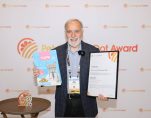
ORLANDO, UNITED STATES – Media OutReach Newswire – 2 April 2026 – As the global pet industry gathers for the Global Pet Expo in Orlando—the largest pet trade show in North America—a new power from Southeast Asia has taken center stage. MR.VET, the rising star of the Asian pet food market, has officially been honored with the 2026 Orange Dot Award (USA) in the Biotech Category, marking a historic milestone for regional brands on the world stage.
The Orange Dot Award is a benchmark of excellence in the pet industry, established by a panel of elite American experts, including the former president of the American Pet Products Association (APPA). It recognizes products that push the boundaries of safety, innovation, and nutritional science. This year, the spotlight shines on MR.VET’s commitment to “Precision Healthcare.”
A Biotech Breakthrough: The T-Series Revolution
The award-winning entry, MR.VET’s T-Series, represents a paradigm shift in how pet owners approach feline health. Unlike conventional dry kibble, the T-Series—comprising T1 (Intestinal Care), T2 (Skin and Coat Care), T3 (Urinary Health), and T4 (Indoor Cat)—is built on a foundation of advanced biotechnology.
At the heart of this innovation is MR.VET’s Specialized Freeze-Drying Technology. While traditional high-heat processing often destroys delicate bioactive compounds, MR.VET utilizes low-temperature dehydration. This “Bioactive Retention” process locks in original nutrition, ensuring that proteins, fatty acids, and essential micronutrients remain intact for efficient absorption. By combining this technology with customized nutritional profiles, MR.VET offers a tailored solution to the most common health “pain points” faced by modern pet owners.
Certified Market Dominance: The Number One Choice
MR.VET’s scientific accolades are backed by staggering commercial success. According to a recent market position statement by the world-renowned consulting firm Frost & Sullivan, MR.VET has been officially certified as the “Ranked No. 1 in Southeast Asia by Sales Volume of Dry Cat Food in 2025.”
Frost & Sullivan, a global leader in market research for over 60 years, conducted an exhaustive analysis of the Southeast Asian landscape, confirming MR.VET’s status as the undisputed market leader. Over the past year, the brand has witnessed an explosive growth trajectory across both digital and physical storefronts:
Indonesia: Ranked #1 on both TikTok and Shopee.
Vietnam: Ranked #1 on TikTok and #3 on Shopee.
Thailand: Recognized as a Top 10 TikTok Trending Brand.
Regional Reach: Rapidly becoming the preferred choice for consumers in Malaysia and the Philippines.
Double Victory: Bite of Wild Sweeps Nutrition Category
The Orange Dot Award ceremony also celebrated a second victory for the group, as sister brand Bite of Wild secured the award in the Nutrition Category for its 42 Series.
The inspiration for Bite of Wild began with a personal mission by co-founder Steve Bui. As a devoted pet owner, Steve sought to create a diet that truly honored the “obligate carnivore” nature of his own pets. Dissatisfied with conventional options, he set out to develop a high-meat, biologically appropriate formula, which eventually evolved into the award-winning 42 Series.
Designed to replicate the “Ancestral Blueprint” of wild felines, the Bite of Wild 42 Series (including the P42 High Meats, F42 6-Fish recipes, and K42 Kitten Formula) is engineered for the “Tiger Physique.” The series boasts industry-leading specifications:
92% Animal Raw Materials: Providing pure biological fuel.
42% High Crude Protein: The gold standard for lean muscle and vitality.
0% Grain & Pork: Eliminating common allergens to ensure peak digestive health.
Bite of Wild caters to the “obligate carnivore” nature of cats, proving that high-performance nutrition can be both scientifically precise and naturally sourced.
A New Era for the Pan-Asian Pet Market
The success of MR.VET and Bite of Wild at the Global Pet Expo signals a broader revolution within the Asian pet market—a transition from “basic feeding” to “scientific nurturing.”
“Winning two Orange Dot Awards in Biotech and Nutrition is a powerful validation of our commitment to elevating pet health standards across the Asian market,” said Steve Bui, co-founder of the brands, during the Orlando ceremony. “It proves that by merging global scientific breakthroughs with deep regional insights, we can lead the world in both market scale and technological sophistication.”
As MR.VET continues to expand its footprint across the Pan-Asian region and beyond, its mission remains clear: to provide pets with “the right care made easy”—backed by science and proven by millions of satisfied owners. The revolution in pet health has arrived, led by the “Tiger Physique” of Bite of Wild and the biotech-driven precision of MR.VET.
Hashtag: #MRVET
The issuer is solely responsible for the content of this announcement.
Arabian Post Staff -Dubai ADNOC Drilling shareholders have approved a final 2025 dividend of $250 million, taking the company’s total payout for the year to $1 billion and cementing a more ambitious cash-return policy that promises at least 5% annual dividend growth from 2026 through at least 2030. The approval, secured at the company’s annual general meeting, marks an important step for one of Abu Dhabi’s most […]
North Korea is sharpening its nuclear posture after the military battering of Iran reinforced Kim Jong-un’s long-held argument that smaller states without an ultimate deterrent risk coercion, attack and political humiliation. In a speech to the Supreme People’s Assembly on March 23, Kim declared the country’s nuclear status “irreversible”, said Pyongyang would permanently strengthen its “self-defensive nuclear deterrent”, and framed the global order as one in which […]
Donald Trump’s administration is making a fresh attempt to draw U. S. oil companies into Venezuela, offering regulatory relief and political backing as Washington tries to turn the country’s vast crude reserves into a strategic and commercial prize. Yet the campaign is meeting resistance from executives wary of sinking billions into a battered industry still shadowed by political risk, legal uncertainty and years of neglect. The push […]