News related to
Investors’

South Korea’s central bank began a pilot of a 24-hour won settlement network on Monday, advancing preparations to give overseas investors broader access to the country’s currency market from next year.

The Bank of Korea said the Bank of Korea Won International Wire Network started trial operations at 9am local time with KB Kookmin Bank, Woori Bank, Hana Bank and Shinhan Bank participating. Two of the banks completed transactions worth about 1.4 billion won during the initial test, according to the central bank.

Full operation is scheduled for January 2027, when foreign financial institutions are expected to gain wider access to the network. The system is designed to allow won payments and settlement during the business hours of major overseas financial centres rather than limiting activity to South Korea’s domestic banking day.

Under the planned framework, offshore investors will be able to trade the won with other foreign participants using accounts opened with Registered Foreign Institutions for KRW Business, known as RFI-Ks, in their home markets. This is intended to reduce the need for investors to open and operate separate accounts directly with financial institutions in South Korea.

The network will function continuously from 9am on each business day until 9am the following day, effectively providing round-the-clock settlement on weekdays. It will remain closed on weekends and public holidays. Foreign banks are also due to participate in the trial, although the Bank of Korea has not specified when they will enter the testing phase.

The central bank said it would monitor the pilot, refine operating arrangements and expand participation before the system moves into full service. It expects the new infrastructure to improve foreign investors’ access to won settlement and support wider international use of the currency.

The trial follows South Korea’s move in July to extend onshore dollar-won trading to a 24-hour schedule. That change removed the previous gap between Seoul trading hours and active periods in major centres such as London and New York, allowing transactions to continue through the global trading day.

Authorities have paired the longer trading window with changes to settlement arrangements because extended dealing hours alone do not remove operational barriers if investors cannot complete payments outside domestic banking hours. The new network is intended to address that mismatch by keeping settlement infrastructure available while overseas markets are active.

The initiative forms part of a broader programme to open South Korea’s foreign-exchange market and make local assets easier for global institutions to access. Seoul has also been seeking improvements in market infrastructure as it pursues developed-market classification for its equities from MSCI, whose accessibility assessments examine areas including foreign-exchange convertibility, investment flows and operational arrangements.

South Korea has already introduced the RFI framework to permit eligible overseas financial institutions to participate directly in the domestic foreign-exchange market. The settlement network extends that approach by enabling those institutions to hold and transfer won through designated accounts linked to the central bank’s payment infrastructure.

The Bank of Korea has also been modernising its core settlement systems. Its 2025 payment and settlement systems report, released last week, said operating hours for BOK-Wire+ were extended in March and that work continued on the international won network and the adoption of the ISO 20022 financial messaging standard.

The central bank has said the international network will use real-time gross settlement, a structure in which transactions are settled individually and continuously rather than being netted for later settlement. That approach is intended to limit credit risk during the payment process while supporting cross-border compatibility.

Preparations have included linked-system testing and business-continuity planning before the scheduled commercial launch. The authorities have also revised foreign-exchange regulations to accommodate the wider use of overseas won accounts and settlement channels.


Arabian Post Staff -Dubai Odisha has signed a memorandum of understanding with Abu Dhabi-based International Holding Company and the Adani Group to explore 14 projects carrying an indicative investment of ₹2.105 trillion across minerals, energy, manufacturing, healthcare, tourism and infrastructure. The agreement was concluded during Chief Minister Mohan Charan Majhi’s investment outreach in the UAE, with the state describing the portfolio as a major expansion of its […]

Westinghouse Electric is seeking a valuation above $50 billion for a planned US initial public offering, people familiar with the preparations said, as the nuclear technology group moves towards a potential public filing as early as October. The proposed valuation has not been announced by Westinghouse or its owners and could change as preparations advance. The number of shares to be sold, the price range and the […]

Veegaland Developers has secured ₹63 crore from anchor investors ahead of its ₹210 crore initial public offering, giving the Kerala-focused property developer an institutional base before public bidding opened on Thursday.

The company allotted 45 lakh equity shares to anchor investors on September 9 at ₹140 apiece, the top end of the IPO price band. The allocation represented 30 per cent of the total 1.5 crore shares offered in the issue.

Public subscription opened on September 10 and will close on September 15. The price band has been set at ₹130 to ₹140 a share, with investors required to bid for a minimum lot of 107 shares and in multiples of 107 thereafter. At the upper end of the band, the minimum retail application amounts to ₹14,980.

The IPO is entirely a fresh issue of shares, with no offer-for-sale component. At the ceiling price, the issue will raise up to ₹210 crore. The company’s shares are proposed to be listed on the BSE and NSE, with the listing scheduled for September 18, subject to completion of the allotment process.

EQ India Fund received the largest share of the anchor allocation, taking about 10.71 lakh shares worth nearly ₹15 crore. Swyom India Alpha Fund was allotted about 7.14 lakh shares valued at ₹10 crore, while Tiger Strategies Fund-I took roughly 5.72 lakh shares for about ₹8 crore.

Other anchor participants included Taurus Mutual Fund schemes, Innovative Vision Fund, Visionary Value Fund, VBCUBE Ventures Trust, CP Capital and Navbharat Investment Trust. The anchor book comprised nine institutional investors across 10 fund accounts, reflecting the participation of more than one scheme under a single fund house.

Veegaland plans to deploy ₹119.82 crore of the net proceeds towards part-financing expenditure on its ongoing real estate projects. The remaining proceeds are earmarked for unidentified land acquisitions and general corporate purposes, according to the offer documents.

For the year ended March 2026, Veegaland reported total income of ₹254.16 crore, up from ₹196.22 crore a year earlier, while profit after tax rose to ₹26.61 crore from ₹20.43 crore. Revenue from operations was ₹250.98 crore and EBITDA stood at ₹42.64 crore. The company reported, in its restated accounts, assets of ₹483.81 crore and borrowings of ₹85.59 crore at the end of the financial year.

The company had earlier proposed a larger fresh issue of up to ₹250 crore in its draft prospectus before reducing the size to ₹210 crore in the final offer structure. The Securities and Exchange Board of India issued its final observation on the proposed public issue on June 1, and the red herring prospectus was filed on August 31.

Veegaland develops residential apartment projects across Kerala under the Veegaland Homes brand. Its portfolio spans mid-premium, premium, ultra-premium, luxe and ultra-luxury residential categories, with projects concentrated in key urban markets in the state.

As of June 2026, the developer had completed 10 projects with an aggregate saleable area of about 11.05 lakh square feet. It also had 12 ongoing projects and three upcoming developments, according to information disclosed for the issue.

The IPO timetable provides for the basis of allotment to be finalised on September 16. Refunds for unsuccessful bidders are expected to be initiated on September 17, with shares scheduled to be credited to successful investors’ demat accounts the same day.

The offer reserves 30 per cent of the total issue for anchor investors. Of the remaining shares, 20 per cent is allocated to qualified institutional buyers, 15 per cent to non-institutional investors and 35 per cent to retail individual investors, under the stated reservation structure.

The company’s issue documents identify Cumulative Capital as the book-running lead manager, while MUFG Intime India is the registrar. The face value of each equity share is ₹10, making the floor price 13 times face value and the cap price 14 times face value.

Pessimism sells. It always has. But investors who let fear set their strategy this year are, I believe, about to miss one of the more compelling setups markets have offered in some time. Eveywhere I look, the mood among investors feels heavier than the numbers actually justify. There is talk of central bank brinkmanship, and a market supposedly one bad news day away from falling apart, among […]

Two transactions worth about $18 billion have reinforced private investors’ appetite for Gulf assets despite geopolitical disruption, tighter credit conditions and growing scrutiny of regional risk. The deals combine a $16 billion partnership involving Kuwait’s crude oil pipeline network and the roughly $2 billion first close of a Saudi-focused private equity fund backed by the Public Investment Fund. Together, they illustrate how infrastructure and sovereign-linked investment platforms […]

Arabian Post Staff -Dubai Investcorp has acquired a majority stake in Berger Financial Group, entering North America’s wealth management market through a platform overseeing more than $3 billion in client assets. Financial terms of the transaction were not disclosed. Berger’s management team and financial advisers will retain a significant ownership interest, while the company’s existing leadership will continue to manage its day-to-day operations. Investcorp will gain representation […]

Advertisements
Tokyo’s Nikkei 225 fell sharply on Wednesday as investors cut exposure to semiconductor and artificial intelligence-linked shares, extending a technology sell-off that swept through major Asian markets.

The benchmark closed at 61,434.19, down 930.73 points, or 1.49%, after briefly dropping to 60,448.90. The index moved through a range of almost 2,700 points, having reached a session high of 63,138.04 during early trading.

The intraday slide from the high exceeded 1,700 points, reflecting unusually volatile trading rather than a fall of that size from Tuesday’s closing level. The index had ended the previous session at 62,364.92 after losing more than 2,500 points.

Semiconductor companies led the decline as investors questioned whether the vast sums being invested in AI infrastructure would generate returns quickly enough to justify elevated technology valuations. The selling was amplified by weakness in South Korea and Taiwan, whose markets contain some of the world’s largest memory-chip and contract-manufacturing companies.

Asian chipmakers had benefited from expectations that spending on data centres, advanced processors and high-bandwidth memory would continue expanding. Those assumptions are now facing closer scrutiny as capital expenditure rises, borrowing costs remain high and earnings expectations become more difficult to exceed.

The shift was visible in South Korea, where the Kospi suffered another severe fall and chip heavyweights came under sustained pressure. Taiwan’s benchmark also declined as investors sold shares exposed to the global semiconductor supply chain.

Tokyo-listed equipment makers and chip-related companies were caught in the same retreat. Their large influence on the price-weighted Nikkei magnified the index’s movements, leaving the broader market vulnerable to concentrated selling in a small group of expensive stocks.

Investors were also awaiting quarterly results from major US technology companies, including businesses whose spending plans have become central to demand forecasts for advanced chips. Any indication that data-centre expenditure is slowing could deepen concerns about the durability of the AI investment cycle.

The Nikkei’s decline followed a powerful rally that had carried the benchmark above 70,000 earlier in July. Despite the pullback, the index remained substantially higher than a year earlier, showing how quickly valuations had expanded during the AI-driven advance.

Currency movements added another layer of uncertainty. The yen remained near its weakest level against the dollar in about four decades, despite gaining slightly during Wednesday’s trading. A weaker currency generally supports exporters by increasing the yen value of overseas earnings, but an extreme decline raises import costs and complicates monetary policy.

Japan depends heavily on imported energy and raw materials. The yen’s depreciation, combined with higher oil prices, threatens to intensify inflation and squeeze household spending. It has also increased speculation that authorities may intervene in foreign-exchange markets.

Markets are watching for any disruption to the yen carry trade, in which investors borrow cheaply in Japan and direct the funds towards assets offering higher returns elsewhere. A sudden strengthening of the yen can force traders to unwind those positions, producing rapid declines across equities, bonds and currencies.

The Bank of Japan begins a two-day policy meeting on Thursday. Traders are assessing whether persistent currency weakness and rising energy costs could push officials towards tighter policy, even as instability in equity markets increases the risks surrounding another rate move.

Oil prices climbed more than 3% as conflict in the Middle East threatened shipping and energy supplies. Higher crude prices added to inflation concerns ahead of the US Federal Reserve’s policy announcement and reduced investors’ willingness to hold high-valuation growth stocks.

The dollar remained supported near a one-month high as traders considered whether the Federal Reserve could maintain a restrictive policy stance. Higher US yields tend to pressure technology valuations by reducing the present value of expected future earnings.

Nearly 1,700 British investors have taken Binance and its founder Changpeng Zhao to London’s High Court, seeking at least £150 million in damages over allegations that the crypto trading platform unlawfully sold them high-risk derivative products without regulatory authorisation. The claim, filed on Monday, marks one of the largest private actions brought in Britain against a global crypto exchange. The investors allege that Binance entities promoted and […]

Nvidia has raised $25 billion through its largest bond sale, drawing a wave of investor demand that underlines Wall Street’s confidence in long-term artificial intelligence spending despite rising questions over the cost of the global data-centre buildout. The Santa Clara-based chipmaker priced the investment-grade deal on June 15 after initially targeting at least $20 billion. Orders reached about $85 billion, allowing the company to expand the transaction […]

Reserve Bank officials have opened discussions with commercial lenders on how to attract larger and more stable deposits, as the banking system grapples with a widening mismatch between loan growth and deposit mobilisation. The push comes as households channel a bigger share of savings into equities and mutual funds, leaving banks under pressure to compete harder for retail money and rely more on costlier wholesale funding.

The backdrop is a funding strain that has become harder for lenders to ignore. Data cited in market reports show credit growth has continued to outpace deposit growth, with loans rising 14.5% year on year as of late February against deposit growth of 11.9%. By mid-March, the system credit-deposit ratio had climbed above 83%, a level analysts describe as historically stretched, underscoring how aggressively banks have had to deploy funds to sustain lending across retail, corporate and small business segments.

That imbalance is feeding directly into banks’ funding costs. Lenders have increasingly turned to certificates of deposit, a short-term market instrument used to raise money from institutional investors, because traditional deposit inflows have not kept pace with credit demand. Reuters reported that outstanding certificates of deposit had risen to a record 6.64 trillion rupees by February 28, while the premium banks were paying over comparable treasury bill yields had widened to levels last seen during the Covid-era funding stress of 2020.

Senior bankers have acknowledged the pressure. Indian Bank managing director and chief executive Binod Kumar told Reuters that some lenders had already raised fixed deposit rates, but that strong credit growth meant funding pressure was likely to persist. That suggests the central bank’s consultations are not merely precautionary; they reflect a structural concern inside the financial system over the quality and stability of bank liabilities, especially at a time when competition for household savings is no longer confined to rival banks.

A key reason lies outside the banking sector. The Economic Survey for 2025-26 said the share of equity and mutual funds in annual household financial savings had risen from about 2% in FY12 to more than 15.2% in FY25, a sharp reallocation that captures how retail investors are moving towards market-linked products. The same survey said individual investors’ share in equity ownership had reached 18.8% by September 2025, while household equity wealth had expanded by about 53 lakh crore rupees between April 2020 and September 2025.

That shift has continued into this year. Reuters reported that inflows into equity mutual funds rose 56% in March to 404.5 billion rupees, the highest in eight months, while monthly SIP contributions climbed to a record near 321 billion rupees. Data published by the Association of Mutual Funds in India separately showed total SIP collections of 32,087 crore rupees in March. Together, those figures point to a household investor base that remains willing to keep allocating money to market instruments even during volatile trading conditions.

For banks, the result is a more expensive contest for deposits. Lenders have already been raising term deposit rates in pockets of the market, particularly where they need to defend margins or maintain funding for loan books growing faster than system averages. Yet higher deposit rates carry their own cost, squeezing net interest margins at a time when analysts are already warning that wholesale funding dependence and tighter liability conditions could drag on profitability.

The RBI is trying to contain the wider liquidity effects while keeping monetary transmission orderly. In its April monetary policy communication, the central bank said it wanted the weighted average call rate, its operative rate, to stay close to the 5.25% repo rate. It indicated that maintaining liquidity surplus in a range of 0.6% to 1.1% of deposits would help keep the spread between the call rate and the policy rate within 5 to 10 basis points. Banking system liquidity surplus has already risen above 4 trillion rupees this month, giving lenders some immediate relief even as the deeper deposit challenge remains unresolved.

PETALING JAYA, MALAYSIA – Media OutReach Newswire – 17 March 2026 – CARSOME Group Inc (CARSOME or the Group), Southeast Asia’s largest integrated car e-commerce platform, today announced a strategic investment round of more than USD 30 million from a set of new and existing investors including the Hong Kong Investment Corporation Limited (HKIC), Gobi Partners, and Asia Partners. This fundraise underscores the investors’ confidence in CARSOME’s journey to profitability and long-term vision across the region, as demonstrated by the recent record FY25 results. These funds will further accelerate its profitable growth in the region for the coming years.

CARSOME Group Inc (CARSOME or the Group), Southeast Asia’s largest integrated car e-commerce platform, today announced a strategic investment round of more than USD 30 million from a set of new and existing investors including the Hong Kong Investment Corporation Limited (HKIC), Gobi Partners, and Asia Partners.

This investment and partnership reflect a shared ambition to strengthen connections between Southeast Asia and Greater China, leveraging Hong Kong’s role as a regional gateway for advanced automotive capabilities, technology development, and global talent. With the support from the HKIC, CARSOME will drive initiatives across areas such as supply chain sourcing and technology collaboration, accelerating the application of data and artificial intelligence (AI) in the automotive sector, which further empowers CARSOME for its regional expansion.

“CARSOME has spent the last several years focused on building a resilient, profitable business with strong fundamentals,” said Eric Cheng, CARSOME Group Co-founder and CEO. “This strategic collaboration and fundraise is a vote of confidence in our continued momentum and long-term vision. This partnership gives us crucial access to innovation capabilities, cross-border networks, and world-class talent that will support our work in AI, data, and next-generation mobility services across Southeast Asia.”

Clara Chan, Chief Executive Officer of the HKIC, said, “We are pleased to support CARSOME as part of our continued effort to harness technology to drive industry transformation, contributing to Hong Kong’s long-term economic development and resilience. With Hong Kong’s unique position as a gateway connecting global innovation and investment opportunities, CARSOME exemplifies the type of high-conviction, technology-driven enterprise that aligns with the HKIC’s mandate to foster scalable innovation across our strategic sectors. We look forward to supporting forward-thinking companies like CARSOME in creating tangible value for the future of Hong Kong.”

Chibo Tang, Managing Partner of Gobi Partners, said, “CARSOME is a leading example of how Southeast Asian startups are well-positioned to create close ties with partners in Greater China, leveraging each region’s unique strengths. We are pleased to be a returning investor in CARSOME, having supported them for almost a decade. Gobi was an early believer in CARSOME’s ability to scale across international borders, and we are happy to see their early potential come to fruition as they reimagine the way consumers across Asia purchase vehicles.”

Hashtag: #CARSOME


The issuer is solely responsible for the content of this announcement.

About CARSOME

CARSOME is Southeast Asia’s largest integrated car e-commerce platform. With operations across Malaysia, Indonesia, Thailand, and Singapore, CARSOME aims to digitize the region’s used car industry by reshaping and elevating the car transaction and ownership experience.

Together with subsidiary brands , , and , , and , CARSOME provides end-to-end solutions to consumers and used car dealers across the decision funnel, from car content consumption, car inspection, and ownership transfer to financing and other ancillary services, as well as an automotive training institution, promising to bring trust, transparency, and choice to our customers. For more information, please visit .

About Hong Kong Investment Corporation Limited (HKIC)

The HKIC was established in 2022 as the Patient Capital institution wholly owned by and representing the HKSAR Government. It adopts an “Investment +” approach, seeking reasonable financial return in the medium to long term and at the same time creating and supporting growth impetus with a view to contributing to Hong Kong’s economy and society.

The HKIC currently manages the “Hong Kong Growth Portfolio”, “Greater Bay Area Investment Fund”, “Strategic Tech Fund”, and “Co-Investment Fund”. At this stage, it is focusing on three key sectors, namely Hard and Core Technology, Biotech, and New Energy and Green Technology, as well as the relevant applications.

As of January 2026, the HKIC has invested in over 170 projects. Every Hong Kong dollar invested by the HKIC has attracted over 6 Hong Kong dollars from long-term capital for investment. Visit the website for more information: https://www.hkic.org.hk/

About Gobi Partners

Founded in 2002, Gobi Partners is a leading pan-Asian investment firm specialising in bespoke capital solutions for family offices, sovereign wealth funds, financial institutions and corporate investors. Headquartered in Hong Kong and Kuala Lumpur, Gobi manages US$1.7 billion across 20 funds, investing in early to growth-stage companies with the potential for generational and global impact.

The firm’s team of over 90 investment professionals operates from 17 locations, curating a diversified portfolio of more than 400 companies, with 75 exits achieved to date. Gobi is recognised for its long-term, values-aligned approach, building ecosystems at the intersection of technology, sustainability, and inclusion. From pioneering TaqwaTech for two billion Muslims, to advancing the circular economy, to promoting gender-diverse leadership, Gobi backs the trends that are reshaping societies.

Gobi’s edge lies in identifying structural and demographic shifts, forging partnerships with universities and institutions of higher education; bridging world-class research with private capital and bringing deep technology breakthroughs to commercialisation.

For more information, please visit:

About Asia Partners

Asia Partners is a growth equity firm focused on the next generation of high-growth technology and technology-enabled companies that will transform the Southeast Asia economy. Its mission is to empower founders to build a new generation of tech giants, through deploying capital that directly addresses the region’s ‘Series C/D Gap’, and expertise in operating skills, drawing upon its collective experience of growing eight multi-billion dollar companies, including three in Southeast Asia.

Visit the website for more information:

The U.S. EB-5 Immigrant Investor Program has continued to grow in demand for Dubai based investors seeking access to long-term residency planning for their families. The demand has been so strong that certain players in the industry have in recent years been a little creative with the financing structure and inadvertently exposed EB5 investors to avoidable immigration risk, not because of the project, but because of how […]

U. S. spot exchange-traded funds tied to major cryptocurrencies saw a marked shift in capital flows on 26 January 2026, with Ethereum-linked products attracting the largest net inflows while Bitcoin, XRP and Solana ETFs drew comparatively lower interest. Data compiled from fund-flow trackers and trading platforms shows the spot Ethereum ETFs posted approximately $117m of net inflows during the session, overturning a streak of prior redemptions, and […]

Arabian Post Staff -Dubai UAE-based conglomerate Al Habtoor Group said on Monday it will pursue legal action against Lebanese authorities to recover about $1.7bn in investments it says were lost during the country’s banking crisis, a move that risks complicating Beirut’s efforts to rebuild confidence among Gulf investors. The group said the losses stem from funds trapped in the Lebanese banking system after the financial meltdown that […]

The latest addition to Kenanga Investors’ flagship series follows the same proven investment objective and philosophy to meet the evolving needs of today’s investors.

KUALA LUMPUR, MALAYSIA – Media OutReach Newswire – 8 January 2026 – Kenanga Investors Berhad (“Kenanga Investors“) has announced the launch of the Kenanga Growth Fund Series 3 (“KGFS3” or “the Fund“), its third fund in its flagship conventional fund series.

Datuk Wira Ismitz Matthew De Alwis, Executive Director and Chief Executive Officer of Kenanga Investors Berhad.

KGFS3 utilises the asset manager’s proven investment objective and philosophy whilst driven by a differentiated strategy to meet the evolving needs of investors. The Fund seeks to provide capital growth over a medium to long term investment horizon. It will be managed with an active investment strategy depending on the market conditions and outlook, combining a top-down asset and sector allocation process with a bottom-up stock selection methodology.

Lee Sook Yee, Chief Investment Officer of Kenanga Investors Berhad.

“Kenanga Growth Fund Series 3 continues our commitment to disciplined growth and investor-focused solutions. Instead of reinventing the wheel, we believe in refining our methods. As a result, the Fund builds on a proven philosophy that has delivered consistent value to our investors, while adapting to today’s market realities. We prefer to stay practical and to apply what works to continue earning the trust of our investors. Simultaneously, the Fund provides investors flexibility and accessibility while benefiting from a professionally managed, mandate-style investment strategy”, said Datuk Wira Ismitz Matthew De Alwis, Executive Director and Chief Executive Officer of Kenanga Investors.

Since the inception of the Kenanga Growth Fund on 17 January 2000, followed by Series 2 in 2018, both funds have displayed consistent performance. As of November 2025, both funds have surpassed RM1 billion in assets under management*, a testament to the fund house’s disciplined investment approach and commitment to long-term value creation.

While equities remain the central focus for KGFS3, the investment team will strategically allocate the remaining net asset value into other permitted asset classes, guided by market conditions and potential growth prospects, ensuring a well-balanced and opportunistic portfolio.

“Our asset allocation decisions are driven by a comprehensive review of macroeconomic trends across global economies. Particularly, we look at key indicators such as GDP growth direction, interest rate movements, inflation patterns and government policies. We believe these factors are critical to determine corporate earnings, allowing us to identify predictable trends that inform our sector selection. This structured approach helps keep us nimble, responsive and grounded in fundamentals”, explained Lee Sook Yee, Chief Investment Officer of Kenanga Investors Berhad.

The minimum initial investment amount is RM10,000 while subsequent investments are at a minimum of RM5,000. The Fund will be measured against a benchmark of 8% growth per annum. It is suitable for Sophisticated Investors who have a high-risk tolerance, have a medium to long term investment horizon; and are looking to achieve high returns through investments in multi-assets.

Kenanga Investors is known for its investment offerings and expertise within the equities space, making this latest launch a strategic addition for its product expansion efforts. The Hong Kong-based Asia Asset Management’s 2025 Best of the Best Awards recognised Kenanga Investors under the following categories, Malaysia Best Retail Asset Management Company and Malaysia Best Equity Manager. The FSMOne Recommended Unit Trusts Awards 2025/2026 awarded the Kenanga Growth Fund Series 2 with the “Sector Equity — Malaysia Focused” award for the fourth consecutive year since 2022.

For more information about Kenanga Investors, please visit www.kenangainvestors.com.my.

*Source: Kenanga Investors Berhad
Hashtag: #Kenanga

The issuer is solely responsible for the content of this announcement.

Kenanga Investors Berhad 199501024358 (353563-P)

We provide investment solutions ranging from collective investment schemes, portfolio management services, alternative investments, as well as wills and trusts for retail, corporate, institutional, and high net worth clients via a multi-distribution network.

The Morningstar Awards 2025 has recognised the Kenanga Blue Chip Fund as Best Malaysia Large-Cap Equity Fund. The Bursa Excellence Awards 2024 awarded KIB’s exchange-traded funds’ arm, Eq8 Capital Sdn Bhd with the Special Award – Thought Leadership for launching Eq8WAQF, the world’s first Waqf-featured Exchange Traded Fund. Introduced under a newly established category, the award highlights innovations that are reshaping the investment landscape.

At the LSEG Lipper Fund Awards Malaysia 2025, KIB received awards for the Kenanga DividendEXTRA Fund (“KDEF”) under the Best Equity Malaysia Diversified – Malaysia Funds over 3 years, Kenanga Malaysian Inc Fund (“KMIF”) under the Best Equity Malaysia Diversified – Malaysia Provident Funds over 10 years, Kenanga Balanced Fund (“KBF”) under the Best Mixed Asset MYR Balanced – Malaysia Provident Funds over 10 years, Kenanga Managed Growth Fund (“KMGF”) under Best Mixed Asset MYR Flexible – Malaysia Provident Funds over 10 years, and Kenanga SyariahEXTRA Fund (“KSEF”) under the Best Mixed Asset MYR Balanced – Malaysia Islamic Funds Awards over 10 years.

The Hong Kong-based Asia Asset Management’s 2025 Best of the Best Awards awarded KIG under the following categories, Malaysia Best Impact Investing Manager, Best Impact Investing Manager in ASEAN, Malaysia Best Equity Manager, Malaysia CEO of the Year (Co-Winner), Malaysia CIO of the Year, Malaysia Best House for Alternatives, Malaysia Best ESG Engagement Initiative, Malaysia Fund Launch of the Year, and Malaysia Best Retail Asset Management Company.

The FSMOne Recommended Unit Trusts Awards 2025/2026 has awarded the Kenanga Growth Fund Series 2 with the “Sector Equity – Malaysia Focused” award for the fourth consecutive year since 2022. We were also recognised at The BrandLaureate BestBrands Awards 2024 – Brand of the Year under the category Wealth Management & Investment Solutions. For the ninth consecutive year, KIB was affirmed an investment manager rating of IMR-2 by Malaysian Rating Corporation Berhad, since first rated in 2017.

This Press Release was issued by Kenanga Group’s Marketing, Communications & Sustainability department.

  By Umesh Sangaralingam The influx of private capital into Middle East markets is securing the region’s place as an evolving global investment hub. With sovereign wealth funds, institutional investors, family offices, and fund managers all increasing allocations, capital commitments are increasing at scale—but it’s not an equal field of opportunity for private investment firms in the region. Capital isn’t the sole defining factor that’s separating private […]

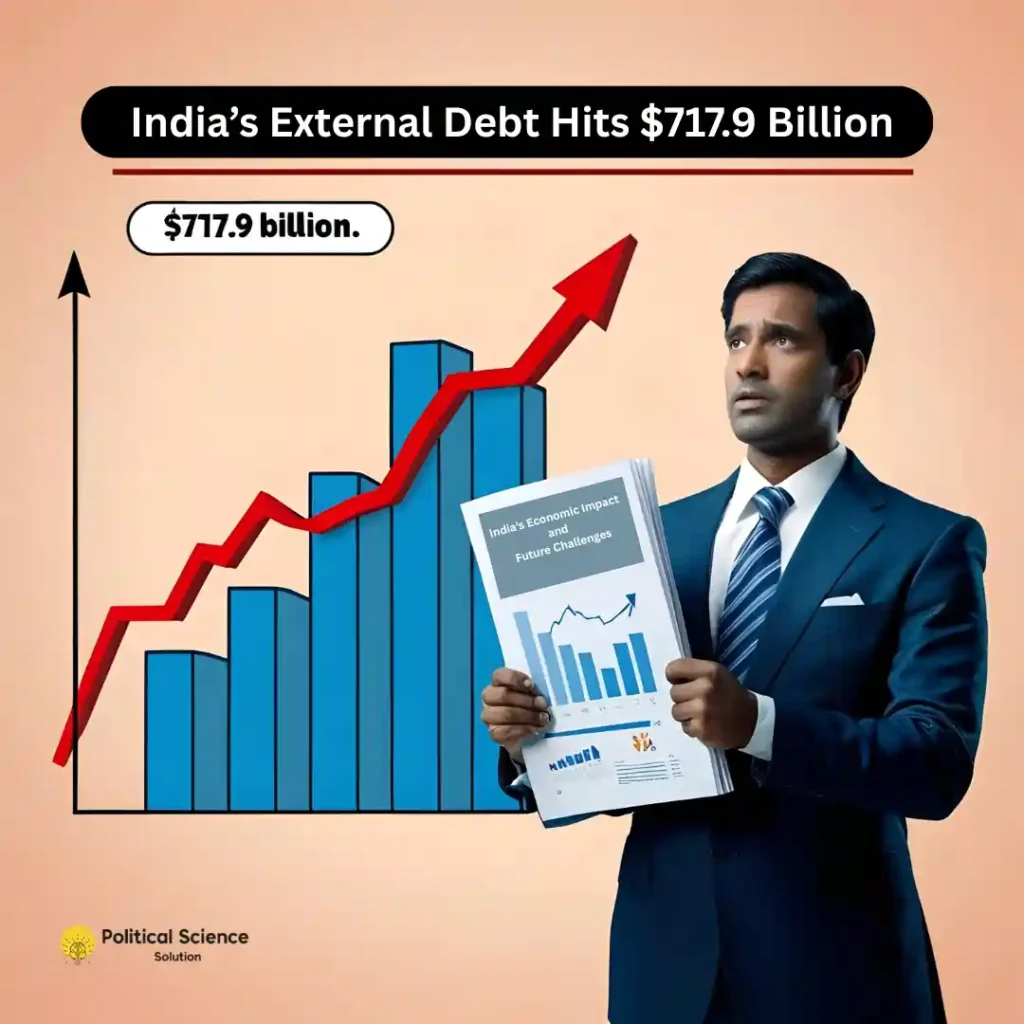
By Nantoo Banerjee The government may disagree but India’s persistent trade deficit is ruining the country’s economy despite its impressive growth. Last month, import-happy India’s trade deficit reached a record high level of US$41 billion as exports witnessed the sharpest monthly decline over a year. Unfortunately, a big surge in gold imports during October by […]

The article Behind India’s Rising Foreign Debt Is Growing Trade Deficit appeared first on Latest India news, analysis and reports on Newspack by India Press Agency).

Nigeria has successfully raised $2.35 billion through the sale of 10-year and 20-year Eurobonds, marking a significant achievement in its financial strategy. The transaction, announced on Wednesday, attracted a staggering $13 billion in orders, the largest-ever demand for Nigerian sovereign debt. The sale, conducted through the country’s Debt Management Office, highlights strong investor confidence in Nigeria’s economic recovery prospects despite ongoing challenges. The sale included two tranches: […]

Gold regained momentum as the US dollar’s slide and expectations of a shift in Federal Reserve policy helped lift the metal above the psychologically important $4,000-per-ounce mark. Spot gold rose around 0.7 % to $4,009.39 per ounce, while US gold futures for December delivery edged up to $4,022.10. At the same time, broader factors have introduced both bullish and cautionary signals to the market.

Investor interest is rekindled by the weaker dollar, which makes gold relatively cheaper for buyers holding other currencies, and by widespread anticipation that the Fed will adopt a more dovish stance. The dollar index fell roughly 0.1 % as markets weighed the possibility of rate cuts. At the same time, certain easing in trade-tensions between the US and China has slightly reduced gold’s role as a safe-haven asset. The confluence of these opposing forces has begun to shape a more nuanced outlook for the metal.

Analysts say that the rebound above $4,000 should not be taken as a strong bullish assurance yet. While the technical bounce signals renewed buying interest, momentum must be supported by fundamentals. One market commentator observed that “buyers who were waiting on the sidelines for gold are now being tempted into taking positions at these price levels. Also, we are seeing a bit of softness from the dollar, which is giving gold a reprieve”.

The wider context shows that gold has already surged markedly this year, up more than 50 % in 2025, and reached a record high near $4,381.21 in mid-October. The rally has been fuelled by a combination of geopolitical anxiety, central-bank buying and expectations of monetary easing. But the pull-back seen earlier this week underscores that investor discipline and macro clarity are still required for any sustained rise.

Emerging trends in the market reveal more structural undercurrents. Research from noted finance academics suggests that gold’s role is evolving: it may increasingly function as a high-quality liquid asset, competing with traditional safe-havens and benefiting from de-dollarisation in global reserves. But at the same time, some firms argue the rally may be overstretched: one analysis warned that with gold already up so sharply this year, its next move could be a “mini-bust,” with projections that prices might fall toward $3,500 by 2026 if support from central-bank demand weakens.

Forecasts for 2026 have also shifted. A poll of analysts and traders indicates a median expectation that average gold prices will exceed $4,000 per ounce next year – a milestone in itself – although forecasts vary widely, reflecting both optimism and caution. On the upside, institutions such as Goldman Sachs remain bullish, pointing to potential further gains on the back of monetary accommodation and geopolitical risk. On the downside, if trade tensions ease and inflation moderates, some believe gold could correct.

The interplay between stimulus expectations and dollar dynamics remains crucial. A softer dollar supports gold, but if authorities signal confidence in economic recovery and maintain higher interest rates, gold’s appeal could diminish because it offers no yield. Additionally, the safe-haven narrative is under pressure as expectations of improved US-China relations gain traction, which may lower investors’ impetus to hold gold purely for risk hedging.

Strength in demand from global central banks has supported prices thus far, but market watchers caution that this may face constraints as gold holdings rise and incremental purchases become harder. For now, the up-move above $4,000 may signal a tentative buying opportunity for traders who believe a rate-cut cycle is on the horizon. For longer-term investors though, vigilance remains essential, as valuations are elevated and market dynamics could shift rapidly.

Dubai Healthcare City Authority has unveiled a Dhs1.3 billion development programme for Phase 1 of Dubai Healthcare City, marking an aggressive expansion that aims to elevate its global standing in health infrastructure. Construction is set to start in December, with a targeted completion window by November 2027.

At the heart of the initiative lies a triple-pronged buildout: a LEED Platinum-certified office block, a purpose-built medical complex, and supporting infrastructure—each tailored to attract health-related investors and operators. The office building, designed by P&T Architects & Engineers, spans some 13,000 sqm across nine levels and includes flexible workspaces and ground-floor retail zones. The medical complex, by Design & Architecture Bureau, covers 5,800 sqm, with two basements and five floors, and is planned to accommodate surgical units, diagnostics, outpatient services and lab facilities.

Beyond buildings, the infrastructure scope includes multi-storey parking with electric vehicle charging points, integration with Salik for smart parking, and accessibility enhancements. The aim is to strengthen the underlying ecosystem so that the healthcare precinct becomes not just a cluster of clinics, but a fully serviced global health hub.

Issam Galadari, DHCA’s CEO, asserted that these projects reflect the authority’s ambition to combine sustainability, global investment appeal and design excellence, aligned with Dubai’s Economic Agenda and the UAE’s Net Zero Strategy 2050. Allae Almanini, COO, added that the works will “boost confidence for healthcare providers and investors” by improving efficiency, accessibility and sustainability across the community.

Phase 1 of DHCC, located in Oud Metha, currently operates within a 4.1 million sq ft footprint dedicated to medical services and education. Phase 2, by contrast, spans around 19 million sq ft at Al Jaddaf, and is oriented more toward wellness and mixed support services.

This new investment signals a sharpened focus on physical infrastructure as a differentiator. In recent years, DHCC has emphasised partnerships and innovation: its free-zone model already supports over 400 licensing entities and more than 168 clinical facilities. Earlier this year, DHCA collaborated with AI Quantum Intelligence Institute to launch an AI healthcare innovation lab in the free zone, and formed an agreement with AirMed International to deepen medical transport capabilities.

Analysts see the move as a bid to compete not only regionally, but globally. Healthcare infrastructure, especially when linked with sustainability credentials such as LEED Platinum certification, is increasingly a factor in investors’ decisions. The new build will position DHCC among the few healthcare zones worldwide that combine clinical, administrative and research capacity within one contiguous ecosystem.

However, the scale and timeline carry risks. Dubai’s construction sector is already navigating supply-chain pressures, labour constraints, and rising material costs. Ensuring timely delivery and quality control in a high-performance project will demand rigorous project management. Meanwhile, the authority must ensure that demand from healthcare operators, both local and international, matches the expanded real estate supply, lest vacancy rates rise.

More immediately, the December commencement date — just weeks away — will test DHCA’s readiness in securing contractors, tendering work packages and coordinating certifications. Delays in permitting or approvals could cascade into missed target windows. Yet, if executed successfully, the project will enable DHCC to present itself as an integrated health campus offering offices, clinical space, and support services under one sustainable umbrella.

Observers note that medical tourism in Dubai already commands significant weight, drawing patients from the GCC, the broader Arab world, Europe, and Asia. DHCA’s bet is that infrastructure sophistication will amplify that pull, especially for high-end specialty and precision medicine segments.

Rania Gule It seems that gold is going through a delicate phase, balancing between long-term bullish momentum and short-term profit-taking pressures, at a time when global markets are on edge ahead of upcoming U.S. sentiment data. As prices approach the $4,000 per ounce mark once again, the key question resurfaces: can gold still break its historical ceiling at $4,059, or will the current corrective wave extend temporarily […]

From left, Kamran Muhammad (6th in frame), CEO of Mashriq Elite, and from right, Aamil Tabani (4th in frame), CEO of Golden Bridge. Launched in September 2023, the project has progressed to delivery as committed, a milestone that underscores investors’ confidence in Dubai’s real estate market  Mashriq Elite Developments and Golden Bridge (exclusive sales and marketing partner) have marked the successful on-time handover of Floarea Residence in […]

Grayscale Investments has enabled staking on its Grayscale Ethereum Trust and Grayscale Ethereum Mini Trust, making them the first U. S.-listed spot exchange-traded products to support native staking functions. In tandem, its Solana trust has also activated staking, pending regulatory approval for an exchange listing.

The introduction means investors in ETHE and ETH can now earn staking rewards while retaining exposure to Ether’s spot price. Grayscale says staking operations will be managed via institutional custodians and a distributed network of validator providers. The firm emphasises that staking is passive, intending to support protocol security while offering additional yield.

ETHE and ETH are not registered under the Investment Company Act of 1940, placing them outside the conventional ETF regulatory regime. That structure allows flexibility but also exposes investors to different oversight and risk frameworks. GSOL, currently quoted over the counter, must undergo a formal uplisting process to align with exchange-traded product standards.

The regulatory environment has posed ongoing challenges for staking-enabled products. Earlier in 2025, the U. S. Securities and Exchange Commission delayed decisions on staking features in ether ETFs proposed by major issuers. The SEC has articulated concerns that staking may constitute an offer of securities, complicating how such products can be structured under existing law. Grayscale’s new move comes amid evolving guidance around liquid staking receipts and the broader regulatory calibration of crypto ETPs.

Grayscale currently controls approximately half of U. S. ETP-held Ethereum, and as of the end of September 2025, the firm reported around $35 billion in assets under management. The firm has already staked tens of thousands of ETH, deploying mechanisms to balance liquidity demands with staking commitments. It uses what it calls a “liquidity sleeve”—a pool of unstaked tokens and short-term financing—to meet redemption requests without forcing premature withdrawals from staking pools.

Analysts note that Ethereum staking yields in the market range around 2 per cent annually, while Solana’s higher inflation and protocol incentives can push staking returns to double digits. For yield-seeking investors, a staking-enabled ETP structure promises a more seamless way to tap into rewards without managing validator nodes or staking accounts directly.

Yet the innovation also carries risks: validator slashing penalties, network downtime, and the volatility of token prices remain material. Because Grayscale’s staking is passive, investors’ rewards reflect aggregated validator performance. The firm has committed to transparency through regular reports disclosing validator partnerships, staking activity, and operational metrics.

VISHNU RAJA
RYO YAMADA
HITORI GOTOH
IKUYO KITA