A newly demonstrated attack against Claude Desktop has highlighted how synced AI preferences and locally connected tools can be chained to turn a trusted chatbot into a covert route for command execution on a user’s workstation. The attack path centres on Claude Desktop’s Personal Preferences feature, which allows users to set account-wide instructions that are synchronised across sessions and devices. Security researchers showed that if an attacker […]
DuckDuckGo has added YouTube video ad blocking to its privacy-focused browser, widening its challenge to dominant browsers and giving users a built-in way to watch videos with fewer commercial interruptions. The feature blocks ads that appear before and during videos viewed inside the DuckDuckGo browser, including on YouTube. It relies on community-maintained uBlock Origin filter lists, a significant choice because those lists are open-source, regularly updated and […]
By K Raveendran The Narendra Modi government’s position on fuel prices now looks less like prudent caution and more like an overly defensive reading of a market that has already absorbed much of the Iran-US risk. The more calibrated question, therefore, is not whether New Delhi is right to watch the West Asian security situation, […]
Compelling path to $1billion ARR and public offering, fueled by product market fit in the agentic AI age, explosion of identities and related threats, and accelerating growth
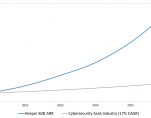
SINGAPORE – Media OutReach Newswire – 9 July 2026 – Keeper Security (“Keeper” or “we”), the identity security platform for humans, machines and AI agents, today announced a major milestone in its journey to become the market standard for AI-native identity security, having reached $225 million in Annual Recurring Revenue (ARR). Since 2021, Keeper’s ARR has grown over 3x.
Keeper protects over 95,000 organizations, which includes many Fortune 500 enterprises and public sector agencies. The company is quickly emerging as the market standard for AI-native identity security for enterprises globally with its leading zero-trust and zero-knowledge identity security platform. In 2025, leading analyst firm Gartner recognized Keeper as the second-fastest-growing security software competitor globally, second only to Google.* This recognition underscores Keeper’s rapid market expansion in addressing identity security challenges created by cloud transformation and artificial intelligence adoption across enterprise infrastructure and endpoints.
Keeper is now growing at over 4x the industry average.
This market-leading growth is driven by the explosion of identities in the agentic AI age and relentless focus on innovation to protect customers, as evidenced by the release of its unified privileged access management and identity security platform, KeeperPAM®, which protects both human and Non-Human Identities (NHIs), including service accounts, machine identities, databases, AI agents and agentic workloads. Since the launch of KeeperPAM in February 2025, KeeperPAM revenue has exhibited 10x year-over-year growth and Keeper has seen industry-leading new customer growth, adding an average of 850 new organizations every month. In the last fifteen months, Keeper added over 400 innovative features and products to KeeperPAM.
“Identity is the new security perimeter,” said Darren Guccione, CEO and Co-founder of Keeper Security. “As enterprises increasingly deploy AI agents and autonomous systems, the number of privileged identities and machine credentials is growing exponentially. Organizations need a modern, unified platform that secures every identity – human and non-human – and governs every privileged interaction. Our growth reflects the market’s demand for a platform purpose-built to address these challenges.”
Keeper’s cloud-native cybersecurity platform delivers a comprehensive approach to identity security and privileged access management by unifying enterprise password management, secrets management, privileged session management, database management and endpoint privilege management in a single platform. Keeper’s AI-native identity security strategy seamlessly extends these capabilities to non-human identities and agentic AI environments, enabling organizations to discover, manage and secure machine credentials and autonomous workloads with the same rigor applied to human users.
As enterprises adopt AI technologies at scale, the proliferation of non-human identities is rapidly outpacing that of human identities by 150:1, according to reports, thereby creating new attack surfaces and operational complexity. Keeper’s platform helps organizations establish identity-first security strategies that provide security, visibility, governance and least-privilege controls across their entire identity ecosystem.
“Autonomous agents, frontier LLMs and machine-to-machine workflows are operating inside enterprise environments right now – without adequate governance, secrets management or access controls,” said Craig Lurey, CTO and Co-founder of Keeper Security. “Keeper is purpose-built to solve this problem at scale.”
The company’s continued growth and market recognition reinforce its position as one of the cybersecurity industry’s most innovative and fastest-growing providers of AI-native identity security and privileged access management solutions. Keeper’s financial profile combines best-in-class growth, profitability and a debt-free capital structure and is an asset positioned to efficiently lead identity security in the agentic AI age.
“Surpassing $225 million in ARR confirms what we’ve heard in every enterprise conversation – that securing non-human identities is the defining security challenge of the AI era,” said Darren Guccione, CEO of Keeper Security. “We have established an accelerated path to $1 billion in ARR which, coupled with our technology roadmap, will provide optionality for a public offering.”
Gartner is a trademark of Gartner, Inc. and/or its affiliates.
Gartner does not endorse any vendor, product or service depicted in its research publications and does not advise technology users to select only those vendors with the highest ratings or other designation. Gartner research publications consist of the opinions of Gartner’s Business and Technology Insights Organization and should not be construed as statements of fact. Gartner disclaims all warranties, expressed or implied, with respect to this research, including any warranties of merchantability or fitness for a particular purpose.
Hashtag: #KeeperSecurity
The issuer is solely responsible for the content of this announcement.
About Keeper Security
Keeper Security is the leading zero-trust and zero-knowledge identity security solution, trusted by millions of people and thousands of organizations globally. KeeperPAM® is Keeper’s privileged access management platform that unifies password and passkey management, secrets management, privileged session management and endpoint privilege management in a single cloud-native platform, protected with quantum-resistant encryption. KeeperAI delivers real-time, AI-native threat detection across every privileged session. As AI agents proliferate and identity becomes the defining attack surface, Keeper governs access for humans, machines, non-human identities and AI agents, serving as the unified control plane for access, compliance and visibility across the enterprise. For more information, visit KeeperSecurity.com.
President Trump’s declaration on Wednesday that the ceasefire with Iran is over immediately pushed oil prices higher, lifted Treasury yields and revived concerns about the security of the Strait of Hormuz. Markets responded in familiar fashion, with traders reassessing energy supplies, inflation expectations and monetary policy. Another consequence deserves equal attention. Higher oil prices strengthen the fiscal position of the Gulf’s major energy exporters. Over time, stronger […]
A China-linked cyber-espionage group has expanded its use of hijacked devices to mask attacks on telecommunications infrastructure, deploying three newly documented malware implants across Windows, Linux and network edge systems. The activity, tracked as UAT-9244, has targeted critical telecoms infrastructure in South America since 2024. The campaign shows how state-aligned operators are moving beyond direct server compromise to build distributed relay networks that help them scan, brute-force […]
A browser flaw in Opera GX allowed hostile websites to silently install customisation mods and use them to extract data from pages visited by a signed-in user, exposing a weakness in how browser styling features can be turned into cross-site surveillance tools. The vulnerability, now patched, affected the gaming-focused Opera GX browser and centred on its GX Mods feature, which lets users customise themes, wallpapers, sounds and […]
Attackers are hiding machine-readable instructions inside websites to manipulate AI agents, turning ordinary web pages into a new security battleground as automated systems begin browsing, summarising and acting on behalf of users. Zscaler’s ThreatLabz has documented two live campaigns using indirect prompt injection, a technique in which malicious instructions are planted in third-party content that an AI system reads during a task. Unlike a direct prompt attack, […]
Arabian Post Staff -Dubai Almarai’s second-quarter revenue rose 11 per cent year on year to SAR5.87 billion, as stronger demand for dairy, poultry and bakery products helped the Riyadh-listed food group absorb higher shipping, energy and raw material costs. The company’s first-half revenue reached SAR12.03 billion, up 9 per cent from the same period last year, reinforcing its position as one of the Gulf’s most closely watched […]
Cybercriminals are using fake cracked-software downloads to infect consumers and smaller businesses with a double payload that steals credentials and mines Monero, underscoring how commodity malware operators are combining immediate data theft with longer-running attempts to profit from compromised machines. The campaign delivers Vidar, a widely used information stealer, alongside XMRig, an open-source cryptocurrency miner often abused in cryptojacking attacks. Victims are lured through malvertising into downloading […]
BANGKOK, THAILAND – Media OutReach Newswire – 8 July 2026 – Researchers from Aquatic Resources Research Institute (ARRI), Faculty of Science, Chulalongkorn University have recently uncovered new genetic evidence explaining how the invasive blackchin tilapia (Sarotherodon melanotheron), a species native to West Africa, became established throughout Thailand.
Based on genetic analysis of 466 fish samples collected nationwide, the study identified high genetic diversity, including 19 distinct haplotypes, revealing that the species originated from multiple introduction events rather than a single release. The findings also show that subsequent human-mediated translocations within Thailand played a major role in the species’ rapid spread.
The study represents one of the most comprehensive genetic assessments of blackchin tilapia in Thailand to date. Researchers confirmed that the invasive populations belong to Sarotherodon melanotheron melanotheron subspecies and identified 13 private haplotypes unique to specific populations. Several of these occurred at relatively high frequencies in Samut Songkhram, Prachuap Khiri Khan and Surat Thani, indicating multiple introduction sources and limited mixing among some regional populations.
Using haplotype distribution patterns, network analysis and phylogenetic comparisons, the researchers traced the origins of Thailand’s blackchin tilapia to multiple geographic sources, including Ghana and Côte d’Ivoire, as well as potentially other unsampled native populations in West Africa.
The study also found that blackchin tilapia populations in different parts of Thailand are genetically distinct, particularly in Samut Songkhram, which is believed to be the earliest site of the invasion. At the same time, researchers discovered that fish sharing the most common genetic signature were found in provinces across eastern and southern Thailand, including Chachoengsao, Rayong, Chanthaburi, Chumphon, Nakhon Si Thammarat and Songkhla, suggesting they were transported by human activities rather than spreading naturally through connected waterways.
The researchers said “The findings provide valuable scientific evidence for strengthening surveillance and management of the invasive species. By identifying introduction pathways and patterns of dispersal, the study offers important guidance for preventing further spread, improving biosecurity measures and mitigating ecological impacts on Thailand’s freshwater ecosystems.”
Enterprise AI agents are moving from pilot projects into business software faster than many security teams can rework the systems that decide who, or what, is allowed to log in. The main obstacle is no longer only model performance. Deployment is being slowed by multi-factor authentication prompts, short-lived session tokens, bot-detection systems, consent screens, delegated permissions and audit requirements built for people using keyboards, not software agents […]
DXC Technology has opened a 200,000-square-foot Customer Experience Centre in Bengaluru, placing the city deeper into the global race to move enterprise artificial intelligence from pilot projects into live, measurable business systems.
The facility, announced on 7 July, is one of DXC’s largest global delivery hubs and brings together customer collaboration areas, an AI Hub, cybersecurity facilities, forensics labs, a Security Operations Centre and a Network Operations Centre. The centre is designed to help clients identify high-value AI use cases, test prototypes, integrate them with legacy platforms and operate them at scale.
The move comes as large companies are under pressure to modernise complex technology estates without disrupting core systems that run banking, insurance, manufacturing, public sector services, travel and healthcare operations. For global IT services firms, the most valuable opportunity now lies not only in building new AI tools, but in attaching them safely to ageing systems of record, cloud platforms, data pipelines and cybersecurity controls.
DXC said the Bengaluru site includes immersive Customer Experience Zones, Fluid Collaboration Hubs, Ideation Studios, Co-Creation Labs and Partner Experience Zones. The structure signals a shift in IT outsourcing from back-office delivery to co-engineering, where clients, consultants and technology partners work together on proof-of-value projects before wider deployment.
Ramnath Venkataraman, president of consulting and engineering services at DXC Technology, said the centre would bring engineering talent closer to customers and partners. He said the objective was to “co-create, engineer, and scale AI-powered solutions” that address complex business challenges and move clients faster from ideas to outcomes.
Rob Le Busque, DXC’s president for Asia Pacific and Japan, described the centre as a base for AI innovation, engineering and customer collaboration. He said DXC was aiming to help customers build connected enterprises where people work alongside AI agents to engineer and run systems of record.
The investment reflects Bengaluru’s continuing pull as a global technology hub. The city hosts a dense base of engineering talent, multinational technology development centres, enterprise software teams and start-up ecosystems. DXC already employs about 38,000 people in the country, making the new facility a strategic addition rather than a symbolic office expansion.
For DXC, the centre also arrives at a critical phase in its own turnaround. The company reported revenue of $12.64bn for fiscal 2026, down 1.8 per cent year on year, while adjusted EBIT stood at $970m. Fourth-quarter revenue was $3.13bn, down 1.2 per cent year on year, though bookings reached $3.3bn and the book-to-bill ratio stood at 1.07 times. Those figures underline both the pressure on legacy IT services revenue and the importance of higher-value modernisation work.
The enterprise AI market has moved beyond experimental chatbots and isolated productivity pilots. Large organisations are now seeking systems that can automate service operations, assist software engineering, improve fraud detection, support call-centre workflows, optimise supply chains and strengthen cyber response. The challenge is that many of these functions depend on decades-old enterprise platforms, heavily customised databases and compliance-heavy workflows.
That is where Bengaluru’s new DXC centre is positioned. Its AI Hub is intended to support hands-on development and testing, while the cyber and operations facilities allow clients to evaluate whether AI tools can be monitored, secured and maintained after deployment. This full-lifecycle approach is becoming central to enterprise modernisation, especially in sectors where downtime, data leakage or flawed automation can carry heavy financial and regulatory consequences.
The facility also strengthens DXC’s partner-led model. Its Partner Experience Zones are expected to support work with software, cloud, cybersecurity and platform companies. For IT services providers, alliances with hyperscalers and enterprise software vendors have become essential as clients seek hybrid solutions rather than single-vendor transformation programmes.
US officials have reportedly cleared OpenAI to widen access to GPT-5.6, allowing the company to move its most advanced model series from a restricted partner trial towards a broader commercial release after cybersecurity and national security checks. The decision covers GPT-5.6 Sol, the flagship version, alongside lower-cost Terra and Luna models. OpenAI has said the models will be made available after an initial period in which access […]
China has offered fresh channels for easing trade tensions with the European Union after Foreign Minister Wang Yi completed a four-country Nordic tour aimed at rebuilding confidence with some of Europe’s most security-conscious governments.
Wang’s 2-8 July visit to Denmark, Sweden, Finland and Norway came as Brussels and Beijing try to prevent a deepening dispute over industrial subsidies, electric vehicles, market access, export controls and critical minerals from turning into a broader trade confrontation. The trip placed trade, green technology, shipping, healthcare, tourism and scientific innovation at the centre of talks, while allowing Beijing to test whether northern Europe could support a less confrontational EU approach.
The diplomatic push followed high-level trade discussions in Brussels, where both sides agreed to establish a ministerial-level mechanism that would meet once or twice a year. Four negotiation tracks are expected to cover export controls, trade and investment balancing, market access, and supply-chain transparency, with October emerging as a key deadline for measurable progress.
The EU’s trade deficit with China stood at about €360 billion last year, driven by imports of electric vehicles, batteries, solar equipment, machinery and consumer goods. European officials have warned that subsidised Chinese production could put pressure on strategic industries, while Beijing argues that EU restrictions on technology exports and investment screening have politicised commerce.
Wang used the Nordic leg to frame China and Europe as partners rather than rivals. In Copenhagen, he urged Denmark to play a constructive role in stabilising EU-China relations and highlighted cooperation in green shipping, life sciences and tourism. Denmark holds political weight in Brussels through its support for open trade, but it has also backed a firmer European line on economic security and resilience.
The tour carried symbolic value. It was the first visit by a Chinese foreign minister to Denmark in 15 years and to Sweden in 22 years. Sweden is China’s largest trading partner in the Nordic region, but relations have faced strain over human rights, security policy and Europe’s concerns over dependence on Chinese technology. Wang met Prime Minister Ulf Kristersson and Foreign Minister Maria Malmer Stenergard in Stockholm, where the talks covered bilateral ties and the wider EU agenda.
Finland added a sharper security dimension to the visit. President Alexander Stubb and Foreign Minister Elina Valtonen have supported a more cautious European posture towards Beijing, particularly since Russia’s war in Ukraine reshaped the security debate across northern Europe. Finland’s accession to NATO has also altered the regional balance, placing Helsinki firmly inside the transatlantic security framework. Trade dialogue with Beijing therefore sits alongside hard questions over Russia, technology transfer and strategic infrastructure.
Norway, the final stop, offered Beijing a more pragmatic opening. Oslo is outside the EU but closely tied to the single market through the European Economic Area. Its energy, maritime and seafood industries give it economic links with China, while Norway’s diplomatic tradition allows space for dialogue even during periods of political tension. Wang’s meeting with Foreign Minister Espen Barth Eide was expected to focus on trade, green transition and international security.
Beijing’s message is that the EU should expand trade rather than restrict it. China has signalled willingness to increase imports from Europe and improve communication over trade frictions. It has also pressed Brussels to ease restrictions on high-tech exports and avoid measures that it views as protectionist. European negotiators, however, want more than general assurances. They are seeking concrete steps to narrow the trade gap, improve access for European firms, and curb state-backed overcapacity in sectors where Chinese exports have surged.
The most sensitive issue remains electric vehicles. The EU imposed duties on battery-powered cars made in China after concluding that state support had distorted competition. Chinese manufacturers have responded by looking more seriously at European production sites, including plants in Hungary and other markets, to maintain access to consumers while reducing tariff exposure. The dispute has become a test case for whether Brussels can defend industry without triggering retaliation that would hit exporters, luxury brands, agriculture and aviation.
Rare earths and critical inputs have become another pressure point. China dominates several stages of processing for materials used in clean energy, defence and advanced manufacturing. European officials are trying to reduce exposure without severing commercial links. Beijing retains leverage through licensing and supply-chain controls, while the EU is developing tools to diversify sourcing, screen investment and support domestic production.
Dubai’s plan to launch commercial air taxis has moved closer to operation after the UAE aviation regulator certified a purpose-built vertiport for electric vertical take-off and landing aircraft near Dubai International Airport. The facility, registered as VDX under the General Civil Aviation Authority’s certification process, is being positioned as the primary hub for the emirate’s first air taxi network. Skyports Infrastructure, which developed the site with Dubai’s […]
Arabian Post Staff -Dubai Iran’s Revolutionary Guards said they fired missiles and drones at US military facilities in Bahrain and Kuwait on Wednesday, widening a confrontation that has put a fragile ceasefire under severe strain after US strikes on Iranian targets near the Strait of Hormuz. The Islamic Revolutionary Guard Corps said the operation hit sites linked to the US Fifth Fleet in Bahrain and Ali Al […]
Arabian Post Staff -Dubai Du Pay has signed a strategic memorandum of understanding with GCash to enable near-instant wallet-to-wallet remittances from the UAE to the Philippines, giving overseas Filipino workers a faster route to send money home and access exclusive rewards tied to digital transfers. The partnership connects du Pay’s mobile wallet in the UAE with GCash accounts in the Philippines, allowing funds sent through the du […]
By Satyaki Chakraborty Amidst Trump-Modi bonhomie and the continuation of India-US trade talks, former Indian intelligence chief Vikram Sood said on Sunday in an interview to a British network that the present U.S. deputy secretary of state Christopher Landau told Indian officials during his visit to India in March 2026 that Washington would use tariffs, […]
Arabian Post Staff -Dubai ADNOC Distribution has agreed to buy Shell Downstream South Africa from Shell South Africa Holdings in a transaction that values the business at about $1 billion, giving the Abu Dhabi-listed fuel retailer a large platform in one of Africa’s most developed downstream markets. The definitive agreement covers 100% of SDSA’s share capital, before adjustments for net debt and working capital. Completion is expected […]
Arabian Post Staff -Dubai Saudi Arabia has slashed the price of its flagship crude for Asian buyers by the widest margin in more than two decades, signalling a tougher fight for market share as rising supply and softer demand reshape the oil trade. Saudi Aramco cut the August official selling price of Arab Light crude by $11 a barrel, setting it at $1.50 below the Oman-Dubai average, […]
G42 and Microsoft have deepened their artificial intelligence alliance through a new collaboration linking Inception42’s Catalyst agentic AI platform with Microsoft Copilot, a move designed to shift AI agents from limited trials into day-to-day government and enterprise operations. The agreement, announced on Monday, allows organisations to build, govern and monitor AI agents on Catalyst while making them available through Microsoft 365 applications including Teams, Outlook and Word. […]
Arabian Post Staff -Dubai DMCC has launched a dedicated cybersecurity vertical as part of a wider restructuring of its technology ecosystem, bringing more than 4,000 technology companies under the newly formalised DMCC Tech platform. The new unit, DMCC Cyber, is designed to support businesses working across cyber resilience, digital trust, data protection, identity management, and governance, risk and compliance. It will sit alongside the DMCC AI Centre, […]
Nissan Americas has disclosed a cyber breach involving employee records after attackers exploited a critical Oracle PeopleSoft flaw used in a wider data-theft campaign linked to the ShinyHunters extortion group. The carmaker said personnel information belonging to current and former staff in the United States, Canada, Mexico and Brazil may have been accessed through Oracle PeopleSoft, the enterprise platform it uses for payroll, tax administration and other […]




 KeeperSecurity.com