Yemen’s Houthi movement said on Wednesday that it had shot down a Royal Saudi Air Force F-15 fighter jet over Marib province, a claim that Saudi authorities had not confirmed and that could not immediately be independently verified. Houthi military spokesman Yahya Saree said the aircraft was brought down with a locally manufactured surface-to-air missile while conducting what he described as hostile operations over Marib. He gave […]
South Korea will not slow its artificial intelligence drive, Deputy Prime Minister and Science and ICT Minister Bae Kyung-hoon said on Wednesday, arguing that the country must pair rapid development with stronger safeguards rather than curb the technology’s advance.
Bae said South Korea was still trying to close the gap with leading AI powers while creating new markets, making its position different from countries or companies at the technological frontier. “We cannot afford to slow down AI right now,” he wrote on social media, describing the government’s approach as one of “speed responsibility” rather than speed control.
His remarks place Seoul firmly on the acceleration side of a widening debate over whether developers should moderate the pace of capable AI systems. Anthropic chief executive Dario Amodei has called for a slowdown in frontier model development to allow more time for safety work, while OpenAI chief executive Sam Altman and other technology leaders have voiced support for stronger precautions as capabilities advance.
Bae said South Korea should continue expanding research, industrial adoption and home-grown model development while strengthening protections against deepfakes, cyber threats and privacy violations. Faster progress, he said, required safety and trust measures to move at the same pace rather than follow after deployment.
The minister pointed to a broader technology agenda that includes sovereign foundation models, systems capable of processing vision and language, and models able to interact with physical environments. He said the country also needed to prepare for AI becoming deeply embedded across industries and everyday life.
The government has made domestic foundation-model development a central part of its ambition to place South Korea among the world’s top three AI powers. The Ministry of Science and ICT has been running a sovereign AI foundation model programme intended to improve domestic capabilities and reduce dependence on foreign technology.
Three teams led by Upstage, SK Telecom and LG AI Research advanced after the programme’s second-stage evaluation this year. The ministry has said models developed under the initiative were built with comparatively limited resources but were released as open source as part of an effort to expand the domestic AI ecosystem.
Bae indicated that further details on the next phase of the foundation-model programme would be announced after ongoing reviews. His comments also referenced government work on security-focused AI models and frontier systems, alongside an “AI for All” initiative intended to spread adoption across the economy.
The policy push is being developed alongside South Korea’s AI Basic Act, which establishes rules covering both the development of artificial intelligence and the creation of a framework for trust. The law’s stated purpose includes protecting rights and human dignity while supporting quality of life and national competitiveness.
That legal structure gives Seoul a basis for pursuing faster adoption without presenting safety as a separate objective. Bae said competitiveness and sustainability were linked, arguing that development speed and safeguards should advance together.
The global dispute has intensified as leading executives and policymakers weigh the economic benefits of faster AI deployment against concerns over misuse and loss of control. Amodei has proposed independent safety evaluators, coordination among major laboratories and greater international cooperation, while Nvidia chief executive Jensen Huang has argued against slowing technological progress and favours advancing safety alongside innovation.
European Commission President Ursula von der Leyen on Wednesday backed calls for greater caution and said frontier AI laboratories would be invited for talks on managing risks. Meta chief executive Mark Zuckerberg, by contrast, said AI companies already had strong incentives to build systems safely and did not require an industry-wide slowdown.
Bae’s intervention highlights the competitive pressures facing countries outside the United States and China, where most frontier AI investment and model development remains concentrated. South Korea has strong semiconductor and technology industries, but its government has acknowledged the need to strengthen domestic models, computing capacity and commercial adoption to narrow the gap.
Cybersecurity shares surged to the top of the S&P 500 on Monday as investors shifted towards digital-defence companies after fresh warnings about the risks of rapidly advancing artificial intelligence unsettled the broader technology trade. CrowdStrike jumped 13.8 per cent to a record closing high of $235.38, while Palo Alto Networks gained 13.1 per cent and Fortinet rose about 9 per cent. The gains stood out in a […]
India summoned Pakistan’s top diplomat in New Delhi on Wednesday after naval vessels from the two countries collided in international waters of the northern Arabian Sea, escalating friction more than a year after their last military confrontation.
The Ministry of External Affairs said Pakistan’s Charge d’Affaires was called in and a strong protest lodged over what it described as “unacceptable and unprofessional conduct” by Pakistani naval units. The ministry said the conduct led to a collision with a unit of the Indian Navy and urged Pakistan’s authorities to ensure that military units exercise due care and observe existing bilateral agreements.
The collision occurred on Tuesday while a frontline warship from India was conducting what officials described as a routine surveillance mission. Officials from India said a Pakistan Navy vessel approached at high speed before the vessels collided. No major damage was reported, and there was no immediate public statement from Pakistan’s government or military responding to New Delhi’s account.
India also instructed its top diplomat in Islamabad to lodge a similar protest with Pakistan’s Foreign Ministry. The exchange elevated what could otherwise have remained a maritime safety incident into a formal diplomatic dispute between two nuclear-armed neighbours whose military contacts are governed by a series of confidence-building arrangements.
New Delhi said the episode breached a 1991 bilateral agreement covering military exercises, manoeuvres and troop movements. Under that agreement, naval ships and submarines of the two countries are required to remain at least three nautical miles apart in international waters to reduce the risk of accidents. India’s foreign ministry said the Charge d’Affaires had been asked to convey the need for all military units to respect those provisions and prevent a recurrence.
Pakistan had not, as of Wednesday afternoon, issued its own description of the encounter, leaving key operational details — including the precise movements of the vessels before impact — based on India’s official account. No ship names, casualty reports or detailed damage assessments were released publicly by either side.
The incident is the clearest publicly acknowledged military encounter between the neighbours since four days of hostilities in May 2025. That fighting followed an April 22 attack on tourists in Pahalgam, in Jammu and Kashmir, that killed 26 people. India blamed Pakistan for supporting cross-border terrorism, an allegation Islamabad rejected, and the crisis developed into missile, drone and artillery exchanges before both sides announced an understanding to halt the fighting.
Relations have remained strained since then despite the cessation of large-scale hostilities. Diplomatic ties had already been downgraded in 2019 amid disagreements over Kashmir, and neither country currently posts an ambassador in the other’s capital, with missions headed by Charges d’Affaires.
The latest protest focused narrowly on maritime conduct rather than broader political disputes. India’s statement did not announce retaliatory military measures or new diplomatic restrictions, and it called instead for compliance with the bilateral framework designed to prevent accidents between armed forces operating near one another.
The northern Arabian Sea is routinely used by both navies for patrols, exercises and surveillance. The 1991 agreement was intended to create practical safeguards at times of tension, alongside notification procedures for certain military activities. Its distance requirement gives commanders a defined separation standard when vessels or submarines from the two countries encounter each other beyond territorial waters.
The military relationship remains sensitive because both countries maintain forces across the Line of Control in Kashmir and continue to accuse each other of hostile activity. Their 2025 confrontation demonstrated how quickly a security incident can widen across domains, although neither government indicated on Wednesday that the naval collision had triggered wider force movements or changes in military posture.
Tuesday’s collision did not produce the kind of damage that would normally force a ship out of service, according to India’s account. The absence of reported casualties limited the immediate operational consequences, but the diplomatic summons ensured the episode received attention at the highest working level between the two foreign ministries.
Germany’s hospitals are accelerating preparations for a potential wartime surge of wounded patients, with military planners warning that a NATO conflict could send hundreds of casualties into the health system each day. The Bundeswehr has built scenarios involving 300 to 1,000 wounded service personnel arriving daily, a scale that would rapidly overwhelm Germany’s five military hospitals and require extensive use of civilian facilities. Military medical planners say […]
SUSE has enabled its enterprise real-time Linux platform for LF Energy’s SEAPATH architecture, giving electricity grid operators and equipment vendors a commercially supported operating system option for virtualised digital substations. The integration, developed with open-source engineering specialist Savoir-faire Linux, combines SUSE Linux Enterprise Real Time with Kernel-based Virtual Machine, or KVM, virtualisation and cluster support. SUSE said the work makes it the first enterprise Linux vendor to […]
The US National Institute of Standards and Technology has finalised new guidance aimed at reducing theft, forgery and misuse of digital tokens that underpin single sign-on, cloud federation and API access. NIST Interagency Report 8587, released on September 15, sets out implementation recommendations for federal agencies and cloud service providers handling identity tokens, access tokens and assertions. The document focuses on how organisations should protect signing keys, […]
China has pushed back against calls from leading US technology figures to slow frontier artificial intelligence development, sharpening differences over safety, access to advanced chips and technological competition before President Donald Trump and President Xi Jinping meet in Washington next week.
Foreign Ministry spokesman Guo Jiakun said on Monday that artificial intelligence was a consequential technology for humanity and should be developed openly and inclusively. Asked about calls from Dario Amodei, Sam Altman and Elon Musk for companies to slow frontier development, Guo warned that “fear-mongering, confrontation and vicious competition” would hinder sound global AI governance.
The response came as Washington’s debate over AI safety widened into a strategic argument about China. Anthropic chief executive Amodei has urged tougher safeguards for advanced systems and has argued that a Chinese lead in frontier AI could create national security risks for the United States. OpenAI chief executive Altman and Musk have also called for stronger precautions as systems become more capable.
Trump, however, has resisted proposals that could materially slow US development. He said this week that America already had tools to police the industry and stressed the importance of maintaining leadership over China. House Speaker Mike Johnson similarly rejected a moratorium, saying any pause could hand Beijing a competitive advantage and create national security risks.
The dispute places AI governance among the issues likely to shadow the Trump-Xi meeting scheduled for September 24 in Washington. The leaders are also expected to confront trade disputes, semiconductor restrictions and China’s controls on rare-earth exports, all of which affect the broader contest over computing capacity and advanced manufacturing.
Treasury Secretary Scott Bessent is due to meet Vice-Premier He Lifeng before the summit.
China has presented a different framework for AI governance, emphasising access, development and multilateral rules while opposing measures it regards as technological containment. At the BRICS summit this month, Xi proposed an open-source and inclusive AI initiative and said China would help establish a BRICS AI open-source community and digital ecosystem platform.
Beijing has nevertheless acknowledged the risks posed by increasingly powerful systems. Chinese officials have called for stronger global governance and risk awareness, while arguing that safety should not become a justification for blocking technological diffusion. The government has also supported the establishment of the World Artificial Intelligence Cooperation Organization, whose founding agreement was signed in Shanghai in July by 29 countries.
The argument over safety is closely linked to semiconductor controls. Washington has maintained restrictions on the export of advanced computing technology to China, although the Commerce Department in January shifted applications for Nvidia H200, AMD MI325X and comparable chips to case-by-case review under specified security conditions. Beijing has repeatedly criticised US technology restrictions as discriminatory and has threatened countermeasures when Chinese companies are targeted.
China’s Commerce Ministry last week also challenged a US cybersecurity advisory accusing China-based AI companies of using distillation campaigns against American models. The ministry said China was prepared for an intergovernmental AI dialogue with the United States but would respond if Washington used such allegations to suppress Chinese firms.
That exchange underscored the difficulty of separating AI safety from the strategic rivalry. US officials and technology executives increasingly frame advanced models as both commercial assets and national security capabilities, while China portrays broad restrictions as attempts to preserve US dominance.
There are areas of overlap. Both governments have said advanced AI presents risks requiring governance, and the two sides have agreed to launch an intergovernmental dialogue on the technology. Informal discussions among researchers and policy specialists have also continued, though official positions remain far apart on access to chips, model controls and the balance between safety and development.
The September 24 summit follows Trump’s May visit to China, when the two leaders agreed to pursue what the White House described as strategic stability and set up new bilateral trade and investment mechanisms. Artificial intelligence was not the centrepiece of those agreements, but it has since moved higher on the bilateral agenda as concerns over model capabilities, export controls and industrial competition have intensified.
Microsoft has released an out-of-band Windows update to correct several faults introduced by its September security patches, including Remote Desktop instability, Hyper-V Linux file-sharing failures and problems affecting some USB audio devices. The emergency servicing release, issued on September 14, applies across multiple supported Windows editions, with separate packages for Windows 11, Windows 10 and Windows Server versions. Microsoft said the updates address problems traced to security […]
OpenAI is using hundreds of outside contractors to examine real ChatGPT conversations and rate the system’s replies, with some reviewers earning more than $50 an hour, according to leaked internal materials that have sharpened scrutiny of the company’s privacy practices. The work is described in instruction guides, Slack messages and reviewer materials under an internal initiative known as Project Lily. Contractors are shown user prompts and, in […]
Arabian Post Staff -Dubai Saudi Arabia is broadening international security contacts as Iran-backed Houthi forces consolidate positions along Yemen’s Red Sea coast, with Britain backing Riyadh and reports of Israeli intelligence co-operation emerging as the kingdom confronts missile, drone and maritime threats. The Saudi outreach has accelerated after Houthi forces captured territory and islands around the Bab el-Mandeb Strait, the narrow waterway linking the Red Sea with […]
By TN Ashok The 18th BRICS Summit, held at Bharat Mandapam in New Delhi on September 12–13, 2026, was never going to escape Washington’s shadow — and it didn’t. Even as Prime Minister Narendra Modi steered eleven member states toward a unanimously adopted New Delhi Declaration that pointedly avoided naming the United States, President Donald […]
HONG KONG SAR – Media OutReach Newswire – 15 September 2026 – The Hong Kong University of Science and Technology (HKUST) welcomed H.E.Mr. Abdulla Nigmatovich ARIPOV,Prime Minister of the Republic of Uzbekistan, for an official campus visit on September 10, 2026, making HKUST the sole university included in his Hong Kong itinerary. The high-level visit underscored the growing partnership between Uzbekistan and HKUST, with a particular focus on advancing collaboration in higher education, research, innovation, and talent development.
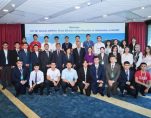
H.E. Mr. Abdulla Nigmatovich ARIPOV, Prime Minister of the Republic of Uzbekistan (seventh right, middle row); Dr. CHOI Yuk-Lin, Secretary for Education of the HKSAR Government (seventh left, middle row); Prof. Harry SHUM, Council Chairman of HKUST (sixth left, middle row); and Prof. Nancy IP, President of HKUST (sixth right, middle row), pose for a photo with students from Uzbekistan during the Prime Minister’s official visit to HKUST.
The Uzbek delegation of 24 members was warmly received by Dr. CHOI Yuk-Lin, Secretary for Education of the HKSAR Government; Prof. Harry SHUM, Council Chairman of HKUST; Prof. Nancy IP, President of HKUST, and senior university leaders.
In a high-level meeting with the University’s leadership, Prime Minister Aripov engaged in in-depth discussions on higher education development, artificial intelligence (AI), technological innovation, talent cultivation, research commercialization, and opportunities for closer collaboration between Uzbekistan and HKUST. The exchange also explored pathways for strengthening academic partnerships, expanding student and faculty mobility, and supporting Uzbekistan’s ambitions in developing a knowledge-based economy and emerging technology sectors.
Prime Minister Aripov said, “We are deeply impressed by HKUST’s achievements and its ability to translate cutting-edge research and innovation into practical industrial applications. With over 7,000 Uzbek students pursuing higher education across China, we see tremendous potential to strengthen our academic ties with Hong Kong and prioritize HKUST as a key destination for our students. As both Uzbekistan and HKUST mark their 35th anniversaries, establishing this partnership presents a symbolic and meaningful opportunity to expand educational excellence and global reach together.”
Prof. Shum said, “We are deeply honored to welcome Prime Minister Aripov and the distinguished Uzbek delegation to HKUST during the Belt and Road Summit. As a young, globally minded university celebrating our 35th anniversary, HKUST serves as a vital super-connector—bringing together diverse talent from over 80 nationalities. Building on our foundation with the El-Yurt Umidi Foundation, this visit marks a pivotal step in deepening ties between Hong Kong and Central Asia, opening up new horizons for collaborative growth and youth development along the Belt and Road.”
President Ip added, “We were delighted to engage in a highly productive and forward-looking dialogue with Prime Minister Aripov and his delegation. Uzbekistan’s strategic priorities in AI, robotics, fintech, and cybersecurity align closely with HKUST’s research strengths and advanced facilities. AI and medical science, in particular, offer promising areas for collaboration and could serve as important starting points for future joint initiatives. Beyond educational exchanges, we see tremendous opportunities to deepen cooperation in research, innovation, talent development, and knowledge transfer. We look forward to visiting Uzbekistan and working closely with our partners to co-create impactful solutions, nurture future-ready talent, and contribute to sustainable economic and technological development.”
HKUST also signed a Memorandum of Understanding (MOU) with the Ministry of Higher Education, Science and Innovation of the Republic of Uzbekistan. The agreement establishes a framework for educational collaboration and promotes excellence and innovation in teaching, learning, and research. Witnessed by Prime Minister Aripov, Dr. Choi, and Prof. Shum, the MOU was signed by President Ip and Mr. Salomov Uktam RAHIMOVICH, Deputy Minister of Higher Education, Science and Innovation of the Republic of Uzbekistan.
The Prime Minister and his delegation toured the HKUST Von Neumann Institute, where they learned about the University’s world-leading research and innovation capabilities in AI. The delegation was introduced to HKUST’s latest advancements in next-generation multimodal AI systems, robotic intelligence technologies, AI-driven 3D understanding and generation, and large-scale healthcare models, as well as their potential applications in addressing societal and industrial challenges. During the visit, the delegation met with 31 Uzbek students studying in Hong Kong, including 14 undergraduates currently enrolled at HKUST, to learn about their academic experiences and life in the city.
The issuer is solely responsible for the content of this announcement.
About The Hong Kong University of Science and Technology
The Hong Kong University of Science and Technology (HKUST) (https://hkust.edu.hk/) is a world-class university renowned for its innovative education, research excellence, and impactful knowledge transfer. Adopting a holistic and interdisciplinary approach to education, HKUST was ranked 33rd globally and 6th in Asia in the QS World University Rankings 2027 and QS Asia University Rankings 2026, respectively. It was also ranked 20th worldwide in the Times Higher Education Sustainability Impact Ratings 2026, placing first among universities in Hong Kong and the Chinese Mainland for the third consecutive year. Eleven HKUST subjects were ranked among the world’s top 50 in the QS World University Rankings by Subject 2026. In addition, HKUST’s Computer Science discipline, which encompasses areas such as artificial intelligence and machine learning, was ranked No. 1 in Hong Kong for the tenth consecutive year in the Times Higher Education World University Rankings by Subject 2026. Its graduates are highly competitive, consistently ranking among the world’s top 30 most sought-after employees. In research and entrepreneurship, more than 80% of HKUST’s research was rated “world-leading” or “internationally excellent” in the University Grants Committee’s Research Assessment Exercise 2020. As of July 2026, HKUST members had founded more than 2,000 active start-ups, including 11 unicorns and 22 successful exits through initial public offerings (IPOs) or mergers and acquisitions (M&A).
A federal judge has stopped the Trump administration from imposing fixed limits on how long foreign students, exchange visitors and journalists may remain in the United States, blocking a major immigration rule one day before it was due to take effect. U. S. District Judge F. Dennis Saylor IV in Boston issued a preliminary injunction on Monday, September 14, finding that the Department of Homeland Security had […]
BRICS leaders have placed development priorities of emerging economies at the centre of their New Delhi agenda, endorsing stronger representation for the Global South while advancing cooperation on trade, technology, finance and sustainable growth.
Chinese President Xi Jinping used the 18th BRICS Summit to argue that countries should pursue development paths suited to their own national conditions, a message that overlapped with the summit’s broader emphasis on policy autonomy, inclusive growth and reform of global institutions.
Addressing the first leaders’ session on September 12, Xi marked 20 years of BRICS cooperation and said members had strengthened themselves through unity while preserving independence in choosing their economic and social models. He described BRICS as an increasingly important platform for emerging markets and developing countries.
The summit’s New Delhi Declaration gave that theme wider institutional form. Leaders called for a more representative international order, greater participation by developing countries in global decision-making and reforms to institutions including the United Nations, World Trade Organization and international financial architecture.
The declaration also reflected the diversity within the expanded grouping. Rather than prescribing a single model of development, BRICS leaders stressed national circumstances, differing capacities and the need for policy space, particularly in areas such as energy transition, industrialisation and climate action. That approach broadly matched Xi’s argument that development strategies should reflect domestic conditions rather than external templates.
Xi sought to extend the idea into technology policy. He proposed an initiative on artificial intelligence-enabled industrialisation, deeper cooperation in research and applications, and stronger industrial and supply-chain links. China also promoted open-source AI collaboration and international platforms intended to improve access to emerging technologies for developing economies.
Other leaders framed similar priorities through their own national perspectives. Prime Minister Narendra Modi emphasised resilience, innovation, cooperation and sustainability, the four themes of India’s 2026 BRICS chairship, and called for solutions developed within the grouping to serve a wider range of developing countries. He also urged members to translate summit commitments into practical programmes.
BRICS members agreed on measures spanning digital cooperation, food and energy security, health, trade facilitation and the use of local currencies in cross-border transactions. The declaration supported stronger payment connectivity while stopping short of endorsing a common BRICS currency.
The economic agenda also underlined the practical test facing the grouping. Members backed use of national currencies in trade and investment, stronger cooperation through the New Development Bank and efforts to improve financial resilience. Such measures are intended to widen financing options for developing economies without committing members to a single monetary framework or common currency.
The expanded bloc now brings together countries with sharply different political systems, strategic alignments and economic structures. That breadth gives BRICS a larger claim to represent developing-country concerns, but it also limits how far members can converge on detailed policy prescriptions. Analysts have noted differences over whether the group should remain primarily an economic and development forum or assume a stronger geopolitical role.
Those tensions were visible alongside the development agenda. Leaders opposed protectionism and unilateral economic measures, supported a stronger multilateral trading system and called for reforms that would increase the voice of developing countries. At the same time, members avoided turning the summit into a unified ideological platform, relying instead on consensus language broad enough to accommodate competing interests.
Xi’s second summit intervention on September 13 placed a “people-centred” development philosophy within a wider call for Global South cooperation. He urged progress on the UN Sustainable Development Goals, improvements to global climate governance and a consensus-based framework for governing artificial intelligence.
China’s approach also carries strategic implications. Beijing has increasingly used BRICS and other multilateral forums to promote its views on development, sovereignty and global governance. Some members share its criticism of unequal representation in international institutions, while others remain cautious about allowing BRICS to become identified with any single country’s geopolitical agenda.
Arabian Post Staff -Dubai Shipping through the Strait of Hormuz fell sharply at the start of the week, with only four commodity vessels recorded transiting the strategic waterway on Monday as attacks across the Middle East intensified. Preliminary ship-tracking data from Kpler showed the Monday total was down from 10 vessels on Sunday, extending a prolonged decline in commercial traffic through a passage that remains central to […]
A new round of 50 per cent US tariffs on Canadian goods took effect early Tuesday, adding the levy to 110 tariff items while removing 10 others from the list. The changes, effective from 12.01am Eastern Time on September 15, cover products including selected cheeses, motorboats, all-terrain vehicles, furniture, mattresses, lamps, aluminium products, paper goods and iron or steel structures. They form part of a package of […]
Arabian Post Staff -Dubai Silicon Central Mall has become the first operating hub for Keeta Drone’s food delivery service in Dubai, linking participating restaurants with customers around Dubai Silicon Oasis through approved autonomous flights. The service is operating after clearance from the Dubai Civil Aviation Authority, with customers able to place eligible food and beverage orders through the Keeta app. Drones depart from Silicon Central Mall and […]
CoinEx has begun an orderly shutdown of its cryptocurrency exchange after nearly nine years, giving customers until December 22 to withdraw assets. The platform said new registrations and referral rewards would stop from September 15, while futures markets moved into reduce-only mode as the first stage of a phased wind-down. CoinEx attributed the decision to a prolonged downturn in digital-asset markets, contracting trading volumes and liquidity, and […]
Arabian Post Staff -Dubai Oil prices rose on Tuesday as renewed attacks on Saudi Arabia and the continued shutdown of the kingdom’s East-West pipeline kept traders focused on the risk of further disruption to Middle East crude supplies. Brent crude climbed $1.24 to $106.93 a barrel, while US West Texas Intermediate gained $1.29 to $102.65 in Asian trading. The move followed another wave of Houthi attacks on […]
Arabian Post Staff -Dubai Dubai will host the third Quantum Innovation Summit from September 28 to 30, bringing government bodies, researchers, technology companies and investors together as the UAE expands work on quantum computing, secure communications and post-quantum cybersecurity. The event will be held at the Grand Hyatt Dubai Conference & Exhibition Centre and is hosted by the UAE Cyber Security Council for a second consecutive year, […]
President Donald Trump has rejected calls for tougher artificial intelligence safeguards, arguing that existing US powers are sufficient even as security specialists warn that faster AI systems are widening the attack surface for cryptocurrency platforms and decentralised finance. Trump said on September 14 that additional safeguards were unnecessary and dismissed warnings from technology executives about uncontrolled development. His position places the White House at odds with industry […]
Swiss Bitcoin Pay has taken its servers offline after detecting what it described as likely unauthorised access to internal systems, while warning that customer contact, banking and transaction data may have been exposed. The Switzerland-based Bitcoin payments provider disclosed the incident on September 14 and said it was investigating the intrusion and securing its infrastructure before restoring service. It has not announced a date for reopening. Swiss […]
A browser extension used by nearly 31,000 Twitch viewers has been found forwarding live OAuth session tokens to proxy infrastructure controlled by the operator of a Russian-language commercial bot service, exposing credentials that can grant access to account functions without requiring passwords or two-factor authentication. Security company Socket said the extension, “Twitch Enhanced Viewer | JeetBot”, was available through both the Chrome Web Store and Mozilla’s Firefox […]





 https://hkust.edu.hk/





