News related to
Stage

Engineers and architects are exploring an innovative solution to the world’s energy storage challenges through towering skyscrapers capable of holding vast amounts of power. These ambitious designs are being developed by Skidmore, Owings & Merrill (SOM), a global architecture and engineering firm, in collaboration with Energy Vault, a pioneering energy storage company. Together, they aim to integrate gravity-based energy storage systems into the design of skyscrapers, creating buildings that not only serve as urban landmarks but also contribute to renewable energy infrastructure.

SOM’s skyscrapers could reach heights up to 1,000 meters—nearly three times the height of London’s iconic Shard. The idea of combining energy storage with urban architecture marks a significant step forward in the push for sustainable development. This novel concept of using buildings as massive storage devices leverages gravity batteries, an emerging technology that promises to address the challenge of energy storage in an environmentally sustainable way.

Gravity batteries store energy by using the excess electricity generated from renewable sources like solar or wind to power a system that lifts heavy weights within the building. This energy is stored as gravitational potential energy, ready to be converted back into electricity when needed by lowering the weight. This technology is seen as an efficient and environmentally friendly alternative to conventional batteries, which rely on resource-intensive materials like lithium.

Bill Baker, an engineer at SOM and a leading figure in the development of the project, emphasized the potential of these skyscrapers to accelerate the carbon payback period of buildings, making them more environmentally sustainable over their lifespan. “These buildings could play a critical role in addressing two major challenges facing urban development: energy storage and carbon emissions,” Baker explained, noting that the inclusion of gravity-based energy storage systems can drastically reduce a building’s carbon footprint.

The partnership between SOM and Energy Vault was announced earlier this year, and the concept is gaining traction in both architectural and environmental circles. Energy Vault, known for its work in gravity energy storage, has already made waves in the energy sector with its innovative use of gravity to store renewable energy. By partnering with SOM, the firm is taking its vision to new heights—literally—by embedding its technology into urban architecture.

While the concept of gravity-based energy storage is still relatively new, it is viewed as a promising alternative to more conventional forms of energy storage like lithium-ion batteries. Unlike chemical-based batteries, gravity batteries have the advantage of being low-maintenance and long-lasting. They rely on basic physical principles, making them simpler to implement and scale. Moreover, they do not degrade over time like traditional batteries, which is a significant advantage in terms of long-term sustainability.

One of the most appealing aspects of this technology is its adaptability. Gravity batteries can be built into existing infrastructure, or in this case, integrated directly into new skyscraper designs. This means that cities can begin to incorporate energy storage solutions into their very fabric, rather than relying solely on grid-based energy storage systems that are often located outside urban areas. In dense, energy-hungry cities, this could provide a much-needed boost to renewable energy adoption by making energy storage more accessible.

SOM’s skyscraper designs are still in the prototype stage, but they have already sparked significant interest. The buildings are envisioned as both functional and visually striking, with the potential to become new symbols of sustainable urban development. At a time when cities around the world are grappling with how to reduce their carbon footprints and become more energy-efficient, these gravity-powered skyscrapers could provide a solution that meets both aesthetic and environmental needs.

However, challenges remain. The initial cost of constructing such skyscrapers, particularly with the integrated gravity battery system, is expected to be high. Developers will need to weigh the long-term environmental and economic benefits against the upfront financial investment. Nonetheless, proponents of the technology argue that the cost could be offset by the savings in energy and carbon emissions over the building’s lifespan.

Another issue is the scalability of the technology. While the concept works well in theory and small-scale trials, implementing it in skyscrapers across major cities will require extensive testing and refinement. Factors like building materials, weight distribution, and energy conversion efficiency need to be carefully considered. However, SOM and Energy Vault remain optimistic about the project’s future, pointing to the global shift towards renewable energy as a strong motivator for continued innovation.

The potential benefits extend beyond energy storage. These skyscrapers could also serve as models for a new generation of smart buildings that are self-sustaining and energy-efficient. By integrating renewable energy storage with modern architecture, cities could drastically reduce their dependence on fossil fuels, cutting emissions and promoting sustainable growth. This would not only improve the quality of life in urban areas but also set a global standard for sustainable development in the 21st century.

While the United Kingdom is one potential market for these towering energy storage solutions, other regions may be quicker to adopt the technology. Countries with large-scale urbanization projects and a strong focus on renewable energy, such as those in the Middle East or East Asia, could be more likely to invest in these energy-storing skyscrapers as they seek to diversify their energy portfolios and meet growing energy demands.

BEIJING, CHINA – Media OutReach Newswire – 13 September 2024 – At the invitation of China International Fair for Trade in Services (CIFTIS) in Beijing, “(Daguan · Keweiwei) The 9th China Brand Value Top 100” and “(Daguan · Keweiwei) The World Brand Value Top 900” rankings are officially released at the CIFTIS on September 12, 2024. “(Daguan · Keweiwei) The 9th China Brand Value Top 100” and […]

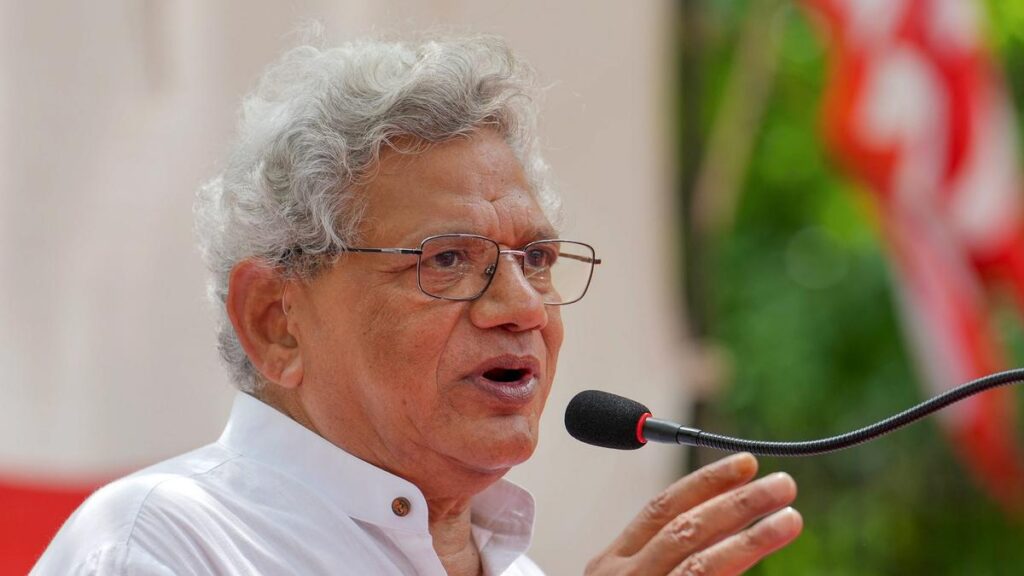
By Nitya Chakraborty The Communist Party of India (Marxist) general secretary Sitaram Yechury, who passed away on Thursday, September 12 after a fatal bout of respiratory illness at the age of 72, has left a deep void just not in the leadership of the CPI(M), but also in the functioning of the INDIA bloc, that […]

Russia is moving closer to regulating cryptocurrency trading, with plans to have a framework in place by November. Anatoly Aksakov, Chairman of the Russian State Duma Committee on Financial Markets, made the announcement, marking a pivotal moment for the nation’s evolving stance on digital assets. Initially, the new regulation will allow only a limited number of organizations to engage in cryptocurrency trading, with the potential for expansion […]

Gelato, long a symbol of Italian craftsmanship and culinary artistry, is now undergoing a cutting-edge transformation, courtesy of AI technology. Milan’s bustling ice cream scene has become the stage for a unique blend of tradition and innovation, with a local gelateria leveraging ChatGPT to create new flavors. This new wave of gelato design taps into artificial intelligence, bringing a futuristic twist to the centuries-old dessert.

Using ChatGPT, shop owners prompt the AI with flavor preferences and profiles, leading to the birth of bold, unexpected combinations. One parlor in Milan has embraced this technology to craft an array of ice creams that reflect not only creativity but also precise customization, allowing customers to influence flavor design by merely feeding the AI a few words about their taste preferences. The AI, trained on massive data sets of ingredient pairings and flavor science, churns out novel ideas, blending classic Italian ingredients with global inspirations. From chili-infused dark chocolate to lavender-tinted pistachio, these blends showcase how AI can elevate culinary experimentation.

This trend highlights a broader global movement towards AI integration in the food industry. Beyond gelato, AI tools are being explored to optimize processes, enhance customer experiences, and expand the boundaries of food innovation. The convergence of food and technology is attracting tech enthusiasts and foodies alike, eager to explore these novel culinary landscapes.

1 Innovative Product “WeMedi HK Dental Protector D2” 2 Product Offers with Attractive Discounts 3 Grand Prizes of Free Round-Trip Tickets to Saipan HONG KONG SAR – Media OutReach Newswire – 13 September 2024 – Blue, Hong Kong’s first digital life insurer, announced today that in celebration of its 6th anniversary, it is launching new product, promotions, and rewards. These include the new innovative “WeMedi HK Dental […]

SINGAPORE – Media OutReach Newswire – 13 September 2024 – SpeakIn, Asia’s largest digital platform for professional learning, has launched FindACoach, a 1:1 personalized coaching platform. SpeakIn FindACoach is the first coaching platform built for the Asian market and is committed to empowering working professionals across the region to navigate their careers. SpeakIn FindACoach brings the collective experience and expertise of Asia’s top thought leaders, subject matter […]

Advertisements

JiYue, a joint venture between Baidu and Geely, is set to disrupt the electric vehicle market with the official launch of the JiYue 07 sedan. Positioned as a luxury all-electric vehicle, this AI-powered sedan will compete with global electric vehicle giants, including Tesla’s Model 3, particularly in China’s rapidly growing electric mobility space. The JiYue 07, designed to impress with advanced technology, bold design, and superior range, […]

Arabian Post Staff -Dubai Bose has consistently set the standard in audio technology, and its Noise Cancelling Headphones 700 continue this legacy with impressive advancements in sound isolation and performance. Offering premium features and a sleek design, these headphones are priced at AED1,649 and are available at Carrefour, City Centre Deira. Combining superior sound quality with advanced noise-cancellation technology, they provide an immersive experience for music lovers, […]

Generative artificial intelligence (AI) has gained considerable attention worldwide, particularly with the rise of tools like ChatGPT. However, its penetration and regular usage vary significantly across different countries and demographic groups, as evidenced by findings from an extensive online survey covering six nations: Argentina, Denmark, France, Japan, the United Kingdom, and the United States. While there is broad awareness of the technology, its adoption in everyday life remains limited, with only a small fraction of people using AI tools regularly.

The survey results reveal that ChatGPT is the most recognized and widely used generative AI tool in all six countries. Nearly half of the population has heard of it, yet daily use remains minimal. For instance, only 1% of people in Japan report using the tool daily, with slightly higher usage rates in the United States (7%) and the United Kingdom (2%). Despite the widespread knowledge of ChatGPT, the technology has not yet become a staple in everyday online activities for most users.

Generative AI tools like ChatGPT, Google Gemini, and Microsoft Copilot are becoming increasingly known to the public, but there remains a significant portion of the population—between 20% and 30%—that is unfamiliar with these technologies. This gap in awareness is consistent across the six countries surveyed. The disparity highlights the ongoing challenge of AI’s integration into mainstream digital life, as a considerable minority still lacks exposure to or understanding of these tools.

Younger generations, particularly those aged 18 to 24, are far more likely to engage with generative AI tools. Across the six nations, an average of 56% of young adults in this age group have used ChatGPT at least once, whereas only 16% of people aged 55 and older report the same. The generational divide in AI usage underscores the technology’s appeal to a younger, more tech-savvy audience, while older individuals seem less inclined to explore these emerging tools.

The survey also delved into how people are using generative AI across various sectors. In the six nations surveyed, 28% of respondents stated that they had used AI to create different types of media—ranging from text and images to audio and code—while 24% reported using it to gather information. Interestingly, despite the vast potential of generative AI in journalism and content creation, only 5% of respondents indicated that they had used such tools to get the latest news. This finding suggests that while AI is being utilized in creative industries, its role in news consumption remains limited.

While generative AI tools are lauded for their versatility in content generation, skepticism persists in their use for journalism. The reliance on AI for news remains low across the board, likely due to concerns about credibility, bias, and the perceived lack of human insight in automated news reporting. In the US, for example, where generative AI usage is more prevalent compared to other nations, only a small fraction of users trust AI for news purposes, indicating a lingering preference for traditional journalism over automated alternatives.

Although the adoption of generative AI is still at a nascent stage, the public’s use of these technologies is evolving. Younger people appear more willing to experiment with AI, particularly in creative and media-centric tasks, but the overall usage remains sporadic. In France, for instance, only 2% of respondents said they used ChatGPT daily, with the majority of users engaging with the tool only once or twice before abandoning it. This trend holds true across all six nations, where generative AI tools are still far from becoming a daily necessity in people’s digital routines.

Google Gemini and Microsoft Copilot, while trailing behind ChatGPT in terms of usage, are also gaining traction among AI users. These tools are mainly utilized for specific functions, such as generating code or assisting in professional tasks. However, their widespread use is still dwarfed by ChatGPT’s reach, which remains the dominant force in the generative AI landscape. The disparity in usage suggests that while other AI platforms are making strides, they have yet to capture the public’s attention on the same scale as ChatGPT.

Despite the promise of generative AI, the survey underscores a need for greater public education about its potential applications. Many users remain unsure about how to integrate AI into their everyday lives beyond novelty tasks. There is also an underlying apprehension about the accuracy and reliability of AI-generated content, particularly in contexts that require human judgment, such as news and information dissemination.

Headlined by French electronic music duo, JUSTICE, along with a carefully-curated mix of international and regional performers, the 2-day festival encompasses everything from the realm of fashion, music, art, and culture. Early bird 2-day weekend ticket sales will open on Klook starting September 12. HONG KONG SAR – Media OutReach Newswire – 11 September 2024 – Hypebeast, the leading global platform for contemporary culture and lifestyle, is […]

By K Raveendran India’s economic aspirations have long been anchored in the expansion of its manufacturing sector, a goal that has become increasingly critical as the country seeks to position itself as a global economic powerhouse. It is widely believed that the realisation of this goal would be impossible without Chinese investments, which however, come […]

The UAE’s ambitious high-speed rail initiative has officially entered its prequalification stage, marking a significant step toward transforming the country’s transport infrastructure. This development follows the recent unveiling of a strategic plan to revolutionize rail travel across the United Arab Emirates.

Etihad Rail, the state-owned company spearheading the project, is inviting companies to submit their qualifications to participate in the development of the rail network. This marks a pivotal moment as the UAE aims to introduce a high-speed rail system that will significantly enhance connectivity between key cities and economic hubs.

The high-speed rail project is part of a broader vision to modernize the UAE’s transportation infrastructure, reduce road congestion, and promote sustainable travel options. When completed, it is expected to link major cities including Abu Dhabi, Dubai, and Sharjah, and extend to other Gulf Cooperation Council (GCC) countries, enhancing regional connectivity.

This initiative is not just about speed but also about efficiency and sustainability. The planned rail network will feature state-of-the-art technology aimed at providing a reliable and eco-friendly alternative to conventional transportation methods. The project underscores the UAE’s commitment to sustainable development and its ambition to become a leading player in global transport innovation.

The prequalification process is crucial for ensuring that only the most capable and experienced companies are involved in the project. Etihad Rail is seeking firms with proven expertise in high-speed rail systems, construction, and project management. This phase will help identify and shortlist potential partners who can contribute to the successful delivery of the rail network.

The high-speed rail system is expected to have a transformative impact on the UAE’s economy. By improving transportation efficiency, it will facilitate better movement of goods and people, potentially boosting economic activities and reducing travel time significantly. This aligns with the UAE’s broader economic diversification strategy, which aims to reduce reliance on oil revenues and foster growth in other sectors.

Key players in the global rail industry are closely watching the progress of this project. Companies from Europe, Asia, and the Americas are anticipated to show interest, bringing a wealth of international experience and technological advancements to the table. This influx of expertise will be crucial for the successful implementation of such an ambitious undertaking.

The UAE’s commitment to high-speed rail reflects a broader trend in the region towards investing in advanced infrastructure projects. Similar initiatives are underway in neighboring countries, with the aim of creating a cohesive and integrated transport network across the GCC. The UAE’s project is poised to set a benchmark for other nations in the region and beyond.

As the prequalification phase progresses, it will be essential for Etihad Rail to ensure transparency and fairness in the selection process. This will help build trust among potential partners and stakeholders and pave the way for a successful collaboration. The project’s success will not only enhance the UAE’s transportation infrastructure but also contribute to its economic and environmental goals.

Shoplazza has entered a pivotal partnership with Stripe to overhaul its payment processing capabilities, a move set to significantly enhance the efficiency and security of e-commerce transactions. Announced at the Stripe Tour Singapore 2024, the collaboration marks a significant milestone in the evolution of Shoplazza’s payment solutions. This alliance is poised to leverage Stripe’s advanced financial infrastructure to bolster Shoplazza’s existing payment platform. As part of the […]

A pioneering SpaceX mission has lifted off, marking a significant milestone in commercial space exploration. Early Tuesday, a spacecraft carrying four private astronauts began its journey to conduct the inaugural private spacewalk. This historic event involves a fresh set of SpaceX-designed spacesuits and an upgraded spacecraft, highlighting advancements in private space ventures.

The mission, dubbed Ax-3, represents a major step forward in the burgeoning industry of commercial space travel. The private crew, composed of seasoned professionals from diverse fields, will undertake activities outside the International Space Station (ISS) that have previously been reserved for government astronauts. This endeavor not only signifies the growing capabilities of private space travel but also sets the stage for future commercial opportunities in low Earth orbit.

SpaceX, renowned for its reusable rocket technology and ambitious space missions, has developed new spacesuits and equipment specifically for this mission. These innovations are designed to enhance the safety and effectiveness of spacewalks conducted by non-professional astronauts. The upgraded spacecraft, a modified version of the Crew Dragon capsule, includes enhancements to support the complex logistics of extravehicular activities (EVAs).

The private astronauts, who have undergone extensive training, are expected to perform a range of tasks during their spacewalk. Their activities will provide valuable data on the functionality of the new spacesuits and spacecraft systems in the harsh environment of space. This mission is a testament to the expanding role of private entities in space exploration, traditionally dominated by government space agencies.

SpaceX’s Ax-3 mission is also a notable achievement in the realm of space commercialization. It underscores the increasing involvement of private companies in space missions that were once exclusively within the purview of governmental space programs. The success of this mission could pave the way for more frequent and diverse private space operations, including potential tourism and research opportunities.

The preparation for this mission has involved rigorous testing and simulations to ensure the safety and efficacy of the new equipment. The spacesuits, developed by SpaceX, feature advanced life support systems and enhanced mobility to support the astronauts during their spacewalk. These suits are a crucial component of the mission, as they are designed to withstand the extreme conditions of space while providing the necessary protection and functionality for the astronauts.

As the spacecraft approaches the ISS, the team will begin the complex process of donning their spacesuits and preparing for the spacewalk. The mission is expected to last several hours, with the crew performing various tasks and experiments outside the spacecraft. This undertaking will not only demonstrate the capabilities of private space technology but also provide critical insights into the operational aspects of private space missions.

The launch of the Ax-3 mission is part of a broader trend of increasing private sector involvement in space exploration. Companies like SpaceX are at the forefront of this movement, pushing the boundaries of what is possible in commercial space travel. Their efforts are contributing to a more competitive and innovative space industry, with potential implications for the future of space exploration and travel.

FRANKFURT, GERMANY – Media OutReach Newswire – 10 September 2024 – Taking center stage at Automechanika Frankfurt on September 10, global premium electric mobility brand Zeekr unveiled its advanced groundbreaking innovations—SEA-M architecture and new 5.5C EV batteries, reaffirming its commitment to reinventing future mobility. The Zeekr MIX, Zeekr 001 FR, and Zeekr X at Automechanika Frankfurt. Showcasing three models at the exhibition—the Zeekr MIX, 001 FR, and […]

China has intensified its efforts to transform its education system as part of a broader national strategy aimed at becoming a global leader in academia by 2035. The latest drive aligns with the nation’s ambition to enhance innovation capacity, cultivate top-tier talent, and modernize its educational infrastructure. President Xi Jinping, speaking at a national education meeting in Beijing, reiterated the importance of strengthening the country’s educational framework as a fundamental aspect of China’s modernization and development strategy.

Since the 18th Congress of the Communist Party of China (CPC), substantial reforms have been implemented to accelerate the modernization of education. These reforms include investments in digitalization initiatives, improving access to quality education, and promoting international cooperation in academic research. The overarching goal is to narrow the disparities between rural and urban areas, and between different social groups, ensuring that education becomes more inclusive and accessible across the country.

The government has focused on fostering virtue and innovation within the education system. President Xi emphasized that a balanced and high-quality compulsory education system is critical for China’s socio-economic development. This includes enhancing cooperation between universities and enterprises, promoting interdisciplinary research, and building a high-caliber teaching workforce. Measures to improve teachers’ welfare and career development have also been prioritized, reflecting the government’s intention to make teaching one of the most respected professions in China.

A key part of this strategy involves expanding China’s international academic exchanges and strengthening partnerships in global scientific research. China seeks to position itself as a leader not only in the quantity of educational opportunities but also in the quality of research and innovation, aiming to cultivate a generation of globally competitive scholars and professionals.

These reforms come at a critical juncture, as China faces challenges such as an aging population and slowing economic growth. A modernized, robust education system is seen as essential to maintaining China’s competitive edge on the global stage, particularly in emerging fields such as artificial intelligence, biotechnology, and green technology.

Drydocks World has secured a groundbreaking agreement with China’s Shanghai Zhenhua Heavy Industries Co. Ltd. (ZPMC) to acquire a state-of-the-art 5,000-ton floating sheerleg crane. The acquisition is set to significantly enhance the company’s capabilities in handling large-scale offshore projects, marking a pivotal milestone for the maritime and offshore energy sectors in the Middle East.

The contract was signed at a ceremony in Dubai, attended by prominent figures from the industry, including Sultan Ahmed bin Sulayem, Group Chairman and CEO of DP World, the parent company of Drydocks World. The new crane is expected to play a vital role in projects that require heavy-lifting capabilities, particularly in the growing market for offshore platforms and vessels.

The sheerleg crane, with a lifting capacity of 5,000 tons and a maximum lifting height of 120 meters, represents a new generation of heavy-lift technology. With its 160-meter-long A-frame and a 600-ton fly jib capable of extending the reach to 180 meters, the crane will enable Drydocks World to handle increasingly complex offshore projects. The versatility of this crane is anticipated to benefit both nearshore and offshore operations, with a particular focus on the construction and installation of offshore platforms, bridges, and marine developments.

This acquisition underlines Drydocks World’s strategic investment in cutting-edge infrastructure, reinforcing its commitment to remain a leader in the global maritime industry. According to Captain Rado Antolovic, CEO of Drydocks World, the crane will not only support the company’s current projects but will also pave the way for more extensive and intricate ventures. Antolovic emphasized that the crane’s ability to handle heavier modules and expedite project timelines would further solidify Drydocks World’s standing as a leading player in the maritime and offshore energy sectors.

ZPMC’s Chairman, You Ruikai, also hailed the partnership, citing the strong ties between ZPMC and DP World as a foundation for future collaborations. Ruikai noted that the sheerleg crane’s advanced safety features and high-capacity ballast systems make it one of the most efficient and environmentally sustainable cranes in the industry. The crane’s integrated control system and automatic ballasting capabilities highlight the emphasis on safety and operational efficiency.

Construction of the crane is expected to take approximately 24 months, with completion scheduled for the second quarter of 2026. Once operational, the crane will serve as a critical asset in Drydocks World’s efforts to meet the increasing demand for offshore infrastructure, such as high-voltage offshore converter platforms and Floating Production Storage and Offloading (FPSO) vessel topsides.

As the offshore industry continues to evolve, the need for advanced lifting solutions has become paramount. Drydocks World has already demonstrated its expertise in executing major offshore projects, including the conversion of vessels such as the Tango FLNG and Excalibur FSU, and the refurbishment of the Firenze FPSO. This latest acquisition will further enhance the company’s portfolio and its ability to undertake large-scale offshore projects.

Sultan Ahmed bin Sulayem commented that this investment is a testament to Drydocks World’s commitment to maintaining its leadership position in the maritime industry. He highlighted that the new crane would boost the company’s operational capacity, allowing it to support projects that contribute to regional economic growth. The crane is also expected to reduce the need for additional support vessels, as it can accommodate up to 50 personnel offshore, thus enhancing efficiency.

With global demand for offshore wind platforms, FPSO vessels, and similar projects on the rise, Drydocks World’s investment in this high-capacity crane positions the company to meet future challenges and opportunities. The acquisition not only strengthens its foothold in the Middle East but also bolsters its standing on the international stage, where the competition for offshore energy projects is intensifying.

New menu concept highlighting iconic dishes of Chef Ducasse MACAU SAR – Media OutReach Newswire – 10 September 2024 – The acclaimed Melco Style Presents: The Black Pearl Diamond Restaurants Gastronomic Series, which was launched in June 2023, will be rolling out its last chapter of themed banquets which will bring to Macau the 10th cross-regional four-hands collaboration and feature City of Dreams’ Black Pearl one diamond […]

Offset8, an Abu Dhabi-based environmental organization, and iRise, a tech and sustainability company, have unveiled an ambitious initiative to restore 10 million trees in Malawi. This extensive reforestation project, which will be executed over the next decade, aims to address both environmental and socio-economic challenges in the Southern African nation. The initiative marks a significant collaboration between technology and conservation, with Offset8 focusing on the reforestation efforts […]

Bank Saudi Fransi (BSF) and AstroLabs have successfully wrapped up the second cohort of their “Banker Technologist” program, a key initiative aimed at enhancing the fintech talent pool in Saudi Arabia. This development highlights the nation’s commitment to becoming a global leader in financial technology and innovation.

The “Banker Technologist” program, which launched its second cohort earlier this year, was designed to equip participants with advanced skills in fintech and related technologies. The program’s primary goal is to bolster the local talent pool, aligning with Saudi Arabia’s Vision 2030 ambitions. This vision includes a significant expansion of the fintech sector, with a target of growing the number of fintech companies from 200 in 2023 to 525 by 2030.

As Saudi Arabia continues to advance its position as a central hub for financial technology, the “Banker Technologist” program stands out as a crucial contributor to this transformation. Participants in the program benefit from hands-on training, mentorship from industry experts, and exposure to cutting-edge fintech solutions. This comprehensive approach aims to ensure that graduates are well-prepared to drive innovation and growth within the sector.

The completion of this cohort underscores a broader trend within the Saudi financial landscape. The Kingdom’s emphasis on nurturing fintech talent is a direct response to the increasing demand for skilled professionals in this burgeoning field. By investing in educational programs and partnerships, Saudi Arabia is not only addressing immediate talent needs but also setting the stage for long-term industry success.

The latest cohort has already made notable contributions to various fintech projects, with several participants successfully integrating new technologies into existing financial systems. These achievements reflect the program’s effectiveness in bridging the gap between academic knowledge and practical application. Moreover, the success of the program aligns with the broader objectives of Vision 2030, which seeks to diversify the economy and reduce dependency on oil revenue by fostering growth in sectors such as technology and innovation.

In addition to its focus on skill development, the “Banker Technologist” program also emphasizes networking and collaboration. Participants have the opportunity to engage with leading fintech companies and industry leaders, facilitating knowledge exchange and potential career opportunities. This aspect of the program is designed to enhance the overall ecosystem, creating a supportive environment for fintech professionals to thrive.

The outcomes of this program are particularly significant as Saudi Arabia continues to attract international attention as a fintech hub. The country’s strategic investments in technology and innovation are setting a precedent for other nations looking to enhance their own financial technology sectors. The successful conclusion of this cohort serves as a testament to the effectiveness of these initiatives and their alignment with broader national goals.

Exploring how AI technologies and customer-centric solutions can elevate engagement, accelerate growth, and drive tangible ROE in banking. HO CHI MINH CITY, VIETNAM – Media OutReach Newswire – 9 September 2024 – Backbase, the global leader in Engagement Banking, will be bringing ENGAGE Asia to Ho Chi Minh City this year. On September 11 and 12, this bustling city will transform into the epicenter of digital banking […]

The United Arab Emirates has completed its first-ever successful test flights of High-Altitude Pseudo-Satellites (HAPS), marking a significant milestone in the country’s efforts to become a global leader in advanced aerospace technologies. The HAPS flights, carried out in the UAE’s desert regions, offer groundbreaking potential for long-duration aerial monitoring, communication, and surveillance operations at high altitudes, a capability that could revolutionize industries ranging from agriculture to national […]

Dubai International Financial Centre (DIFC) is spearheading a series of new initiatives aimed at positioning itself as a global hub for wealth management and asset management firms. As Dubai continues to solidify its reputation as a key financial center, the strategic move by the DIFC underscores the increasing interest from international firms looking to establish a presence in the region.

With the region’s financial landscape rapidly evolving, the DIFC’s efforts target the growing influx of high-net-worth individuals and institutional investors. A range of programs designed to enhance operational efficiencies for firms, alongside regulatory advancements and incentives, has been rolled out to attract global firms seeking to expand their wealth and asset management portfolios.

This development comes as the Middle East has emerged as a significant player in global wealth management. With a booming ultra-high-net-worth population and growing institutional investments, Dubai is making strides to become a central hub for wealth and asset management activities. The DIFC, long regarded as the financial heartbeat of Dubai, is now doubling down on its efforts to ensure that the city remains competitive on the global stage.

Key among the new initiatives are specialized regulatory frameworks tailored to the asset management sector. These frameworks have been designed to simplify the process for international firms looking to set up operations in Dubai. The objective is to provide a clear and efficient regulatory environment, reducing administrative burdens and encouraging more firms to base their operations in the DIFC.

As part of these efforts, the DIFC has also introduced a range of incentives for firms to expand their footprint in the region. These include tax exemptions, streamlined licensing processes, and enhanced access to a global network of clients and investors. By offering a competitive regulatory and business environment, Dubai aims to draw in more firms, contributing to the city’s long-term financial growth.

Dubai’s wealth management sector has seen significant expansion over the past few years. A growing number of family offices, private equity firms, and institutional investors have established themselves in the DIFC. The trend reflects the region’s increasing importance in the global financial ecosystem, driven in part by the region’s geographic location and its robust infrastructure.

The DIFC’s strategic location at the crossroads of Asia, Europe, and Africa has long made it an attractive destination for financial services. The center is now leveraging this advantage to deepen its focus on wealth and asset management. With growing geopolitical shifts and economic trends driving more capital to the Middle East, Dubai is well-positioned to capture a significant share of this market.

Global asset management firms have already begun to capitalize on the opportunities presented by the DIFC. Several prominent international firms have recently established their regional headquarters in Dubai, underscoring the city’s appeal as a base for financial operations. This growing influx of firms is expected to boost the region’s financial services sector, creating new jobs and driving further investment.

Moreover, the DIFC’s reputation as a secure, transparent, and well-regulated environment has played a critical role in attracting global investors. The center’s robust legal framework, which is based on international standards, provides firms and investors with the confidence needed to operate in the region. This legal certainty is particularly attractive to firms navigating complex international markets.

Another significant factor driving the DIFC’s initiatives is the growth of Islamic finance. As the demand for Sharia-compliant financial products continues to rise globally, Dubai is positioning itself as a leading hub for Islamic asset management. The DIFC has introduced several initiatives aimed at facilitating the growth of Islamic finance, including the establishment of dedicated frameworks for Sharia-compliant investments. These initiatives have positioned the DIFC as a key player in the global Islamic finance market, attracting firms from across the globe.

Dubai’s economic diversification strategy is another driving force behind the DIFC’s latest efforts. As the city looks to reduce its reliance on oil revenues, financial services have emerged as a critical pillar of Dubai’s economy. By fostering a competitive and dynamic financial sector, the DIFC is playing a central role in Dubai’s economic transformation.

The DIFC’s latest initiatives also align with Dubai’s broader strategy to become a global leader in innovation and technology. The center has placed a significant focus on fintech, with several programs aimed at fostering innovation within the financial services sector. The growing importance of digital transformation in financial services is further positioning Dubai as a key destination for firms seeking to innovate in asset management and wealth management.

VISHNU RAJA
RYO YAMADA
HITORI GOTOH
IKUYO KITA
Just in: