News related to
Success

Prudent Risk Management Yields Solid Outcomes metrics, Core Pawn Business Demonstrates Resilient Growth with Proposed Final Dividend of HK$1.15 cents per share

Results Highlights:

  • Profit for the year attributable to shareholders increased by approximately 47.8% YoY to approximately HK$82.6 million
  • Net profit margin increased by approximately 16.2 p.p. YoY to approximately 50.2%
  • Impairment losses recognized on loan receivables decreased by approximately 72.6% YoY to HK$12.7 million
  • Revenue from pawn loan business increased by approximately 12.9% YoY to approximately HK$98.6 million
  • Proposed final dividend of HK$1.15 cents per share

HONG KONG SAR – Media OutReach – 27 May 2026 – The board of directors of Oi Wah Pawnshop Credit Holdings Limited (HKEx stock code: 1319.HK, the “Group” or “Oi Wah”) announced its annual results and its financial position. For the year ended 28 February 2026 (“FY2026“), the Group recorded revenue of approximately HK$164.4 million. Profit attributable to shareholders of the Company reached approximately HK$82.6 million, representing an increase of 47.8% compared to the year ended 28 February 2025 (“FY2025“). During the year, net interest margin expanded to approximately 17.2%.

As of 28 February 2026, the cash and cash equivalents (net of bank overdraft) amounted to approximately HK$376.9 million, representing a substantial increase of approximately 74.8% YoY. The net assets increased to approximately HK$1,155.7 million. Concurrently, the gearing ratio dropped to 4.1%. During the year, the earnings per share increased by approximately 48.3% YoY to HK 4.3 cents. The Board of Directors recommends a final dividend of HK 1.15 cents per share.

BUSINESS REVIEW

Mortgage loan business

In FY2026, the economy entered a phase of gradual recovery, leading to a steady resurgence in financing demand. The revenue from the mortgage loan business was approximately HK$65.8 million and accounted for approximately 40.0% of the Group’s total revenue during the year. The gross mortgage loan receivables were approximately HK$612.5 million as at 28 February 2026. During the year, net interest margin of the mortgage loan business was approximately 10.1%.

In FY2026, the Group maintained a disciplined and risk-sensitive approach in its lending activities. While we observed an encouraging stabilization in the residential property market, the Group exercised intensified vigilance toward the commercial and industrial sectors due to persistent supply overhangs and valuation pressures. Our underwriting strategy remained focused on building a resilient loan portfolio by prioritizing high-quality collaterals and prudent loan-to-value ratios. During the year, the average loan-to-value ratio for first mortgage was approximately 56.27%, while overall average loan-to-value ratio for subordinate mortgage was approximately 40.82% of which, average loan-to-value ratio of subordinate mortgage that the Group participated in was approximately 3.73%.

Reflecting our robust credit risk management, the charge for impairment losses recognized on loan receivables decreased from approximately HK$46.3 million to approximately HK$12.7 million, representing a decrease of approximately 72.6% or HK$33.6 million.

Pawn Loan Business

The revenue from the pawn loan business increased by approximately 12.9% to approximately HK$98.6 million in FY2026. The business’s profitability was further bolstered by a significant 73.0% increase in the gain on disposal of repossessed assets, which reached approximately HK$19.2 million as compared to approximately HK$11.1 million in FY2025. This performance was mainly attributed to the unprecedented strength of gold prices and a highly active secondary market for luxuries, particularly high-end timepieces. These factors have further solidified the pawn loan business as a resilient and strategic hedge against broader economic volatility.

During the year, the Group continued to channel resources to advertising and promotion to enhance the Group’s brand exposure. Such effort has generated demand for one-to-one pawn loan appointment services for pawn loans exceeding HK$0.1 million.

PROSPECTS

Looking ahead, the Group maintains a stance of cautious optimism regarding the global economic recovery. While macroeconomic and geopolitical uncertainties may persist, we remain dedicated to a proactive yet prudent strategy to ensure sustainable long-term growth and maximize returns for our shareholders.

Within the mortgage loan market, our strategy will be characterized by a calibrated and divergent approach. We continue to hold an optimistic outlook on the residential property segment, where we intend to capitalize on the stabilizing interest rate environment by identifying high-quality mortgage opportunities. Conversely, we maintain cautious and vigilant towards the commercial and industrial sectors. Given the structural challenges of inventory overhang and the increasing prevalence of distressed assets, the Group will exercise intensified oversight in its credit underwriting and collateral appraisal to mitigate valuation risks.

Regarding our core operations, we anticipate our pawn loan business to remain resilient, supported by a firm gold price trajectory and sustained demand for liquidity management. To further enhance operational efficiency, the Group is actively optimizing its pawn shop network. We are strategically identifying more cost-effective locations within our established service areas, aiming to relocate our pawn outlets to premises with more competitive lease terms to reduce operating overheads while maintaining our leading market presence.

Simultaneously, our strategic partnership with PACM Group remains a key driver for geographic diversification. By proactively exploring institutional credit opportunities in developed markets while maintaining rigorous investment oversight, the Group is well-positioned to navigate evolving industry dynamics and deliver stable value to all stakeholders.

Mr. Edward Chan, Chairman and CEO of the Company, said, “Global geopolitical and macroeconomic uncertainties intertwine, placing pressure on the global economic recovery and posing ongoing challenges to the local property market. In the face of a complex external environment, Oi Wah has consistently adhered to a proactive yet prudent management strategy. Our core pawn loan business has fully demonstrated its role as a strategic tool to hedge against macroeconomic fluctuations, showcasing the Group’s strong resilience amidst market challenges.

Looking forward, we will adopt a carefully calibrated differentiation strategy and continue to drive regional diversification. Under strict investment monitoring, we will actively explore business opportunities in developed markets to further expand our revenue streams and customer base, striving to deliver long-term, stable, and sustainable returns for our shareholders.”

Hashtag: #OiWah

The issuer is solely responsible for the content of this announcement.

About Oi Wah Pawnshop Credit Holdings Limited

Oi Wah is a financing service provider in Hong Kong, mainly providing short-term secured financing, including pawn loans and mortgage loans. The Group established its first pawnshop in 1975 and currently owns 10 pawnshops and one premium service center in various locations in Hong Kong. Oi Wah diversified into mortgage loan business in 2009. The Group is the first local pawn shop which successfully listed on the Main Board of The Stock Exchange of Hong Kong Limited on 12 March 2013.

Another significant step towards the success of ICVAX®

HONG KONG SAR – Media OutReach Newswire – 27 May 2026 – Immuno Cure Group (“Immuno Cure“), headquartered at Hong Kong Science Park, is pleased to announce the inauguration of the research facility for its HIV therapeutic DNA vaccine (“ICVAX®“) at the Center of International Innovation for Technology and Science (“CIITS”) located in Hetao, Shenzhen. The facility aims for the development and application of key technologies for the clinical research and commercialization of Immuno Cure’s ICVAX®. ICVAX® is developed by Immuno Cure with the aim of achieving antiretroviral therapy (“ART“)-free functional cure for HIV infection. This project is carried out in collaboration with Prof. Zhiwei CHEN, the Founding Director of the AIDS Institute of Li Ka Shing Faculty of Medicine, the University of Hong Kong (“HKU AIDS Institute“), and Prof. Hongzhou LU, President of the Third People’s Hospital of Shenzhen, in the capacity as advisors.

From left to right: Dr.Tengfei CAO, Deputy Director of CIITS; Mr. Tom LAU, Corporate Finance Director and Co-Founder of Immuno Cure; Dr. Renchen LIU, Executive Deputy Dean of Research Institute of Tsinghua University in Shenzhen and Director of CIITS; Dr. Xia JIN, CEO and Co-Founder of Immuno Cure; Prof. Zhiwei CHEN, Principal Scientific Advisor and Co-founder of Immuno Cure; Dr. Percy CHENG, Chairman and Co-Founder of Immuno Cure

CIITS is a national-level achievement transformation platform co-built by Guangdong Province, Shenzhen Municipality, and Tsinghua University, and is located at the Hetao Shenzhen-Hong Kong Science and Technology Innovation Co-operation Zone (“Hetao Co-operation Zone“). It is committed to building a world’s leading major technological innovation and industrialization platform with a global perspective. It focuses on key tracks including biomedicine, high-performance materials, and artificial intelligence (AI). It aims to aggregate global innovation resources, connect with leading enterprises, and conduct organized scientific research and achievement transformation to address national major strategic needs.

Since AIDS was first identified in 1981, 40.8 million people have died from HIV infection, with over 44.1 million people living with HIV globally. While antiretroviral therapy can effectively control HIV replication, it cannot cure the disease, highlighting the critical need for immunotherapies. Designed to enhance the host’s immune response, immunotherapies aim to achieve sustained viral control without lifelong ART, ultimately leading to complete viral suppression and functional cure. Immuno Cure’s proprietary innovative HIV therapeutic DNA vaccine, ICVAX®, induces broad-spectrum, polyfunctional virus-specific T cells to achieve the ultimate goal of ART-free functional cure of HIV infection.

Immuno Cure completed the first-in-human Phase I clinical trial of ICVAX® in November 2024, demonstrating excellent safety and promising immunogenicity. Two multi-center Phase II clinical trials—randomized, double-blind, and placebo-controlled—are scheduled to launch in Q2-2026 to evaluate the vaccine’s mechanism of action and efficacy. The trials will be conducted at Prince of Wales Hospital in Hong Kong, as well as eight top-tier hospitals in China, including the Shenzhen Third People’s Hospital, Beijing Ditan Hospital Affiliated to Capital Medical University, Beijing Youan Hospital affiliated to Capital Medical University, the Eighth People’s Hospital of Guangzhou, the Second People’s Hospital of Tianjin, the Sixth People’s Hospital of Zhengzhou, Chengdu Public Health Clinical Medical Center, and Chongqing Public Health Medical Center.

Notably, standardized testing systems for evaluating immunological and virological indicators are crucial for HIV vaccine clinical trials. However, the lack of domestic standard operating procedures (SOPs) for infectious samples in clinical trials hinders the clinical development and regulatory approval of novel infectious disease therapies like ICVAX®. The mission of this research facility at CIITS is to establish an internationally aligned standardized clinical testing system for T-cell immunogenicity and viral reservoirs, as well as identify core biomarkers associated with vaccine efficacy — filling a domestic technical gap. Immuno Cure will offer the ICVAX® Phase II clinical trial to facilitate the development of this standardized precision testing method for clinical sample analysis.

Dr. Xia JIN, CEO of Immuno Cure, stated, “I am delighted to be appointed to lead this key project of CIITS. I would also like to thank CIITS for the fully fitted modern laboratory space and the RMB10.0m funding support for this 2-year initial phase. My whole scientific team is committed to contributing diligently to the success of this project. I have no doubt that the development of a standardised testing regime would not only enhance the quality of our clinical trials for ICVAX® but would also eventually be adopted as industry and national standards for the clinical translation of medicine for HIV/AIDS and other infectious diseases.

Renchen LIU, Executive Deputy Dean of Research Institute of Tsinghua University in Shenzhen and Director of CIITS, stated, “Warmest congratulations on the inauguration of the research facility for ICVAX® at the CIITS. In the future, CIITS will continue to leverage its platform resources to implement full-chain incubation services. Project managers will provide service support throughout the entire project period, ensuring the smooth progress of the project through resource integration, talent recruitment and development, clinical collaboration, and achievement transformation. These efforts will safeguard the steady progress of the project.”

As the project advances, Immuno Cure’s ICVAX® is positioned to become the world’s first therapeutic DNA vaccine to deliver an ART-free functional cure for HIV infection, bringing new hope to people currently living with HIV. In parallel, the standardized testing platform and collaborative innovation model developed through this effort will provide a scalable, replicable blueprint for R&D of novel therapies targeting other major infectious diseases. Together, these outcomes will strengthen the global competitiveness of biomedicine development in GBA and contribute to the development of national biosecurity capabilities and a more resilient public health system.

Hashtag: #ImmunoCure


The issuer is solely responsible for the content of this announcement.

About the Center of International Innovation for Technology and Science (“CIITS”)

Center of International Innovation for Technology and Science (CIITS), as the international headquarter of the Greater Bay Area National Center of Technology Innovation (GBA NCTI), is operated by Research Institute of Tsinghua University in Shenzhen (RITS). CIITS actively promotes the commercialization of technology and scientific advances with overseas and domestic innovation institutions and teams, as well as industry partners, focusing on areas such as biomedicine, advanced materials and artificial intelligence.

To learn more about CIITS, please follow the WeChat official account: gh_425f503135d5

About Immuno Cure

Immuno Cure is a clinical-stage biotechnology group headquartered at Hong Kong Science Park. Immuno Cure is committed to the R&D of innovative DNA vaccines and antibody immunotherapies for infectious diseases, inflammations, and cancers. Immuno Cure possesses two technologies: the “PD-1 Enhanced DNA Vaccine Platform” and the “Anti-Δ42PD1 Antibody”.

To learn more about Immuno Cure, please visit:

Binance has opened a supervised route back into the Philippines through a partnership with BlockShoals Technologies Inc., placing the world’s largest crypto exchange inside the Philippine Securities and Exchange Commission’s Strategic Sandbox after two years of regulatory tension over unlicensed offshore platforms.

The arrangement makes BlockShoals the approved local intermediary under the SEC’s StratBox framework, while Binance supplies technology, security systems, operational support and compliance expertise developed across regulated markets. The sandbox phase is expected to begin in the second half of 2026 and run for at least two years, giving regulators direct oversight of product testing before any wider rollout to users.

The move marks a notable shift in Binance’s strategy in the Philippines. Rather than seeking to restore access through an offshore model, the exchange is now pursuing market participation through a domestic company operating under SEC supervision. BlockShoals, a Philippine-incorporated fintech firm, secured approval under the crypto asset intermediary framework after a multi-year process involving regulatory conditions, compliance checks and investor-protection requirements.

Binance’s online presence in the Philippines was blocked in 2024 after the SEC said the platform had offered investment and trading services without the necessary licence. The regulator had warned the public about the exchange in November 2023, then moved to restrict website access through telecommunications authorities the following year. The action became one of the clearest signals that Manila intended to bring offshore digital-asset platforms under local rules.

That enforcement drive has since widened. The SEC’s crypto-asset service provider rules, issued in 2025, require firms serving Philippine users to register, maintain sufficient capital, observe marketing standards, and meet operational and reporting obligations. The framework is intended to protect retail investors while allowing controlled innovation in a market where crypto use remains high by regional and global standards.

The Philippines ranked ninth in the 2025 global crypto adoption index, reflecting strong activity across retail centralised services and digital-asset platforms. Usage has been driven by a young, mobile-first population, remittance demand, online work, gaming-linked crypto activity and a broad appetite for alternative financial products. That adoption has also heightened regulatory concern over fraud, weak disclosures, market volatility and the risks of foreign platforms serving users without domestic accountability.

Seker, Binance’s head of Asia-Pacific, described the Philippines as one of Southeast Asia’s most dynamic digital economies, saying frameworks such as StratBox create a channel for regulators and industry participants to work together while maintaining user protection and market integrity. The company has presented the BlockShoals partnership as part of a compliance-first approach rather than a conventional market relaunch.

BlockShoals has framed its role around local accountability. A company representative said the partnership was an opportunity to show that global digital-asset platforms and domestic regulatory frameworks could operate constructively together, adding that the firm would work under direct SEC supervision while building a secure platform for users.

The sandbox structure gives the SEC room to monitor how products are configured, how customer onboarding is handled, how risks are disclosed, and how safeguards such as know-your-customer checks, anti-money-laundering controls and transaction monitoring are applied. It also gives Binance a pathway to rebuild trust after a period in which its Philippine operations were defined by access restrictions and licensing concerns.

The Philippine approach mirrors a broader shift across Asia, where regulators are moving away from informal tolerance of offshore crypto activity and towards domestic licensing regimes. Singapore, Hong Kong, Thailand, Indonesia and Japan have tightened rules for exchanges, stablecoin activity, custody, marketing and investor suitability. The result is a more fragmented operating environment for global platforms, with access increasingly dependent on local registration, capital commitments and regulator-facing governance.

For Binance, the Philippine partnership carries strategic value beyond one market. The exchange has spent the past several years seeking to repair relations with regulators after facing scrutiny in multiple jurisdictions. A successful sandbox test in Manila would support its argument that global crypto platforms can adapt to local rules through partnerships, product controls and supervised deployment.

Microsoft has issued fixes for a high-severity SharePoint Server vulnerability that could allow authenticated attackers to run code remotely on affected on-premises systems, sharpening security concerns for organisations that continue to rely on self-managed collaboration platforms. Tracked as CVE-2026-45659, the flaw affects SharePoint Server Subscription Edition, SharePoint Server 2019 and SharePoint Enterprise Server 2016. The vulnerability has been assigned a CVSS score of 8.8, placing it in […]

48% of job seekers now expect upfront salary disclosure before applying

HONG KONG SAR – Media OutReach Newswire – 27 May 2026 – As the European Union prepares to transpose the EU Pay Transparency Directive into law by June 2026, employers will soon be required not only to disclose pay scales but to provide unprecedented clarity on how pay decisions are made.

This movement is not confined to Europe. Across the US, UK, Canada, Brazil, Australia, and Japan, a combination of strict regulation and rising employee expectations is pushing organisations toward a new standard of openness.

According to the latest Pay Transparency E-guide from the world’s most trusted talent solutions company Robert Walters, 48% of job seekers say they only apply for roles where salary ranges are disclosed upfront, which reflects salary transparency is no longer a ‘nice-to-have’ but prerequisite for even engaging in the hiring process.

In Hong Kong, where salary disclosure has traditionally remained limited and highly individualised, these global developments are beginning to prompt new conversations around how pay is determined and benchmarked in the hiring process.

Growing public debate over current hiring practice to benchmark offers in Hong Kong

The common practice of requesting candidates’ current or previous salary is beginning to attract more discussion in Hong Kong. While employers have traditionally used this information to benchmark offers, some professionals question whether it places too much emphasis on past earnings rather than the value of the role or prevailing market rates.

“Candidates are increasingly asking how compensation is determined, not just what is being offered,” said John Mullally, managing director at Robert Walters Hong Kong. “Where decisions appear to be anchored to previous salary rather than the scope of the role, it can shape perceptions of fairness during the hiring process.”

At the same time, candidates are also paying closer attention to the amount of personal information requested during recruitment, reflecting broader expectations for transparency and consistency.

Wage secrecy culture under reassessment as Gen Z shows greater openness toward salary disclosure

Traditionally, salary has been a deeply private matter in Hong Kong, often viewed as a “confined personal message” that is rarely shared even with family members, which can make it difficult for employees to understand how pay decisions are made or how they compare with peers in similar roles.

However, data from the Robert Walters Salary Survey suggests that Gen Z is beginning to dismantle these long-standing cultural roots.

While only 5.5% of Hong Kong professionals overall are comfortable discussing their compensation with colleagues, that openness jumps to 24% among Gen Z. This stands in stark contrast to the 4% of Millennials and 2% of Gen X who are willing to share such information. This shift indicates that as the younger workforce grows, the cultural resistance to pay transparency is starting to fade.

“For Gen Z, transparency is a marker of fairness, equity, and social responsibility,” says John Mullally. “Candidates today have more access to market information and are making more informed decisions. Greater transparency can help build trust earlier in the process and support more constructive conversations around expectations.”

Global standards, local implications

With stricter requirements emerging in regions such as Europe, practices in one location are increasingly shaping expectations in others. Companies that operate across borders may find that consistency in how compensation is communicated becomes more important in attracting and retaining talent.

“For multinationals, this is more than just a compliance task. Operating transparently in one market while remaining opaque in another creates an ‘information asymmetry’ that erodes internal trust. We are seeing forward-thinking firms ‘level up’ by adopting a consistent, global standard of transparency, even before local legislation mandates it.” comments John Mullally.

While standardisation is difficult in industries like sales or professional services, where pay is often tied to commissions and individual portfolios, companies may need to balance flexibility with clearer communication. As expectations evolve, greater openness may become an important factor in securing and retaining talent.

Navigating complexity: how organisations can prepare

To prepare for this shift, Robert Walters advises Hong Kong organisations to move beyond simple disclosure toward building a robust job architecture. This framework must clearly explain the logic behind pay decisions, ensuring that transparency provides clarity rather than confusion when employees compare compensation.

Businesses should also prioritise internal equity audits to resolve any unjustified pay gaps before they lead to friction. Ultimately, the success of this transition depends on communication; managers must be trained to lead data-driven, honest conversations about pay to ensure transparency becomes a foundation for trust and a stronger employer brand.

“While full transparency on pay is still some way off in Hong Kong, expectations are clearly evolving,” Mullally said. “Organisations do not need to replicate other markets overnight but taking steps towards clearer and more consistent communication around pay will become increasingly important in staying competitive.”
Hashtag: #RobertWaltersHongKong #HongKongHiringMarket #HiringTrends #Benefits #Salary #Hiring #2026 #PayTransparency


The issuer is solely responsible for the content of this announcement.

Robert Walters Hong Kong

About – Robert Walters is the world’s most trusted talent solutions business. Across the globe, we deliver recruitment, recruitment process outsourcing and advisory services for businesses of all shapes and sizes, opening doors for people with diverse skills, ambitions, and backgrounds. We help organisations find the skills and solutions to reach their goals and assist talented professionals to power their unique potential.

The Hong Kong office specialises in placing high-calibre professionals on a permanent or contract basis in the following specialities: accounting & finance, construction, property & engineering, financial services, HR & business support, legal & compliance, sales & marketing, supply chain, logistics & procurement, and tech & transformation.

About the Robert Walters Pay Transparency E-guide

With landmark legislation going live in Europe this June and conversations around salary openness gaining momentum worldwide, the era of “confidential” compensation is rapidly coming to an end. In its place is a new corporate landscape defined by transparency, clarity, and open dialogue around pay. This comprehensive e-guide explores the practical realities of this global shift, defining what pay transparency actually looks like in practice and examining why open compensation structures matter now more than ever in the modern workplace.

The guide also provides deep insights into how employee and job applicant expectations are shifting on a global scale, highlighting the direct link between pay transparency and a company’s Employee Value Proposition (EVP). Ultimately, it offers actionable, strategic advice for businesses and hiring managers on how to successfully navigate the cultural and structural transitions within their own organisations.

To download the full Robert Walters Pay Transparency E-guide, please contact us or visit: https://www.robertwalters.com.hk/insights/hiring-advice/e-guide/global-pay-transparency.html

Tether plans to launch GEL₮, a stablecoin representing the Georgian lari, with backing from Georgia’s government, placing the South Caucasus state among the earliest jurisdictions to test a privately issued digital version of a national currency under a dedicated stablecoin framework. The initiative, announced on 25 May 2026, is designed to support cross-border commerce, digital payments and fintech development by putting the lari on blockchain-based payment rails. […]

By Nitya Chakraborty With the U.S. President Donald Trump himself downgrading the status of the four nation Quadrilateral Security Dialogue (QUAD), why is Indian government spending so much of its precious time on QUAD meetings? It is sheer wastage of time for the Prime Minister Narendra Modi as also Foreign Minister Dr. S Jaishankar. US […]

The article Trump Has Downgraded Status Of QUAD-India Should Not Waste Time On It appeared first on Latest India news, analysis and reports on Newspack by India Press Agency).

Advertisements
HONG KONG SAR – Media OutReach Newswire – 26 May 2026 – At 11.08pm on May 24, Dr Lai Ka-ying made history by becoming the first Hong Kong astronaut to blast off into space aboard the Shenzhou-23 manned spaceship. This momentous occasion also launched a new era for Hong Kong’s development of innovation and technology (I&T) as well as the city’s participation in national development under China’s 15th Five-Year Plan.

Congratulating Dr Lai on her achievement, John Lee, Chief Executive of the Hong Kong Special Administrative Region (HKSAR), said that the HKSAR can “transform from a ‘supporter’ of the country’s great aerospace endeavours into an ‘executor’ “.

Dr Lai Ka-ying (left) made history by becoming the first Hong Kong astronaut to blast off into space aboard the Shenzhou-23 manned spaceship.

“This not only demonstrates the HKSAR’s capability in contributing to the country’s development into an aerospace power, but also showcases how Hong Kong could better integrate into and serve the overall national development,” Mr Lee said.

“This mission is of great significance, as it is not only the first manned spaceflight mission during the 15th Five-Year Plan period, but also the first time for a payload expert from the HKSAR to participate in it.”

The Shenzhou-23 crew will conduct on-orbit rotation with the Shenzhou-21 crew. The crew, including Dr Lai, will stay in the space station and conduct multiple experiments and applications in various fields such as scientific applications.

The Secretary for Innovation, Technology and Industry of the HKSAR Government, Professor Sun Dong, led a delegation to the Jiuquan Satellite Launch Center to witness this historic moment. Members of the delegation included other government representatives, I&T experts, youths and students.

“I truly believe this is a great demonstration of Hong Kong integrating into and serving the overall national development through concrete actions, while contributing our strength in I&T,” Professor Sun said.

” ‘Science and technology is primary productive force, talent is primary resource, and innovation is primary driver of growth.’ The HKSAR Government will continue to drive the development of I&T, accelerate the establishment of an international I&T centre, and make greater contributions to building our nation into a strong power in science, technology, and aerospace.”

Commissioner for Innovation and Technology of the HKSAR Government, Mr Ivan Lee, said that the Government had been providing funding support for universities and research institutions in conducting aerospace technology-related projects through the Innovation and Technology Fund.

“In 2024, we launched a special call for funding applications, inviting universities to submit project proposals related to aerospace technology. Following a selection process, we supported six projects. Among them was the Multi‑Spectral Imaging Carbon Observatory (MUSICO) developed by a team from the Hong Kong University of Science and Technology,” he said.

On the Tiangong Space Station, Dr Lai will conduct experiments including operating the MUSICO — the world’s first lightweight, high-resolution synergistic observatory for carbon dioxide and methane emission point sources.

The Long March 2F Y23 carrier rocket carrying the Shenzhou-23 manned spaceship launched successfully at 11.08pm on May 24 at the Jiuquan Satellite Launch Center. ‎

Born and raised in Hong Kong, Dr Lai is a Superintendent of the Hong Kong Police Force. In the recruitment exercise of China’s fourth batch of preparatory astronauts launched in 2022, she was successfully selected as a payload expert and was deployed to the China Astronaut Research and Training Center for training.

Before embarking on the historic spaceflight, Dr Lai expressed hope that it would inspire more Hong Kong youths to devote themselves to the field of I&T, thereby contributing to the country’s scientific and technological self-reliance and strength.

Hashtag: #HongKong #BrandHongKong #I&T #aerospace #technology


The issuer is solely responsible for the content of this announcement.

A targeted cyber-espionage campaign has struck China’s higher education sector, using deceptive PDF-style shortcut files to install Cobalt Strike beacons on victim machines and open a path for remote control. The operation, labelled Dragon Whistle, has focused on Changzhou University and related academic users by exploiting a familiar administrative pressure point: compulsory student fitness testing tied to the 2026 National Student Physical Fitness and Health Standards. The […]

Washington has moved to fold Middle East normalisation into its Iran diplomacy, with President Donald Trump urging key Muslim-majority states to join the Abraham Accords as negotiations with Tehran enter a delicate phase. Trump used a Truth Social post to say talks with the Islamic Republic of Iran were “proceeding nicely”, while warning that failure to reach what he called a “great deal” could send the parties […]

BINZHOU, CHINA – Media OutReach Newswire – 25 May 2026 – On May 11, experimental samples for the project “Study on the Effect of Rotating Magnetic Field on the Solidification Process of Aluminum-based Lightweight High-entropy Alloys under Space Microgravity Conditions” were officially launched aboard the Tianzhou-10 cargo spacecraft. Co-developed with the Metal Materials Center of Binzhou Weiqiao UCAS Advanced Technology Research Institute, these samples are now en route to China’s Manned Space Station to begin their on-orbit scientific journey in a microgravity environment.

Researchers conducting project experiments

This initiative is a collaborative effort involving the University of Chinese Academy of Sciences (UCAS), the National Space Science Center of the Chinese Academy of Sciences, and the Binzhou Weiqiao UCAS High Technology Research Institute. The successful launch marks a historic “zero-to-one” breakthrough, representing the first time private sci-tech forces from Binzhou and indeed Shandong province have reached space. It also stands as China’s first in-space experiment to study the solidification of lightweight high-entropy alloys under the dual-field coupling of “microgravity and rotating magnetic fields.”

As a national-level “space laboratory,” the manned space station hosts world-class research facilities and serves as a core platform for disruptive innovation in new materials. This successful deployment not only highlights the institute’s cutting-edge research capabilities but also signifies a deep integration between corporate scientific research and national aerospace engineering. Looking ahead, the institute will continue its deep dive into frontier fields such as space materials and lightweight alloys. By strengthening collaborative innovation across industry, academia, and research, they aim to empower the upgrading of the new materials industry with technological innovation, contributing both wisdom and strength to the development of China’s manned space program and the cultivation of new quality productive forces.
Hashtag: #BinzhouInformationOffice

The issuer is solely responsible for the content of this announcement.

  • At the launch, KPMG also unveiled its Trusted AI Assurance offering that is aligned with relevant international standards and frameworks to mitigate risk and build trust in AI deployment. This gives businesses a clear, credible pathway to scale AI confidently as Singapore reinforces its position as a trusted node in the global community.

SINGAPORE – Media OutReach Newswire – 25 May 2026 – As Singapore deepens its commitment to becoming a world-leading AI hub, the question of how organisations build AI that is trusted — by customers, regulators and international partners — has become as consequential as how fast they build it. Today, KPMG took a significant step in answering that question with the launch of its Trusted Artificial Intelligence Centre of Excellence (AI CoE). Supported by the Singapore Economic Development Board (EDB), the AI CoE is a dedicated capability hub designed to help organisations move beyond AI experimentation and embed AI as a trusted, enterprise-ready asset.

At the same event, KPMG also unveiled its Trusted AI Assurance — a structured, business-focused, evidence-based approach that gives Singapore businesses a rigorous multi-faceted assessment of their AI deployment and a clear pathway to scale confidently. Today’s launch — bringing together government, enterprise and the professional services sector — signals a pivotal shift in the national AI conversation: from speed to scale of adoption where trust is the foundational bedrock of deploying AI.

The Trusted AI CoE was officially launched by Ms Jasmin Lau, Minister of State, Ministry of Digital Development and Information & Ministry of Education, alongside Mr Jermaine Loy, Managing Director of the Singapore Economic Development Board (EDB), and Ms Lee Sze Yeng, Managing Partner of KPMG in Singapore.

KPMG’s 2025 Global CEO Outlook shows that more than seven in ten CEOs now rank AI as a top investment priority — yet for many, the gap between ambition and sustained enterprise impact remains wide. Governance, data readiness and workforce capability are the defining constraints of this next phase of adoption. Singapore-based businesses face a further dimension: as they expand regionally and globally, they need their AI systems to be trusted not just at home but across multiple jurisdictions — each with its own regulatory expectations and stakeholder standards.

Lee Sze Yeng, Managing Partner at KPMG in Singapore, said: “Across every sector, we are seeing the same pattern: organisations that moved fast on AI are now asking harder questions — where is the real value, are our people genuinely ready to work alongside AI, and can we stand behind the decisions our systems make? These are not technical questions. They are leadership questions. And for Singapore businesses with ambitions beyond our shores, there is an added dimension: the trust that matters to customers and regulators in the markets you are entering may be defined differently from what is required here. Through the KPMG Singapore Trusted AI Centre of Excellence, we are partnering with businesses to rigorously assess where they stand, close the gaps that matter, and build AI that is trusted not just locally but in the markets most critical to their growth. Trusted AI is not a constraint on ambition. Done well, it is the foundation for it.”

Jermaine Loy, Managing Director, EDB, said: “KPMG’s Trusted AI Centre of Excellence here in Singapore will enable businesses across diverse sectors – including financial services, healthcare, logistics and manufacturing – to scale use of AI with confidence, supported by robust governance frameworks and assurance capabilities. At the same time, this strengthens Singapore’s growing AI ecosystem by building enterprise capabilities and workforce readiness for AI adoption. We welcome KPMG Singapore’s efforts to work with EDB and the relevant agencies in advancing Singapore’s position as a globally trusted hub for AI deployment and innovation.”

Trusted AI Assurance — Giving Singapore Businesses a Foundation to Scale AI

For Singapore businesses, the ambition to scale AI is rarely the obstacle. What is harder — and more consequential — is the question of whether the AI they are building and deploying can genuinely be stood behind: by their boards, by their customers, employees and by the regulators and partners they will encounter as they grow beyond Singapore’s shores.

KPMG’s Trusted AI Assurance offering (the “Trusted AI Assurance”) was developed in response to the need to address the trust deficit with AI in the business community to boost adoption. It is not a certification exercise or a compliance checklist. It is a rigorous, evidence-based independent assessment that gives leadership teams an honest picture of where they stand — and a clear, practical path to where they need to be.

What makes it meaningful is its specificity. The Trusted AI Assurance is calibrated to each organisation’s sector, operating context and growth ambitions — because a financial institution navigating cross-border data regulation faces a fundamentally different set of questions from a manufacturer embedding AI into operational workflows, or a healthcare provider deploying AI-assisted diagnostics. Generic benchmarks serve neither well.

The assessment examines two things that are often conflated but must be considered separately: whether an organisation has the governance, culture and leadership practices to deploy AI responsibly; and whether the AI solutions it has built or acquired are themselves trustworthy — documented, risk-assessed, well-integrated and performing as intended. An organisation can have the right intentions and still be running AI that falls short of what its stakeholders — or another country’s regulators — would accept.

Across four domains, the Trusted AI Assurance examines what genuinely matters:

AI Governance — Whether the frameworks, operating models, policies and procedures that govern AI are real and embedded, not aspirational documents that sit untouched between audits.

AI Systems — The AI systems themselves: how they are documented, how risks are inventoried, how models are integrated into business workflows, and whether the data foundations — including Retrieval-Augmented Generation, pipelines and datasets — are robust enough to be relied upon.

AI Regulatory Compliance — How prepared an organisation is for the regulatory environments it currently operates in, and those it intends to enter. For Singapore businesses with expansion ambitions, this is often where the most important gaps surface: the Trusted AI Assurance can identify whether a specific AI system meets the requirements for deployment in a given market — such as the European Union — or what adjustments would make it so.

AI Security — The strategies and processes in place to protect AI systems, manage privacy, and ensure the organisation can detect, respond to and recover from threats as they evolve.

The stakes are sharpest for businesses in highly regulated sectors. Financial institutions, healthcare providers and infrastructure operators have long been accustomed to navigating complex compliance environments — and Singapore’s AI governance frameworks are among the most developed in the region. But as the EU AI Act moves into full enforcement, a new and specific set of expectations is taking effect for any organisation deploying AI within European markets, or handling the data of European citizens. What satisfies regulators here does not automatically satisfy regulators there.

The reality is one of regulatory diversity: different jurisdictions are building their AI governance regimes at different speeds, with different emphases, and with different evidentiary requirements. A Singapore company that has passed relevant local standards may still find that its AI systems require different documentation, greater explainability, or additional human oversight controls to operate with compliance and trust in a European context. Discovering that gap in the middle of a market entry, a cross-border partnership or a regulatory review is a risk that can be avoided.

The Trusted AI Assurance maps these jurisdictional differences, giving organisations a clear read of where they stand against the specific requirements of markets they are entering — before those requirements become obstacles. It is aligned with globally recognised standards including the EU AI Act, the NIST AI Risk Management Framework, ISO 42001 and Singapore’s Model AI Governance Framework, ensuring that what organisations build here is credible and defensible everywhere.

The Trusted AI Assurance is coupled with consultancy guidance — from KPMG or partnered stakeholders — ensuring every assessment leads to a practical path forward. The intent is to give Singapore businesses the clarity and confidence to grow their AI ambitions without having to rebuild trust from scratch in new markets they enter into regionally or globally.

A Framework for Singapore’s AI Ambition: The Four Doors

Beyond the Trusted AI Assurance, organisations can leverage the AI CoE to assess their broader AI strategies through KPMG’s Four Doors framework — four strategic pillars that help Singapore businesses move from isolated pilots to trusted, sustained AI at scale. Together, they address what it takes for Singapore to be not just an AI-capable nation, but a globally trusted one: where the AI solutions developed and deployed here meet the expectations of regulators, partners and customers worldwide.

Value — From Activity to Impact: Establishing the clear metrics and sector-specific solutions needed to distinguish AI activity from measurable business value, across Financial Services, Government, Healthcare, Real Estate, Infrastructure and Manufacturing.

Trust — Trusted-by-Design AI: Built on a human-centric foundation encompassing ten ethical pillars — including Fairness, Transparency, Accountability, Privacy and Sustainability — the Trust pillar puts responsible governance at the centre of AI strategy, rather than treating it as a compliance afterthought.

People — Genuine AI Fluency: Covering sustainable AI workforce strategy, job redesign, leadership development and change management — from executive ignition sessions that build board-level commitment to the behavioural shifts needed to embed AI into everyday working practices.

Data and Technology — Scalable Foundations: Establishing the trusted data and technology infrastructure that enterprise AI requires, supported by KPMG’s proprietary platforms and a market-ready suite of AI tools, with rigorous attention to data quality, system integration, product development and enterprise-wide AI deployment.

For Singapore’s business community, the Four Doors offer a structured path to becoming AI-trusted — not just AI-active. As global regulatory standards tighten and international partners raise governance expectations, that distinction will increasingly determine which Singapore enterprises are positioned to lead in the markets they enter.

Building AI Capability in Singapore

The Trusted AI CoE (the “CoE”) is designed to function as a capability hub to support Singapore’s position as a trusted node in the global community — co-creating knowledge, accelerating innovation and strengthening Singapore’s AI ecosystem across the business community, academia and the public sector.

At its core is a dedicated innovation team of AI/Software Engineers, Solution Architects, Data Analysts, Product Managers, Tech Business Analysts and Designers — 100 per cent Singapore-based and locally hired. This specialist nucleus is complemented by KPMG’s 3,600-strong Singapore workforce and over 275,000 professionals globally, giving the CoE both deep technical capability and multi-disciplinary reach across Audit, Advisory and Tax.

Solutions co-developed through the CoE are pressure-tested with KPMG as default “Client Zero” where appropriate — rigorously iterated across the firm’s own operations before being brought to clients. Initial focus sectors include Financial Services, Infrastructure and Logistics, Manufacturing, Government, Healthcare and Real Estate, alongside functional domains such as Finance, Governance Risk and Compliance, Customer Services and Operations. Strategic partnerships with technology companies, academic institutions and government agencies further support Singapore’s ambition to serve as a trusted and well-governed regional AI hub.

KPMG’s Commitment to Singapore

KPMG is the world’s first professional services firm to attain ISO/IEC 42001 certification for AI Management Systems — the globally recognised standard for responsible AI governance. This underpins every element of today’s launch, reflecting KPMG’s commitment to practising what it advocates: embedding the disciplines of trusted AI governance into its own operations before bringing them to clients.

KPMG continues to invest in Singapore’s AI talent pipeline through international mobility programmes, internal rotations and capability development across data, digital and leadership disciplines — directly aligned with Singapore’s national goal of growing the skilled workforce its AI ambitions require.

ANNEX: Bringing the KPMG Singapore Trusted AI Centre of Excellence to Life

To bring the KPMG Trusted AI Centre of Excellence (AI CoE) to life, guests at the launch were invited to explore four interactive stops (“windows”) showcasing how trusted AI can move from strategy into real-world enterprise and national impact.

Spanning areas including governance, workforce readiness, ecosystem collaboration and SME enablement, the windows offered a practical look at how organisations can scale AI responsibly while building trust, resilience and long-term capability.

FIRST WINDOW – AI Philosophy

The first window introduced guests to KPMG’s Four Doors framework and Trusted AI Assurance – an evidence-based approach designed to help organisations move from AI experimentation to AI that is genuinely trusted by their boards, their customers, and the regulators and partners they encounter as they grow beyond our shores.

Through an interactive scenario set in the financial services sector, the demonstration illustrated how organisations are assessed across four strategic pillars: Value, Trust, People, and Data and Technology. The walkthrough explored whether businesses have the governance structures, workforce readiness, data foundations and operational oversight needed to support trusted, scalable AI deployment.

  1. Value — Whether the organisation has clearly defined what its AI investments are meant to deliver, and whether it has the metrics to distinguish genuine business impact from mere AI activity
  2. Trust — Whether the organisation’s AI is built on a responsible, human-centric foundation — covering governance frameworks, ethical guardrails, risk management, security and accountability for AI-driven decisions
  3. People — Whether the workforce, from board to frontline, has the genuine AI fluency needed to work alongside AI systems, including the leadership commitment, job redesign and capability development required for adoption to take hold
  4. Data and Technology — Whether the data assets, infrastructure and system integration practices are robust enough to support trusted, scalable AI deployment

The experience also demonstrated how AI systems themselves are assessed – including areas such as system documentation, risk inventories, model integration and data platform robustness – highlighting the importance of building AI that is genuinely trusted.

  1. System Card — Whether each AI solution is properly documented, including how it performs and how it is used in practice
  2. Risk Inventory — Whether AI systems across the enterprise have been identified and their risks catalogued
  3. Model Integration — Whether adequate processes and controls govern how AI models are integrated into business workflows
  4. Data Platform — Whether the data foundations underpinning AI outputs — including Retrieval-Augmented Generation (RAG) pipelines and datasets — are fit for purpose

A second stage of the scenario then explored the reality of regulatory diversity across jurisdictions. While an organisation may be assessed as “trusted” in Singapore, areas that require attention may emerge when expanding into international markets such as Europe under the EU AI Act.

The demonstration underscored the growing importance of regulatory readiness for Singapore businesses with international ambitions, and how the AI CoE is designed to help organisations expand with confidence through trusted AI governance.

SECOND WINDOW – AI Journey

The second window focused on KPMG’s “Client Zero” approach, where suitable AI solutions are developed and applied within its own operations under real-world conditions, and in some cases co-developed with clients depending on their specific needs. This model reflects a simple philosophy: credibility in guiding responsible AI adoption must be earned by applying the same discipline internally. This approach is particularly relevant in Singapore’s context, where trust and reliability are central to how AI is being adopted across sectors.

KPMG’s “Client Zero” approach provides a structured pathway for scaling AI responsibly. Solutions are first embedded into live workflows – allowing organisations to address practical considerations such as human oversight, explainability, data handling and accountability – before broader deployment. This mirrors the journey many enterprises in Singapore are now facing, as they transition from pilots to AI that can be relied on consistently in regulated, cross-border environments. This shift is important, as trust at scale is built not through experimentation alone, but through systems that are reliable, auditable, and able to operate consistently across different contexts.

At this window, MOS will see this pathway brought to life with AI applied across real business workflows, through three solutions: KPMG’s Digital Gateway (DG) GenAI, KPMG Clara Intelligence and Kiara. These solutions are already implemented in real-time across KPMG’s various functions.

The first demonstration illustrates how the audit and tax professions are beginning to deploy AI agents within their workflows to enhance how work is performed. Rather than treating AI as standalone tools, these capabilities are being embedded into business processes to support analysis, decision-making and execution in a controlled and accountable manner. DG GenAI, KPMG’s Generative AI capability embedded within our Digital Gateway platform, will be used as a demonstration of how this is operationalised in practice — showing how AI capabilities can be integrated into everyday workflows, with appropriate governance, data security and user controls in place.

The second demonstration presents KPMG Clara Intelligence, an intelligent AI-powered platform which acts as a centralised platform. KPMG Clara Intelligence showcases the future of audit, where AI is used to support data-driven risk assessment, better insights and analysis and decision-making on a single platform. This reduces reliance on manual processes and enables auditors to focus on higher-value judgement, improving both efficiency and audit quality. MOS will see how this reflects a broader shift in the profession — towards AI-assisted workflows that require new skills and deeper analytical capabilities.

This window also highlighted how AI is reshaping the accountancy and professional services sector. As AI becomes embedded into core workflows, roles within the profession are evolving — routine, manual tasks are increasingly automated, allowing professionals to focus on higher‑value judgement, analysis and advisory work. At the same time, this shift requires a broader base of AI fluency across the workforce, not just among specialists, as professionals will need to work alongside AI systems in their day‑to‑day roles.

These changes are driving a wider rethinking of skills development across the sector, including how institutions and employers prepare current and future talent. Efforts are underway to align training and education pathways with these evolving needs, ensuring that individuals entering the profession — and those already in it — are equipped to operate effectively in an AI‑enabled environment. This reflects a broader transition towards a workforce that combines strong domain expertise with AI capabilities, in line with Singapore’s ambition to develop an AI‑bilingual workforce.

The third solution, Kiara, is KPMG’s GenAI recruitment assistant, illustrating how AI can enhance the candidate engagement and streamline scheduling of interviews. This highlights how AI is not only transforming business processes, but also how people work and interact with technology.

Overall, the window demonstrated how these solutions reflect the same principles KPMG advises its clients to adopt: strong data foundations, embedded governance, and human oversight at key decision points – illustrating the practical steps organisations take to deploy AI responsibly at scale, underpinning the rigour required for Singapore to continue its progress as a trusted hub for AI.

THIRD WINDOW – AI Vision

The third window focused on how AI does not merely change the tools organisations use, but changes the nature of work itself – which roles exist, how decisions are made, and what it means to be genuinely capable in a professional environment.

As organisations navigate AI-driven workforce transformation, the showcase highlighted the same set of questions organisations consistently grapple with: which roles are genuinely enhanced by AI, and which risk being hollowed out? Where should organisations invest in reskilling, and on what timeline? How are accountability and professional standards maintained when AI is embedded into decisions that used to rest entirely with a person?

The insight that emerges across sectors is consistent: organisations that treat AI workforce transformation as a technology deployment tend to underinvest in the human dimensions – and that is where adoption stalls, quality erodes or trust breaks down. The organisations that get it right treat it as a leadership and organisational design challenge first, with technology as the enabler.

The window also demonstrated how KPMG Mystro™, an AI-enabled workforce intelligence platform, is used to map how work is done today at the task and decision level, and model where AI can responsibly augment human roles across functions such as finance, audit and operations.

Drawing on examples from finance, audit and operations, the showcase illustrated professionals working alongside AI in ways that redirect their expertise toward work requiring human judgement. More broadly, it reinforced the importance of approaching AI transformation not simply as a technology deployment exercise, but as a broader leadership and organisational design challenge.

Singapore’s commitment to building an AI-bilingual workforce – professionals who are not merely aware of AI but genuinely capable of working alongside it, questioning its outputs and being accountable for the decisions it informs – rests on organisations taking the human dimension of transformation as seriously as the technology itself. The insights at this window speak directly to that agenda: what it takes to build not just AI capability, but the kind of AI-confident workforce that sustains Singapore’s competitiveness over the long term.

FOURTH WINDOW – AI Ecosystem

The fourth window focused on how trusted AI adoption cannot be the preserve of large enterprises alone. Singapore’s economic resilience depends on its SME community — the businesses that form the backbone of the economy and that stand to gain enormously from AI, but that often lack the resources, expertise or confidence to navigate adoption responsibly.

Referencing the DBS Spark GenAI programme and DBS SME AI Playbook – developed through a collaboration between DBS and KPMG, and supported by SkillsFuture Singapore – the showcase highlighted practical pathways designed to help SMEs build awareness and accelerate their AI adoption through tailored pathways depending on their AI maturity.

  1. Start — For businesses at the beginning of their AI journey: practical orientation on what AI can realistically deliver, where to begin, and what foundational steps to take before committing to more significant investment
  2. Accelerate — For businesses that have taken initial steps and are ready to move further: guidance on identifying higher-value use cases, building internal capability and managing the operational changes that come with deeper AI adoption
  3. Scale — For businesses ready to embed AI more systematically: the governance, integration and workforce considerations that responsible scaling requires

The window also highlighted the broader support ecosystem available to SMEs, including a broader ecosystem of over 16,000 solution providers globally via IMDA’s Open Innovation Platform, alongside the SME AI Playbook which offers practical use cases, success stories from real businesses, FAQs and an AI readiness diagnostic tool.

Economy-wide AI adoption – the kind that drives meaningful productivity gains across the full breadth of Singapore’s business community – only happens if SMEs are part of the story. The DBS SME AI Playbook is a direct response to that reality: a practical, accessible entry point into AI adoption calibrated to the real constraints and real ambitions of smaller businesses.

The collaboration between DBS and KPMG reflects how Singapore’s AI ecosystem works at its best: financial institutions, professional services firms, government platforms and businesses working together to make trusted AI adoption accessible to every part of the economy, not just its largest players.

Hashtag: #KPMG

The issuer is solely responsible for the content of this announcement.

About KPMG in Singapore

KPMG in Singapore is part of a global organization of independent professional services firms providing Audit, Tax and Advisory services. We operate in 138 countries and territories with more than 276,000 partners and employees working in member firms around the world. Each KPMG firm is a legally distinct and separate entity and describes itself as such. KPMG International Limited is a private English company limited by guarantee. KPMG International Limited and its related entities do not provide services to clients.

For more details about our structure, please visit .
For more information, visit
LinkedIn:

Jensen Huang’s arrival in Taipei ahead of Computex has put Nvidia’s next AI platform at the centre of a widening test for Taiwan’s semiconductor supply chain, as the company seeks more production capacity for Vera Rubin while riding record demand for data-centre chips.

Huang is expected to meet Taiwan Semiconductor Manufacturing Company chairman and chief executive C. C. Wei as Nvidia prepares a second-half production ramp for Vera Rubin, the next-generation platform that combines new Vera CPUs, Rubin GPUs, advanced memory and high-speed networking for rack-scale AI systems. The visit has drawn close attention because Nvidia’s product cycle is now tied more tightly than ever to Taiwan’s foundries, packaging houses, server assemblers and component suppliers.

Nvidia reported revenue of $81.6bn for the quarter ended April 26, up 85 per cent from a year earlier, with data-centre revenue reaching $75.2bn, up 92 per cent. The company also authorised an additional $80bn in share repurchases and raised its quarterly dividend to 25 cents a share from 1 cent, underscoring the scale of cash generation from the AI infrastructure boom.

Demand is being driven by cloud providers, AI model developers, enterprise customers and sovereign AI projects, all seeking clusters capable of training and running larger generative and agentic AI systems. Nvidia has described the buildout of “AI factories” as one of the largest infrastructure expansions in technology history, with its platform spanning chips, networking, systems software and reference designs for data centres.

Vera Rubin is expected to follow the Blackwell and Grace Blackwell generation, which is still being shipped in high volumes. That overlap is creating pressure across Taiwan’s supply chain because new capacity must support existing commitments while preparing for a platform with different requirements in advanced packaging, high-bandwidth memory integration, board assembly, cooling and system validation.

Huang has described Vera Rubin as potentially the biggest product ramp in Nvidia’s history and one of the largest technology manufacturing efforts Taiwan has handled. Industry estimates around the platform point to millions of parts across each system and the involvement of well over 100 Taiwan-based ecosystem partners, from chip fabrication and advanced packaging to printed circuit boards, power systems, connectors, thermal modules and final server integration.

TSMC remains central to the effort because Nvidia depends on its leading-edge process technology and advanced packaging capacity. The challenge is not limited to wafers. CoWoS and other packaging technologies have become strategic bottlenecks as AI accelerators require multiple logic dies, high-bandwidth memory stacks and dense interconnects. Any delay in packaging expansion can ripple through server production schedules, cloud deployment plans and Nvidia’s revenue timing.

Taiwan’s broader technology sector has become a critical artery for the global AI trade. TSMC, Foxconn, Quanta, Wistron, Wiwynn, Inventec and a dense network of specialist suppliers are competing to add capacity while dealing with constraints in land, power, water, skilled labour and equipment availability. The concentration gives Nvidia speed and engineering depth, but also exposes the company to geopolitical and operational risks.

China remains the clearest commercial setback. Huang has said US export controls have pushed Nvidia’s share of China’s advanced AI chip market to zero, a striking reversal for a company that once held a dominant position there. The restrictions have strengthened the opening for Huawei and other domestic suppliers, while leaving Nvidia dependent on whether Washington and Beijing allow compliant chips to be sold without triggering national-security objections.

That loss has not slowed Nvidia’s global momentum, but it has changed the composition of growth. Revenue is now increasingly concentrated in markets where hyperscale cloud companies, enterprise AI developers and governments are building large AI data centres outside China. For investors, the question is whether demand can keep absorbing each successive architecture at the scale implied by Nvidia’s guidance.

Nvidia forecast revenue of about $91bn for the current quarter, above market expectations, signalling that orders for AI infrastructure remain strong despite concerns about overcapacity, power shortages and the pace at which customers can monetise AI services. Operating expenses rose 49 per cent to $7.75bn, reflecting the growing cost of research, supply commitments and ecosystem investments needed to sustain the company’s lead.

US cyber authorities have added a critical Drupal Core SQL injection flaw to their exploited-vulnerabilities list after attacks began targeting unpatched websites using PostgreSQL databases, escalating pressure on government agencies, universities, media groups and enterprises that rely on the open-source content management platform. The vulnerability, tracked as CVE-2026-9082, affects Drupal Core versions from 8.9.0 through several 10. x and 11. x branches before the fixed releases issued […]

Mohammad Yahya’s PFL MENA debut ended in frustration at Coca-Cola Arena as Tunisia’s Mehdi Saadi edged the Dubai-based fighter by split decision in the featherweight tournament headliner, while 18-year-old Zamzam Al Hammadi gave the home crowd a lift with a unanimous decision victory in her women’s strawweight amateur showcase. The mixed results at PFL MENA 9: Pride of Arabia on Sunday night underlined both the opportunity and […]

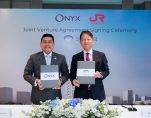
BANGKOK, THAILAND – Media OutReach Newswire – 25 May 2026 – ONYX Hospitality Group, a leading hospitality management company in Asia Pacific specialising in hotels, resorts, serviced apartments, and luxury residences, has announced a significant international partnership through the signing of a joint venture agreement with JR Kyushu Business Development (Thailand) Co. Ltd. (a group company of Kyushu Railway Company), one of Japan’s foremost corporations listed on Tokyo Stock Exchange. The collaboration will see the development of Shama North Pattaya, further advancing ONYX’s portfolio by leveraging Shama’s expertise to capitalize on short- and extended-stay demand, while reinforcing confidence in the growth potential of Thailand’s Eastern Economic Corridor (EEC).

Left: Mr. Yuthachai Charanachitta Right: Mr. Toshihiro Mori

This latest agreement marks a continuation of the strategic partnership between the two organizations, building upon the success of Shama Lakeview Asoke, which ONYX manages on behalf of JR Kyushu Group. The property has earned recognition as one of the leading serviced apartments in Bangkok’s central business district, reflecting the Japanese partner’s strong confidence in ONYX’s management capabilities and in-depth market expertise.

The development of Shama North Pattaya therefore represents not only an expansion into a high-potential location, but also a reaffirmation of ONYX’s disciplined growth strategy. By collaborating with globally respected partners, the group continues to strengthen its footprint in the EEC.

Mr. Yuthachai Charanachitta, Chief Executive Officer of ONYX Hospitality Group, stated that this joint venture with JR Kyushu Group reflects the company’s long-standing commitment to growing alongside its partners. It also marks ONYX’s second joint venture with an international partner under its strategic expansion plan, underscoring continued investor confidence in the company’s capabilities, as well as its ongoing pursuit of investment opportunities and strategic collaborations with high-potential partners.

“For ONYX Hospitality Group, growth is not defined merely by the number of projects we develop, but by the strength of the partnerships we cultivate. Our joint venture with JR Kyushu Group reflects a shared vision and a commitment to creating long-term value together.

The Shama brand has grown from a deep understanding of the long-stay market, which we have consistently studied and monitored over the years. We see clear future potential in this segment. Each Shama development is founded on comprehensive insights into resident needs and expectations, placing emphasis on the core of the living experience — comfort, flexibility and a genuine sense of home — all delivered to international standards.

Shama North Pattaya represents another important strategic property in strengthening and completing ONYX Hospitality Group’s presence in Pattaya, a high-potential destination within the EEC, alongside our key brands Amari and OZO, helping to create a more integrated and cohesive hospitality cluster in the area.”

Yuthachai added, “Shama North Pattaya reflects ONYX’s commitment to strengthening Thailand’s position as a leading destination for long-term residents while supporting the sustainable growth of the residential hospitality sector.”

Mr. Toshihiro Mori, Representative Director and Senior Managing Executive Officer of Kyushu Railway Company stated that this joint venture marks an important next step in JR Kyushu Group’s continued partnership with ONYX Hospitality Group in Thailand, building on the success of Shama Lakeview Asoke.

“Following our successful collaboration on Shama Lakeview Asoke Bangkok, we are pleased to deepen our partnership with ONYX Hospitality Group through Shama North Pattaya. We see strong potential in Pattaya as a leading resort destination within the EEC, and we have full confidence in ONYX’s hospitality expertise to deliver an exceptional property that meets the evolving needs of both Thai and international guests. We look forward to creating lasting value together.”

Strategically located in North Pattaya, a key tourism and economic hub within the EEC, Shama North Pattaya is designed to blend the comfort and convenience of serviced apartments with the refined services of a leading hotel brand. The project aims to cater to the steadily expanding long-stay segment, which is projected to continue its upward trajectory in 2026 and beyond.

The partnership between ONYX Hospitality Group and JR Kyushu Group not only highlights the complementary strengths of both organisations, but also serves as a strong indicator of Japanese investor confidence in Thailand’s economic stability and long-term prospects. At the same time, it signals the readiness of Thai hospitality brands to compete and grow alongside global partners in a sustainable and forward-looking manner.

Hashtag: #ONYXHospitalityGroup

The issuer is solely responsible for the content of this announcement.

About ONYX Hospitality Group

ONYX Hospitality Group, a reputable force in the Asia-Pacific hospitality industry, operates a collection of comprehensive yet complementary brands – Amari, OZO, Shama and Oriental Residence – catering to the distinctive needs of discerning business and leisure travellers across the region where it has deep expertise. In addition to its brand portfolio, ONYX Hospitality Group also operates additional hospitality services across spa and food & beverage. With six decades of management experience, the company extends its innovative solutions throughout the region, upholding internationally recognised standards and ensuring optimal operational manoeuvrability. By fostering enduring relationships with like-minded business partners, ONYX Hospitality Group delivers unparalleled experiences in a dynamic and competitive market, meeting the ever-evolving demands of travellers.

More information:

Find us on social media:
Follow us on Instagram:
Follow us on LinkedIn:
Follow us on Facebook:

About JR Kyushu

Kyushu Railway Company (JR Kyushu), headquartered in Fukuoka, Japan, and listed on the Prime Market of the Tokyo Stock Exchange, is a diversified group operating across Transportation, Real Estate and Hotels, Retail and Restaurants, Construction, and Business Services. Building on more than three decades of experience since its establishment in 1987, JR Kyushu has expanded beyond its core railway operations into a wide range of community-based and lifestyle businesses. In Thailand, JR Kyushu Business Development (Thailand) Co., Ltd. serves as the group’s investment platform for hospitality and real estate, building on the success of Shama Lakeview Asoke Bangkok and continuing to pursue long-term growth opportunities in the region.

Hackers have compromised the Laravel-Lang open-source ecosystem, turning trusted PHP localisation packages into a vehicle for credential theft and remote code execution across developer machines and build systems. The attack, detected on May 22, targeted packages used by Laravel applications to manage translations, attributes and HTTP status messages. Security teams tracking the incident identified malicious activity across laravel-lang/lang, laravel-lang/http-statuses, laravel-lang/attributes and laravel-lang/actions, with more than 700 historical […]

Cybercriminals are exploiting demand for AI coding tools by pushing fake Gemini CLI and Claude Code installation pages into search results, using the sites to deliver a fileless PowerShell infostealer aimed at developer workstations. The campaign, active since early March 2026, marks a sharper turn in financially motivated attacks against software teams as AI assistants become embedded in daily coding workflows. The attackers are not merely imitating […]

HONG KONG SAR – Media OutReach Newswire – 22 May 2026 – At the International Hydrogen Development Symposium 2026 today (May 18), nine pioneering companies from Korea, the Chinese Mainland, France, and Hong Kong – including Hyundai Motor Group – signed a landmark Memorandum of Understanding (MOU) on hydrogen ecosystem building, marking a major step toward advancing the city’s green economy.

At the International Hydrogen Development Symposium 2026 today (May 18), nine pioneering companies from Korea, the Chinese Mainland, France, and Hong Kong - including Hyundai Motor Group - signed a landmark Memorandum of Understanding on hydrogen ecosystem building, marking a major step toward advancing the city's green economy. Photo shows (from left) Senior Vice President (Sustainability) for Technology, Innovation and Entrepreneurship of Invest Hong Kong (InvestHK), Ms Olivia To; the Director-General of Investment Promotion of InvestHK, Ms Alpha Lau; Executive Vice President and Head of Energy & Hydrogen Policy Sub-Division at Hyundai Motor Group, Mr Seung Kyu-shin; Deputy Minister for Territorial and Urban Policy at Ministry of Land, Infrastructure and Transport of the Republic of Korea, Mr Jeong Eui-kyung; the Global Head of Financial Services, Fintech & Sustainability of InvestHK, Mr King Leung; and Senior Vice President, Transport, Logistics and Industrials of InvestHK, Ms Bonnie Ho, at the symposium.
At the International Hydrogen Development Symposium 2026 today (May 18), nine pioneering companies from Korea, the Chinese Mainland, France, and Hong Kong – including Hyundai Motor Group – signed a landmark Memorandum of Understanding on hydrogen ecosystem building, marking a major step toward advancing the city’s green economy. Photo shows (from left) Senior Vice President (Sustainability) for Technology, Innovation and Entrepreneurship of Invest Hong Kong (InvestHK), Ms Olivia To; the Director-General of Investment Promotion of InvestHK, Ms Alpha Lau; Executive Vice President and Head of Energy & Hydrogen Policy Sub-Division at Hyundai Motor Group, Mr Seung Kyu-shin; Deputy Minister for Territorial and Urban Policy at Ministry of Land, Infrastructure and Transport of the Republic of Korea, Mr Jeong Eui-kyung; the Global Head of Financial Services, Fintech & Sustainability of InvestHK, Mr King Leung; and Senior Vice President, Transport, Logistics and Industrials of InvestHK, Ms Bonnie Ho, at the symposium.

This multi-party signing was officiated by Deputy Minister for Territorial and Urban Policy at Ministry of Land, Infrastructure and Transport of the Republic of Korea, Mr Jeong Eui-kyung; the Acting Secretary for Environment and Ecology, Miss Diane Wong; the Director of Electrical and Mechanical Services, Mr Poon Kwok-ying; and the Director-General of Investment Promotion of Invest Hong Kong (InvestHK), Ms Alpha Lau.

At the International Hydrogen Development Symposium 2026 today (May 18), nine pioneering companies from Korea, the Chinese Mainland, France, and Hong Kong - including Hyundai Motor Group - signed a landmark Memorandum of Understanding on hydrogen ecosystem building, marking a major step toward advancing the city's green economy. Photo shows the Director-General of Investment Promotion of Invest Hong Kong, Ms Alpha Lau, delivering a speech.
At the International Hydrogen Development Symposium 2026 today (May 18), nine pioneering companies from Korea, the Chinese Mainland, France, and Hong Kong – including Hyundai Motor Group – signed a landmark Memorandum of Understanding on hydrogen ecosystem building, marking a major step toward advancing the city’s green economy. Photo shows the Director-General of Investment Promotion of Invest Hong Kong, Ms Alpha Lau, delivering a speech.

Spearheaded by Hyundai Motor Group, the MOU establishes a collaborative framework to build a comprehensive, self-sustaining hydrogen ecosystem in Hong Kong, targeted to be fully operational by the end of 2030. The collaboration will prioritise the development of waste-to-hydrogen technologies to convert landfill gas into clean energy, along with an immediate focus on piloting a liquefied hydrogen refuelling infrastructure. To enable full value chain integration, it also targets the deployment of customised hydrogen fuel cell commercial vehicles, including tour and airport shuttle buses.

Through facilitating public-private partnerships and inter-governmental collaboration, InvestHK is supporting Hyundai Motor Group and its partners to implement go-to-market strategies aligned with the shared vision for hydrogen ecosystem building.

This partnership will also position Hong Kong as a strategic base for Hyundai Motor Group’s hydrogen business expansion across the Asia-Pacific region.

Miss Wong said, “This collaboration marks a significant milestone in developing tangible, on-the-ground hydrogen applications to accelerate the green transition towards carbon neutrality. By combining Korea’s world-class technological capabilities with Hong Kong’s strategic urban context, Hong Kong could serve as an exceptional international demonstration platform for showcasing green and low-carbon technologies. If these cutting-edge innovations could be applied and scaled up successfully here, it will serve as a positive model and provide highly viable options for reference by modern cities worldwide.”

Ms Lau said, “Today’s multi-party signing is both a landmark moment for Hong Kong’s green economy and a clear signal that the city’s hydrogen ecosystem is gaining real traction. Over the past three years, InvestHK has helped leading hydrogen enterprises establish themselves in Hong Kong, several of which have since listed on the Hong Kong Stock Exchange, raising over $2.5 billion in total. For businesses with global green ambitions, Hong Kong is where business growth takes shape.”

At the International Hydrogen Development Symposium 2026 today (May 18), nine pioneering companies from Korea, the Chinese Mainland, France, and Hong Kong - including Hyundai Motor Group - signed a landmark Memorandum of Understanding on hydrogen ecosystem building, marking a major step toward advancing the city's green economy. Photo shows the Acting Secretary for Environment and Ecology, Miss Diane Wong, delivering a speech.
At the International Hydrogen Development Symposium 2026 today (May 18), nine pioneering companies from Korea, the Chinese Mainland, France, and Hong Kong – including Hyundai Motor Group – signed a landmark Memorandum of Understanding on hydrogen ecosystem building, marking a major step toward advancing the city’s green economy. Photo shows the Acting Secretary for Environment and Ecology, Miss Diane Wong, delivering a speech.

Executive Vice President and Head of Energy & Hydrogen Policy Sub-Division at Hyundai Motor Group, Mr Seung Kyu-shin, said, “This MOU was signed as Hyundai Motor Group’s commitment to advancing Hong Kong’s proactive hydrogen policies and driving the acceleration of its hydrogen ecosystem utilising the Group’s hydrogen business capability and experience. Starting with Hong Kong, we look forward to expanding our collaboration and business opportunities across the broader Asia-Pacific hydrogen market.”

At the International Hydrogen Development Symposium 2026 today (May 18), nine pioneering companies from Korea, the Chinese Mainland, France, and Hong Kong - including Hyundai Motor Group - signed a landmark Memorandum of Understanding on hydrogen ecosystem building, marking a major step toward advancing the city's green economy. Photo shows Deputy Minister for Territorial and Urban Policy at Ministry of Land, Infrastructure and Transport of the Republic of Korea, Mr Jeong Eui-kyung (back row, second right); the Acting Secretary for Environment and Ecology, Miss Diane Wong (back row, second left); the Director of Electrical and Mechanical Services, Mr Poon Kwok-ying (back row, first left); and the Director-General of Investment Promotion of Invest Hong Kong, Ms Alpha Lau (back row, first right), witnessing the signing.
At the International Hydrogen Development Symposium 2026 today (May 18), nine pioneering companies from Korea, the Chinese Mainland, France, and Hong Kong – including Hyundai Motor Group – signed a landmark Memorandum of Understanding on hydrogen ecosystem building, marking a major step toward advancing the city’s green economy. Photo shows Deputy Minister for Territorial and Urban Policy at Ministry of Land, Infrastructure and Transport of the Republic of Korea, Mr Jeong Eui-kyung (back row, second right); the Acting Secretary for Environment and Ecology, Miss Diane Wong (back row, second left); the Director of Electrical and Mechanical Services, Mr Poon Kwok-ying (back row, first left); and the Director-General of Investment Promotion of Invest Hong Kong, Ms Alpha Lau (back row, first right), witnessing the signing.

Partners entering into this MOU include Hyundai Motor Company and Hyundai Engineering & Construction from Hyundai Motor Group, China Inspection Co Ltd, Chun Wo Bus Services Limited, Chun Wo Construction & Engineering Company Limited, Jiangsu Guofu Hydrogen Energy Equipment Co Ltd, JEA ENG, Templewater Limited, the Hong Kong and China Gas Company Limited, and Veolia Hong Kong Holding Limited.

This multi-party, long-term collaboration is set to establish a robust, end-to-end hydrogen industry chain – spanning production, storage, transportation, refuelling and utilisation.

New energy is vital to Hong Kong’s Climate Action Plan 2050 and the national dual-carbon goals. As set out in the Chief Executive’s 2025 Policy Address, Hong Kong will establish public hydrogen filling facilities on Hong Kong Island and in Kowloon, press ahead with more hydrogen trial projects, and develop the GBA Hydrogen Corridor in collaboration with Guangdong Province. The Hong Kong Special Administrative Region Government is actively advancing hydrogen development through technological innovation, talent cultivation, ecosystem building, and regional co-ordination. To date, over 30 hydrogen trial projects have been greenlit, paving the way not only for decarbonisation targets, but also for unlocking new quality productive forces for green economic growth.
Hashtag: #InvestHK

The issuer is solely responsible for the content of this announcement.

About InvestHK

Invest Hong Kong (InvestHK) is the investment promotion agency of the Government of the Hong Kong Special Administrative Region (HKSAR).

Apache OFBiz users have been urged to move to version 24.09.06 after disclosure of an authentication bypass flaw that can be chained to remote code execution, exposing enterprise resource planning systems to takeover through a manipulated password-change workflow. Tracked as CVE-2026-45434, the vulnerability affects Apache OFBiz versions before 24.09.06. It stems from improper authentication handling in the platform’s password-change logic, where a forced password reset condition may […]

Washington is testing rival artificial intelligence models across a small group of Defence Department power users as it seeks a workable replacement for Anthropic’s Claude, deepening a high-stakes contest over military AI, supplier risk and control of advanced software inside classified US systems. The review involves 25 heavy users of AI tools inside the Pentagon, with officials comparing how competing models respond to identical tasks and how […]

Google has issued a Chrome security update after fixing multiple flaws that could allow attackers to execute code remotely, disrupt browser sessions, steal information, bypass restrictions or spoof content on affected systems. The update moves Chrome’s stable desktop channel to version 148.0.7778.178/179 for Windows and macOS, and 148.0.7778.178 for Linux. It is being rolled out globally through the browser’s automatic update mechanism, though users and administrators may […]

Cisco has issued an urgent security fix for a maximum-severity flaw in Secure Workload that could let unauthenticated attackers obtain Site Admin privileges and reach sensitive enterprise resources through internal REST API endpoints. The vulnerability, tracked as CVE-2026-20223, has been assigned a CVSS v3.1 base score of 10.0, the highest rating under the widely used severity system. It is classified as CWE-306, or missing authentication for a […]

By Roksolana Pyrtko, Managing Consultant, Symbol Consulting DMCC Walk through a shopping centre in Warsaw, Kyiv, or Bratislava and the formula is almost always the same. A hypermarket on the ground floor, a food court upstairs, fashion brands filling the floors in between. For a long time, it worked. Developers across the region built to that template, leased up quickly, and moved on. The model is now […]

VISHNU RAJA
RYO YAMADA
HITORI GOTOH
IKUYO KITA
Just in:
Mubadala and Centerbridge secure £1.17bn Canaccord wealth agreement // Google identifies autonomous AI systems conducting vulnerability attacks // JPMorgan restores transactions after banking payments disruption // Over 360 electricity distribution professionals meet in Seoul for CIRED’s first major event in the Asia-Pacific region // Galaxy Resort Presents: “Plácido Domingo & José Carreras: The Legends United Opera Gala” // ASEAN adopts binding pact on regional digital commerce // Iran claims six-drone operation against US radar in Bahrain // Regulator demands answers on controversial power deal // Hong Kong schedules Gulf-Asia investment forum for 2027 // Row over Sabarimala toilet disruption // UK privacy regulator flags GTA 6 phishing threats // Danone expands consumer insight capabilities to accelerate nutrition innovation through Southeast Asia R&I Application Lab upgrade // Bora Group 3Q26: Revenue and Net Income Expansion Continues U.S. Manufacturing and Biologics Footprint Complete; Margin Expansion to Follow as Utilization Improves // ADQ Aviation raises Abu Dhabi Aviation holding to 71.61% // Bitcoin rebounds after weekend plunge wipes billions from cryptocurrencies // Mexican journalists demand accountability after Acapulco reporter killed // Ayara Kamala Reveals a Refreshed Vision for Wellness in Phuket // Takaichi exchanges greetings with Chinese minister at Manila summit // Hong Kong International Airport Online Shop Winter Festive Offer // Dubai airport passenger traffic drops 28.1% amid conflict //