News related to
Success

China’s solar industry, particularly its polysilicon segment, is experiencing a defining shift. Six leading solar makers reported a combined loss of Rmb20.2 billion during the first half of 2025, prompting regulatory intervention to stem overcapacity and destructive price competition.

In early September, GCL Technology Holdings confirmed that investors can anticipate clarity soon on a plan to restructure the polysilicon industry—potentially this year. Chief Financial Officer Yang Wenzhong indicated that GCL may invest its own capital into the effort but is proceeding with caution amid financial uncertainty.

The core of this restructuring lies in a proposed RMB50 billion pooling of funds by top producers like GCL and Tongwei. The aim is to acquire and retire roughly one-third of existing production capacity, targeting approximately one million metric tonnes of lower-quality output. This supply reduction could help raise prices and restore downstream solar panel maker profitability.

Government authorities are reinforcing this market realignment through direct meetings with industry representatives. In August, China’s Industry Ministry held its second session in two months, urging the sector to eliminate outdated manufacturing capacity and curb “low-price disorderly competition” as part of a broader effort to reverse deflationary trends.

The policy response reflects concern over global glut: in 2024, China produced 588 GW of solar capacity while global demand stood at 451 GW, leaving utilisation at just 54%. Analysts estimate that up to 20–30% or more of solar manufacturing capacity must exit the market to reestablish profitability.

This state-guided consolidation faces substantial obstacles. Local governments that have boosted regional development through subsidies, tax breaks and favourable land deals for solar manufacturers may resist decommissioning facilities tied to local GDP and employment. Even if a cartel is formed, analysts warn that members might sneak back into production once prices rebound.

While the outlook remains complex, sentiment among investors appears cautiously optimistic. Markets showed tentative improvement after reports of progress in industry coordination and price gains surfaced. Trina’s commentary on earnings, describing polysilicon as “the first step of anti-involution,” hints at broader hopes for a turnaround.

Global attention is intensifying. Successful restructuring could reinforce China’s dominance—already controlling around 90% of global solar cell capacity—while disrupting cheap exports that have pressured international markets. But a failed effort could compound challenges in other overcapacity-prone sectors such as electric vehicles or shipbuilding.

Longi, another solar powerhouse, is also adapting. Its founder, Li Zhenguo, has relinquished daily management to focus on R&D, including back‑contact cell and green hydrogen technology. The shift comes amid sustained losses and an 80% decline in its share price since 2021, as analysts predict that overcapacity will persist through 2028.

China’s solar supply chain—from polysilicon to panels—is at an industrial crossroads. The restructuring effort is perhaps the boldest policy move yet to recalibrate supply with demand. But its success hinges on overcoming entrenched regional interests, ensuring disciplined industry behaviour, and catalysing sustainable demand growth.


Nigeria has secured a production-sharing contract with TotalEnergies and South Atlantic Petroleum for two deepwater offshore blocks, under a novel legal structure designed to prioritise gas development alongside oil. The agreement spans units PPL 2000 and PPL 2001—a territory of some 2,000 square kilometres in the Niger Delta Basin—and marks Nigeria’s first PSC under its transformative Petroleum Industry Act of 2021. The PIA, enacted in 2021, acknowledges the differing […]

By Nitya Chakraborty After successfully passing the test of strategic autonomy for India at the just concluded summit of the Shanghai Cooperation Organisation (SCO) at Tianjin in China on August 31 and September 1, Prime Minister Narendra Modi faces another test on Monday September 8 at the virtual meeting of the BRICS nations convened by […]

Greenlogue/AP SOHAR Port and Freezone has inked an agreement with MoonRock and the Danish firm PowerCon to install shore power infrastructure at its container terminal, enabling berthed vessels to plug into onshore electricity and switch off their auxiliary engines—cutting emissions, fuel use and noise pollution while enhancing efficiency. The ceremony took place during the Gulf Green Mobility Forum, with MoonRock as lead investor and PowerCon providing technical […]

Sobha Realty, the Dubai-based luxury developer rated Ba2 by Moody’s and BB by S&P, is advancing plans to issue its inaugural green, US dollar‑denominated, Regulation S benchmark sukuk under its established USD 1.5 billion trust issuance programme. The five‑year, fixed‑rate, senior unsecured sukuk offering carries a stable outlook from both agencies. The firm has shifted from tapping into conventional capital markets toward the growing sustainable finance segment. Preparing to launch […]

HONG KONG SAR – Media OutReach Newswire – 3 September 2025 – Luxshare Precision (002475.SZ) released its 2025 Interim Report at the end of last month. Under the complex and ever-changing global economic environment, the company still maintained a steady growth. The report shows that the company achieved growth in both revenue and profit in the first half of the year: operating income reached RMB 124.503 billion, […]

MrBeast is set to expand into telecommunications by launching a mobile phone service built using existing carrier networks, positioning himself as a mobile virtual network operator. According to investor materials seen by Business Insider, the YouTube star and his company plan to partner with carriers such as AT&T, T‑Mobile or Verizon, rather than constructing costly infrastructure. The business model mirrors that of Mint Mobile, where Ryan Reynolds […]

Advertisements

Only one-third of insurers in China provide mental health services, despite rising demand Fifty percent of insurers see personalisation as key to the success of health and wellbeing programs SINGAPORE – Media OutReach Newswire – 3 September 2025 – Aon plc (NYSE: AON), a leading global professional services firm, released insights from its inaugural 2025 Insurer Wellbeing Benchmarking Report offering a comprehensive analysis of the health and […]

JIAXING, CHINA – Media OutReach Newswire – 1 September 2025 – On the morning of August 26, at the Tide-Watching Resort Park in Yanguan Ancient City – also known as the “Tides and Music Resort” – a large number of participants gathered to play African drums as they welcomed the surging Qiantang River tide. The event successfully set a new Guinness World Record for the “Most People […]

Rocket Lab has expanded its in‑house manufacturing strength by successfully incorporating Planetary Systems Corporation, a Maryland‑based specialist in satellite separation systems. The deal, announced on 15 November 2021 and concluded by December that year, involved $42 million in cash and 1.72 million shares of Rocket Lab stock, with an additional performance‑based stock earn‑out dependent on PSC’s performance through 2022 and 2023.

PSC, celebrated for its “Canisterized Satellite Dispenser” and Lightband separation systems, boasts a flawless 100 percent mission‑success record across more than 100 launches. Its hardware has served a broad spectrum of launch platforms—from Rocket Lab’s own Electron vehicles to those managed by SpaceX, United Launch Alliance, Northrop Grumman, and international agencies such as Arianespace, the Indian Space Research Organisation, and JAXA.

By bringing PSC into its fold, Rocket Lab enhances its vertically integrated Space Systems division, now including Photon satellite buses, Maxwell dispensers, reaction wheels, star trackers, solar solutions, flight software, and the newly added separation hardware. PSC will continue operations in Maryland under the leadership of Mike Whalen as CEO, with founder Walter Holemans remaining chief engineer.

Chunked behind this strategic move is Rocket Lab’s intent to streamline the satellite deployment value chain, offering customers a one‑stop solution—from launch services to the final separation of payloads in orbit. Founder and CEO Peter Beck noted that integrating PSC’s proven hardware “simplifies the journey to orbit” by aligning hardware, software, spacecraft, and launch into a seamless package.

Alongside the acquisition of Advanced Solutions, Inc. in October 2021, this move aligns with Rocket Lab’s broader objective to secure technology, talent, and production capacity internally, reducing external dependencies. Industry observers have characterised this as a deliberate backward integration effort. A participant in an online space‑industry discussion observed:

“It seems like they are reverse integrating into their supply chain… instead of paying for products, buy the company, make the products for yourself, and make the margin on selling to others.”

Operationally, the acquisition has borne tangible returns. In November 2022, Rocket Lab secured two contracts totalling $14 million to supply Lightband separation systems for the Space Development Agency’s Tranche 1 transport layer constellation, reinforcing its position in national security‑oriented space architecture. The Lightbands, inherited from PSC, now supply critical satellite deployments with demonstrated reliability in specialised environments.

Rocket Lab’s expanded suite of capabilities positions it advantageously within a market increasingly dominated by fully integrated space services providers. By combining its Electron launch vehicle, Photon spacecraft, separation hardware, and on‑orbit software offerings, the company provides end‑to‑end mission support—a compelling proposition for both commercial and government customers.

With growth in space demand showing no signs of abating, particularly in low-Earth orbit constellations and defence networks, consolidating key enabling technologies under one roof offers Rocket Lab both operational efficiencies and competitive edge. The PSC acquisition stands as a pivotal building block in that strategy.

Linkin Park have confirmed their return to Abu Dhabi with a performance at Etihad Arena, Yas Island, on Tuesday 20 January 2026—tickets open for Live Nation’s general sale at 12 pm Gulf Standard Time that day. Presales for Linkin Park Underground community members, including Legacy and Passport Plus members, begin on Monday 1 September, with Live Nation presales running from 2–4 September, ahead of the general public sale […]

Nvidia has acknowledged that its AI models do not instinctively grasp common sense—such as knowing that birds cannot fly backwards or that ice melts into water—and has adopted an unusual remedy: assembling human “teachers” to devise pop‑quiz questions that train the AI to understand physical reality more reliably. At the forefront of this initiative is Cosmos Reason, Nvidia’s vision‑language model engineered to reason using physical common‑sense. Developed […]

Google has eliminated around 35 percent of managers overseeing small teams, opting to shift many into individual contributor roles in a decisive drive to flatten its organisational structure. Brian Welle, vice president of People Analytics and Performance, revealed during an all‑hands meeting that the company now has substantially fewer managers and direct reports compared to this time last year. The aim is to reduce bureaucracy and accelerate decision‑making […]

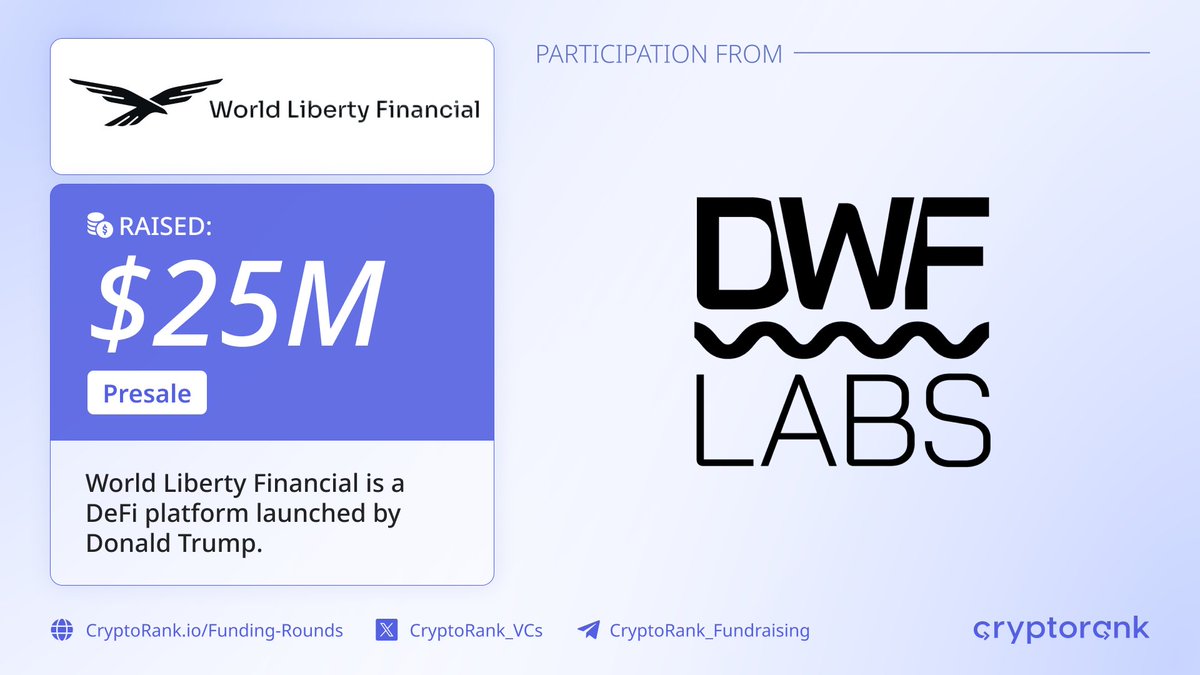
DWF Ventures, the investment arm of Web3 market‑maker DWF Labs, has delivered a detailed evaluation of $WLFI, World Liberty Financial’s newly issued utility token. Published via X, the analysis emphasises $WLFI’s integration into World Liberty’s broader ecosystem and its potential as a key enabler in connecting traditional finance with on‑chain liquidity. Unlike World Liberty’s $TRUMP memecoin, $WLFI is purpose‑built to power the upcoming “WLFI super app”, which will streamline access through web wallets and bank on‑ramps, and underpin planned lending and borrowing services.

The report highlights the success of the USD1 stablecoin—backed by short‑term US Treasuries and cash equivalents—which now commands a market capitalisation approaching $2.5 billion and enjoys listings on major exchanges such as Binance and Coinbase. These developments have significantly boosted investor attention toward the $WLFI token.

World Liberty has raised approximately $500 million across two funding rounds by selling about a quarter of its 100 billion token supply. Among its backers are DWF Labs itself and crypto figure Justin Sun, while ALT5 Sigma has outlined a $1.5 billion treasury strategy centred around $WLFI. DWF Ventures expects that the token could soon be integrated by several DeFi protocols, including Falcon Finance, Ethena and Mantle.

Importantly, DWF Ventures positions $WLFI’s launch as more than a token debut; it sees the initiative as a structural pivot that could catalyse institutional adoption and facilitate compliant capital onboarding—possibly even drawing interest from sovereign investors.

But $WLFI’s entry into the market has triggered concerns. Reports reveal technical difficulties involving the Lockbox contract, intended to unlock 20 percent of token allocations for early investors, which have left many users unable to activate the mechanism. Pre‑market trading responded with a 40 percent drop, raising doubts about launch readiness. Coupling these issues with the political profile of its founders, the token has become entangled in financial and reputational risks.

Indeed, WLFI’s connection to the family of the former president has cast a shadow over its market potential. The token’s political dimensions have already affected diplomatic engagements—such as withdrawals from the Bitcoin Asia 2025 conference—and prompted ethical criticism over conflicts of interest.

Broader scrutiny of World Liberty Financial underscores such tensions. Investigations have revealed that the Trump family commands a substantial share of revenue from token sales and that governance design reflects unusual centralisation for a DeFi project. Further concerns relate to self‑dealing practices: for instance, ALT5 Sigma—a firm acquired by World Liberty—purchased $750 million worth of WLFI tokens. As part of this arrangement, its leadership includes Eric Trump and WLFI co-founder Zach Witkoff, a structure that regulators and critics view as raising red flags.

Ethics experts warn that such close ties between ruling office, private enterprise and foreign investment could undermine democratic safeguards. The New Yorker, for one, described the venture as stretching the norms of political ethics, with World Liberty seen by some as a mechanism for influence through token‑based access channels.

The $WLFI launch is clearly more than a token generation event—it is shaping into a test case for the nexus of politics, finance and regulation in the emerging Web3 era.

HAMBURG, GERMANY – EQS Newswire – 1 September 2025 – Preferred Supply Agreements (PSAs) have been awarded for supply of monopile foundations to EEW Special Pipe Construction GmbH, transition pieces to Dajin Heavy Industry, foundation transportation and installation to Seaway7 and inter-array cable supply and installation to the consortium of Boskalis and TKF. The Gennaker project is securing employment local to the project in the Mecklenburg-Vorpommern region […]

Hyundai is preparing to unveil the IONIQ 3 at the upcoming Munich Motor Show, showcasing a more affordable electric vehicle that may be the first non-luxury model to support Apple’s next-generation infotainment system, CarPlay Ultra. The IONIQ 3 is expected to launch as a nearly production-ready concept in early September, positioning itself between the entry‑level Inster and the Kona EV in the automaker’s lineup. The vehicle promises a digital-first […]

Connecting thousands of community members with the annual Volunteer Day HONG KONG SAR and SHANGHAI, CHINA – Media OutReach Newswire – 1 September 2025 – Hang Lung Properties Limited (SEHK stock code: 00101) (the “Company” or “Hang Lung”) announced its kick-off of the 65th anniversary celebration month, featuring extensive promotions across Hong Kong and eight cities in mainland China. Together with its annual Nationwide Volunteer Day, the […]

OKB, the native token of the OKX exchange, surged past the $200 threshold in the wake of a sweeping tokenomics overhaul and landmark ecosystem upgrades. These strategic shifts have reshaped the token’s role within the OKX ecosystem, igniting both market interest and institutional focus.

A decisive blow to token supply was delivered on 13 August 2025, when OKX executed a one‑off burn of approximately 65 million OKB—equivalent to around $7.3 billion—effectively halving circulating supply and capping total supply at 21 million tokens. The smart‑contract upgrade also eliminated future minting or discretionary burns, solidifying this deflationary model.

That scarcity shock triggered an explosive price rally. OKB vaulted from roughly $45 to a range between $135 and $200, with reported gains of 160–170% in the immediate aftermath. Trading volumes followed suit, rising sharply—in some accounts by as much as 383%, with daily turnover exceeding $1 billion.

Parallel to the token burn, OKX launched its upgraded X Layer blockchain, powered by Polygon’s CDK and zkEVM technology. This infrastructure now delivers throughput of 5,000 transactions per second, near‑zero gas fees and enhanced Ethereum compatibility, positioning OKB as the exclusive gas token across OKX Wallet, Exchange and Pay services. By migrating more than 90% of OKB tokens to X Layer and phasing out Ethereum Layer‑1 and OKTChain, OKX has consolidated liquidity and simplified its token architecture.

OKX also introduced a $100 million X Layer Ecosystem Fund to support developers and drive adoption in areas such as DeFi, payments and real‑world assets, while exploring entry into regulated markets in Europe and pursuing an IPO in the U. S..

Analysts caution that the token’s meteoric rise has pushed key technical indicators into overbought territory. Yet, many argue that OKB’s redefined scarcity model and expanded utility offer a structural foundation for sustained value, rather than a fleeting speculative euphoria.

Amid lingering regulatory uncertainties, particularly across Asian markets, investor sentiment remains firm. Continued strength may hinge on user migration to X Layer and the successful rollout of incentive initiatives and application-building support.

A client‑side remote code execution flaw in Google Web Designer for Windows poses a severe threat, allowing attackers to inject malicious CSS into configuration files to subvert internal APIs and seize full control of affected systems. The bug impacts every build prior to version 16.4.0.0711, and a fix has already been deployed in that release. Security researcher Bálint Magyar publicly disclosed the vulnerability, tracked as CVE‑2025‑4613, by demonstrating […]

Okta Threat Intelligence has uncovered a widespread campaign exploiting malicious online ads to tempt hotel and vacation rental professionals into disclosing access credentials. Attackers have been deploying paid search advertisements on platforms such as Google Search, impersonating familiar hospitality service providers. These deceptive ads lead victims to counterfeit login portals of cloud‑based property management and guest messaging systems, with the goal of harvesting usernames, passwords and one‑time authentication codes.

The adverts specifically mimic legitimate service providers—Okta researchers identified at least thirteen hospitality‑focused brands being spoofed. Rather than redirecting users to authentic company sites, these ads channel them to typosquatted domains that host visually convincing but fraudulent login pages. Through these pages, attackers collect credentials and MFA codes, undercutting security even when multi‑factor authentication is in place.

The phishing sites also incorporate tracking capabilities—collecting geolocation, session data, bot detection metrics and analytics—to better tailor the campaign and measure its effectiveness.

This strategy exemplifies the growing menace of malvertising, where advertisements themselves become vectors for malware distribution or phishing. Malwarebytes data reflects dramatic growth in such campaigns: a 42 per cent month‑on‑month escalation in fall 2023, followed by another rise of 41 per cent between July and September. Malicious ads frequently appear alongside legitimate search results, granting them apparent credibility and increasing the chance of successful deception.

Experts point out the dual advantage these tactics offer to threat actors: extensive reach through ad networks and a veneer of trust derived from the proximity to legitimate search results.

The hospitality sector faces unique vulnerabilities as hotels and rental operators increasingly rely on cloud systems to manage bookings, guest interactions and operational workflows. With projections indicating that by 2028 some 76 per cent of travel and tourism revenues will be generated online, these sectors have become especially tempting targets.

This campaign represents a convergence of two escalating cybersecurity concerns: the explosive growth of malvertising and the rising exposure of hospitality infrastructure to credential-based attacks. While the ads serve as the initial lure, the fraudulent credential capture enables potential downstream compromises across cloud services that manage guest data, reservations and even messaging systems.

For hotel and rental operators, the implications are severe—a breach of access credentials might cascade into broader system intrusions, guest data exposure and operational disruption. Preventive measures should include rigorous verification of URLs before entering credentials, vigilant monitoring of sponsored search results for impostor ads, widespread staff awareness and training, and robust technical controls like domain-based message authentication and behavioural anomaly detection.

Journalistic integrity demands careful cross-verification of details. Okta’s findings were drawn from their threat intelligence and threat detection capabilities tailored to enterprise identity environments. Malvertising trends are substantiated by independent cybersecurity data from industry researchers such as Malwarebytes. The convergence of these findings draws a consistent picture: the hospitality industry must brace for sophisticated phishing campaigns delivered via the same channels they rely on for marketing.

MACAU SAR – Media OutReach Newswire – 1 September 2025 – In a landmark move to deepen regional ties and expand its international footprint, Galaxy Entertainment Group (hereinafter as “GEG”) proudly announces the opening of a new overseas office in Singapore. This strategic initiative marks a new chapter in GEG’s growth trajectory and underscores its commitment to promoting Macau as the “World Centre of Tourism and Leisure” […]

StuDIYo Lab, a design‑technology and woodworking centre for young learners based in Dubai, has entered into a five‑year memorandum of understanding with the Bhubaneswar City Knowledge Innovation Cluster Foundation, under the Office of the Principal Scientific Adviser to the Government of India. The agreement sets a clear trajectory for rolling out maker‑based education, inclusive workshops, bootcamps and vocational training across India and the UAE.

The collaboration begins by launching School Innovation Labs in targeted Indian states. Over the next six months, the partners plan to establish up to four pilot labs, train some 20 educators, and engage over 500 learners. The agenda emphasizes accessibility for underserved groups, including tribal communities and neurodiverse participants, aiming to extend the reach of creative, skill‑based education beyond urban centres.

As part of the initiative, vocational programmes will be tailored specifically for women and youth, while inclusive workshops will cater to special‑needs learners. Innovation and entrepreneurship bootcamps are also planned to nurture student‑led startups and ideas.

This partnership represents a strategic convergence of StuDIYo Lab’s international pedagogical expertise and BCKIC’s deep grassroots network in India, reflecting a commitment to equitable and experiential learning. Capt. G. S. R., Adviser to the foundation, and Lina Sadek, founder and CEO of StuDIYo Lab, were present during the signing of the MoU in August 2025.

StuDIYo Lab has earned the Certified Autism Center™ designation, a mark of its dedication to inclusive environments and creative engagement for sensory‑sensitive individuals. The CAC accreditation underscores the lab’s commitment to accessibility and may enhance the quality and inclusivity of programmes deployed under the new agreement.

BCKIC has a track record of forging multi‑sector partnerships to support innovation, sustainable livelihoods, and inclusive growth across communities. Its ecosystem‑building efforts have previously included collaborations with educational institutions, startups, NGOs and research organisations.

This latest MoU follows a pattern of strategic alliances BCKIC has been cultivating. Earlier in August 2025, BCKIC signed a pact with AIIMS Bhubaneswar and KIIT‑TBI to support healthcare innovation, start‑up incubation and the development of joint Centres of Excellence. The new partnership with StuDIYo Lab signals an expansion of its mandate into design-oriented and maker-based learning pathways.

The timing reflects growing attention to bridging practical skill development with innovation ecosystems. By emphasising maker labs, vocational training, and inclusion across demographic and geographic lines, the pact contributes to a broader agenda of democratizing access to creative and technological learning.

This alliance also opens doors for corporate social responsibility initiatives from Middle Eastern and philanthropic partners, creating a channel for investment into inclusive educational infrastructure and innovation in India.

With its applied learning model and certified inclusivity, StuDIYo Lab brings a distinctive approach that complements BCKIC’s innovation cluster framework. The aim is to replicate scalable, equitable education solutions across diverse Indian regions—encompassing tribal, rural, urban and neurodiverse communities alike.

The experimental nature of the pilot labs and the focused goals for learner and teacher engagement indicate a test-and-scale strategy. If successful, this could form a template for expanding maker-based, design-driven learning nationwide.

By linking UAE’s expertise in accessible, hands-on learning with a credible Indian innovation ecosystem actor, the partnership may serve as a model of cross-border collaboration in education—a bridge between global pedagogy and local implementation at scale.

Choithrams Is Turning Everyday Shopping into Lifesaving Support at Choithrams.com and across outlets in UAE to support WFP’s nutrition programme for schoolchildren DUBAI, UNITED ARAB EMIRATES – EQS Newswire – 1 September 2025 – Choithrams (www.Choithrams.com), Dubai’s leading supermarket chain, and the United Nations World Food Programme (WFP) are launching the latest edition of the “End Hunger with Goodness” campaign to support school meal programmes across the […]

Pepeto has secured over $6.5 million in presale funding, driven by an operational ecosystem that includes a zero‑fee decentralised exchange, staking rewards exceeding 230 per cent APY, and independent audits—a suite of features positioning the token as a serious contender amid meme‑coin revival.

At its Ethereum‑based core, Pepeto boasts PepetoSwap, a DEX offering fee‑free, fast trading, alongside PepetoBridge, enabling seamless cross‑chain transfers without intermediaries—all built on the security of Ethereum’s mainnet. Audits conducted by SolidProof and Coinsult reinforce its transparency credentials, a notable departure from many fleeting meme‑coin projects.

The presale’s momentum stems from strong investor appetite. Millions have poured into the token, with reports showing more than $6.2 million raised by Stage 10—completed ahead of schedule—and over $6.5 million amassed as the presale continues. Token pricing has incrementally increased across presale stages, intensifying urgency among investors hoping to enter early.

Pepeto’s tokenomics reflect a deliberately structured approach: 30 per cent allocated to presale distribution, another 30 per cent to staking incentives, 20 per cent for marketing, 12.5 per cent for liquidity, and 7.5 per cent reserved for development. The absence of team wallets and trade taxes further underscores a model designed to align with holder interests.

Community engagement appears healthy; over 100,000 followers on social platforms are amplifying the narrative around Pepeto—and its product rollout, including a public demo exchange, has already lifted awareness and participation.

Analysts compare Pepeto’s structure favourably to early meme‑coin success stories. Some suggest that the ecosystem, staking mechanics, and infrastructure could drive returns of 30× to 70×—or more—if broader market conditions align, drawing parallels to Shiba Inu’s legendary run but with stronger fundamentals.

Broader industry commentary frames Pepeto as more than a hopeful token—it is being touted as the meme‑coin with legs in 2025, combining utility with the viral energy typically absent in the category. A few analysts even liken Pepeto’s potential trajectory to a “next‑BNB‑style” breakout following exchange listings.

Still, the meme‑coin landscape remains inherently speculative. While Pepeto addresses familiar structural weaknesses—such as high fees and opaque governance—its success will depend on sustained investor interest, execution of its infrastructure, and broader crypto market cycles. History cautions that meme‑coins often fade when hype fades.

If Pepeto translates infrastructure into adoption, it may carve out a path distinct from prior meme plays. Early investors, particularly those securing tokens at the current presale price—estimated at approximately $0.000000150—stand to gain significantly should the token replicate past meme-coin rallies, albeit with arguably enhanced foundation.

VISHNU RAJA
RYO YAMADA
HITORI GOTOH
IKUYO KITA