Arabian Post Staff -Dubai MarsLab Pte Ltd has introduced a Singapore-based roadmap for AI inference infrastructure, positioning the company around enterprise and edge deployment at a time when organisations are shifting from model experimentation to production-scale artificial intelligence systems. The roadmap, announced on 28 May, centres on what MarsLab describes as a system-first approach to inference, the stage at which trained AI models generate outputs in live […]
Cybersecurity teams across India face a compressed response window after CERT-In urged organisations to fix actively exploited internet-facing vulnerabilities within 12 hours wherever feasible, marking a sharper regulatory push as artificial intelligence accelerates cyber-attack cycles.
The guidance, issued on May 25 in a 38-page blueprint, reflects growing official concern that attackers are using generative AI, large language models and autonomous tools to discover exposed systems, weaponise flaws, craft phishing lures and scale malware operations faster than conventional security programmes can respond. The document places rapid remediation, continuous monitoring and exposure reduction at the centre of enterprise cyber defence.
CERT-In’s most stringent timeline applies to known exploited vulnerabilities affecting internet-facing and critical systems, including applications, identity platforms, cloud assets, APIs, operational technology and systems supporting essential business functions. Organisations are advised to patch, mitigate or isolate such weaknesses within 12 hours where feasible. Critical externally exposed vulnerabilities should be addressed within one day, while known exploited flaws inside internal systems should be fixed within one day unless compensating controls are implemented and documented.
The blueprint also recommends that critical internal vulnerabilities affecting high-value systems be remediated within three days, and high-severity vulnerabilities within five days based on risk prioritisation. Where patches are unavailable, organisations are expected to use temporary protections such as isolation, access restrictions, web application firewalls, API shields, feature disabling and enhanced monitoring until permanent fixes are deployed.
The directive signals a shift from audit-driven cybersecurity to continuous exposure management. CERT-In has warned that organisations can no longer depend on periodic assessments or reactive incident response when automated tools can identify weak credentials, misconfigured systems, insecure APIs and vulnerable internet-facing services at machine speed. The approach requires security teams to maintain live inventories of assets, prioritise exposed systems and test whether controls work under attack conditions.
AI is changing both sides of the cyber equation. Attackers can use it to automate reconnaissance, write exploit code, refine phishing messages, generate synthetic identities and adapt malicious software. Defenders are being pushed to use similar capabilities for anomaly detection, threat hunting, automated triage and faster containment. The risk, however, is that poorly governed AI systems can themselves become attack surfaces through prompt injection, data leakage, model manipulation, poisoned training data, model theft and compromised orchestration pipelines.
The guidance gives particular weight to organisations operating in banking, financial services, telecom, healthcare, government, energy, transport, cloud services and other critical infrastructure-linked sectors. These environments often rely on interconnected digital systems, third-party software, outsourced technology providers and legacy platforms, creating wider exposure when a single flaw is weaponised quickly.
Global breach data has reinforced the urgency behind faster patching. Software vulnerability exploitation has overtaken stolen credentials as a leading breach entry point in major datasets, while ransomware remains a high-impact threat. Security teams also face growing pressure from supply-chain compromise, shadow AI usage, cloud misconfiguration and business email compromise. Unauthorised use of public AI tools has become a data governance issue as employees may upload source code, business documents, credentials or customer information into platforms outside corporate oversight.
CERT-In’s blueprint calls for a zero-trust approach, least-privilege access, layered controls and secure-by-design practices across applications, infrastructure and AI workflows. It urges organisations to maintain visibility into AI deployments, restrict sensitive data uploads to public AI platforms, log AI activity, conduct adversarial testing and keep human approval for critical autonomous actions.
Software supply-chain visibility is another major focus. Organisations are encouraged to use software bills of materials and related inventories for AI models, cryptographic assets and hardware components to understand dependencies, validate provenance and coordinate remediation when vulnerabilities emerge in third-party products.
The new expectations build on India’s existing cyber incident reporting framework, under which specified cyber incidents must be reported to CERT-In within six hours. The latest blueprint does not merely extend compliance obligations; it raises operational expectations for boards, chief information security officers and technology vendors by linking resilience to the speed of response.
Smaller organisations may struggle with the 12-hour benchmark because patch testing, downtime concerns, legacy dependencies and staffing shortages often slow remediation. The guidance therefore recognises feasible mitigation as part of the response, but it also makes clear that unmanaged exposure is no longer acceptable when attackers can exploit public-facing weaknesses within hours.
BINZHOU, CHINA – Media OutReach Newswire – 27 May 2026 – The Information Office of Binzhou Municipal People’s Government recently held a press conference to officially release the Outline of the 15th Five-Year Plan for National Economic and Social Development of Binzhou City (hereinafter referred to as “the plan”). The plan sets forth the overarching goals, primary tasks, and major initiatives guiding the city’s economic and social trajectory from 2026 to 2030, charting a comprehensive blueprint for the coming five years.
The scenery of Binzhou City
During the conference, city officials reviewed the achievements of the “14th Five-Year Plan” period, noting that the progress made over the past five years has laid a solid foundation for the upcoming phase. The formulation of the new plan adhered to an open and inclusive approach, extensively incorporating feedback from various sectors of society. Following 36 rounds of revisions, the finalized document comprises 16 chapters and 77 sections, supported by 528 key projects designated for implementation.
The plan highlights five distinct features and centers on the comprehensive elevation of the city’s “Eight Qualities,” covering industrial development, innovation capacity, openness, ecological environment, cultural and humanistic development, public services, governance systems, and quality of life. Relevant officials further elaborated on key priorities, including the development of a modern industrial system, science and technology innovation-driven growth, advancement of new industrialization, implementation of the rural revitalization strategy, and optimization of public welfare and well-being.
Binzhou officials emphasized that the plan is not merely a policy document, but a strategic choice and action commitment for the city’s development toward 2030. Over the next five years, Binzhou is poised to fulfill its mission of “taking the lead and shouldering greater responsibilities.” Guided by the plan, the city will continue to exert effort in enhancing urban quality, driving innovation-led transformation, and improving public well-being, thereby writing a distinctive chapter of development within China’s broader journey toward modernization.
Hashtag: #BinzhouInformationOffice
The issuer is solely responsible for the content of this announcement.
Another significant step towards the success of ICVAX®
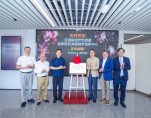
HONG KONG SAR – Media OutReach Newswire – 27 May 2026 – Immuno Cure Group (“Immuno Cure“), headquartered at Hong Kong Science Park, is pleased to announce the inauguration of the research facility for its HIV therapeutic DNA vaccine (“ICVAX®“) at the Center of International Innovation for Technology and Science (“CIITS”) located in Hetao, Shenzhen. The facility aims for the development and application of key technologies for the clinical research and commercialization of Immuno Cure’s ICVAX®. ICVAX® is developed by Immuno Cure with the aim of achieving antiretroviral therapy (“ART“)-free functional cure for HIV infection. This project is carried out in collaboration with Prof. Zhiwei CHEN, the Founding Director of the AIDS Institute of Li Ka Shing Faculty of Medicine, the University of Hong Kong (“HKU AIDS Institute“), and Prof. Hongzhou LU, President of the Third People’s Hospital of Shenzhen, in the capacity as advisors.
From left to right: Dr.Tengfei CAO, Deputy Director of CIITS; Mr. Tom LAU, Corporate Finance Director and Co-Founder of Immuno Cure; Dr. Renchen LIU, Executive Deputy Dean of Research Institute of Tsinghua University in Shenzhen and Director of CIITS; Dr. Xia JIN, CEO and Co-Founder of Immuno Cure; Prof. Zhiwei CHEN, Principal Scientific Advisor and Co-founder of Immuno Cure; Dr. Percy CHENG, Chairman and Co-Founder of Immuno Cure
CIITS is a national-level achievement transformation platform co-built by Guangdong Province, Shenzhen Municipality, and Tsinghua University, and is located at the Hetao Shenzhen-Hong Kong Science and Technology Innovation Co-operation Zone (“Hetao Co-operation Zone“). It is committed to building a world’s leading major technological innovation and industrialization platform with a global perspective. It focuses on key tracks including biomedicine, high-performance materials, and artificial intelligence (AI). It aims to aggregate global innovation resources, connect with leading enterprises, and conduct organized scientific research and achievement transformation to address national major strategic needs.
Since AIDS was first identified in 1981, 40.8 million people have died from HIV infection, with over 44.1 million people living with HIV globally. While antiretroviral therapy can effectively control HIV replication, it cannot cure the disease, highlighting the critical need for immunotherapies. Designed to enhance the host’s immune response, immunotherapies aim to achieve sustained viral control without lifelong ART, ultimately leading to complete viral suppression and functional cure. Immuno Cure’s proprietary innovative HIV therapeutic DNA vaccine, ICVAX®, induces broad-spectrum, polyfunctional virus-specific T cells to achieve the ultimate goal of ART-free functional cure of HIV infection.
Immuno Cure completed the first-in-human Phase I clinical trial of ICVAX® in November 2024, demonstrating excellent safety and promising immunogenicity. Two multi-center Phase II clinical trials—randomized, double-blind, and placebo-controlled—are scheduled to launch in Q2-2026 to evaluate the vaccine’s mechanism of action and efficacy. The trials will be conducted at Prince of Wales Hospital in Hong Kong, as well as eight top-tier hospitals in China, including the Shenzhen Third People’s Hospital, Beijing Ditan Hospital Affiliated to Capital Medical University, Beijing Youan Hospital affiliated to Capital Medical University, the Eighth People’s Hospital of Guangzhou, the Second People’s Hospital of Tianjin, the Sixth People’s Hospital of Zhengzhou, Chengdu Public Health Clinical Medical Center, and Chongqing Public Health Medical Center.
Notably, standardized testing systems for evaluating immunological and virological indicators are crucial for HIV vaccine clinical trials. However, the lack of domestic standard operating procedures (SOPs) for infectious samples in clinical trials hinders the clinical development and regulatory approval of novel infectious disease therapies like ICVAX®. The mission of this research facility at CIITS is to establish an internationally aligned standardized clinical testing system for T-cell immunogenicity and viral reservoirs, as well as identify core biomarkers associated with vaccine efficacy — filling a domestic technical gap. Immuno Cure will offer the ICVAX® Phase II clinical trial to facilitate the development of this standardized precision testing method for clinical sample analysis.
Dr. Xia JIN, CEO of Immuno Cure, stated, “I am delighted to be appointed to lead this key project of CIITS. I would also like to thank CIITS for the fully fitted modern laboratory space and the RMB10.0m funding support for this 2-year initial phase. My whole scientific team is committed to contributing diligently to the success of this project. I have no doubt that the development of a standardised testing regime would not only enhance the quality of our clinical trials for ICVAX® but would also eventually be adopted as industry and national standards for the clinical translation of medicine for HIV/AIDS and other infectious diseases.
Renchen LIU, Executive Deputy Dean of Research Institute of Tsinghua University in Shenzhen and Director of CIITS, stated, “Warmest congratulations on the inauguration of the research facility for ICVAX® at the CIITS. In the future, CIITS will continue to leverage its platform resources to implement full-chain incubation services. Project managers will provide service support throughout the entire project period, ensuring the smooth progress of the project through resource integration, talent recruitment and development, clinical collaboration, and achievement transformation. These efforts will safeguard the steady progress of the project.”
As the project advances, Immuno Cure’s ICVAX® is positioned to become the world’s first therapeutic DNA vaccine to deliver an ART-free functional cure for HIV infection, bringing new hope to people currently living with HIV. In parallel, the standardized testing platform and collaborative innovation model developed through this effort will provide a scalable, replicable blueprint for R&D of novel therapies targeting other major infectious diseases. Together, these outcomes will strengthen the global competitiveness of biomedicine development in GBA and contribute to the development of national biosecurity capabilities and a more resilient public health system.
The issuer is solely responsible for the content of this announcement.
About the Center of International Innovation for Technology and Science (“CIITS”)
Center of International Innovation for Technology and Science (CIITS), as the international headquarter of the Greater Bay Area National Center of Technology Innovation (GBA NCTI), is operated by Research Institute of Tsinghua University in Shenzhen (RITS). CIITS actively promotes the commercialization of technology and scientific advances with overseas and domestic innovation institutions and teams, as well as industry partners, focusing on areas such as biomedicine, advanced materials and artificial intelligence.
To learn more about CIITS, please follow the WeChat official account: gh_425f503135d5
About Immuno Cure
Immuno Cure is a clinical-stage biotechnology group headquartered at Hong Kong Science Park. Immuno Cure is committed to the R&D of innovative DNA vaccines and antibody immunotherapies for infectious diseases, inflammations, and cancers. Immuno Cure possesses two technologies: the “PD-1 Enhanced DNA Vaccine Platform” and the “Anti-Δ42PD1 Antibody”.
Brussels faces resistance from Germany and Spain over a proposed EU-wide move to force telecom operators to remove Huawei and ZTE equipment from critical networks, exposing a rift between the European Commission’s security agenda and national concerns over cost, timing and market disruption. Officials in Berlin and Madrid are pushing back against plans that would turn the EU’s existing 5G security guidance into binding law, arguing that […]
ByteDance is weighing capital expenditure of as much as $70 billion this year as the TikTok owner accelerates an artificial intelligence push aimed at strengthening its position in China’s intensifying technology contest. The Beijing-based group is discussing one of the largest spending programmes by a private technology company outside the United States, with funds expected to go into data centres, AI chips, networking equipment and model development. […]
Binance has opened a supervised route back into the Philippines through a partnership with BlockShoals Technologies Inc., placing the world’s largest crypto exchange inside the Philippine Securities and Exchange Commission’s Strategic Sandbox after two years of regulatory tension over unlicensed offshore platforms.
The arrangement makes BlockShoals the approved local intermediary under the SEC’s StratBox framework, while Binance supplies technology, security systems, operational support and compliance expertise developed across regulated markets. The sandbox phase is expected to begin in the second half of 2026 and run for at least two years, giving regulators direct oversight of product testing before any wider rollout to users.
The move marks a notable shift in Binance’s strategy in the Philippines. Rather than seeking to restore access through an offshore model, the exchange is now pursuing market participation through a domestic company operating under SEC supervision. BlockShoals, a Philippine-incorporated fintech firm, secured approval under the crypto asset intermediary framework after a multi-year process involving regulatory conditions, compliance checks and investor-protection requirements.
Binance’s online presence in the Philippines was blocked in 2024 after the SEC said the platform had offered investment and trading services without the necessary licence. The regulator had warned the public about the exchange in November 2023, then moved to restrict website access through telecommunications authorities the following year. The action became one of the clearest signals that Manila intended to bring offshore digital-asset platforms under local rules.
That enforcement drive has since widened. The SEC’s crypto-asset service provider rules, issued in 2025, require firms serving Philippine users to register, maintain sufficient capital, observe marketing standards, and meet operational and reporting obligations. The framework is intended to protect retail investors while allowing controlled innovation in a market where crypto use remains high by regional and global standards.
The Philippines ranked ninth in the 2025 global crypto adoption index, reflecting strong activity across retail centralised services and digital-asset platforms. Usage has been driven by a young, mobile-first population, remittance demand, online work, gaming-linked crypto activity and a broad appetite for alternative financial products. That adoption has also heightened regulatory concern over fraud, weak disclosures, market volatility and the risks of foreign platforms serving users without domestic accountability.
Seker, Binance’s head of Asia-Pacific, described the Philippines as one of Southeast Asia’s most dynamic digital economies, saying frameworks such as StratBox create a channel for regulators and industry participants to work together while maintaining user protection and market integrity. The company has presented the BlockShoals partnership as part of a compliance-first approach rather than a conventional market relaunch.
BlockShoals has framed its role around local accountability. A company representative said the partnership was an opportunity to show that global digital-asset platforms and domestic regulatory frameworks could operate constructively together, adding that the firm would work under direct SEC supervision while building a secure platform for users.
The sandbox structure gives the SEC room to monitor how products are configured, how customer onboarding is handled, how risks are disclosed, and how safeguards such as know-your-customer checks, anti-money-laundering controls and transaction monitoring are applied. It also gives Binance a pathway to rebuild trust after a period in which its Philippine operations were defined by access restrictions and licensing concerns.
The Philippine approach mirrors a broader shift across Asia, where regulators are moving away from informal tolerance of offshore crypto activity and towards domestic licensing regimes. Singapore, Hong Kong, Thailand, Indonesia and Japan have tightened rules for exchanges, stablecoin activity, custody, marketing and investor suitability. The result is a more fragmented operating environment for global platforms, with access increasingly dependent on local registration, capital commitments and regulator-facing governance.
For Binance, the Philippine partnership carries strategic value beyond one market. The exchange has spent the past several years seeking to repair relations with regulators after facing scrutiny in multiple jurisdictions. A successful sandbox test in Manila would support its argument that global crypto platforms can adapt to local rules through partnerships, product controls and supervised deployment.
Immutable and XDC Network have recorded their largest exchange withdrawals of 2026, signalling a shift in investor behaviour as holders move tokens away from trading venues and into private wallets. On-chain data showed net outflows of about 4.67 million IMX, worth roughly $760,000, and 10.38 million XDC, valued at about $756,000, from exchange-linked wallets in a single day. The moves mark the strongest withdrawal readings for both […]
Humanity is consuming resources at a rate the planet cannot sustain, a new peer-reviewed study has warned, placing pressure on food systems, climate stability, biodiversity and living standards as the global population moves deeper into ecological overshoot. Researchers led by Corey J. A. Bradshaw of Flinders University found that the world’s population has already surpassed Earth’s sustainable carrying capacity, with today’s 8.3 billion people well above the […]
Bitcoin slipped towards $75,000 as traders watched a developing “golden cross” on its chart, leaving the world’s largest cryptocurrency at a critical technical point even as global equity markets pushed to record highs. The token traded near $75,800 after touching an intraday low close to $75,200, extending pressure across major digital assets. Ether also weakened, hovering just above $2,080, while traders identified the $2,400 area as an […]
Microsoft is preparing to scale back internal use of Anthropic’s Claude Code and move thousands of developers towards GitHub Copilot CLI, marking a sharper push to consolidate AI coding work around tools it owns and governs more directly. The reported shift affects the company’s Experiences and Devices division, which covers major product groups including Windows, Microsoft 365, Outlook, Teams and Surface. Engineers using Claude Code have been […]
Arabian Post Staff -Dubai United Nations Security Council members have unanimously condemned a drone strike on the Barakah Nuclear Power Plant in Abu Dhabi’s Al Dhafra region, warning that any attack on a civilian nuclear facility carries grave risks for human life, critical infrastructure and the environment. The 15-member council said the strike on an electricity generator outside the plant’s inner perimeter amounted to “a flagrant violation […]
KUALA LUMPUR, MALAYSIA – Media OutReach Newswire – 27 May 2026 – As traditional large-model scaling laws near their computational limits, the global tech community is racing to explore next-generation AI pathways. On May 12, at the Science x AI Summit 2026 in Silicon Valley, Turing winners, Fields Medal-level scientists, and leaders from Google, OpenAI, and NVIDIA discussed algorithm efficiency, high-value data, and industrial restructuring. Chow Kit Hui, a senior finance expert and AI founder, drew attention for his data‑rationality and vertical risk‑control perspective.
The summit signaled a clear “cross‑border restructuring.” With computing power collaboration entering a new phase, AI competition is expanding from single‑model parameters to industrial scenarios like math, life sciences, financial risk control, and complex macro decisions. Chow Kit Hui argues that extensive competition based on capital and model scale is shifting to refined competition—the future AI ecosystem hinges on integrating technology, data, and scenarios.
At the summit, Chow Kit Hui and NVIDIA launched a new strategic collaboration on algorithm optimization, AI training architecture, vertical data assets, and decision‑model integration, aiming to boost computing efficiency and drive deployment of industry‑level AI agents and autonomous reasoning in complex scenarios.
Chow Kit Hui unveiled his strategically positioned AI fund, AlgoVision AI Growth Partners Foundation. Driven by computing power, capital, and application scenarios, it backs upstream tech breakthroughs and high-value downstream applications, bridging AI research with industrial use. From academic discourse to computing coordination, the summit revealed a new competitive landscape: core advantage now lies in integrating technology, data, scenarios, capital, and resources—not the capability of a single model. With data-driven rationality and risk control, Chow injected lasting long-termism into global AI deployment.
Hashtag: #KitHuiGrowthFinancialAcademy
The issuer is solely responsible for the content of this announcement.
About KitHui Growth Financial Academy
Kit Hui Growth Financial Academy was founded by Chow Kit Hui. Chow Kit Hui has long focused on global asset allocation, corporate mergers and acquisitions, private equity, derivatives, risk management, macroeconomic research, and financial valuation modeling. The academy does not center on short-term market predictions or teaching investment “tricks.” Instead, it helps learners establish a rational, long-term, and structured path to financial understanding. The academy emphasizes structured comprehension of market mechanisms, risk-prioritized decision-making, and independent judgment.
Asia’s first Design & Innovation Festival announces its venue and key speakers — where Japanese design expertise meets the cultural diversity of Asia
BANGKOK, THAILAND – Media OutReach Newswire – 27 May 2026 – On Friday, June 26, 2026, SYNC Design & Innovation in SITE 2026 will be held at Siam Paragon, Bangkok — a large-scale forum dedicated to the convergence of design and business. Organized by Nikkei Business Publications, Inc. (Nikkei BP) and co-organized by FOURDIGIT Inc. and the National Innovation Agency (NIA) of Thailand, the event announces its venue and principal speaker lineup.
A special program within SITE 2026, one of Southeast Asia’s largest innovation festivals
SYNC Design & Innovation is realized in collaboration with SITE 2026 (June 25–27), the flagship startup and innovation technology festival hosted by NIA and one of the largest of its kind in Southeast Asia. Past editions have drawn more than 30,000 in-person visitors and generated approximately 2.89 million online impressions, establishing SITE as a focal point of the regional innovation calendar across Asia. SYNC will be staged on June 26, the second day of SITE 2026, as a dedicated forum within the festival, positioned as the meeting point where Japanese design intelligence converges with the cultural diversity of Asia.
A landmark gathering of Japan’s leading designers and business leaders
The program brings together pioneers who have carried the power of design from Japan to the global stage:
• Manabu Mizuno (good design company), known for long-horizon brand strategy and total direction
• Eisuke Tachikawa (NOSIGNER), Board of Directors, World Design Organization (WDO)
• Eriko Yamaguchi, founder of MOTHERHOUSE, a brand operating across six Asian markets
• Kazufumi Nagai (Tama Art University), behind the branding of numerous Japanese corporations
• Yoshihiro Yagi (dentsu Japan), recipient of more than 750 awards in Japan and abroad
From the co-organizer, Ryo Taguchi, CEO of FOURDIGIT Inc., who has pioneered UX design within Japan’s digital industry, and Takehiro Suenari, who has led service design practice across Southeast Asia, will also take the stage.
The business track features practitioners working at the intersection of AI, technology and enterprise, including Satoru Yamamoto, who leads AI initiatives across the Dentsu Group; Akio Kazama of ZOZO, Japan’s leading fashion commerce company; and Shinichiro Nishikawa of NTT DATA Global Payment, who has supported international financial innovation. They will be joined by senior leaders of Japanese enterprises based in Thailand.
Thai innovation and design leaders join the stage
From the host city, leaders shaping policy, business and design in Thailand will convene:
• Dr. Krithpaka Boonfueng, Executive Director of NIA, architect of the 4G Strategy for national growth
• Dr. Chakrit Pichyangkul, Executive Director of the Creative Economy Agency (CEA), driving Thailand’s creative economy
• Dr. Surapant Meknavin of the National Higher Education, Science, Research and Innovation Policy Council (NXPO), leading AI policy and digital transformation
• Dr. Nares Damrongchai, an international leader of organizational transformation
• Sumpatha Jadee, Senior Designer at Farm Group
A special live performance bridging music and innovation
Beyond the business and design sessions, SYNC will feature live performances by acclaimed Japanese and Thai artists, designed to symbolize the fusion of business and creativity and to broaden the event’s reach to wider audiences.
Featured artists include: Wednesday Campanella, KIKI, EYE VDJ MASA (with ALS MASATANE MUTO), Takahito Uchisawa (androp), STEREO DIVE FOUNDATION, Tom Kawada, Ohzora Kimishima, Hana Taguchi, inmintcondition, and others.
Special guest: Kumamon to appear with Manabu Mizuno
The forum welcomes a special guest from Japan: Kumamon, Sales and Happiness Manager of Kumamoto Prefecture. The beloved mascot will share the stage with creative director Manabu Mizuno, who designed Kumamon.
Dubai has opened the Dubai Esports & Games Festival 2026 with a stronger emphasis on gaming as a career pathway, placing digital skills, education and competitive play at the centre of a citywide programme running from May 22 to June 7. Organised by Dubai Festivals and Retail Establishment, part of the Dubai Department of Economy and Tourism, the festival is being positioned as more than an entertainment […]
Qualcomm has secured a major opening in artificial intelligence infrastructure through a deal to supply ByteDance with chips for AI data centres, giving the San Diego-based group a high-profile customer as it pushes beyond its traditional smartphone processor business. The agreement covers application-specific integrated circuits, or ASICs, designed to support AI workloads in ByteDance’s expanding data-centre operations. The chips are expected to be used for AI agent […]
Code4Mzansi highlights the growing strength of South Africa’s developer ecosystem and the role of youth-led innovation in shaping the country’s digital future
JOHANNESBURG, SOUTH AFRICA – Media OutReach Newswire – 26 May 2026 – South Africa’s emerging developers are building close to the ground, with many of the strongest solutions at the inaugural Huawei Code4Mzansi finals focused on systems people use every day: township retail, healthcare, energy, agriculture, payments and the creative economy.
The winners at the Huawei Developer Competition, Code4Mzansi
The competition was held in partnership with the Department of Small Business Development. “The Code4Mzansi competition is not just a celebration of achievement, it is a launchpad for the future,” said Minister Stella Ndabeni, whose department co-hosted the event and delivered the closing address.
The finals revealed a clear shift from building abstract digital products to practical tools that help small businesses trade better, communities access services more easily, and local industries solve problems faster.
Four finalist teams focused directly on the township economy, with solutions covering food safety verification for spaza shops, offline point-of-sale systems built for load-shedding, WhatsApp-native marketplaces for informal retailers, and community credit systems for SASSA grant recipients.
Others addressed AI-driven healthcare access, electricity theft detection, smart agriculture, financial infrastructure for the creator economy, and AI-generated African music.
Held at Huawei Office Park in Woodmead, the finals brought together more than 100 attendees, including government representatives, academic partners, industry leaders and media.
“The quality of the finalist solutions demonstrated the potential of local innovation to respond to real market needs,” said Steven Chen, Cloud CEO of Huawei Technologies South Africa.
Academic partners included the University of Pretoria, the University of Johannesburg, the University of the Witwatersrand and the University of Cape Town.
“Small businesses are the backbone of our economy, and technology is their greatest accelerator. The participants here today are future entrepreneurs who will drive South Africa’s digital economy forward,” said Professor Thokozani Shongwe, Vice Dean of Postgraduate Studies, Research and Internationalisation at the University of Johannesburg’s Faculty of Engineering and the Built Environment.
Industry partner rain also attended. Leon Nortje, Principal and Senior Architect at rain, said the competition offered a strong view of the country’s emerging technology pipeline.
“It is always good to see new projects and new teams working on solutions that are valuable and industry-related. We will be looking out for potential new employees,” said Nortje.
The winners
The finalists competed for a prize pool of R800,000. MAAT by SIMVAK was named the overall grand winner and received the Business Value Award, taking home R300,000. The platform addresses food safety and regulatory compliance in South Africa’s informal retail sector through AI agents, real-time product recall alerts, and counterfeit detection for the spaza shop ecosystem.
“The spaza network is the supply chain for most South African households,” said SIMVAK founder Shingirayi Mandebvu.
HealthHive by FTCK received second prize in the Business Value Award category, taking home R200,000, for its AI telemedicine platform that matches patients with the right medical practitioners based on their symptoms.
Auraa received the Grand Innovation Award for its AI music engine built to generate authentic African sound. The platform has been associated with an album that has crossed one million streams.
The Future Star Award went to e-Khadi, a community credit and stokvel platform giving SASSA grant recipients access to essentials at their local spaza shops, supported by AI-assisted credit scoring and fraud detection.
The People’s Choice Award, voted by the public on Huawei’s social media channels, went to DevRift, a semi-finalist in the competition, who took home R100,000.
Minister Ndabeni delivered the closing address, positioning Code4Mzansi within the government’s agenda for youth entrepreneurship, small business development and digital inclusion.
“Our task is to ensure that innovation does not remain a moment of applause, but becomes a pathway to enterprise creation, digital inclusion, and sustainable growth,” she said.
“Thank you to Huawei for being a perfect partner on the journey that we are travelling, and of course, those that matter most, the developers who dared to compete,” she said.
Code4Mzansi forms part of the global Huawei Cloud Developer Competition. In its inaugural edition, South Africa attracted more participants than any other country: 1,041 across 353 teams, including 176 enterprise teams, resulting in the highest enterprise participation rate among all competing markets. Twenty semi-finalists were selected before the top nine advanced to the final.
For the finalists, the work is just beginning. As Minister Ndabeni said, “Go home today proud. But tomorrow, wake up, build again.”
The issuer is solely responsible for the content of this announcement.
About Huawei
Founded in 1987, Huawei is a leading global provider of information and communications technology (ICT) infrastructure and smart devices. With 213,000 employees operating in over 170 countries, we serve more than three billion people worldwide.
Huawei is committed to bringing digital to every person, home, and organisation for a fully connected, intelligent world. In 2025, Huawei generated CNY880.9 billion in revenue, reinvesting 21.8% (CNY192.3 billion) into R&D, with about 53.7% of its employees working in R&D. As a private company fully owned by its employees, Huawei focuses on customer-centric innovation and open collaboration to create lasting value and drive technological breakthroughs globally.
For more information, please visit Huawei online at www.huawei.com or follow us on:
Abu Dhabi motorists weighing new-car purchases are being offered up to three years of free fuel on selected Nissan models, as Al Masaood Automobiles seeks to sharpen showroom demand during the summer travel season and ease ownership costs at a time of elevated petrol prices. Al Masaood Automobiles, the authorised distributor of Nissan vehicles in Abu Dhabi, Al Ain and Al Dhafra, has launched the limited-time campaign […]
Donald Trump has urged Saudi Arabia and Qatar to move first in a renewed push to expand the Abraham Accords, linking wider recognition of Israel to US efforts to secure a deal with Iran and recast the Middle East diplomatic order. The US president said countries involved in the Iran negotiations should join the normalisation framework, naming Saudi Arabia, Qatar, Pakistan, Egypt, Turkey and Jordan among those […]
Wes Streeting has intensified pressure on Keir Starmer to impose tougher curbs on children’s access to social media, warning that Britain’s current approach to mobile phones and online platforms amounts to “giving children a hammer and saw” without enough protection from the harm they can cause. The former health secretary, who quit government this month after accusing Starmer of lacking the ambition needed to improve Britain, said […]
China’s artificial intelligence market is entering a faster and more expensive phase, with enterprise spending forecasts pointing to a surge that could reshape global competition in cloud computing, semiconductors, robotics and industrial automation.
Global enterprise AI expenditure is expected to reach about $940 billion in 2026 and climb to roughly $2.1 trillion by 2029, reflecting a shift from experimental deployments to large-scale use across manufacturing, finance, logistics, health care, energy and public services. China is emerging as one of the fastest-expanding markets within that cycle, helped by heavy infrastructure spending, state-backed industrial policy and a corporate race to build domestic alternatives to foreign chips, models and cloud platforms.
The acceleration is no longer confined to model development. China’s AI buildout is moving across the full technology stack, from data centres and accelerators to enterprise software, robotics and agentic systems capable of handling complex workflow tasks. The first phase of the investment wave was dominated by computing power, foundational models and large infrastructure projects. The next phase is being shaped by applied AI, intelligent services and automation across production lines, offices and consumer platforms.
That transition is putting pressure on global rivals. US technology groups still lead in advanced chips, frontier models and hyperscale cloud capacity, but China’s market has advantages in deployment speed, manufacturing depth and policy coordination. Companies including Alibaba, Tencent, Baidu, Huawei and ByteDance are expanding AI services while also trying to reduce dependence on restricted US semiconductor supplies. Alibaba has unveiled a new AI chip through its T-Head unit and is directing tens of billions of dollars into cloud and AI infrastructure over several years. Huawei’s Ascend processors have become central to China’s domestic accelerator strategy as export controls limit access to top-tier Nvidia products.
Infrastructure remains the foundation of the race. Worldwide AI infrastructure spending is on course to exceed $1 trillion by 2029, with accelerated servers accounting for the overwhelming share. China remains the second-largest AI infrastructure market after the US, even though export restrictions have created supply constraints for high-end accelerators. Those restrictions have encouraged domestic chip design, local server ecosystems and more efficient deployment models for inference, where many commercial AI applications run after models have been trained.
China’s data centre expansion is also moving into more specialised formats. AI workloads demand dense computing power, stable electricity supply and advanced cooling, all of which are raising costs and straining grids. Projects near Shanghai and other technology hubs are testing alternative energy and cooling systems, including offshore and renewable-powered facilities. These efforts reflect a broader attempt to manage the energy burden of AI while supporting national ambitions in cloud services, industrial software and smart manufacturing.
Robotics is becoming a central pillar of the spending wave. China already has the world’s largest industrial robot base and is pushing into embodied intelligence, where AI systems are integrated into machines that operate in factories, warehouses, homes and public spaces. Forecasts for China’s robotics market point to rapid expansion over the next five years, with demand coming from electric vehicles, electronics, logistics and elder care. The combination of AI models, sensors, batteries and manufacturing scale gives domestic firms a route to compete internationally beyond software alone.
Policy support is reinforcing corporate investment. Beijing’s “AI Plus” strategy, issued in 2025, aims to embed artificial intelligence across the economy by expanding access to data, compute and talent while promoting open-source ecosystems and industrial adoption. Local governments have added funding programmes, innovation parks and procurement support, creating competition among cities such as Beijing, Shanghai, Shenzhen and Hangzhou. That model can accelerate deployment, though it also raises the risk of duplicated capacity, uneven standards and projects driven more by subsidy incentives than commercial demand.
The competitive picture remains mixed. China leads in AI publication volume, citations, patent output and industrial robot installations, while the US continues to produce more frontier models and higher-impact patents. The performance gap between leading US and Chinese models has narrowed, aided by open-source releases and engineering efficiency from Chinese labs. DeepSeek’s breakthrough earlier in the cycle demonstrated that capable systems could be produced with fewer resources than previously assumed, intensifying debate over whether raw spending alone will determine leadership.
Bitcoin’s recovery attempt is losing momentum as equity markets push higher, leaving traders focused on whether the largest digital asset is forming another lower high after a two-week pullback. The token was trading near $77,000 on Tuesday, after falling about 7 per cent over two weeks and failing to regain the stronger technical posture it held earlier this month. Ether was near $2,120, still trapped in a […]
By Nitya Chakraborty With the U.S. President Donald Trump himself downgrading the status of the four nation Quadrilateral Security Dialogue (QUAD), why is Indian government spending so much of its precious time on QUAD meetings? It is sheer wastage of time for the Prime Minister Narendra Modi as also Foreign Minister Dr. S Jaishankar. US […]
HONG KONG SAR – Media OutReach Newswire – 26 May 2026 – At 11.08pm on May 24, Dr Lai Ka-ying made history by becoming the first Hong Kong astronaut to blast off into space aboard the Shenzhou-23 manned spaceship. This momentous occasion also launched a new era for Hong Kong’s development of innovation and technology (I&T) as well as the city’s participation in national development under China’s 15th Five-Year Plan.
Congratulating Dr Lai on her achievement, John Lee, Chief Executive of the Hong Kong Special Administrative Region (HKSAR), said that the HKSAR can “transform from a ‘supporter’ of the country’s great aerospace endeavours into an ‘executor’ “.
Dr Lai Ka-ying (left) made history by becoming the first Hong Kong astronaut to blast off into space aboard the Shenzhou-23 manned spaceship.
“This not only demonstrates the HKSAR’s capability in contributing to the country’s development into an aerospace power, but also showcases how Hong Kong could better integrate into and serve the overall national development,” Mr Lee said.
“This mission is of great significance, as it is not only the first manned spaceflight mission during the 15th Five-Year Plan period, but also the first time for a payload expert from the HKSAR to participate in it.”
The Shenzhou-23 crew will conduct on-orbit rotation with the Shenzhou-21 crew. The crew, including Dr Lai, will stay in the space station and conduct multiple experiments and applications in various fields such as scientific applications.
The Secretary for Innovation, Technology and Industry of the HKSAR Government, Professor Sun Dong, led a delegation to the Jiuquan Satellite Launch Center to witness this historic moment. Members of the delegation included other government representatives, I&T experts, youths and students.
“I truly believe this is a great demonstration of Hong Kong integrating into and serving the overall national development through concrete actions, while contributing our strength in I&T,” Professor Sun said.
” ‘Science and technology is primary productive force, talent is primary resource, and innovation is primary driver of growth.’ The HKSAR Government will continue to drive the development of I&T, accelerate the establishment of an international I&T centre, and make greater contributions to building our nation into a strong power in science, technology, and aerospace.”
Commissioner for Innovation and Technology of the HKSAR Government, Mr Ivan Lee, said that the Government had been providing funding support for universities and research institutions in conducting aerospace technology-related projects through the Innovation and Technology Fund.
“In 2024, we launched a special call for funding applications, inviting universities to submit project proposals related to aerospace technology. Following a selection process, we supported six projects. Among them was the Multi‑Spectral Imaging Carbon Observatory (MUSICO) developed by a team from the Hong Kong University of Science and Technology,” he said.
On the Tiangong Space Station, Dr Lai will conduct experiments including operating the MUSICO — the world’s first lightweight, high-resolution synergistic observatory for carbon dioxide and methane emission point sources.
The Long March 2F Y23 carrier rocket carrying the Shenzhou-23 manned spaceship launched successfully at 11.08pm on May 24 at the Jiuquan Satellite Launch Center.
Born and raised in Hong Kong, Dr Lai is a Superintendent of the Hong Kong Police Force. In the recruitment exercise of China’s fourth batch of preparatory astronauts launched in 2022, she was successfully selected as a payload expert and was deployed to the China Astronaut Research and Training Center for training.
Before embarking on the historic spaceflight, Dr Lai expressed hope that it would inspire more Hong Kong youths to devote themselves to the field of I&T, thereby contributing to the country’s scientific and technological self-reliance and strength.






 https://immunocure.hk
 https://www.linkedin.com/company/immuno-cure







 https://twitter.com/HuaweiSAR
 https://www.facebook.com/HuaweiSAR
 http://www.youtube.com/Huawei




 https://www.instagram.com/brandhongkong




