Mexico’s Attorney General’s Office is examining whether a British Columbia-based mining company bears any responsibility in the abduction of 10 of its employees, following allegations that criminal groups targeted the workers in a region affected by organised crime. President Claudia Sheinbaum said on Friday that federal prosecutors are investigating the circumstances surrounding the kidnapping and assessing whether the company complied with security obligations and local regulations. The […]
OpenClaw, the open-source autonomous AI agent framework that has attracted both widespread interest and intense scrutiny, has rolled out version 2026.2.12, a major update that resolves over 40 security flaws and strengthens core components of the platform. The release aims to address an array of risks—from remote code execution exposures to prompt-injection weaknesses—that researchers and operators have flagged as critical for safe deployment of agentic AI systems. […]
OPEC+ is signalling a shift back to increasing oil output from April as producers prepare for stronger demand through the summer months, according to multiple officials and industry delegates ahead of a key March meeting. The coalition, led by core producers such as Saudi Arabia and the United Arab Emirates, paused monthly output rises for the first quarter amid concerns over supply gluts, but growing market confidence […]
Arabian Post Staff -Dubai DP World has announced a sweeping leadership change at the helm of its global logistics empire, elevating His Excellency Essa Kazim to chairman of the board and naming Yuvraj Narayan as group chief executive officer, following the resignation of long-time executive Sultan Ahmed bin Sulayem. The appointments signal a strategic reset for the Dubai-based operator amid heightened scrutiny over its governance and reputation […]
Microsoft has unveiled a new security feature in Windows 11 that fundamentally alters how administrator privileges operate on personal computers, signalling a decisive shift in the company’s approach to endpoint protection. The feature, known as Administrator Protection, removes persistent administrative rights from user accounts and replaces them with a tightly controlled, task-based elevation model. Instead of granting broad and continuous access to system-level controls, Windows 11 now […]
A coalition of major Hollywood studios and industry bodies has accused ByteDance of exploiting copyrighted film and television material to train its artificial intelligence video tools without permission, intensifying a widening legal confrontation between the entertainment sector and generative AI developers. The dispute centres on ByteDance’s fast-evolving video generation systems, integrated into platforms linked to TikTok and its editing suite CapCut, which allow users to create cinematic […]
Truth Social Funds, the investment arm linked to Trump Media & Technology Group, has filed registration statements with the U. S. Securities and Exchange Commission for two exchange-traded funds focused on major cryptocurrency assets. The proposed products, if approved, would give investors exposure to Bitcoin and Ether in one fund and to Cronos in a second fund that also seeks to generate yield through network staking rewards. […]
Blackstone’s private equity fund tailored for wealthy investors registered a hefty net 20 per cent return last year, propelled by strategic investments tied to artificial intelligence platforms and infrastructure, according to financial industry figures. The performance marks one of the strongest showings across alternative asset strategies targeting individual high-net-worth portfolios amid a broader industry push to deliver private markets access beyond institutional clients. The Blackstone Private Equity […]
Arabian Post Staff -Dubai Mohammed Bin Rashid School of Government convened policymakers, academics and technology leaders in Dubai to examine how governments can prepare societies for the rapid workforce shifts driven by artificial intelligence, positioning the emirate at the centre of a wider regional debate on skills, productivity and social stability. The dialogue, held at the school’s headquarters, served as an official pre-summit event for the AI […]
SHANDONG, CHINA – Media OutReach Newswire – 13 February 2026 – On February 10, 2026, The original Chinese algorithm “Congzi AI” was officially open-sourced by Shandong Congzi Chao Quantum Technology Co., Ltd. This open-source initiative aims to remove technical barriers and promote deep integration between artificial intelligence and fundamental science.
Four major modules: Strengthening the technical foundation
The Congzi AI reconfigures the AI cognitive thinking ability through four major modules and five core components. The Congzi Force-Speed Relativistic Reasoning Core constrains the causal chain within the momentum conservation, reducing the illusion rate of scientific question answering by 92%; the computing system can be arbitrarily divided into independent sub-domains for full-efficiency parallel computing; the cross-scale unified field engine covers multi-scale scenarios ranging from 10⁻¹⁵m (quarks) to 10⁻³m (materials), predicting the proton-proton repulsion force at 0.7fm with an error less than 3.6%, surpassing AlphaFold, achieving “force generation” rather than merely “structure prediction”; the quantum form memory compressor compresses the trillion-token-scale knowledge base to within 1GB, supporting cross-disciplinary mapping on ordinary servers within milliseconds, without relying on expensive H100/GPU clusters; the Soul Existence Verification Protocol (SEV Protocol) provides a verifiable path for each scientific assertion, allowing AI conclusions to be fully traceable and verifiable, completely solving the problem of AI “lying”.
The open-source AI algorithm of Congzi adheres to the principles of “low threshold and high compatibility”. Developers only need to complete the integration in three steps and do not need to retrain the model. It is compatible with mainstream hardware such as Tsinghua Unigroup, Horus, and Intel CPU, and compatible with mainstream AI architectures such as Qwen, DeepSeek, AWS-Rufus, Llama, and GPT. It enables “zero-cost upgrade”.
Open-source ecosystem is open: facilitating technology implementation
The Congzi open-source ecosystem is fully open, providing developers with a complete set of guidance and resources, including tutorials and other materials. These resources have been launched on the designated platform. The first batch focuses on key scientific scenarios such as drug molecule prediction and chip material simulation, covering cutting-edge fields such as biomedicine and advanced manufacturing.
First-Ever Attack-Defence Simulation Aligns with Real Corporate Needs Setting a New Benchmark for Local Cybersecurity Competitions
HONG KONG SAR – Media OutReach Newswire – 13 February 2026 – As cyberattacks grow increasingly complex, cybersecurity has become a critical domain of global concern and a talent shortage. According to the latest “Hong Kong Cybersecurity Outlook 2026” released by the Hong Kong Computer Emergency Response Team Coordination Centre (HKCERT) under the Hong Kong Productivity Council (HKPC), nearly 30% of the 622 surveyed enterprises still lack dedicated cybersecurity staff. Specifically, only 26% of SMEs have a dedicated cybersecurity role, significantly lower than the 59% of large enterprises, reflecting a gap in resource allocation and technology adoption among SMEs.
Now in its sixth year, “HKCERT Capture The Flag Challenge” continues to attract top cybersecurity talents from Hong Kong and beyond, showcasing the capability and vitality of the next generation of local and international cybersecurity professionals.
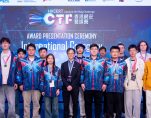
To cultivate practical talent for the cybersecurity sector, the sixth “HKCERT Capture The Flag Challenge 2025” (HKCERT CTF Challenge) was successfully organised by the Digital Policy Office (DPO), HKPC, and HKCERT. This year’s competition was elevated to the first-ever adoption of an attack–defence mode, closely replicating the network setup of real enterprises. Participants experienced first-hand hacking techniques, system vulnerability analysis, threat intelligence gathering, and coordinated response in a simulated real-world environment. Through completing multiple tasks within a limited time, the competition also allowed them to break through the traditional classroom theoretical framework, gain practical experience and build confidence. The event attracted around 1,940 young contestants, an increase of nearly 40% from last year’s 1,385 participants, reaching a record high for the competition. Contestants included teams from Hong Kong, Chinese Mainland, Asia, and Europe, fostering cross-regional exchange and collaboration. In the finals, three local teams and one overseas team were awarded gold prizes in the Secondary School, Tertiary Institution, Open Category, and International Category respectively, while Sing Yin Secondary School received the “Best School Award”. The full list of awardees is available on the event website.
Participants Share Practical Experience Integrating AI into Attack and Defence The competition was well received by contestants for its innovative format and realistic offensive and defensive environment, offering a valuable platform for learning and exchange. The winning team in the International Category, W&M, commented, “Our members are from Shanxi, Guangdong and Beijing. This was our first time competing together in the HKCERT CTF Challenge. The atmosphere and experience of the finals were excellent. The tasks were centred on an attack‑defence simulation, requiring us to find all vulnerabilities while patching our own systems and attacking other teams at the same time. Some vulnerabilities were discovered and exploited by other teams first, which kept the scores very close and made the competition incredibly tense and exciting”.
They added, “During the competition, we also applied lots of AI techniques for assistance, such as applying AI to analyse vulnerabilities and refine attack methods. In the future, AI may play a deeper role in areas like vulnerability detection and code analysis, but for now it cannot be fully relied upon—human oversight is still essential”.
HKCERT CTF Challenge has now been held for six consecutive years, with its scale expanding annually and participants showing continuous growth. Many secondary school students gain their first hands‑on exposure to cybersecurity through the competition and connect with university mentors, helping them shape their academic and career paths. Several past participants have gone on to compete in local and international events, committing to a future in the cybersecurity field. Beyond attracting overseas talent to exchange ideas in Hong Kong, HKCERT continues to build connections between cybersecurity professionals in Hong Kong and Chinese Mainland. Top‑performing teams can gain direct entry into equivalent finals in Chinese Mainland. For example, participants from the previous HKCERT CTF Challenge 2024 advanced directly to the finals of the “Greater Bay Area Cup Cybersecurity Challenge”, where they secured the top four places in the Hong Kong and Macao category. This also provided local contestants with access to world‑class cybersecurity techniques, effectively promoting cross‑regional elite collaboration and talent development.
Finals Format Upgraded: Attack-Defence Mode Mirrors Real Enterprise Operations The finals were comprehensively upgraded this year. In addition to increase the overall technical difficulty, the competition introduced an attack‑defence format for the first time that closely mirrors real enterprise cybersecurity operations. Teams played dual roles—both attackers and defenders—in an environment created with reference to the real-world systems. The tasks simulated incident response and live attack-defence scenarios commonly encountered in the cybersecurity field. Within a limited timeframe, participants had to do penetration testing, exploit vulnerabilities and attack, while patching their own systems and monitoring threats in real time against attacks from other teams. This parallel attack‑defence setup reflects actual workflow patterns in the industry, effectively training participants’ analytical abilities and adaptability under pressure. Through hands‑on practice in a likely enterprise environment, contestants developed multifaceted, industry‑aligned capabilities—laying a solid foundation for their future careers in cybersecurity.
Ms Candy CHAN, Assistant Commissioner (Project Governance and Cybersecurity) of the DPO, highlighted the DPO’s commitment to enhancing Hong Kong’s cyber resilience, with one of its key initiatives being the nurturing of the next generation of cybersecurity professionals. She emphasised that the DPO has been collaborating closely with academia and industry partners to foster a robust talent pipeline and build a safer digital environment in Hong Kong. She noted that this year marks the sixth edition of the HKCERT CTF Challenge, which has grown into one of Hong Kong’s most respected and anticipated cybersecurity competitions over the years. Beyond being a contest of technical prowess, the Challenge serves as a dynamic platform for networking, knowledge exchange and community building among the new generation of cybersecurity experts.
Ir Samson SUEN, General Manager of Digital Trust and Transformation Division of HKPC, stated, “HKCERT CTF Challenge has consistently aimed to build an international platform for technical exchange. Through high-intensity simulated contests, we enhance participants’ cyber defence skills and promote cross-regional interaction among emerging cybersecurity talents. This cultivates a new generation of globally competitive professionals in Hong Kong and strengthens the local talent pipeline. This year’s finals first introduced a simulation of real-world cybersecurity operations, enabling teams to experience both offensive and defensive roles in a recent cybersecurity team. This hands-on approach is crucial for developing practical skills and incident response capabilities”.
Fostering Cybersecurity Awareness Across All Sectors of Society To further enhance cybersecurity awareness across the community, HKCERT has partnered with the DPO and the Cyber Security and Technology Crime Bureau of The Hong Kong Police Force, to launch the “Building a Secure Cyberspace 2026” campaign to promote cybersecurity awareness. The initiative includes various educational activities, such as an “AI-Generated Four-Panel Comic”contest, which encourages the public to make good use of AI tools while strengthening their understanding of cybersecurity. At the corporate governance level, HKCERT will publish a series of practical guidelines addressing emerging risks —such as AI applications and supply chain security—highlighted in the “Hong Kong Cybersecurity Outlook 2026”, to support business in establishing a robust protection framework. In particular for AI governance, the guidelines will offer actionable recommendations covering AI system security assessments, compliance rules for employees using public AI platforms, controls over sensitive data input, and methods for monitoring and defending against AI‑assisted attacks. These resources aim to help enterprises systematically enhance their cyber resilience across governance, technology, and awareness.
As Hong Kong accelerates the development of innovation and technology and advances its digital economy, strengthening cyber defence capabilities has become a key talent need. HKCERT will continue to support businesses and the public through incident response, security guidance, and cybersecurity awareness programmes. The HKCERT CTF Challenge continues to play a vital role in nurturing local talent, fostering cross-regional collaboration, and advancing public education. By enhancing the overall level of protection, the competition contributes to the sustainable development of the digital economy and reinforces Hong Kong’s long‑term competitiveness.
The seventh edition of HKCERT CTF Challenge will be held in November 2026, featuring more innovative attack-defence challenges and continuing to set up an international category to provide local contestants with a platform for technical exchange with top teams from Hong Kong, Chinese Mainland, and overseas. Registration opens in September 2026, with finalists competing in the live finals in February 2027.
Hashtag: #HKCERT
The issuer is solely responsible for the content of this announcement.
About Hong Kong Productivity Council
The Hong Kong Productivity Council (HKPC) is a statutory body established in 1967, dedicated to enhancing the productivity and competitiveness of Hong Kong enterprises through world-class applied R&D, innovative technology services, and integrated manufacturing solutions. As a market-oriented, international R&D organisation, HKPC leverages its deep expertise and extensive industry experience in key areas such as AI, advanced manufacturing, life and health technology, green technology and new energy to drive new industrialisation and support the growth of emerging and future industries.
HKPC focuses on addressing businesses challenges and industrial technology needs, promoting the full integration between technological and industrial innovation. Through technology transfer, product innovation, intellectual property protection and commercialisation of R&D outcomes, the Council fosters collaboration with the local business community as well as top global R&D institutions, delivering added value to industries and advancing the development of new productive forces. HKPC’s world-class R&D achievements have been widely recognised over the years, winning an array of local and overseas accolades, reinforcing Hong Kong’s role as an international innovation and technology centre and a smart city.
To help enterprises capitalise on Hong Kong’s strengths in international connectivity to expand into global markets, HKPC offers comprehensive overseas expansion services tailored to critical areas including product development, technology, manufacturing, and management, enabling businesses to successfully go global from Hong Kong.
HKPC is also committed to providing timely and practical support to SMEs and startups with timely and practical , assisting them in accessing Government funding programmes. Through its FutureSkills training initiatives, HKPC helps both industry and academia stay ahead in latest digital and STEM technologies, nurturing a future-ready talent pool for Hong Kong.
For more information, please visit HKPC’s website: www.hkpc.org/en.
A wave of stress signs emerging across the global private credit market is prompting closer scrutiny from investors and analysts, with covenant defaults climbing, leverage rising and slowing earnings growth among private companies shaping the outlook for direct lenders and credit managers. Recent proprietary data from valuation specialists and market trackers show covenant default rates creeping higher compared with historical averages, while a combination of weaker cash […]
New Delhi has approved a proposal worth about $39 billion to expand the country’s fleet of Rafale fighter aircraft, marking one of the largest defence procurement decisions in its history and signalling a further shift towards advanced Western platforms in its combat air strategy.
The clearance by the defence ministry paves the way for negotiations with France’s Dassault Aviation for additional Rafale jets, building on an earlier $8.7 billion contract for 36 aircraft for the Air Force, deliveries of which were completed in 2024. A separate agreement has also been signed for 26 Rafale-M naval variants intended for deployment aboard aircraft carriers, underscoring a broader push to strengthen maritime air power.
New Delhi pushes major Rafale fleet expansion as it seeks to address concerns over squadron strength and ageing aircraft. The Air Force’s sanctioned strength stands at 42 squadrons, yet operational numbers have hovered well below that benchmark for years, raising debate within strategic circles over preparedness along contested borders with China and Pakistan.
Officials familiar with the procurement process say the new proposal reflects both operational requirements and long-term modernisation goals. India’s fleet still includes a significant number of Soviet-era MiG-21s and other legacy platforms, many of which are due for phased retirement. The Rafale, a 4.5-generation multirole fighter equipped with advanced avionics, electronic warfare systems and long-range precision weapons, has been positioned as a key element in bridging capability gaps.
The initial induction of 36 Rafales was widely viewed as a stopgap measure after the earlier Medium Multi-Role Combat Aircraft tender was scrapped amid cost and contractual disputes. Since their deployment at Ambala and Hasimara air bases, the aircraft have been integrated with India-specific enhancements, including advanced radar and electronic countermeasures. Defence planners argue that expanding the Rafale fleet would provide logistical and training efficiencies compared with diversifying further across multiple foreign platforms.
The naval variant, Rafale-M, has been selected to operate from the INS Vikrant, the country’s first domestically built aircraft carrier, and potentially from INS Vikramaditya. Naval aviation officials have indicated that the twin-engine aircraft meets requirements for carrier-based operations, including ski-jump take-offs and arrested landings, following evaluation trials against competitors such as Boeing’s F/A-18 Super Hornet.
Strategic analysts view the combined air force and naval acquisitions as part of a wider recalibration of procurement policy. Over the past decade, New Delhi has sought to balance self-reliance initiatives with the need for timely capability upgrades. Programmes under the “Atmanirbhar Bharat” framework aim to boost domestic manufacturing, yet complex fighter development remains a long-term endeavour. The Light Combat Aircraft Tejas, produced by Hindustan Aeronautics Limited, has entered service and secured additional orders, but it is not seen as a direct substitute for heavier multirole platforms like the Rafale.
Financial implications are significant. A $39 billion outlay would rank among the largest defence capital expenditures, at a time when the government is managing competing demands from infrastructure, welfare and economic stimulus. Officials have indicated that staggered payments and potential technology transfers could form part of negotiations, with an emphasis on local industry participation.
Previous Rafale contracts were accompanied by offset obligations requiring Dassault and its partners to invest in the domestic aerospace ecosystem. Whether similar provisions will apply to the expanded deal remains a subject of scrutiny, particularly as policymakers seek to deepen supply-chain integration and reduce long-term import dependence.
Diplomatically, the move reinforces defence ties with France, which has emerged as a key security partner in the Indo-Pacific. Bilateral cooperation spans joint exercises, maritime surveillance and submarine technology. Paris has consistently supported India’s strategic autonomy, a factor often cited by policymakers as attractive compared with other major arms suppliers.
Political debate is likely to accompany the procurement, as the earlier Rafale deal became a focal point of parliamentary contestation over pricing and process transparency. Government representatives have maintained that all procedures were followed in accordance with defence acquisition rules, and that operational urgency justified the intergovernmental route adopted at the time.
Air power specialists argue that a larger Rafale fleet would enhance interoperability and deterrence. The aircraft’s ability to carry Meteor beyond-visual-range missiles and SCALP cruise missiles has been highlighted as a force multiplier. Integration with indigenous weapons and network-centric warfare systems is also under way, reflecting a hybrid approach that blends imported hardware with domestic innovation.
Beyond immediate operational considerations, the proposal signals continuity in defence planning that spans successive administrations. India remains among the world’s largest arms importers, yet officials have reiterated ambitions to transition towards greater domestic production capacity over the coming decade. Achieving that balance, while sustaining readiness across land, sea and air domains, presents both fiscal and industrial challenges.
Arabian Post Staff -Dubai Asus has introduced its latest dual-display laptop in the United Arab Emirates, positioning the Zenbook Duo UX8407AA as a flagship productivity device built around Intel’s Core Ultra platform and a redesigned twin-screen form factor. The launch marks a renewed push by the Taiwan-headquartered manufacturer to popularise multi-screen computing beyond niche creative users. The Zenbook Duo features two 14-inch 3K OLED panels branded as […]
China’s Z. ai has propelled its artificial intelligence ambitions into the global spotlight with the launch of GLM-5, a 744-billion-parameter open-source large language model that stands toe-to-toe with leading Western counterparts and underscores Beijing’s drive for technological self-sufficiency. Released on 11 February by the company formerly known as Zhipu AI, GLM-5 combines advanced architecture with broad hardware compatibility and permissive licensing, signalling a shift in the global AI landscape.
The GLM-5 model, built on a mixture-of-experts framework and trained on an expanded dataset of roughly 28.5 trillion tokens, is designed for multifaceted tasks including coding, reasoning and agentic operations. Z. ai reports that the model’s performance on internal benchmarks approaches that of leading proprietary systems such as Anthropic’s Claude Opus 4.5, and on certain tests it outperforms Google’s Gemini 3 Pro. Its permissive MIT licence allows unrestricted commercial use and adaptation, making GLM-5 one of the most accessible frontier AI models available to developers and enterprises worldwide.
A standout feature of GLM-5 is its independence from American semiconductor technology. Trained and deployable on domestic Chinese chips from manufacturers like Huawei Ascend, Moore Threads, Cambricon and Kunlunxin, the model sidesteps reliance on high-end Nvidia GPUs that are constrained under US export controls. Z. ai’s use of the MindSpore AI framework further embeds the model within a Chinese software ecosystem, emphasising self-reliant technological development. This strategy exemplifies a broader push within China’s AI sector to mitigate the impact of external trade restrictions and build robust, locally supported infrastructures.
Market reception underscored the impact of GLM-5’s launch: Z. ai’s shares surged nearly 29 per cent on the Hong Kong Stock Exchange following the announcement, reflecting investor optimism about the company’s competitiveness and growth prospects. Industry analysts note that GLM-5’s arrival comes amid an acceleration of model releases and chip optimisation efforts by several Chinese AI firms, signalling more intense competition on both domestic and international fronts.
Benchmarks published by Z. ai highlight GLM-5’s strengths and limitations. On software engineering evaluations, the model achieved a score of 77.8 per cent on the widely referenced SWE-bench Verified suite, trailing slightly behind Claude Opus 4.5’s 80.9 per cent but outperforming other notable systems in agentic and multitask contexts. The architecture’s efficient handling of long-context sequences—up to 200 000 tokens—positions GLM-5 for applications requiring extensive reasoning over lengthy inputs.
GLM-5’s low cost of deployment also enhances its appeal. Analyses of pricing data suggest inference can cost around US $1 per million tokens, a fraction of the fees charged by some proprietary APIs, potentially lowering barriers for startups and research teams seeking cutting-edge language modelling without prohibitive expenditure. The MIT licence further expands this accessibility by granting broad rights to adapt and deploy the underlying model weights in commercial and research settings.
Despite its technical achievements and open licensing, experts caution against over-interpretation of benchmark results as definitive proof of superiority. Performance under controlled test conditions does not always translate to uniformly strong real-world applications, particularly in generative and reasoning tasks where robustness and safety remain critical hurdles. Some observers also warn that differences between self-reported evaluations and independent assessments could emerge as the model is adopted more widely.
GLM-5’s emergence reflects broader trends within China’s AI ecosystem, where domestic firms and chipmakers are increasingly synchronised in advancing cutting-edge technologies. Industry developments suggest that model and hardware optimisation efforts are happening in near tandem, with architecture adaptations and inference support enabling faster incorporation of new Chinese semiconductor products. These developments sit against a backdrop of regulatory frameworks that increasingly emphasise the alignment of AI systems with government objectives, including content governance and cybersecurity considerations.
ServerDirect has finalised a €25 million enterprise artificial intelligence infrastructure deployment, marking one of the largest projects in its portfolio and underscoring Europe’s accelerating investment in high-performance computing for corporate AI workloads. The Netherlands-based systems integrator said the project, delivered in partnership with Super Micro Computer, widely known as Supermicro, involved the design, supply and commissioning of advanced GPU-accelerated servers and supporting data centre architecture for a […]
Nexon Co., Ltd. reported revenue of $3.1 billion for 2025, a 6.5 per cent increase on the previous year, marking its third consecutive year of record-breaking sales as strong performance from key titles, including the much-anticipated Arc Raiders, bolstered earnings. The Tokyo-listed gaming group said operating income also rose year on year, supported by sustained engagement across its core franchises and improved monetisation in overseas markets. Management […]
Russia has moved to block WhatsApp across its territory, citing alleged breaches of domestic legislation, in a decision that signals a sharper turn towards state-aligned digital platforms and tighter control over online communications. Telecoms watchdog Roskomnadzor said access to the Meta-owned messaging service had been restricted following what officials described as repeated failures to comply with data localisation and content moderation rules. The regulator argued that foreign […]
Coinbase reported fourth-quarter earnings that fell short of market expectations after transaction revenue dropped below the $1 billion mark, underscoring the pressure on retail trading volumes as digital asset prices cooled towards the end of the year. The largest US-listed cryptocurrency exchange said total revenue declined from the previous quarter as trading activity moderated across its retail and institutional platforms. Transaction revenue, which remains the core driver […]
Construction of the first 200 megawatts of the Stargate Data Centre project in the UAE is advancing, according to ALEC Holdings, as structural works near completion and major mechanical and electrical installations gather pace. ALEC, a subsidiary of the Investment Corporation of Dubai, informed the Dubai Financial Market that building structures have been erected and that mechanical, electrical and plumbing works are well under way. The update […]
Arabian Post Staff -Dubai Child Digital Safety Council has held its first meeting, marking the start of a coordinated national drive to protect children online while supporting their cognitive and social development in an increasingly connected environment. Officials said the council will serve as a central platform to align regulatory oversight, policy design and public awareness campaigns under a single framework. The inaugural session brought together representatives […]
Arabian Post Staff -Dubai United Arab Emirates authorities have formalised agreements to begin the fourth phase of a sweeping national airspace restructuring programme, a move designed to strengthen capacity, improve safety and support projected growth in passenger and cargo traffic across the federation’s airports. The General Civil Aviation Authority confirmed that the latest phase will refine route structures, optimise sectorisation and deploy advanced air traffic management technologies […]
Nile has entered a strategic partnership with Truecaller aimed at reinforcing consumer confidence and reducing fraud across Egypt’s fast-growing digital economy, as businesses face mounting pressure to prove the authenticity of their communications. The collaboration is designed to allow companies using Nile’s financial and digital services platform to verify their outbound calls and messages through Truecaller’s caller identification and business verification tools. By displaying verified brand information […]
African technology ventures attracted $174 million in funding in January 2026, signalling a measured but steady start to the year for a sector navigating tighter global capital conditions. The figure, compiled by market intelligence platform Africa: The Big Deal, covers equity, debt and grant financing across the continent. The total marks a continuation of cautious investor behaviour that characterised much of the past two years, following the […]





 www.hkpc.org/en