Just in:

News related to
Technology

Former UK prime minister Boris Johnson has triggered a sharp debate across financial and technology circles after describing Bitcoin as a “giant Ponzi scheme”, drawing swift rebuttals from leading cryptocurrency advocates including MicroStrategy chairman Michael Saylor and other industry figures. Johnson made the remarks in a newspaper column in which he questioned the long-term value of cryptocurrencies, arguing that their prices rely heavily on a continuous influx […]

Dubai-based technology firm Solstice Data has signed a memorandum of understanding with the Kerala government to invest ₹52,600 crore in a large-scale data infrastructure project at the KINFRA Industrial Park in Mattannur, marking one of the biggest technology investments proposed for the state’s digital economy. The agreement envisions the development of advanced artificial intelligence-driven high-performance computing data centres on approximately 100 acres of land in Kannur district, a move officials say could reshape the region’s industrial profile.

The MoU was exchanged in Thiruvananthapuram between Raj Babu Thulaseedharan, Solstice Data’s country head for India, and Santhosh Koshy Thomas, managing director of Kerala Industrial Infrastructure Development Corporation, commonly known as KINFRA. The signing ceremony took place in the presence of Industries Minister P Rajeev and Director of Industries P Vishnuraj, signalling strong administrative backing for the project.

Solstice Data, headquartered in Dubai, specialises in designing and operating high-performance computing facilities that support artificial intelligence applications, cloud services and large-scale data processing. The company has overseen more than sixty data-centre projects internationally, including facilities in North America. The planned Kerala campus is expected to incorporate similar advanced infrastructure, supporting large computing workloads used by artificial intelligence developers, research institutions and global technology companies.

Officials involved in the negotiations describe the proposed facility as a strategic attempt to position Kerala within the expanding global data-centre ecosystem. The investment is scheduled to be implemented over a five-to-seven-year period, with phased development of computing infrastructure and supporting utilities. Such projects typically require heavy investments in power systems, cooling technology, fibre-optic connectivity and advanced cybersecurity frameworks, all of which are considered essential to attract international technology firms that rely on reliable data-processing capacity.

Mattannur’s KINFRA Industrial Park was selected as the project site after infrastructure upgrades created additional industrial land within the complex. The park covers about 175 acres, with roughly 123 acres designated for industrial use after internal roads, power supply and other facilities were developed. Officials said the Solstice Data project will occupy the remaining 100 acres currently available for new enterprises within the park, effectively completing the industrial allocation of the site.

Kerala’s industry department has framed the project as part of a broader push to attract technology-driven investments beyond the state’s established IT corridors. While cities such as Kochi and Thiruvananthapuram host major software parks and technology campuses, northern districts have been seeking large industrial anchors to stimulate employment and infrastructure development. Officials believe a data-centre cluster could generate both direct and indirect jobs, ranging from engineering and maintenance roles to specialised positions in artificial intelligence research and cloud-computing operations.

Industries Minister P Rajeev said the planned facility is expected to open significant digital opportunities for the state’s technology ecosystem. According to government officials, the project will be developed in collaboration with local partners, potentially creating links with educational institutions, startups and software companies working in artificial intelligence and data analytics. The state has promoted digital innovation as a key pillar of its industrial strategy, aiming to expand sectors such as fintech, health-tech and data science.

Data-centre investments have gathered momentum globally as demand for computing power rises with the growth of artificial intelligence models, streaming services and cloud-based applications. Major technology companies have been building hyperscale facilities capable of handling vast quantities of data, often requiring reliable electricity supply and extensive fibre-optic connectivity. Industry analysts say regions that provide stable power networks, regulatory clarity and strong connectivity stand to attract significant investments from technology infrastructure firms.

Kerala has gradually positioned itself as a destination for knowledge-based industries through investments in IT parks, research institutions and digital-skills programmes. Earlier technology initiatives in the state have involved collaborations with global companies and overseas investors. Observers see the Solstice Data project as another example of cross-border partnerships shaping technology infrastructure, particularly with firms based in the Gulf that maintain commercial ties with southern states.

Local authorities in Kannur district view the project as a potential catalyst for broader economic activity around Mattannur, an area already connected by road networks and the nearby Kannur International Airport. Industrial planners say large technology campuses often stimulate the creation of ancillary industries including power equipment suppliers, cooling system manufacturers and digital-services firms.

Solstice Data’s decision to establish an artificial-intelligence-focused data-centre campus also reflects the intensifying competition among regions seeking to host digital infrastructure. Governments across Asia have introduced policies aimed at attracting such projects through land allocation, tax incentives and investments in high-capacity electricity grids.

Arabian Post Staff -Dubai Firefighters and emergency teams contained a blaze in the emirate of Fujairah after debris from an intercepted drone fell in the area on Saturday, authorities said, with no injuries reported. Officials confirmed that air-defence systems intercepted the unmanned aerial vehicle before it reached its intended target, but fragments from the interception landed on the ground and ignited a fire. Civil defence crews responded […]

  • Long range, premium comfort, and five-star safety—the CHANGAN DEEPAL S05 delivers a high-tech electric driving experience.
  • Cutting-edge EV technology that brings together global design, engineering, and manufacturing.

BIRMINGHAM, UK – Media OutReach Newswire – 14 March 2026 – Changan UK has launched the all-electric CHANGAN DEEPAL S05, a compact C-SUV blending premium design, intelligent technology, and everyday practicality.

“The CHANGAN DEEPAL S05 is designed for people who want an electric SUV that fits effortlessly into everyday life,” Nic Thomas, Managing Director of Changan UK, said, “It delivers reassuring performance, thoughtful comfort, and technology that simply works—all without the premium price tag. ”

The CHANGAN DEEPAL S05: Range, Comfort, Safety

Powered by a 68.8kWh LFP battery, the CHANGAN DEEPAL S05 delivers WLTP ranges of up to 303 miles (RWD) and 278 miles (AWD). Inside, the aircraft-inspired cockpit features vegan leather heated and ventilated front seats, including a full-recline zero gravity passenger seat. A 15.4-inch rotating touchscreen, AR-HUD, 14-speaker audio system, and wireless smartphone connectivity complete the high-tech cabin.

Safety is central to the CHANGAN DEEPAL S05, earning it a five-star Euro NCAP rating. It comes standard with 17 intelligent driver assistance systems, enabling L2 autonomous driving through a network of cameras, radars, and ultrasonic sensors—including a 540-degree surround-view camera system.

More Than a Model: How the CHANGAN DEEPAL S05 Embodies a Global Vision

Changan is now present in 16 European markets, with launches in Italy, Spain, and Poland coming soon. The UK anchors this footprint as a strategic hub for local development. Leading this momentum is the CHANGAN DEEPAL S05, a model built on a truly global foundation. Designed at Changan Design Center Europe in Turin and calibrated at the Changan UK R&D Centre in Birmingham, it has been meticulously tuned for local roads.

For the UK market, the CHANGAN DEEPAL S05 is produced at Changan Rayong Factory in Thailand—established in 2023 as a dedicated hub for global right-hand drive markets. With approximately 60% local sourcing, the facility ensures consistent quality, testing, and supply, while its strategic location enables worldwide logistics. More than a new model, the S05 stands as a testament to Changan’s global ambitions—integrating design, engineering, and production across continents to deliver a truly international electric vehicle.

Hashtag: #Changan

The issuer is solely responsible for the content of this announcement.

A sophisticated malware operation targeting software developers has expanded its reach by exploiting trusted extension ecosystems, with security researchers uncovering dozens of malicious packages distributed through the Open VSX marketplace. The campaign, known as GlassWorm, now relies on hidden transitive dependencies to introduce malicious code into developer environments, marking a notable shift in tactics within the growing wave of software supply-chain attacks. Security analysts have identified at […]

Arabian Post Staff -Dubai Conflict involving Iran, Israel and the United States has entered a second week, prompting heightened caution across financial markets in the Gulf while investment banks operating in the region signal that their local operations remain in place despite escalating security warnings. Financial institutions active in the Gulf Cooperation Council have indicated that dealmaking teams and advisory units will continue functioning as normal even […]

Authorities in Hong Kong have launched one of the most sweeping investigations into the territory’s financial industry in nearly a decade, placing hedge fund Infini Capital Management at the centre of a widening insider-trading probe that has rattled brokers, banks and investors across Asia’s leading financial hub.

The investigation, conducted jointly by the Securities and Futures Commission and the Independent Commission Against Corruption, has led to the arrest of eight people and the search of offices and residences across the city. The operation targeted suspected exchanges of confidential market information tied to share placements in Hong Kong-listed companies, a practice that authorities say may have generated illicit profits while undermining confidence in capital markets.

Sources familiar with the matter have identified Infini Capital Management, alongside brokerage operations linked to Citic Securities and Guotai Junan International, as among the firms caught up in the crackdown. The investigation centres on allegations that executives accepted more than HK$4 million in bribes in return for non-public information about equity placements before those transactions were disclosed to investors.

According to regulatory statements, the suspected information leaks allowed traders to establish short positions in companies whose share placements would later depress prices once announced publicly. Authorities estimate the strategy generated profits of roughly HK$315 million, underscoring the scale of the alleged misconduct.

Infini Capital has said its operations remain normal and that its investment management processes have not been disrupted by the investigation. The firm has pledged to comply fully with regulatory authorities while declining to comment on what it described as unverified reports circulating in the market.

Founded in 2015 by former investment banker Tony Chin, the hedge fund built a reputation for aggressive trading strategies and direct negotiations with companies seeking capital. Market participants say the firm sometimes approached share placement deals in ways that bypassed traditional investment bank intermediaries, a tactic that brought both attention and scrutiny within Hong Kong’s tightly interconnected financial community.

Chin, who previously worked at major global financial institutions before establishing the fund, has not responded publicly to requests for comment regarding the probe. Regulatory filings indicate that he stepped down as a responsible officer for Infini Capital at the end of 2025, meaning he no longer holds the licence required to oversee regulated asset management activities on behalf of the firm.

Developments surrounding the investigation have reverberated beyond the immediate targets of the raid. Several global banks, including JPMorgan and UBS, had already severed prime brokerage relationships with Infini Capital months before the probe became public, according to people familiar with the matter. The reasons behind the decisions were not disclosed, though the timing has drawn attention among market observers assessing the fund’s risk profile and compliance record.

Prime brokerage services play a critical role in hedge fund operations, providing financing, securities lending and trade execution support. Losing such relationships can constrain trading activity and signal broader concerns among financial institutions regarding counterparty risk.

The crackdown arrives at a moment when Hong Kong’s equity capital markets have been undergoing a revival following a prolonged downturn in listings. Fundraising through share offerings surged in the past year as Chinese technology and industrial companies turned to the territory for capital, helping restore the city’s position as one of the world’s busiest venues for initial public offerings.

Regulators have responded to that surge by intensifying scrutiny of investment banks and brokers responsible for underwriting and distributing share sales. Officials have warned repeatedly that lapses in due diligence or market conduct could undermine investor trust and the credibility of Hong Kong’s financial system.

Analysts say the case highlights the complex ecosystem that has developed around equity placements, where hedge funds, banks and corporate issuers interact in fast-moving transactions worth hundreds of millions of dollars. Such deals often involve limited groups of investors receiving shares at discounted prices, creating incentives for traders to speculate on how markets will react once the placements are disclosed.

Authorities believe that confidential information about several such deals was circulated before public announcements, allowing certain investors to position themselves advantageously. The resulting trades allegedly generated substantial profits when share prices fell following the disclosure of the placements.

Operation “Fuse”, the codename given to the joint investigation, involved searches at fourteen locations across Hong Kong, including corporate offices and private residences. The arrests included senior executives within financial firms, signalling that regulators are pursuing accountability at the highest levels of the industry.

Market participants are watching closely to see whether the probe expands further. Hong Kong’s regulators have historically pursued insider trading cases aggressively, but raids on multiple high-profile financial institutions simultaneously are comparatively rare.

Infini Capital had become an active participant in the city’s equity markets over the past several years, taking positions in a number of high-profile share placements linked to technology companies and other fast-growing sectors. The firm also forged financing partnerships with emerging robotics and artificial intelligence businesses seeking funding through Hong Kong’s capital markets.


Advertisements

Cuba has confirmed that discussions are under way with officials from the United States as Washington intensifies economic and diplomatic pressure on the island, raising tensions between the neighbouring nations separated by just 90 miles of water across the Florida Straits. Havana said contacts with US representatives have taken place through diplomatic channels, signalling a cautious attempt to maintain dialogue even as relations remain strained under policies […]

United States military authorities have dispatched thousands of interceptor drones originally refined on the battlefields of Ukraine to the Middle East, aiming to counter Iranian aerial attacks while reducing reliance on expensive missile defences. Officials say about 10,000 drones were moved to the region within days of a joint US–Israeli military campaign against Iranian targets that began in late February. The deployment reflects a broader shift in […]

Bosch SDS and NxtGen Datacenter & Cloud Technologies have unveiled plans to launch a sovereign artificial intelligence cloud platform designed to accelerate Industry 4.0 adoption across India’s manufacturing and industrial sectors. The initiative aims to give enterprises secure domestic infrastructure for deploying advanced AI applications, including predictive maintenance, asset optimisation and real-time industrial data orchestration from factory floors to cloud platforms.

The partnership brings together Bosch’s software and digital engineering capabilities with NxtGen’s hyperscale data-centre infrastructure and managed cloud services. Executives involved in the project say the platform is intended to address a growing demand among industrial companies for locally hosted AI environments that comply with national data sovereignty expectations while enabling modern digital manufacturing systems.

Manufacturers across sectors such as automotive, energy, logistics and heavy engineering are increasing investment in AI-driven automation as global supply chains shift toward greater efficiency and resilience. Analysts say many firms are seeking platforms capable of processing large volumes of machine data generated by connected sensors, robotics systems and industrial equipment. The Bosch–NxtGen cloud aims to provide such capabilities by linking edge computing devices installed on factory floors with secure domestic cloud infrastructure.

Industry 4.0 technologies depend heavily on real-time analytics and machine learning models trained on operational data from equipment and production lines. Engineers use these tools to forecast equipment failures, schedule maintenance more efficiently and optimise energy use in industrial facilities. Bosch SDS has developed software frameworks and digital twin technologies designed to model industrial processes, while NxtGen operates data centres capable of hosting high-performance computing and AI workloads.

Executives from both companies say the sovereign AI cloud will enable manufacturers to run advanced analytics while ensuring sensitive operational data remains within national boundaries. Data localisation requirements have become an important consideration for companies adopting AI technologies, particularly in sectors linked to critical infrastructure and strategic industries.

Industrial data orchestration represents a central component of the project. Factories typically generate vast amounts of information from sensors embedded in machines, assembly lines and supply-chain systems. The new platform aims to unify these streams into a single architecture that allows companies to analyse operational patterns and automate decision-making across production networks.

Predictive maintenance stands among the most prominent applications expected to benefit. Machine-learning models trained on historical equipment data can detect early warning signs of mechanical problems before breakdowns occur. Companies adopting such systems report improvements in production uptime and reductions in maintenance costs. Asset optimisation tools can also adjust equipment performance dynamically based on real-time operational conditions, helping plants operate more efficiently.

Bosch SDS, a digital engineering and IT services division of the Bosch Group, has built a strong presence in industrial software development, automotive electronics and embedded systems. The organisation provides engineering services to manufacturing clients globally and has increasingly expanded into artificial intelligence and Internet of Things technologies.

NxtGen Datacenter & Cloud Technologies operates hyperscale data-centre infrastructure in several metropolitan regions and provides cloud platforms designed for enterprise workloads requiring high performance and data security. The company has promoted the concept of sovereign cloud infrastructure as governments and corporations seek greater control over digital assets and regulatory compliance.

Demand for domestic cloud infrastructure has expanded as companies become more cautious about where critical data is stored and processed. Sovereign cloud environments typically guarantee that data remains within a country’s jurisdiction and that infrastructure operators comply with local legal frameworks. Such models have gained traction among governments and enterprises concerned about cross-border data transfer risks.

Industrial companies are also moving toward hybrid architectures combining edge computing and centralised cloud platforms. Edge devices located inside factories can process sensor data close to the source, enabling immediate operational responses, while cloud platforms provide the computing power required for large-scale analytics and machine-learning training. Integrating these environments allows enterprises to monitor production lines in real time while developing predictive insights from aggregated data.

Artificial intelligence adoption within manufacturing has accelerated as companies pursue automation and efficiency gains. Industrial AI applications include quality control using computer vision, supply-chain forecasting, energy-efficiency optimisation and autonomous robotics. Technology providers see manufacturing as one of the largest growth markets for AI deployments because factories generate extensive data suitable for machine-learning models.

Digital transformation initiatives in India’s industrial sector have gained momentum as manufacturers attempt to strengthen global competitiveness. Government-backed programmes promoting advanced manufacturing and smart factories have encouraged investment in automation, robotics and digital infrastructure. Large technology firms and industrial groups have launched multiple projects aimed at building domestic platforms capable of supporting AI-driven manufacturing systems.

Bosch and NxtGen executives say the sovereign AI cloud will provide enterprises with tools to modernise legacy manufacturing operations while maintaining strict security and governance standards. Industrial clients are expected to gain access to modular services including AI development environments, digital twin simulations and scalable computing resources tailored to industrial workloads.

Technology analysts note that partnerships combining industrial engineering expertise with specialised cloud infrastructure have become increasingly common as companies seek to accelerate digital transformation. Providers that can integrate operational technology systems with enterprise cloud platforms are viewed as well positioned to serve manufacturers adopting Industry 4.0 strategies.

Government plans to establish an $11 billion fund aimed at accelerating semiconductor development, a move designed to strengthen the country’s position in the global electronics supply chain and reduce dependence on imported chips. The proposed initiative, valued at more than ₹1 trillion, is under active discussion and could be unveiled within months as part of a broader push to expand domestic technology manufacturing.

Semiconductors form the backbone of modern technology, powering devices ranging from smartphones and laptops to vehicles, industrial equipment and artificial intelligence systems. Officials believe the new fund will provide subsidies for chip design, semiconductor manufacturing equipment and the development of supporting supply chains, while encouraging investment from both domestic conglomerates and international technology companies.

Policy planners view the programme as a key step in transforming the country into a major centre for semiconductor manufacturing and design. Industry specialists say the fund would complement earlier government initiatives aimed at building a full semiconductor ecosystem, including design, fabrication, assembly, testing and packaging capabilities.

The proposal builds on earlier efforts launched in 2021 under the semiconductor incentive scheme, which earmarked about $10 billion to attract chip manufacturers and component makers. That programme sought to cover a significant share of the capital costs associated with establishing fabrication and assembly plants, a strategy widely adopted by governments worldwide seeking to secure technology supply chains.

Authorities have framed semiconductor development as a strategic priority amid rising global demand for advanced electronics. The push is also tied to ambitions of expanding the domestic electronics manufacturing sector, which has grown rapidly over the past decade as multinational companies diversify production away from traditional manufacturing hubs.

Major industrial projects linked to this strategy are already underway. A semiconductor assembly and testing facility led by Tata Group in the northeast is expected to become one of the country’s first large-scale chip processing plants, while U. S. firm Micron is developing a packaging facility valued at about $2.7 billion. These projects represent early steps toward creating an integrated semiconductor ecosystem spanning design, fabrication and advanced packaging.

Other proposals include joint ventures between technology firms and global chipmakers. One such project involves a partnership between HCL Group and Taiwan’s Foxconn to establish a semiconductor unit near Jewar airport in Uttar Pradesh. The facility is designed to produce display driver chips used in consumer electronics and could reach an output of tens of millions of units annually once operational.

Government officials have also focused on strengthening the talent pipeline required for the semiconductor industry. A national programme known as “Chips to Startups” aims to train around 85,000 engineers in chip design across more than 300 academic institutions, reflecting recognition that workforce development is critical for sustaining a competitive semiconductor sector.

Industry leaders note that chip manufacturing remains one of the most capital-intensive segments of the technology economy. Fabrication plants require investments that can exceed $10 billion, along with long development timelines and highly specialised expertise. As a result, government subsidies and strategic partnerships are widely seen as essential for building a viable domestic semiconductor base.

Global competition in the semiconductor sector has intensified as governments race to secure supply chains for critical technologies. The United States has enacted multi-billion-dollar incentives through its CHIPS and Science Act, while China continues to channel state funding into chip design and manufacturing. Similar programmes have emerged in Europe, Japan and South Korea, underscoring the geopolitical significance of semiconductor production.

Economic planners argue that strengthening chip capabilities could support broader industrial growth, particularly in sectors such as electric vehicles, telecommunications, defence electronics and artificial intelligence infrastructure. Demand for semiconductors is expected to surge as digitalisation spreads across industries and emerging technologies such as machine learning, cloud computing and smart devices expand globally.

Technology companies have shown growing interest in establishing operations in the country as electronics manufacturing scales up. Smartphone assembly has expanded sharply, with global firms increasing production capacity and boosting exports, reflecting a shift in supply chains that had previously centred heavily on East Asia.

Private investment in semiconductor start-ups has also gained momentum. State-backed funds and regional initiatives have begun supporting chip design ventures working on networking processors and communications hardware, signalling a move toward building indigenous intellectual property alongside manufacturing capacity.

Challenges remain significant. Establishing advanced chip fabrication facilities requires complex infrastructure, steady power supply, large water resources and access to specialised equipment dominated by a small number of global suppliers. Analysts say progress will depend on sustained policy support, long-term financing and collaboration with established semiconductor companies.

Artificial intelligence has moved from experimentation to operational priority across industries, yet many organisations struggle to turn promising pilots into large-scale value. Executives and technology leaders increasingly argue that the barrier is no longer access to powerful models or computing infrastructure but a lack of organisational capability to use them effectively. Analysts and industry researchers say AI literacy — the ability of employees and leaders to understand, […]

Arabian Post Staff -Dubai Global aviation authorities have begun rolling out a new digital platform designed to eliminate paper documentation for hazardous air cargo shipments, a move aimed at improving safety and efficiency across the air freight industry. The International Air Transport Association has launched DG Digital, a technology integrated into its DG AutoCheck compliance platform that enables shippers, airlines and logistics companies to create and approve […]

Arabian Post Staff -Dubai Approval of a national strategy aimed at expanding entrepreneurship and small-business activity across rural communities has signalled a renewed push to strengthen economic opportunities beyond major urban centres in the United Arab Emirates. The initiative, endorsed by Sheikh Theyab bin Mohamed bin Zayed Al Nahyan in his capacity as Deputy Chairman of the Presidential Court for Development and Fallen Heroes’ Affairs and Chairman […]

Google has finalised its $32 billion acquisition of the cloud security firm Wiz, marking one of the largest deals in the cybersecurity sector and underscoring the growing importance of protecting complex cloud infrastructure as companies expand their use of artificial intelligence and distributed computing. The purchase brings Wiz into the Google Cloud division while allowing the company’s technology to continue operating across multiple cloud platforms. Executives from […]

Bittensor’s native cryptocurrency TAO climbed sharply on March 13, posting gains of about 12 per cent as enthusiasm around decentralised artificial intelligence networks and new training activity on its Templar subnet drew fresh investor attention. Market data showed the token breaking above the $210 resistance level and trading near $230 during the session, outperforming several major digital assets during the same period. The rally was accompanied by […]

Ferrari has introduced the Amalfi Spider, a V8-powered 2+ convertible designed to blend grand touring comfort with the marque’s hallmark performance engineering, marking another expansion of the company’s front-mid-engine sports car line-up. Revealed as part of Ferrari’s evolving range of high-performance open-top models, the Amalfi Spider features a front-mid-mounted V8 engine configuration and a 2+ seating layout intended to combine everyday usability with the brand’s racing-derived dynamics. […]

Arabian Post Staff -Dubai Apple is preparing to launch a new MacBook Pro powered by its next-generation M6 processor later this year, according to multiple industry reports and supply-chain disclosures, signalling another step in the company’s rapid push to refine its in-house silicon strategy. Information circulating within the technology supply chain suggests the updated MacBook Pro models will maintain the design language introduced with earlier Apple Silicon […]

Arabian Post Staff -Dubai Autonomous taxi operations in Abu Dhabi are expanding across Yas Island as authorities push forward with plans to integrate self-driving transport into everyday mobility. The Integrated Transport Centre, operating under the Department of Municipalities and Transport, announced the extension of commercial driverless taxi services across the island, marking a further step in the emirate’s strategy to build a technology-driven transport ecosystem. The initiative […]

Cybersecurity researchers have demonstrated a method to circumvent safety guardrails embedded in widely used generative artificial intelligence systems, raising concerns about the reliability of protective controls designed to prevent misuse of large language models. A research team from Palo Alto Networks’ Unit 42 disclosed that a specially crafted attack can bypass safeguards in some generative AI platforms by manipulating how the models interpret safety instructions. The technique, […]

Digital asset markets received renewed attention after Coinbase chief executive Brian Armstrong argued that tokenisation of financial assets could remove entrenched inequities in global finance by widening participation in investment markets and lowering structural barriers that historically limited access. Armstrong, speaking in comments circulated across financial and crypto industry platforms, said tokenisation could “strip away a huge amount of unfairness from the system by increasing asset access […]

  • A native world model built from the ground up for embodied intelligence, Kairos 3.0-4B delivers exceptional physics-consistent deep understanding and cross-embodiment generalization, enabling a single “brain” to drive robots of multiple form factors.
  • Kairos 3.0-4B leverages a unified “multi-modal understanding-generation-prediction” architecture for physical-level deep understanding, long-horizon dynamic interaction, precise action control, and long-horizon interaction — 7-minute coherent interaction videos set a new industry benchmark.
  • As a lightweight 4B-parameter model, Kairos 3.0-4B outperforms mainstream embodied world models while delivering industry-leading inference efficiency. It achieves real-time edge generation on the THOR platform with a1:1.5 ratio of generation time to video duration, leading performance across both cloud and edge environments.
  • Kairos 3.0-4B achieves top-ranking accuracy across multiple authoritative benchmarks. Furthermore, leveraging model capabilities and inference tooling, its inference speed is 72 times faster than Cosmos 2.5, setting a new global performance record for embodied world models.

SHANGHAI, CHINA – Media OutReach Newswire – 13 March 2026 – ACE ROBOTICS announced the open-source release of Kairos 3.0-4B, the industry’s first native world model for embodied intelligence to realize unified “multi-modal understanding-generation-prediction” within a single architecture. As the technical cornerstone of the company’s “Human-Centric” ACE Embodied Intelligence R&D Paradigm, Kairos 3.0-4B is designed from the ground up for real-world robotic operation — integrating physical laws, human behavior, and real robot actions to deliver physics-consistent deep understanding of the real world.

The prevailing approach to embodied world models has largely involved retrofitting general-purpose large language or vision models with motion interfaces. Kairos 3.0-4B takes a fundamentally different path. Rather than appending motion capabilities onto existing model architectures, it is built from the architectural level around the fundamental physical and causal laws that govern real-world environments, constructing a unified world-understanding framework capable of cross-embodiment generalization. By embedding causal reasoning chains directly into its decision-making process, the model transcends behavioral imitation and achieves what ACE ROBOTICS defines as physical-level deep understanding — enabling robots to not only know what to do, but to understand why. Its core breakthrough lies in the deep integration of three categories of data: real robot interaction data, structured human behavioral data, and chain-of-thought reasoning data, effectively breaking down multi-source data barriers and significantly improving the reuse efficiency of real-world data.

A landmark achievement of this release is Kairos 3.0-4B’s real-time edge deployment capability. Deployed on the NVIDIA Jetson Thor T5000 platform at 517 TFLOPs, it is the world’s first embodied world model to achieve real-time generation on edge hardware — achieving a 1.5x faster-than-real-time generation speed on the THOR platform — and the first capable of directly driving physical robot bodies for real-world task execution through native edge deployment. The model issues full-body control commands spanning upper limbs, fingers, and lower limbs without intermediate control layers, enabling robots to move from “capable of performing” to genuinely “capable of working.”

Kairos 3.0-4B also delivers a breakthrough in long-horizon interaction. By combining its unified architecture with Agent-based hierarchical planning and a self-reflective iterative optimization mechanism, the model generates coherent future-state predictions up to 7 minutes in length while maintaining full scene coherence and physical fidelity throughout — setting a new industry benchmark for long-horizon embodied interaction and opening new pathways for embodied intelligence training and deployment.

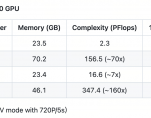
On the A800 GPU benchmark, Kairos 3.0-4B’s inference speed surpasses NVIDIA Cosmos 2.5 by 72 times, setting a new global performance record for embodied world models. This performance is delivered with a lightweight footprint of just 4B parameters and 23.5GB of VRAM — a fraction of Cosmos 2.5’s 70.2GB requirement — demonstrating that efficiency and capability need not be in tension and fundamentally challenging the assumption that larger parameters are a prerequisite for superior performance. The model has also achieved top rankings across three authoritative global benchmarks: PAI-Bench-robot, co-developed by Georgia Tech and CMU; WorldModelBench-robot TI2V, introduced at CVPR 2025; and NVIDIA GEAR Lab’s DreamGen Bench, outperforming all evaluated models on physical consistency and instruction-following metrics.

In A800 GPU benchmarks, Kairos 3.0-4B achieves order-of-magnitude breakthroughs in compute efficiency and inference speed

Supporting seamless cross-embodiment deployment across single-arm, dual-arm, and dexterous hand configurations with no additional per-embodiment training required, Kairos 3.0-4B is compatible with major hardware platforms including Agilex PIPER, Unitree G1, and Galaxy G1. Kairos 3.0-4B is now available on Github (https://github.com/kairos-agi/kairos-sensenova) and Hugging Face (https://huggingface.co/kairos-agi/kairos-sensenova-common).

Hashtag: #ACEROBOTICS


The issuer is solely responsible for the content of this announcement.

About ACE ROBOTICS – Equipping robots with intelligent “brains” and engaging “souls”

ACE ROBOTICS is a pioneering robotics company dedicated to advancing the field of embodied intelligence. Founded by SenseTime co-founder Wang Xiaogang, the company has brought together a team of young, globally scarce AI scientists and industry experts to focus on embodied intelligence. Through breakthrough technological innovations and deep insights into embodied intelligence scenarios, we aim to empower robots with the ability to autonomously understand and explore the physical world, thereby accelerating their commercial implementation.

The company pioneered the ACE R&D paradigm and built a vision-based “environmental data engine, real-world cognition, embodied interaction generalization” technology chain. Using full spatiotemporal and multi-perspective environmental capture as its engine, along with Kairos 3.0 – China’s first open-source and commercially applicable world model – plus the Embodied Foundation Model as its technical backbone, ACE ROBOTICS addresses core industry challenges such as data scarcity, common sense gaps, poor generalization, and limited versatility. Simultaneously, the company unveiled its flagship A1 Embodied Super Brain Module, accelerating the large-scale commercial deployment of embodied intelligence across diverse scenarios.

ACE ROBOTICS is both a technology pioneer and an ecosystem builder. Through strategic cooperation with top hardware manufacturers, cloud service providers, and vertical scenario partners, we have broken through the “model-hardware-scenario” industrial deadlock, providing standardized and customized solutions that are driving the development of China’s embodied intelligence industry.

HONG KONG SAR – Media OutReach Newswire – 13 March 2026 – The Hong Kong Innovation and Invention (HKII), one of the flagship projects organised by the Hong Kong Exporters’ Association (HKEA), leads 48 inventions from the Guangdong–Hong Kong–Macao Greater Bay Area(GBA) to showcase at the International Exhibition of Inventions Geneva (IEIG), taking place from 11 to 15 March (Central European Time).

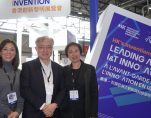
(From Left to right: Ms. Helena Chiu, Chairman of the Hong Kong Exporters Association; Ir. Andrew Young Honorary Advisor, The Hong Kong Exporters’ Association; and Ms. Alice Lai, Vice Chairman of the Hong Kong Exporters Association and Project Convenor, Hong Kong Innovation & Invention)

Hosted by HKEA and sponsored by the Innovation and Technology Commission (ITC) of the Government of the Hong Kong Special Administrative Region, HKII is committed to providing free international exchange opportunities for Hong Kong’s innovation and technology community. The initiative brings Hong Kong’s unique technological inventions onto world‑class exhibition platforms, connecting GBA innovators with global enterprises and users, and showcasing Hong Kong’s innovation story to the world.

Exhibited inventions have undergone rigorous evaluation by a distinguished panel of industry professionals. The shortlisting process will be conducted based on novelty, level of innovation and invention, technical utility, and symbolic significance. All exhibits are original inventions and launched in the market with patent protection or are under patent filing.

“‘Created in Hong Kong’ has long been recognised worldwide, yet the global visibility of our SMEs and start‑ups still has room to grow,” said Helena Chiu, Chairman of HKEA. “Through HKII, we enable Hong Kong’s innovation and technology brands to participate in top‑tier international exhibitions at no cost and connect directly with the global business community. This year, we are also bringing leading innovators from the Greater Bay Area to join Hong Kong enterprises as we venture overseas together and capture new opportunities around the world.”

MEET International, a multi-functional engineering inspection company, exhibits at IEIG for the first time. “With a supply chain anchored in the Greater Bay Area and more than 30 years of global market experience, we have been committed to strengthening ties with overseas clients and building a world‑recognised brand,” said K.S. Chou, Director of MEET International. “IEIG offers valuable access to engineers from European construction firms and research organisations, enabling us to present our product capabilities directly and substantially enhance our opportunities for international orders.”

“Intellectual property built on core technologies is essential for Hong Kong enterprises to upgrade their businesses,” said Marco Li, Managing Director of Propagate Intellectual Property, an invention commercialisation platform. “We are committed to nurturing academic innovations into patented technologies, developing products tailored for different scenarios for global customers. By exhibiting with other Greater Bay Area enterprises at Generva, our intellectual properties could become more attractive to European buyers. On top of greater revenue to companies and inventors, it also strengthens the branding of ‘Created in Hong Kong’ among the global, high‑end, industrial value chain.”

48 innovations and inventions are being showcased at the exhibition through HKII for free. The inventions span a wide spectrum of categories, including:

  1. Smart City,
  2. Smart Home & Lifestyle,
  3. Health Technologies and Medicine, and
  4. Smart Industry,

alongside a dedicated Youth Category for inventors aged 18 or below. The showcased innovation and technology products from the Greater Bay Area include:

Smart City: MEET International, a multi-functional engineering inspection company, developed a “7‑in‑1 Building Leakage Tracing Device,” breaking through the technical limitations of traditional single‑function inspection tools and redefining the standards for leakage detection. By continuously capturing and comparing highly precise data readings, the device pinpoints the source of leakage, ensuring that concealed problem areas are accurately exposed.

The device features synchronized “AC leakage” and “water leakage” dual detection, enabling early identification of hidden risks and precise localisation of the source to mitigate both seepage and electrical hazards. It also incorporates an innovative all‑scenario adaptability design, allowing it to operate effectively across different building materials and leakage environments. Applications include building maintenance, renovation inspection, and property management.

Smart Home & Lifestyle: Researchers at Sun Yat‑sen University developed a patented “Composite Heating Material” that integrates advanced graphene and nano-carbon tube composite heating films, replacing traditional heating tubes. The invention delivers precise, rapid and efficient heating with uniform heat distribution, while reducing energy loss.

Propagate Intellectual Property has commercialised the invention into more than 40 intellectual property assets, applying it to products such as electric teppanyaki, food‑warming mats and beauty eye masks, as well as in building and industrial settings, providing an efficient and flexible heating solution across diverse applications.

Health Technologies and Medicine: Health‑tech start‑up Kin Technology launched Kindo & App, a homecare solution redefining homecare and wellness. Integrating automation, IoT connectivity, and advanced AI, Kindo & App can automatically sort and dispense up to 10 types of medication with a single click. Equipped with smart reminders, a child‑safety lock, and built‑in humidity and temperature sensors, the solution ensures medication safety, accuracy, and convenience.

Paired with the Kin App and Web Platform, users can track their dosage history, set reminders, and receive low-medication alerts. The platform also supports remote dispensing, enabling caregivers to manage prescriptions and dispense medications from anywhere. Families and caregivers gain real-time access to adherence data and remote management tools, while healthcare providers can monitor patients, manage prescriptions, and access analytics to enhance outcomes.

Smart Industry: URS AI developed URS AI MATE, a holographic interactive AI agent. Integrating holographic projection technology, proprietary LLM, and multimodal interaction algorithms, URS AI MATE has successfully built a full closed‑loop of perception, cognition, decision‑making, and execution that enables continuous self‑evolution. This strengthens its ability to adapt in different scenarios and understand users, creating an AI agent uniquely tailored to each individual.

Hashtag: #HongKongExporters’Association #HKEA #HongKongInnovation&Invention #HKII

The issuer is solely responsible for the content of this announcement.

About “Hong Kong Innovation & Invention” (HKII)

Launched in 2023, “Hong Kong Innovation & Invention” (HKII), organized by the Hong Kong Exporters’ Association (HKEA) and sponsored by the Innovation and Technology Commission (ITC) of the Government of the Hong Kong Special Administrative Region, is an initiative dedicated to showcasing and promoting Hong Kong’s immense potential in innovation and technology (I&T) to a global audience. The Project aims to facilitate collaboration within the industry and cultivate a vibrant I&T culture among the general public.

For more details on the Project, visit

About Hong Kong Exporters’ Association (HKEA)

Founded in May 1955, the Hong Kong Exporters’ Association (HKEA) is a non-profit-making trade association registered under the Hong Kong Companies Ordinance. The Association’s mission is to develop Hong Kong as a trading hub for exporters, dedicating its efforts to serve and add value for the exporter community.

This press release is distributed by Mitopia Limited on behalf of the Hong Kong Exporters’ Association.

*Disclaimer: Any opinions, findings, conclusions or recommendations expressed in this material/event (or by members of the project team) do not reflect the views of the Government of the Hong Kong Special Administrative Region, the Innovation and Technology Commission or the Vetting Committee of the General Support Programme of the Innovation and Technology Fund.

  Motorists navigating through Dubai have reported unusual glitches in digital navigation systems, with some drivers briefly appearing to travel across open water or far from their actual locations on popular mapping applications. The phenomenon, noticed by commuters across parts of the emirate, has drawn attention to the growing vulnerability of satellite-based navigation systems to interference and technical anomalies. Drivers using applications such as Google Maps and […]

VISHNU RAJA
RYO YAMADA
HITORI GOTOH
IKUYO KITA