

News related to
Technology

Partnered with CB Insights to unveil Hong Kong leads Asia and ranks fifth globally for high-potential start-ups, orchestrating the next era of global tech innovation

Key Takeaways:

  • HKSTP’s 25th Anniversary Prelude theme, “Innovation. Next by Nature.”, brings together great minds and bold ideas to inspire what comes next for Hong Kong’s innovation ecosystem.
  • The CB Insights-HKSTP white paper ranks Hong Kong first in Asia and fifth globally, with a Mosaic score of 370 — a key indicator of high-potential ventures and future unicorns.
  • The research highlights Chinese Mainland’s lead in Asia’s physical AI wave, as the region powers global growth in robotics and AI funding.

HONG KONG SAR – Media OutReach Newswire – 31 August 2026 – The Hong Kong Science and Technology Parks Corporation (HKSTP) today officially kicked off its year-long 25th anniversary celebration with a landmark event “Together to NEXT”, bringing together Innovation and Technology Partners, Park Companies, industry leaders, academia and startups to mark a quarter-century of transforming bold ideas into global impact.

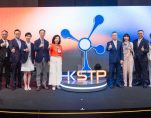
HKSTP's 25th Anniversary Prelude theme, "Innovation. Next by Nature.", brings together great minds and bold ideas to inspire what comes next for Hong Kong's innovation ecosystem. Ms Cordelia Chung, Chairman of HKSTP (6th from left), Mr Terry Wong, CEO at HKSTP (6th from right), Mr Aldous Mak, Chief Financial Officer of HKSTP (5th from left), Ms Hilda Chan, Chief Marketing Officer, HKSTP (5th from right), Ms Filla Mak, Chief Property and Asset Officer, HKSTP (4th from left), Mr Eric Or, Chief Ecosystem Development Officer, HKSTP (4th from right), Ms Fanny Wong, Chief Talent Officer, HKSTP (3rd from right), Mr Oscar Wong, Acting Chief Business Development Officer, HKSTP (2nd from right) and members from the management team officiate the event.
HKSTP’s 25th Anniversary Prelude theme, “Innovation. Next by Nature.”, brings together great minds and bold ideas to inspire what comes next for Hong Kong’s innovation ecosystem. Ms Cordelia Chung, Chairman of HKSTP (6th from left), Mr Terry Wong, CEO at HKSTP (6th from right), Mr Aldous Mak, Chief Financial Officer of HKSTP (5th from left), Ms Hilda Chan, Chief Marketing Officer, HKSTP (5th from right), Ms Filla Mak, Chief Property and Asset Officer, HKSTP (4th from left), Mr Eric Or, Chief Ecosystem Development Officer, HKSTP (4th from right), Ms Fanny Wong, Chief Talent Officer, HKSTP (3rd from right), Mr Oscar Wong, Acting Chief Business Development Officer, HKSTP (2nd from right) and members from the management team officiate the event.

To commemorate this milestone, HKSTP unveiled its anniversary theme, “Innovation. Next by Nature.”, a vision that signals its evolution from ecosystem enabler to orchestrator of the next era of global innovation. HKSTP also announced the findings of a landmark study, “Inside Asia’s Fast-Track to Global Tech Scale,” conducted in partnership with the leading technology market intelligence firm CB Insights, revealing Hong Kong ranks first in Asia and fifth globally, with a Mosaic score of 370. Mosaic score is CB Insight’s proprietary and industry-recognised indicator of high-potential ventures and future unicorns, evaluating momentum, financing, market opportunity and leadership quality. Hong Kong’s top ranking among Asian markets reflects a concentrated pool of scale-ready ventures and highly-investable innovation.

Ms Cordelia Chung, Chairman of HKSTP, said: “For 25 years, HKSTP has driven I&T as Hong Kong’s economic engine. Across our 240-hectare infrastructure and service ecosystem—comprising Science Park, InnoCentre, three InnoParks, and our Shenzhen Park—we turn research into real-world impact. Looking ahead, our ‘What’s Next’ vision is built on four dimensions, ‘Broad and Deep, Far Yet Near’: Broad means building a diverse talent ecosystem where human minds leverage technology; Deep involves advancing tech-industry convergence; Far entails expanding our global footprint; and Near focuses on drawing the future nearer with immediate action. Our community is our heartbeat. Together, we must strengthen, enhance, and collaborate, harnessing Hong Kong’s unique advantages to shape a better future for all.”

To kick off this next era, HKSTP has partnered with CB Insights to launch a white paper titled “Inside Asia‘s Fast-Track to Global Tech Scale.“ The report shows how Asia is reshaping the global innovation playbook with a network of specialist clusters, each optimised for a different stage of the innovation journey and built for today’s multipolar market landscape. CB Insights is a global tech intelligence leader and predictive data platform trusted by Fortune 500 companies.

Mr Terry Wong, CEO at HKSTP, said: “Asia’s rising innovation power is rewriting the global innovation map. While Silicon Valley grew as a single, all-in-one hub, Asia, with the Chinese Mainland as a key technology engine, is evolving an accelerated and more specialised network for global innovation. Hong Kong’s role as a super connector and value-adder has never been more important as Asia sets a new benchmark for start-up ecosystems. As HKSTP steps up as an ecosystem orchestrator, we are connecting innovators with capital, talent, deep Mainland China links and trusted pathways to global markets.”

Other Key Report Findings:

  • Chinese Mainland drives physical AI takeover
    Asia’s AI investment exploding as physical AI leads the way with robotics raising US$26.1B and AI infrastructure hit US$21.4 billion in 2025, outpacing generative AI and fintech. China dominates region with close to 100% of deals in emerging segments: robot/industrial humanoid robot foundation models, vision language and autonomous driving models.
  • Asia‘s specialist hubs as accelerators of growth across innovation lifecycle
  • Asia vies for global R&D lead to complement established manufacturing and consumer power
    The region’s global R&D expenditure surge from 24% in 2007 to 45% in 2024, according to WIPO, while already the dominant region for global manufacturing as well as driving global consumption with growing purchasing power with Asia’s GDP reaching 48.6 percent in 2025, according to Boao Forum for Asia (BFA).


HKSTP: Global
I&T Ecosystem Orchestrator and Innovation Accelerator

HKSTP’s 25th anniversary signals a renewed mission to make Hong Kong the global heartbeat of what’s next in innovation and technology (I&T). As HKSTP approaches its 25th anniversary, the new brand theme, “Innovation. Next by Nature.”, positions HKSTP as inherently built to lead the change. The year-long celebrative campaign “25 to NEXT” starts from August 2026 to July 2027 with 25 high-impact activations and cultural moments.

Anchored by three core goals — The Next Habitat (cultivating an innovation culture by connecting ecosystem stakeholders with signature events), The Next Horizon (broadening perspectives through industry-guiding insights, including the landmark study in partnership with CB Insights and 25 KOL collaborations), and The Next Pinnacle (developing overseas delegations and platforms across international markets). The campaign positions HKSTP as a more connected engine and forward-oriented convener of talent, capital, infrastructure and partnerships across sectors and borders.

Since its establishment, HKSTP has grown into Hong Kong’s largest I&T ecosystem, driving breakthroughs across Life and Health Technology, AI and Data Science, Microelectronics and Advanced Manufacturing, and GreenTech and New Energy. As the ecosystem orchestrator, HKSTP is committed to powering Hong Kong’s rise as the international I&T hub, underpinned by leading critical partnerships across Hong Kong and beyond, attracting talent, engaging stakeholders, and building a connected, forward-looking I&T community for the next era of global innovation.
Hashtag: #HongKongScienceandTechnologyParksCorporation #HKSTP

The issuer is solely responsible for the content of this announcement.

About Hong Kong Science and Technology Parks Corporation

Hong Kong Science and Technology Parks Corporation (HKSTP) was established in 2001 and has built a proven foundation as Hong Kong’s leading innovation and technology (I&T) ecosystem. Established for 25 years, HKSTP is supporting 14 unicorns, has nurtured more than 17,000 research professionals and built a community of over 2,600 technology companies from 26 countries and regions across four strategic technology clusters: Life and Health Technology, AI and Data Science, Micro-electronics, and New Energy and Green Technology.

As an ecosystem orchestrator, HKSTP provides end-to-end support to attract and nurture talent, accelerate commercialisation and help technology ventures scale. Its innovation infrastructure spans over 240 hectares covering Hong Kong Science Park in Pak Shek Kok, InnoCentre in Kowloon Tong, and three modern InnoParks in Tai Po, Tseung Kwan O and Yuen Long, advancing Hong Kong’s vision for new industrialisation and smart manufacturing.

Hong Kong Science Park Shenzhen Branch in Futian, Shenzhen, strengthens cross-border collaboration by connecting Hong Kong, the Chinese Mainland and global innovation networks and propels Chinese innovators onto the world stage, while also delivering comprehensive GBA landing support to accelerate cross-border success for local and international ventures.

As HKSTP enters its next chapter with strong foundations, it continues to deepen impact, elevate quality and create value for innovators. As an ecosystem built to lead change, HKSTP is empowering Hong Kong to define what comes next in innovation, growth and opportunity.

More information about HKSTP is available at .

By Nantoo Banerjee The Indian Space Research Organisation (ISRO) is going great guns. The country’s national space agency plans to launch its own independent orbital outpost, named the Bharatiya Antariksha Station (BAS) by 2035. If it succeeds, India will be the only country after China to have an independent space station. Neither the US nor Russia […]

The article India plans own orbital space outpost, second after China appeared first on Latest India news, analysis and reports on Newspack by India Press Agency).

European Central Bank Executive Board member Isabel Schnabel has called for central bank money to become a native programmable asset on distributed-ledger platforms, arguing that smart contracts could make monetary policy operations faster and more flexible as finance becomes tokenised. Speaking at the Jackson Hole Economic Policy Symposium on August 28, Schnabel said central banks need to extend their operational reach into tokenised markets rather than leave […]

Artificial intelligence adoption has spread across Gulf businesses, but only a small minority are converting deployments into measurable financial gains, exposing a gap between experimentation and value creation. About 84 per cent of organisations in the Gulf Cooperation Council use AI in at least one business function, up from 62 per cent in 2023, according to a McKinsey survey conducted with the GCC Board Directors Institute. Yet […]

Arabian Post Staff -Dubai Venezuelan acting President Delcy Rodríguez faced criticism on Sunday from opposition figures and former Chavista officials over a sweeping oil agreement that gives the United States majority control over output tied to 65 billion barrels of proven crude reserves. Rodríguez defended the 25-year arrangement in a televised address, insisting Venezuela would retain ownership and sovereignty over its natural resources while using US capital, […]

Norway’s government digital services have largely returned to normal after a sustained distributed denial-of-service attack against infrastructure supporting the Norwegian Digitalisation Agency ended on Wednesday evening, following more than two days of disruption. Digitaliseringsdirektoratet, known as Digdir, said the attack stopped at about 7.30pm on Wednesday, August 26, after beginning at 3.38am on Monday. By Thursday morning, most systems were operating normally, although some traffic from outside […]

US authorities have warned that a China-linked hacking group built a distributed ecosystem of scanning, exploitation and proxy tools to target government networks and critical infrastructure, while court-authorised action has disabled two central platforms. The FBI, National Security Agency and US Cyber Command’s Cyber National Mission Force said QTFY, also known as QT and QTCYBER, developed purpose-built systems that allowed hackers to identify vulnerable devices at scale, […]

Advertisements
India’s hotel industry is expected to strengthen in the second half of FY27 as robust domestic leisure travel, improving corporate demand, weddings and a seasonal recovery in international arrivals support occupancy and room rates.

A sector assessment by PhillipCapital said the April-June quarter had already shown resilience despite geopolitical disruptions, with industry occupancy rising by two to four percentage points from a year earlier. Average room rates increased 6-8 per cent, while revenue per available room, or RevPAR, advanced 11-13 per cent.

The brokerage expects business conditions to improve further during the October-March period, helped by a heavier wedding calendar, stronger meetings, incentives, conferences and exhibitions activity and higher international travel during the traditional peak season. Corporate travel, which was softer earlier in the year amid uncertainty linked to the West Asia conflict, has also shown signs of gradual recovery.

Limited additions to room supply in key markets are expected to give operators continued pricing power if demand strengthens as projected. That imbalance between demand and new capacity has been an important support for average room rates across several major destinations and is likely to remain favourable through the second half of the financial year.

The outlook is consistent with ICRA’s projection that hospitality industry revenues will rise 7-9 per cent year on year in FY27, following an estimated 9-12 per cent increase in FY26. The ratings agency expects pan-India premium hotel occupancy to remain at 72-74 per cent, broadly unchanged from FY26, while average room rates for premium hotels rise to Rs 8,600-8,800 from Rs 8,200-8,500.

Domestic travellers remain the principal source of demand and have helped cushion the industry from weaker foreign arrivals and disruptions to international air routes. ICRA estimated occupancy at 66-68 per cent during the first two months of FY27, compared with 62-64 per cent a year earlier, while average room rates were estimated at Rs 7,800-8,000 against Rs 7,500-7,700.

Leisure destinations have generally performed better than business-focused hotels during the opening months of the year. Indian Hotels Company reported strong demand across its domestic portfolio, with revenue from operations within India rising during the June quarter and leisure markets contributing significantly to growth.

Other listed hotel operators have also reported positive RevPAR trends, though performance has varied by city, customer mix and exposure to international guests. The sector’s recovery in the first quarter was more occupancy-led than in earlier periods, when sharp increases in room rates were the dominant driver of revenue growth.

Demand from corporate customers is expected to become more supportive as travel budgets normalise and business activity strengthens. Bengaluru, Hyderabad and Delhi have shown firmer room rates in parts of the second quarter, aided by technology, global capability centre and broader corporate travel demand.

International traffic remains a key variable. Foreign tourist arrivals were hit earlier by disruptions associated with the conflict in West Asia, but the Ministry of Tourism’s data portal indicates arrivals during 2026 have begun to show year-on-year improvement in available updates. A seasonal rise from October would add higher-paying international travellers to the domestic base.

Wedding demand is also expected to provide a material lift. Hotels typically benefit not only from room bookings during large celebrations but also from food and beverage, banquet and event revenue, making the wedding calendar an important contributor during the second half.

Meetings and exhibition business is another area expected to improve as companies resume travel and events. Stronger MICE demand can lift weekday occupancy at city hotels, complementing leisure traffic that is often concentrated around weekends, holidays and destination markets.

Risks to the outlook remain. A prolonged escalation in West Asia could again disrupt international travel and corporate spending, while inflation could weigh on discretionary consumption. ICRA has said these factors remain monitorable even though domestic demand has so far limited the direct impact on the sector.

Mistral AI and Saudi Arabia’s HUMAIN have agreed a strategic collaboration worth hundreds of millions of euros, linking local computing infrastructure with model development and enterprise deployments across the kingdom and the wider Middle East. The agreement, announced on August 24, will see Paris-based Mistral explore using HUMAIN’s data centre infrastructure to meet growing local computing demand while the companies jointly develop and localise advanced artificial intelligence […]

OpenAI has appointed Meta’s India and Southeast Asia vice-president Sandhya Devanathan as its vice-president for Southeast Asia and Australia, strengthening the ChatGPT maker’s regional leadership as it expands consumer, enterprise and government engagement across Asia-Pacific.

Devanathan is due to take up the newly created role in October and will be based in Singapore, reporting to Kiran Mani, OpenAI’s managing director for Asia-Pacific. Her responsibilities will cover consumer growth, enterprise adoption and partnerships, regulatory engagement and operations across Southeast Asia and Australia.

The move gives OpenAI an experienced technology executive as competition intensifies among artificial intelligence companies for users, corporate customers, developers and public-sector partnerships. Devanathan has spent more than a decade at Meta and has held senior roles spanning ecommerce, gaming and country leadership across Asia-Pacific.

Devanathan announced her departure from Meta on Friday, describing the decision as “bittersweet” and saying she would take a short break before beginning her next chapter. OpenAI subsequently confirmed that she would join the company in the regional position.

Her departure also reshapes Meta’s reporting structure in one of its largest markets. Arun Srinivas, Meta’s managing director and country head for India, will report directly to Benjamin Joe, the company’s vice-president for Asia-Pacific. Srinivas had been reporting to Devanathan.

Devanathan joined Meta in 2016 and helped build its businesses and teams in Singapore and Vietnam, as well as ecommerce initiatives across Southeast Asia. She moved in 2020 to lead Meta’s gaming business in Asia-Pacific before being appointed vice-president and head of India, taking up that position in January 2023. Her remit was later expanded to include Southeast Asia.

At Meta, her work covered the company’s business and revenue priorities, relationships with major brands, advertisers, creators and partners, and the expansion of digital commerce and messaging services. She has more than 25 years of experience across banking, payments and technology.

OpenAI’s appointment places Devanathan in charge of markets where governments and companies are accelerating investment in generative artificial intelligence while also debating rules on safety, data, copyright and the use of advanced models. Her remit includes regulatory engagement, making her role important to OpenAI’s efforts to navigate differing policy regimes across Southeast Asia and Australia.

The company has been expanding its physical and management presence across Asia-Pacific, with offices in Singapore, Tokyo, Seoul, Sydney and Delhi. It has also strengthened its leadership in India, where it appointed former Uber executive Prabhjeet Singh as managing director earlier this year.

OpenAI has made India a significant part of its regional growth strategy as demand for generative AI tools rises among consumers, developers and businesses. In February, the company launched OpenAI for India, an initiative focused on artificial intelligence infrastructure, enterprise adoption, skills development and education partnerships.

Devanathan’s appointment extends that regional build-out beyond India, giving OpenAI a senior executive responsible for Southeast Asia and Australia from Singapore. The role combines commercial expansion with policy and operational responsibilities rather than focusing solely on sales or partnerships.

For Meta, the leadership change comes as the company continues to manage its advertising, messaging and social-media businesses across the region while increasing investment in artificial intelligence. Devanathan’s departure removes an executive who had overseen both India and Southeast Asia and had been part of Meta’s Asia-Pacific leadership structure.

When Meta appointed Devanathan to lead its India operations in 2022, the company said she would bring together its business and revenue priorities and strengthen relationships with brands, creators, advertisers and partners. She moved back to India for the role after earlier assignments in Singapore and Southeast Asia.

In her departure message, Devanathan highlighted work involving government citizen services delivered through WhatsApp in India and small businesses using Meta’s applications as digital storefronts in Vietnam, Indonesia and Thailand. She also referred to her experience helping technology companies and creators grow across the region.

Formula One world champion Lando Norris has signed a new long-term agreement with McLaren that will keep him at the team until at least the end of 2030, with an option extending beyond that date. McLaren announced the deal on Saturday at its Technology Centre in Woking, where Norris told staff and guests that he wanted to continue the partnership that began when he joined the team’s […]

Researchers have mapped and classified about 1.8 million individual trees across New York City, creating a citywide database designed to improve decisions on urban cooling, air quality, flooding and public health. The project combines high-resolution satellite imagery, airborne laser measurements and ground-level tree records to identify trees across streets, parks, private property and natural areas. About 1.4 million of the trees had not previously been covered by […]

Ripple is moving ahead with a four-phase programme to prepare the XRP Ledger for post-quantum cryptography, targeting a transition to quantum-resistant signatures by 2028 while testing security mechanisms before a large-scale quantum threat becomes practical. The roadmap, set out by Ripple in April and detailed by its engineering team, is designed to protect accounts and transactions if powerful quantum computers eventually become capable of breaking the elliptic-curve […]

The United States and Cameroon have outlined about $7 billion in American investment and trade opportunities spanning energy, infrastructure, critical minerals, technology, forestry and logistics after their first bilateral Economic and Commercial Dialogue in Yaoundé. Officials said the portfolio, valued at nearly 4 trillion CFA francs, contains new and expanding projects at different stages of development rather than a single package of committed capital. The August 27 […]

China’s data industry expanded to 6.78 trillion yuan in 2025, registering 15.7 per cent annual growth as artificial intelligence drove demand for specialised datasets, software and data-processing services.

Figures unveiled at the 2026 China International Big Data Industry Expo in Guiyang, Guizhou province, showed that data-related software products, including AI application software, and data-resource products involving token services generated a combined 4.99 trillion yuan. The two categories accounted for 73.6 per cent of the industry’s total output, underlining the growing commercial connection between data resources and AI development.

The number of data enterprises operating across China reached 482,000 by the end of 2025, an increase of 17.9 per cent from a year earlier. The eastern regions remained the largest concentration of activity, with their data industry valued at about 5.23 trillion yuan.

Growth has accelerated steadily over the past three years. China’s data industry was valued at 5.06 trillion yuan in 2023 and 5.86 trillion yuan in 2024 before climbing above 6.7 trillion yuan last year. Expansion has increasingly shifted from basic data collection and processing towards higher-value services designed for AI models, intelligent agents and industry-specific applications.

High-quality datasets have emerged as a particularly important segment. By August 2026, more than 126,000 such datasets had been established nationwide, containing more than 1,815 petabytes of data. Their combined volume has risen by more than 89 per cent since March, reflecting rapidly expanding demand from developers training and refining AI systems.

The broader supply of digital information is also growing sharply. China generated 52.26 zettabytes of data during 2025, up 27.28 per cent from the previous year and representing roughly 27.4 per cent of global data production. Enterprises accounted for about nine-tenths of the increase, with manufacturing, transport and logistics, software and information technology services recording especially strong gains.

That expansion is occurring alongside rapid growth in AI itself. China’s core AI industry exceeded 1.2 trillion yuan in 2025, with more than 6,200 specialised AI enterprises operating nationwide. More than 30 per cent of large manufacturing enterprises had adopted AI technologies by the end of the year, widening demand for industrial datasets capable of training systems for production, quality inspection, predictive maintenance and automation.

AI development is also changing the composition of the data market. Large language models initially depended heavily on publicly accessible text and image material, but developers are increasingly seeking proprietary industrial, scientific, financial, medical and operational data. The expansion of intelligent agents and embodied AI is adding demand for video, three-dimensional information, sensor readings, physical interaction records and synthetic data.

Intelligent-agent innovation has become another growth area. More than 3,400 patents associated with agent technologies were authorised during 2025, with the pace of growth more than doubling from the previous year. Commercial platforms are simultaneously combining access to multiple AI models with tools that allow companies to select, adapt and deploy systems without developing every component internally.

Policy is increasingly focused on turning China’s vast quantity of information into commercially usable AI resources. A national programme launched this year calls for high-quality industry datasets covering areas including scientific research, manufacturing, agriculture, energy, transport, financial services, healthcare, education, e-commerce, tourism, meteorology, urban governance, autonomous driving, embodied intelligence and biotechnology.

The programme is intended to expand dataset supply, improve annotation and quality assessment, encourage controlled circulation and connect dataset development more closely with practical AI applications. Authorities are targeting significant progress by the end of 2028, including industry datasets tested through real-world applications and specialised companies capable of developing tools and standards around them.

Arabian Post Staff -Dubai Gulf companies are pouring money into artificial intelligence, but many are finding that rapid adoption is not translating into measurable financial returns as weak data foundations, fragmented technology systems and governance gaps constrain deployment at scale. Around 84% of organisations across the Gulf are using AI in some form, yet only about 11% have reached a level where scaled deployments are producing clearly […]

Arabian Post Staff -Dubai Jordan’s industrial exports to the UAE jumped 29% in the first half of 2026, adding about JD45 million to their value as manufacturers expanded sales across major regional and global markets. The increase implies industrial shipments to the UAE reached roughly JD200 million during the January-June period, compared with about JD155 million a year earlier. The JD45 million gain is equivalent to about […]

Twitter. now is betting that artificial intelligence can help users screen misinformation, but research on automated fact-checking suggests the technology becomes substantially less dependable when claims are politically contested, context-heavy or difficult to verify. The social network, developed by Virginia-based Operation Bluebird, has placed a system called VERA at the centre of its effort to distinguish itself from X. The proposed “veracity engine” analyses posts, attaches trust […]

Google DeepMind has completed what it describes as the world’s first double-blind evaluation of a proprietary frontier-class artificial intelligence model, testing Gemini 2.5 Flash-Lite while preventing both the developer and external evaluators from accessing each other’s confidential material. The pilot represents a significant attempt to address benchmark contamination, one of the most persistent weaknesses in measuring advanced AI systems. Under conventional testing arrangements, model developers may gain […]

US Immigration and Customs Enforcement is preparing to spend as much as $2 million on robotic dogs, extending a technology push accompanying the Trump administration’s drive to sharply increase immigration arrests and deportations. Federal procurement records show ICE is seeking Boston Dynamics’ four-legged Spot robots and accessories for law-enforcement and public-safety operations. The planned purchase has an estimated value of between $1 million and $2 million. The […]

India and Kuwait have agreed to deepen defence cooperation across military training, exercises, medicine, staff-level exchanges, defence production and research, giving operational shape to the strategic partnership established between the two countries in 2024.

The agreement emerged from the inaugural meeting of the India-Kuwait Joint Defence Committee in New Delhi on August 28, marking the first formal session of the mechanism created to institutionalise expanding security and military ties.

The talks were co-chaired by Joint Secretary Amitabh Prasad and Brigadier General Raed Alsakran, who headed a five-member delegation from Kuwait. India’s delegation brought together representatives of the Army, Navy and Air Force along with officials from the Department of Defence Production, Defence Research and Development Organisation, Armed Forces Medical Services and Ministry of External Affairs.

Both sides identified training and military exercises as priority areas, opening the possibility of greater exchanges between personnel and institutions. Military medicine and structured staff talks were also placed on the cooperation agenda, potentially creating regular channels through which officers can exchange operational experience and develop closer institutional links.

Defence manufacturing formed another important component of the discussions. The Kuwaiti delegation visited DPSU Bhawan in New Delhi and held talks with representatives of India’s defence industry on potential areas of cooperation. A separate interaction with industry representatives was also included in the delegation’s programme, indicating that commercial and technological partnerships are becoming a stronger part of the bilateral defence relationship.

The engagement gives practical momentum to the memorandum of understanding on defence cooperation signed during Prime Minister Narendra Modi’s visit to Kuwait on December 21-22, 2024. The agreement was designed to institutionalise cooperation in training, exchanges of personnel and experts, joint exercises, defence manufacturing, supply of military equipment and research and development.

That visit also saw India and Kuwait elevate their relationship to a strategic partnership, broadening a relationship traditionally centred on energy, trade and the movement of people. Defence and security have since gained greater prominence as both governments seek more structured engagement amid shifting geopolitical and security conditions across the Gulf and wider West Asian region.

The Joint Defence Committee provides a mechanism through which the provisions of the 2024 agreement can be translated into programmes, exchanges and projects. Its composition also reflects the wide scope envisaged for cooperation, extending beyond conventional military contacts into medical services, technology development and defence manufacturing.

Kuwait has traditionally relied heavily on international suppliers for defence equipment, while India has been expanding its efforts to become a larger producer and exporter of military systems. New Delhi has been encouraging overseas partnerships for domestically manufactured weapons, platforms, electronics and support systems as defence production capacity expands.

Research and development cooperation could therefore become a significant part of the relationship. Participation by the Defence Research and Development Organisation at the committee meeting creates an institutional route for exploring technology-based projects alongside conventional equipment sales and training arrangements.

The talks also come as Kuwait broadens defence engagement with partners across Asia while navigating a complex regional security environment. Its location at the northern end of the Gulf, close to Iraq, Saudi Arabia and Iran, has made military preparedness and diversified security partnerships enduring priorities for the country.

For India, deeper defence engagement with Kuwait complements its expanding strategic relationships with Gulf Cooperation Council states. New Delhi has progressively widened military exercises, naval engagements, training programmes and defence-industry cooperation with countries across the Gulf as economic and energy relationships have developed into broader strategic ties.

Brigadier General Alsakran also laid a wreath at the National War Memorial in New Delhi ahead of the committee meeting, paying homage to fallen military personnel. The gesture formed part of a programme combining official consultations, ceremonial engagements and meetings with defence-sector representatives.

Manchester Airports Group has disclosed a cyberattack that exposed personal information belonging to about 8.7 million customers across Manchester, London Stansted and East Midlands airports, though flight operations and aviation security were not affected. The breach involved customer information associated with car park, airport lounge and Fast Track bookings, as well as registrations for Wi-Fi services inside the three airports. Data accessed by an unauthorised third party […]

Forest City Special Financial Zone has clarified that its incentive for qualifying fintech and technology-enabled financial services is a 5% corporate tax rate rather than a blanket tax exemption, drawing a distinction between the Johor-based programme and Malaysia’s separate national digital incentives.

The clarification sets out the eligibility framework for companies considering operations in Pulau 1 of Forest City, where qualifying fintech businesses, Financial Global Business Services operations and foreign-owned payment system operators can apply for the special rate. The incentive runs for 10 consecutive years of assessment and may be extended for another 10 years if the company continues to meet the stipulated conditions.

Malaysia Digital Economy Corporation, or MDEC, is the government agency appointed to process applications, while approvals are subject to the national investment assessment framework. Eligibility does not arise simply from locating a technology business within Forest City.

Qualifying activities must incorporate at least one designated technology enabler. These include artificial intelligence or big data analytics, the Internet of Things, cybersecurity, cloud computing, blockchain, creative media technology, robotics or automation, and advanced network connectivity or telecommunications technology.

The framework therefore covers AI where the technology supports an eligible financial or business-service activity. A general AI developer or technology company does not automatically qualify for the Forest City incentive merely because it uses artificial intelligence.

Applicants must be companies incorporated under Malaysia’s Companies Act and resident in the country, with minimum paid-up capital of RM50,000. The qualifying business must be conducted in Pulau 1, Forest City. Companies must also comply with requirements covering employment, knowledge workers, operating expenditure, economic substance, environmental, social and governance commitments and any regulatory approvals applicable to their activities.

The Forest City incentive is separate from Malaysia Digital Status and the Malaysia Digital tax incentive administered by MDEC. Companies do not need Malaysia Digital Status to apply for the Forest City programme, and an applicant generally cannot receive another tax incentive for the same qualifying activity.

That distinction has become important because the national Malaysia Digital scheme includes figures of up to 100%, potentially creating confusion over whether technology and AI businesses can obtain complete corporate tax exemption in Forest City.

Under the Malaysia Digital tax incentive, companies making new investments can apply for a zero per cent reduced tax rate on qualifying intellectual-property income, subject to the applicable intellectual-property nexus rules. Qualifying non-IP income may receive a 5% or 10% reduced rate for up to 10 years, depending on whether the relevant conditions are met.

Alternatively, eligible new investments can choose an investment tax allowance of 60% or 100% of qualifying capital expenditure, which can be set against up to 100% of statutory income for a period of up to five years. The 100% figure refers to the investment tax allowance and does not constitute a general declaration that all income earned by an eligible company is tax-free.

Companies undertaking qualifying expansion investments face a different structure. The national digital programme provides a 15% reduced tax rate on qualifying IP and non-IP income for up to five years, or an investment tax allowance of 30% or 60% of qualifying capital expenditure, subject to the conditions attached to the scheme.

Applications for the Malaysia Digital tax incentive remain open until December 31, 2027. Applicants for that programme must first secure Malaysia Digital Status. Forest City’s programme has a longer application window, running to December 31, 2034 under the existing guidelines.

Forest City’s financial-zone incentives were formally unveiled by the government in September 2024 as part of an effort to establish Johor as a competitive financial and services hub close to Singapore. The package also includes separate arrangements for single family offices and knowledge workers.

Qualifying single family office vehicles operating under the Forest City framework can obtain a zero per cent tax rate on chargeable income from approved holding and investment activities, subject to Securities Commission Malaysia requirements. That concession is distinct from the 5% regime covering fintech, Financial Global Business Services and foreign payment system operators.

Forest City also sits within the wider Johor-Singapore Special Economic Zone, strengthening its role in Malaysia’s strategy to attract cross-border investment, advanced financial services and digital businesses. Johor has emerged as a major destination for digital infrastructure and technology investment, supported by its proximity to Singapore, expanding data-centre capacity and improving regional connectivity.

A federal judge has struck down the Pentagon’s blacklisting of artificial intelligence company Anthropic, ruling that the government unlawfully retaliated against the Claude developer over its restrictions on military uses of AI. US District Judge Rita F. Lin said the Defence Department’s decision to designate Anthropic as a national security “supply chain risk” violated the company’s First Amendment rights and was arbitrary and capricious. The ruling removes […]

VISHNU RAJA
RYO YAMADA
HITORI GOTOH
IKUYO KITA



