News related to
Years

The yen weakened against the dollar on Monday as traders remained alert to possible intervention by Japan after sharp currency swings late last week, while the US currency held firm following a run of interest-rate increases and hawkish signals from major central banks.

The dollar rose about 0.2 per cent against the yen to around 157.20, with trading conditions thinner because Japanese markets were closed for a three-day holiday. The limited liquidity kept attention on whether authorities in Tokyo might act if volatility intensified.

The yen had come under pressure despite the Bank of Japan raising its policy rate on Friday to 1.25 per cent, the highest level in 31 years. Two policymakers dissented from the decision and the central bank stopped short of delivering the stronger guidance some investors had expected on the pace of further tightening.

The currency fell sharply after the decision before recovering part of its losses when Japanese officials were reported to have conducted rate checks with market participants. Such checks are closely watched because they can signal that authorities are assessing market conditions ahead of possible intervention.

Lee Hardman, senior currency analyst at MUFG, said the rate check should help restrain expectations over how far the yen might be allowed to weaken in the near term. Traders nevertheless continued to test the currency as they weighed the Bank of Japan’s policy stance against a comparatively hawkish Federal Reserve.

The dollar index, which measures the US currency against six major peers, was broadly steady at about 100.23 after gaining more than 1 per cent last week. The advance followed the Federal Reserve’s latest rate increase and indications that additional tightening could be needed if inflation pressures remain persistent.

Market pricing showed investors assigning about a 55 per cent probability to another Federal Reserve rate rise at its October meeting, compared with roughly 43 per cent a week earlier. The shift underscored how expectations for US monetary policy continued to support the dollar despite tightening moves elsewhere.

The European Central Bank has also raised rates this month and signalled that further action may be required to contain inflation pressures. Those moves, combined with the Federal Reserve’s stance, have reinforced expectations that borrowing costs in major economies may remain elevated for longer than investors had anticipated.

Against the euro, the dollar was little changed, with the single currency near $1.149. Sterling was also broadly flat at around $1.339, leaving the yen as the main focus in otherwise subdued foreign-exchange trading.

The yen had strengthened to a seven-month high earlier in September as investors positioned for faster Bank of Japan tightening and signs that Japanese investors were repatriating funds. Some of those gains have since unwound as traders reassessed how aggressively the central bank is prepared to raise rates.

US regulatory positioning data showed speculative net-long yen positions had climbed to about $9.7 billion in the week to September 15, the largest such exposure since July 2025. The build-up left the currency vulnerable to a sharper reversal when the Bank of Japan’s message failed to match the most hawkish market expectations.

Fred Neumann, chief Asia economist at HSBC, said the central bank faced a high bar in convincing investors that its policy stance had become decisively hawkish, particularly after the Federal Reserve delivered a unanimous rate increase.

Thomas Mathews, head of markets for Asia-Pacific at Capital Economics, said traders continued to regard the Federal Reserve as more hawkish than the Bank of Japan. He added that the yen might have to weaken further before intervention again became an immediate consideration.

Japan has already shown its willingness to enter currency markets when moves become disorderly. The yen fell to 163.99 per dollar in July, its weakest level in four decades, before coordinated action by Tokyo and Washington helped lift the currency.

Arabian Post Staff -Dubai Dubai has begun 10 days of official mourning following the death of Sheikh Ahmed bin Rashid Al Maktoum, Deputy Chairman of Dubai Police and Public Security and the younger brother of Sheikh Mohammed bin Rashid Al Maktoum, Vice President and Prime Minister of the UAE and Ruler of Dubai. The Court of Sheikh Mohammed announced Sheikh Ahmed’s death on Monday morning, September 21, […]

Meta Platforms’ Facebook and Instagram returned to normal operation after a brief disruption affected thousands of users across the United States on Sunday night, with outage reports dropping sharply within little more than an hour. The disruption began at about 8.55 pm Eastern Time on September 20, according to data from Downdetector, which tracks service problems using reports submitted by users and information from other sources. Reports […]

European electricity prices for the coming winter have risen to their highest levels since the 2022 energy crisis, with German January contracts trading above €180 a megawatt-hour as gas supply concerns and geopolitical disruption tighten the market across the continent now. The German benchmark on the European Energy Exchange is more than 60 per cent higher than a year ago, signalling growing concern over the cost of […]

HONG KONG SAR – Media OutReach Newswire – 19 September 2026 – Hong Kong’s Chief Executive John Lee rolled out various measures to develop Hong Kong’s key economic centres when he unveiled the First Five-Year Plan for Economic and Social Development of the Hong Kong Special Administrative Region (HKSAR) (2026-2030) and his fifth Policy Address on September 16.

Under Hong Kong’s First Five-Year Plan, Hong Kong will focus on strengthening the four centres, developing the hub for high-calibre talent, consolidating and enhancing its competitive edge as an international city.

Hong Kong’s status as world-renowned international financial, maritime and trade centres as well as an international aviation hub underpin the city’s high-quality development and provide a firm foundation for the city’s long-term stability and prosperity.

“We will consolidate and enhance Hong Kong’s status as an international financial centre, and stay committed to our global positioning,” Mr Lee said. “Hong Kong will deepen the development of its global offshore Renminbi business and capital market, develop an international asset and wealth management centre and international risk management centre, enhance the securities market and expand fixed income and commodity trading.”

Hong Kong has become the world’s largest cross‑boundary wealth management centre this year, and the HKSAR Government will continue to develop a more attractive asset and wealth management ecosystem, Mr Lee said.

Hong Kong will develop a commodity trading ecosystem with gold as an entry point by driving the development of the clearing system, storage, supply, and infrastructure related to gold trading. The city’s central clearing and settlement system for gold will be officially launched in the first quarter of 2027.

“The significance of the First Five-Year Plan for Hong Kong lies in a mindset shift; we must plan Hong Kong’s financial development with a longer-term vision and broader perspective to adapt with flexibility and diversity,” said Christopher Hui, Hong Kong’s Secretary for Financial Services and the Treasury. “Each of our initiatives centres around one objective, which is to elevate Hong Kong from a ‘corridor of capital’ to a ‘destination of choice’.”

Hong Kong was ranked the world’s fifth‑largest entity in merchandise trade in 2025. The HKSAR Government announced plans to consolidate and enhance Hong Kong’s status as an international trade centre, playing a greater role in the high‑level opening up of the Chinese Mainland.

Since the Task Force on Supporting Mainland Enterprises in Going Global was established last October, it has provided assistance, including listing and raising capital in Hong Kong, aligning with overseas standards, acquiring industry certifications and fulfilling compliance requirements for more than 340 Mainland enterprises.

The Task Force will strengthen collaboration with professional organisations to train talent for the GoGlobal initiative and enhance professional services, among other areas.

“In alignment with the National 15th Five-Year Plan’s call to advocate and practise true multilateralism, the First Five-Year Plan proposes to continue expanding international economic and trade network,” said Algernon Yau, Hong Kong’s Secretary for Commerce and Economic Development.

“We will actively forge free trade agreements and investment agreements with economies that are of development potential or strategic locations. Meanwhile, we will expand our network of overseas offices, and leverage the combined networks of our overseas Economic and Trade Offices, InvestHK, and the Hong Kong Trade Development Council offices globally to deepen overseas ties and step up trade and investment promotion.”

As an international maritime centre, Hong Kong has ranked fourth globally in maritime comprehensive strength for seven consecutive years. The Five-Year Plan will drive a “volume to value” transformation of the Hong Kong Port, capitalising on its strengths in high value‑added maritime services, to develop Hong Kong into a “Global Maritime Capital”.

To promote high value-added services, the industry will develop “Finance + Shipping”.

Taking advantage of the city’s well‑established maritime finance, insurance and maritime arbitration under common law, Hong Kong will build an integrated ecosystem under which Hong Kong‑invested enterprises adopt Hong Kong law, take out Hong Kong insurance and choose for arbitration to be seated in Hong Kong.

Regarding aviation, Hong Kong’s passenger throughput recorded a year‑on‑year increase of 15% last year, to 61 million, with flights to over 220 destinations. The city’s air cargo throughput reached 5.07 million tonnes, making its airport the world’s busiest cargo airport for the 15th year since 2010.

To strengthen development as international aviation hub, Hong Kong will expand its aviation network, and diversify business opportunities.

The HKSAR Government will continue to take the initiative to visit South America, Africa, Central Asia, the Middle East and the Caucasus to expedite the conclusion of new air services agreements and the expansion of traffic rights, thereby assisting the industry in exploring new passenger and cargo sources.

As for building Hong Kong as an international innovation and technology centre, the HKSAR Government will step up its efforts to promote artificial intelligence (AI) applications across various trades, and continue to strike a balance between encouraging innovation and protecting security, thereby enhancing Hong Kong’s international competitiveness in AI development.

In alignment with the national strategic technology areas, Hong Kong will focus on core technologies such as life and health, AI and robotics, microelectronics, new energy, advanced manufacturing and new materials. It will also continue to raise the ratio of Total Domestic Expenditure on Innovation Activities to Gross Domestic Product, striving to reach 3% after 2030.


Hashtag: #HongKong#PolicyAddress#First5YearPlan#FourCentres


The issuer is solely responsible for the content of this announcement.

Arabian Post Staff -Dubai Cross-border investment in commercial property rose 56 per cent to $71.8 billion in the first half of 2026, with stronger activity in Asia and Europe helping international deals outpace the broader recovery in global real estate transactions. Data from property consultancy JLL showed overseas investment into Asian property quadrupled to $19.3 billion, while cross-border investment in Europe increased 31 per cent to $39.9 […]

TypeSafe AI has released Jev, a transformer-based artificial intelligence model designed to make structured decisions for software rather than generate conversational text, drawing strong early interest from developers seeking faster and cheaper automation tools. The San Francisco start-up, founded by former OpenAI researcher Diogo Almeida, introduced Jev as its first “System One” model after two years in stealth. Almeida helped develop research behind ChatGPT and reinforcement learning […]

Advertisements

Westinghouse Electric is seeking a valuation above $50 billion for a planned US initial public offering, people familiar with the preparations said, as the nuclear technology group moves towards a potential public filing as early as October. The proposed valuation has not been announced by Westinghouse or its owners and could change as preparations advance. The number of shares to be sold, the price range and the […]

HONG KONG SAR – Media OutReach Newswire – 18 September 2026 – Hong Kong’s Chief Executive, John Lee, took part in a radio phone-in programme this morning (September 18), fielding questions about the First Five-Year Plan for Economic and Social Development of the Hong Kong Special Administrative Region (HKSAR) (2026-2030) and his fifth Policy Address, which were unveiled on Wednesday (September 16).

Quizzed on various aspects of the HKSAR Government’s new blueprint for economic and social development, Mr Lee said the inaugural Five-Year Plan set out five main objectives for Hong Kong: better livelihoods for all; breakthroughs in economic development; expanding global competitiveness and influence; faster development of the Northern Metropolis; and to better serve the country.

image-1.jpeg

On expanding global competitiveness, Mr Lee said the Government would make good use of its international networks.

“The strength of Hong Kong is its international status, and we have been emphasising on how we ensure the internationalism or the ‘internationalness’ of Hong Kong. We are expanding to cover every part of the world where we can reach,” Mr Lee said, noting that the Government had offices, including Economic and Trade Offices, and the offices of Invest Hong Kong and the Hong Kong Trade Development Council, in countries around the world. “I’m very serious about expanding our network.”

Since taking office four years ago, Mr Lee has led delegation visits to regions, including ASEAN Member States, the Middle East, and recently Central Asia. “And my colleagues really go more often to different parts of the world, so for South Africa, and also Kenya and these are the very popular African places that my colleagues go to visit,” he added.

To boost Hong Kong’s influence in overseas markets, Mr Lee highlighted the example of the International Organization for Mediation (IOMed).

“We are very proud to have the headquarters of IOMed set up in Hong Kong, because this is an organisation which is of United Nations status,” Mr Lee said. He added that an international office would be set up in Hong Kong under the global network of corruption prevention authorities. “Hong Kong is an international city, which not just is very good at doing business, but is exercising its responsibility as a global participator, and also, we really can contribute.”

“And this is also very important, because it just means how, in different areas, Hong Kong is doing very well, and also very connected to the world. And not just being a member, but being a contributor, being really a driver, and we want to share our good experiences, and also learn from other experiences.”

The First Five-Year Plan and the 2026 Policy Address placed strong focus on speeding up the development of the Northern Metropolis (NM) project, so as to boost long-term economic development, improve people’s livelihoods and help the city to further integrate into overall national development.

“The Northern Metropolis represents about one third of our geographical area. So it is a big piece of land that gives us new opportunities. An opportunity to upgrade ourselves, both from the accommodation angle as well as development angle,” Mr Lee said.

Beyond the city’s core economic strengths such as finance, shipping and trade, Mr Lee said the NM would provide room for diversifying local industries, creating new jobs and a brighter future as more development opportunities emerge from different kinds of industries as well as closer alignment with national development.

“The NM is actually mentioned in our country’s 15th Five-Year Plan. That means it is not just a Hong Kong development, it has been elevated as a state-driven project. And with the elevation of position, we will have to work hard. And I am sure that the Central Government will also help us to ensure that this will be a success story.

“And so, doing the Five-Year Plan has this advantage. We will capitalise on all the opportunities that the state can give us. At the same time, we will remain very fully connected to the international world. So we have the beauty of both worlds.”

Asked about Hong Kong’s approach to adopting artificial intelligence (AI), Mr Lee stressed the need to take advantage of the opportunities brought by AI, while also protecting against the risks of AI, in areas such as crime, fraud, sexual abuse and potential negative impacts on younger people.

“Last year, we talk very much about how we should benefit from the application of AI, how it will do things faster, and how it will also do things more correctly,” Mr Lee said.

“So while we develop and ensure people understand and use it, we also need to tell everybody the potential risks that it will bring.”

Mr Lee said the Government would create a post of Commissioner for AI, with a mandate that he is “the chief for the whole government, in terms of AI. It means setting the policy. It means coordinating resources, identify problems for them, setting the best practices, issuing guidelines. And also, very importantly, is developing AI for the whole of government with a view to, after we have developed our experience, let the world also learn from these experiences.”


Hashtag: #HongKong #PolicyAddress #First5YearPlan #IOMed #NorthernMetropolis


The issuer is solely responsible for the content of this announcement.

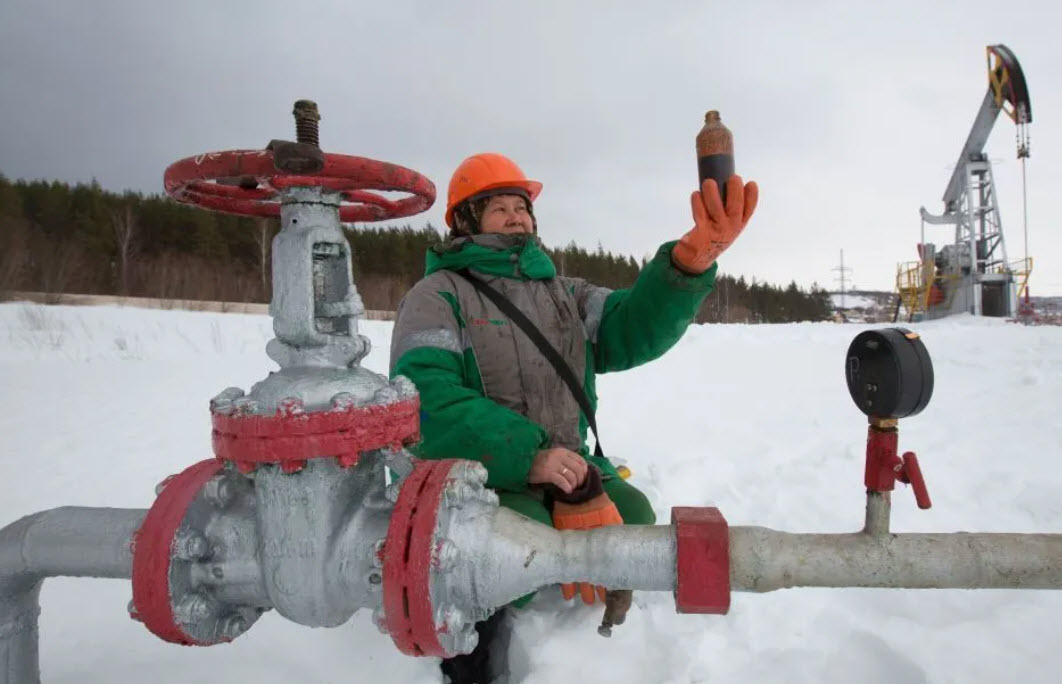
By T N Ashok The passage by the US Congress of the Lindsey O. Graham Sanctioning Russia and Iran Act of 2026 has confronted India with a problem that is simultaneously diplomatic, economic and strategic. The immediate headline is stark: the legislation creates a statutory pathway allowing President Donald Trump to impose tariffs of up […]

The article India’s Graham Act Dilemma: Energy Security Meets US Tariff Weapon appeared first on Latest India news, analysis and reports on Newspack by India Press Agency).

By Arun Srivastava It would be politically naive to look at the decision of Trinamool Congress chief Mamata Banerjee to stay out of the Nandigram by-poll purely as a calculated move to avoid a trap set by her opponents. Yet another significant move Mamata has made is of a tactical outreach by offering the Nandigram […]

The article Nandigram by-poll, Mamata Banerjee and West Bengal politics appeared first on Latest India news, analysis and reports on Newspack by India Press Agency).

Dr. Julie Xing, Global Board Chairman and CEO Discusses New Pathways to High-Quality Growth with Global Business Leaders

GUANGZHOU, CHINA – Media OutReach Newswire – 17 September 2026 – Lee Kum Kee Sauce (“Lee Kum Kee”), the century-old sauce brand and the only sauce and condiments brand among this year’s Forum partners, actively participated in the 2026 Fortune Global 500 Forum, held on September 16 in Guangzhou, China. Julie Xing, Ph.D., Global Board Chairman and Chief Executive Officer of Lee Kum Kee Sauce, was invited to speak at a panel discussion and to attend the Most Powerful Women (MPW) Breakfast, joining other leading global business leaders to explore the key pathways for enterprises to achieve sustainable growth.

Dr. Julie Xing, Global Board Chairman and Chief Executive Officer of Lee Kum Kee Sauce, speaks at the panel discussion of the 2026 Fortune Global 500 Forum, exchanging insights with industry leaders.

Under the theme “The New Growth Equation”, this year’s forum brought Dr. Xing and three other industry leaders, including Pingyi Huang, Senior Vice President of Shandong Weiqiao Pioneering Group Co., Ltd.; Weiming Xiang, Vice President, GE Aerospace and President, GE Aerospace Greater China; and John Qu, Senior Partner, McKinsey & Company, for a panel discussion titled “The Invisible Moat: Revaluing Soft Power and Sustainability”. Moderated by Wei Yue, Senior Editor at Fortune China, the discussion explored what truly constitutes long-term advantages that can withstand cycles amid rapid technological iteration and intensifying competition. Topics spanned brand trust and consumer mindshare in consumer goods, data insights and organizational transformation in the AI era, and the pathways and stages of globalization for Chinese enterprises.

During the panel discussion, Dr. Xing points out that a true moat is a 360-degree, multi-dimensional structure built on product quality, consumer experience, emotional value, and innovative scenarios. (Photo credit: Fortune Global 500 Forum)

“In an era where almost everything can be replicated, consumers’ mindshare and trust cannot,” Dr. Xing said during the discussion. “The real moat is not just the product itself — it is a 360-degree, multi-dimensional moat built on product quality, consumer experience, emotional value and innovative scenarios.” She added that AI is bringing disruptive changes from consumer insights to organizational structure, and that future-ready organizations must embrace a flatter structure powered by AI agents, redirecting freed-up resources toward strategic decision-making and long-term value creation.

On the topic of Chinese enterprise globalization, Dr. Xing shared a three-stage pathway from product export to local manufacturing to glocalization, emphasizing that true globalization means deeply understanding local consumers and serving local markets with local insights.
Dr. Julie Xing, named to the 2026 Fortune China MPW list, attends the MPW Breakfast and shares her thoughts on corporate competitiveness in the AI era. (Photo credit: Fortune Global 500 Forum)

During the Forum, Dr. Xing was invited to share her insights at the MPW Breakfast themed “Decision-Making Power in the Age of Efficiency”, where she joined leaders from across industries to discuss opportunities and challenges for businesses in the new era. She highlighted that while AI enhances operational efficiency, human judgment, leadership and long-termism remain more critical competitive advantages.

As a recipient of the 2026 Fortune China’s MPW list, Dr. Xing has earned this recognition for three consecutive years. Launched in 2010, the MPW list is regarded as one of the most representative rankings of women business leaders in China.

The Fortune Global 500 Forum this year brought together representatives from over 350 leading global companies, academic institutions, and business leaders worldwide. Discussions focused on topics including artificial intelligence, global supply chain transformation, sustainable development, and opportunities in emerging markets.

Looking ahead, Lee Kum Kee will continue to uphold its commitment to quality and innovation. Alongside driving business growth, the company will further deepen its sustainability practices, nurture talent, and enhance corporate governance, working with all stakeholders to forge new pathways to high-quality growth.
Hashtag: #LeeKumKee #LKK

The issuer is solely responsible for the content of this announcement.

About Lee Kum Kee Sauce

Lee Kum Kee Sauce is the global gateway to Asian culinary culture, dedicated to promoting Chinese culinary culture worldwide. Since 1888, it has brought people together over joyful reunions, shared traditions and memorable meals. Beloved by consumers and chefs alike, Lee Kum Kee Sauce’s range of more than 300 sauces and condiments sparks creativity in kitchens everywhere, inspiring professional and home chefs to experiment, create and delight. Headquartered in Hong Kong, China and serving over 100 countries and regions, Lee Kum Kee Sauce’s rich heritage, unwavering commitment to quality, sustainable practices and “Constant Entrepreneurship” combine to enable superior experiences through Asian cuisine for people worldwide. For more information, please visit .

About Fortune

Fortune is the premier global media company for global business leaders, built on a 96-year-old legacy of trusted, award-winning journalism. Independently owned, Fortune tells the story of business, spanning legacy companies to the world’s new generation of innovators. Fortune measures corporate performance through rigorous benchmarks, and holds companies accountable, in regions around the world. Its iconic rankings include Fortune 500, Fortune Global 500, Most Powerful Women, and World’s Most Admired Companies. Fortune builds world-class communities by convening industry thought leaders for exclusive summits and conferences, including the Fortune Global Forum, Fortune Brainstorm Tech, and Fortune Most Powerful Women. For more information, visit .

OpenAI chief Sam Altman, Anthropic chief Dario Amodei and xAI owner Elon Musk have publicly backed a slower pace for frontier artificial intelligence development, an unusual alignment among fierce rivals as safety concerns intensify and Altman says OpenAI will not pursue a stock-market listing in 2026. The convergence followed an essay by Amodei calling for the industry to “pace the frontier” rather than continue scaling advanced models […]

The Africa Women Innovation and Entrepreneurship Forum has named Rania Al-Mashat, Magda Wierzycka and Judy Dlamini as keynote speakers for its 2026 conference in Cape Town, setting the headline line-up for the annual gathering focused on women-led enterprise and economic participation. The two-day Conference, Expo and Awards will take place on November 10 and 11 at the Cape Town International Convention Centre, with organisers expecting more than […]

CoinEx will shut its cryptocurrency exchange on December 22 after nine years of operation, citing a prolonged market downturn, falling trading activity and mounting regulatory and compliance costs. The platform began an orderly wind-down on September 15, halting new user registrations and restricting several services, while allowing customers to withdraw assets until 02:00 UTC on December 22. CoinEx said all user assets were fully backed and that […]

Arabian Post Staff -Dubai The UAE has ranked first in a new global tax optimisation index assessing 48 jurisdictions for internationally mobile individuals, driven by its lack of personal income, wealth and inheritance taxes and a 5 per cent value-added tax. The study by Global Citizen Solutions’ Global Intelligence Unit gave the UAE a composite score of 82.7 out of 100, narrowly ahead of Antigua and Barbuda […]

Arabian Post Staff -Dubai Yemen’s Houthis claimed on Wednesday that they had shot down a Saudi F-15 fighter jet over Marib governorate, an assertion that would mark a significant escalation in the renewed fighting between the group and Saudi Arabia if independently confirmed. Houthi military spokesman Yahya Saree said the aircraft was hit while conducting operations over Marib and was brought down by what he described as […]

Nigeria’s fixed-income market appears to be crossing an important threshold. For much of the past two years, yields were principally shaped by a familiar combination of aggressive government borrowing, restrictive monetary policy and investors demanding substantial compensation for inflation and currency risk. That hierarchy is changing. AAG Capital argues that liquidity is becoming the more powerful force behind pricing, potentially pushing government yields lower even while fiscal […]

Greenlogue/AP Aldar Properties and Mubadala Investment Company have jointly acquired Masdar City Square for Dh918 million, expanding their income-generating real estate portfolio in Abu Dhabi’s Masdar City to Dh4.7 billion. The acquisition was completed through the real estate joint venture established by the two Abu Dhabi groups in 2024. Masdar City Square comprises more than 47,000 square metres of net leasable space across seven office buildings and […]

Washington’s rare purchase of Japanese yen has put currency intervention, US Treasury stability and global risk appetite into the same market equation, with implications extending to bitcoin and other digital assets. The US Treasury joined Japan on July 31 in buying yen to counter what Tokyo described as excessive volatility and disorderly moves in the currency. Japan’s Ministry of Finance confirmed the coordinated operation on August 3, […]

A member of the National Traders’ Welfare Board has urged the Centre to withdraw the new merchant discount rate on higher-value UPI payments, warning that the levy could impede business growth and increase costs for consumers.

Ramesh Khandelwal, who represents Madhya Pradesh on the government-constituted board, said on Wednesday that the 0.4 per cent merchant discount rate, or MDR, on UPI transactions above Rs 2,000 was at odds with the government’s stated emphasis on ease of doing business. The charge is due to take effect on October 15.

Khandelwal said he would raise the issue at the next meeting of the National Traders’ Welfare Board and sought an immediate rollback in the wider interests of merchants and customers. He argued that businesses operating on thin margins could struggle to absorb the additional transaction cost and that some of the burden might ultimately feed into retail prices.

The National Payments Corporation of India has said the revised framework will apply to specified person-to-merchant UPI payments above Rs 2,000. The fee will be borne by merchants rather than consumers and will be capped at Rs 300 for transactions of Rs 75,000 or more.

Person-to-person transfers, including payments between friends and family, will remain free. Merchant transactions up to Rs 2,000 will also continue without MDR, while small merchants receiving up to Rs 1 lakh a month through UPI QR payments are exempt under the framework.

Specified categories including railway tickets, fuel, agriculture, utilities, telecom, insurance, credit-card dues and tax payments will attract a lower flat charge of Rs 5 on eligible transactions above Rs 2,000. The government has also advised banks to ensure that merchants do not directly pass the MDR on to customers.

The opposition from Khandelwal adds to broader concern among traders over the return of merchant charges to UPI after more than six years of a zero-MDR regime. A nationwide LocalCircles survey of more than 32,000 merchants and businesses across 242 districts found that only 17 per cent of respondents were willing to bear a 0.4 per cent MDR on payments above Rs 2,000, while 41 per cent said they were unwilling to pay any such fee.

Merchants have raised particular concerns about sectors where high-value digital payments are common but margins are comparatively narrow. Textile traders in Surat, for example, said the levy could affect smaller businesses and workers who use UPI extensively for salaries, purchases and other routine transactions.

The policy change also marks a significant shift in the economics of the UPI ecosystem. Banks, payment applications and payment aggregators have long argued that the rapid expansion of transaction volumes requires greater spending on infrastructure, fraud prevention, cyber security and system capacity. The new MDR is intended to create a revenue stream to support those costs while keeping small-value and personal transfers outside the charging structure.

UPI has become the dominant retail digital payment system, with billions of transactions processed every month. That scale has increased the cost of maintaining the network even as users have become accustomed to making payments without a visible transaction fee.

The government’s approach seeks to confine the charge to larger commercial payments and to limit the exposure of small merchants and customers. Under the announced structure, a Rs 5,000 eligible merchant payment would carry an MDR of Rs 20, while a Rs 50,000 payment would cost the merchant Rs 200. Payments of Rs 75,000 and above would face the Rs 300 ceiling.

Khandelwal’s intervention puts the focus on whether traders will accept those costs or seek alternatives such as cash, bank transfers or other payment methods. His position is that even a small percentage charge, when repeated across large transaction volumes, can become a meaningful operating expense.

The dispute is likely to centre on merchant margins, enforcement and whether businesses can absorb the levy without changing prices or payment preferences. Traders also want clarity on how exemptions will be identified at the point of payment, particularly where a business accepts UPI through multiple bank accounts, QR codes or payment service providers across different locations.

Saudi warplanes struck Houthi positions across Yemen on Wednesday as the Iran-aligned movement pressed territorial gains along the Red Sea coast and widened attacks on Saudi targets, intensifying a new front in the Middle East war. Houthi military spokesman Yahya Saree said Saudi aircraft had carried out as many as 450 strikes during the week. Officials from Yemen’s internationally recognised government acknowledged that their forces and Saudi […]

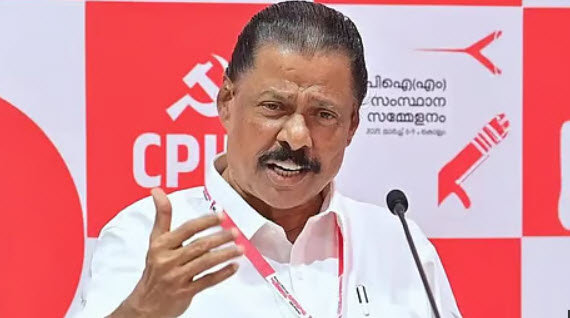
By P. Sreekumaran THIRUVANANTHAPURAM: A big salute to the CPI(M)’s lower-level leaders and the party cadres. For, it was their bold, open and trenchant criticism of the leadership which forced the party to go for a change for the better. The party’s central leadership, ably led by general secretary M. A. Baby, also deserves full […]

The article Kerala CPI-M in self-critical, corrective mode at three-day conclave appeared first on Latest India news, analysis and reports on Newspack by India Press Agency).

HONG KONG SAR – Media OutReach Newswire – 16 September 2026 –

Response by KK Chiu, International Director, Chief Executive, Greater China, Cushman & Wakefield:

Optimising the Housing Ladder and Improving Living Conditions

We welcome the Government’s commitment to increase housing supply, shorten the Composite Waiting Time for public rental housing and further strengthen the housing ladder. The adoption of a long-term housing supply framework comprising 40% public rental housing, 30% subsidised sale housing and 30% private housing, together with the delivery of approximately 196,000 public housing units over the next five years, will provide a clearer housing and homeownership pathway for different income groups.

We believe that increasing the supply of subsidised sale housing and enhancing the housing ladder will help more public housing tenants progress towards homeownership, accelerate housing mobility and enable families with genuine housing needs to gain access to public housing more quickly.

We support the Government’s efforts to increase public housing supply, continue the Light Public Housing programme and implement the Basic Housing Units regime in an orderly manner to phase out substandard subdivided units. This approach is consistent with our long-held view that increasing housing supply is the fundamental solution to improving inadequate housing conditions. With the Government targeting the resolution of substandard subdivided units in domestic buildings by 2030, we expect living conditions for grassroots households to improve progressively.

Urban Renewal Incentives

We support the Government’s more flexible approach to urban renewal, including transferable plot ratio arrangements and measures to unlock redevelopment potential. These initiatives will help enhance market participation, accelerate renewal in areas with pressing redevelopment needs and contribute to overall housing supply growth. We recommend the Government provide clearer guidance on application requirements and further streamline cross-departmental approval procedures to facilitate implementation.

Advancing the Yacht Economy

We welcome the Government’s continued efforts to promote the yacht economy. Beyond increasing marina berth supply and enhancing supporting infrastructure, we believe it is equally important to further facilitate cross-boundary initiatives, allowing greater mobility of yachts within the Greater Bay Area and fostering regional collaboration.

As more superyachts and high-net-worth visitors arrive in Hong Kong, demand is expected to rise across luxury tourism, hospitality, food and beverage, retail, marine services and waterfront commercial facilities, helping unlock the economic potential of Hong Kong’s coastline and island resources. At the same time, Hong Kong has the potential to develop a more comprehensive marine industry ecosystem encompassing yacht repair and maintenance, refitting services and specialised professional services. The development of a holistic marine services value chain will further strengthen Hong Kong’s competitiveness as a regional and international yachting hub.

Response by John Siu, Managing Director, Hong Kong, Cushman & Wakefield:

Planning Ahead for AI and Data Centre Infrastructure

We welcome the Government’s commitment to accelerate the development of the Sandy Ridge Data Facility Cluster, which is expected to provide computing power equivalent to 36 times Hong Kong’s current capacity by 2032, alongside a HK$1 billion injection into the Artificial Intelligence Subsidy Scheme. These initiatives will provide important support for the development of Hong Kong’s artificial intelligence and data centre sectors, further strengthening the city’s position as a regional digital and innovation hub.

However, with rapid advancements in artificial intelligence, large language models and cloud computing, demand for computing power is expected to grow significantly in the coming years. We believe that, in addition to planning data centre sites, the Government should proactively review long-term requirements for power supply, electricity grid capacity and related infrastructure. As AI adoption becomes more widespread, access to reliable power and supporting infrastructure will be a key factor in maintaining Hong Kong’s competitiveness as a technology and data centre hub.

We support the Government’s stated direction of pursuing “high-efficiency computing power, stable electricity supply and low-carbon transition”. Looking ahead, we recommend that the Government regularly review future demand for land, power supply and supporting infrastructure arising from the growth of artificial intelligence and data centre activities, particularly within the Northern Metropolis and other strategic development areas. A coordinated approach to computing, energy and digital infrastructure planning will help attract more data centre operators and technology companies to Hong Kong, while supporting the city’s long-term development as a regional hub for data and artificial intelligence.

Response to the Budget 2026/2027 by Rosanna Tang,Deputy Managing Director, Head of Research, Hong Kong, Cushman & Wakefield:

Clear Industry Positioning for the University Towns

We welcome the Government’s efforts under Hong Kong’s First Five-Year Plan to further define the positioning of the three university towns in the Northern Metropolis University Town, and are encouraged by its strategy to promote synergy among the university towns, the San Tin Technopole and surrounding industry parks. As the only city in the world with five universities ranked among the global top 100, Hong Kong possesses a strong foundation in higher education and research. At the same time, the San Tin Technopole is set to become a key innovation and technology hub. The complementary strengths of these two pillars, both geographically and strategically, provide a solid foundation for building a globally competitive innovation ecosystem in Hong Kong.

We are particularly encouraged by the Government’s emphasis on integrated industry-academia-research collaboration. The university towns should not be viewed merely as educational developments, but as strategic platforms for research commercialisation, international talent attraction and the cultivation of emerging industries. Closer collaboration among universities, research institutes, innovation and technology enterprises and industry parks will help establish a complete innovation value chain covering talent development, scientific research, technology transfer and industrial implementation.

In addition, the Plan proposes approximately 300 hectares of educational facilities as the core of the university towns, connected with adjacent strategic industry areas, distinctive conservation areas, sports and cultural facilities, and surrounding communities, bringing the overall development footprint to more than 1,000 hectares. Such a large-scale integrated education and industry development model is rare in Hong Kong’s urban planning history and clearly demonstrates the Government’s long-term vision of creating a knowledge-based city cluster and an international education hub in the Northern Metropolis.

Attracting Signature Industry Projects and Anchor Institutions to Enhance the Northern Metropolis’ Global Appeal

We welcome the Government’s efforts to establish differentiated industry positioning through the three university towns, while integrating key development nodes such as the San Tin Technopole, the Hong Kong Park of the Hetao Shenzhen-Hong Kong Science and Technology Innovation Co-operation Zone, the Hung Shui Kiu Industry Park and Ta Kwu Ling. This provides a clearer direction for industrial development in the Northern Metropolis and helps address long-standing market concerns regarding overlapping functions and unclear district positioning.

As highlighted in our previous research, we believe the next critical stage for the Northern Metropolis will be its ability to attract influential anchor institutions and leading enterprises. By bringing together universities, research institutes and industry leaders, Hong Kong can foster the clustering of businesses, talent and capital, gradually forming industry clusters with scale and international competitiveness. Hong Kong should also capitalise on its common law system, international financial centre status, intellectual property protection framework and global talent network by focusing on high value-added segments such as research and testing, intellectual property management, fundraising and listing activities, and international accreditation services. This will help Hong Kong establish an irreplaceable role within the Greater Bay Area industrial value chain.

Beyond strategic industries, we believe the Northern Metropolis could also explore internationally recognised and iconic industry projects to further enhance its global profile and attractiveness. For example, the Government may consider developing initiatives around new energy vehicles, smart mobility and advanced technologies, while exploring the feasibility of internationally recognised racing events, testing facilities or technology R&D platforms, such as those associated with Formula One. By leveraging motorsport-related economic activities and innovation-led development, Hong Kong could attract international automotive manufacturers, mobility technology companies and research institutions to establish regional headquarters, R&D centres or testing facilities in the city. This would in turn support the growth of engineering, intelligent transport, advanced manufacturing, tourism, hospitality, retail and convention and exhibition industries, further enriching the Northern Metropolis industrial ecosystem.

Accelerating Land Supply While Advancing Industries and Infrastructure in Parallel

We note that Hong Kong’s First Five-Year Plan proposes a significant acceleration in land and housing supply within the Northern Metropolis. Residential completions are expected to increase substantially from approximately 11,000 units during 2021/22 to 2025/26 to around 70,000 units during 2026/27 to 2030/31. Over the same period, the supply of “spade-ready sites” will rise from approximately 120 hectares to around 900 hectares, representing an increase of around 7.5 times. These figures demonstrate that the Northern Metropolis is transitioning from a planning and land formation phase to a new stage characterised by large-scale development, industrial implementation and population intake.

However, we believe the success of the Northern Metropolis should not be measured solely by the volume of land or housing delivered. As substantial residential, innovation and technology, and industrial sites come on stream, the focus should gradually shift from land supply to city-building. The Government should ensure the coordinated delivery of railway and cross-boundary infrastructure networks, industry parks, commercial facilities, public services and community amenities, while accelerating the introduction of leading enterprises and strategic industries to create sufficient, high-quality employment opportunities and achieve a genuine jobs-housing balance.

In particular, we believe the Northern Metropolis should be driven by industry-led development, with the San Tin Technopole, the Hetao Shenzhen-Hong Kong Science and Technology Innovation Co-operation Zone, the university towns and major industry parks serving as key growth engines. This would create a virtuous cycle in which industry attracts population, population supports consumption, and consumption drives urban development. Only through the coordinated growth of industry, talent, infrastructure and communities can the Northern Metropolis evolve from a large-scale land development project into a modern metropolitan district integrating industry, education, living and international exchange.

Response by Tom Ko, Executive Director, Head of Capital Markets, Hong Kong of Cushman & Wakefield:

New Opportunities for Student Accommodation Market

We welcome the Government’s initiatives to deepen Hong Kong’s development as an international hub for post-secondary education through the “Hong Kong: Your World-class Campus” campaign, expanded global student recruitment efforts and the extension of the Immigration Arrangements for Non-local Graduates pilot arrangement to graduates from Greater Bay Area campuses of Hong Kong universities. These initiatives will further enhance Hong Kong’s attractiveness to overseas students and talent while reinforcing the “Study in Hong Kong” brand.

We are encouraged by the continued progress of the Hostels in the City Scheme. The scheme has already received 41 confirmed applications, providing approximately 10,800 bed spaces and demonstrating strong market confidence in the long-term growth of Hong Kong’s education sector.

The scheme has opened up a new supply channel for converting commercial buildings into student accommodation. At a time when hotel conversion opportunities are becoming more limited as tourism continues to recover, it provides an alternative pathway for investors while helping unlock the value of underutilised commercial assets and meet rising demand for student housing. As the Government prepares to tender the first dedicated student hostel site, we believe purpose-built student accommodation will gradually emerge as a distinct and scalable asset class within Hong Kong’s real estate market.

To further increase supply, we recommend that the Government continue reviewing and refining approval procedures for student hostel conversions. Greater flexibility and streamlined processes, while maintaining appropriate safety and operating standards, would encourage wider market participation and support Hong Kong’s ambition to become a leading international education destination.

(Click here for high-res pictures)

Hashtag: #Cushman&Wakefield

The issuer is solely responsible for the content of this announcement.

About Cushman & Wakefield

Cushman & Wakefield (NYSE: CWK) is a leading global commercial real estate services firm for occupiers and investors with approximately 53,000 employees in over 350 offices and nearly 60 countries. In Greater China, a network of 23 offices serves local markets across the region. In 2025, the firm reported revenue of $10.3 billion across its core services of Valuation, Consulting, Project & Development Services, Capital Markets, Project & Occupier Services, Industrial & Logistics, Retail, and others. Built around the belief that Better never settles, the firm receives numerous industry and business accolades for its award-winning culture. For additional information, visit or follow us on LinkedIn ().

VISHNU RAJA
RYO YAMADA
HITORI GOTOH
IKUYO KITA