News related to
Years

BRICS leaders have placed development priorities of emerging economies at the centre of their New Delhi agenda, endorsing stronger representation for the Global South while advancing cooperation on trade, technology, finance and sustainable growth.

Chinese President Xi Jinping used the 18th BRICS Summit to argue that countries should pursue development paths suited to their own national conditions, a message that overlapped with the summit’s broader emphasis on policy autonomy, inclusive growth and reform of global institutions.

Addressing the first leaders’ session on September 12, Xi marked 20 years of BRICS cooperation and said members had strengthened themselves through unity while preserving independence in choosing their economic and social models. He described BRICS as an increasingly important platform for emerging markets and developing countries.

The summit’s New Delhi Declaration gave that theme wider institutional form. Leaders called for a more representative international order, greater participation by developing countries in global decision-making and reforms to institutions including the United Nations, World Trade Organization and international financial architecture.

The declaration also reflected the diversity within the expanded grouping. Rather than prescribing a single model of development, BRICS leaders stressed national circumstances, differing capacities and the need for policy space, particularly in areas such as energy transition, industrialisation and climate action. That approach broadly matched Xi’s argument that development strategies should reflect domestic conditions rather than external templates.

Xi sought to extend the idea into technology policy. He proposed an initiative on artificial intelligence-enabled industrialisation, deeper cooperation in research and applications, and stronger industrial and supply-chain links. China also promoted open-source AI collaboration and international platforms intended to improve access to emerging technologies for developing economies.

Other leaders framed similar priorities through their own national perspectives. Prime Minister Narendra Modi emphasised resilience, innovation, cooperation and sustainability, the four themes of India’s 2026 BRICS chairship, and called for solutions developed within the grouping to serve a wider range of developing countries. He also urged members to translate summit commitments into practical programmes.

BRICS members agreed on measures spanning digital cooperation, food and energy security, health, trade facilitation and the use of local currencies in cross-border transactions. The declaration supported stronger payment connectivity while stopping short of endorsing a common BRICS currency.

The economic agenda also underlined the practical test facing the grouping. Members backed use of national currencies in trade and investment, stronger cooperation through the New Development Bank and efforts to improve financial resilience. Such measures are intended to widen financing options for developing economies without committing members to a single monetary framework or common currency.

The expanded bloc now brings together countries with sharply different political systems, strategic alignments and economic structures. That breadth gives BRICS a larger claim to represent developing-country concerns, but it also limits how far members can converge on detailed policy prescriptions. Analysts have noted differences over whether the group should remain primarily an economic and development forum or assume a stronger geopolitical role.

Those tensions were visible alongside the development agenda. Leaders opposed protectionism and unilateral economic measures, supported a stronger multilateral trading system and called for reforms that would increase the voice of developing countries. At the same time, members avoided turning the summit into a unified ideological platform, relying instead on consensus language broad enough to accommodate competing interests.

Xi’s second summit intervention on September 13 placed a “people-centred” development philosophy within a wider call for Global South cooperation. He urged progress on the UN Sustainable Development Goals, improvements to global climate governance and a consensus-based framework for governing artificial intelligence.

China’s approach also carries strategic implications. Beijing has increasingly used BRICS and other multilateral forums to promote its views on development, sovereignty and global governance. Some members share its criticism of unequal representation in international institutions, while others remain cautious about allowing BRICS to become identified with any single country’s geopolitical agenda.

CoinEx has begun an orderly shutdown of its cryptocurrency exchange after nearly nine years, giving customers until December 22 to withdraw assets. The platform said new registrations and referral rewards would stop from September 15, while futures markets moved into reduce-only mode as the first stage of a phased wind-down. CoinEx attributed the decision to a prolonged downturn in digital-asset markets, contracting trading volumes and liquidity, and […]

Arabian Post Staff -Dubai New York-based software company Clay has raised $115 million in a Series D funding round led by Wellington Management, lifting its valuation to $7.1 billion as demand grows for artificial intelligence tools used by sales and marketing teams. The financing, announced on September 9, included participation from Sequoia Capital, StepStone Group, Andreessen Horowitz’s Perennial fund, Meritech Capital, DST Global, CapitalG, BoxGroup, Boldstart, Bloomberg […]

The Friedrich Naumann Foundation for Freedom awards its Freedom Prize 2026 to the courageous people of Iran who are fighting for freedom, civil rights and democracy.

POTSDAM, GERMANY – Newsaktuell – 15 September 2026 -The Friedrich Naumann Foundation for Freedom honors the Iranian people with its Freedom Prize 2026 on 7 November 2026 at St. Paul’s Church in Frankfurt. Reza Pahlavi will accept the award in a fiduciary capacity. Bijan Djir-Sarai, foreign policy spokesperson the Free Democratic Party (FDP), will deliver the laudatory address.

Since 2006, the Friedrich Naumann Foundation for Freedom has awarded the Freedom Prize every two years in recognition of outstanding commitment to the development of a liberal civil society, thereby contributing to strengthening values and goals of freedom around the world.

Steffen Saebisch, Chairman of the Board of the Friedrich Naumann Foundation for Freedom, comments: “The Friedrich Naumann Foundation for Freedom is deliberately awarding the Freedom Prize to the Iranian people rather than to an individual. We seek to honor the desire for freedom of the many hundreds of thousands of people who have risked their lives to overthrow the criminal mullah regime. We are pleased that Reza Pahlavi is accepting to receive the award in trust on behalf of the Iranian people until the day the prize can be presented to the freely elected representatives of Iran.”

The Friedrich Naumann Foundation for Freedom has asked Reza Pahlavi to receive the award in trust on behalf of the Iranian people, as he is the best-known personality of the Iranian opposition and is committed to the return to freedom and democracy in Iran. According to his own statements, he does not advocate one form of government over another, as long as it is democratic. He repeatedly emphasizes that the future political order of Iran must be decided by the Iranian people. According to many, he is currently also the most important political figure of identification for many Iranians (probably the majority) in Iran. In addition, Reza Pahlavi is committed to an end to Iranian-fueled conflicts in the Middle East, the normalization of Iran’s relations with its neighboring countries and, in particular, reconciliation with Israel.

The award goes to all those who stand up for their rights, for their own freedom and for a free and democratic society. It is dedicated in particular to those who lost their lives in the fight against a murderous regime and to those who were or are currently persecuted and imprisoned because of their commitment to freedom and democracy.

The award honors the courage of countless people who resist in their everyday lives: women who stand up for their right to self-determination; students who demand freedom of thought and learning; journalists who, despite intimidation and threats, stand up for press freedom; workers who fight for fair conditions and dignity; families who resist paternalism and the denial of individual choices in their conduct of life. Their strength lies not in individual actions, but in the perseverance of a society that refuses to be silenced.

For decades, the theocratic regime has ruled brutally and with great contempt for basic human rights. That is why it is all the more admirable that so many people in Iran are speaking out in various ways against the regime and in support of their freedom and fundamental rights, taking to the streets to make their voices heard. These extraordinarily courageous people deserve the full support of everyone for whom freedom, self-determination and democracy are the highest ideals.

By conferring the Freedom Prize on the Iranian people, the Foundation is deliberately drawing attention to the many unnamed people whose civic courage often remains unseen, but who form the basis of any peaceful change. The Freedom Prize is an expression of respect and solidarity – and at the same time an appeal to the international community to consistently protect the rights of all Iranians and to support their demands for freedom effectively.

The Iranian people stand for the hope that an open society can also emerge where freedom is suppressed. Their commitment reminds us: freedom is indivisible – and it begins with people who have the courage to stand up.

That is why our Foundation is committed to honoring freedom-loving people in Iran. By conferring the Freedom Prize on the Iranian people, the Foundation is sending a clear message to the public: The struggle for freedom and democracy has the full support of all liberals.

The issuer is solely responsible for the content of this announcement.

Eight major US banking trade groups have urged Senate leaders to tighten the CLARITY Act’s restrictions on stablecoin rewards, warning that a new regulatory “circuit breaker” would take effect only after damaging deposit outflows had already occurred. The warning came in a joint letter sent on Monday to Senate Majority Leader John Thune and Democratic Leader Chuck Schumer ahead of a procedural vote scheduled for Tuesday, September […]

Arabian Post Staff -Dubai Saudi building materials procurement platform BRKZ has raised $31 million in fresh capital, with Aramco-backed Wa’ed Ventures co-leading a $13 million Series B equity round alongside 500 Global. The financing also includes an $18 million growth-debt commitment from Stride Ventures, part of a previously announced $30 million venture-debt facility. BECO Capital and ANB Seed Fund participated in the equity round, BRKZ said on […]

Arabian Post Staff -Dubai Wall Street is preparing for the Federal Reserve to raise interest rates this week for the first time since July 2023, after another surge in oil prices and stubborn inflation pushed market expectations decisively towards tighter policy. Interest-rate futures on Monday assigned roughly a 90% probability to a quarter-point increase at the Federal Open Market Committee’s September 15-16 meeting. A move of 25 […]

Advertisements

By R Suryamurthy The 2026 New Delhi Declaration arrives at a revealing moment for BRICS: two decades after the grouping emerged as a shorthand for the rising economic weight of the Global South, it is no longer merely demanding a larger seat at the table of global governance, but is beginning to construct the institutional […]

The article BRICS is not building a new order, but a hedge against the old one appeared first on Latest India news, analysis and reports on Newspack by India Press Agency).

Arabian Post Staff -Dubai Ras Al Khaimah has retained its A/A-1 sovereign credit rating from S&P Global with a stable outlook for 2026, with the agency citing prudent fiscal management, strong buffers and broad economic stability over the next two to three years. S&P said the emirate’s fiscal position should remain resilient despite geopolitical uncertainty, supported by conservative budgeting, low debt and the government’s ability to adjust […]

Egypt and India have agreed to pursue concrete steps towards lifting bilateral trade to $12 billion, with President Abdel Fattah El-Sisi and Prime Minister Narendra Modi also discussing ways to expand investment ties during talks on the sidelines of the 18th BRICS Summit in New Delhi.

The leaders met on Sunday as Egypt pressed for faster progress on a trade goal first set during El-Sisi’s state visit to New Delhi in January 2023. Egypt’s presidency said the discussions covered measures to strengthen the strategic partnership, increase commerce and encourage more investment from India in sectors including manufacturing, technology, clean energy and the automotive industry.

El-Sisi stressed the importance of translating the economic relationship into projects and commercial flows capable of taking trade to the $12 billion target. The two sides also reviewed opportunities for companies from India to expand their presence in Egypt, which Cairo has promoted as a production and export base serving markets in Africa, the Middle East and Europe.

Bilateral merchandise trade stood at about $6.5 billion in the 2025-26 financial year, according to figures cited by India’s embassy in Cairo. That leaves the two countries seeking almost to double the current level if they are to reach the objective discussed by their leaders.

Investment formed a central part of the meeting. Egypt highlighted manufacturing, information technology, renewable and clean energy, and vehicle production as areas where it wants to attract additional capital. Cairo has also sought greater participation by overseas companies in the Suez Canal Economic Zone and other industrial centres as it works to raise exports and secure more foreign currency.

Modi and El-Sisi reviewed the broader strategic partnership and discussed cooperation in economic and commercial fields, along with regional and international developments. Their meeting came as New Delhi hosted the September 12-13 BRICS summit under the theme of resilience, innovation, cooperation and sustainability.

Egypt joined BRICS at the start of 2024 and has since used the grouping to widen economic links with major emerging economies. The New Delhi summit brought together an expanded bloc whose agenda included trade, finance, technology, energy, climate issues and greater use of national currencies in cross-border transactions.

The trade push also builds on institutional contacts between Cairo and New Delhi. Egypt’s Foreign Minister Badr Abdelatty said during BRICS ministerial meetings in May that the two countries wanted to raise bilateral trade to $12 billion over five years and strengthen cooperation in investment, technology and other economic sectors.

El-Sisi and Modi upgraded relations to a strategic partnership in 2023, creating a framework for closer coordination across trade, investment, defence, energy and political consultation. The latest talks focused more narrowly on turning the economic component of that partnership into measurable gains, particularly through private-sector investment and expanded market access.

Egypt has been courting manufacturers as it seeks to increase domestic production and exports, while companies from India already operate in industries including chemicals, textiles, food processing and manufacturing. Cairo’s investment campaign has emphasised projects that can supply the domestic market while using Egypt’s trade agreements and transport links to reach neighbouring regions.

The two leaders also discussed international and regional issues, according to Egypt’s presidency, without announcing a separate bilateral agreement during the meeting. Their talks were among a series of leader-level engagements held around the BRICS gathering as member states sought to advance economic cooperation alongside the summit’s wider diplomatic agenda.

For Egypt, the $12 billion goal provides a benchmark for a relationship that has expanded beyond traditional merchandise trade into investment-led cooperation. For India, stronger commercial ties with Egypt offer access to a major Arab and African market and to production locations close to the Suez Canal, one of the world’s principal shipping routes.

Arabian Post Staff -Dubai Oman has called for new liquefied natural gas export routes that can bypass the Strait of Hormuz, arguing that the months-long disruption to the Gulf’s main energy artery has exposed a critical weakness in global gas supply chains. Energy and Minerals Minister Salim bin Nasser Al Aufi told the Gastech conference in Bangkok on Monday that producers and consumers needed to examine infrastructure […]

Arabian Post Staff -Dubai QNB Group, working with Mastercard, has issued what it describes as Syria’s first internationally accepted payment card, extending the country’s return to cross-border card services after years of isolation from global payment networks. The new card is intended to allow eligible customers in Syria to make payments locally and abroad wherever Mastercard is accepted, subject to applicable regulatory and compliance requirements. The launch […]

Sweden’s centre-left opposition held a narrow lead early Monday after a national election that could determine whether the far-right Sweden Democrats enter government for the first time, leaving the final result dependent on remaining ballots. Preliminary figures from the Swedish Election Authority put the opposition bloc led by Social Democrat Magdalena Andersson ahead of Prime Minister Ulf Kristersson’s governing alliance, with the margin narrow enough to keep […]

Arabian Post Staff -Dubai Dubai Aerospace Enterprise has launched a $2.1 billion syndicated loan, adding another large bank financing to its funding programme as the aircraft lessor manages a substantially enlarged global fleet following major acquisitions this year. DAE is rated Baa2 by Moody’s and BBB by Fitch. The launch places the Dubai-based aviation services group back in the syndicated loan market less than six months after […]

Dubai’s Theatre of Digital Art will host Disco Experience by That ’70s Band on September 25, pairing live renditions of major 1970s dance hits with choreography, period-inspired costumes and the venue’s 360-degree digital projections. The show is scheduled to begin at 8pm, with doors opening at 7.30pm, according to the venue and ticketing information. Tickets are priced from Dh180, with several seating categories available. That ’70s Band […]

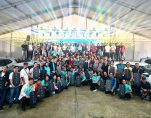
METRO MANILA, PHILIPPINES – Media OutReach Newswire – 13 September 2026 – Green GSM Philippines will host the Green GSM Platform Driver Partner Festival from September 12-14, 2026, expected to bring together up to 5,000 current and prospective Driver Partners, with the handover of 1,000 electric vehicles to Green Driver Partners as the centerpiece of the event at The Tent in Las Piñas City and Green GSM’s depots. The event aims to meet the growing demand for the green transition among Driver Partners and the public transport community, while marking a new step in the expansion of Green GSM’s service ecosystem in the Philippines.

Green GSM Philippines and Driver Partner community at the Green GSM Platform Driver Partner Day.

One of the highlights of the event is the handover of the first 1,000 electric vehicles to Green GSM Platform Driver Partners, expanding their business options and giving the driver community access to more suitable and efficient operating models. The addition of more vehicles will also help Green GSM strengthen its service capacity and better meet customers’ growing mobility needs, while contributing to the transition to green transportation in the Philippines.

Building on the cooperation between VinFast and Green GSM, the event will further introduce the vehicle rental model designed for Driver Partners, with an initial investment starting from just PHP 5,000, opening up additional business options and reducing barriers for drivers to participate in electric vehicle operations. The program reflects Green GSM’s “5 Green Promises” commitment, with a focus on providing better vehicles, suitable operating models, and sustainable livelihood opportunities for the Driver Partner community.

Under this partnership model, eligible Driver Partners can choose from VinFast electric vehicles such as the 4-seater Herio Green/VF 5 and the 7-seater Limo Green. These all-electric models are designed to meet the needs of service operations, offering smooth performance, ease of use, and optimized energy, maintenance, and servicing costs compared with gasoline vehicles in the same segment. Through support programs for pioneering partners, including free charging and VinFast warranty coverage of up to 7 years/160,000 km for the Limo Green and the VF 5/Herio Green, drivers can significantly reduce operating costs, improve business efficiency, and increase their long-term earnings.

As part of the event series, Green GSM continues to reaffirm its long-term commitment to the Green Driver Partner community in the Philippines, with a focus on enhancing service quality, professionalism, and community engagement through the launch of the Global Green GSM Driver Partner Community in the Philippines. The Community serves as a platform to connect and support Driver Partners, while strengthening engagement across the broader Green GSM ecosystem.

Through the Community, members will be able to share and learn from one another’s experiences in operating electric vehicles and providing mobility services, stay updated on the latest information and policies, and work together to build an increasingly professional, connected, and sustainable Driver Partner community.

Through the “Green GSM Platform Driver Partner Festival,” Green GSM is committed to supporting the sustainable development of the driver community in the Philippines, raising awareness and encouraging the green transition, while expanding livelihood opportunities for drivers to increase their income. At the event, Driver Partners will have the opportunity to test-drive VinFast electric vehicles, receive answers from Green GSM regarding electric vehicles, learn about relevant policies and benefits, and receive prompt assistance in completing the registration procedures required to transition to providing services with electric vehicles.

The event forms part of Green GSM’s development plan to strengthen its ability to meet market demand, with the goal of providing more vehicles, faster service, and progressively higher service quality in line with five-star standards, delivering a more satisfying experience for customers on every green journey.

Ms. Le Thi Thu Trang, CEO of Green GSM Philippines, said: “Through the Green GSM Platform Driver Partner Festival and Car Handover Week, Green GSM aims to accompany the driver community in its development and expansion while enhancing both quality and professionalism. We seek to create more livelihood opportunities for drivers to access optimized and efficient operating models that can significantly increase their earnings. At the same time, we expect the event to inspire and help lay the foundation for the next phase of green mobility development in the Philippines.”

Green GSM currently operates electric taxi services in key urban areas across the Philippines, including Metro Manila in Luzon, Central Visayas, and Mindanao. Its two service offerings – Green GSM Car and Green GSM Limo, a 7-seater Premium Taxi – cater to customers’ diverse mobility needs.

In addition to its direct operations, Green GSM is expanding partnerships with local taxi operators to accelerate the green transition through diverse, flexible, and cost-efficient partnership programs.

Going forward, Green GSM will continue improving service quality and expanding its network, consistent with its “5 Green Promises” commitment, with the aim of raising service standards and contributing to greener urban mobility in the Philippines./.

Hashtag: #GreenSM

The issuer is solely responsible for the content of this announcement.

Commerce and Industry Minister Piyush Goyal has urged BRICS members and partner countries to link payment systems, expand local-currency trade and open markets more widely as India presses for stronger economic integration across the grouping.

Addressing the BRICS Business Forum in New Delhi, Goyal said greater connectivity between national payment networks, including systems modelled on India’s Unified Payments Interface, could lower friction in cross-border commerce while supporting wider use of members’ own currencies.

His proposals were aligned with the economic agenda carried into the BRICS summit, where leaders backed further work on facilitating trade and investment settlements in local currencies and improving interoperability between payment systems. The approach stops short of creating a common BRICS currency and instead focuses on practical links between existing financial infrastructures.

BRICS leaders encouraged the New Development Bank to expand local-currency financing and diversify its funding base, complementing efforts to make cross-border payments faster, cheaper and safer. Officials have stressed that the objective is not a single currency, but greater use of national currencies where commercially practical and mutually agreed.

Goyal said UPI now handles more than 250 billion transactions annually and is accepted in 11 countries. He urged BRICS economies to explore linking their payment networks, promote trade in each other’s currencies and expand digital commerce alongside cooperation in emerging technologies.

The minister coupled the payments proposal with a call for easier market access. He said BRICS economies should open their markets to one another’s products, including raw materials and critical minerals, while simplifying regulatory procedures and accelerating the clearance of consignments.

Goyal argued that resilient supply chains required two-way trade rather than dependence on one-sided flows. He said non-tariff measures impose higher export costs than tariffs in 88 per cent of countries, making regulatory obstacles and customs delays a central concern for companies seeking to trade across BRICS markets.

The push comes as intra-BRICS commerce has expanded sharply. Commerce Secretary Rajesh Agrawal said trade among BRICS countries rose from $84 billion in 2003 to nearly $1.2 trillion in 2024, underscoring both the scale of the bloc’s market and the potential gains from reducing transaction and financing costs.

Agrawal also highlighted the global trade-finance gap, estimated at about $2.5 trillion, and said BRICS should improve access to affordable working capital for exporters. The Jaipur Consensus, agreed by BRICS trade ministers in August, provides a basis for examining a common mechanism to help smaller businesses obtain finance against confirmed orders and reliable payment records.

Trade ministers have also advanced a 2026-2030 action plan on global value chains, including BRICS Connect, business-to-business partnerships, digital trade documentation and possible platforms for strategic supply chains and investment promotion. These measures form part of a broader effort to make trade flows more diversified and less vulnerable to disruption.

Goyal identified agriculture, pharmaceuticals, engineering, electronics, automobiles, auto components and services as sectors with scope for deeper cooperation. He called for closer links between startup ecosystems and urged agri-tech companies to work jointly on solutions for farmers and food security.

Services trade was another priority. Goyal said BRICS members should make it easier for professionals to move across borders and work towards greater recognition of professional qualifications, arguing that services markets needed to become more genuinely accessible.

External Affairs Minister S. Jaishankar, speaking at the same forum, said supply-chain connectivity, trade facilitation and innovation had become central to BRICS cooperation. He also pointed to digital public infrastructure, artificial intelligence, financial technology and advanced manufacturing as areas offering opportunities alongside questions of standards, security and trust.

Russia’s Economic Development Minister Maxim Reshetnikov separately supported stronger alternative payment arrangements, saying the share of Russia’s export settlements conducted in dollars and euros had fallen sharply over the past three years. He also promoted work on a proposed BRICS grain exchange and closer cooperation among special economic zones.

Chinese President Xi Jinping and Prime Minister Narendra Modi agreed to strengthen economic, transport and people-to-people links while preserving peace along their disputed frontier, using Xi’s first visit to India in seven years to push forward a cautious repair of bilateral relations.

The two leaders met on Saturday on the sidelines of the BRICS summit in New Delhi and welcomed what the Prime Minister’s Office described as steady progress in ties since their meeting in Tianjin in August 2025. They agreed that relations should be approached from a strategic and long-term perspective and that differences should not be allowed to become disputes.

Modi said peace and tranquillity in border areas remained an essential basis for further development of the relationship. He called for both sides to observe existing agreements and understandings on frontier issues and said engagement should be guided by “mutual respect, mutual sensitivity and mutual interest”.

Both leaders committed themselves to seeking a fair, reasonable and mutually acceptable settlement of the boundary question, while expanding cooperation in areas where their interests converge. They also backed stronger cultural exchanges, business links and mobility, alongside efforts to resolve economic frictions.

Trade featured prominently in the discussions. The two sides agreed on the need to address concerns over the structural trade imbalance, supply-chain issues and access to each other’s markets. Bilateral trade reached a record $155.6 billion in 2025, while India’s imports from China were about $132 billion, leaving a large deficit that New Delhi has repeatedly sought to narrow.

The meeting marked Xi’s first trip to India since 2019, when he travelled to Tamil Nadu for an informal summit with Modi. Relations deteriorated sharply after the 2020 military confrontation in eastern Ladakh, including the Galwan Valley clash that killed 20 soldiers from India and four from China.

A disengagement agreement reached in October 2024 helped end key points of the military standoff and opened the way for higher-level political contacts. Modi and Xi then held a substantive bilateral meeting during the BRICS summit in Kazan that month, followed by another meeting in Tianjin in August 2025.

Diplomatic and military mechanisms have since been revived. At the 25th round of Special Representatives’ talks in Beijing on August 25, National Security Adviser Ajit Doval and China’s Wang Yi agreed on eight measures covering border management, military communication, boundary negotiations, trade routes, pilgrimage arrangements and cooperation on trans-border rivers.

Among those steps were two additional channels for military hotlines in the eastern and middle sectors and two additional meeting points for senior commanders. The two sides also agreed to continue work towards a framework for settling the boundary dispute and to use existing diplomatic and military channels to deal promptly with incidents along the Line of Actual Control.

Practical links have also begun returning. Direct passenger flights have resumed, business visa processing has improved and the Kailash Mansarovar pilgrimage has restarted, while three traditional border trading points have reopened. Those measures have not removed the deeper trust deficit, but they have restored channels that were largely frozen after 2020. Officials on both sides have indicated that further easing will depend on predictable border management and progress on commercial concerns over the coming months.

Despite the thaw, major differences remain. Large troop deployments continue along sections of the Himalayan frontier, and the boundary itself has not been settled. Economic engagement is also constrained by investment screening, regulatory barriers, visa delays and security concerns affecting sectors considered sensitive by either government.

Xi’s visit nevertheless gave both governments an opportunity to demonstrate that political contacts are becoming more regular after years of strained relations. Beijing has repeatedly said the two countries should view each other as partners rather than rivals, while New Delhi has maintained that normal relations require durable peace at the border.

The Reserve Bank of India has turned down Tata Sons’ request to surrender its core investment company registration, leaving the group holding company subject to rules that require upper-layer non-banking financial companies to list on stock exchanges.

The decision was conveyed in a letter dated September 11 after the central bank considered Tata Sons’ March 28, 2024 application and subsequent correspondence, people familiar with the matter said. The RBI advised the company to take the steps needed to comply fully with requirements applying to upper-layer NBFCs.

Tata Sons had sought to give up its Certificate of Registration after reducing debt and arguing that it could operate as an unregistered core investment company. Approval would have removed the principal regulatory basis for a compulsory market listing and allowed the company to remain privately held.

The rejection closes that route. RBI rules require an NBFC classified in the upper layer to list within three years of identification and subject it to tighter standards covering capital, governance, disclosures and risk management. Tata Sons was first placed in the upper layer in September 2022, making its original listing deadline September 2025.

The company remained unlisted while its deregistration request was under examination. When the RBI published its upper-layer list for 2024-25 in January 2025, it retained Tata Sons as a core investment company but said the inclusion was without prejudice to the outcome of the pending application.

The central bank subsequently revised its scale-based framework. Under the current approach, very large NBFCs face enhanced supervision, with an asset threshold of ₹1 trillion among the key criteria. Tata Sons’ standalone assets were about ₹1.75 trillion at the end of March 2025, placing it comfortably above that level. More recent accounts cited in corporate filings and regulatory discussions put the asset base above ₹2 trillion.

The company had repaid more than ₹200 billion of borrowings before seeking deregistration, a step intended to eliminate reliance on public funds, but the regulatory framework also considers circumstances in which access to funding may arise through group entities.

RBI Governor Sanjay Malhotra said in August that entities meeting the applicable criteria continued to fall within their respective regulatory layers. At that stage, Tata Sons’ application to surrender its core investment company registration had not been decided.

The latest communication therefore resolves the central regulatory question that had kept the company’s listing status uncertain. It does not, by itself, set out the structure, timing or size of any share sale, and Tata Sons has not publicly announced an IPO plan following the RBI decision.

A listing would have significant consequences for the ownership of Tata Sons, which sits at the centre of a group spanning technology, automobiles, steel, consumer businesses, airlines and financial services. Tata Trusts collectively hold roughly two-thirds of the company, giving the philanthropic trusts decisive influence over the holding company.

The Shapoorji Pallonji Group is the largest minority shareholder, with an interest of about 18 per cent. A market listing has long been important to the shareholder because it could create a transparent route for monetising part of that holding, while sections of Tata’s controlling shareholder base have favoured keeping Tata Sons private.

The regulatory decision arrives as Tata Sons is also dealing with leadership uncertainty. Chairman N Chandrasekaran has said he will not seek another term when his current tenure ends in February 2027, adding another major governance issue for the board and shareholders to address.

Tata Sons controls or holds substantial stakes in several listed companies, including Tata Consultancy Services, Tata Motors and Tata Steel, while also overseeing unlisted businesses. Its position as the group’s principal holding company means any listing would require extensive work on disclosures, capital structure, shareholder arrangements and regulatory compliance.

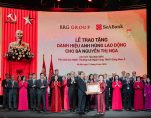
HANOI, VIETNAM – Media OutReach Newswire – 12 September 2026 – Entrepreneur Nguyen Thi Nga, Chairwoman of BRG Group and Standing Vice Chairwoman of SeABank’s Board of Directors, has been conferred the title of Labor Hero in the Renewal Period by General Secretary cum President To Lam, in recognition of her outstanding achievements in labor, creativity and service to the country. BRG Group and SeABank have each received a First-class Labor Medal for their outstanding contributions to the state budget and socio-economic development.

National Assembly Chairman Tran Thanh Man presents the Labor Hero title to entrepreneur Nguyen Thi Nga.

At the ceremony, National Assembly Chairman Tran Thanh Man congratulated Labor Hero Nguyen Thi Nga, BRG Group and SeABank, expressing his hope that they would continue advancing their vision, determination and pioneering spirit in developing and contributing to Vietnam’s economic growth.

In response, Labor Hero Nguyen Thi Nga affirmed: “We will transform these prestigious honors into concrete actions to expand international relations, promote sustainable development and create greater practical value for our country.”

BRG Group is Vietnam’s leading private multi-sector economic and services group, founded by entrepreneur Nguyen Thi Nga. The Group provides high-quality products across key sectors, including real estate, golf, hospitality and tourism, retail, banking and finance, manufacturing and trading, and services, currently employing more than 22,000 people nationwide.

BRG Group partners with Hilton, Marriott International, IHG, Accor and Sumitomo Corporation to bring international governance and service standards to Vietnam. The Group also pioneers in the golf industry with 10 international-standard golf courses, collaborating with world-leading names such as Greg Norman and Jack Nicklaus. BRG Group is also dedicated to preserving and promoting Chu Dau Ceramics, a nearly 600-year Vietnamese ceramic tradition with artifacts displayed at 46 museums across 32 countries.

SeABank is one of the earliest-established JSC banks in Vietnam. For many consecutive years, SeABank has been ranked among the best banks by the State Bank of Vietnam and among the Top 10 most reputable private JSC banks in Vietnam. SeABank currently serves more than 4.2 million customers and holds Ba3 credit ratings with a Positive outlook from Moody’s. To promote green finance and financial inclusion while supporting SMEs and women-owned businesses, SeABank has mobilized nearly US$1.1 billion in funding from international financial institutions, including IFC, DFC, AIIB, ADB and others.

Hashtag: #SeABank

The issuer is solely responsible for the content of this announcement.

By R Suryamurthy The latest BRICS financial agenda is ambitious enough to suggest that the grouping is no longer content merely to complain about the inequities of the global economic order; it wants to build pieces of an alternative. But ambition, particularly in a grouping as diverse as BRICS, is cheap. The harder question is […]

The article Brics has a financial roadmap: The hard part is making it work appeared first on Latest India news, analysis and reports on Newspack by India Press Agency).

Thailand has placed 17 strategic industrial projects worth 121 billion baht on an accelerated approval track while introducing added tax incentives intended to encourage technology-focused companies to list on domestic capital markets.

The Board of Investment approved the measures at a meeting chaired by Deputy Prime Minister and Finance Minister Ekniti Nitithanprapas, expanding the Thailand FastPass mechanism and launching a BOI-to-IPO programme with the Securities and Exchange Commission and the Stock Exchange of Thailand.

The 17 projects, submitted by 15 companies, are expected to create more than 14,000 jobs. Electronics and electrical manufacturers account for 10 projects worth 83.92 billion baht, close to 70 per cent of the latest batch, according to the BOI.

Two processed-food projects represent investment of 24.34 billion baht, two pet nutrition projects total 8.80 billion baht, and three precision machinery and automotive component projects amount to 4.36 billion baht.

The additions take the FastPass portfolio to 42 strategic projects across three rounds, with planned investment exceeding 344 billion baht and projected employment of more than 27,000 people. The scheme uses service-level agreements across state agencies to shorten licensing timelines, address approval bottlenecks and move projects more quickly from investment applications to construction and operation.

The first two FastPass rounds covered 25 projects from 23 companies worth more than 223 billion baht and were expected to generate over 13,000 jobs. All 25 have received investment-promotion approval, 19 have been issued investment certificates and 11 have completed all required permits within the prescribed service-level deadlines. Actual investment by projects in the programme has exceeded 21 billion baht.

Alongside the approval drive, the BOI said it was shifting the way it evaluates investment promotion, placing greater weight on realised investment, domestic value added, links with small and medium-sized suppliers, high-skilled employment, research and development, technology transfer and capital-market participation.

The policy overhaul also narrows support for activities that contribute limited local value, with the BOI saying incentives will increasingly favour advanced manufacturing, technology transfer and deeper integration of domestic vendors. New operational indicators will measure how many approved projects become investments and how quickly agencies process approvals.

Narit said the policy seeks to lift investment to 30 per cent of gross domestic product, support annual economic growth above 3 per cent and improve Thailand’s competitiveness ranking. Those objectives are government targets rather than assured outcomes and will depend on investment execution, productivity gains and economic conditions.

BOI secretary-general Narit Therdsteerasukdi said the agency was moving towards measuring the quality and domestic value generated by investment rather than focusing mainly on application volumes. He said the government wanted targeted measures in strategic sectors to support higher investment and productivity.

The BOI-to-IPO programme is designed to help promoted companies, particularly businesses in sectors classified as part of the New Economy, raise capital through Thailand’s exchanges and expand their operations. The SEC has shortened its IPO approval process, while the stock exchange is easing certain market-capitalisation and operating-track-record requirements for qualifying New Economy companies.

A special listing pathway is also being provided for companies promoted by the BOI or the Eastern Economic Corridor, linking investment incentives with access to equity financing.

Promoted companies that list on the Stock Exchange of Thailand, the Market for Alternative Investment or the LiVEx board can qualify for additional tax relief. SET-certified New Economy companies may receive up to three additional years of corporate income-tax exemption, or a 50 per cent reduction for five years.

Other promoted companies that list can receive up to two additional tax-free years, or a 50 per cent reduction in corporate income tax for three years, subject to the programme’s conditions.

Narit said the policy was intended to allow companies that had established successful operations in Thailand to finance new plants and production lines, invest in research and technology, and expand overseas while retaining Thailand as a business base.

The Pan-African Payment and Settlement System is shifting from network-building to large-scale adoption, targeting faster transaction growth as its reach extends across more than 30 African countries. PAPSS chief executive Mike Ogbalu III said the system’s next strategic phase, beginning in 2027, will focus on activating its expanding network, widening use among banks, fintechs and businesses, and developing high-volume payment corridors. The platform now connects 24 national […]

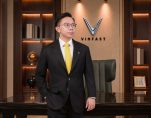
HANOI, VIETNAM – Media OutReach Newswire – 12 September 2026 – VinFast and GSM today officially announced new leadership appointments, succeeding Mr. Pham Nhat Vuong and Ms. Pham Thu Huong in senior global leadership roles. Accordingly, Mr. Pham Nhat Quan Anh, currently Chairman of VinFast Global, will concurrently assume the position of CEO of VinFast Global, succeeding Mr. Pham Nhat Vuong, while also taking on the roles of Chairman and CEO of VinFast Vietnam. Mr. Nguyen Quoc Tuan will assume the position of Chairman of GSM Global, succeeding Ms. Pham Thu Huong, while Mr. Pham Nhat Minh Hoang will become CEO of GSM Global and concurrently CEO of GSM Vietnam.

Mr. Pham Nhat Quan Anh, Chairman and CEO of VinFast Global, and Chairman and CEO of VinFast Vietnam.

The strengthening of the senior leadership teams at VinFast and GSM comes as Vingroup and companies across its ecosystem accelerate the training and development of in-house talent and transition leadership responsibilities to a younger generation of leaders, in line with the needs and growth trajectory of the system. In particular, both VinFast and GSM are entering a period of strong and decisive growth on a global scale.

Prior to assuming the position of Chief Executive Officer of VinFast Global from Mr. Pham Nhat Vuong, Mr. Pham Nhat Quan Anh was appointed Chairman of VinFast Global in May 2026. With his official assumption of the positions of Chairman and Chief Executive Officer of VinFast Global, as well as Chairman and Chief Executive Officer of VinFast Vietnam, Mr. Pham Nhat Quan Anh will hold ultimate and comprehensive responsibility for all of VinFast’s operations as the company enters a new phase of growth.

Following his official appointment, Mr. Pham Nhat Quan Anh commented: “I am deeply honored by the Board of Directors’ trust and confidence in entrusting me with the additional responsibility. Built on a strong foundation established over the years and supported by the growing confidence of customers across our markets, VinFast is well positioned to seize the significant opportunities ahead and further strengthen its role in advancing the global transition to sustainable mobility. I am committed to working closely with our talented team to uphold VinFast’s core values and continue delivering world-class products and the highest standards of service to customers around the world.”

Born in 1993, Mr. Pham Nhat Quan Anh holds a Bachelor’s degree from Singapore Management University and has held several key leadership positions at VinFast and other companies within the Vingroup ecosystem before being appointed Chairman of the Board of Directors of VinFast Auto Ltd. in May 2026. With extensive cross-sector management experience and a strategic operational mindset, he has made significant contributions to VinFast’s development, from building its foundation in the domestic market to expanding its presence internationally.

In addition to his senior leadership responsibilities at VinFast, Mr. Pham Nhat Quan Anh will continue to serve as Chief Executive Officer of VinMetal Trading and Production JSC, a high-quality steel manufacturer within the Vingroup ecosystem.

At GSM, Mr. Nguyen Quoc Tuan, currently Chief Executive Officer of GSM Global, has been appointed Chairman of GSM Global, succeeding Ms. Pham Thu Huong. Mr. Pham Nhat Minh Hoang will succeed Mr. Tuan as Chief Executive Officer of GSM Global and concurrently assume the position of Chief Executive Officer of GSM Vietnam.

Mr. Pham Nhat Minh Hoang, CEO of GSM Global and CEO of GSM Vietnam.

Born in 2000, Mr. Pham Nhat Minh Hoang has held senior leadership positions at VinFast, Green Future, VinSmart Future, GSM and other companies. In addition to his management responsibilities, he has directly invested in and serves as a major shareholder of several industrial, technology, energy and infrastructure companies within the Vingroup ecosystem, including VinSpeed, VinEnergo, VinMetal, VinVentures and robotics companies.

VinFast currently has a presence in 16 countries worldwide, including key markets such as Vietnam, India, Indonesia, the Philippines, Europe, the Middle East and North America. VinFast electric cars and electric motorcycles are currently manufactured at four facilities across three countries: Vietnam, Indonesia and India.

Alongside VinFast, GSM operates its green mobility brand, Green SM. The company currently operates in seven countries, including Vietnam, Laos, Indonesia, the Philippines, India, Kazakhstan and Denmark, and plans to expand into at least three additional markets within this year. GSM is also targeting a transition into a globally scaled public company with its shares listed on an international stock exchange.

The appointment of senior leadership is of particular importance, not only in addressing the more demanding requirements of the companies’ next phase of development, but also reflecting positive expectations for the future of VinFast and GSM as they continue their expansion into international markets.

Hashtag: #VinFast #GSM

The issuer is solely responsible for the content of this announcement.

VISHNU RAJA
RYO YAMADA
HITORI GOTOH
IKUYO KITA
Just in:
Reliance explores satellite manufacturing alliances for broadband network // Ukraine faces $32.6 billion financing gap amid legislative delays // Bora Group 3Q26: Revenue and Net Income Expansion Continues U.S. Manufacturing and Biologics Footprint Complete; Margin Expansion to Follow as Utilization Improves // Takaichi exchanges greetings with Chinese minister at Manila summit // China’s Recombinant Collagen Technology Wins the INPD Innovative Manufacturing Process Award // Broermann Medical Innovation Award 2026: Three Pioneers of Modern Obesity and Diabetes Therapies Honored // Over 360 electricity distribution professionals meet in Seoul for CIRED’s first major event in the Asia-Pacific region // Daughter resumes father’s eatery after fatal crash // Apple restores services after App Store and iCloud outages // Mubadala and Centerbridge secure £1.17bn Canaccord wealth agreement // UK privacy regulator flags GTA 6 phishing threats // ASEAN adopts binding pact on regional digital commerce // First Abu Dhabi Bank proposes AED15 billion share sale // Mangroves Documentary Premieres, Exploring How Cities and Wetlands Coexist // Dubai airport passenger traffic drops 28.1% amid conflict // Ratio cut mooted to end teachers stir // JPMorgan restores transactions after banking payments disruption // Galaxy Resort Presents: “Plácido Domingo & José Carreras: The Legends United Opera Gala” // Ayara Kamala Reveals a Refreshed Vision for Wellness in Phuket // Singapore outlines three AI initiatives for financial services //