Just in:
Ramayana triggers high tourist traffic to Jatayu rock centre // Galaxy Resort Presents: “Plácido Domingo & José Carreras: The Legends United Opera Gala” // Google identifies autonomous AI systems conducting vulnerability attacks // Microsoft restores cloud services after gateway software failure // Ukraine faces $32.6 billion financing gap amid legislative delays // Hong Kong schedules Gulf-Asia investment forum for 2027 // Mubadala and Centerbridge secure £1.17bn Canaccord wealth agreement // ADQ Aviation raises Abu Dhabi Aviation holding to 71.61% // Hong Kong International Airport Online Shop Winter Festive Offer // Regulator demands answers on controversial power deal // Bora Group 3Q26: Revenue and Net Income Expansion Continues U.S. Manufacturing and Biologics Footprint Complete; Margin Expansion to Follow as Utilization Improves // Danone expands consumer insight capabilities to accelerate nutrition innovation through Southeast Asia R&I Application Lab upgrade // Bitcoin rebounds after weekend plunge wipes billions from cryptocurrencies // Mexican journalists demand accountability after Acapulco reporter killed // Ayara Kamala Reveals a Refreshed Vision for Wellness in Phuket // EU levies definitive duties on five steel suppliers // Iran claims six-drone operation against US radar in Bahrain // Takaichi exchanges greetings with Chinese minister at Manila summit // Govt offers talks to protesting teachers after CM signal // Row over Sabarimala toilet disruption //

News related to
Years

Washington has imposed sanctions on more than 50 Iran-linked individuals, companies and vessels, targeting a currency exchange network and oil transport channels as pressure builds on Tehran to reach a deal and reopen the Strait of Hormuz. The measures announced on Tuesday place Amin Exchange, also known as Ebrahimi and Associates Partnership Company, at the centre of a renewed campaign against Iran’s financial and petroleum networks. The […]

Arabian Post Staff -Dubai Fujairah has become the first completed passenger station on Etihad Rail’s national network, marking a significant step towards the phased start of UAE passenger train operations later this year. The station, located in Madinat Al Hilal, spans 51,900 square metres and places the east coast emirate at the centre of the opening stage linking Fujairah with Dubai and Abu Dhabi. Adhraa Al Mansoori, […]

Dubai has unveiled the Museum of Digital Art at DIFC Zabeel District, positioning the planned five-floor institution as the region’s first museum dedicated to digital art and new technologies. Launched by Sheikha Latifa bint Mohammed bin Rashid Al Maktoum, Chairperson of Dubai Culture and Arts Authority, the project brings together Dubai Culture and Dubai International Financial Centre in a cultural partnership designed to expand the city’s role […]

Washington announced a $1.776 billion compensation fund for people who claim they were unfairly investigated or prosecuted, opening a politically charged new phase in President Donald Trump’s campaign against what his administration calls government “weaponisation”. The Justice Department said the Anti-Weaponization Fund would be created as part of a deal resolving Trump’s $10 billion lawsuit against the Internal Revenue Service over the unauthorised leak of his tax […]

Greenlogue/AP Global building emissions rose again in 2024, underscoring how rapid urban expansion is outpacing efficiency gains and slowing the sector’s shift towards a net-zero pathway. Operational emissions from buildings increased 1 per cent to 9.9 gigatonnes of carbon dioxide last year, even as energy intensity improved across parts of the global building stock. The latest Global Status Report for Buildings and Construction 2025-2026, released on 19 […]

Elon Musk has lost a major legal battle against OpenAI after a federal jury in Oakland, California, found that he waited too long to bring claims accusing the artificial intelligence company and its leaders of abandoning its founding mission. The unanimous verdict delivered a significant courtroom victory to OpenAI, chief executive Sam Altman, president Greg Brockman, the OpenAI Foundation and Microsoft, all of whom were targeted in […]

SINGAPORE – Media OutReach Newswire – 19 May 2026 – The ECOVACS WINBOT is the world’s #1 bestselling robotic window cleaner, according to data from global market intelligence firm IDC. ECOVACS Robotics, a global leader in service robotics, pioneered this category in 2011 with the WINBOT 5 Series – the world’s first robotic window cleaner. ECOVACS’ “Created for Ease” philosophy led it to create the WINBOT to bring consumers a smarter, safer, and easier way to tackle window cleaning.

ECOVACS WINBOT

Keeping the large windows and expansive views in today’s modern homes crystal-clear can be risky, inconvenient, and labor-intensive. Windows are constantly exposed to dust, pollution, and severe weather. For those in high-rise buildings, cleaning exterior windows can be dangerous and requires expensive professional help. Manual cleaning often leaves streaks. Scrubbing large glass surfaces can be tiring. These challenges lead many to avoid cleaning their windows altogether.
Robotic window cleaners like the ECOVACS WINBOT help solve these pain points so users can enjoy clear views from edge to edge with ease. Consumer demand for them is surging, according to IDC, which found that the ECOVACS WINBOT was the world’s #1 selling robotic window cleaner in 2025.1 It has also been #1 in China for three consecutive years according to data from All View Cloud (AVC).
A Trusted Choice for Effortless Cleaning
ECOVACS is a pioneer in service robotics. Knowing that consumers want effortless smart home cleaning solutions beyond floor cleaning, it began developing robotic window cleaners 15 years ago. Since the first WINBOT, the line has undergone seven generations of core upgrades. Leveraging its R&D strengths, ECOVACS continually sets new industry benchmarks with innovative technologies that make window cleaning safer, faster and more convenient for users.

ECOVACS WINBOT’s innovations for enhanced cleaning performance are designed to effectively remove dust, rain stains, and pollution buildup. For example, ECOVACS’ TruEdge Technology is designed to clean edges and hard-to-reach corners — ensuring spotless, crystal-clear views — and its Three-nozzle Wide-angle Spray Technology enables a deeper clean.

Other innovations enhance convenience. The all-in-one OMNI Station is a control panel, charger, stabilizer, and portable storage space for the WINBOT and its accessories. It is also equipped with a safety rope with a tensile strength of up to 100KG. Other WINBOT safety features include optimized suction power, anti-drop protection, edge detection, smart navigation for obstacle avoidance, and insurance protection.
The ECOVACS WINBOT’s sales performance is also impressive. In 2025, its sales volume exceeded 1 million units, with cumulative global sales surpassing 2.6 million units.

From entry-level to premium models, ECOVACS offers a diverse WINBOT product portfolio across different markets to meet users’ needs for taking care of various glass surfaces, including glass panels, balcony glass, and shower screens. The ECOVACS WINBOT family revolutionizes window cleaning with cutting-edge technologies that bring users a high-performance, convenient and hassle-free experience that ensures crystal-clear views with absolute peace-of-mind.

1https://www.idc.com/resource-center/blog/global-home-cleaning-robot-market-2025/

Hashtag: #ECOVACS

The issuer is solely responsible for the content of this announcement.

Advertisements
HONG KONG SAR – Media OutReach Newswire – 19 May 2026 – Real Asset Management (RAM) has hosted an exclusive Active Investor Plus investor briefing at its Hong Kong office, bringing together distribution partners, investors and representatives from Invest New Zealand, as offshore investor interest in New Zealand’s residency-by-investment pathway continues to strengthen.

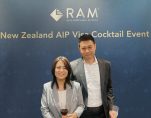
Agnes Liu, RAM Executive Director, Head of Client Advisory & Distribution - North Asia, and William Chai, RAM Managing Director.
Agnes Liu, RAM Executive Director, Head of Client Advisory & Distribution – North Asia, and William Chai, RAM Managing Director.

The event comes amid renewed momentum for New Zealand’s Active Investor Plus (AIP) Visa, following changes introduced in April 2025 to simplify the program and attract more international capital into the New Zealand economy. As of 5 May 2026, Immigration New Zealand had received 688 applications under the new settings, representing a potential total minimum investment of $4.015 billion.

The growing demand reflects a broader shift in global wealth movement, as high-net-worth individuals increasingly seek jurisdictions that offer political stability, transparent governance, quality of life and long-term optionality for their families and capital. For many investors, New Zealand’s appeal lies not only in residency access, but also in the opportunity to participate in investments that support business growth, innovation and economic resilience.

Mr Scott Wehl, Founder of RAM Group and Director of RAM New Zealand, said the Hong Kong briefing provided an important forum for partners and investors to better understand the investment and migration opportunities available through the AIP programme.

“New Zealand continues to attract strong interest from global investors seeking stability, transparency and long-term opportunity,” said Mr Wehl.

“Our Hong Kong briefing was designed to help partners and investors better understand the opportunities that the AIP program offers, and how RAM’s income-focused strategies can support both investor objectives and the broader New Zealand economy.”

Supporting New Zealand’s real economy through private credit

A key focus of the briefing was the role private credit can play in supporting New Zealand’s real economy. Private credit can help broaden the country’s business funding ecosystem by providing an additional source of secured, non-bank capital for businesses seeking funding for growth, working capital, expansion or other productive business needs.

The RAM New Zealand Credit Fund is an approved managed fund under the AIP Growth category and may also be included as part of a Balanced category investment portfolio. The Fund is designed to provide investors with consistent income and capital stability through exposure to secured, asset-backed credit investments in New Zealand.

Through this strategy, RAM seeks to direct offshore investor capital into productive domestic investment while maintaining a disciplined focus on risk management, downside protection and portfolio diversification.

“The RAM New Zealand Credit Fund provides an AIP-aligned investment pathway focused on secured, asset-backed New Zealand credit,” said Mr Wehl.

“For investors, the Fund is designed to deliver regular income and capital stability, with liquidity aligned to AIP investment timeframes. For New Zealand, the strategy can support the real economy by directing offshore investor capital into domestic private credit and helping provide secured lending to New Zealand businesses.”

RAM’s credit approach is centred on disciplined credit selection and robust portfolio construction. The firm’s New Zealand credit capability is supported by a highly experienced team with more than 200 years of combined credit market experience, guided by leading credit experts and senior leaders with deep knowledge of New Zealand’s financial markets.

“Our approach is grounded in strong governance, prudent credit assessment and a clear focus on capital preservation, which is particularly important for investors seeking stable, income-focused outcomes across market cycles,” said Mr Wehl.

In addition to the RAM New Zealand Credit Fund, RAM also offers the RAM New Zealand Bond Fund, which may be included as part of a Balanced category investment portfolio. The Fund invests in a portfolio of floating-rate, investment-grade bonds issued by established banks and New Zealand entities, and is designed to prioritise capital stability while generating regular income.

With a long-term commitment to New Zealand, RAM will continue to leverage its international presence, investment capability and experience in income-focused strategies to support global investors and contribute to the continued development and diversification of New Zealand’s capital markets.

Hashtag: #RAM

The issuer is solely responsible for the content of this announcement.

About Real Asset Management

Real Asset Management (RAM) is an alternative asset manager, providing investment solutions in Credit, Real Estate, and Private Equity markets, for institutions and wealthy families globally. RAM was founded in 2010 and has a pan-Asia presence of 7 offices in Auckland, Sydney, Melbourne, Brisbane, Shanghai, Hong Kong and Manila.

RAM provides more than 25 investment strategies and has a team of over 230 finance professionals managing over NZ$9.8bn in assets. RAM is registered as a financial services provider in New Zealand (FSP1011247). We also provide a global set of investment solutions through our group companies licensed by the Australian Securities and Investments Commission (AFSL 484263), and the Securities & Futures Commission of Hong Kong (CE BGL803).

For more information about RAM New Zealand, please visit

A chance photograph taken on a remote Queensland property has returned Ptilotus senarius to scientific view after 58 years without a confirmed record, turning a plant long treated as presumed extinct into a live test case for smartphone-powered biodiversity discovery. The small, slender shrub, a member of the Amaranthaceae family, had not been collected since 1967 and was known only from preserved herbarium specimens before horticulturalist and […]

At the close of the nomination period for the 2026 season, the VinFuture Prize, a global science and technology prize recorded 1,819 nominations from around the world, supported by a network of more than 17,000 nominators spanning 117 countries and territories.

HANOI, VIETNAM – Media OutReach Newswire – 18 May 2026 – After six seasons, the VinFuture Prize has not only expanded its influence in the international scientific community, but has also affirmed its position as a prestigious global prize dedicated to identifying and honoring breakthroughs with profound significance for the future of humanity.

H.E. Tran Thanh Man, Chairman of the National Assembly of Vietnam, presents the 2025 VinFuture Grand Prize to the scientists whose pioneering contributions led to the discovery and development of the HPV vaccine. In the 2026 season, nominations in medicine and healthcare continue to account for the largest share (38.4%), alongside other critical fields including environmental and earth sciences, energy, transportation and construction, as well as food and agriculture. Photo courtesy of VinFuture.


A Global Network Bringing Together More Than 17,000 Outstanding Minds

This year’s VinFuture nominations span a wide range of critical fields, including medicine and healthcare (38.4%), environmental and earth sciences (17%), energy, transportation, and construction (15%), food and agriculture (10.6%), as well as other scientific and technological disciplines (19%).

At the same time, the official nominator network of the VinFuture Prize has continued to expand substantially, reaching 17,154 nominators from 117 countries and territories across all five continents. This represents an increase of approximately 16% compared with the 2025 season and a more than fourteenfold expansion compared with the inaugural season in 2021. Moreover, the number of countries and territories represented within the nominator network has nearly doubled over the past six years.

Notably, 1,415 nominators for the 2026 VinFuture Prize are ranked among the world’s top 2% most-cited researchers. Nearly 8,000 experts are affiliated with leading universities, research institutes, and scientific organizations worldwide, including Australian Academy of Science, Massachusetts Institute of Technology (United States), Stanford University (United States), Harvard University (United States), University of California, Berkeley (United States), University of Oxford (United Kingdom), National University of Singapore (Singapore), Nanyang Technological University (Singapore), and Weizmann Institute of Science (Israel), among others.

Participating on a voluntary basis, these nominators play a vital role in identifying and recommending outstanding scientific innovations capable of generating meaningful and lasting improvements to the lives of billions of people worldwide. They also contribute significantly to extending the global reach of the VinFuture Prize within the international scientific community and promoting cross-border academic connections. Several distinguished nominators have traveled to Vietnam during the 2024 and 2025 VinFuture Sci-Tech Weeks to connect and exchange knowledge directly with the Vietnamese scientific community.

“The continued growth in both the number of nominations and our network of more than 17,000 nominators reflects the increasing confidence that leading scientists and prestigious institutions around the world place in VinFuture Prize and its mission to identify and honor scientific and technological innovations with meaningful impact on humanity. This momentum also reinforces our commitment to upholding rigorous and transparent evaluation standards, while advancing a long-term vision of connecting global intellect in pursuit of a better future for all,” said Dr. Thai-Ha Le, Managing Director of the VinFuture Foundation.

Following the conclusion of the nomination period, the Pre-Screening Committee will begin the process of evaluating and selecting the most outstanding scientific works for consideration by the VinFuture Prize Council in the final judging round, which is expected to continue through early September 2026. All nominations will undergo a rigorous multi-layer evaluation process based on stringent international standards to ensure the highest levels of scientific integrity, fairness, and transparency.

The core evaluation criteria include the degree of scientific and technological advancement, the potential for meaningful impact on human life, as well as the scale and long-term sustainability of the proposed innovations.

Vietnam’s Growing Imprint on the Global Innovation Map

After six seasons, the VinFuture Prize has firmly established its reputation and standing within the global science and technology landscape. Several VinFuture Laureates have subsequently been honored by some of the world’s most prestigious scientific awards, including the Nobel Prize, the Queen Elizabeth Prize for Engineering, and the Breakthrough Prize, demonstrating VinFuture’s ability to recognize, at an early stage, innovations with foundational significance for the future of humanity.

Notable examples include Prof. Omar Yaghi (2021 VinFuture Special Prize; 2025 Nobel Prize in Chemistry); Dr. Katalin Karikó and Prof. Drew Weissman (2021 VinFuture Grand Prize; 2023 Nobel Prize in Physiology or Medicine); Drs. Demis Hassabis and John Jumper (2022 VinFuture Special Prize; 2024 Nobel Prize in Chemistry); Prof. Geoffrey Hinton (2024 VinFuture Grand Prize; 2024 Nobel Prize in Physics); as well as Prof. Yoshua Bengio, Prof. Yann LeCun, Prof. Geoffrey Hinton, Mr. Jensen Huang, and Prof. Fei-Fei Li (2024 VinFuture Grand Prize; 2025 Queen Elizabeth Prize for Engineering). Additional examples include Prof. Daniel Drucker, Prof. Joel Habener, Prof. Jens Juul Holst, and Assoc. Prof. Svetlana Mojsov (2023 VinFuture Special Prize), who later received the 2025 Breakthrough Prize.

Beyond recognizing transformative scientific achievements, VinFuture has become a point of convergence for knowledge, collaboration, and the aspiration to serve humanity. Over the course of six seasons, VinFuture has contributed to shaping a more open, connected, and inspiring scientific ecosystem, while positioning Vietnam as an increasingly important destination on the global innovation map.

Hashtag: #VinFuture

The issuer is solely responsible for the content of this announcement.

Arabian Gulf Automobiles and Equipment has launched Deepal, Changan’s new energy vehicle brand, in Oman, bringing three range-extended electric SUVs to a market preparing for wider adoption of cleaner transport. The Muscat launch introduced the Deepal S05, S07 and G318, positioning the brand in a fast-growing segment between conventional petrol vehicles and fully battery-powered electric models. The line-up uses range-extended electric vehicle technology, allowing daily electric driving […]

Paper Werewolf has expanded its campaign against Russian industrial, financial and transport organisations, using phishing emails, fake Adobe software updates and the EchoGather remote access trojan to deepen access inside targeted networks. The Russian-language threat cluster, also tracked as GOFFEE, was active in the March-April 2026 window with a toolset that shows a clear shift from conventional phishing toward layered intrusion chains. The latest campaign begins with […]

By Nantoo Banerjee India’s continuous hesitancy to curb the retail oil consumption pattern despite a worldwide surge in fuel prices is inexplicable, if not unacceptable. The government, the biggest benefactor of large domestic fuel use by way of imposition of levies close to 50 percent of the retail oil prices, is not prepared to ration […]

The article India Needs To Curb Oil Consumption appeared first on Latest India news, analysis and reports on Newspack by India Press Agency).

Japan’s government bond market has become the centre of a global debt selloff as higher oil prices, stubborn inflation and expectations of tighter monetary policy push borrowing costs across major economies to levels not seen for years.

The sharpest pressure has fallen on long-dated Japanese government bonds, where the 30-year yield has climbed above 4 per cent, reaching a record since the maturity was introduced in 1999. The 10-year yield has also risen to around 2.8 per cent, its highest level in nearly three decades, marking a decisive break from the low-yield era that defined Japan’s markets for much of the post-deflation period.

The selloff has rippled across global debt markets. US Treasury yields have moved higher, with the 30-year yield testing levels above 5 per cent, while Germany’s benchmark bonds and UK gilts have also weakened. Bond prices move inversely to yields, meaning the surge in yields reflects heavy selling by investors who are demanding greater compensation for inflation, fiscal risk and uncertain central bank policy.

Rising oil prices are the immediate catalyst. Brent crude has moved above $100 a barrel as geopolitical tensions in the Middle East disrupt energy flows and heighten concerns over import costs for major economies. For Japan, which relies heavily on imported energy, the oil shock carries a particularly direct inflationary threat. A weaker yen has amplified the impact, increasing the local-currency cost of fuel, food and other imported goods.

Japan’s inflation backdrop has become more difficult for policymakers. Consumer prices have remained above the Bank of Japan’s 2 per cent target for an extended period, while corporate goods prices have shown persistent pressure from energy, raw materials and logistics costs. Investors are now pricing in a greater chance that the central bank will raise interest rates again, possibly as early as its next policy meetings, after years of extraordinary accommodation.

Fiscal concerns are adding to the strain. Tokyo is preparing additional spending to cushion households and businesses from rising fuel and utility costs, but fresh borrowing could worsen concerns over debt sustainability. Japan’s public debt is already among the highest in the developed world, making long-term bond investors more sensitive to any increase in issuance. The prospect of larger supply has hit demand for longer maturities, where insurers, pension funds and banks traditionally played a stabilising role.

The Bank of Japan faces a delicate balance. Raising rates too quickly could unsettle growth and worsen losses in bond portfolios held by financial institutions. Moving too slowly could allow inflation expectations to become entrenched and place further pressure on the yen. The central bank has already scaled back its dominance of the bond market compared with the period of yield-curve control, leaving prices more exposed to market forces.

Global investors are also reassessing the role of government bonds as a safe asset. During earlier market shocks, US Treasuries, German Bunds and Japanese government bonds often rallied as investors sought protection. The current episode is different because the shock is inflationary rather than deflationary. Higher energy prices reduce household purchasing power, raise business costs and complicate the task of central banks that had hoped to cut rates or keep policy steady.

The selloff has implications beyond financial markets. Higher sovereign yields raise funding costs for governments already facing pressure from defence spending, ageing populations, energy subsidies and climate-related investment. They also affect mortgage rates, corporate borrowing and equity valuations. Technology shares and other growth-sensitive assets tend to come under pressure when long-term yields climb, because future earnings are discounted more heavily.

Japan’s shift is especially important because its low yields long encouraged domestic investors to buy overseas bonds. As yields rise at home, insurers and pension funds have less incentive to take currency risk abroad, potentially reducing demand for US and European debt. That repatriation effect could intensify volatility in global markets if Japanese institutions continue to rebalance portfolios.

HONG KONG SAR – Media OutReach Newswire – 18 May 2026 – Doremi3babies is one of Hong Kong’s most comprehensive retailers of Caraz baby playmats and playpens, with years of accumulated experience serving local families and maintaining quality standards for every product carried. Observing that size mismatches are among the most common issues parents encounter after purchase, Doremi3babies has drawn on its local service experience to compile a practical size selection reference based on actual Hong Kong residential floor areas, helping parents identify the most suitable mat size and playpen configuration for their home.

Space Is Limited in Hong Kong Homes — Choosing the Right Size Matters
According to Hong Kong’s Census and Statistics Department 2021 Population Census, the median per capita residential floor area stands at approximately 172 sq ft. The latest Housing Bureau supply statistics (2025) show that 88% of private residential units currently in the development pipeline have a usable area of less than 70 square metres (approximately 753 sq ft). In a space-constrained home, a playmat that’s even slightly misjudged in size can disrupt daily living — making preparation before purchase all the more important.

4 Steps to Choosing the Right Size
The following steps help parents confirm their needs before buying, reducing the chance of a mismatch after the mat arrives home:
1. Measure the net usable area: Measure the actual spot where the mat will be placed — deducting furniture and walkways from the total floor space, not the overall unit size.
2. Consider your baby’s developmental stage: Crawling infants (approx. 4–10 months) need continuous flat surface area; toddlers (approx. 10–18 months) benefit more from playpen boundaries to define a safe zone.
3. Decide whether to pair with a playpen: If combining a mat with a playpen, calculate the usable area inside the playpen — not the mat’s outer dimensions.
4. Choose the style based on your confirmed space: Once space constraints are clear, foldable or modular designs help maximise what’s available.

A General Size Reference Based on Unit Floor Area
One of the most common mistakes Hong Kong parents make when buying a playmat is estimating size based on the total unit area, rather than the net usable floor space after accounting for furniture. The gap between the two is often what leads to a mismatch once the mat arrives home.

Caraz playmats, for example, offer a range from compact sizes suited to a corner of a single room, through to larger formats that can cover the main activity zone of a living area. Using net usable floor area as the starting point, the general reference is as follows:
* Under 200 sq ft: A mat around 70×140cm is a common starting point. The foldable design is especially practical — it can be stored upright against a wall when not in use, freeing up the living space.
* 300–400 sq ft: Mid-size options such as 120×160cm to 140×200cm are the most common choice among Hong Kong families, balancing play space with storage flexibility.
* 400 sq ft and above: Larger formats such as 160×200cm or above give infants a dedicated zone for crawling and first steps without compromising daily living.

If a playpen is being added alongside the mat, the playpen’s overall outer footprint needs to be estimated separately — it cannot be read directly from the mat dimensions alone.

Three Practical Directions for Compact Homes
For families with limited floor area, these approaches are worth considering:
* Choose a foldable mat: Fold it away when not in use to free up everyday living space.
* Consider a modular playpen system: Adjustable configurations adapt to irregular room layouts without being locked into a fixed size.
* Base your size decision on net usable area: The right standard is whether it fits and gets used — not simply bigger is better.

Hashtag: #Doremi3babies

The issuer is solely responsible for the content of this announcement.

About Doremi3babies

Founded in Hong Kong in 2017, Doremi3babies is Hong Kong’s most comprehensive Caraz retailer, offering the full product range — playmats, playpens, and baby houses — with new arrivals in sync with the Korean market. The company has served over 6,000 families and delivered more than 16,000 baby products, with every item personally tested by the store owner before introduction. All Caraz products are manufactured in Korea and meet KC and CE international safety certification standards.
For more playmat size recommendations, visit the.

Tech Giants Microsoft, Adobe, BytePlus, HP, and iFLYTEK Headline the Event; Over 10,000 Professional Visits Expected to Bridge the “Deployment Gap” through High-Impact Exhibitions, Strategic Summits, and Hands-on Skills Labs

HONG KONG SAR – Media OutReach Newswire – 18 May 2026 – 2026 represents a definitive turning point as Artificial Intelligence transitions from experimental “pilot” phases to industrialized, enterprise-scale implementation. AI+ Power 2026, Hong Kong’s premier exhibition & conference for commercial AI applications, returns to the Hong Kong Convention and Exhibition Centre (HKCEC) from 4-5 Jun 2026. Now in its sixth edition, the event actively responds to the HKSAR Government’s “AI+” development strategy. Under the theme “AI+ Power in Action,” the expo focuses on how AI creates value and unlocks new market opportunities for enterprises. By showcasing a diverse array of AI solutions on-site, the event empowers businesses to remain competitive in an increasingly challenging business environment.

The 2026 Enterprise Imperative: Beyond Prompting – Agentic AI Enters the Era of Autonomous Execution

For today’s business leaders, the challenge is no longer understanding AI — it is choosing the right tools and applying them effectively. According to Gartner’s 2026 Strategic Trends, the enterprise landscape has moved beyond the initial GenAI hype into the era of Agentic AI — autonomous systems capable of independent decision-making and workflow execution. While most enterprises have begun AI deployment, the ultimate differentiator for 2026 is achieving the transition from “conversation to execution” and securing a measurable Return on Investment (ROI).

Culsin Li, Founder and Chief Visionary Officer of AI+ Power, noted: “In 2026, the most critical executive skill is becoming leaders who can strategically direct AI adoption. With AI applications entering the ‘no-code’ era, technical implementation is no longer the primary hurdle; the focus for leadership returns to the core of business: identifying operational pain points and defining strategic needs. AI+ Power 2026 serves as a premier platform where attendees can gain insights from expert-led case studies and source ready-to-deploy AI solutions to immediately resolve bottlenecks. We provide a comprehensive one-stop ecosystem, enabling decision-makers to transition seamlessly from strategic inspiration to procurement and final implementation.”

AI+ Power 2026 features six high-impact pillars designed to accelerate AI adoption:

Pillar 1: AI+ Summit – Strategic Roadmaps for Vertical Transformation

The AI+ Summit features a formidable roster of global pioneers, including Microsoft, HP, Adobe, BytePlus, and iFLYTEK, who will dissect the shift from smart office revolutions to autonomous AI agents.

To address the critical pillars of corporate governance and financial practice, the Summit has curated two flagship strategic forums:

  • CEO Panel: AI Transformation for Hong Kong’s Legacy Leaders — Moderated by Dr. Toa Charm, Chairman of the Data and AI Literacy Association (DALA), this session explores how C-suites navigate AI strategy and talent governance while balancing technological innovation with business value creation. It also examines how leaders can accelerate the scalable adoption of AI across Hong Kong, the Greater Bay Area (GBA), and Asia to ensure AI visions translate into tangible organizational impact.
  • FinTech 2.0: From Future of Work to Agentic Workflows — Moderated by Mr. Peter Koo, Convenor, FinTech Specialist Group of Hong Kong Computer Society. Partners from the “Big 4” (EY, Deloitte, KPMG, and PwC) will share the stage for a rare joint session to dismantle how Agentic AI automates KYC and risk monitoring, and explores “Data-to-Revenue” pathways. The forum will also address the convergence of AI with Tokenisation, Stablecoins, Digital Assets, and RegTech.

The Summit will also cover MarTech, enterprise productivity, retail, and education, featuring leaders from MTR Lab, HSBC, Maxim’s Group, Hong Yip, HKT, PrimeCredit, and Logitech, alongside academic representatives.

Pillar 2: AI+ Expo – The Modern Workplace & Smart Living Revolution

Industry leaders Canon HK, Logitech, Shure, and iFLYTEK will demonstrate how AI-driven hardware eliminates operational friction, allowing teams to focus on core creativity.

Pillar 3: AI+ Skills Lab — Zero-Barrier Mastery for Decision Makers

To address the enterprise talent gap, the AI+ Skills Lab has been launched this year to provide hands-on, practical training. Led by a team of veteran practitioners including Arik Chan from GDG HK (CISSP-certified), Frankie Wu from GDG HK and also Founder of Nexamind AI, and Roland Leung, Director of Datality Lab, the lab is tailor-made for non-technical decision-makers. It emphasizes a “small-class, laptop-ready” approach; featured highlights include OSINT-driven fraud detection using Google Gemini, the deployment of privacy-safe enterprise AI agents, and rapid AI-powered commercial video creation using Seedance 2.0 and KlingAI 3.0. This practical experience empowers participants to “Learn Today, Apply Tomorrow,” transforming AI into real-world productivity.

Pillar 4: Embodied AI & Robotics — The First “Smart Living Experience Zone”

Breaking away from pure software solutions, the event debuts the first “Smart Living Experience Zone,” presenting the physical manifestation of AI integrated with robotics in environmental management, medical rehabilitation, and gerontech. Highlights include environmental robots capable of automatic waste classification and autonomous cleaning; medical assistant systems for physical therapy and ward delivery; and non-invasive “passive fall detection” care solutions. These innovations are setting new benchmarks for automated operations across the property management, healthcare, and social welfare sectors.

Pillar 5: AI Strategic Advisory Hub & Industry Networking — Unlocking New Business Opprtunities

The event proudly presents the “AI Strategic Advisory Hub,” a flagship initiative designed to disrupt the traditional one-way nature of business matching. Technical experts from leading providers will transform into “Consultants”, offering decision-makers immediate diagnostics and tailored deployment advice. Navigating a vast array of technical choices can be overwhelming; this “Advisory Hub” is dedicated to helping enterprises pinpoint high-ROI implementation pathways, ensuring that technology investments translate directly into tangible profitability. Furthermore, the two-day event features exclusive industry networking sessions to foster deep dialogue and strategic exchanges between technology pioneers and enterprise leaders.

Pillar 6: AI+ Power Awards 2026 — Recognizing the Future Leaders of Commercial AI

The AI+ Power Awards 2026, a highly anticipated flagship event, returns to honor the region’s most innovative, impactful, and commercially viable AI applications. This year has seen an unprecedented level of competition, and the first-round finalists have officially been announced. Shortlisted organizations in key categories such as “AI+ in Business” and “AI+ Project of the Year” include industry pioneers such as Maxim’s Group, CITIC Telecom CPC, iFLYTEK, ASTRI, and Lingnan University. The final winners will be grandly unveiled in late May.

Capturing the Momentum of AI Scaling: Building a New Era for Innovation

AI+ Power 2026 responds proactively to the HKSAR Government’s “AI+” strategy, embodying the core spirit of “AI+ Power in Action.” We are committed to transforming policy vision into commercial reality, helping enterprises successfully transition from AI “observers” to “active practitioners.”

Through high-level summit exchanges, immersive exhibition experiences, step-by-step practical training, and prestigious award recognition, we empower every attendee to seize first-mover advantages in the age of AI scaling. Together, we are driving Hong Kong’s evolution into the premier Asia-Pacific hub for commercial AI innovation.

Secure Your Advantage: Register Now

Online pre-registration for AI+ Power 2026 is now officially open. Trade visitors and industry professionals are invited to register for free admission and pre-book seats for keynote summits and hands-on Skills Lab workshops. Please note that workshop seating is limited and available on a first-come, first-served basis.

Register Now: https://bit.ly/3R9W3fC

Event Details:

  • Date: 4-5 June 2026 (Thursday–Friday)
  • Venue: Hall 5FG, Hong Kong Convention and Exhibition Centre (HKCEC)
  • Admission: Free for trade visitors (Pre-registration required; group registration available)
  • Official Website: www.aipluspower.com

Hashtag: #AIPower #AIPower2026

The issuer is solely responsible for the content of this announcement.

About AI+ Power’s Organizer – Baobab Tree Event Management Co., Ltd.

Baobab Tree Event Management Co., Ltd. (BTE) is a Hong Kong–based event and exhibition organizer founded in 2011, with offices in Guangzhou, Shanghai, and Beijing. With over 20 years of industry experience, the company specializes in event management, exhibition operations, marketing, sales, and on-site delivery.

The company manages the delivery of Hong Kong’s signature mega events, including the Hong Kong Chinese New Year Parade and the Hong Kong Wine & Dine Festival, both organized by the Hong Kong Tourism Board, while also developing and managing professional exhibitions across multiple industry sectors such as AI and digital technology, Food & Beverage, Veterinary, Non-Woven, Professional AV, and PCB & electronics manufacturing, serving regional and international markets.

Committed to sustainable development, the company integrates ESG principles into its operations and has completed an independent ESG assessment, achieving Level 1 status under an assessment framework developed by the The University of Hong Kong and ESG Development Co., Ltd.

Official website:

Scientists have found radioactive iron from exploded stars locked inside Antarctic ice, offering fresh evidence that Earth is moving through a cloud of ancient supernova debris while the material continues to fall on the planet today. The findings, published on May 13 in Physical Review Letters, centre on traces of iron-60, a rare isotope produced inside massive stars and scattered across space when they die in supernova […]

Washington’s defence establishment is confronting a sharper supply-chain warning after President Donald Trump left Beijing claiming major trade progress, while China kept key controls on materials vital to US weapons, aircraft, satellites and advanced electronics. Trump ended his two-day visit by declaring that he had reached “fantastic trade deals” with President Xi Jinping, saying the understandings would benefit both economies. The commercial package pointed to tariff discussions, […]

Samsung Electronics and its largest labour union will return to negotiations on Monday in a high-stakes attempt to prevent an 18-day strike that could disrupt semiconductor production, unsettle global technology supply chains and deepen pressure on South Korea’s export-led economy. The talks, to be held with government mediation, follow days of failed discussions over pay, performance bonuses and transparency in reward structures at the world’s largest memory […]

CertiK has warned that attackers are using artificial intelligence to scan ageing smart contracts for exploitable flaws, raising the risk level for decentralised finance projects that still rely on older code, inherited protocol designs and under-maintained deployments. The blockchain security firm’s May 15 alert points to a shift in the economics of crypto attacks. Vulnerability hunting that once required time, specialist knowledge and manual review can now […]

China’s market regulator has set 34 priorities for 2026 aimed at strengthening private sector growth, placing fair competition, legal safeguards and more efficient supervision at the centre of Beijing’s effort to restore business confidence.

State Administration for Market Regulation said the agenda would focus on removing market barriers, promoting a unified national market, improving law enforcement practices and curbing destructive price wars that have weighed on corporate margins. The measures form part of a broader policy push to reassure entrepreneurs after years of regulatory tightening, weak domestic demand, a property downturn and intense competition across technology, retail and manufacturing.

Private firms remain central to China’s economic model, accounting for more than half of tax revenue, over 60 per cent of economic output, about 70 per cent of technological innovation, more than 80 per cent of urban employment and the bulk of registered enterprises. Beijing’s latest move signals that policymakers see the sector as essential to stabilising growth, sustaining jobs and advancing innovation under the 2026–2030 development blueprint.

The 34-point programme places particular emphasis on equal treatment for private and state-backed enterprises. Regulators are expected to expand checks on local protectionism, discriminatory procurement rules, hidden entry restrictions and administrative practices that prevent companies from competing across provincial borders. The objective is to make China’s internal market function more like a single national marketplace rather than a patchwork of local systems shaped by regional preferences.

Fair competition has become a sharper policy concern as price wars spread across food delivery, electric vehicles, e-commerce and consumer services. Authorities have described extreme discounting and subsidy battles as “involution-style” competition, a term used in China to describe intense rivalry that consumes resources without producing sustainable gains. Regulators are now seeking to distinguish legitimate competition from practices that damage suppliers, workers and smaller rivals.

The plan also strengthens the legal dimension of private sector support. It follows the Private Economy Promotion Law, which came into force in May 2025 and formally placed protections for private business within the legal system. That law sought to address long-standing complaints over unequal access to finance, arbitrary penalties, delayed government payments, inconsistent enforcement and barriers to participation in infrastructure and public procurement.

Beijing is under pressure to show that those commitments can be enforced beyond policy slogans. Private entrepreneurs have frequently complained that local officials apply rules unevenly, with smaller companies facing heavier compliance burdens than larger state-linked groups. The latest regulatory agenda calls for more standardised enforcement, fewer unnecessary inspections and better coordination among agencies, reducing the risk that overlapping regulatory demands disrupt business operations.

The emphasis on efficient regulation also reflects a change in tone after the sweeping crackdowns that reshaped China’s platform economy from 2020 onwards. Internet groups, education providers, fintech companies and delivery platforms faced tighter controls, large fines and abrupt policy shifts, weakening investor sentiment. Although authorities continue to insist that capital must operate within defined boundaries, the current message is more focused on predictability, confidence and growth.

Financial support remains another pillar of the wider policy framework. China has encouraged banks and financial institutions to increase lending to private firms, particularly in advanced manufacturing, artificial intelligence, green technology, biotechnology and other strategic sectors. Large banks have announced multi-year financing pledges for the private economy, while policymakers have called for broader fundraising channels and lower financing costs for smaller enterprises.

The regulatory agenda fits into China’s 2026 economic strategy, which prioritises stable growth, stronger domestic demand, technological self-reliance and risk control. The government has set a growth target range of 4.5 to 5 per cent for 2026, lower than earlier expansion rates but still demanding at a time of weak household confidence, subdued inflation and pressure from external trade frictions.

Private firms are especially important in technology and advanced manufacturing, where China is seeking to reduce reliance on foreign supply chains. Companies such as Huawei, BYD, CATL, Tencent and Alibaba remain closely watched as indicators of the relationship between the state and enterprise sector. Beijing’s message to these firms is twofold: innovation is encouraged, but expansion must align with national priorities and regulatory boundaries.

Foreign investors will watch whether the new priorities translate into measurable changes. China has pledged to widen market access and improve the business environment, but concerns remain over data rules, cross-border flows, procurement access, security reviews and policy transparency. For multinational companies and domestic entrepreneurs alike, the credibility of the 34-point programme will depend on implementation by local authorities as much as central-level messaging.

The market regulator’s plan also gives Beijing a mechanism to address deflationary pressures caused by excessive competition. Food delivery platforms, online retailers and electric vehicle producers have all faced pressure from aggressive pricing campaigns. While consumers may benefit from lower prices, sustained discount battles can weaken profitability, reduce wages across supply chains and discourage investment in quality improvements.

Revolut has offered employees across its global workforce a £1,000 payment for helping bring new business customers to the digital bank, signalling a sharper push into corporate banking as Chief Executive Officer Nik Storonsky seeks to sustain rapid growth ahead of a planned public listing. The incentive, communicated to staff on Friday, places business customer acquisition at the centre of the London-based fintech’s next phase. Employees across […]

Lumen Technologies is expanding its long-haul fibre network with a new Seattle-to-Minneapolis route designed to carry heavier artificial intelligence and cloud traffic across a growing northern US data corridor. The project, named NorthLine, is expected to be available by the end of 2026 and will initially support 100G and 400G wavelength services. The route is being positioned as a low-latency link between the Pacific Northwest and central […]

By Nitya Chakraborty Now that the U.S. President Donald Trump is back to Washington DC. After his two day summit talks in Beijing on May 14 and 15, it is appropriate to decode the gains of the summit. There were four major issues– Taiwan, Iran war, trade deals and facilitating more business for the American […]

The article Decoding Global Geopolitical Impact Of Trump-Xi Summit In Beijing appeared first on Latest India news, analysis and reports on Newspack by India Press Agency).

VISHNU RAJA
RYO YAMADA
HITORI GOTOH
IKUYO KITA