News related to
Years

Tata Steel has been served with a demand notice of ₹17.55 billion by the District Mining Office in Ramgarh, Jharkhand, over alleged excess coal extraction at its West Bokaro Colliery, adding another legal challenge to the steelmaker’s long-running mining disputes in eastern India. The company said it received the notice on April 3, a day after the end of the financial year, and would contest it through judicial or quasi-judicial forums.

In its stock exchange disclosure dated April 4, Tata Steel said the notice, dated March 30, alleges extraction of about 162.4 million tonnes of mineral coal beyond permissible limits during the period from FY2000-01 to FY2006-07. The company said the demand had been framed on grounds similar to those examined by the Supreme Court in the Common Cause versus Union of India litigation, a landmark case that hardened official scrutiny of mining done beyond environmental or statutory limits.

The scale and vintage of the claim are striking. By reaching back more than two decades, the notice underscores how historical mining records, clearances and production caps remain exposed to reinterpretation by regulators long after the ore or coal has been extracted. For Tata Steel, which has spent years simplifying its structure and strengthening its balance sheet while managing volatile steel demand, the notice also revives a regulatory risk investors know well: mining-linked liabilities that can surface suddenly and run into hundreds or thousands of crores.

Tata Steel has taken a firm line in response. In its filing, management said the claim “lacks justification and substantive basis” and indicated it would pursue legal remedies. That wording suggests the company does not see the notice as an immediately payable liability, but as a disputed demand that will have to be tested through litigation or administrative review. Bloomberg, citing the company statement, reported the amount at about $189 million.

The case fits into a wider pattern. Tata Steel’s annual reports already describe other significant Jharkhand mining disputes, including older claims tied to alleged unlawful iron ore extraction after the expiry of lease renewals. In those disclosures, the company said a demand of ₹3,568.31 crore had been challenged before the Jharkhand High Court, while another ₹421.83 crore notice had also been disputed and partly paid under protest after transit permits were halted. Tata Steel said in that filing that it believed it was remote the state’s demand would ultimately survive.

That history matters because it shows the latest notice is not an isolated compliance issue but part of a broader tension between mining companies and state authorities over how production limits, lease terms and environmental permissions should be interpreted. The Common Cause rulings sharpened the legal and financial consequences of excess extraction, especially where production outstripped environmental clearance or statutory approvals. Courts and regulators have since shown a greater willingness to revisit older conduct and calculate compensation on a far more punitive basis than companies had anticipated years ago.

For Jharkhand, one of the country’s key mining belts, such claims carry a dual message. They show the state remains determined to pursue compensation linked to alleged over-extraction, while also signalling to miners that legacy operations are not beyond review. For the industry, the episode is another reminder that captive mines, often central to cost control for steelmakers, bring legal and policy exposure alongside raw material security. The business logic of owning mineral assets remains strong, but it comes with increasingly intense compliance scrutiny.

The timing is also notable. Tata Steel has faced other mining-related claims over the past year, including a demand from Odisha in July 2025 linked to mineral dispatch issues at the Sukinda Chromite Block. While the factual basis of that case differs from the West Bokaro matter, the accumulation of notices across jurisdictions suggests large resource companies remain under close watch from state mining departments even as policymakers push for higher domestic output of minerals and metals.

Microsoft has rolled out three first-party artificial intelligence models aimed at speech transcription, voice generation and image creation, stepping up its push to offer developers and companies a broader in-house alternative to rival tools. The new systems — MAI-Transcribe-1, MAI-Voice-1 and MAI-Image-2 — are available through Microsoft Foundry, while the company’s MAI Playground has opened access for trials in the United States. The launch puts the spotlight […]

Arabian Post Staff -Dubai Uber has launched a five-day promotion in the UAE offering 20 per cent off rides to selected destinations in Dubai and Abu Dhabi, in a campaign aimed at steering more residents and visitors towards local shopping, dining and cultural districts at a time when consumer-facing businesses are navigating softer momentum across the non-oil economy. The offer began on April 3 and runs until […]

Abu Dhabi’s cultural calendar for 2026 is being redrawn, with Abu Dhabi Festival now set to begin its main programme in October under a revised line-up that still includes Croatian cellist Hauser and Tunisian oud virtuoso Dhafer Youssef, while other large-scale music events in the emirate have also been pushed back amid regional disruption to travel and live entertainment logistics. The changes place several of the capital’s […]

Gold prices surged on 27 March as bargain hunters returned to the market after a sharp pullback earlier in the week, lifting bullion by more than 3% and sending other precious metals higher as investors weighed signs that tensions in the Middle East might ease. Spot gold climbed as much as $4,554.39 an ounce during the session before trading around $4,491.78 by mid-afternoon in New York, while […]

France is preparing targeted support for motorists who rely on their cars for work and daily life after the war involving Iran drove up oil prices and sharpened pressure on household budgets, with Prime Minister Sébastien Lecornu signalling that broad-based fuel subsidies remain off the table even as pump costs climb. Speaking in Bordeaux, Lecornu said ministers had been asked to draw up measures for people who […]

Ageing lung tissue, rather than age alone, may be a central reason influenza and COVID-19 become far more dangerous for older adults, according to a newly published study that found structural cells in the lung can set off a damaging immune overreaction. The work, led by University of California, San Francisco researchers and published in Immunity on March 27, adds a fresh layer to the medical understanding […]

Advertisements

Shiba Inu posted a sharp rebound on 3 April, with market trackers showing the token climbing by roughly 2% on a daily closing basis and by a little over 3% at points during trading, offering traders a tentative sign of technical recovery after weeks of pressure on meme coins. SHIB closed around $0.00000599 on 3 April, up from about $0.00000586 a day earlier, while current live pricing […]

Arabian Post Staff -Dubai Dubai has rolled out a Dhs1 billion economic incentives package aimed at easing pressure on businesses and households, with the measures taking effect from April 1 for a period of three to six months as the emirate seeks to cushion the fallout from regional instability and protect economic momentum. The package, approved by Sheikh Hamdan bin Mohammed bin Rashid Al Maktoum in his […]

Wall Street’s rush to treat hyperscalers as the safest way to profit from artificial intelligence is running into a harder question: whether all that spending will generate returns fast enough to justify the cost. Microsoft, Amazon, Alphabet and Meta are pushing capital expenditure to extraordinary levels as they race to build data centres, secure chips and expand cloud capacity, but investors are facing a business model that […]

Dubai Municipality has unveiled a Dh150 million plan to install electric-vehicle supercharging facilities across 600 public parking spaces at parks, beaches and recreational sites, in a move aimed at widening access to charging beyond roadsides, malls and fuel stations. The scheme, announced on Friday, is being rolled out with Emarat EV Charging Stations Company, known as UAEV, and its first phase will bring 75 supercharging stations serving […]

A Japanese-owned liquefied natural gas tanker has crossed the Strait of Hormuz, offering the clearest sign yet that tightly controlled commercial traffic may be resuming through one of the world’s most sensitive energy corridors after weeks of disruption linked to the war involving Iran. The vessel, SOHAR LNG, is the first Japan-linked LNG carrier confirmed to have made the passage since the conflict began on 28 February, […]

Oil prices jumped sharply on Thursday after US President Donald Trump said the United States would step up attacks on Iran over the coming weeks, stoking fears that disruptions around the Strait of Hormuz could last longer and tighten supplies of crude and refined fuels across global markets. West Texas Intermediate settled at $111.54 a barrel after surging more than 11%, while Brent closed near $109.03, extending […]

  U. S. defence shares have failed to sustain the geopolitical bounce that often accompanies armed conflict, with the sector sliding in March even as tensions around Iran intensified. The NYSE Arca Defense Index, which tracks 34 large and small-cap companies, fell nearly 8% during the month, a steeper decline than the S&P 500’s roughly 5% drop, underscoring how investors have become more cautious about paying up […]

Arabian Post Staff -Dubai Kingdom Holding Company has agreed to buy Prince Alwaleed bin Talal AlSaud’s stake in Breakthrough Energy Ventures for 255 million riyals, or about $68 million, in a deal that pushes the Riyadh-listed investment firm further into climate-focused venture capital while underlining the growing role of Gulf capital in technology bets beyond conventional energy. The company disclosed the transaction on 2 April and said […]

Arabian Post Staff -Dubai   Banks across the Gulf are on course to set aside sharply higher sums for bad loans over the next two years, as investors and analysts weigh the knock-on effects of prolonged regional conflict, softer property sentiment and the possibility that stress in real estate could begin feeding through to bank balance sheets. Estimates compiled by Visible Alpha, part of S&P Global Market […]

Microsoft has unveiled a $10 billion investment plan for Japan running from 2026 to 2029, marking one of the company’s biggest artificial intelligence commitments in Asia and a major escalation from its earlier pledge in the country. The package, worth about 1.6 trillion yen, is aimed at expanding AI infrastructure, strengthening cyber defence cooperation with Tokyo and widening access to domestic cloud capacity for government agencies and businesses.

The announcement signals how sharply competition for AI infrastructure has intensified across Asia. Microsoft said the programme will focus on adding computing capacity inside Japan at a time when governments and corporations are demanding secure, local processing for sensitive workloads. Brad Smith, Microsoft’s vice-chair and president, disclosed the plan during a visit to Tokyo, where the company also set out training and security goals tied to the investment.

Under the plan, Microsoft intends to train one million engineers and developers by 2030, a figure that underlines the labour challenge facing Japan as it tries to scale AI use across the economy. The company is also expanding cybersecurity collaboration with the Japanese government, including work around threat intelligence and cybercrime prevention. Those elements give the package a dual purpose: commercial expansion for Microsoft and strategic support for a country that has made digital resilience and industrial competitiveness central to policy.

The new commitment builds on a smaller programme announced in April 2024, when Microsoft said it would invest $2.9 billion over two years to expand cloud and AI infrastructure in Japan, while also launching wider digital skilling efforts, opening its first Microsoft Research Asia lab in the country and deepening cooperation on cybersecurity. The latest package therefore appears less like a standalone move than the next stage of a longer campaign to lock in market share and policy relevance in one of Asia’s most advanced economies.

Japan offers Microsoft an attractive mix of high-value enterprise customers, a technologically sophisticated manufacturing base and a government that has been openly supportive of industrial uses for generative AI. Tokyo’s policy stance has increasingly favoured the deployment of advanced digital tools to lift productivity, offset labour shortages and bolster economic security. That political environment has made Japan a focal point for global technology groups seeking not just customers, but durable alignment with state priorities on data sovereignty and national resilience.

Market conditions also help explain the scale of the move. Reuters reported that around one-fifth of working-age people in Japan are now using generative AI tools, showing that adoption has advanced but remains well below leading global levels, leaving substantial room for growth. At the same time, labour projections point to a steep shortage of AI and robotics specialists by 2040, raising the stakes for corporate training programmes and local infrastructure investment. For Microsoft, that creates an opening to sell both computing capacity and the wider ecosystem needed to make AI usable at scale.

Partnerships with local players will be central to execution. Microsoft said it would work with firms including SoftBank and Sakura Internet to expand domestic AI computing capacity and provide more secure local access to Azure services. That matters in Japan, where demand from public institutions and regulated industries often hinges on where data is processed and how operational control is shared. Collaboration with established domestic groups may also help Microsoft navigate competitive pressure from rival cloud providers and home-grown digital infrastructure ambitions.

GitHub has been drawn into another cyber threat case after researchers uncovered a multi-stage malware campaign using malicious Windows shortcut files to target users in South Korea, with the code-hosting platform serving as a covert command channel in the infection chain. The operation relied on booby-trapped. LNK files, embedded decoding routines and PowerShell to pull down follow-on payloads, maintain persistence and move stolen data through attacker-controlled infrastructure […]

Rising global energy prices are adding a fresh inflation risk to the United States even as the International Monetary Fund said the world’s largest economy remains on a solid growth path, with trade and fiscal changes expected to narrow the current-account deficit only modestly over the medium term. The IMF’s latest assessment said growth in the US is projected to reach 2.4 per cent in 2026, while […]

Arabian Post Staff -Dubai   Dubai lender Emirates NBD has won approval from the Reserve Bank of India to acquire up to 74 per cent of Mumbai-based RBL Bank, a decision that moves one of the largest cross-border banking deals in the country closer to completion and could reshape the private lender’s ownership, governance and market position. The approval, disclosed on April 2, allows Emirates NBD to […]

Arabian Post Staff -Dubai Majid Al Futtaim has launched Ma’an, a new initiative with Dubai SME that opens parts of its retail, leisure and digital network to homegrown businesses across the UAE, giving selected small enterprises free access to high-footfall venues including Mall of the Emirates, THAT Concept Store, VOX Cinemas, Carrefour and the group’s SHARE loyalty ecosystem. The programme was announced on 1-2 April and positions […]

By Dr. Gyan Pathak While world’s untaxed wealth of the richest 0.1 per cent hidden offshore surpasses entire wealth of the poorest half of the humanity, India remains the receiver of the highest number of the regressive tax recommendations by the International Monetary Fund (IMF) that increases tax burden on the lower-income households more than […]

The article India Gets Highest Number IMF’s Advice To Tax Lower-Income Households More appeared first on Latest India news, analysis and reports on Newspack by India Press Agency).

Masdar and TotalEnergies have signed a binding agreement to combine their onshore renewable energy portfolios across nine Asian markets into a 50:50 joint venture valued at $2.2 billion, marking one of the more significant cross-border clean energy tie-ups involving Gulf and European players this year. The new platform, to be headquartered in Abu Dhabi, is set to become the exclusive vehicle through which the two companies develop, […]

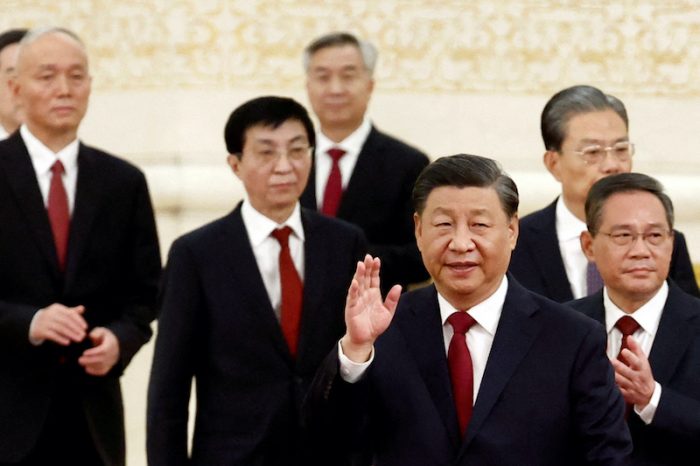
China’s central bank has pulled cash from the banking system for the first time in about a year, signalling a more cautious near-term approach to liquidity management as higher oil prices begin to feed into factory costs, transport bills and corporate margins.

The People’s Bank of China conducted a small reverse repo operation on 2 April while a far larger batch matured, producing a net daily withdrawal of 223.5 billion yuan. The move came after policymakers had spent months leaning towards support for growth, and it suggests Beijing is trying to preserve room for manoeuvre rather than rushing into broader easing while imported inflation risks build.

That calibration matters because China is facing two conflicting pressures at once. On one side, domestic demand remains weak, producer prices are still soft, and policymakers have already acknowledged that supply continues to outstrip demand in parts of the economy. On the other, the oil shock linked to the Middle East conflict is lifting input costs and complicating the case for an immediate flood of fresh liquidity. China’s central bank said after its first-quarter monetary policy committee meeting that it would maintain an “appropriately loose” stance while keeping liquidity ample and supporting a recovery in prices.

The timing of the drain is striking because it follows signs that parts of the economy had started to stabilise before energy costs became a bigger threat. Official manufacturing activity returned to expansion in March, with the PMI rising to 50.4 from 49.0 in February, while a private survey showed factory output and orders still growing even as cost pressures intensified. Those readings pointed to a modest improvement in momentum, but they also showed that the rebound is vulnerable to rising commodity prices and longer supplier delivery times.

Economists and policy advisers in China have begun to frame the challenge less as a choice between stimulus and restraint, and more as a balancing act between supporting growth and containing imported inflation. Huang Yiping, a central bank adviser, said this week that oil-led price pressure was hurting profitability and narrowing the room for policy to respond, even though broader inflation remains below the official target. China’s consumer inflation rose 1.3% in February, the highest in more than three years, but still below Beijing’s target of around 2% for 2026.

For markets, the signal is not that Beijing has turned hawkish. The seven-day reverse repo rate remained unchanged at 1.4%, and the central bank has continued to stress that it can still use rate cuts, reserve requirement reductions and other tools if needed. What has changed is the sequencing. Officials appear unwilling to react to every external shock with an immediate dose of easier money, especially when higher oil prices could push up headline inflation even as underlying demand stays fragile.

That caution is also tied to the broader policy picture. China set a 2026 growth target of 4.5% to 5%, below last year’s goal, reflecting weaker confidence in the external environment and the unfinished task of shifting growth away from debt-heavy sectors and towards household consumption. Policymakers have pledged to support demand, private investment and prices, but the tone from Beijing has been measured rather than aggressive. The central bank’s liquidity withdrawal fits that pattern: it does not amount to a policy reversal, but it does show a preference for targeted fine-tuning over blunt stimulus.

The oil backdrop helps explain why. China has entered the current energy shock in a stronger position than some of its Asian peers, with strategic stockpiles, diversified power supply and a large electric-vehicle base helping to soften the blow. That resilience has supported Chinese assets during wider market turbulence. Yet the country is not immune. Independent refiners have already been cutting processing rates as crude costs climb and domestic fuel demand stays under pressure, while manufacturers are reporting the fastest increase in output prices in years.

VISHNU RAJA
RYO YAMADA
HITORI GOTOH
IKUYO KITA