News related to
Years

FIFA has confirmed the final squad lists for the 2026 World Cup, naming a record 1,248 players across 48 national teams for the expanded tournament in Canada, Mexico and the United States. The lists mark the last major administrative step before the competition opens on 11 June, with the final scheduled for 19 July after 104 matches across the three host countries. Each participating association has submitted […]

MUMBAI/CHENNAI: Just as the microfinance sector appears to be emerging from a prolonged asset-quality stress cycle, a weaker monsoon forecast threatens to create fresh challenges. With the India Meteorological Department (IMD) downgrading its southwest monsoon forecast to “below normal” — potentially the weakest in 11 years — concerns are resurfacing for India’s over ₹3-lakh-crore microfinance […]

The article Weak Monsoon Forecast Raises Fresh Concerns For India’s Rs 3 Lakh Crore Microfinance Sector appeared first on Latest India news, analysis and reports on Newspack by India Press Agency).

Cyber espionage operators are using a newly documented Windows backdoor called HazyBeacon to target government networks in Southeast Asia, turning legitimate Amazon Web Services infrastructure into a covert command-and-control channel that can blend into ordinary cloud traffic. The activity, tracked as CL-STA-1020, has been linked to intelligence-gathering operations focused on sensitive state information, including material tied to tariffs, trade disputes and government policy discussions. Security researchers have […]

Abu Dhabi Gaming has signed a strategic partnership with ASPIRE to accelerate AI-led game development, linking the emirate’s interactive entertainment ambitions with advanced research capabilities from one of its key technology institutions. The agreement was formalised during the A2RL Summit at ADNEC Centre Abu Dhabi, where global technology, mobility, autonomy and gaming specialists gathered to examine how artificial intelligence is reshaping industries built around real-time decision-making and […]

Persistent dollar strength pushed the yen back towards 160 per US dollar on Wednesday, reviving concern that Tokyo may step into the foreign exchange market as renewed Gulf hostilities drove investors towards the US currency.

The yen traded near 159.92 per dollar in Asian dealings, close to the level widely viewed by traders as a possible trigger for official action. The move erased much of the currency’s rebound after Japan’s ¥11.7 trillion intervention campaign earlier this year, leaving markets alert to fresh warnings from the Ministry of Finance.

Dollar demand strengthened after renewed fighting in the Gulf raised fears of wider disruption to energy supplies and trade routes. The US currency benefited from its reserve status, while risk-sensitive currencies came under pressure. The dollar index held around 99.27, supported by geopolitical uncertainty and firm US labour indicators that have reduced expectations of near-term monetary easing by the Federal Reserve.

Japan’s authorities have intensified verbal warnings as the yen weakens. Finance Minister Satsuki Katayama has said the government is ready to respond appropriately to excessive currency moves, language that traders typically read as a signal that intervention remains on the table. Officials have also stressed coordination with the United States, a politically sensitive point because unilateral currency action can draw scrutiny from trading partners.

The yen’s slide reflects a combination of external pressure and domestic policy constraints. Japan remains heavily dependent on imported energy, much of it priced in dollars. Higher oil prices therefore worsen the trade position and add pressure to household costs, while a weaker yen raises import bills further. Brent crude climbed towards $95 a barrel as Gulf tensions fed concerns over supplies, adding another layer of strain for Japan’s economy.

Attention is now focused on Bank of Japan Governor Kazuo Ueda, whose next policy signals will be watched closely ahead of the June 15-16 policy meeting. Markets have increased bets that the central bank could raise interest rates from 0.75% to 1%, especially as imported inflation pressures build. Any move would mark a further step away from the ultra-loose policy framework that kept Japan’s rates far below those of other major economies for years.

Still, the Bank of Japan faces a difficult balance. A rate increase could support the yen and help restrain inflation expectations, but policymakers remain cautious about tightening too sharply while domestic demand stays uneven. Wage growth has improved, yet household purchasing power remains vulnerable to higher energy and food costs. A premature tightening cycle could hurt consumption just as companies pass on higher input costs.

The interest-rate gap with the United States remains central to the yen’s weakness. US policy rates are still high by comparison, keeping dollar assets attractive to global investors. Stronger US jobs data has strengthened the argument that the Federal Reserve may keep policy restrictive for longer, or even consider further tightening if inflation risks intensify. That has limited any relief for currencies trading against the dollar.

Other major currencies also softened. The euro slipped as investors assessed rising energy-driven inflation in the eurozone and the possibility of a European Central Bank rate increase at its June 11 meeting. Sterling edged lower, while the Australian and New Zealand dollars were weighed down by weaker risk appetite. Cryptocurrency markets also came under pressure as investors moved away from volatile assets.

For Japan, the 160 level carries market and political significance. Authorities intervened when the yen breached similar levels in 2024 and again used large-scale buying this year to slow the currency’s decline. The effectiveness of intervention, however, depends on whether monetary policy and global market conditions move in the same direction. Without a narrower yield gap or a broader fall in the dollar, direct yen purchases can lose impact quickly.

Advancing Cross-Border Payments Across Latin America and Europe

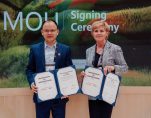
AMSTERDAM, NETHERLANDS – Media OutReach Newswire – 3 June 2026 – XTransfer, the world’s leading B2B cross-border trade payment platform, and BBVA, a global financial group, have signed a Memorandum of Understanding (MOU) during Money20/20 Europe 2026 in Amsterdam to deepen cross-border payment infrastructure across Latin America and Europe.

The MOU was signed by Bill Deng, Founder and CEO of XTransfer, and Ksenia Nekrasova, Global Sector Co-Head of TMT at BBVA, at Money20/20 Europe 2026 in Amsterdam.

Under the MOU, XTransfer and BBVA will combine their respective strengths to explore the delivery of integrated cross-border financial solutions, spanning FX conversion, local payments and cross-border payments across Latin America, Europe and Hong Kong SAR.

The parties will also explore leveraging technology and innovation, including APIs, digital platforms, collection solutions and virtual accounts, to support more automated, real-time and seamless FX conversion and transaction processing. By streamlining payment flows and improving operational connectivity, the collaboration is expected to enhance the scalability, efficiency and reliability of cross-border financial services for SMEs engaged in international trade.

In recent years, trade between China and Latin America has grown closer. XTransfer data shows that in 2025, payment collections from Latin America on its platform rose 94% y-o-y. Yet many SMEs still face major cross-border settlement hurdles, including slow onboarding, FX constraints, and complex compliance. The partnership between XTransfer and BBVA is structured to tackle these barriers directly.

For XTransfer, the partnership strengthens the coverage and depth of X-Net, its global unified B2B cross-border settlement and risk management network, in two of the most important regions for its SME clients. With Latin America emerging as a high-growth corridor for Chinese exporter settlements, BBVA’s strong presence across Latin America and Europe further strengthens XTransfer’s reach and competitive position.

With XTransfer’s network of more than 897,000 SME clients worldwide, the partnership also strengthens BBVA’s position in global payments and expands its ability to serve a broader, more diverse client base across multiple regions.

Bill Deng, Founder and CEO of XTransfer, said, “Latin America remains an active but underserved B2B trade corridor, where SMEs still encounter significant challenges. We are pleased to sign this MOU with BBVA, enabling us to leverage their expertise to bring X-Net’s infrastructure directly into the region. Together, we aim to simplify cross-border finance and improve the efficiency and inclusivity for global traders.”

Ksenia Nekrasova, Global Sector Co-Head of TMT at BBVA, said: “Beyond the growth in flows, we are seeing a shift in how our clients operate: digital platforms with global, real-time and highly integrated needs. This agreement allows us to anticipate that evolution, strengthening our capabilities in the TMT space and supporting these clients in their international expansion with solutions designed for their scale and complexity.”
Hashtag: #XTransfer #BBVA #CrossborderPayments #SMEs


The issuer is solely responsible for the content of this announcement.

About XTransfer

XTransfer, the world’s largest B2B cross-border trade payment platform with over US$60 billion TPV in 2025, according to CIC. Founded in 2017 as one of the first payment platforms worldwide dedicated to B2B cross-border trade, we serve the largest customer base of over 800,000 registered SMEs globally as of March 31, 2026.

We connect top-tier financial institutions directly to SMEs, the backbone of global trade, giving businesses of every size access to the same secure, compliant and seamless payment infrastructure once reserved for multinationals. As of March 31, 2026, we provide payment services across more than 200 countries and regions through partnerships with financial institutions, including some of the most established international banks around the world.

XTransfer has obtained required licenses in major hubs, including the Chinese Mainland, Hong Kong, the United Kingdom, the United States, Singapore, the Netherlands, Australia and Canada.

For more information, please visit: https://www.xtransfer.com

Oman India Fertiliser Company is preparing to sell 25 per cent of its share capital through an initial public offering, setting up a July debut on the Muscat Stock Exchange as Oman pushes ahead with a broader programme to widen public ownership of strategic assets.

The offering will comprise existing ordinary shares held by the company’s current shareholders, meaning proceeds from the sale will go to the selling shareholders rather than to OMIFCO. The subscription period is expected to open this month, subject to final regulatory approvals from the Financial Services Authority, with trading targeted for July if market conditions remain supportive.

OMIFCO is 50 per cent owned by Oman state energy group OQ, while Indian Farmers Fertiliser Cooperative Limited and Krishak Bharati Cooperative Limited each hold 25 per cent. The float is expected to give investors access to one of Oman’s largest industrial exporters and a fertiliser producer with strong exposure to global urea and ammonia demand.

The company operates from Sur Industrial City, where its complex includes two ammonia trains and two urea trains. Annual nameplate capacity stands at about 1.15 million tonnes of ammonia and 1.65 million tonnes of urea, making the producer one of the largest fertiliser operators in the Gulf. The business is supported by long-term gas supply arrangements, established marketing relationships and export infrastructure, including a dedicated deep-water berth that connects the plant to overseas markets.

The IPO comes at a sensitive moment for fertiliser supply chains, with Middle East producers drawing stronger investor attention as global prices respond to disruptions in energy and shipping routes. Urea remains OMIFCO’s dominant revenue source, accounting for the bulk of sales, while ammonia provides an additional export stream and supports integrated production at the Sur complex.

OMIFCO generated revenue of $802.3 million in 2025, with an EBITDA margin of 50.6 per cent and a net profit margin of 40 per cent. Revenue for the first quarter of 2026 reached $207.4 million, while EBITDA margin stood at 50.5 per cent and profit margin at 40.4 per cent. The company has said it has maintained a net cash position for several years and has no interest-bearing debt, a profile likely to feature prominently in investor marketing.

The company expects to distribute dividends of about RO71.2 million, equivalent to roughly $185 million, for the 2026 financial year. The payout is planned in two equal instalments, scheduled for September 2026 and April 2027. For the following two financial years, dividend guidance is expected to be linked to either 90 per cent of net profit or a minimum annual compounded increase from the 2026 dividend base, whichever is higher.

The planned sale follows a series of listings and privatisation moves aimed at expanding the depth of Oman’s capital market. OQ Exploration and Production’s 2024 listing was one of the largest offerings in the region that year, while Asyad Shipping also formed part of the state-linked pipeline of public market transactions. OMIFCO’s proposed listing would extend that momentum into industrial manufacturing and food-security-linked exports.

Bank Muscat and Société Générale have been appointed joint global coordinators for the offering, with Bank Muscat also acting as issue manager. Arqaam Capital and United Securities are serving as joint bookrunners. The final structure, allocations and investor eligibility terms will be detailed in the prospectus after approval by the Financial Services Authority.

The offering is expected to include tranches for institutional and retail investors, with participation governed by Oman’s regulations for public joint stock companies. Shares will also be offered to selected qualified investors outside the United States under applicable securities rules, broadening the potential investor base while keeping the formal listing on the Muscat Stock Exchange.

OMIFCO’s position is closely linked to demand from agriculture markets, particularly urea used in crop nutrition. India has remained a major destination for its exports, supported by long-term commercial ties with its cooperative shareholders. From 2023 to 2025, the country accounted for most exported urea volumes and a substantial share of ammonia shipments, reinforcing the company’s role in cross-border fertiliser supply.

Advertisements
Kioxia Holdings has moved within striking distance of Toyota Motor’s market value, underscoring how the artificial intelligence boom is reshaping Japan’s corporate hierarchy and lifting a memory-chip maker that listed in Tokyo less than two years ago into the country’s market elite.

The Tokyo-based maker of NAND flash memory and solid-state drives has become one of the most closely watched stocks on the Tokyo Stock Exchange after a sharp rally tied to demand for data-centre storage, AI servers and high-performance memory systems. Its market capitalisation has climbed into the tens of trillions of yen, placing it near Toyota and behind SoftBank Group in a reshuffled ranking that would have seemed unlikely when Kioxia priced its initial public offering at 1,455 yen a share in December 2024.

The shift marks a wider challenge to the long-standing dominance of Japan’s manufacturing champions. Toyota, the global carmaker that symbolised the strength of Japan Inc. for decades, has been displaced from the top position by SoftBank during the latest AI-led surge, while Kioxia has risen rapidly from a former Toshiba memory unit backed by Bain Capital into a central player in the market’s technology rotation.

Kioxia’s climb reflects investor expectations that memory will remain a bottleneck in AI infrastructure. Generative AI systems require vast amounts of storage and high-speed data movement, pushing demand beyond the older cycle driven mainly by smartphones and personal computers. Data-centre operators, cloud companies and chip designers are competing for components needed to train and run large AI models, giving memory producers stronger pricing power after years of volatility.

The company’s earnings have strengthened sharply. Kioxia has projected operating profit of about 1.3 trillion yen for the April-June quarter, a figure that puts it among the most profitable listed companies in Japan. Its latest annual results showed strong momentum in revenue, margins and cash generation, helping ease earlier concerns about debt and cyclicality. Rating upgrades to investment grade have added to the perception that the balance sheet is improving at a time when investors are rewarding semiconductor exposure.

Kioxia’s origins give its rise broader industrial significance. The company traces its roots to Toshiba’s memory business, which was sold to a Bain-led consortium in 2018 after Toshiba’s financial crisis. The group was renamed Kioxia in 2019, drawing on the Japanese word for memory and the Greek word for value. Its public listing in 2024 valued it below 800 billion yen, after earlier IPO attempts were delayed by weak valuation conditions and pressure in the memory market.

That cautious debut contrasts sharply with its current status. Shares have multiplied as investors reassessed the role of NAND flash in AI systems, especially as large-scale data centres require higher storage density, faster access and more energy-efficient hardware. Kioxia has also been developing advanced BiCS FLASH technology and promoting next-generation SSDs for AI storage infrastructure.

The rally has also lifted questions over valuation risk. Memory chips remain one of the semiconductor industry’s most cyclical segments, with prices exposed to shifts in capital spending, inventory levels and customer demand. A sharp rise in market value leaves Kioxia vulnerable if hyperscaler investment slows, if competitors add capacity faster than expected, or if customers push back against higher pricing.

Competition is intense. Samsung Electronics, SK Hynix, Micron Technology and SanDisk remain key players across memory markets, with SK Hynix holding a dominant position in high-bandwidth memory used in AI accelerators. Kioxia’s strength is more closely tied to NAND flash and SSDs, where demand from AI infrastructure has broadened the market but does not eliminate the risk of oversupply once new capacity comes on stream.

Toyota’s relative decline in the rankings does not point to operational weakness alone. The carmaker remains one of the world’s largest manufacturers by sales and a major profit generator, but investors have been rotating away from traditional industrial leaders towards companies with direct AI exposure. Concerns over electric-vehicle competition, currency movements and the cost of future technologies have weighed on auto valuations, even as Toyota continues to command global scale in hybrid vehicles and supply-chain management.

SoftBank’s ascent has further highlighted the changing market narrative. Its exposure to Arm and AI-related investments has drawn investors seeking Japan-based access to global AI infrastructure. Together, SoftBank and Kioxia now represent a market story centred on chips, data centres, software platforms and computing capacity rather than the export-led industrial model that long defined Japan’s equity market.

Foreign investor flows have amplified the shift. Japan’s equity market has benefited from corporate-governance reforms, stronger capital returns and renewed interest in companies linked to the AI supply chain. The Nikkei 225 has reached record territory, though the rally has been uneven, with gains concentrated in a limited group of technology-linked names while broader market performance has been more mixed.

Kioxia’s next test will be whether it can convert favourable pricing and sold-out capacity into durable earnings. Investors will look for clearer shareholder-return plans, disciplined capital expenditure and evidence that AI storage demand can remain strong beyond the current investment wave. The company’s contemplated US share listing would widen access to global technology investors and could further raise its profile if market conditions remain supportive.

Between 2018 and 2023, Dr Ivan Puah treated over 550 cases, addressing unique challenges in Singapore’s multi-ethnic population. His study included diverse case profiles. Results revealing no complications and high satisfaction prove the need to adapt surgical techniques for variations in skin type between Asian and Caucasian patients.

SINGAPORE – Media OutReach Newswire – 3 June 2026 – The evaluation and management of surgical treatment for gynecomastia primarily focus on Western populations. However, Amaris B. Clinic’s decades of experience in Singapore highlight specific considerations for Asian patients.

Dr Ivan Puah, Medical Director at Amaris B. Clinic and the lead researcher on a recent study, has offered new insights into treating gynecomastia, a condition characterised by male breast enlargement, in Singapore.

The research paper titled ‘Surgical Management of Gynecomastia in Asian Men – Clinical Experience and Considerations for Different Patient Types’ provides detailed, important considerations, including the management of the consultation process, addressing varying patient expectations, and tackling the surgical aspects necessary to achieve desired aesthetic outcomes.

Between 2018 and 2023, Dr Puah treated over 550 cases at Amaris B. Clinic and presented six representative patient cases that illustrate the demographics and unique challenges faced by this multi-ethnic Asian population.

The typical patient profiles included obese, overweight, and lean adults, as well as adolescents. Common causes of gynecomastia observed in the patients included hormonal changes during puberty, drug-induced gynecomastia from anabolic steroids, and conditions related to weight loss.

Dr Puah’s proprietary surgical methods involve making a single incision along the areola to minimise scar visibility while effectively excising glandular tissue, performing liposuction to remove excess fat, and tightening the chest skin.

Six case studies of diverse gynecomastia patient profiles

Gynecomastia Grade Demographic Profile
Grade II 17-year-old Chinese
  • A history of bilateral breast enlargement since 13 years-old
Grade II 18-year-old Chinese
  • A history of bilateral breast enlargement since 12 years-old
Grade II 22-year-old Malay
  • Using anabolic hormone supplements for bodybuilding for 4 years
Grade II 46-year-old Chinese
  • Took anabolic steroids for 5 years
Grade IV 28-year-old Chinese
  • Overweight since childhood
  • No reduction in breast enlargement despite losing weight
  • Skin laxity present
Grade IV 21-year-old Indian
  • Overweight since childhood
  • No reduction in breast enlargement despite losing weight
  • Skin laxity present

At the 3-month follow-up after surgery, 5 of 6 patients reported no complications, highlighting the effectiveness of the tailored surgical approach. They expressed high satisfaction with the aesthetic results of the procedure, rating it a perfect 7 out of 7, and reported relief from emotional distress.

Only one patient experienced mild keloid formation at the edges of both areolae where incisions were made, which were not easily noticeable, and reported no complications or dissatisfaction.

Dr Ivan Puah emphasises, “It is important to adapt surgical techniques to address issues such as scarring and hyperpigmentation, which can be more pronounced in Asian patients due to their skin types. The differences in skin quality and glandular tissue characteristics between Asian and Caucasian patients with gynecomastia necessitate distinctions in treatment planning, particularly regarding careful incision placement.”

The full paper is available via World Journal of Plastic Surgery at https://pmc.ncbi.nlm.nih.gov/articles/PMC12843043/


The issuer is solely responsible for the content of this announcement.

ABOUT AMARIS B. CLINIC

Amaris B. Clinic, established in 2004 in Singapore and led by Dr Ivan Puah, focusing on medical aesthetics and cosmetic surgery.

The clinic offers facial and body sculpting services such as liposuction, gynecomastia surgery, and fat grafting, as well as non-surgical treatments like Ultherapy Prime, biostimulator injections, and hair loss therapy.

Amaris B. Clinic’s Signature Treatments

ABOUT DR IVAN PUAH

Dr Puah, an MOH-accredited liposuction doctor with extensive training in various cosmetic procedures, is committed to providing personalised care with an artful eye and proven medical techniques.

  • Dedicated surgical training in gynecomastia surgery in San Francisco
  • Chairman of the Lipo Peer Review Committee in Singapore
  • Trained in Vaser liposuction (fundamental and hi-definition) in Colorado and Argentina
  • Trained in syringe liposculpture, fat grafting, and thread lift from renowned French plastic surgeon, Dr Pierre Francois Fournier
  • Appointed trainer by Allergan and Merz for fellow doctors on cosmetic injectables
  • Designated trainer for PDO thread lift and Picolaser from Venusys Medical
  • Graduate Diploma in Family Dermatology from NUS
  • Graduate Diploma in Acupuncture from TCMB
  • Graduate Diploma in Sports Medicine from LKCMedicine, NTU

By T N Ashok The dust may have settled on the 2026 West Bengal Assembly election, but the political war has only intensified. Defeated former Chief Minister Mamata Banerjee has launched perhaps the most serious challenge yet to the legitimacy of the Bharatiya Janata Party’s sweeping victory, alleging that the saffron party manipulated electoral rolls, […]

The article Poll Results Were Out In Bengal A Month Ago, But Political Violence Is Still Continuing appeared first on Latest India news, analysis and reports on Newspack by India Press Agency).

Jean-Jacques Muyembe and Peter Piot are being honored with the international award of €500,000 for exceptional life-long leadership spanning five decades since the first outbreak of Ebola

BERLIN, GERMANY – Newsaktuell – 2 June 2026 – The Virchow Prize 2026 has been jointly awarded to Jean‑Jacques Muyembe and Peter Piot for their pioneering and enduring leadership in the discovery, control, and understanding of epidemic threats, and for advancing equitable, multilateral cooperation and governance that have fundamentally strengthened global preparedness and solidarity in the face of infectious disease outbreaks.

The Virchow Prize Laureates 2026: Jean-Jacques Muyembe (DR Congo) and Peter Piot (Belgium), honored for their pioneering and enduring leadership in the discovery, control, and understanding of epidemic threats, and for advancing equitable, multilateral cooperation and governance that have fundamentally strengthened global preparedness and solidarity in the face of infectious disease outbreaks.

The announcement was made today by the Virchow Foundation which is granting the annual award. The selection of the laureates by the independent Virchow Prize Committee was preceded by a nomination period that ended on February 28, followed by a three-month deliberation period.

This moment resonates with particular historical gravity: 2026 marks both fifty years since the emergence of Ebola and a renewed confrontation with the virus through the current outbreak and unpreparedness.

According to the committee, the careers of Jean‑Jacques Muyembe and Peter Piot are anchored in a defining moment of modern infectious disease history: the first identified Ebola outbreak in 1976. Their collaboration demonstrated the necessity of crossing contextual, disciplinary and geographic boundaries, highlighting both the potential and the inequities inherent in global health partnerships. Over the decades, both Muyembe and Piot have worked – partly closely together, partly independent from each other in complementary ways – to transform epidemic research in an exemplary manner, firmly rooted in equity, reciprocity, and shared leadership.

Taken together, the laureates’ contributions illustrate a continuum that is central to advancing health for all: from discovery to delivery, from local response to global coordination, from emergency action to long-term system strengthening. Their work has directly improved the ability to detect, understand, and control deadly outbreaks, while also influencing broader frameworks for addressing global health challenges in a manner that is equitable and inclusive.

By awarding the Virchow Prize 2026 equally to Muyembe and Piot, their scientific achievements and their commitment to strengthening health systems and fostering global solidarity are honored. The laureates’ work embodies Rudolf Virchow’s legacy that health is inseparable from social organisation, governance, and collective responsibility.

Full Article and detailed Virchow Prize Committee jury rationale at www.virchowprize.org/vp2026

Contact: Virchow Foundation | Dorotheenstr. 83 | DE-10117 Berlin, Germany | [email protected]

The issuer is solely responsible for the content of this announcement.

Abu Dhabi has launched an AI-powered parking payment system that automatically records vehicle entry and exit, calculates charges and deducts fees from the user’s Darb wallet without requiring tickets, machines, SMS messages or QR codes. The Free Flow Paid Parking System marks a further shift in the capital’s transport network towards automated, cashless mobility services. Q Mobility said the system uses automatic number plate recognition technology supported […]

Advancing Research Commercialization and Building a Vibrant I&T Ecosystem

HONG KONG SAR – Media OutReach Newswire – 2 June 2026 – The Hong Kong University of Science and Technology (HKUST) today successfully hosted its annual “Unicorn Day,” one of Hong Kong’s flagship innovation and entrepreneurship events. The event brought together over 1,800 participants, including students, faculty, and alumni, as well as international and local government representatives, industry partners, investors, innovation and technology entrepreneurs, and researchers. Participants exchanged insights on strategies to strengthen collaboration across the innovation ecosystem, foster cross-disciplinary partnerships, and accelerate the translation of research outcomes into real-world impact.

The event was officiated by Prof. SUN Dong, Secretary for Innovation, Technology and Industry of the HKSAR Government, alongside consuls-generals and senior officials from countries including Australia, Chile, France, Hungary, India, Japan, Malaysia, the Netherlands, Vietnam, and the United Arab Emirates. They were joined by Prof. Nancy IP, HKUST President; Prof. Lionel NI, HKUST (Guangzhou) President; and Prof. Tim CHENG, HKUST Vice-President for Research and Development; in touring over 100 HKUST-nurtured startups, showcasing innovations and applications spanning areas such as healthcare, electronics, and artificial intelligence systems, as well as new materials, green energy, and sustainability.

Prof. Sun Dong remarked, “Innovation and technology (I&T) has always been at the top of the Hong Kong SAR Government’s agenda. We fully recognise the crucial role of local universities — not only as key partners, but as the bedrock of Hong Kong’s I&T ecosystem. In just three and a half decades, HKUST has risen to become a global powerhouse in deep tech, entrepreneurship, and innovation as demonstrated by its ability to nurture unicorns and deep-tech ventures. Hong Kong is entering a golden era of I&T development. We are building new engines to drive Hong Kong’s high-quality development, focusing on research and development in key fields and leading industry applications. I am confident that Hong Kong will rise as a leading international I&T center and contribute meaningfully to our nation’s high-quality development, and that HKUST will continue to be a driving force in this amazing journey.”

President Ip said, “As we mark the 35th anniversary of HKUST this year, we also celebrate the spirit of innovation and entrepreneurship that has long been embedded in our DNA. Both the Technology Transfer Center and the Entrepreneurship Center were established in the University’s early years to support faculty and students in realizing their entrepreneurial aspirations and to promote the translation of research outcomes into practical solutions. Over the past 35 years, the University has forged ahead with determination, sowing the seeds of innovation and yielding remarkable achievements across multiple frontier fields. Today, HKUST continues to broaden its horizons, strategically positioning itself in key domains. One example is medical education. The establishment of the HKUST Medical School will integrate the life sciences with cutting-edge technologies to nurture a new generation of interdisciplinary medical professionals.

Concurrently, HKUST has been actively involved in national initiatives such as the Chang’E 8 lunar exploration mission and research projects for the Tiangong Space Station, and the launch of the first commercially viable aerospace project under the RAISe+ Scheme. These achievements exemplify HKUST’s enduring ‘can do’ spirit over the past decades and echo the theme of today’s event—’From Ideas to Miracles—35 Years of Impact and Beyond’. Looking ahead, HKUST will continue to nurture bold ideas and action, working hand in hand with partners across different sectors to cultivate a vibrant innovation ecosystem, ensuring that research achievements benefit society and create lasting global impact.”

To support startups in expanding into global markets and to promote cross-border collaboration, HKUST introduced an “International Pavilion,” featuring startups and innovation organizations from various countries and regions. Participants from Thailand, Singapore and Korea were among those represented, strengthening connections between Hong Kong, and countries and regions along the Belt and Road in technology application and industry development.

The event also saw the signing of multiple partnership agreements, including six strategic collaborations with:

  • GPTX Investment Management Limited
  • China Everbright Water Limited
  • Jiangsu Daotop Environmental Technology
  • Samsung R&D Institute China – Guangzhou
  • CalmCar Physical AI Innovation Center
  • InnoAngel

to advance talent development and industry–academia integration, and foster innovation-driven research and real-world technology translation.

HKUST’s I&T Strength Driving Economic Growth

In addition, HKUST also released the report Driving Socioeconomic Impact Through Research and Innovation: Insights from HKUST, commissioned by the University and prepared by the international research information analytics organization Elsevier. The report highlights HKUST’s outstanding performance in innovation and entrepreneurship. Over the past five years, research output has recorded an average growth of 10%, approximately 9% higher than that of other local institutions. More than 65% of the research is concentrated in engineering and computer science, while 6.2% involves academia-industry collaboration, significantly higher than the global average of 2.7%. These collaborations have translated into impactful intellectual property, with approximately 1,670 patent applications and 700 grants over the same period, and a high IP utilization rate of above 30%.

Prof. Tim Cheng noted that the findings demonstrate HKUST’s steadily strengthening capabilities in research translation and academia-industry collaboration. HKUST’s publications achieved a Field-Weighted Citation Impact of 4.40, indicating that their citation impact is 4.4 times the global average. This underscores HKUST’s significant contributions to advancing Hong Kong’s socioeconomic development and enhancing its competitiveness in innovation and technology.

In addition, a “Marketplace” was also featured, showcasing products already launched by startups, including AI analytics tools, healthcare technologies, and smart city solutions, demonstrating the progress of translating research into practical applications.

Hashtag: #unicorn #unicornday #HKUST #partnership #innovation #startup #tech #AI #space #robotics #materialscience

The issuer is solely responsible for the content of this announcement.

Gold has overtaken US Treasuries as the world’s largest reserve asset by market value, marking a significant change in the composition of official reserves and underlining how central banks are adjusting to geopolitical risk, high debt levels and uncertainty over the dollar-based financial system. The European Central Bank’s latest review of the international monetary system shows gold accounted for 27 per cent of total official foreign reserves […]

Swiss watch exports fell sharply in April as shipments to the United States slumped from a distorted high base created last year, when brands and distributors rushed inventory across the Atlantic before higher US tariffs took effect. Exports dropped 16.6 per cent year on year to CHF2.13 billion, with the United States accounting for the largest drag on the industry’s monthly performance. Shipments to the US, still […]

Nvidia and Microsoft have introduced RTX Spark-powered Windows PCs designed to run personal AI agents locally, marking a major escalation in the race to make artificial intelligence a core feature of everyday computing rather than a cloud-based add-on. The systems, unveiled around Computex and Nvidia GTC Taipei, are expected to arrive this autumn from major PC makers including Asus, Dell, HP, Lenovo, Microsoft Surface and MSI, with […]

Tencent Holdings shares posted their strongest intraday gain in more than three years in Hong Kong after details emerged that the company is testing an artificial intelligence agent for WeChat, raising expectations that China’s most powerful consumer internet platform may become a launchpad for mass-market AI services.

The stock climbed about 6 per cent on Tuesday as investors reacted to signs that Tencent is moving closer to embedding a task-performing assistant inside WeChat, the messaging, payments and social platform used by more than 1.4 billion people. The prototype is designed to help users complete everyday actions within the app, including finding venues, interacting with mini-programmes and placing customised orders, rather than merely answering questions in chatbot form.

The planned agent would mark a significant step in Tencent’s push to convert its AI investments into consumer products at scale. WeChat already functions as a digital operating system for daily life in China, covering messaging, payments, shopping, food delivery, public services, entertainment, ride-hailing and enterprise communication. That reach gives Tencent an advantage that few rivals can match: a single platform with a vast user base, heavy daily engagement and a dense network of third-party services.

People familiar with the prototype have indicated that users would be able to access the AI agent through a swipe gesture on the main WeChat screen. Tencent is expected to begin the regulatory compliance process before wider testing, with a small group of external users likely to receive access before any phased public launch. A firm release date has not been set, reflecting both regulatory uncertainty and the technical demands of deploying agentic AI across a platform of WeChat’s size.

The market response underscores how investors are reassessing Tencent’s AI position after months of concern that the company was trailing Alibaba, ByteDance and Baidu in the race to commercialise generative AI. Tencent has promoted Yuanbao, its AI chatbot, developed its Hunyuan foundation model and introduced productivity-focused AI tools, but WeChat remains the asset most capable of turning those efforts into a daily consumer habit.

Tencent’s first-quarter earnings showed both the strength and the cost of that strategy. Revenue rose 9 per cent year on year to RMB196.5 billion, while IFRS net profit attributable to equity holders increased 21 per cent to RMB58.1 billion. Marketing services revenue rose 20 per cent to RMB38.2 billion, helped by AI-driven advertising improvements, while domestic games revenue grew 6 per cent and international games revenue climbed 13 per cent. Capital expenditure reached RMB31.9 billion, up 16 per cent, as spending on AI infrastructure continued to rise.

The company has told investors that new AI products are weighing on margins, even as core businesses continue to generate strong cash flow. Excluding new AI products, non-IFRS operating profit rose 17 per cent in the first quarter, compared with a 9 per cent increase overall. That gap highlights the near-term drag from AI investment, but also explains why investors are sensitive to any sign that Tencent can place AI directly into revenue-generating services.

Competition is intensifying across China’s technology sector. Alibaba has pushed Qwen into consumer and enterprise markets, ByteDance has expanded AI features across its content ecosystem, and Baidu continues to build around Ernie and AI cloud services. The key battleground is shifting from chatbots to agents that can perform tasks, connect with apps and act across digital services with limited user input.

WeChat’s mini-programme ecosystem could be central to Tencent’s approach. Millions of merchants, developers and service providers already operate within the platform, allowing an AI agent to navigate services without pushing users outside Tencent’s environment. For merchants, an effective agent could increase conversion rates by shortening the path from search to purchase. For Tencent, it could deepen engagement, improve advertising relevance and strengthen its fintech and business services ecosystem.

Regulation remains a critical constraint. China requires generative AI services offered to the public to comply with rules covering data security, content control and algorithmic governance. Any WeChat agent would need to satisfy those requirements before broad release, especially because it could interact with payments, commerce and public services.

Mounting pressure on the rupee has put the Reserve Bank of India’s reserve strategy under sharper scrutiny after a report indicated that the central bank may have sold about $12 billion worth of gold holdings to protect foreign currency assets from the fallout of the US-Iran conflict.

The reported move, if confirmed, would mark a significant shift in the composition of India’s external buffers at a time when oil prices, foreign portfolio outflows and import demand are combining to test the country’s balance of payments position. The RBI has not publicly confirmed any gold sale of that scale, and the latest available reserve data show a fall in the value of gold holdings rather than a definitive disclosure of physical bullion sales.

India’s foreign exchange reserves fell to $681.4 billion for the week ended May 22, down $7.5 billion from the previous week. Foreign currency assets declined by about $3 billion to $543 billion, while the value of gold reserves dropped by roughly $4.5 billion. The fall came as the rupee traded near record lows, having weakened by more than 4 per cent since the outbreak of the US-Iran conflict and the accompanying rise in energy prices.

The rupee has been under sustained pressure from higher crude oil and liquefied natural gas costs, wider hedging by importers and withdrawals by overseas investors from domestic equities. Brent crude has traded in the mid-$90 range, raising concern over India’s import bill because the country depends heavily on overseas energy supplies. Any prolonged disruption in Gulf shipping routes would add to inflation risks and intensify demand for dollars from refiners and importers.

The RBI has intervened through state-run banks to slow the currency’s decline, with traders indicating that the central bank has been uncomfortable with disorderly depreciation. The rupee was around 95 to the dollar this week after briefly sliding close to 97 in May. The central bank’s policy decision due this week is being watched for signals on whether it will rely mainly on liquidity tools, dollar sales and administrative measures, or consider a firmer monetary response.

The reported $12 billion gold-related action has drawn attention because India’s gold holdings have expanded in importance within the reserve portfolio. The central bank held about 880.5 tonnes of gold at the end of March, with gold accounting for nearly 17 per cent of total foreign exchange reserves. The physical stock has been broadly steady around 880 tonnes since mid-2025, suggesting that changes in the dollar value of gold reserves can reflect price movements, accounting effects and reserve operations as well as outright sales.

Gold has become a larger part of central bank reserves worldwide as monetary authorities seek diversification away from dollar assets and protection against geopolitical shocks. India has also moved more of its bullion to domestic vaults, reducing custody risks linked to overseas storage. That strategy had been seen as a long-term strengthening of sovereign reserve control, making any suggestion of sizeable gold liquidation politically and financially sensitive.

The government has moved separately to curb foreign exchange outflows. Import duties on gold and silver have been lifted sharply to about 15 per cent from 6 per cent, reversing earlier tariff relief and increasing the landed cost of precious metals. Rules around some bullion imports have also been tightened, while appeals have been made to households to reduce discretionary gold purchases.

Fuel prices have also been raised as state-run retailers pass through part of the increase in international crude costs. Petrol and diesel prices have risen after several years of limited retail adjustments, adding to household costs but reducing the burden on public-sector oil marketing companies. The step is intended to limit under-recoveries at fuel retailers and reduce the fiscal strain that would otherwise build if global prices stay elevated.

The combined policy response reflects the strain of a classic external shock: a weaker currency lifts import costs, higher oil prices widen the trade deficit, and investors demand higher compensation for risk. India enters this phase with substantial reserves, moderate inflation by past crisis standards and a financial system that remains broadly stable, but the speed of the rupee’s decline has revived comparisons with earlier episodes of currency stress.

For markets, the key question is whether the central bank can preserve confidence without exhausting liquid dollar assets or signalling panic. A calibrated use of reserves can smooth volatility, but heavy intervention may raise doubts if investors see it as a defence of a particular exchange-rate level. The RBI’s challenge is to keep currency markets orderly while allowing enough flexibility for the rupee to adjust to the oil shock and global risk aversion.

Mette Frederiksen has secured a third consecutive term as Denmark’s prime minister after reaching a coalition agreement that ends nearly 10 weeks of political deadlock following the March 24 parliamentary election. The Social Democratic leader will head a centre-left minority administration made up of the Social Democrats, the Moderates, the Green Left and the Social Liberal Party. The deal keeps Frederiksen in power despite a weakened election […]

Emirates Telecommunications Group Company PJSC, known as e&, has agreed to sell part of its stake in Careem Technologies to Uber Technologies for $100 million in cash, reducing its majority position in the Dubai-based platform while keeping a sizeable exposure to one of the region’s best-known technology businesses. The binding agreement covers 12.5 per cent of e&’s 50.03 per cent holding in Careem Technologies. Once the transaction […]

Arabian Post Staff -Dubai Sobha Realty delivered about 3,000 residential units ahead of schedule and launched nearly 15,000 new homes during 2025, marking one of its strongest expansion phases in the UAE property market. The UAE-headquartered developer said at a media briefing that the year’s activity was driven by four major master developments across Dubai and Umm Al Quwain, reinforcing its shift from single-tower launches to larger […]

NASA’s Jet Propulsion Laboratory has moved mission-critical IT infrastructure to Red Hat OpenShift Virtualization, strengthening the computing foundation behind deep space operations as robotic missions place rising demands on data handling, resilience and automation. The migration gives JPL a unified platform for running traditional virtual machines alongside containerised applications, allowing teams to modernise core workloads without forcing an abrupt break from legacy systems that support highly specialised […]

By Nantoo Banerjee Bangladesh’s involvement of China in the country’s US$ 1.5-billion Teesta River Comprehensive Management and Restoration Project (TRCMRP) seems to have posed a significant geopolitical tension for India and its defence concerns. Dhaka made a formal request to China for the project during Foreign Minister Khalilur Rahman’s recent visit to Beijing, reflecting a […]

The article Chinese Part In Bangladesh Teesta Project Alarms India appeared first on Latest India news, analysis and reports on Newspack by India Press Agency).

French police detained 780 people after celebrations over Paris Saint-Germain’s Champions League triumph turned violent across Paris and several other cities, leaving officers injured, shops damaged and vehicles set on fire during a night of disorder that overshadowed the club’s second successive European title. The unrest broke out after PSG defeated Arsenal 4-3 on penalties following a 1-1 draw at the Puskás Aréna in Budapest on Saturday, […]

VISHNU RAJA
RYO YAMADA
HITORI GOTOH
IKUYO KITA