News related to
Years

By Nitya Chakraborty The interim Government of Bangladesh which took office on August 8 this year completed its first one hundred days on November 16. On this occasion, head of the interim Government Dr. Muhammad Yunus in a televised address to the nation on Sunday urged the people to keep patience and promised road map […]

Emirates NBD has successfully issued a $500 million five-year sustainability-linked loan bond, underscoring its commitment to sustainable finance and reinforcing its position in the growing green investment space. The move is part of the bank’s broader strategy to integrate environmental, social, and governance (ESG) factors into its financial products and services. This marks a significant milestone for the bank as it strengthens its sustainability efforts, aiming to meet its green targets while tapping into the rising demand for green bonds among investors.

The loan bond was issued at a fixed coupon rate of 4.5% and will mature in 2029. It is linked to the bank’s ambitious sustainability goals, which include reducing its carbon footprint and aligning its portfolio with the principles of the Paris Agreement. The bond issuance represents a broader trend in the financial sector, where sustainability-linked instruments have become increasingly popular among institutions seeking to demonstrate their commitment to ESG principles.

Emirates NBD’s new bond issuance is expected to support various sustainability projects, particularly in areas like renewable energy, sustainable infrastructure, and green technology. This is in line with the UAE’s broader national objectives to achieve net-zero carbon emissions by 2050 and to transition to a more sustainable economy. With climate change emerging as a global challenge, banks like Emirates NBD are strategically positioning themselves to support projects that align with global environmental goals.

The issuance received strong demand from international investors, reflecting the growing appetite for sustainable investment opportunities. Analysts highlight that sustainability-linked bonds, which tie financing to a company’s environmental performance, are becoming an attractive alternative to traditional debt instruments. They offer companies an incentive to meet specific sustainability targets, which can improve their financial and environmental performance over time.

Experts argue that sustainability-linked bonds have become a key mechanism for banks and corporations to fund their sustainability strategies while also improving their long-term credibility and reputation in the market. By linking financial performance to environmental targets, these bonds offer a more flexible and impactful way for companies to demonstrate their commitment to the environment.

Emirates NBD has stated that the proceeds from the bond will be used for financing and refinancing sustainability initiatives within the bank’s existing portfolio. This aligns with the financial sector’s broader push to integrate ESG metrics into core business activities. Additionally, the bank intends to use the bond proceeds to further enhance its sustainable finance offerings, as well as to continue supporting environmentally and socially responsible projects across various sectors.

The bank has been at the forefront of promoting sustainable finance in the region, having already issued multiple green bonds in previous years. These bonds, along with the new sustainability-linked loan bond, contribute to the bank’s goal of becoming a leader in green financing in the Middle East. The UAE’s financial institutions, led by major players like Emirates NBD, are expected to play a pivotal role in shaping the region’s green economy, particularly as global investors look to place their funds into markets that prioritize sustainability.

This new issuance also highlights the evolving dynamics of the financial markets, where investors are becoming increasingly discerning about the ESG credentials of the entities they invest in. Global trends show that institutional investors, including pension funds and sovereign wealth funds, are placing a premium on ESG-compliant investments. This is creating new opportunities for financial institutions that can offer sustainable products, further incentivizing banks like Emirates NBD to accelerate their green financing initiatives.

Emirates NBD’s sustainability efforts are also being aligned with the global transition to net-zero emissions. As part of its ongoing sustainability initiatives, the bank has committed to cutting its own carbon emissions and promoting green banking practices within its operations. The issuance of the sustainability-linked loan bond is expected to be a key component of this strategy, allowing the bank to tap into a new pool of capital while supporting the growth of environmentally responsible projects.

The broader implications of this issuance extend beyond the banking sector. By raising awareness of the growing significance of sustainable finance, Emirates NBD’s actions may encourage other banks in the Middle East to adopt similar initiatives. Furthermore, this issuance may increase awareness among investors of the critical role that banks play in driving the transition to a sustainable future. The UAE’s position as a key player in the global financial system means that this move could have ripple effects across other regional markets, contributing to the growth of ESG investing in the Middle East.

Saudi Aramco, Sinopec, and Fujian Petrochemical have officially begun the construction of a significant new refining and petrochemical complex in Fujian province, China. This collaboration marks a major step forward in enhancing energy infrastructure, with an investment that highlights the deepening trade and energy ties between the Middle East and China.

The project, located in the coastal city of Quanzhou, is poised to become a vital hub for refining and petrochemical production, aimed at bolstering the energy needs of the rapidly growing Chinese market. The new facility will process millions of tons of crude oil annually and produce a wide range of petrochemical products, further strengthening the value chain in both the refining and chemicals sectors. As one of the largest investments of its kind in the region, the project underscores the strategic importance of Sino-Saudi relations and Aramco’s broader vision for international expansion.

At the core of this venture, Saudi Aramco is contributing a substantial stake, with the company’s role as a key supplier of crude oil expected to provide crucial support to the complex’s operations. Aramco has been a key player in the Chinese market for years, consistently expanding its footprint and solidifying its presence in one of the world’s largest and most dynamic energy markets. Through this venture, Aramco continues to build on its long-standing relationship with Sinopec, one of China’s state-owned oil giants, to help meet the country’s increasing demand for refined fuels and chemicals.

Sinopec, one of China’s leading oil and gas corporations, is providing significant technical expertise and resources for the development of the new refinery. With a vast network of refineries and petrochemical facilities across China, Sinopec’s involvement is expected to enhance operational efficiencies and facilitate greater integration between refining and petrochemical processes. The partnership brings together both advanced technological capabilities and the ability to navigate the Chinese regulatory and commercial landscape, which remains critical to success in this market.

Fujian Petrochemical, a key player in China’s petrochemical industry, is a joint venture partner in the project. The company is renowned for its strategic location along China’s eastern coast and its established role in petrochemical manufacturing. By leveraging its access to the South China Sea shipping routes, Fujian Petrochemical will play a vital role in ensuring smooth logistics for the import of crude oil and the export of refined and petrochemical products.

This new project is expected to generate significant economic benefits for the region. It will provide a boost to local employment, create opportunities for small and medium-sized enterprises, and enhance the skillsets of the workforce in Quanzhou. The complex will also be a significant contributor to the local economy through taxes and royalties, aligning with the Chinese government’s ongoing efforts to modernize its energy infrastructure and industrial capabilities.

The environmental impact of this venture has also been carefully considered. While the complex will undoubtedly play an important role in meeting the energy demands of China’s rapidly developing economy, all three partners have committed to ensuring that the project adheres to the highest standards of environmental sustainability. This includes employing advanced technologies to minimize emissions, improve energy efficiency, and reduce the ecological footprint of the refinery’s operations.

The decision to locate the complex in Fujian province is strategic, as the area has long been a hub for the petrochemical industry in China. Fujian’s proximity to major shipping lanes and its well-established infrastructure make it an ideal location for such a high-capacity facility. The provincial government has expressed strong support for the project, citing its potential to contribute to regional economic growth and enhance China’s energy security.

The broader geopolitical context of this project also plays a significant role in its development. With China’s growing focus on self-sufficiency in energy production and its ambition to strengthen domestic refining and chemical manufacturing capabilities, this initiative is timely. It reflects the ongoing trend of closer cooperation between China and energy-rich nations in the Middle East, particularly in the oil and gas sector.

For Saudi Aramco, the Fujian venture represents a further expansion of its global refining and petrochemical portfolio, reinforcing its position as a dominant player in the global energy market. The company has been diversifying its operations beyond crude oil production, investing heavily in refining and petrochemicals as part of its long-term strategy to adapt to evolving energy trends and the global push toward cleaner energy solutions.

As the global energy landscape continues to evolve, with increasing emphasis on sustainability and energy transition, the timing of this major refining and petrochemical project highlights the delicate balance between meeting current energy demands and investing in future-proof technologies. For China, which remains one of the world’s largest consumers of petrochemical products, this new facility is an important step in securing reliable, high-quality energy sources that align with its ambitious economic development plans.

This collaboration also stands as a testament to the growing importance of international partnerships in the energy sector. While the primary focus remains on meeting the energy needs of China’s economy, the involvement of key players such as Aramco, Sinopec, and Fujian Petrochemical signals the increasing interdependence of the global energy market. The success of the Fujian project will likely pave the way for further cooperation between the Middle East and China in areas such as renewable energy, advanced technologies, and global infrastructure development.

Emirates NBD, one of the largest banking groups in the Middle East, has engaged multiple banks for a five-year sustainability-linked loan. This initiative represents a significant step in aligning its financial strategies with environmental, social, and governance (ESG) principles. The loan underscores the bank’s ongoing commitment to integrating sustainable practices into its corporate strategy, a trend gaining traction among global financial institutions. The proposed loan ties Emirates […]

Vingroup, Vietnam’s largest private conglomerate, is poised to lead the nation’s green transition. Backed by substantial resources, top talent, and cutting-edge technology, Vingroup is well-equipped to overcome the challenges and drive sustainable growth. HANOI, VIETNAM – Media OutReach Newswire – 13 November 2024 – Driven by the vision of “Creating a Green Future,” Vingroup, Vietnam’s largest private conglomerate, is strategically positioned to lead the nation’s journey toward […]

Adani Green Energy’s subsidiaries have mandated banks for the issuance of USD-denominated green bonds, marking a significant step in the company’s expansion of its sustainable financing efforts. This move follows a broader trend in the renewable energy sector, where corporations are increasingly turning to green bonds as a means to fund eco-friendly projects and promote sustainability. The subsidiaries, including Adani Green Energy Limited and Adani Renewable Energy […]

Small and medium-sized enterprises (SMEs) in Abu Dhabi have become a crucial driver of the emirate’s economy, contributing 42.8% to the non-oil gross domestic product (GDP), according to the latest data from government sources and economic reports. This surge underscores the growing significance of the private sector, as the region diversifies its economy away from oil dependence. The contribution of SMEs is seen as a pivotal element […]

Advertisements

Exclusive Trade Masterclass with Tim Mondavi at High House SINGAPORE – Media OutReach Newswire – 19 November 2024 – Monopole is proud to host a Trade Masterclass at High House, welcoming the legendary winemaker Tim Mondavi’s visit to Singapore. Tim shares his secret to redefining Napa—revealing his journey from establishing Continuum Estate to creating an iconic new chapter with Continuum and Novicium. With this, he is breaking […]

SINGAPORE – Media OutReach Newswire – 18 November 2024 – The esteemed Golden Bull Award, a hallmark of excellence and leadership in the business community, proudly unveils its latest cohort of honorees—20 exemplary Singaporean businesses that capture the diverse and dynamic spirit of the nation’s SMEs. This year’s award celebrates these organisations for their outstanding performance, pioneering innovation, and unwavering resilience in navigating challenges. These honorees were […]

Etihad Airways will discontinue its codeshare agreement with Virgin Australia in June 2025, impacting travelers who have relied on the convenience of booking flights with Virgin Australia through Etihad’s channels. The decision ends an almost decade-long partnership between the two airlines, which began in 2011 and allowed passengers to seamlessly book flights between the Middle East and Australia via Etihad’s extensive global network.

Under the terms of this codeshare agreement, travelers could book flights operated by Virgin Australia using Etihad’s booking system, giving them more options for connecting flights from Abu Dhabi to various destinations in Australia. However, starting June 2025, this will no longer be possible, forcing passengers to explore alternative booking channels.

The shift follows Virgin Australia’s changing strategy and its increasing focus on its own alliances. The airline has also forged new partnerships with other international carriers, such as Qatar Airways, which has made moves to strengthen its own position in the Australian market. This will provide Virgin Australia with more flexibility to offer direct connections to different global markets, without relying on a codeshare arrangement.

Etihad has stated that the end of this agreement is part of a broader strategy to streamline its network and partnerships. The airline has refocused its efforts on enhancing its offerings with other key airline alliances, such as the “three major alliances”, including the Oneworld, SkyTeam, and Star Alliance groups. This reorientation reflects a global trend where airlines are reassessing codeshare partnerships to bolster stronger joint ventures that can bring higher revenue-sharing models and offer more coordinated schedulesare agreements, which allow airlines to sell tickets for each other’s flights, often come under scrutiny when airlines look to sharpen their competitive edge. They are generally seen as a stepping stone to closer partnerships or joint ventures, with some airlines choosing to transition into joint ventures as they become more closely aligned. For example, partnerships such as the one between American Airlines and British Airways have led to more coordinated pricing and shared services, while also increasing flexibility for passengers【8†sourceve by Etihad could signal a more competitive landscape for both Virgin Australia and Etihad, particularly in terms of their strategies for connecting long-haul travelers to destinations across the Middle East, Asia, and Australia. As part of this, both airlines may also adjust their pricing models in the coming years to adapt to the new dynamics of their respective international networks.

Harare City Council has ignited widespread outrage with its decision to demolish approximately 5,000 houses in the Zimbabwean capital, citing their construction on illegally acquired land. Mayor Jacob Mafume defended the action, asserting it was necessary to restore order and enforce municipal regulations. However, the demolitions have drawn severe criticism for their execution and humanitarian impact.

The council’s justification centers on curbing illegal land sales by so-called land barons, who profit from unregulated housing developments. These operations often lead to structures being built without proper planning approvals or access to essential amenities. The demolitions, however, have displaced hundreds of families, with some losing homes that were substantial investments. Critics argue the council’s failure to act earlier allowed illegal developments to proliferate, making the decision appear both punitive and poorly timed.

A significant portion of the criticism has been directed at the lack of alternative arrangements for those affected. Families were left to salvage belongings from rubble while officials defended the demolitions as a legal obligation. Harare’s Director of Planning, Samuel Nyabeza, emphasized that future developments would require stricter adherence to municipal regulations and threatened severe action against land barons.

Opposition leaders and activists have condemned the demolitions as a violation of human rights. Former cabinet minister Fortune Chasi called the operation “crass insensitivity and cruelty,” highlighting concerns over the absence of court orders and transparency in the process. Legislator Darlington Chigumbu urged for systemic reforms, advocating for the establishment of specialized land courts and the publication of investigative reports on illegal land dealings to address the root causes of such disputes.

Observers note the timing of these demolitions follows years of delays, leaving many questioning why enforcement agencies failed to intervene earlier during the initial stages of construction. The move has sparked accusations of political motives, with critics suggesting that targeting these properties may serve as a warning against unauthorized land use rather than a genuine attempt to regulate urban development.

TAIPEI, TAIWAN – Media OutReach Newswire – 18 November 2024 – Arla Foods Ingredients is moving forward with its acquisition of Volac’s Whey Nutrition business, after it was approved by the UK’s Competition and Markets Authority. The regulator’s go-ahead followed an agreement between the two companies, which was signed in April 2024. Arla Foods Ingredients The business is built around a processing facility at Felinfach in Wales, […]

Bitcoin’s historical price movements following halving events have sparked speculation about its trajectory in the cryptocurrency market. Bitwise Asset Management’s research highlights that Bitcoin prices tend to peak approximately 400 days after a halving, a phenomenon closely tied to the cryptocurrency’s supply mechanics. With 213 days elapsed since the last halving on April 11, 2024, projections suggest that Bitcoin’s next peak may materialize around May 2025.

Halving events, occurring roughly every four years, reduce the rewards for mining Bitcoin, effectively decreasing the supply entering circulation. These supply contractions have historically catalyzed upward price movements. Following the 2020 halving, Bitcoin reached a new all-time high of $69,000 in November 2021, about 530 days after the event. The delayed peak compared to earlier halvings has been attributed to evolving market dynamics and increasing institutional involvement.

Analyzing past patterns, the first halving in 2012 saw Bitcoin rise from $12 to $260 within a year. The subsequent halving in 2016 initiated a bull run that peaked at $20,000 by late 2017. These trends underline a consistent correlation between halvings and significant price surges, typically within a 12 to 18-month window. Such trends are often supported by reduced supply, which bolsters scarcity-driven demand.

The broader cryptocurrency market context also plays a crucial role in shaping Bitcoin’s price movements. Regulatory clarity, institutional adoption, and macroeconomic factors like interest rate policies and inflation expectations influence investor sentiment. As of late 2024, Bitcoin has shown resilience, maintaining prices above $30,000 despite market volatility, signaling steady interest from both retail and institutional investors.

Technical indicators, including Relative Strength Index (RSI) and Moving Average Convergence Divergence (MACD), suggest mixed signals for Bitcoin’s short-term trajectory. The RSI levels hover near overbought conditions, while MACD trends remain bullish, indicating potential consolidation before any significant upward movement. Analysts argue that Bitcoin’s price stability is underpinned by its increasing role as a hedge against inflation and store of value, mirroring traditional safe-haven assets.

China is poised to complete an ambitious environmental project by the end of this year, encircling its largest desert, the Taklamakan, with a vast green belt. This initiative, part of the nation’s long-standing efforts to combat desertification, promises to improve local ecosystems and mitigate environmental challenges faced by communities in the region. The Taklamakan Desert, located in the Xinjiang Uygur Autonomous Region, spans roughly 337,000 square kilometers, […]

Elon Musk has revealed a concept video of “Terminus,” a proposed city on Mars designed to support human life and sustainable living on the Red Planet. The video, shared via SpaceX’s official platforms, offers a glimpse into Musk’s long-standing vision of interplanetary colonization. The concept, described as futuristic and ambitious, features advanced technologies that would enable the city to function in the harsh Martian environment. The video […]

Air travel demand is steadily recovering, as evidenced by the latest traffic reports from the International Air Transport Association (IATA). Despite global economic uncertainties, IATA’s January 2024 statistics indicate that passenger demand continued to grow, signaling robust recovery in the aviation sector.

Global passenger traffic surged by 40% year-on-year in January 2024, compared to the same month in 2023. This was primarily driven by increased international travel, especially in the Asia-Pacific region, where long-haul flights experienced a significant uptick. The strong rebound is also attributed to consumers’ willingness to travel, driven by pent-up demand following the pandemic.

As nations lifted COVID-related restrictions over the past year, airlines began ramping up their services to meet the growing demand. A report from IATA shows that international traffic has exceeded pre-pandemic levels, a milestone that was expected but achieved sooner than anticipated. The domestic travel sector also saw impressive results, with traffic in major markets such as the U.S., China, and India continuing to grow steadily.

IATA’s Director General, Willie Walsh, highlighted that this growth trend is consistent with the association’s forecast, which predicted a return to near-full recovery in 2024. Walsh pointed out that while inflation and high fuel prices are still challenges for the industry, the demand for travel is resilient enough to offset these pressures, marking a strong recovery trajectory.

One of the key drivers of this rebound is the resurgence in business travel, which had initially lagged in the wake of the pandemic. With many companies now adopting hybrid work models, corporate travel has rebounded sharply, especially to destinations in Europe and North America. Walsh indicated that while some business travel remains subdued, demand for international meetings, conventions, and events continues to rise, further stimulating air travel.

China, in particular, has been a standout performer, with the lifting of strict travel restrictions boosting both international and domestic flights. According to IATA, China’s air traffic levels have surpassed 2019 figures, supported by increased demand from tourists and business travelers alike. As China regains its position as a dominant player in global aviation, the country’s airlines have seen their flight frequencies and routes expand significantly.

In Europe, the trend has also been positive, with the European Union and the U.K. reporting a consistent recovery in flight bookings. Particularly notable is the increase in travel from European countries to Asia-Pacific, with long-haul flights seeing particularly strong performance. Both business and leisure travelers are driving demand, underscoring how global tourism is once again a major contributor to economic recovery.

Another important factor contributing to the ongoing recovery is the ability of airlines to adapt to new market conditions. Airlines have modernized their fleets and implemented new service offerings, such as flexible booking options, which have enhanced customer confidence. These changes have been pivotal in retaining and attracting travelers who may have been hesitant to fly just a few years ago.

However, IATA’s reports also note that the aviation industry faces several challenges moving forward. While air travel demand is recovering, issues such as rising fuel costs, inflationary pressures, and labor shortages remain. In addition, environmental sustainability concerns continue to be at the forefront of the industry, with many airlines setting ambitious carbon neutrality targets for the coming decades.

Despite these obstacles, Walsh remains optimistic. He emphasized the importance of policy support and investment in infrastructure to ensure that the industry continues to grow at a sustainable pace. Governments have been encouraged to continue their support for the aviation sector, recognizing it as a critical part of the global economy. Walsh also underlined the necessity for a coordinated approach to address sustainability goals, which will require the cooperation of airlines, manufacturers, and governments.

In terms of passenger sentiment, there is clear evidence that travelers are returning to the skies in full force. According to surveys conducted by IATA, over 70% of passengers reported feeling confident about flying, citing the enhanced safety and hygiene measures implemented by airlines in response to the pandemic. Moreover, travelers are increasingly prioritizing travel experiences, such as unique leisure and business trips, further driving the demand for air services.

Pure Harvest Smart Farms, a controlled environment agriculture (CEA) pioneer based in the UAE, is setting the stage for rapid expansion beyond the Middle East. The company, which specializes in growing crops in climates that are inhospitable to traditional agriculture, is attracting significant investment to fuel its growth. With a focus on expanding into new markets, Pure Harvest aims to take advantage of the increasing global demand for sustainable food production solutions.

In a recent round of funding, Pure Harvest secured $180.5 million from international investors, including a mix of private equity firms and corporate partners. These funds are intended to help the company scale its operations, introduce new technologies, and explore product extensions. The investors are betting on Pure Harvest’s ability to expand into new geographic areas, particularly in Asia, where controlled-environment agriculture is seen as a solution to food security challenges caused by climate change. With the support of these investors, the company is poised to grow significantly over the next few yearsarvest’s investment in technology and innovation is at the heart of its strategy. The company’s cutting-edge CEA systems allow it to grow produce with less water and land compared to traditional farming methods. This technology has proven especially important in regions with extreme weather conditions, like the UAE, where water scarcity and high temperatures make farming a challenge. By using hydroponics, aeroponics, and other advanced techniques, Pure Harvest can produce crops year-round, making it a reliable food source even in harsh climates .

The ceadership has been crucial to its growth. Pure Harvest’s co-founders, who include former executives with backgrounds in agriculture, technology, and sustainability, have worked to create a business model that is both scalable and environmentally responsible. Their vision for a sustainable future has resonated with investors, as evidenced by the backing from firms like IMM Investment Corp and the Olayan Financing Company. The conancial backers believe that Pure Harvest is well-positioned to thrive in a market that is becoming increasingly concerned with food security and sustainability.

Beyond expanding its technology and operations, Pure Harvest is also exploring new product lines. The company is investigating ways to use its expertise in water-efficient systems to produce fodder, a key ingredient for animal feed, in areas where water is scarce. This initiative could not only provide a new revenue stream but also contribute to global efforts to improve food security.

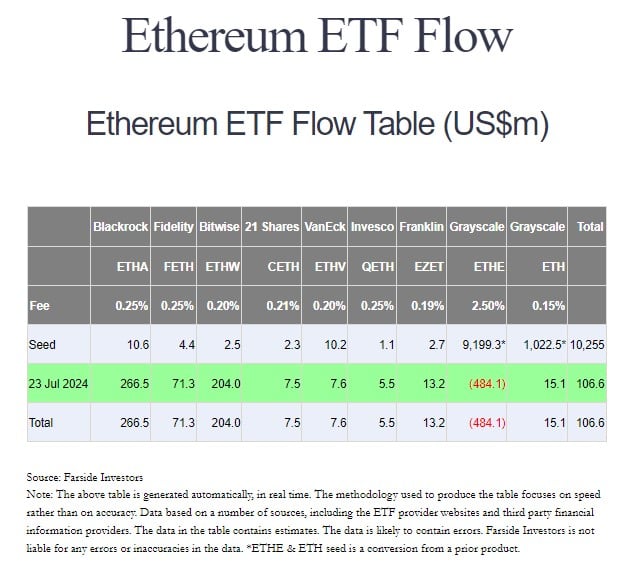
Ethereum spot ETFs experienced an extraordinary surge in inflows last week, with net inflows reaching a record $515 million, driven largely by BlackRock’s Ethereum ETF (ETHA). This marks a significant milestone for the digital asset market, particularly as Ethereum’s spot ETFs continue to gain traction among institutional investors.

The biggest beneficiary was BlackRock’s ETHA, which attracted over $500 million of the total, reaffirming its dominance in the burgeoning sector of cryptocurrency-linked investment vehicles. This ETF has garnered significant attention, reflecting growing institutional confidence in Ethereum, despite the asset’s volatility compared to Bitcoin. The inflows into ETHA have been particularly notable given the widespread competition in the market, with other Ethereum spot ETFs, such as Grayscale’s ETHE and Fidelity’s FETH, also drawing substantial investments, though not on the same scale.

The surge in Ethereum ETF inflows is seen as a positive sign of mainstream acceptance of the cryptocurrency, with institutional players seeking exposure to Ethereum’s value proposition. BlackRock’s strong performance is part of a broader trend of large financial institutions moving into the crypto space, with BlackRock leading the charge after its success with Bitcoin ETFs. The company’s Ethereum ETF has become one of the most popular in the market, a testament to BlackRock’s well-established presence and trust among investors.

This trend comes amidst a series of positive developments in the cryptocurrency sector, with regulatory frameworks slowly taking shape and increased clarity surrounding the investment vehicles that offer exposure to digital assets. Analysts believe the influx of institutional capital into Ethereum ETFs will help stabilize the market, providing a more structured path for retail investors and pushing Ethereum further into the spotlight as a key player in the world of digital finance.

Despite the record-breaking inflows, the Ethereum spot ETF sector remains under scrutiny from some quarters. Experts are watching closely to determine whether this spike in investments will be sustained, as Ethereum’s price has historically been more volatile than Bitcoin. The success of Ethereum ETFs could, however, signal a shift in how traditional financial markets view cryptocurrency, making it a more mainstream asset.

The ETF market for Ethereum is still evolving, and with large players like BlackRock driving momentum, its future looks increasingly intertwined with the broader financial ecosystem. As more institutional investors and crypto-focused funds enter the space, the legitimacy and long-term viability of Ethereum-linked ETFs will be tested. However, last week’s influx proves that the appetite for such products is growing steadily, and Ethereum may be positioned for greater integration into global financial markets in the years to come.

The Bitcoin Fear and Greed Index surged to an extraordinary 90 on November 17, signaling an ‘Extreme Greed’ sentiment in the cryptocurrency market. This mark, which has only been seen three times in the past, reflects heightened optimism and a surge in speculative investment, as traders and investors appear more eager than ever to embrace the volatile market. The last time this index hit a similar level was nearly three years ago, and analysts are closely monitoring this sudden spike to assess its long-term implications on Bitcoin’s price trajectory.

This sharp increase in market sentiment has stirred up both excitement and caution among market observers. The last occasions the Fear and Greed Index reached such high numbers were in 2019 and 2020, periods of rapid price increases followed by corrections. The cryptocurrency community is now wondering if history will repeat itself or if Bitcoin has entered a new era of sustained bullish behavior.

The Fear and Greed Index, a tool designed to gauge market sentiment on a scale from 0 to 100, reflects the psychological mood of investors by measuring factors like price volatility, trading volume, social media activity, and surveys. When the index reaches extreme values like 90, it often signals that the market is overheated, making it vulnerable to a pullback or sudden correction. However, for many Bitcoin enthusiasts, these numbers can also be a signal of continued upward momentum.

Historically, periods of extreme greed have been followed by significant price swings. For instance, the 95 reading from June 26, 2019, coincided with a massive rally that saw Bitcoin’s price rise from around $3,500 to $13,800 within a span of just six months. Similarly, in December 2020 and January 2021, Bitcoin saw a steady climb, crossing the $40,000 mark after months of extreme greed in the market.

The trend in 2021 was particularly notable as Bitcoin reached an all-time high above $60,000 in April, but quickly fell back under $30,000 by July. This marked a period of high volatility, demonstrating how quickly the market can shift from euphoria to fear. Investors have long debated whether these rapid cycles of boom and bust are an inherent part of Bitcoin’s behavior or whether the cryptocurrency has reached a level of maturity that will temper these fluctuations.

With the Fear and Greed Index at 90, the market is again facing similar conditions. The latest surge comes amid growing institutional interest in Bitcoin, as companies like MicroStrategy, Tesla, and Square have all made substantial investments in the digital currency. This institutional involvement has provided a degree of legitimacy to Bitcoin, which was once seen primarily as a speculative asset. Now, as more hedge funds and financial firms enter the space, many are predicting that Bitcoin’s volatility may decrease, although the current spike in sentiment would suggest otherwise.

Further driving this bullish sentiment is the recent activity in the broader cryptocurrency market, which has seen impressive growth across altcoins as well. Ethereum, the second-largest cryptocurrency by market capitalization, has also been gaining traction, partly due to its role in decentralized finance (DeFi) and its upcoming network upgrades aimed at improving scalability. This has led to a renewed interest in the broader crypto ecosystem, with Bitcoin often viewed as a bellwether for the entire market.

Some analysts, however, remain cautious, warning that extreme greed could lead to a price correction. The market’s unpredictable nature is amplified by external factors such as government regulations and macroeconomic conditions. In the past, China’s crackdown on cryptocurrency mining and trading has led to sudden market drops, and recent discussions around U.S. regulatory measures have raised concerns over potential tightening of crypto policies.

The Fear and Greed Index is also influenced by public sentiment and media coverage. Bitcoin has garnered increased attention from mainstream media outlets, particularly as the price of Bitcoin has soared in 2024. This media coverage has sparked a new wave of retail investment, with more individuals entering the market without fully understanding the risks involved. The growing presence of social media influencers in the cryptocurrency space has further amplified these feelings of optimism, with prominent figures encouraging followers to invest in Bitcoin as a hedge against inflation or as a means of achieving significant returns.

Despite the overwhelming sense of optimism, some are warning that the Bitcoin market remains highly speculative. Bitcoin’s inherent volatility means that even small shifts in investor sentiment can cause large fluctuations in price. The high levels of greed recorded on the index could be a precursor to another sudden sell-off, where a rapid rise in price triggers profit-taking and causes a sharp decline. This cycle of fear and greed is something that Bitcoin investors have experienced multiple times in the past, and while each cycle offers new lessons, it remains a constant in the world of cryptocurrency.

What stands out about this particular surge in the Fear and Greed Index is the context in which it occurs. Bitcoin has shown resilience amid global economic uncertainty, and many investors now view it as a store of value, similar to gold. With inflation fears, currency devaluation, and geopolitical tensions rising around the world, more individuals are turning to Bitcoin as a hedge, driving up demand and fueling the optimism reflected in the index.


Global climate goals are facing an escalating challenge as the 1.5°C target, a key ambition set under the Paris Agreement, increasingly appears unattainable. Despite decades of concerted global efforts, the pace of emissions reductions has remained insufficient to halt the ongoing rise in global temperatures. Many experts now argue that it is time to reassess strategies and focus on more adaptable and pragmatic climate solutions. The central […]

The UAE grocery retail market, valued at around $40 billion, is set for significant growth over the next few years. Projections suggest a compound annual growth rate (CAGR) of approximately 6.5%, which is expected to fuel expansion across multiple sectors. This growth trajectory comes despite challenges such as inflationary pressures and shifts in consumer behavior due to economic volatility and changing shopping patterns. Supermarkets and hypermarkets continue […]

Understood. I’ll provide a 900-word news report on the cancellation of Ubisoft’s *Splinter Cell* movie adaptation. Let me gather up-to-date and credible information to craft the report. Please hold on.

Plans for a film adaptation of Ubisoft’s acclaimed *Splinter Cell* series have officially been abandoned. The project, initially announced over a decade ago, faced challenges in script development and budgeting, ultimately leading to its cancellation. Producer Basil Iwanyk confirmed the decision, expressing disappointment over not being able to finalize the vision despite numerous attempts.

The adaptation was originally set to feature Tom Hardy in the lead role as Sam Fisher, the iconic protagonist of the stealth-action franchise. Hardy, known for his versatile performances in films such as *Venom* and *Mad Max: Fury Road*, was first attached to the project in 2012. At the time, Ubisoft Motion Pictures, which spearheaded the initiative, described Hardy’s casting as a significant coup, praising his ability to portray complex characters.

Despite its strong potential, the film encountered recurring setbacks. Iwanyk stated that multiple versions of the script were developed but failed to meet creative expectations. “We just couldn’t get it right, script-wise or budget-wise,” he remarked, adding that the cancellation marked a regretful end to what could have been a groundbreaking project for fans of both the game and action cinema.

The cancellation underscores broader challenges in adapting video games for the big screen. While some franchises, such as *The Last of Us* and *Sonic the Hedgehog*, have seen recent successes in their cinematic or television interpretations, others like *Splinter Cell* highlight the difficulties of balancing creative authenticity with commercial feasibility. Ubisoft itself has struggled to bring several of its properties to theaters, with the only major adaptation being the lukewarmly received *Assassin’s Creed* film in 2016.

Full-Service Emergency and Inpatient Care Available 365 Days a Year in East Kowloon HONG KONG SAR – Media OutReach Newswire – 18 November 2024 – Peticare Medical Group proudly announces the grand reopening of its fully upgraded Peticare Kowloon East Animal Hospital in Kwun Tong. The 15,000-square-foot facility, upgraded this year, stands as one of Hong Kong’s few comprehensively equipped animal hospitals, providing cutting-edge medical services for […]

By K Raveendran Chief Justice Sanjiv Khanna’s tenure has had an eventful start with the Supreme Court delivering the landmark ‘bulldozer justice’ verdict that grabbed global headlines. That the verdict was delivered by a bench comprising Justices B R Gavai and K V Vishwanathan, of which the chief justice was not a part, is a […]

VISHNU RAJA
RYO YAMADA
HITORI GOTOH
IKUYO KITA